


Likes
Comments
Share


@Nofeckingclue79
Follow
I've not had to trim any fan leaves they have all died on their own and I have just picked them off with tweezers apologies for the video I don't know what happened but I add smoked a doobie before 😂😵💫

Likes
199
Share


@CRiSPrGrow
Follow
These came down 11 weeks to the day from seed , this is them on their last day here. Wet weight is 😂 😂 😂 😂 😂 😂 was not expecting so much, it will last me HOURS ! these got wet trimmed now they're on the mat drying , the smell is typical american sweet candy ... was it fun? yes , yes it was fun ! what a plant this one is, my tallest one at 100cm, averaging 85cm , wet weight is.... gonna wait for dry weight, before i jinx it could be dense could be loose ! looks dense + not expecting to loose more than 50% it's all in the cure now ! 🚀

Likes
19
Share

@Brujha77
Follow
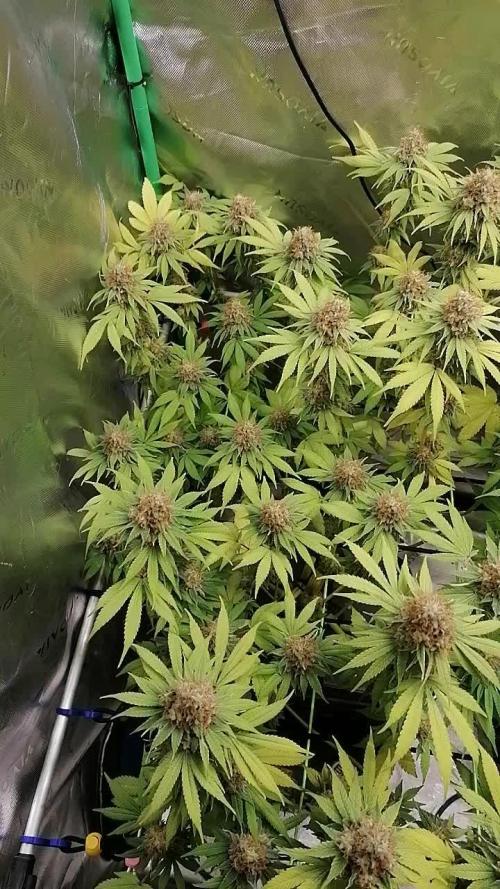
Die letzten Tage...
Für die 3 geht es nun deutlich Richtung Ende.
Trichome sind alle Trüb und vereinzelt sind schon Ember zu sehen (vor allem bei der mittleren).
Denke mal bis Ende nächster Woche sind sie dann soweit. 🥀
Geruch ist bei 2 identisch (mitte/rechts). Die linke ist etwas süßer/Cremiger ist als die andren beiden und riecht eher nach Mandarine/Orange.
Ansonsten süß/cremig mit etwas Gas und etwas säuerlich mit leichten Zitrusnoten😜😍😍😍
Tag54
Heute wurde der AutoPot abgestellt und Samstag ist es dann soweit

Likes
Comments
Share

@Organic_bud21
Follow
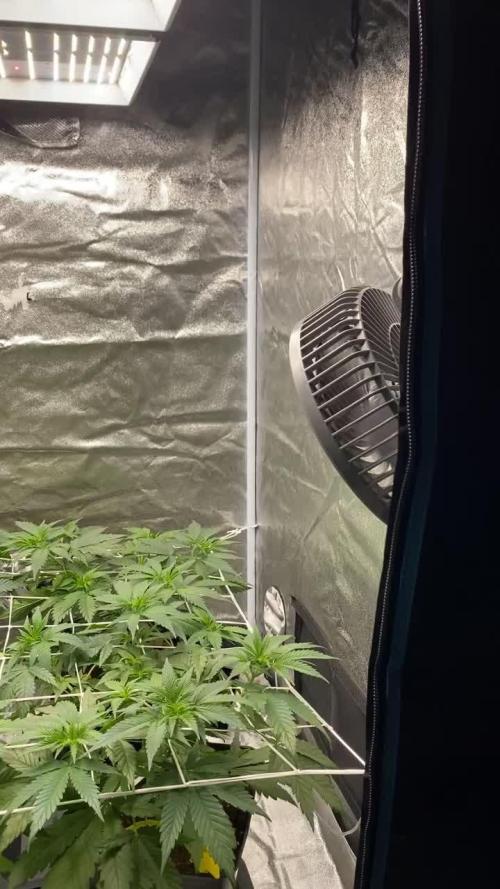
In der 6ten Woche Lag der Fokus auf Erholung von umtopfen, damit ich vor der Blüte Blätter und Triebe entfernen kann, die ich nicht benötige. Zum Ende der Woche habe ich dann das Erste Netz eingezogen und mich geärgert, warum ich es nicht schon früher gemacht habe. Naja man lernt jedes Mal dazu. Den Abstand zur Lampe habe ich auf 60cm verringert.

Likes
1
Share


@nowayReggie
Follow
Strain: Hillbilly Wedding
Genetics:
F-
(Raspberry Moonshine)
[Raspberry Kush x Old Time Moonshine]
x
M-
(Wedding Cake x More Cowbell)
[Girl Scout Cookies Forum Cut x (88G-13 x HP)]
that old time moonshine.... I believe is a Dj Short creation.
When I first started floating the idea to start growing the first thing that came to mind was find my favorite strain. BLUEBERRY! THAT DJ SHORT BLUE BERRY...
Dj had just rereleased the OTM line.. I did not grab those beans but I am glad Ziplock got to it!
I was graced with blueberry moonshine back in 07. 🤤
First time growing a strain with Girl Scout Cookies
and a second chance with the 88G13 & HP
Soaked for 36hrs
had a glass with a lid(seems to be working for me)
heatmat on top of drawer seeds are in set to 80
11/12 cracked open before planting{very abnormal for me}
Likes
42
Share


@GODSGIFT_2005_JM
Follow
⛺️ MARSHYDRO
💡VIPARSPECTRA
🍼GREENHOUSE FEEDING BIO GROW
🌱 WEEDSEEDEXPRESS

Likes
8
Share


@TorvicKofran
Follow
ESPAÑOL:
Hola chicos, espero se encuentren muy bien!
Esta semana las chicas han mejorado un poco, se detuvo el amarillamiento, descubri que Cal-Max de Grotek interfiere en la composicion de la linea hesi por lo que las chicas sufren un bloqueo de nutrientes, dejé de utilizarlo y las chicas han continuado con su desarrollo relativamente normal.
ya estan en su 5ta semana de floracion, Tutankhamon ha producido una cantidad gigantesca de resina, Lennon esta engordando a toda velocidad y aun le quedan 6 semanas aprox.
Anubis a pesar de su color intenso amarillo palido esta engordando bastante bien y su produccion de resina es inimaginable y ya solo que quedan 2 semanas y media aprox.
espero que a partir de ahora ya no surjan mas problemas y que las chicas terminen su floracion de la mejor manera.
esto es todo por esta semana chicos, espero que se encuentren muy bien !
INGLES:
Hello guys, I hope you are very well!
This week the girls have improved a little, the yellowing stopped, I discovered that Cal-Max from Grotek interferes with the composition of the hesi line so the girls suffer a nutrient lock, I stopped using it and the girls have continued with their relatively normal development.
They are already in their 5th week of flowering, Tutankhamun has produced a gigantic amount of resin, Lennon is gaining weight at full speed and he still has about 6 weeks left.
Anubis, despite its intense pale yellow color, is gaining weight quite well and its resin production is unimaginable and there are only about 2 and a half weeks left.
I hope that from now on no more problems arise and that the girls finish their flowering in the best way.
This is it for this week guys, I hope you are doing well!

Likes
24
Share


@SkunkyDog420
Follow
Hallo zusammen 🤙.
So das war es für sie habe sie heute geerntet
Sie riecht fantastisch und sieht sehr lecker aus.
Wir sehen uns in 3 Wochen mit dem Erntebericht.
Rabattcode für den BIOTABS-Webshop https://biotabs.nl/en/shop/ GDBT420, damit erhalten Sie 15 Prozent
Likes
55
Share

@JaramnieJazz
Follow
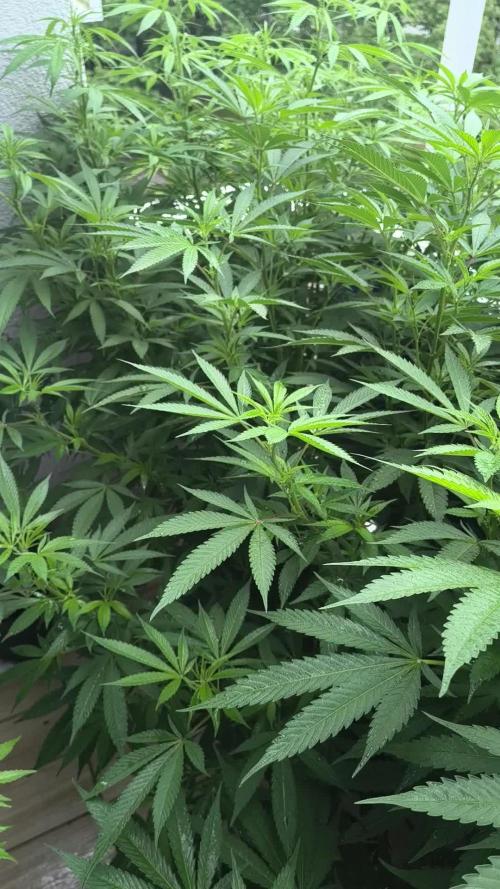
01.07.26 Ja weiter geht's sind richtige Monster geworden und so wie sie im Moment aussehen werde ich wohl nicht entblättern müssen das Licht dringt schön in die Pflanzen ein ich denke Apple Betty wird wohl am meisten Ertrag bringen zusammen mit Chocobang aber GDP braucht sich nicht verstecken wir werden sehen die Frage ist nur wann in Blüte entweder in 2 Wochen oder am 01.08.26 in 2 Wochen wäre wohl besser da ich paar Sorten diese Runde hab die bis zu 11 Wochen gehen dann wäre Anfang Oktober ende sonst ende Oktober und da ist das Wetter Mist mal schauen Daumen drücken für gutes Wetter Peace 🕊️
02.07.26 Sieht Bombe aus
03.07.26 Keine Ahnung ob es mir nur so vorkommt aber irgendwie bekommen die immer voll den Schub nach Regen sind deutlich größer geworden
04.07.26 Wetter ist schlecht keine Sonne nur Regen ich will sie bald in die Blüte schicken Daumen drücken dass das besser wird zumindest in der 2 Hälfte der Blühte .
Hab noch paar Triebe gefunden die nichts werden und entfernt. Größe ist jetzt 133cm die Chocobang ist ein Riese fuck mein Balkon ist ein Busch ich musste auf den Stuhl mich stellen um ein Überblick zu bekommen ich wünschte ich könnte die draußen anbauen damit sie sich voll entfalten können so klaut eine der anderen Licht eigentlich darf ich so 4stk machen 6 ist zuviel die können garnicht ihr volles Potenzial ausschöpfen
05.07.26 Weiter geht's es regnet am Stück hoffe das bleibt nicht so führs Wachstum ist das gut aber nicht die Blüte und die rückt näher .Der Favorit fürs bestäuben ist Black Lemon wegen dem FIZZZZ im Stemrub
06.07.26 Mehr Regen 😑 und kalt 14°C die Dünger Angaben von RQS ist eine Tablette auf 10L
07.07.26 Regen Regen Regen Größe ist 143cm


Likes
5
Share

@GoodTimesOrganics
Follow
Hi liebe Community and Welcome Back! 🌿💚
Permanent Marker von Seed Junky Genetics x Doja Exklusiv!
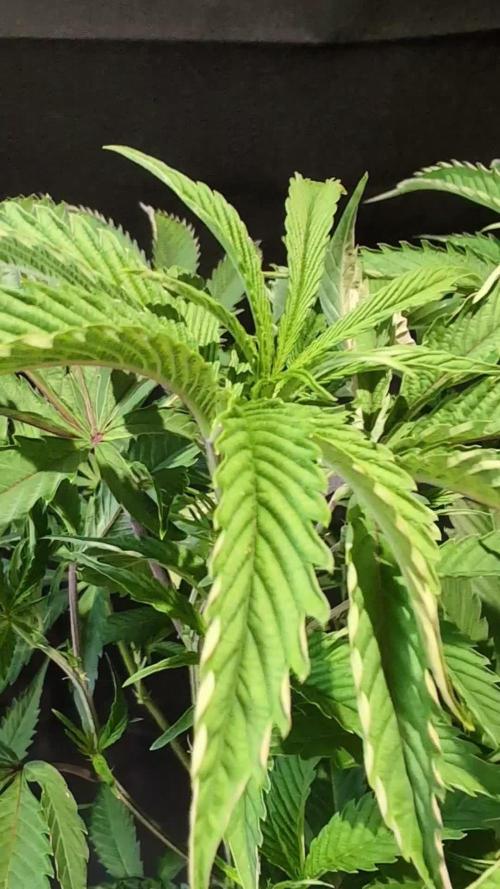
Wir befinden uns in Wachstumswoche 7 seit dem Eintopfen (Tag 44).
Sie hat nun 20 cm in einer Woche zugelegt und ich habe nochmals etwas die Triebe rausgeschnitten und dass Blattwerk rausgenommen.
Die Triebe entwickeln sich super.
Die Pflanze legt insgesamt eine top Performance hin. Ich denke nach einer Woche geht es dann in die Blüte.
Gegrowt wird wie immer rein Organisch!
Die Bedingungen für einen Steckling, bis er gut angewachsen ist sind gerade Top:
—————
🌞 Temp: 26
🌚 Temp: 18°C bis 19°C
💨 RH: 64%
VPD: 1,1 kPa
💡ppfd: 330 mpm
—————

Likes
26
Share

@For2itous
Follow
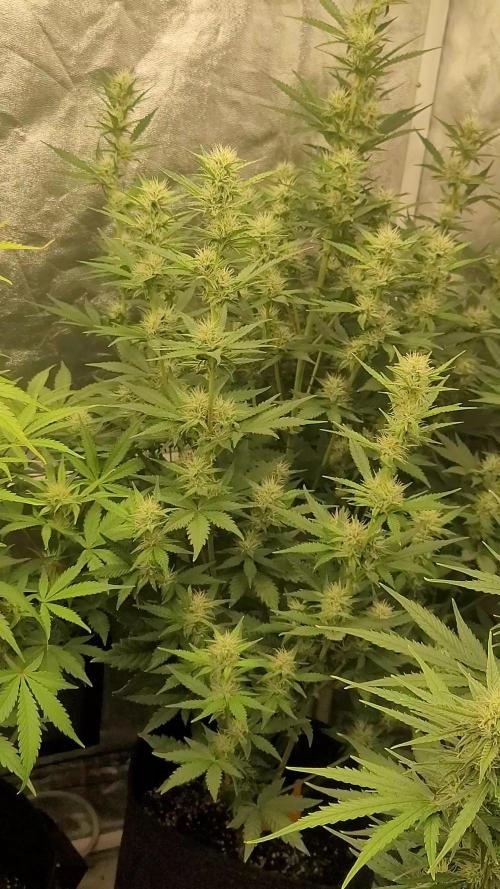
Its really taken off 😊 just typical feeding routine of some nutes and just top dressed them to hopefully keep in some more moisture and help the roots expand. They've got so big I don't have much room so I just defoliate them when I can. They're all starting to smell really good 😋 just hard to tell with so many branches cramped together lol Happy growing 🌴

Likes
16
Share


@m0use
Follow
This #40 and #42 plants from Ganja Farmer Seeds where the best out of them all, this is a bias review though as they where not all grown in the same bucket system as these two and thus could not grow to their true potential. The bugs where solid rock hard and crystaly They are true keepers if your wanted a good performing auto for shits and giggle outdoors. The major downside is how easily they got pests and how the pests preferred them over the other weed plants. this is a bit concerning to me and makes me wonder why. More to come.
@GanjaFarmerSeeds, If you like the images or videos I can send you raw files that have not been shrunk and contain no watermarks, if you feel I am in the top 3 of your BDOTY Contest that is :D

Likes
16
Share

@Highsenberg82
Follow
03/28/2026
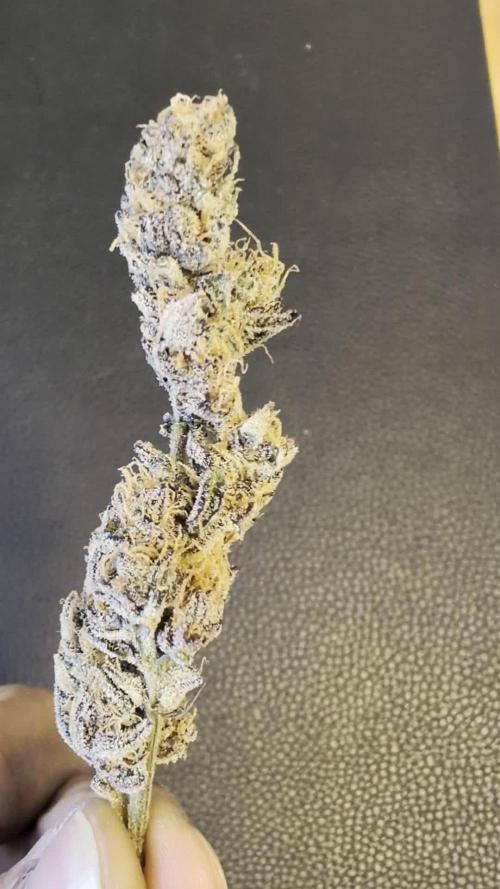
Sour Fraise is drying now. Temperature fits, humidity not. A little too dry 48% RH). Hope upcoming rain will raise humidity soon.
04/02/2026
Added the AC infinity Cloudforge T3 humidifier to the drying tent to keep RH around 60% (60/60 Method). So far so good. Still too humid for curing. Drying nice and slow.

Likes
7
Share


@Baboon_Grows
Follow
She had 10l this week in dry side , visit her once every 3-4 days to check the reservoir , excited as she’s coming down soon , maybe 20-30days left
Likes
52
Share


@Ultraviolet
Follow
You don't become confident by shouting affirmations in the mirror, but by having a stack of undeniable proof that you are who you say you are, outwork your self-doubt.
Nitrogen fixation is a chemical process by which molecular nitrogen (N2), which has a strong triple covalent bond, is converted into ammonia (NH3) or related nitrogenous compounds, typically in soil or aquatic systems but also in industry. The nitrogen in air is molecular dinitrogen, a relatively nonreactive molecule that is metabolically useless to all but a few microorganisms. Biological nitrogen fixation or diazotrophy is an important microbe-mediated process that converts dinitrogen (N2) gas to ammonia (NH3) using the nitrogenase protein complex (Nif).[2][3]
Nitrogen fixation is essential to life because fixed inorganic nitrogen compounds are required for the biosynthesis of all nitrogen-containing organic compounds, such as amino acids and proteins, nucleoside triphosphates and nucleic acids. As part of the nitrogen cycle, it is essential for agriculture and the manufacture of fertilizer. It is also, indirectly, relevant to the manufacture of all nitrogen chemical compounds, which include some explosives, pharmaceuticals, and dyes.
Nitrogen fixation is carried out naturally in soil by microorganisms termed diazotrophs that include bacteria, such as Azotobacter, and archaea. Some nitrogen-fixing bacteria have symbiotic relationships with plant groups, especially legumes.[4] Looser non-symbiotic relationships between diazotrophs and plants are often referred to as associative, as seen in nitrogen fixation on rice roots. Nitrogen fixation occurs between some termites and fungi.[5] It occurs naturally in the air by means of NOx production by lightning.[6][7]
All biological reactions involving the process of nitrogen fixation are catalyzed by enzymes called nitrogenases.[8] These enzymes contain iron, often with a second metal, usually molybdenum but sometimes vanadium.
Green clover (Fixation)
White clover (Fixation)
Red Clover. (Fixation)
Yellow Clover. (Fixation, deeper roots)
Sweet Thai Basil. (Terpenes)
Italian Basil. (Terpenes)
Chamomile.(Oil production)
Borage.(Pest attraction taste)
Lavender.(Pest attraction smell)
Marigold(Pest attraction visual)
Mycorrhizae are beneficial associations between mycorrhizal fungi and a plant’s root system. Mycorrhizal fungi spores germinate in the soil, creating filaments (hyphae) that penetrate the root cells, thus establishing a symbiotic relationship. This collaboration leads to the development of both intra-radical and extra-radical networks of filaments, enabling efficient exploration of the soil for enhanced access to nutrients and water. Consequently, these vital resources are transferred to the plant, resulting in numerous benefits for crop cultivation.
Various mycorrhizal products are available in diverse formulations (powder, granular, and liquid), concentrations, and qualities. Ongoing advancements in products, technologies, and research are reshaping our understanding of mycorrhizae. Despite these positive developments, certain misconceptions persist. In the following discussion, we aim to clarify the truths and dispel the myths surrounding mycorrhizae products.
MYTH #1
A HIGHER NUMBER OF MYCORRHIZAE SPECIES MEANS BETTER RESULTS.
Contrary to common belief, having a higher number of mycorrhizae species in a product does not translate to better results; in fact, it often yields the opposite outcome. A plant can sustain only one association with a particular mycorrhizal fungi species. Introducing multiple species creates competition among them, which is not advantageous for the plant. The initial colonizer does not ensure the highest success; instead, it gains precedence. It is recommended to select a product with a concentrated presence of a single mycorrhizae species known for its effective performance, rather than opting for a product with multiple species at lower concentrations.
MYTH #2
ECTOMYCORRHIZAE ARE EFFECTIVE FOR CANNABIS PLANTS.
Although ectomycorrhizae can colonize five to ten percent of plant species, cannabis is not among them. Ectomycorrhizae do not penetrate the root cells; instead, they develop around the roots and on the exterior. For cannabis plants, it is essential to seek out endomycorrhizae. Endomycorrhizae are capable of colonizing 70% to 90% of plant species, including cannabis. Unlike ectomycorrhizae, endomycorrhizae penetrate the root cells, forming structures like arbuscules for the exchange of nutrients and water with the plant.
MYTH #3
WHOLE INOCULANT (PROPAGULES) PERFORM BETTER THAN ONLY VIABLE SPORES.
The propagule count specified on most mycorrhizae products indicates the presence of spores (viable and unviable), hyphae, and root fragments. However, it is crucial to note that only viable spores, those with the capacity to germinate, can successfully colonize a plant’s root system. Spores are to mycorrhizal fungi what seeds are to cannabis plants—a fundamental component enabling fungi reproduction. Consequently, even if a mycorrhizal product boasts millions of propagules, its effectiveness hinges on the presence of viable spores. Without viable spores, the product will not contribute to plant development. Therefore, the genuine value of a mycorrhizal inoculant lies in the quantity of viable spores it contains, as only viable spores can efficiently initiate symbiosis.
MYTH #4
ALL METHODS OF APPLICATION YIELD IDENTICAL RESULTS.
To establish the symbiosis, mycorrhizal fungi spores must be close to the plant roots. The optimal recommendation is to directly apply mycorrhizal inoculant to the roots, either in powder, granular or slurry form. This method ensures maximum proximity between the spores and the roots, facilitating a rapid establishment of symbiosis. Particularly with crops like cannabis, which have a short growing cycle, employing this technique is the most effective way to obtain optimal benefits. Alternatively, techniques such as blending the inoculant with the soil are effective, but there may be a delay in the establishment of symbiosis. This is because the roots need to grow and come into contact with the dispersed spores throughout the growing media.
MYTH #5
MYCORRHIZAE CAN ONLY BE GROWN ON LIVING PLANTS.
While the predominant method for commercially producing mycorrhizae involves growing them on the root systems of living plants (in vivo production), it is not the exclusive nor the optimal technique. In fact, this production approach has notable drawbacks that the “root organ culture” method just does not have (in vitro production). In vitro production occurs in meticulously controlled, aseptic laboratory conditions, allowing for the consistent generation of products that are viable, highly concentrated, species-specific, and free from pathogens. Achieving such precision and quality is impossible when relying on the cultivation of mycorrhizal fungi on plants exposed to external conditions.
In conclusion, it is crucial to take all these factors into consideration when choosing the appropriate product for your crop to fully harness the wide array of benefits provided by a high-quality mycorrhizal product.
STRONGER PLANT – Stress resistance.
FASTER GROWTH – Improve plant structure and shorter veg time.
INCREASE YIELD – Overall more biomass.
IMPROVED QUALITY – Increase cannabinoids and terpenes content.

Likes
9
Share


@CanarianGrow92
Follow
The koshers are going great, just transplanted to bigger containers which are the definitive once, no food provided yet im thinking to start slowly next week as the soil i have is quite strong.
Also i decided to just keep the 2 plants which are exactly the same for the competition, the other plant which looked different is removed to another room (of course maybe the buds are the same but at the end im looking for the best looking plants for this competition)
We also removed the top this week to create some more tops 😁

Likes
14
Share


@Lazuli
Follow
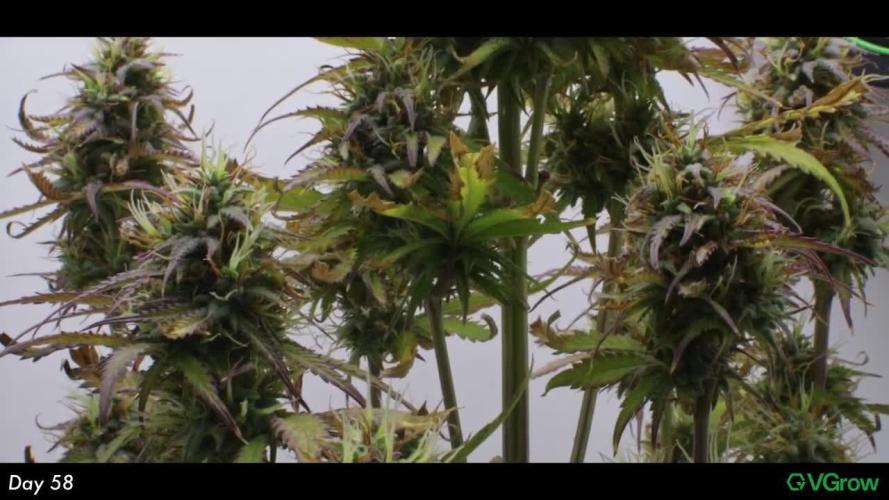
plants look healthy and ready to start making weight
juli 26 (day 30 since flip)
huge defoliation (see pics)

Likes
4
Share

@Beastmaster
Follow
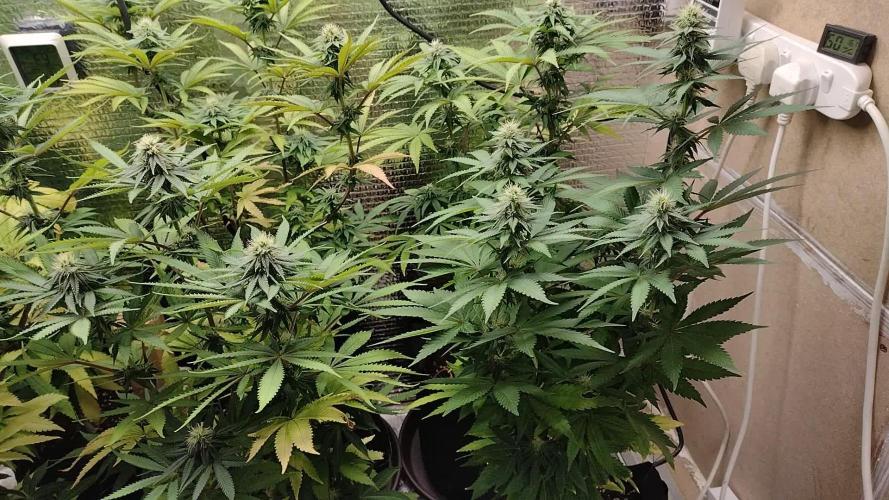
Tue 18th Nov. All pretty good, a few yellow leaves, still using calmag and vega, now some boost as well.

Likes
55
Share


@Max1973
Follow
Well, this was a interesting first journey.... the buds finished drying today, 5 days drying, added pics and vids.
Just curing to go.... ah nice buds :)
Edit: i forgot to mention i went over the buds when i harvested them, and checked / removed any impurities, like
gnats caught in the sticky bud.... picked em clean with tweezers... 👍
Edit: needed to air/dry out the buds abit more, and get some Boveda Humidipak for curing.... it's looking good...
i'll update with some pics of trimmed, cured buds 😎
The buds turned out beautiful, pungent, pine, berry, citrusy, daytime, medical..... this has theoretical 1:1 - 21% THC, 19% CBD, so it's not going to give u a knockout high.... its medical grade 1:1 ....... side effects - happy, relaxed.
haha :)
I weighed it dry and came up with about 123.32g (4.35oz) ... i used abit of guesswork in the weight, not to concerned with weight, as to
quality.... (that weight is with the test buds added in, +-15g.) .... you can guess the weight from the pics and vids, haha
I really enjoyed growing this.... i found the website by looking up the seeds, decided to start a grow diary,
it's my first grow, i made alot of mistakes and growdiaries really helped alot, joined a chat group with some other really good growers.
Edit - Day 111 - added vid/pic, Been curing for a week, burp and roll em abit twice a day....... smell and taste nicer each day, 👍
Edit - Day 112 - added good vid of trimmed up test bud, beautiful ......
I hope You enjoyed the Diary..... Good Buds 😎
Likes
4
Share
@Beastmaster
Follow
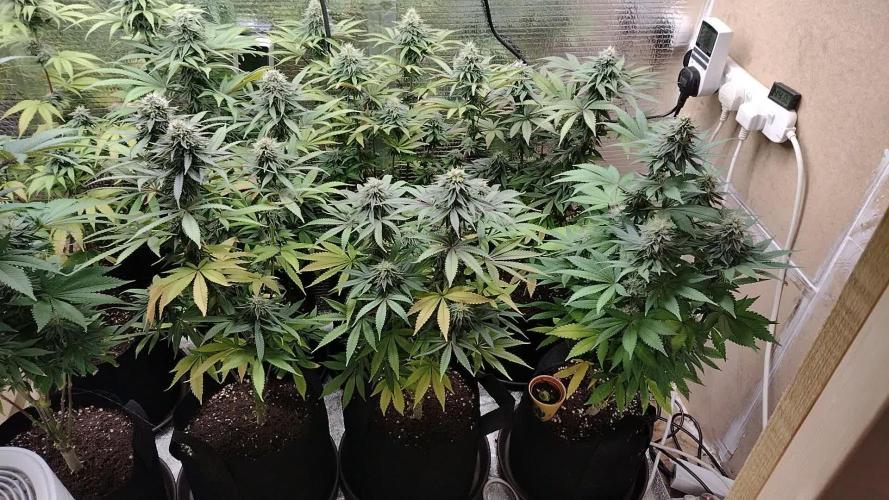
Starting to get a bit of weight on them now. Still feeding with boost calmag and flores.😎