


Likes
Comments
Share


@BIXXIE
Follow
🔥🔥this project & phenotype was scrapped due to some personal things that came up. However, im growing these exact plants again, a very good phenotype found!! check out my recent uploads! 🔥🔥

Likes
12
Share


@PajaritoUY
Follow
Esta planta es fuerte y estoy disfrutando mucho de su crecimiento, bien ramificada y con flores formándose incluso en la parte inferior. una gran joya


Likes
4
Share

@PhinolaGreen
Follow
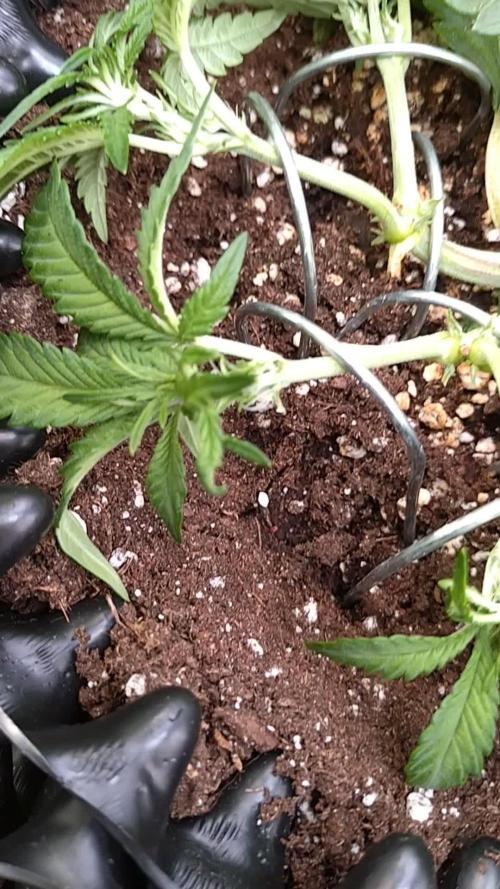
5. Woche
Sie hat sich gut vom letzten Topping erholt, ich werde sie diese Woche noch ein bisschen zurecht Formen, wie ich sie haben will 😊

Likes
22
Share

@BettyFlores
Follow
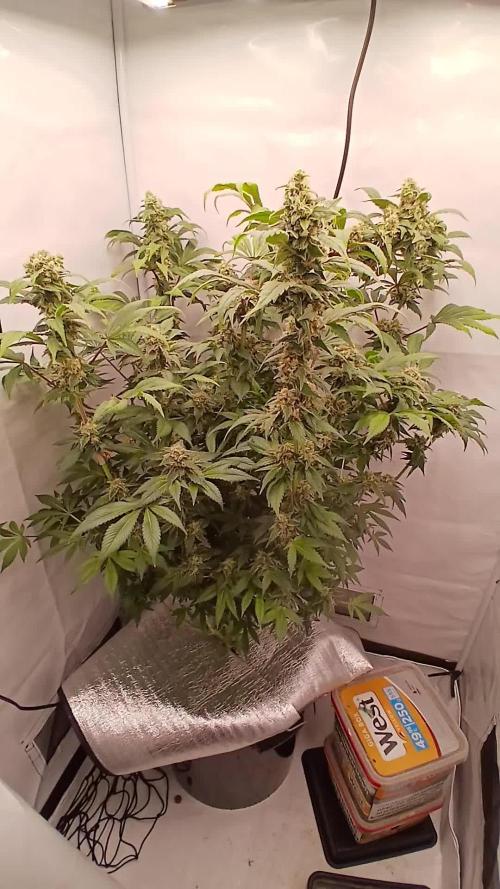
January 5, 2026
Hey everyone, quick update on my personal seed vault!
The standout in the collection right now is my self-bred Gelato x Black Lebanon x Agent Orange line. These seeds come from a careful cross of a frosty Gelato cut, resin-packed Black Lebanon, and the citrus powerhouse Agent Orange. Expect dense, trichome-heavy buds with a complex terp profile: creamy gelato sweetness, earthy/hashy depth from the Lebanon, and a bright orange punch on the finish.
Special note: The straight Gelato x Black Lebanon seeds from this project are a true Limited Edition – only a handful of packs were preserved, and I won’t be remaking this exact combo. These are the ones I’m most excited to run again.
Seeds are properly dried, labeled, and stored long-term. Planning a full pheno hunt later this year once space opens up.
Stay tuned for germination and grow updates when these beauties hit the medium!
#Homebred #Gelato #BlackLebanon #AgentOrange #LimitedEdition
23.12.2025 She got harvested today. For two days I was really struggeling if to harvest or not. But today the decission came fast and I cut her down. What a pitty! Her smell is so wonderful, lemony with a touch of wound plaster. I'm so absolutely looking forward to check, if there are any seeds and what about the smoke? She is so promissing to be a really good christmas herb 🌸
Likes
29
Share


@Basementganja
Follow
This C4 auto was very fast to flower, and stretched up to produce some very pretty, berry smelling/tasting nugs!
The buds didn't flower very dense, they formed as fox-tail shapes.
Yield is on the low-end of acceptable, but good considering the bud structure!
I'm growing another next run, to compare phenotypes!
Likes
28
Share


@Wastent91
Follow
Eccoci qua ragazzi, le ultime 2 settimane prima del raccolto, spero che vi piaccia il risultato anche se putroppo ho avuto vari problemi e le cime sono rimaste piccole, ma vi posso assicurare che sono stra piene di resina e dure come sassi, anche a livello terpenico è qualcosa di eccezionale è dire poco! Ora sto per raccogliere, grazie a tutti voi che mi avete seguito e supportato, siete la mia più grande forza! Grazie a Mars hydro e ai nutrienti di Terra Aquatica per aver reso possibile tutto ciò! Vi adoro! Continuate a seguirmi e spero che vada tutto per il. Meglio! Un buon 420 a tutti voi 🙏💪😸🌱🌿😽💨❄️❄️❄️❤️

Likes
35
Share

@Cooky_420L
Follow
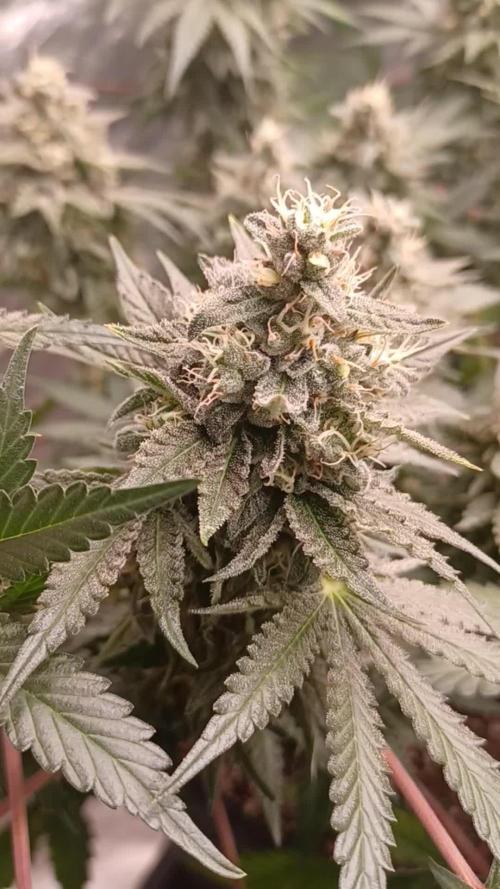
7' semaine de floraison, elles ont 94 jours dont 50 jours de floraison. C'était la dernière semaine d'engraissage. Aucun soucis cette semaine ,A1 à reçu 2x 2L de nutriments et B1 à reçu 3x 2L de nutriments dans la semaine ( 1.5 ml PK13/14 , 1 ml Green sensation) EC 153 . Réglages culture inchangé.
Merci aux Growmies qui me suivent ✌️ Bonne semaine de culture à tous les p'tites ✋️ vertes 🌱🌞🌱

Likes
27
Share


@TheCannaProphet
Follow
------------------------------------
~SEEDSMAN PEYOTE ZKITTLEZ~
------------------------------------
Description
Peyote Zkittlez is an Indica-dominant hybrid strain bred by pollinating Peyote WiFi with the sweet-tasting Zkittlez. Peyote WiFi is itself a cross of Peyote Purple and the US Indica WiFi strain. Zkittlez is a 3-way cross of Grape Ape, Grapefruit and a third, top secret, strain.
Peyote WiFi is an Indica-dominant strain which is a cross of Peyote Purple, derived from a single purple pheno-type which was back-crossed for several generations to cement its qualities, and WiFi, a US Indica strain created by crossing The White with Fire OG. This plant is medium-sized with large, broad leaves and takes around 75 days of flowering before it is ready to harvest producing very generous yields of highly potent weed - up to 650 gr/m2 indoors and 1500 gr/plant when cultivated outdoors. The THC potential of this strain is very high with plants attaining 26 - 28%.
Zkittlez is a sweet-tasting Indica-dominant (80%) cannabis strain which produces high yields boasting high levels of THC. This is a very colorful strain displaying green and purple colors with bright orange pistils.
Zkittlez is a 3-way cross between Granddaddy Purple, Grapefruit and Afghani. It is suitable for growing in all environments and takes between 60 - 65 days to complete flowering indoors. Outdoors it will be ready to harvest during late September in northern latitudes. Yields are very good and vary between 450 - 600 gr/m2.
Zkittlez' scent is very sweet and entices with ripe tropical fruits and candy which also follow through in the taste as well. THC production is in excess of 20%. The effect is very uplifting, especially for an Indica strain. Therapeutically it is used to combat stress, depression and anxiety as well as for those with ADHD.
Peyote Zkittlez will make a superb, highly potent and high-yielding Indica-dominant addition to all seed collections which is certain to become a growers' favorite. Get yours from Seedsman now.
*description credit to Seedsman Seeds
__________________________________________________________________________________________________________________________________________________________________________________________________________________________________________________________________________________________________________________________________________________________________________________________________________________________________________________
BREEDER/BRAND: Seedsman
PRODUCT TYPE: Seeds THC
GENETICS: Peyote WiFi (The White x Fire OG) x Zkittlez
VARIETY: Mostly Indica
FLOWERING TYPE: Photoperiod
SEX: Feminised
THC CONTENT: 20%+
YIELD: Indoors: up to 650 gr/m2; Outdoors: up to 1500 gr/plant
GROWS: Indoors, Outdoors
FLOWERING TIME: 60 days
MEDICAL CONDITIONS: Anxiety, Depression, Stress
MEDICINAL PROPERTIES: Yes
EFFECT: Powerful, Relaxing
__________________________________________________________________________________________________________________________________________________________________________________________________________________________________________________________________________________________________________________________________________________________________________________________________________________________________________________
THE SETUP:
~Planted into Jiffy Peat Pellets that were hydrated with de-chlorinated water with SuperThrive added then ph'd to 6.0 @ 80℉
~Grown 100% organic in 10g fabric pots with Mother Earth 70/30 Coco/Perlite medium amended with 2tbs/g of Down To Earth 4-4-4 / 2 cups/g of Earthworm Castings / 1tbs/g of Dr. Earth Flower Girl 3-9-4, 1tbs/g of Dr. Earth Bat Guano, 3/4 cup of Down To Earth Azomite and 1 tsp/g Down To Earth Fish Bone Meal.
~24hr light cycle during Germination / 19/5 light cycle for Vegetation and 12/12 for Flower
~Straight water ph'd @ 6.2-6.8 when needed and weekly Compost Tea's.
__________________________________________________________________________________________________________________________________________________________________________________________________________________________________________________________________________________________________________________________________________________________________________________________________________________________________________________
WEEKLY UPDATES:
9/13- With approx. 10 weeks of growth behind her now she's going into her 5th week of flower now and let me tell you the pictures don't do her justice... This is one phenomenal cultivar! 😍
She was given Compost Tea yesterday and today was still fairly heavy so I skipped watering and just removed a few leaves to maintain light penetration, turned her pot and sat and chatted with her awhile!
9/15- Well she really must have liked that last batch of Compost Tea as she looks exceptionally vibrant today!
She's continuing on her mission of stacking her flowers, which are developing beautifully and have a delicious sweet citrus aroma to them right now.
I did not water yesterday, so today I watered with 1.5g of straight de-chlorinated water that was ph'd to 6.5 @ 72℉ and rotated her pot... Damn she is looking great! 🤩💖
9/17- Yesterday I top dressed her with 1/2 cup of Down To Earth Bio-Fish then watered it in with 1.5g of straight de-chlorinated water that was ph'd to 6.5 @ 72℉.
Her flowering is continuing beautifully and she's smelling stronger every day it seems! I'm staying on top of tucking leaves blocking light and turning her pot daily as well.
9/19- Five weeks of flower on the books! We're halfway there now, she's stacking her flowers tightly going into Week Six and she's looking phenomenal! 🤩
When I watered her today I added 1 tbsp/g each of Kelp Extract and Fish Emulsion (both liquid) to the 1.5g of straight de-chlorinated water she received, which was ph'd to 6.2 @ 74℉.
~Thanks for stopping in! Things should be getting a lot more interesting in the coming weeks...Stay lifted and be Blessed! 😎🙏~
Likes
17
Share


@ButterfliesLittleFarm
Follow
Hello Diary.
It completed the last week of flowering, a total of three weeks of vegetation and seven weeks of flowering. A total of 80 days since Purple Punch # 1 sprouted, while Purple Punch # 2 I had to put on germination again because it didn’t sprout at first.
In the end it was 5 days late but as you can see, the harvest was the same day.
The conclusion in the end is that Purple Punch exceeded my expectations, although they look totally different, the height and build of the stems are the same, the flowers are totally different.
It is well seen in the photos. While it doesn’t have the purple color I might have expected given the name, the flowers are hard, full of trichomes and have a strong sweet scent.
We’ll see after drying what we made.
There were only two waterings this week, I wanted him to consume all the water to make the drying faster.
The condition in the growbox is satisfactory, the temperature is around 25 degrees while the humidity is below 40%.
Here’s what the last week looked like.
31/04/2021 - Day 64.
Watering. I regulated p.H. at 6.3 and with 7 liters of water I evenly watered all three plants on the “farm”.
Temp / Humidity on the farm - 25 degrees and 37% humidity.
03/04/2021 - Day 67.
Watering. The procedure is the same as three days ago.
Temp / Humidity on the farm - 25.3 degrees and 38% humidity.
07/04/2021 - Day 71.
Harvest. After I did the photography, first one plant and then another, I cut the plants at the bottom of the stalk and hung them upside down in a growbox to dry.
The temperature in the Box is about 25 degrees and the humidity is slightly lower than 40%.
I turned off the lights and left only the ventilation on while I also turned off the fans.
And now all three plants are hanging upside down, two Purple Punch and their roommate Watermelon.
They are preceded by about two weeks of drying, maybe a little less, so I call with one last review. See you soon.
Likes
42
Share


@MadeInGermany
Follow
Info:
Unfortunately, I had to find out that my account is used for fake pages in social media.
I am only active here on growdiaries.
I am not on facebook instagram twitter etc All accounts except this one are fake.
Have fun with the update.
Hi everyone :-)
This week she was repotted in 15 l and trained with topping.
When repotting I got her 2 g GHSC Powder Feeding Bio Grow per l Coco.
At Giesen there was 1 g enhancer per l coco Everything was cleaned and refilled.
Have fun and stay healthy 🙏🏻
You can buy This Strain at :
www.Zamnesia.com
☝️🏼☝️🏼☝️🏼☝️🏼☝️🏼☝️🏼
Strain
Gelato clone from mother (Zamnesia )
☝️
Genetics: Wedding Cake x Gelato x Gelato 33
Vega lamp:
2 x Todogrow Led
Quantum Board 100 W
💡
Bloom Lamp :
2 x Todogrow Led
Cxb 3590 COB 3500 K 205W
💡💡☝️🏼
Soil :
Canna Coco Professional +
☝️🏼
Fertilizer:
Green House Powder Feeding
☝️🏼🌱
Water:
Osmosis water mixed with normal water (24 hours stale that the chlorine evaporates) to 0.2 EC. Add Cal / Mag to 0.4 Ec Ph with Organic Ph - to 5.5 - 5.8 .

Likes
28
Share


@PrairieFrostGrow
Follow
*
************** Week 8 - May 30 to June 5, 2020 - Days 50 to 56 from germination ****************
*
This was a good growth week. KK has many white hairs on bud sites she is filling in and bulking up. pH numbers still higher so keeping an eye on the amount of base nutes to minimize lockouts. Leaf color is doing good and she is on her way. When the medium is in the correct range she is swelling and looking happy. She has been good with heavier feedings but she is also outwardly happier when the pot is on the dry side. More oxygen around the roots is my assumption.
She is a beautiful little plant and is bushy.....trimming will take a little bit of work but its all good......not bending over her top is giving her a nice shape. Lots of leaves😀 She tight nodal spacing and is certainly growing as a little bush. Great strain for those concern about height restrictions!!!
Note: I have running with the Green Plant line for nutes and I am very happy........I also have some Advanced Nutrients bottles that have not been used so I am fitting them in as it seems appropriate. I really like Piranha, Voodoo, Tarantula, Sensyzme, and Overdrive......don't see me stopping having those bottles around garden.
Little more detail..........
May 30/20 - Day 50
- 4L feed with Sensyzime @ 1.5ml/L = 315ppm and 4.4pH
- runoff in the pot before feeding was 7.1pH.
- runoff after feed was 5.8.
- leaves are an okay color, not too dark, and she is doing well.
- bud sites getting larger.
May 31/20 - Day 51
- 4L heavier feed: CalMag & Rezin & Lwt @ 1ml/L, Rhino @ 1.5ml/L, Vita & Kelp @ 2ml/L, Massiv @ 3ml/L = 700ppm
- fair bit of runoff, not checked.
- good growth overnight......happy getting their medium down to 5.8 yesterday.
- This girl seems happier when her pot is on the lighter side.
June 1/20 - Day 52
- 3L feed with Massive @ 2ml and Dual Fuel @ 1.5ml = 1300ppm, pH 4.4
- Pulled a few leaves.....take more on weekend.
- She is wide but not going to be too tall......under 24" idea I suspect.
- Bud sites are a medium size and her hairs are white but not huge.
June 2/20 - Day 53
- 2.5L feed: Terp & Massive @ 3ml/L, Vitathrive @ 2ml/L, Rezin & LWt & Dual Fuel @ 1.5ml/L = 1300ppm 4.6pH.
- she is doing well......buds continue to get bigger.
- still don't know what the hell with the pH?
June 3/20 - Day 54
- 2L feed: Sensyzime @ 2ml/L = 315ppm and pH to 4.9
- she has reacted well to take some of leaves and her branches are more defined all the time.
- just gave her some enzymes today to keep the roots clean of the salts.
- raised her up more in the tent to get closer to light. Set her on another riser.
June 4/20 - Day 55
- dry out day
- her leaves are growing back quickly and she is appearing happy.
- she has reacted well to the increased light intensity!!
June 5/20 - Day 56
- 3L feed: AN Big Bud & Vitathrive & Rezin @ 2ml/L, Liquid Weight @ 1.5ml/L
- 1050ppm and 4.4pH going in.
- no run off from the girls......they are eating!!
- crazy.......4.4pH going in and she loves it!!
- took more leaves to expose some more sites.
- She is firming up well. Not rushing to take more leaves.
That will wrap up week number 8 already! The girls are fighting a few issues but overall they are performing well. Killer Kush plants would fill in a 4 x 4 nicely and create a great canopy with 6 plants. As always with the girls I have grown.......@Sweet_Seeds has selected nice characteristics for this strain!! 👍💪

Likes
3
Share


@Happydays58
Follow
10/04 - DAY 71
- Girls are within the harvest window per breeder. Trichomes still immature and 70/30 clear/cloudy
- Both girls giving off slight diesel aromas with Jane giving off more strawberry.
10/08 - DAY 75
- Some purple filled trichomes are appearing. Foxtails are starting on Mo. Gonna push for another week.



Processing
Likes
3
Share


@Andylatynhack
Follow
I started the 12/12 cycle the plants begin to get used to, I left the first 2 or 3 days of flowering the mh instead of 7 or 10 due to lack of time, but I see that they grow well the same with hps 600 already immediately

Processing
Likes
26
Share


@eldruida_lamota
Follow
Que pasa familia, hemos vuelto para actualizar las skunk que ya tenemos cosechadas.
Que gran genética, y muy típica entre fumadores de hierba, un crecimiento más indico pero floración lenta bastante lenta, en teoría se supone que es Sativa, 17% thc en la tas con un tamaño medio pequeño pero flores mi compactas y dulces, un cultivo ni fácil ni difícil, sin más, bastante neutral para los cambios climáticos algo sensible con el aspecto alimentación.
La recomendaría en verdad, sobre todo para aquellos amantes del dulce.
Nos vemos en próximos proyectos fumetillas

Likes
19
Share


@emeraldlabs
Follow
Still dealing with a little clawing... Two straight waterings with only pHed water (~1.75 G each time). No longer feeding any veg nutes so hoping things improve.
Photos/video taken 105 days after breaking soil, day 28 of flower.
Likes
26
Share


@Bread_n_Buds
Follow
The situation is starting to get super interesting also for our Zamnesia photoperiods, we have new and very different strains that are expressing themselves very well, Karen Kush, Test 1, Test 2, Cosmic Noodles and Runtz are already making my mouth water, it is the grass that I will be consuming during the magical Christmas and end of year periods, it must be done well to give nice trips to me and those who are with me.
The Cosmic Noodles that is growing straight has become my favorite and I will explain why-
--- Plant 1 - The Cosmic Noodles is a marvel for the eyes. It is a plant with low distance between the internodes, which means that it comes short, not very tall so that is not a problem at all, in fact for the low growboxes of now it is essential not to have height problems. She has not grown regularly on all the branches is practically symmetrical in and the flowers are dense and of a quality that you can see will be superior. Aesthetically it is really super beautiful, the flowers are super dense and smell like paradise, I expect a lot from the last weeks of flowering
--- Plant 2 had some problems in the veg phase and we did a topping, not bad but we will show it to you at the end there are no photos
---- Fertilization program - The two plants consume the right amount of water about 1.5 per day for a plant that is doing well and they are slightly over fertilized I do a slight climb during the week. The end of flowering program started early because the flowers compose quickly and if Green Sensation is normally started at week 4, I start it at week 3 otherwise you immediately find yourself in flush
Feeding / Drink regular /
- Alga Bloom - 3 ml/l
- Sugar Royal - 1 ml/l
- Power Buds - 1 ml/l
- Green Sensation - 1 ml
--- The dehumidifier now works between 50% and 55%
--- You can find the 100% Organic Plagron package on Zamnesia at the link: https://www.zamnesia.io/it/11457-pla gron-easypack-natural .html //
// Strain Description //cross of Alien OG and Rollercoaster Haze, Cosmic Noodles offers excellent yields and extraordinary aromas. This variety is very powerful, contains 25% THC and produces intense and long-lasting effects. Stimulating and relaxing at the same time, Cosmic Noodles causes an energizing cerebral effect that fades over time becoming soothing at a physical level.
- Get a seed of this fantastic strain --- https://www.zamnesia.io/it/10777-zamnesia-seeds-cosmic-noodles.html
- Fully organic soil and fertilizers --- https://plagron.com buy at www.zamnesia.com
- Music and sound --- I made my girls listen to 432hz frequencies and black music from www.radionula.com
- Z --- You can find these seeds, much more from the world of cannabis, mushrooms and an incredible series of accessories and gadgets on the reference site not only mine but of many growers
---- https://www.zamnesia.com
Likes
24
Share


@nonick123
Follow
Día 129 (07/10) Riego con 750 / 1.000 ml H2O de osmosis
Empiezan a moderarse las temperaturas con 28 ºC de máxima
Día 130 (08/10) Riego con 500 / 1.000 ml H2O de ósmosis
Las temperaturas están sobre 25 °C
Día 131 (09/10) Riego con 500 / 750 ml H2O de ósmosis
Día 132 (10/10) Riego con 750 / 1,250 ml H2O de ósmosis
Día 133 (11/10) Riego con 750 / 1,250 ml H2O de ósmosis
Día 134 (12/10) Riego con 500 / 1.000 ml H2O de ósmosis
Reviso los tricomas y estos indican que estamos más o menos a una semana de la cosecha! 50% trasparentes / 50% nublados
Día 135 (13/10) Riego con 1 litro H2O pH 6,5 + Kelp Hidrolizado 0,3 g/L
💦Nutrients by Lurpe Solutions - www.lurpenaturalsolutions.com
🌱Substrate PRO-MIX HP BACILLUS + MYCORRHIZAE - www.pthorticulture.com/en/products/pro-mix-hp-biostimulant-plus-mycorrhizae

Likes
19
Share


@MrGrowMan
Follow
week 20-21
1 nutrient water
1 non nutrient water
LsT and Scrog
Diesel and Mimosa Harvest
day 62 start 12/12 light period (genetically damaged plants)
2 break up cake day 67 start flowering
17.03 day 130 Left flush.
21.03 day 134 Right Flush.

Likes
4
Share

@poloq
Follow
_Environment_Setup
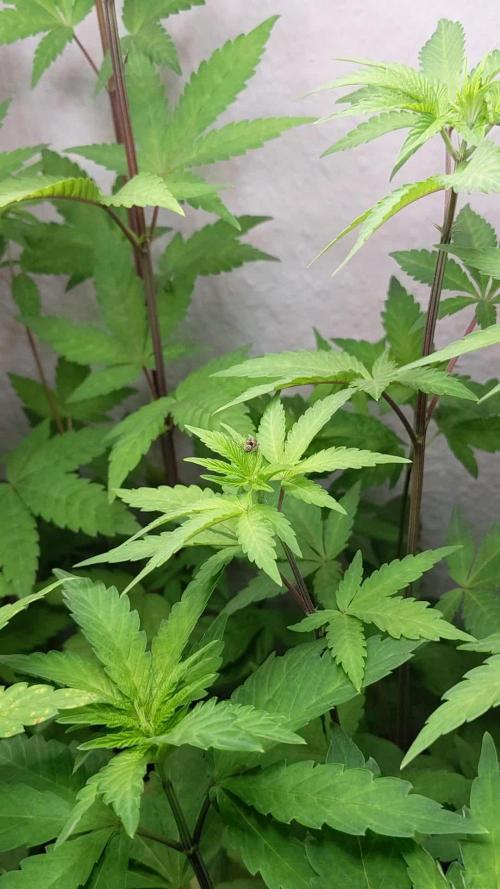
The amount of water I give has easily doubled - to about 5 l every 2 - 3 days. Super excited for the little jumping spider.
At the end of this week, I decied to rotate the whole pot by 180°. The reason being, that the wall relfects light + the window bringing in light, so that one side gets more and grew stronger. Should even out the canopy.
_Preflower
Now it's 2 girls (but sadly right next to each other).
_Plants
I definitely need to thin out the plants. Right now, each plant basically has only its two main shoots. The two additional side shoots on each plant are underdeveloped due to the lack of light, so I’ll probably remove some of them.
The cell damage to the lower leaves is increasingly evident as a result of a combination of an excessively dry period, low light intensity, and a lack of nutrients.