The Grow Awards 2026 🏆 







Likes
Comments
Share
@d_blut
Follow
Die halbe Woche sollte sie noch, habe aber eine Banane gefunden und werde doch morgen ernten.

Likes
211
Share
@PapaNugs
Follow
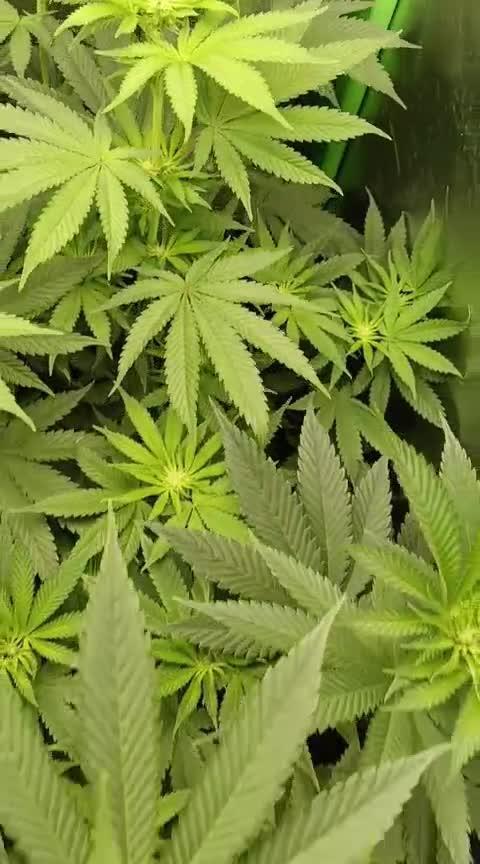
Constantly taking leaves off all these girls. Trying to make space for those buds! These are some leafy genetics overall but some are starting to change color nicely for week six of flower! I checked some of the trichomes but they aren't close to ready so I didn't snap any pictures of those. But some good trichomes production from them.
Got the UVB 310 in full effect right now at 4 hours. Will be boosting up to six tomorrow and continue to push for the next two weeks.
Likes
3
Share
@Ryno1990
Follow
This strain came out amazing atlas seeds did an amazing job with her genetics she was frosty as can be an some of the best bud iv grown to date


Likes
59
Share
@Salokin
Follow
I fed them nutrients until Wednesday and continued until Saturday with RO water, changing the reservoir daily until I got the ppms down to were my truncheon doesn’t react anymore. On Saturday evening started cutting them down (6hours….).
Likes
151
Share
@CANNASIM
Follow
------SETUP------
-HOMEBOX TRIANGLE+ .4sqm
-BOSSLED LIGHTS 250W REAL
-INTAKE FAN HIGH PRO - 107 m³/h
-EXHAUST FAN PROFAN - 220 m³/h
-TWO SMALL VENT FANS
-HUMIDIFYER WHEN NEEDED
-AC IN THE ROOM
-15L SMARTPOTS
-50%PERLITE 50%SPHAGNUM PEAT MOSS
------STRAIN------
SEEDSMAN BLUEBERRY = SM BB.
Blueberry was originally created by Canadian DJ Short and dates back to the 1970s. It is a 3-way indica-dominant hybrid cross of an Afghani strain together with Thai and a Purple Thai. When grown in good conditions it can grow into a fairly large plant displaying a range of red, purple and blue colours and producing very good yields.
Another quality of Blueberry is that, although taking a while to cure out, when correctly prepared and packaged it has a very long shelf-life compared with many strains available today..
/BOUQUET
Unsurprisingly when fully-cured Blueberry has an incredibly fruity perfume along with the unmistakable sweet flavour of blueberry.
/EFFECTS
The effect is a pot smokers dream - a very potent yet happy high which is very euphoric yet relaxing and enduring.
------GENERAL COMMENT------
The first 7 days of this grow is almost complete, Blueberry and the AK47 germinated fine, had some issues with the Candy Kush Express, so the last seed is germinating, and seams that it will emerge soon! I'm optimistic, so basically till now we will do a free seed run, since this ones came with the genetics I purchased from seedsman and gyo green. 😎😛
-251217
First feed with a very light nutrient dose. Will implement some cal mag next water.
Humidity has been a little hard to control, is oscillating a lot.
------SM.BLUEBERRY COMMENT------
Development is ok, nothing overwhelming for now, lets see how things evolve. Still not convinced of the easy plugs, kind of hate them, direct soil seams more effective. 👍

Likes
8
Share
@Gabgrow
Follow
Not much on this week besides a strong streech and the set-up of an aquabox system to manage some days I'll be out for holidays. Mantaining the same nutrition and feeding through acqua box. Almost any gnats on the tent on this week. Not doing much besides trying to avoid disrupting their streech period.
Good growing to everyone!
Ps. Almost forgot: AK moved to a smaller tent with another plant I'm reporting in a separated diary since she is an autoflower and I belive it would be most beneficial a 18/6 light schedule
Likes
Comments
Share
@Robom069
Follow
had to change nutrients bc i didnt had enough so i had to buy a good bloom fertilizer in panic
i chose hesi bc its relieable
left side acid dough
right side black domina

Likes
15
Share
@Happy_Rakosnicek
Follow
I got new lighting from VIPARSPECTRA and type XS1000 and I added another dose of nutrients according to the table, but I only used 0.5l of water.

Likes
9
Share
@Rock_n_Roll_Randy
Follow
All the photos are in the 8x8 now just a few autos in here now
FOR EVERYTHING MARS HYDRO VISIT:
www.mars-hydro.com
www.marshydroled.ca
PROMO CODE: rocknroll
VISIT THE ALIEXPRESS STORE:
@marshydro_aliexpress
Instagram: @marshydropenny
Thanks for taking the time to read and check out my diary🤜🤛
TS3000 FEATURES:
WIDEBAND SUNLIGHT FULL SPECTRUM LED GROW, Infinite close to natural sun light, suit for all plants whole stages indoor growing, rapid plant response from seed to flower, achieve maximum quality and quantity, much better than traditional HPS grow systems.
HIGH REFLECTIVE & NOISE FREE-Fanless LIGHT BOARDS design will make your growing life easy and quiet, quickly heat dispersing material aluminum reducing light lost to aisles and walls, increase the light intensity up to 20%, allowing your plants receive more energy and without burning your plants for maximum headroom.
HIGH EFFICIENCY ENERGY SAVING PLANT LIGHT, high-power NEW LED grow, Compares to traditional 3000 watt HPS lamp and other brand led grow light while only 450 watts true output with 1016 LEDs, more scientifically and energy-efficient! Perfect for 5' x 5' veg stage, 4' x 4' bloom stage, higher intensity in a MARS HYDRO grow tent, reflective area, or by crossing over using multiple TS3000.
BOOM YIELD LARGE GROW LIGHT, NEWEST SMD LED technology provide highest PAR/LUMEN output(1095.6umol/), makes you get 30% higher yield compare OLD led lights, can get max yield at 2.5g/watt, less pay but get more yield, bring a amazing grow trip to any home grower as it beams huge amounts of light energy to plants below.
COMMERCIAL LED GROW LIGHT, Updated easy dimming & daisy chain function, main light controlled, especially come with two waterproof and dimmable Mean Well Drivers, auto sensing power supply works on both 120VAC and 240VAC and 277VAC, suit for Large Rooms and Commercial Setups.
Low Energy-Consuming LED Grow Light: Consuming 300w and also mounted with 1016 chips, TS3000 has the ability to replace a 450w HPS light while reducing 40% power intake.
High Efficiency LED Grow Light: With overall light output PPF 343umol/S as well as amazing PPE 2.3 umol/j, it's 50% even more photon efficient and can assure a 30% more return than the old HPS/MH lights.
Patent Highly-Reflective Hood Shape: The reflector design on TS3000 is patented, which can effectively gather the light dispersed in all directions to enhance its light intensity as well as assist plants in absorbing more light.
Full Spectrum Plants Favorite Spectra: By the unique mix of spectra that makes most light in the 400-700nm waveband, incredibly conducive to plant photosynthesis. Adequate IR(730-740nm) is additionally consisted of in the range to generate larger buds.
Dimming And Daisy Chain Feature Available: Upon an independent dimming button on the external driver, backing 0-100% settings adaptation and up to 30 LEDs daisy-chained in a group, it supplies different light levels for various plant stages meanwhile saving energy.
Safety Certifications And Service Warranty: CE, ETL, RoHS, UKCA security certifications accepted, 50,000 hours durability, 5-year service warranty, and local after-sales repair
5x5 GROW TENT:
LOCK ALL LIGHT INSIDE MARS HYDRO Indoor Grow Tent interior is made of diamond mylar which is highly reflective. (Other brand's mylar and reflective rate is as low as 50%, won't provide efficient light. )MARS HYDRO 1680D canvas, being double stitched, it is tear proof and has perfect light locking. Mars Hydro's grow tent keeps 100% lighting beams inside and helps your plant absorb more lights. EXTRA-THICK --No light leaks or rips at all
DURABILITY GROW TENT Stable metal corner adapters and poles are the trustful supporters of the tent, standing sturdy, neither rusting nor paint-falling, quick easy tool-free installation. Mars Hydro's heavy-duty metal zippers, with double layer black lining, are the best on the market which create a light-proof seal
EASY OBSERVATION FOR YOUR PLANTS. Special observation windows are made by double layers of cloth. Observe the growing conditions of your plants without opening the tent and avoid disturbing plants. The observation window also serves to dissipate heat and ventilate air
AUTOMATIC 6 INCH EXHAUST FAN KIT W/ CONTROLLER:
Mars Hydro 6'' Inline Fan uses a mixed-flow design to maintain peak performance in a high static pressure environment.
GROW TENT FAN: MARS HYDRO inline fans are designed to ventilate hydroponic grow rooms, transfer heating/cooling, cool AV closets, and exhaust odors.
EFFECTIVE VENTILATION: Variable speed controller for easy fan speed adjustment. Optimal ventilation for your planting.
LOW NOISE LEVEL: Durable plastic fan housing and blades for extremely low noise(32dB-A); create a truly quiet growth environment.
EASY INSTALLATION: Removable duct ends with locking tabs for quick removal and easy maintenance and a cord length of 4.9 feet for hassle-free setup. This grows tent fan with a controller for easy fan speed adjustment.
BASIC PARAMETERS: Ventilation exhaust fan size: 6” | Dimensions: 315mm*225mm*210mm. | Weight: 2.7. | Airflow: 402CFM | Noise: 32dB-A | Bearings: Dual Ball.
Likes
6
Share
@Chuckwaggon420
Follow
Stuff looks awesome cant wait to try it. Almost been hanging a week! Will come back for update after days and I do a trim!!
Likes
19
Share
@Skinnytalls420
Follow
Day 51-31/01/22 looking really well first signs of crystals and brown hairs coming through!!!! Day 54-03/02/22 some of them look like they gonna be ready soon!!!! Day 56-05/02/22 we end this week with a watering I’ve woke up this morning and from the pics u can probably tell they need water!!!!

Likes
22
Share
@SativaSteve88
Follow
Last update of pictures before harvest nothing much to write up on, been om a flush for 7 days now so far and will give her a few more before i cut her down, see you next time im back when i update my harvest overall results and final pics of the buds.
Next up i have a selection from barneys farm including Wedding cake autos and fems gorilla glue autos, tropicanna banana and dos si dos, and some amnezia haze from RQS see you soon 👊👍


Likes
12
Share
@Jays_Not_Here_Man
Follow
The 34 street seed Cookies had Lot’s of LST and training this week! The girls did very well overall after being topped, and have recovered very nicely. I also finished up my drying my last harvest, so after a cleanup session, my big tent was ready to go again!
This week was pretty easy, just watching the girls and adjusting the ties to keep the side branching going. I like to come in regularly and bend and twist the shoots between my fingers encouraging healthier stems.
While I’m in there I’ll adjust the wire ties a bit to keep things even. After 2-3 days with the tie downs on, I’ll take them off and let the plant recover.
With the environment dialled in at 79 degrees and 63% RH, it’s giving me a VPD of 1.0-1.1 , great for optimal growth. 💪
I think I am going to split the girls up, 4 (2 of eachin the one tent, 2 in my small tent, both with a Scrog in place.
I’ll be transplanting this weekend, It won’t be long before these girls are ready for flower, October is a busy month for me so I may wait until the beginning of November to switch to flower light timing. Happy Gardening 🇨🇦❤️🌱😎💨


Likes
71
Share
@DogDoctorOfficial
Follow
Hello, Grow Diaries family! 🎉🍌
I’m beyond excited to share the harvest report for my incredible Red Banana Pudding! This journey has been nothing short of amazing, and I can’t wait to dive into the details. Let’s get into it! 🚀
🌿 The Harvest
After a wonderful flowering period, it’s time to celebrate the fruits of our labor. The Red Banana Pudding has reached its peak, and I’m thrilled with the results! 🌈🍑
Visuals: The buds have developed beautifully, showcasing an array of stunning colors and a perfect density. The aroma is incredibly sweet and fruity, promising a delightful smoke. 😍
🌟 Harvesting Process
• Timing: Harvested at the perfect moment to ensure maximum flavor and potency. The trichomes were checked and showed an ideal mix of cloudy and amber for peak effects. ⏳✨
• Technique: I followed a meticulous process, ensuring each branch was trimmed with care. The process was smooth, and the final product is a testament to the love and effort put into this grow. ✂️💪
Fun Fact: Did you know that Red Banana Pudding is renowned for its unique banana-like flavor with a hint of creaminess? It’s a true treat for the taste buds! 🍌🍰
🌿 Post-Harvest
• Curing: After trimming, the buds were carefully hung to dry in a controlled environment, maintaining optimal humidity and temperature. The curing process will enhance the flavor and potency, making for a truly exceptional smoke. 🌬️💨
• Batches: The buds are being sorted into batches to ensure even curing and to preserve the quality of each nugget. The anticipation is building as we wait for this next phase! 🎉
Pro Tip: Proper curing can significantly impact the final taste and smoothness of your buds. Make sure to store them in airtight jars and burp them regularly! 🍁
🌱 Looking Ahead
The Red Banana Pudding has set the bar high, and I’m excited to see how it turns out after curing. This has been an incredible experience, and I’m grateful for the support and engagement from the Grow Diaries community! 💚
Sneak Peek: Stay tuned for upcoming content, including taste tests and smoke reports! You won’t want to miss out. 😉👀
🎥 Catch the Full Journey
For a detailed look at the entire grow process, including the harvest, be sure to check out my YouTube channel, where I share in-depth updates and tips. Dive into the full experience and see how it all came together! 🌟🎥
Thank you for following along with this amazing journey. Your support means the world to me! 🌍💚
Happy growing and see you in the next update! ✨🌿

Likes
72
Share
@BodyByVio
Follow
After 14 days drying, 7 days hanging and another 7 days on cardboard boxes 📦 at a temp between 61 and 65 degrees F and a humidity between 52-55 % I trimmed all the buds and jar them with Boveda 62. After 2 days in jars ( 16 days from cutting the plant down) I weighed in everything. I got 434g of grade A buds and 685g of Grade B ( perfectly smokable ) buds plus a lot of trim that I didn’t weight.
I’m very pleased with everything and I enjoyed every single step along the way. Probably next time I will lollipop/defoliate more aggressively so I can get more top bud and less grade b bud.

Likes
7
Share
@Mokorelsare1
Follow
She growing very well, her main stem was 4mm thick on day 13 which means that plant left the seedling stage and she's thick enough to top it, to make 4 main nodes instead of 1 (topping autoflower is risky it may stunt your grow) you can aways try LST
Don't forget to use a small fan for air circulation
On day 12 distance from the light is 36cm (14") 640PPFD
No nutrients has been added, only water PH 5.8 - 6.0
Water your plant only if the top 5cm (2") of your soil feels dry if it's still wet leave it alone.
Likes
184
Share
@OrganicNature420
Follow
Germination date 🌱 12/07/2021
Day 64 16/09/2021
Strain 🍁 SinCity seeds YUZU SORBET
(Purple yuzu x whitenightmare)
THC% • Unknown
💡 Mars Hydro FC4800
• Power draw 480W + 5%
• Max coverage 5 x 5
• LED 2070pcsSamsungLM30B1&Osram660nm
• Max Yield 2.5g / watt
• Noise level 0 DB
• Removable Driver +2m cable
• Daisy chain (multiple lights)
https://marshydroled.co.uk/products/mars-hydro-fc-4800-led-grow-light-samsunglm301b-commercial-greenhouse-medical-indoor-kit 🇬🇧
https://www.mars-hydro.com/buy-fc-4800-480w-4x4-energy-saving-full-spectrum-commercial-led-grow-light-mars-hydro-for-sale 🇺🇸
PROMO CODE • (ORG420) DISCOUNT 👍🏻 marshydroled.com
⛺ Mars Hydro 120 x 120 x 200cm
📤📥 AC infinity 6inch
💧 10lt dehumidifier
❄️ 3.1kw air con system
💉 Nutrients GreenBuzzLiquids
Organic Grow Liquid • 1-4ml until 2wk flower
Organic Bloom Liquid • 2-4ml flower stage
Organic More PK • 2-4ml +wk3 of flower
Organic Calmag • 1-2ml/lt whole grow
Fast Plants Spray • first 3days at night lights off
More Roots • 2-5ml veg +2wks flower
Fast Buds • 5ml +wk2 of veg until 1wk flower
Humic Acid Plus • 2-5ml whole grow
Growzyme • 2-5ml whole grow
Big Fruits • 2-5ml flower stage
Clean Fruits • 5ml flush 1wk
Ph powder
Root Gel
Living Organics
PROMO CODE • organicnature420 15% off ✌️🏼
https://greenbuzzliquids.com/
🥥 Growing Media • Coco Coir
Notes 📝
Week 2 done. Girls look good, slight nitrogen toxicity but they will live through it 🌱
Happy growing fam ❤️🌱🍁👍🏻
Likes
1
Share

