Likes
Comments
Share


@Roberts
Follow
Candy has been growing good. I switched h her light times today. So her flower adventure is getting started. I will likely be doing a solution change next update for blooming nutrition. I trimmed some of the under growth, and some defoliation in the rest. Everything is looking good, and she seems ready to go. Thank you Spider Farmer, Athena, and Divine Seeds. 🤜🏻🤛🏻🌱🌱🌱
Thank you grow diaries community for the 👇likes👇, follows, comments, and subscriptions on my YouTube channel👇.
❄️🌱🍻 Happy Growing 🌱🌱🌱
https://youtube.com/channel/UCAhN7yRzWLpcaRHhMIQ7X4g.

Likes
57
Share


@Grey_Wolf
Follow
Looking For a Keeper
cream of the crop seeds purple paralysis
10th March 2021
So Far So Good for these two , it hasn't rained again since the last downpour but the clouds hanging around this afternoon
look very ominous indeed. 😐
I only water early morning now so that the soil is fairly dry again on top by the time the sun sets in the evening.
this is to limit the extra moisture that could hinder the plants resistance to mold .
I also gave them a good old feed of my Worm castings tea mixed with Mollasses & Seaweed mix. 💪💪
Cheers for stopping by 👍

Likes
12
Share

@DogDoctorOfficial
Follow
Week 12 — GMO Cookies
Served with extra curiosity ?
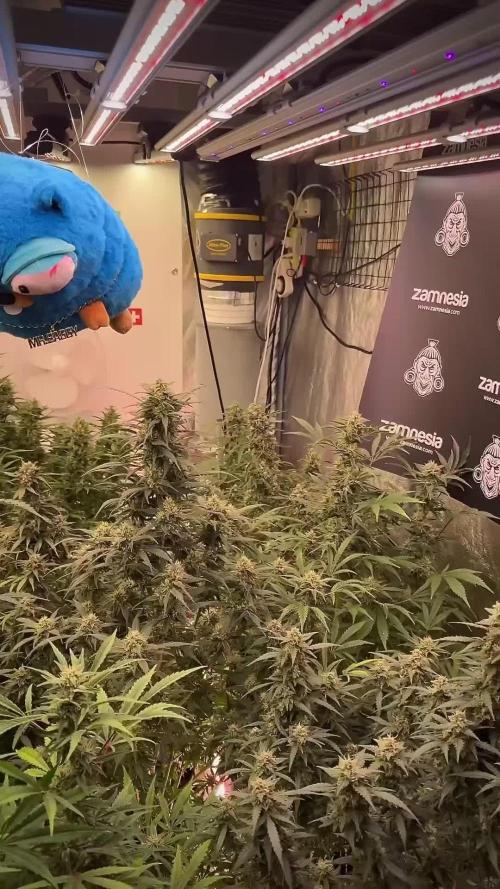
Week 12 from seed marks what we call Week 7 of flower in this 12/12-from-seed run, and at this stage the room is doing exactly what it should: less intervention, more observation, and a whole lot of trust in the process.
By now the heavy lifting is done. Structure is built, flowers are formed, resin production is in full swing, and the focus shifts from pushing growth to guiding the finish. That’s why the room still looks familiar on paper — 26°C days, 18°C nights, 60% RH, steady airflow, same rhythm, same calm environment. No dramatic changes, no chasing numbers, no panic-adjusting because a chart says so. Leaf expression remains relaxed, transpiration is steady, and the plants are still telling us the same thing they have all run: conditions are stable, leave us be.
That consistency is what got us here.
And now we let them finish.
⸻
Less feeding, more finishing
This week marks the real transition into the final stretch.
The bottles have mostly stepped aside, and the focus now is simple: water, enzymes, patience.
At this point the soil still holds more than enough nutrition to carry these plants home. That is one of the biggest advantages of building a living, reusable medium instead of treating soil like an inert substrate. The plant has already been fed. Now the soil gets to do what it was built to do: buffer, break down, recycle, and deliver what remains.
So instead of continuing to push feed late into flower, we’ve shifted almost entirely to enzymes.
This week the mix is simple:
* rainwater
* dehumidifier water
* Pure Zym
* no pH adjustments
Landing naturally around 6.8.
That is perfectly acceptable here, and more importantly, it is consistent.
At this stage we are no longer trying to micromanage every decimal point. We are reading plant response, not chasing bottle charts. The root zone is stable, the soil is active, and the plants are finishing without asking for more.
That matters more than forcing a perfect number onto paper.
⸻
Why enzymes matter now
This is where enzymes earn their place.
Late flower is less about feeding the plant directly and more about helping the soil finish clean.
Enzymes work by breaking down dead root matter, leftover organic residue, and unused nutrient material in the substrate. Instead of allowing that material to sit, stall, or accumulate as waste, enzymes help convert it into simpler compounds the soil biology can either recycle or clear out.
That matters for three reasons right now:
1. Cleaner root zone
The plant is nearing the end of its life cycle. Roots naturally slow, age, and shed. Enzymes help keep that zone cleaner, reducing buildup and preventing the root mass from becoming stagnant.
2. More efficient nutrient recycling
There is still food in this soil. Enzymes help unlock what remains, allowing the plant to access residual nutrition already present in the medium instead of continuing to push fresh inputs.
3. Better soil for reuse
This matters beyond harvest. Because this soil is being reused, enzymes help start that cleanup process now — breaking down residual organics and preparing the medium to be re-amended instead of discarded.
This is not just feeding the end of this run.
It is preparing the beginning of the next one in the veggie world outside.
⸻
Drinking less… but still drinking well
Water uptake has eased slightly this week, now sitting around 1.5L per plant every 24 hours.
That small drop is exactly what we expect here.
They are drinking a little less now because the plant is no longer prioritizing rapid structural expansion. Stretch is done. Leaf production has slowed. Vertical growth is over. The plant is no longer spending energy building framework.
Now it is ripening.
That shift changes demand.
Water use naturally tapers as metabolic priorities move away from expansion and toward maturation. Less new biomass is being built, so total uptake softens.
But they are still drinking well — and that matters.
Because while structural growth has slowed, flower metabolism has not.
The plant is still:
* moving water
* stacking density
* swelling calyxes
* pushing resin
* regulating temperature
* transporting stored energy into the flowers
That still takes water.
So yes, they are drinking less.
But 1.5L per day, in late flower, with this amount of biomass and this level of flower production, is still a very healthy sign that the engine is running exactly as it should.
⸻
The room right now
This is one of the most rewarding phases of the cycle.
The room smells louder.
The flowers feel heavier.
The frost gets thicker by the day.
The color starts to shift.
And every plant begins speaking its final language.
This is where the run stops being about control and becomes about presence.
There is less to do now.
But more to notice.
This stage is hand-watering, lifting pots, checking weight, scanning leaves, watching posture, tracking fade, peeking into bracts, checking trichomes, noticing who is ahead, who is slower, who is swelling, who is darkening.
This is where the work becomes quiet.
And this part matters just as much as everything that came before it.
⸻
Bulk, frost, and the final swell
This week the flowers are doing what good late flowers should do:
they are swelling.
Not stretching.
Not throwing chaos.
Swelling.
The buds are putting on that final weight now — denser, tighter, heavier by the day. Calyxes are stacking over calyxes, the flower surface is thickening, and what looked finished a week ago suddenly looks like it still has more to give.
That late swell is where so much of the final weight comes from.
And GMO is showing exactly why it earned its reputation.
The flowers are broad, greasy, and dense.
The frost is no longer just visible — it is layered.
Trichome coverage has moved past sparkle and into texture.
You can see it sitting on the flower surface like sugar pulled too thick.
This is where the plant starts looking less like it is flowering and more like it is preserving itself in resin.
⸻
What you are seeing now: pistils, calyxes, and ripening
This is the point where flower development becomes easier to read once you know what is changing.
Those bright white hairs (pistils) that dominated earlier flower are beginning to darken, curl, and recede.
That is normal.
Early on, pistils emerge fresh and white as part of active flower development. Their job is simple: reach outward while the flower builds.
Now that the flower is mature, many of those pistils have done their job.
So they begin to:
* oxidize
* darken
* curl inward
* shift from white to orange, amber, or brown
That is not decline.
That is ripening.
At the same time, the calyxes beneath them begin swelling.
This is the part many growers miss.
As the pistils age and pull inward, the calyxes underneath begin to enlarge and firm up — becoming fuller, rounder, tighter, and more pronounced. That swelling is where density comes from. It is one of the clearest signs the flower is still building real mass even when fresh white hairs begin slowing down.
So while the pistils look older, the flower itself is still maturing.
That is exactly what we want.
⸻
And then there are the trichomes
This is where the real finish happens.
Trichomes are not just “frost.”
They are the plant’s chemical armor.
These resin glands are where cannabinoids, terpenes, and much of the plant’s aromatic complexity are produced and stored. What looks like sparkle is actually the plant concentrating its chemistry onto the flower surface.
And late flower is when that chemistry peaks.
Right now they are thickening, clouding, and maturing.
This is the stage where clear heads begin turning cloudy, volatile terpene content is peaking, and the plant begins shifting from active production into final ripening.
That is why this stage matters so much.
This is not just visual maturity.
This is chemical maturity.
⸻
Special guest in the garden ?
This week’s inspection team also included one highly unqualified but deeply committed assistant.
A tiny toy fly has been making rounds through the canopy, checking trichome density, inspecting pistil posture, and offering absolutely no useful advice whatsoever.
Morale has improved.
Yield projections remain unchanged.
The inspection reports were biased, but adorable.
We’ll allow it.
⸻
Looking ahead to Week 13
Next week will be about watching the finish tighten.
Expect:
* more visible fade
* stronger senescence expression
* slower water uptake
* deeper aroma
* continued calyx swell
* more pistil recession
* trichomes pushing further cloudy
This is where patience matters most.
Not every plant will finish on the same day.
Not every top will mature at the same speed.
And not every signal arrives all at once.
Next week is not about deciding harvest.
It is about learning how close harvest is becoming.
And that is a very different thing.
⸻
Final thoughts
Week 12 is one of those weeks that reminds you why the slow parts matter.
The feeding.
The restraint.
The consistency.
The observation.
The trust.
Now it shows back in the flowers.
To everyone following along — the longtime growers, the silent lurkers, the curious beginners, the sharp-eyed critics, the day-ones, the new faces, the supporters, the skeptics, the genetics, the breeders, the platform, and everyone spending even a minute here with this run:
Thank you.
To those who watch closely, cheer loudly, question honestly, and keep showing up week after week — respect.
To the OGs who have been here since the first awkward updates and to the new eyes just arriving now: welcome.
And to these plants, for doing what they do best with quiet precision and no ego at all—
all love.
📡 DELETED @ 1K Please stay tuned.we never quit https://www.youtube.com/@TheDogDoctorOfficial NEW 🙏 Thank you for your patience and continued support.
FOR DISCOUNT CODES AND MORE JUST FOLLOW THE LINK https://website.beacons.ai/dogdoctorofficial
📲 Don’t forget to Subscribe and follow me on Instagram and YouTube @DogDoctorOfficial for exclusive content, real-time updates, and behind-the-scenes magic. We’ve got so much more coming, including transplanting and all the amazing techniques that go along with it. You won’t want to miss it.
GrowDiaries Journal: https://growdiaries.com/grower/dogdoctorofficial
Instagram: https://www.instagram.com/dogdoctorofficial/
YouTube: https://www.youtube.com/@dogdoctorofficial Deleted by Youtube - https://www.youtube.com/@TheDogDoctorOfficial NEW
Vimeo : https://vimeo.com/dogdoctorofficial Under construction stay tuned ⸻
Explore the Gear that Powers My Grow
If you’re curious about the tech I’m using, check out these links:
🔆 Lighting & Environmental Control
• Future of Grow — Advanced LED lighting technology
https://www.futureofgrow.com/
DISCOUNT CODE: DOG20
• Lumiflora — Under-canopy LED lighting
https://lumiflorade.com/
• TrollMaster — Environmental controllers and automation gear (past collaboration)
⸻
Genetics
• Zamnesia Seeds — Genetics used in this project
https://www.zamnesia.com/
⸻
🌱 Soil, Substrates, Boosters & Root Support
• Plagron — Substrates, bio mixes, and supportive products
https://plagron.com/en/
⸻
🎒 Storage, Curing & Preservation
• Grove Bags — Curing and storage solutions
https://grovebags.com/
⸻
📸 Photography Equipment & Tools
(Not sponsors, but part of my creative toolkit)
• Sony A6700
• Sony full-frame macro lens + few more
• Stacking photography workflow - learning
• iPhone (for behind-the-scenes shots)
We’ve got much more coming as we move through the grow cycles. Trust me, you won’t want to miss the next steps, let’s push the boundaries of indoor horticulture together!
As always, this is shared for educational purposes, aiming to spread understanding and appreciation for this plant. Let’s celebrate it responsibly and continue to learn and grow together.
With true love comes happiness. Always believe in yourself, and always do things expecting nothing and with an open heart. Be a giver, and the universe will give back in ways you could never imagine.
💚 Growers love to all 💚
📸 P.S. – The Eye Behind the Lens
All photos in this diary (for now — except for the ones showing the camera, which I took with an iPhone) are taken with a Sony A6700 paired with a Sony full-frame macro lens and a few more.
Photography is part of the story — it’s how we share the fine textures, the glow, and the quiet details that words can’t always capture.
I’ve also started experimenting with photo stacking — a technique where multiple images, each taken at a slightly different focus point, are layered together to create one perfectly sharp image from front to back.
It’s not digital enhancement or AI; it’s pure photography — a way to reveal the plant’s beauty in microscopic depth, from trichome to petal.
You’ll even see a few shots of "ghost me" capturing the shots — camera, lens, setup — because every grow deserves not just to be cultivated, but documented like art.
FOR DISCOUNT CODES AND MORE JUST FOLLOW THE LINK https://website.beacons.ai/dogdoctorofficial
NEW DISCORD - Official Server Invite Link : https://discord.gg/ksjAkA5T74

Likes
52
Share


@Hashy
Follow
Grow diary 11 stage 7
Day 61-70
This is the size of plant I was expecting from all 4 strains and the way I had trained them. She has come on quite a bit over last 9 days, she is the 3rd furthest along.

Likes
7
Share


@Hommero75
Follow
End of the 3rd week for the Purple Lemonade. I did some LST on her and she just got fed Goldleaf feterlizer. It's been a slow process with ups and downs. I encounter a few issues, but she's still hanging in there. Hopefully week 4 is better. I still got faith in her.
Likes
38
Share


@ILoVeThiSpLaNt
Follow
La pianta per le bassissime temperature di fine ottobre è stata tagliata qualche giorno prima ma sicuramente la rifarò indoor. Sono molto contento e difficilmente lo sono. Ho detto tutto 😊🖐️

Processing
Likes
3
Share


@LittleBigTrees
Follow
Still not given any food at 35 days since popping. She's growing well and I've put her in a 4ltr pot.
I've pinched the top out to slow down the vertical growth.

Likes
10
Share

@Growmigos
Follow
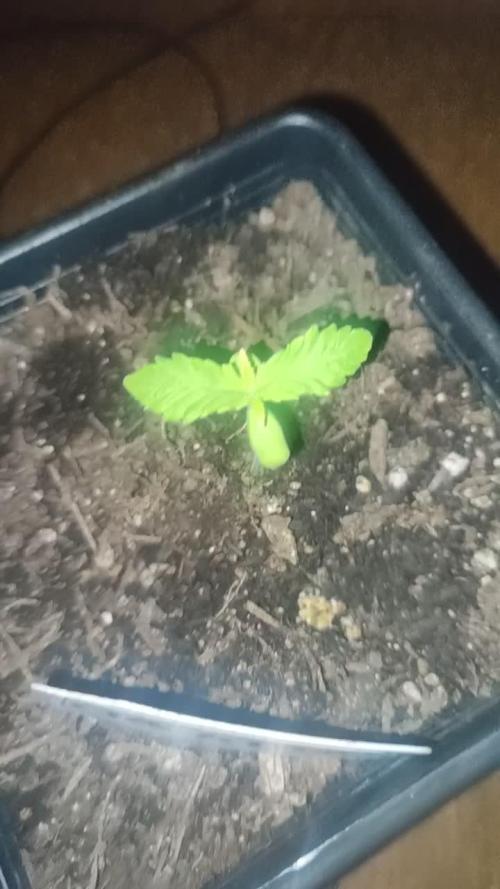
ICHch finde sie sieht aus wie letzte Woche ,bei Photos siehst du erstmal 1-2 Wochen nichts, unter der Erde bereitet sie sich auf ihr Leben vor!!!


Likes
1
Share


@Bwright_315
Follow
So where do I start they are both the same strain but just growing completely different. The first picture is super frost growing strong while the second still seem to be in the beginning of flower stage. We will just keep an eye on it from week to week

Likes
41
Share


@Mrs_Larimar
Follow
2024-07-23
A few months ago, I germinated three opium poppy seeds. Each seedling was given a different setup:
1. Outdorgrow in a 30L container
2. Outdoorgrow in a 75L container
3. Indoorgrow in a 30L Airpot
This post focuses on the indoor plant, which was trained using various techniques such as mainlining, topping,
LST (Low Stress Training), and some supercropping.
The indoor plant thrived from the beginning, showing vigorous and healthy growth. It responded well to training,
consistently displaying a robust appearance. Its growth seemed effortless, requiring only adequate water and minimal nutrients.
Training began with topping and continued for 9 weeks during the vegetation phase.
The main technique used was mainlining, shaping the plant into a circle using pipe cleaners.
The plant's soft stems and branches made it easy to train without causing stress.
After 9 weeks of vegetative growth and training, I was satisfied with the result and initiated the flowering phase.
The plant continued to flourish, primarily needing water and care. Only a few NPK feedings were necessary,
but it received many beneficial supplements with watering.
The growing medium used was Terra Preta MJ-Mix, and I applied a mycorrhizal inoculant called DYNOMYCO.
This significantly enhanced root development and nutrient breakdown. Essentially,
And i applied aTodpressing with Insectfrass, so they stayed lovely green.
I was feeding the microorganisms in the Terra Preta mix, which in turn kept the plant healthy.
The plant developed beautiful colas while maintaining its circular shape. Harvesting was straightforward.
The aroma was fruity (reminiscent of apricot) with a strong, gassy undertone.
The buds are currently curing. I've taken photographs of the plant's "skeleton" and some pre-cured buds,
showcasing the impressive trichome development.
The OutdoorPlants are still growing, and the Diary will continue


Likes
29
Share


@Hashdestroia
Follow
Overall i'm really happy with this strain. First i thought i wouldn't get a high yield but i'm pretty happy with it i got 250grams of top trimmed buds 2g of hashoil 2g of bubblehash and another 80grams of dry plant material for making bubblehash. Super potent strain with an amazing flavour, definitely nit the last time growing this strain.

Likes
5
Share


@Show_Me_Dank
Follow
She is growing nicely and she has been really easy to grow. The only problem I have been having is humidity issues off and on bc of the weather but I added an extra inline fan. The buds are coming in and im just making sure they fill the scrog out.
Likes
17
Share


@JeyGanesha
Follow
Queste 3gorilla strawberry sono spettacolari.sanno davvero di fragola..


Likes
13
Share


@Gorilaweed420
Follow
Muchas gracias por dejarme participar BsF y grow diariaries y compartir este cultivo gorila glue 4. Fue un hecho en scroog en un metro veinte cuadrado usando dos masetas de 23 ltrs usanso microorganismos y productos orgánicos súper contento con esta sepa, fueron criadas con dos focos galoponeros en un armario con poco a lo q tengamos podemos hacer mucho lo importante es aprender un poco todos los días y disfrutar de nuestras cosechas un fuerte abrazo para todos @gorilaweed420

Likes
26
Share


@KingSalomonsWeed
Follow
Joa, die Gelato ist super stable. Gebrochener Hauptstamm. Egal. 2 mal, auch egal. Sie ignoriert es einfach. 😍
Sensi Seeds
Good looking girl.
Duftet hervorragend.
Aus dem zelt kommt eun frischer Bananen angehauchter treibhausduft.
Sehr angenehm.


Likes
17
Share

@eldruida_lamota
Follow
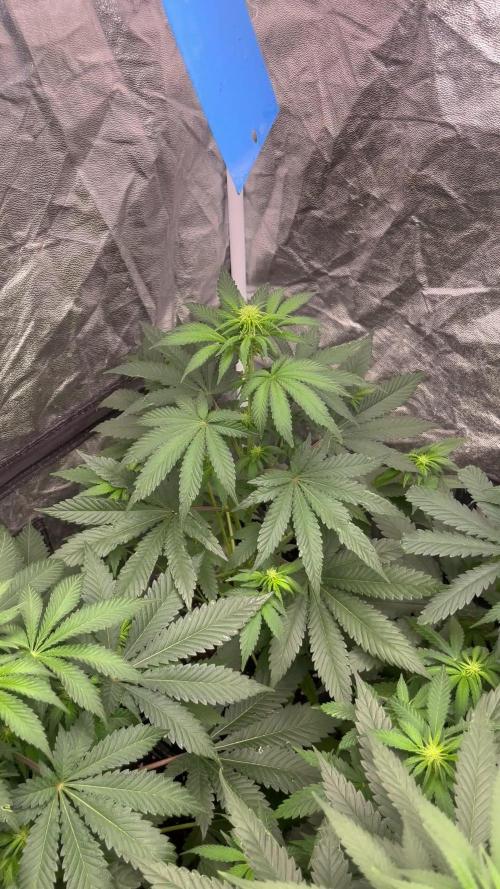
Actualizamos familia, con la segunda semana de floración de estas Zoap Rose de Kannabia seeds.
Gracias al LST arrancaron a crecer bien los satélites y va pareciéndose a un arbusto, tienen un color bien verde sin carencias por el momento y se ve que están sanas, las plantas están en macetas de 7 Litros definitivamente, con tierra top crop, con una altura similar a 45/50cms.
Como los anteriores cultivos tuve visitantes(trips) estoy rociando aceite de neem y jabón potásico 1 vez a la semana, añadí también tiras de color azul / amarillo para prevenir y controlar mejor el tema plagas.
El riego que aplicamos son 700ml de agua cada 48 horas y el ph se controla en 6.5, la temperatura la tenemos entre 22/25 grados y la humedad ronda el 55% gracias al humidificador.
El mismo día que escribo esto el foco está al 80% de potencia. Me gusta subirlo muy progresivamente, las manías.
- os dejo por aquí un CÓDIGO: Eldruida
Descuento para la tienda de MARS HYDRO.
https://www.mars-hydro.com
- los nutrientes directamente desde https://agrobeta.com/agrobetatiendaonline/36-abonos-canamo
Hasta aquí todo, Buenos humos 💨💨💨