The Grow Awards 2026 🏆
Likes
110
Share
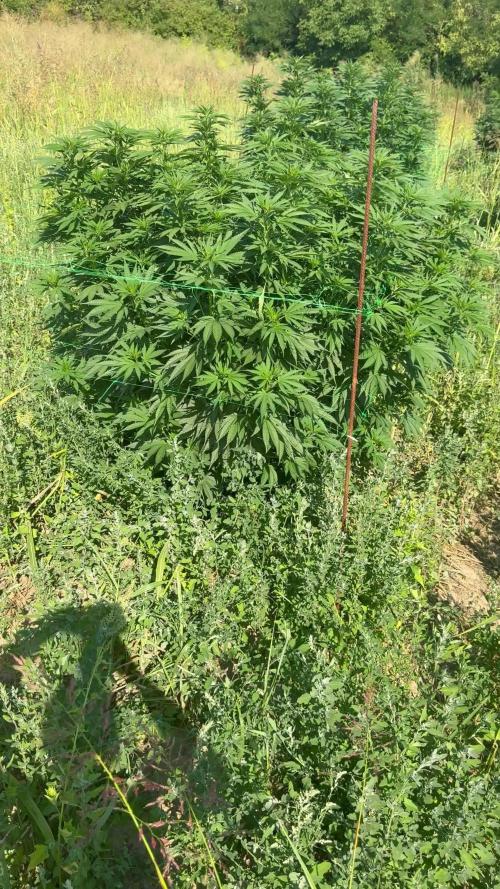
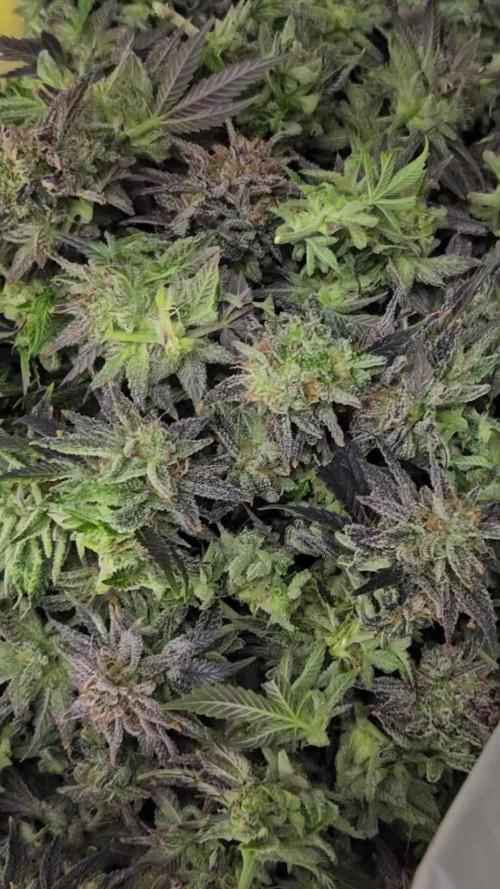
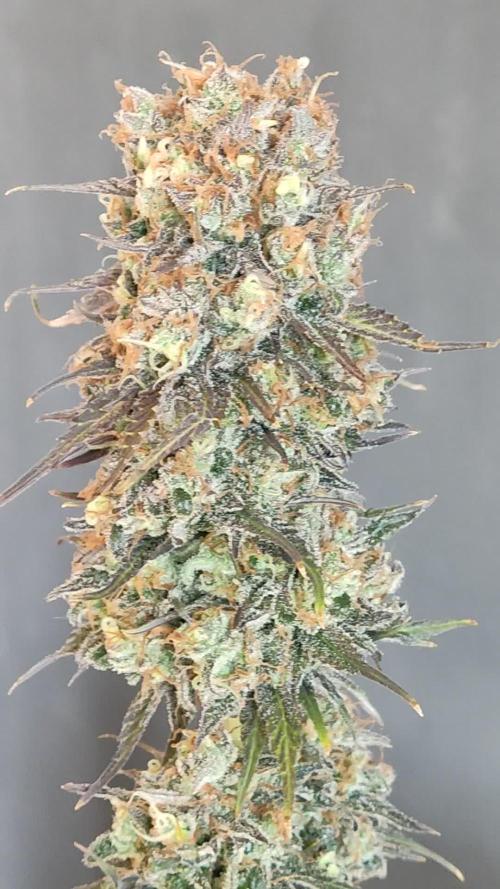
💜 💚 😍🥤💜💜 💚 😍🥤💜💜 💚 😍🥤💜💜 💚 😍🥤💜💜 💚 😍🥤💜 Dear growmies, welcome to week 10!! ❤️ Lalalalaaa singing all day... 💜 look at my festive purple lemonurple! 😍 I'm wondering what she's up to now.. does she want more food? or maybe champagne?? 😁 DAY 64 Watered with 1ml PK + 3ml bloom + 4ml growzyme + humics + big fruits + 2ml Calmag + epsom + Living Organics 💧 DAY 66 Watered with 2ml pk +4ml bloom + 4ml growzyme + humics + big fruits 💧 DAY 68 Watered with 2ml pk + 4ml bloom + 3ml growzyme + humics + big fruits 💧 DAY 70 Watered with 1ml pk + 2ml bloom + 3ml growzyme + humics + big fruits 💧 Thanks @Fast_Buds for your awesome genetics, growing Fastbuds is always a bit like riding a ferris wheel! Woohooo!! 😜 🙏 💚 Thanks to my sponsors @Green_Buzz_Nutrients, their nutes never ever let me down!! Check out my diaries on how well they work! 💚 😘 In case you want to give them a try, you can find a generous discount code in the setup description further down the road ⬇️ You can find more brand hot updates on my IG, where I share real time events from my growroom, don't miss this! 😝 _______________________________________________________________________ Purple Lemonade FF As refreshing as cold lemonade on a hot Summer day. 🌞 • Quench your thirst. Just as good as lemonade on a hot Summer day. • The gentle giant. Up to 550 g/m2 of gorgeous pinkish-purple buds. • Refreshing for the mind and body. The ideal all-day strain with a perfectly balanced effect. • Sweet n’ sour terps. Mouth-puckering lemon flavors that’ll hypnotize your taste buds. • Properly purple. The perfect choice for purple hash and extractions. As refreshing as cold lemonade on a hot Summer day. Arising from a cross between purple and citrus Cali genetics, Purple Lemonade FF (Fast Flowering) offers a complex high made up of perfectly balanced cerebral and body effects that are ideal for daytime use. Expect an extremely enjoyable high that boosts your mood while deeply relaxing your whole body and getting rid of muscle pain. This meticulous cross produces up to 550 g/m2 of some of the most beautiful purple buds, with pinkish and reddish hues that will catch everyone’s attention. The beautiful purple buds are ready for harvest in 7-8 weeks and come hand-in-hand with unbelievably sugary citrus terps that are just as refreshing as a cold lemonade on a hot Summer day. It’s the ideal variety for the sweet-tooth stoner seeking strains that deliver both in quality and quantity of resin. Bud Description 🦔 Purple Lemonade FF grows chunky, spade-shaped buds that boast a whole range of pinkish-purple hues with rich, dark orange pistils shooting out of every direction. This variety stands out for the, oftentimes, lilac trichomes that give them a gorgeous pink tint and make for outstanding purple concentrates. The buds give off a delicious tart lemon aroma that reveals a sweeter, more fruity scent as you break the buds open. Definitely a must for flavor chasers and those looking for pungent terpene profiles. Smoke Reports 💨 Purple Lemonade FF offers an effect that’s just as unique as the flavor. Expect a potent uplifting high that gives you that energy boost you need to get things done while 100% happy and stress-free. The effect gradually transforms into a wave that works its way along the limbs and through the muscles, deeply relaxing your body and putting you in the right mindset to go through a busy day with a huge smile on your face. This is an excellent all-day smoke as it not only increases energy but can also help combat chronic pain, migraine and stress. Plant Appearance 💄 This feminized photoperiod variety develops a thick and strong structure, growing a medium-sized main cola with multiple shorter side branches, typical of hybrid strains. Purple Lemonade FF develops fairly short internodal spacing with gorgeous purple buds growing stacked on top of each other, making it the perfect choice for growers of all levels looking to get lots and lots of top-shelf purple weed, as this variety can produce up to 550 g/m2 in a 7-8 week flower cycle. Grow Tips 🤓 This is a super fast feminized photoperiod version that takes approximately 7-8 weeks to flower with a 5-week vegetation cycle,, this means you can have faster harvests by shortening the veg cycle or have a longer veg cycle for bigger yields. Purple Lemonade FF (Fast Flowering) makes for a great candidate for growers of all levels as it’s a vigorous strain that will thrive with basic maintenance both indoors and outdoors. This is a resin powerhouse so make sure to have your trim bin close by as all the resinous sugar leaves will make for the most mouth- watering hash and extracts. Flavor 😋 Expect a long-lasting citrus zest that taste just like it smells. Purple Lemonade FF reeks of a delicious blend of sweet fruits and tart citrus that’ll make your mouth water. On the inhale, expect sour flavors that taste just like lemon candy with hints of orange and a really subtle earthy background. And on the exhale, the citrus flavors open up, giving place to a more sugary berry fruitiness that leaves your whole mouth tasting like an extremely sweet weed-infused lemonade. https://2fast4buds.com/seeds/purple-lemonade-fast-flowering _______________________________________________________________ Setup: 140x70x200 cm Spiderfarmer tent 2x Monkey 16W fans (not oscillating) 1x Secret Jardin 30W 1x box fan 50W oscillating (on lowest level) LED Full Spectrum 320W AGLEX AGL-320W-MA 5,6 kg foldable, dimmable 864 pieces Samsung LH301H 864umol/s 2,7umol/J full spectrum white + RED 660nm + IR 740nm wavelength range 380-780nm covering 3x4ft Green Buzz Nutrients https://greenbuzzliquids.com/ ❗ Use code GD42025 for generous 25% discount (for orders of minimum 75€) Biobizz Lightmix + coco + wormcastings + perlite Carbon Active Granulate Filter 125/360 cm³/h PrimaKlima exhaust EC 125-400/240 cm³/h
Likes
2
Share
En esta etapa no agregue ningún nutriente a la solución para evitar que la planta tenga gusto al nutriente, así dicen los expertos que queman esta hierba. Yo lo hago solo por deporte, no porque lo fume. mantuve el ph en condiciones estables a como dictan los científicos en este rubro. la próxima😁 semana corto las plantas y las pongo a secar.
Likes
1
Share
Très belle évolution malgré les différences de température actuellement un temps trop pourri en France on parle de 30 degrés celsius à 13 degrés celsius du jour au lendemain mais elle supporte très bien 👍
Likes
44
Share
**Encontrarás la traducción a español al final de la descripción** From/Desde: 03/05/19 || To/Hasta: 09/05/19 From day/Desde día: 71 || To day/Hasta día: 77 You can find the Money Maker Diary here: ** Podéis encontrar el diario de las Money Maker aquí:** https://growdiaries.com/diaries/25667-gorillamakingmoney-gorilla-vs-money-m -----IMAGES & VIDEOS----- 4, 5 & 6: Same tail 10: Leaves affected by CO2 in the roots commented in previous weeks -----WEEK SUMMARY----- As you can see in the videos, the buds are creating massive amounts of crystals. As I already mentioned, due to the short time of growth I gave them and the massive defoliation, the tails are not coming together from bottom to top, however, the buds are growing and fattening very well, so much that they make you want to eat them. Besides, they are not only full of crystals, they are also extremely sticky much more than the plants that I've had so far. On the other hand the smell is already super intense this week, it's difficult to hide it on the apartment, although it's something that I don't care about. -----WATERING CALENDAR----- 05/04/19 - 1,250 ml with All week nutrients -(Nirvana, B52 & Blombastic) also Big Bud half dosed @ PH6.4 & 1.7 E.C. 08/04/19 - 1,250 ml with Bud Candy, Big Bud, Nirvana, B52, Bud Factor-X, Sensizym & Blombastic @ PH6.4 & 1.7 E.C. *****ESPAÑOL***** -----IMÁGENES Y VÍDEOS----- 4, 5 & 6: Misma cola 10: Muestra de las hojas afectadas por exceso de co2 en las raíces que he comentado en las semanas anteriores. -----SUMARIO SEMANAL----- Como podéis ver en los vídeos los cogollos están creando cantidades masivas de cristal, como ya comenté debido al corto tiempo de crecimiento que les di y a la defoliación masiva, las colas no se están juntando de arriba abajo, no obstante, los cogollos están creciendo y engordando muy bien, tanto que dan ganas de comérselos. Además no solo están llenísimos de cristales, también son extremadamente pegajosos mucho más que las plantas que he tenido hasta el momento. Por otro lado el olor ya es super intenso esta semana, se hace difícil ocultarlo en el piso, aunque es algo que no me importa. -----CALENDARIO DE RIEGO----- 05/04/19 - 1,250 ml con todos los nutrientes semanales -(Nirvana, B52 y Blombastic), Big Bud sólo media dosis @ PH6.4 & 1.7 E.C. 08/04/19 - 1,250 ml con Bud Candy, Big Bud, Nirvana, B52, Bud Factor-X, Sensizym y Blombastic @ PH6.4 & 1.7 E.C.
Likes
29
Share
@Smokwiri
Follow
Welcome to week 5 of my Runtz gum diary by Original sensible seeds. Switching to 12/12 today, cant wait to see the first signs of flowering... Viparspectra discount: Amazon: http://url-9.cn/0y9i Amazon US: https://amzn.to/3e0P2bk Amazon CA: https://amzn.to/3bTnEJC Amazon discount Code: it10smokwiri XS1000 10% XSsmokwiri XS1500 8% it20smokwiri XS2000 5% it40smokwiri XS4000 5% ViparSpectra 8% DISCOUNT CODE on the viparspectra websites (.com/.eu) RUFFSELEKTAH
Likes
24
Share
If you do not often cut off the weeds around your plants, then they begin to interfere with them and do not allow light to pass
Likes
10
Share
Week 14 Day 92 | 22/07/2022: No time today Day 93 | 23/07/2022: Watered the girls today with just 1.5L of water. The temperatures have dropped thankfully so it's not too hot for them now Day 94 | 24/07/2022: So many trichomes on these girls, the buds are looking white! Just a few days left! Day 95 | 25/07/2022: The trichomes are looking amazing on these girls! Shame they won't be able to get to their full potential since most of the hairs are still white and the trichomes are still mostly cloudy, but I am really looking forward to trying them! They smell like a fruit juice or something :D Also I decided not to water them anymore so they can dry up a bit before harvest in 3 days! Day 96 | 26/07/2022: Day 97 | 27/07/2022: Day 98 | 28/07/2022: Today was the big day! (for the girls and for myself) So the only thing I did was tidied up the foliage by removing all the fan leaves, cutting the girls at the base and handing them in the tent. I find that the remaining leaves really help keep the moisture at a higher level and they tend to smell less like hay. I will be leaving the girls to dry for about 10 days, and then I always put them into glass jars to cure! I really wish I could have kept these girls growing just for another week because most of their hairs are still white, but unfortunately i had no choice and this is still more than good enough. Let's hope the genetics make up for it in the smoke!
Likes
17
Share
Such Bittersweet Joy Added this week as ‘Flowering’ although technically should be harvested as I but I haven’t had a chance to weigh or anything. I will do that next week once trimmed etc. So finally cut them down on D89, it was a beautiful day outside and it just felt right. Although when it came to the deed itself I felt sadder than I thought I would for my girls and the time we had together. All 6 (I’m growing another 3 different strains but not included on this diary) are now hanging to dry in the tent. Temp -18 C; Humidity-60% seems to be holding steady with no tinkering thankfully. After the 3 days they have all dried noticeably, perhaps 4/5 more before trimming / curing. I’ve had quite a close look at most of the harvest and as far as this noob can tell, there doesn’t seem to be any issues with mould / bud rot. Fingers remain crossed. I did have one very profound moment this week... It happened as I was surveying the harvest hanging up for the first time. I could feel my mindset change suddenly from the constant paranoia over their health and overcoming my impatience to “I actually have a crap load of weed”. It was beautiful beautiful moment... Thanks for reading. Have a great week 😊
Likes
Comments
Share
@CxHxAxNxT
Follow
10/27 end of week 2. recently trellised.
Likes
10
Share
Day 28 after flip of zombie kush! Starting to focus on buds! We all ready can smell it not sweet more floral smell . See u next week growmies!
Likes
13
Share
@Drawer
Follow
There is very little to do with the plants, they are getting fatter by the day and frostier by the day. I found out I was giving them way too much nutrient so I started giving them 0.4 EC less (its still a work in progress). The lights are still on 85%. It is starting to smell more and more sour and there is also a fresh lemon smell coming from it now.
Likes
1
Share
Likes
18
Share
Green light is radiation with wavelengths between 520 and 560 nm and it affects photosynthesis, plant height, and flowering. Plants reflect green light and this is why they appear green to our eyes. As a result, some growers think that plants don’t use green wavelengths, but they actually do! In fact, only around 5 – 10% of green light is reflected from leaves and the rest (90 – 95 %) is absorbed or transmitted to lower leaves [1]. Green wavelengths get used in photosynthesis. Chlorophyll pigments absorb small amounts of green wavelengths. Light that doesn’t get absorbed is transmitted to leaves that are shaded out from direct light. This means that leaves at the bottom of the canopy get more green light than leaves at the top. A high proportion of green wavelengths compared to other colors tells lower leaves that they are being shaded out, so they are able to react accordingly. Lower leaves may react by opening or closing their stomata or growing longer stems that help the leaves reach brighter light [1, 2, 3]. When it comes to growing cannabis, many cultivators are interested in the quality of light used for the flowering stage. In many plants, flowering is regulated by two main photoreceptors: cryptochrome and phytochrome. Both photoreceptors primarily respond to blue light but can also respond to green, although to a lesser extent. Green can accelerate the start of flowering in several species (although cannabis has yet to be tested) [1, 4, 5]. However, once flowering has begun, it’s important to provide plants with a “full spectrum” light that has high amounts of blue and red light, and moderate amounts of green, in order for photosynthesis to be optimized. Green light mediates seed germination in some species. Seeds use green wavelengths to decide whether the environment is good for germination. Shade environments are enriched in green relative to red and blue light, so a plant can tell if it is shady or sunny. A seed that senses a shaded environment may stay dormant to avoid poor growing conditions [1]. Some examples of plant species where researchers have documented this response are: ryegrass (a grass that grows in tufts) and Chondrilla (a plant related to dandelion) [1, 6]. Although green wavelengths generally tell plants NOT to germinate, there are some exceptions! Surprisingly, green wavelengths can stimulate seed germination in some species like Aeschynomene, Tephrosia, Solidago, Cyrtopodium, and Atriplex [1, 6, 7]. Of course, light is not the only factor affecting seed germination – it’s a combination of many factors, such as soil moisture, soil type, temperature, photoperiod, and light quality. When combined with red and blue light, green can really enhance plant growth [1, 8]. However, too much green light (more than 50% of the total light) can actually reduce plant growth [8]. Based on the most current research, the ideal ratio of green, red, and blue light is thought to be around 1:2:1 for green:blue:red [9]. When choosing a horticultural light, choose one that has high amounts of blue and red light and moderate amounts of green and other colors of light. Not many studies can be found about the effect of green light on cannabis growth or metabolism. However, if one reads carefully, there are clues and data available even from the very early papers. Mahlberg and Hemphill (1983) used colored filters in their study to alter the sunlight spectrum and study green light among others. They concluded that the green filter, which makes the environment green by cutting other wavelengths out, reduced the THC concentration significantly compared to the daylight control treatment. It has been demonstrated that green color can reduce secondary metabolite activity with other species as well. For example, the addition of green to a light spectrum decreases anthocyanin concentration in lettuce (Zhang and Folta 2012). If green light only reverses the biosynthesis of some secondary metabolites, then why put green light into a growth spectrum at all? Well, there are a couple of good reasons. One is that green penetrates leaf layers effectively. Conversely red and blue light is almost completely absorbed by the first leaf layer. Green travels through the first, second, and even third layers effectively (Figure 2). Lower leaf layers can utilize green light in photosynthesis and therefore produce yields as well. Even though a green light-specific photoreceptor has not yet been found, it is known that green light has effects independent from the cryptochrome but then again, also cryptochrome-dependent ones, just like blue light. It is known that green light in low light intensity conditions can enhance far red stimulating secondary metabolite production in microgreens and then again, counteracts the production of these compounds in high-intensity light conditions (Kim et al. 2004). In many cases, green light promoted physiological changes in plants that are opposite to the actions of blue light. In the study by Kim et al. blue light-induced anthocyanin accumulation was inhibited by green light. In another study it has been found that blue light promotes stomatal opening whereas green light promotes stomatal closure (Frechilla et al. 2000). Blue light inhibits the early stem elongation in the seedling stage whereas green light promotes it (Folta 2004). Also, blue light results in flowering induction, and green light inhibits it (Banerjee et al., 2007). As you can see, green light works very closely with blue light, and therefore not only the amount of these two wavelengths separately is important but also the ratio (Blue: Green) between these two in the designed spectrum. Furthermore, green light has been found to affect the elongation of petioles and upward leaf reorientation with the model plant Arabidopsis thaliana both of which are a sign of shade avoidance symptoms (Zhang et al. 2011) and also gene expression in the same plant (Dhingra et al. 2006). As mentioned before, green light produces shade avoidance symptoms which are quite intuitive if you consider the natural conditions where the plants grow. Not all the green light is reflected from the highest canopy leaves in nature but a lot of it (50-90%) has been estimated to penetrate the upper leaves at the plant level ((Terashima et al., 2009; Nishio, 2000). For the plant growing in the understory of the forest green light is a signal for the plant of being in the shade of a bigger plant. Then again, the plants growing under unobstructed sunlight can take advantage of the green photons that can more easily penetrate the upper leaves than the red and blue photons. From the photosynthetic pigments in higher plants, chlorophyll is crucial for plant growth. Dissolved chlorophyll and absorb maximally in the red (λ600–700 nm) and blue (λ400–500 nm) regions of the spectrum and not as easily in the green (λ500–600 nm) regions. Up to 80% of all green light is thought to be transmitted through the chloroplast (Terashima et al., 2009) and this allows more green photons to pass deeper into the leaf mesophyll layer than red and blue photons. When the green light is scattered in the vertical leaf profile its journey is lengthened and therefore photons have a higher chance of hitting and being absorbed by chloroplasts on their passage through the leaf to the lower leaves of the plant. Photons of PPFD (photosynthetic photon flux density) are captured by chlorophyll causing an excitation of an electron to enter a higher energy state in which the energy is immediately passed on to the neighboring chlorophyll molecule by resonance transfer or released to the electron transport chain (PSII and PSI). Despite the low extinction coefficient of chlorophyll in the green 500–600 nm region it needs to be noted that the absorbance can be significant if the pigment (chlorophyll) concentration in the leaf is high enough. The research available clearly shows that plants use green wavelengths to promote higher biomass and yield (photosynthetic activity), and that it is a crucial signal for long-term developmental and short-term dynamic acclimation (Blue:Green ratio) to the environment. It should not be dismissed but studied more because it brings more opportunities to control plant gene expression and physiology in plant production. REFERENCES Banerjee R., Schleicher E., Meier S. Viana R. M., Pokorny R., Ahmad M., Bittl R., Batschauer. 2007. The signaling state of Arabidopsis cryptochrome 2 contains flavin semiquinone. The Journal of Biological Chemistry 282, 14916–14922. Dhingra, A., Bies, D. H., Lehner, K. R., and Folta, K. M. 2006. Green light adjusts the plastic transcriptome during early photomorphogenic development. Plant Physiol. 142, 1256-1266. Folta, K. M. 2004. Green light stimulates early stem elongation, antagonizing light-mediated growth inhibition. Plant Physiol. 135, 1407-1416. Frechilla, S., Talbott, L. D., Bogomolmi, R. A., and Zeiger, E. 2000. Reversal of blue light -stimulated stomatal opening by green light. Plant Cell Physiol. 41, 171-176. Kim, H.H., Goins, G. D., Wheeler, R. M., and Sager, J. C. 2004.Green-light supplementation for enhanced lettuce growth under red- and blue-light emitting diodes. HortScience 39, 1617-1622. Nishio, J.N. 2000. Why are higher plants green? Evolution of the higher plant photosynthetic pigment complement. Plant Cell and Environment 23, 539–548. Terashima I., Fujita T., Inoue T., Chow W.S., Oguchi R. 2009. Green light drives leaf photosynthesis more efficiently than red light in strong white light: revisiting the enigmatic question of why leaves are green. Plant & Cell Physiology 50, 684–697. Zhang, T., Maruhnich, S. A., and Folta, K. M. 2011. Green light induces shade avoidance symptoms. Plant Physiol. 157, 1528-156. Wang, Y. & Folta, K. M. Contributions of green light to plant growth and development. Am. J. Bot. 100, 70–78 (2013). Zhang, T. & Folta, K. M. Green light signaling and adaptive response. Plant Signal. Behav. 7, 75–78 (2012). Johkan, M. et al. Blue light-emitting diode light irradiation of seedlings improves seedling quality and growth after transplanting in red leaf lettuce. HortScience 45, 1809–1814 (2010). Kasajima, S., et al. Effect of Light Quality on Developmental Rate of Wheat under Continuous Light at a Constant Temperature. Plant Prod. Sci. 10, 286–291 (2007). Banerjee, R. et al. The signaling state of Arabidopsis cryptochrome 2 contains flavin semiquinone. J. Biol. Chem. 282, 14916–14922 (2007). Goggin, D. E. & Steadman, K. J. Blue and green are frequently seen: responses of seeds to short- and mid-wavelength light. Seed Sci. Res. 22, 27–35 (2012). Mandák, B. & Pyšek, P. The effects of light quality, nitrate concentration and presence of bracteoles on germination of different fruit types in the heterocarpous Atriplex sagittata. J. Ecol. 89, 149–158 (2001). Darko, E. et al. Photosynthesis under artificial light: the shift in primary and secondary metabolism. Philos. Trans. R. Soc. B Biol. Sci. 369 (2014). Lu, N. et al. Effects of Supplemental Lighting with Light-Emitting Diodes (LEDs) on Tomato Yield and Quality of Single-Truss Tomato Plants Grown at High Planting Density. Environ. Control Biol. 50, 63–74 (2012).
Likes
2
Share
Harvest day 74. 10g dried after 4 days. Little plant and little yeald. Didn't respond well to topping, problems with over feeding in late flowering. Also began to foxtail in last week, probably due to 40°C at daytime. Will update the smoke test curing.