


Likes
Comments
Share


@Ultraviolet
Follow
....Understanding Electrical Conductivity
Electrical conductivity measures a material’s ability to transmit electric current, which in the context of gardening, relates to the soil or nutrient solution’s ion content. In simpler terms, EC indicates how salty the environment is around the roots of a plant. This “saltiness” is crucial because it affects the plant’s osmotic pressure, which in turn influences nutrient uptake and overall plant health.
The Science Behind EC
At its core, EC measures the presence of soluble ions like potassium, calcium, magnesium, and nitrates – all vital nutrients for plant growth. These ions carry electrical charges, and their movement creates an electrical current, detectable as conductivity. High EC levels typically mean a high concentration of dissolved ions, whereas low EC levels indicate fewer nutrients are available.
The Impact of Electrical Conductivity on Plant Growth
The relationship between EC and plant growth is a delicate balance. Just the right EC level can enhance nutrient uptake, bolster plant health, and increase yields. However, when EC levels stray too far from the optimal range, they can lead to nutrient imbalances, osmotic stress, and even plant death.
Nutrient Uptake and EC Levels
Plants absorb nutrients from the soil or water through their roots, a process influenced by the surrounding EC levels. Ideal EC levels help create an optimal environment for this exchange, ensuring plants receive the nutrients they need without exerting excessive energy.
High EC Levels: A Double-Edged Sword
While a certain level of dissolved ions is beneficial, excessively high EC levels can harm plants. High salinity can draw water out of plant cells, leading to dehydration and nutrient lockout – a condition where plants cannot absorb essential nutrients despite their presence.
Low EC Levels: Undernourished Gardens
Conversely, low EC levels can starve plants of necessary nutrients, stunt growth, and lead to underdeveloped or diseased plants. Maintaining an optimal EC range is crucial for healthy plant development.
Measuring and Adjusting Electrical Conductivity
Understanding the importance of EC is one thing, but applying this knowledge in the garden or greenhouse requires practical steps. Regular monitoring and adjustment can ensure that plants remain in a conducive growth environment.
Tools for Measuring EC
Gardeners can use various tools to measure EC, from simple handheld meters to more sophisticated systems integrated into hydroponic setups. Regular monitoring allows for timely adjustments to soil or nutrient solutions, ensuring optimal EC levels.
Adjusting EC for Optimal Growth
Adjusting EC involves changing the concentration of nutrients in the soil or solution. In hydroponics, this might mean diluting or concentrating the nutrient solution. In soil, amendments may be added or flushed with water to correct EC levels.
Practical Applications: EC in Various Growing Environments
The application of EC knowledge varies across different growing environments, from traditional soil-based gardens to modern hydroponic systems.
Soil Gardening
In soil, EC measurements can help diagnose nutrient imbalances and guide fertilization practices. Amending soil with organic matter or flushing with water can adjust EC levels to better support plant growth.
Hydroponics and Aquaponics
In hydroponic and aquaponic systems, where plants are grown in water-based solutions, maintaining optimal EC levels is crucial for nutrient availability. These systems allow for precise control of EC, directly influencing plant health and yield.
Greenhouse Cultivation
In greenhouses, EC monitoring can help manage the nutritional status of various plants, ensuring that each receives the right nutrient mix for optimal growth. Automated systems can provide real-time EC adjustments based on plant needs.
Navigating Challenges: Overcoming EC-Related Issues
While maintaining optimal EC levels can significantly enhance plant growth, gardeners may encounter challenges such as fluctuating conditions, equipment malfunctions, or environmental stresses. Regular monitoring, combined with a solid understanding of each plant’s specific needs, can mitigate these issues.
Conclusion: The Conductive Path to Lush Gardens
Electrical conductivity, though an invisible factor, is a cornerstone of successful gardening and farming. By understanding and managing EC levels, gardeners and farmers can profoundly influence the health and productivity of their plants. As we continue to explore the nuances of plant growth, the role of EC stands out as a testament to the marriage of science and nature in cultivating life. Whether in soil, water, or air, mastering the art of electrical conductivity can unlock the full potential of our green companions, leading to bountiful harvests and vibrant gardens.

Processing
Likes
4
Share


@ReelEyezEnt
Follow
Finally flipped the lights over to flower mode and took the humidifier out of the tent.
So far so good we are gonna keep watching to make sure we didn't over do the nuts. Don't want any Nut burn that can be annoying.
make sure you hit the follow button


Likes
19
Share


@Robin87
Follow
Day 44! Well, the mainlining didn’t quite go to plan😂 but I reckon she’s been topped about 76 times 😂, still have no plans to even think about flower yet untill all the other girls are out the way, might even transplant her to a bathtub yet, we’re see! Untill next time!👊🏻

Likes
26
Share


@Growin_it
Follow
Top dressed Asman and Asal with a tablespoon of Dr. Earth Bloom and 3 tbs of worm castings.
Added terpinator, microbials and molasses to calmag'd water.
Benesh got fed last week with the same load/mix and is doing great.
No defoliation or much training early this week.
Did some heavier defoliation on Sunday to give more of the bigger and higher buds space.
Will make a TCHA tincture off of the defoliated buds, which I will add to later.
Lovely mint and chocolate aromas on my fingers after the defoliation.


Likes
2
Share


@Budking420
Follow
Idk what to do here shes definetly flowering but idk how she is so tall shes more than doubled her height in the last 2 weeks. Thinking about bending the main top over with some string or rope. Check back next week to see if it continues to stretch haha worlds tallest auto maybe idk. The fact that I topped it and it did this really has me wondering

Likes
19
Share

@Kirsten
Follow
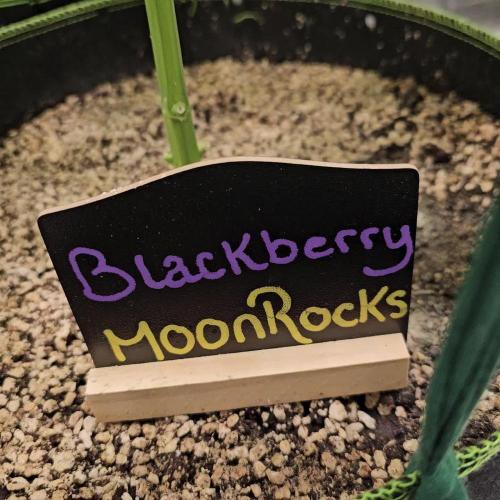
Blackberry Moon Rocks has become very tall and she is starting to flower now. And also stretching quite a lot.
I had previously topped the plant, and one top had grown larger than the other. So, with that one, I decided to use a fabric tie and tie it to the pot, to hopefully try and even things out a little.
There aren't really many branches on this plant.So hopefully that will mean that the colas grow bigger. Heres hoping, anyway!
I have gone through the tent this week, and I have removed a lot of the lower branches on the plants, as they're not going to grow into big colas or anything.
So it's better not to waste the plant's energy, developing those to hopefully redirect it into the larger flowers.
28.7.25:
I watered with 3ltrs of dechlorinated water PH'd to 6.3 with;
💜 2.5ml Ecothrive Trace
💜 1 TSP Ecothrive Biosys
PH: 6.3
PPM: 352
2.8.25:
I watered with 2ltrs of dechlorinated water PH'd to 6.6, containing the following nutrients;
💜 2ml Ecothrive Trace
PH: 6.6
PPM: 425
3.8.25:
Today I top dressed as follows:
🧡 1 Cup Worm Castings
💚 1.25 TBSP Ecothrive Bloom
💚 1.5 TSP Ecothrive Life Cycle
I watered the top dress in with with 2ltrs of dechlorinated water PH'd to 6.4, containing the following nutrients;
💜 1ml Ecothrive Trace
PH: 6.4
PPM: 363
That's all I did this week 😊 Thanks for stopping by and checking out my diary. Good to see you in the comments! 😊💚✌️🌱😁

Likes
4
Share


@adam_pawloski87
Follow
@twenty20Mendocino R&DUpdate ~ Let’s Go day 49 for these girls an we are looking beautiful! This week we gave them another trim up a tied them down more a today they have bounced back like nothing happened, strong ones they gonna be an so nice an healthy!
The Sangria is looking really beautiful, she’s Been flowering for lil over 2 weeks now so we still got a good amount of weeks for her to build a little more but she is already looking amazing, can’t wait for her to be done, smelling delicious! Hope you all enjoy an have an amazing productive day as well as a great safe weekend! Peace love positive vibes to all y’all Cheers 😶🌫️💨💨💨💨🤙🏻


Likes
12
Share


@DogDoctorOfficial
Follow
# 💙 Project Blue Tent – Week 12
## ? Blue Waffle F1 – Pheno A
### 🌸 More Photons, More Flowers, and a Beautifully Balanced Ecosystem
Hello everyone, and welcome back to another chapter of Project Blue Tent! 💙🌱
And honestly, my friends...
LOOK AT HER! 😂🌸
We're now moving further into flowering, and I'm genuinely happy with what I'm seeing inside this little ecosystem.
Four plants. Two different cultivars. One tent. One shared environment.
Our beloved Blue Waffle F1 girls are sharing the space with their Pickle Lemon Haze F1 sisters, and every plant is giving us something interesting to observe.
But today, we're putting the spotlight on Blue Waffle F1 – Pheno A.
Because even though she's sharing the same tent, the same reservoir, and the same environmental conditions as the other girls, she deserves her own report and her own moment to shine.
And this week, we made a couple of small but meaningful adjustments.
We lowered the temperatures and humidity slightly, increased the power of our overhead LEDs, and kept the entire nutrition recipe exactly where it was.
No unnecessary changes. No complicated interventions.
Just a little refinement of the environment and a lot of appreciation for what these beautiful cultivars are showing us.
Let's get into it! 💙🌿
### 🌸 WEEK 12 – A SMALL CHANGE THAT MAKES THIS WEEK INTERESTING
Not every week needs to bring a major transformation.
Sometimes, the most interesting updates are the ones where we make a few adjustments and observe how the plants respond.
That's exactly where we are now.
The major structural work has already been completed. The canopy has been organized, the second SCROG is in place, and the under-canopy lighting experiment is underway.
Now we're concentrating on maintaining a comfortable environment while the flowers continue developing.
This week, we made two principal adjustments:
- We reduced the temperature and relative humidity slightly.
- We increased the power of the overhead LEDs to the highest level we intend to use in this 1 × 1 metre tent.
We're not running everything at 100%, and we're not necessarily trying to squeeze every possible watt out of the equipment.
Instead, we're giving the girls a little more light than before while keeping an eye on how the whole ecosystem responds.
And so far?
They're looking beautiful! 😂💙
### 💡 MORE PHOTONS – BUT WE'RE KEEPING OUR HEADS COOL
Let's talk about the lighting, because this is one of the most interesting changes this week.
We've increased the LED power to the maximum level we currently intend to use in this particular tent.
Not necessarily the maximum the equipment can deliver, but the maximum we've decided to use for this setup.
There's a difference!
I honestly don't think we need to push the lights harder just for the sake of doing it. The tent is relatively compact, and we already have a beautiful, productive-looking canopy.
But we also know that light is one of the important factors influencing plant development and flower production.
So we're giving the girls a little more photon availability and observing how they respond.
The goal isn't simply to turn up the lights and hope for the best.
It's to find a sensible balance between light intensity, temperature, humidity, and the plants' overall condition.
More light can be beneficial when the plants can use it effectively, but more isn't automatically better. The response depends on the intensity reaching the canopy, the environment, and how comfortably the plants are handling the conditions.
That's why we're not jumping straight to 100%.
We're increasing the available light while keeping the ecosystem balanced.
And now we watch.
Because the plants always get the final word. 🌿💡
### 🌸 THE WHITE PISTILS ARE CHANGING, AND THE FLOWERS ARE FORMING
This is where things are becoming particularly beautiful.
The white pistils are developing and changing as the flowers continue to form.
The flowering sites are becoming more defined, and the overall structure is starting to show us more clearly where this plant is heading.
When I look at Blue Waffle F1 Pheno A, I see a plant that's moving through another stage of her flowering journey.
We're no longer looking only at the framework we created during vegetation.
We're watching the flowers develop within that framework.
The branches, the canopy organization, the training, and the support system are all part of the picture, but the flowers are increasingly taking centre stage.
And the close-up photographs make it even more enjoyable to follow.
Every week gives us another opportunity to compare what we're seeing now with what we saw before.
The pistils. The flower structure. The developing resin. The way the plant is progressing.
It's a beautiful process to document.
And she's giving us plenty of reasons to keep the camera ready! 📸💙
### ❄️ THE FROST IS STILL ONE OF MY FAVOURITE THINGS TO OBSERVE
I have to mention the frost again, because you know me...
😂❄️
I love getting close to the flowers and seeing all those little details that are easy to miss when you're simply looking at the whole plant.
The developing flowers and sugar leaves give us so much to appreciate through the camera.
And that's one of the things I love about keeping a detailed diary.
You can see the plant from a distance and appreciate the structure.
Then you get closer, take a photograph, and discover an entirely different level of detail.
We're documenting the plant as she develops, not just taking pretty pictures.
Although, let's be honest...
the pretty pictures certainly help! 😂💙
### 🌡️ A LITTLE LESS HEAT AND HUMIDITY
Alongside the increase in LED power, we've also reduced the temperature and relative humidity slightly.
These adjustments go together as part of the overall environmental management.
When we change the lighting, we're also paying attention to the conditions around the canopy. More light can mean a different thermal load, so we want to make sure the room continues operating comfortably.
We're not changing every setting at once or rebuilding the entire environment.
We're refining the conditions while keeping the rest of the setup consistent.
And that's an important distinction.
We already have a system that we're happy with. We don't need to reinvent it every week.
We simply need to keep observing, make sensible adjustments when appropriate, and avoid changing things without a reason.
The ecosystem is working beautifully, and the goal is to keep it that way. 🌿💙
### 🌱 SAME NUTRITION, SAME RESERVOIR, SAME PHILOSOPHY
Now, here's something that hasn't changed this week.
The nutrition.
We're keeping the same recipe in the reservoir because everything is progressing well, and there's no reason to introduce unnecessary changes just because we've adjusted the lighting and environmental conditions.
Our current recipe remains:
- PLAGRON Hydro A — 2.2 ml/L
- PLAGRON Hydro B — 2.2 ml/L
- PLAGRON Power Buds — 1 ml/L
- PLAGRON pH Plus — 0.03 ml/L
- PLAGRON pH Minus — 0.03 ml/L
The pH Plus and pH Minus quantities are the recorded recipe values; the actual amount required for adjustment can vary with the source water and the solution.
We're not changing the nutrient recipe this week.
The plants are developing, the irrigation system is working beautifully, and we're happy with the overall progress.
Keeping the nutrition consistent also means we're not introducing another variable while observing the effect of the lighting and environmental adjustments.
That's part of what makes this project interesting.
We make a change where we believe it makes sense, maintain the other elements, and watch what happens.
Simple, consistent, and documented. 💙
### 💧 IRRIGATION AND DRAINAGE – THE QUIET HEROES
One of the best things about this ecosystem is that the irrigation and drainage systems are doing their jobs without demanding constant attention.
The girls are sharing the same reservoir, and the automatic irrigation system continues supporting the plants throughout the day.
When these systems are working properly, it's easy to forget how important they are.
But consistency matters.
We want a setup that supports the plants while allowing us to concentrate on observing their development.
And that's exactly what we're aiming for here.
The equipment doesn't need to be the star of every update.
Sometimes, the best compliment you can give a system is that everything is running as expected.
No unnecessary drama.
Just another part of the ecosystem working together. 💧🌿
### 🕸️ THE STRUCTURE IS ESTABLISHED – NOW WE WATCH
Remember how much work went into getting these girls to this point?
The training.
The topping.
The SCROG.
The defoliation.
The management of the stretch.
The adjustments to the available space.
The additional support.
The airflow improvements.
There was a time when the main question was how we were going to manage the canopy.
Now, the structure is established, and we're watching the plants develop within it.
The second SCROG remains an important part of that support system, while the canopy organization helps us observe the flowering sites more clearly.
We're not looking to make unnecessary structural changes this week.
The plant has a framework, the support is in place, and the focus is on monitoring her progress.
Sometimes, the best way to appreciate the work we've done is to stop interfering with it and see what the plant does next.
And that's precisely what we're doing with Blue Waffle F1 Pheno A.
### 💡 TWO LUMIFLORA FIXTURES – LIGHT FROM BELOW
Our under-canopy lighting experiment also remains part of the bigger picture.
We're using two LumiFlora 150W full-spectrum fixtures underneath the canopy, arranged in an X-cross configuration.
The main LEDs provide the primary overhead lighting, while the LumiFlora fixtures give us another way to explore supplemental lighting in the lower portions of the plants.
It's an interesting addition to this setup, particularly because the plants have developed substantial vertical structure.
But, as always, we're approaching this as an experiment.
We aren't assuming that adding lights underneath will automatically produce a particular result.
We're interested in observing how the lower flowering sites develop and how the complete lighting arrangement performs as the plants progress.
The overhead power adjustment and the under-canopy lighting are both parts of the lighting environment, but they serve different roles.
Now we continue monitoring the plants and documenting what we see.
That's what this project is about: experimenting, observing, and learning as we go. 💡🌸
### FOUR PLANTS, TWO CULTIVARS, ONE BEAUTIFUL ECOSYSTEM
This is one of the things that makes Project Blue Tent so enjoyable for me.
We have four plants sharing one tent, representing two different cultivars: Blue Waffle F1 and Pickle Lemon Haze F1.
They're growing in the same room, sharing the reservoir, and experiencing the same general environmental conditions.
And yet every plant deserves to be documented individually.
I know I've mentioned how uniform these plants can look, but I still find it fascinating.
Sometimes, looking across the canopy, the plants appear remarkably similar in their overall development.
At the same time, we need to leave room for individual differences to show themselves as flowering progresses.
That's why I'm keeping separate phenotype reports.
A shared environment gives us a useful basis for comparison, but it doesn't mean every plant will necessarily respond identically.
Each one has its own development to document.
And today, that's Blue Waffle F1 Pheno A's moment.
She's looking fantastic, and I'm genuinely happy with the way this ecosystem is progressing.
### 🌿 WHY THIS WEEK MATTERS – AND WHY IT DOESN'T NEED TO BE DRAMATIC
I think this is an important point to make.
This week matters because we've adjusted two environmental variables: temperature and relative humidity. We've also increased the overhead LED power to the highest level planned for this tent.
Those are meaningful changes to observe.
But this doesn't mean we need to make the week sound more dramatic than it is.
We haven't changed the nutrition.
We haven't introduced a completely new training technique.
We haven't rebuilt the room.
We're refining an already established setup.
And sometimes, that's exactly what a good grow update should document.
Not every week needs a breakthrough.
Not every adjustment needs to produce an immediate, obvious difference.
Some changes need time before we can properly evaluate them.
So we're recording what we've changed, appreciating what we're seeing, and giving the plants time to respond.
That's how we learn.
And that's why I enjoy documenting the entire journey rather than only showing the big moments.
The quiet weeks matter too. 💙
### 🌸 CURRENT GROW CONDITIONS
- Cultivar: Blue Waffle F1
- Phenotype: Pheno A
- Flowering: Week 12
- Height:Approximately 145 cm
- Light schedule: 12/12
- Day temperature: Reduced slightly; current value to be confirmed
- Night temperature:Reduced slightly; current value to be confirmed
- Relative humidity: Reduced slightly; current value to be confirmed
- pH: 6.01
- EC: 2.24 mS/cm, last recorded value
- Solution temperature: 25°C, last recorded value
- Substrate temperature: 24°C, last recorded value
- CO₂: Approximately 666 ppm, last recorded value
- Pot size: 8 L
- Watering volume: Approximately 1.6 L per plant per 24 hours
- Main lighting: LED power increased to the maximum planned level for this tent
- Under-canopy lighting: 2 × LumiFlora 150W full-spectrum fixtures
- Nutrient program: PLAGRON Hydro
- Nutrient recipe: Unchanged this week
Note: The previous recorded readings are retained where no new measurement was provided. They should not be interpreted as newly measured values for this week.*
### 🔭 WHAT I'M WATCHING NEXT
Now I'm particularly interested in seeing how the girls respond to the updated environment.
How will Blue Waffle F1 Pheno A progress with the increased overhead light intensity?
How will the slightly reduced temperature and humidity affect the overall balance of the room?
How will the flowers continue developing?
How will the lower flowering sites progress under the supplemental LumiFlora lighting?
And will the similarities between our Blue Waffle F1 and Pickle Lemon Haze F1 plants continue as they move further through flowering?
We don't need to answer all those questions today.
We need to keep the environment consistent, observe the plants, and record what happens.
That's the beauty of a project like this.
We're not simply trying to reach the finish line.
We're learning along the way.
### 💙 FINAL THOUGHTS – KEEP EVERYTHING SHINING
Blue Waffle F1 Pheno A is looking beautiful, and I'm genuinely happy with the direction this ecosystem is taking.
The flowers are forming.
The white pistils are developing and changing.
The structure is established.
The nutrition remains consistent.
The irrigation and drainage are working beautifully.
We've slightly reduced the temperature and humidity, increased the overhead LED power, and kept the rest of the system stable.
And that's the story of this week.
A few deliberate adjustments.
No unnecessary changes.
And a beautiful plant continuing her flowering journey.
I don't believe we need to push every setting to its absolute maximum to prove that we're doing something.
We need to find a balance that makes sense for the space, the lighting, and the plants themselves.
That's why we're not running the LEDs at 100%.
We're giving the girls more light while keeping the whole environment in mind.
And now we let the plants show us how they respond.
I'm really, really happy with this room.
Four plants. Two cultivars. One ecosystem.
And so much still to discover.
Blue Waffle F1 Pheno A deserves her own spotlight, and this week she's getting exactly that.
Keep the environment balanced.
Keep observing.
Keep learning.
And remember that sometimes the best decision is the one that allows you to appreciate what you've already built.
💙🌸🌿
### 🙏 A HUGE THANK YOU
A huge thank you to Zamnesia for making Project Blue Tent possible and giving us the opportunity to explore these beautiful Blue Waffle F1 and Pickle Lemon Haze F1 cultivars.
Thank you to PLAGRON for the Hydro nutrient line supporting the girls throughout this journey.
A massive thank you to Zamnesia for the Phytonaut LED lighting, curved scissors, and clip fans that have become important parts of this ecosystem.
Thank you to Mars Hydro for the automatic irrigation and drainage system that continues helping us maintain consistency throughout the tent.
And a special thank you to LumiFlora for the 150W full-spectrum under-canopy fixtures that we're using to explore supplemental lighting beneath the canopy.
And of course, thank you to GrowDiaries for giving us the platform to document the journey, the experiments, the lessons, and the beautiful moments along the way.
Most importantly, thank you to everyone following Project Blue Tent! 💙
We're continuing to learn, observe, and enjoy the process, one week at a time.
Until next week...
More flowers.
More observations.
More learning.
And hopefully, even more reasons to stand in front of the tent, look at these beautiful girls, and smile.
😂💙🌸
Growers Love, happy growing, and take care everyone!🌱💙

Likes
8
Share


@Mr_nugs_lover_David
Follow
Very good journey to me, she has responded very well to the lst training, providing me beautiful colas, enough for me to have nice clean organic nuggets to smoke. I would definitely would run this Ak420 by seedstockers again, the sweetest phenotype was the number #2 which you can take a look at here in my page!

Likes
2
Share
@DogDoctorOfficial
Follow
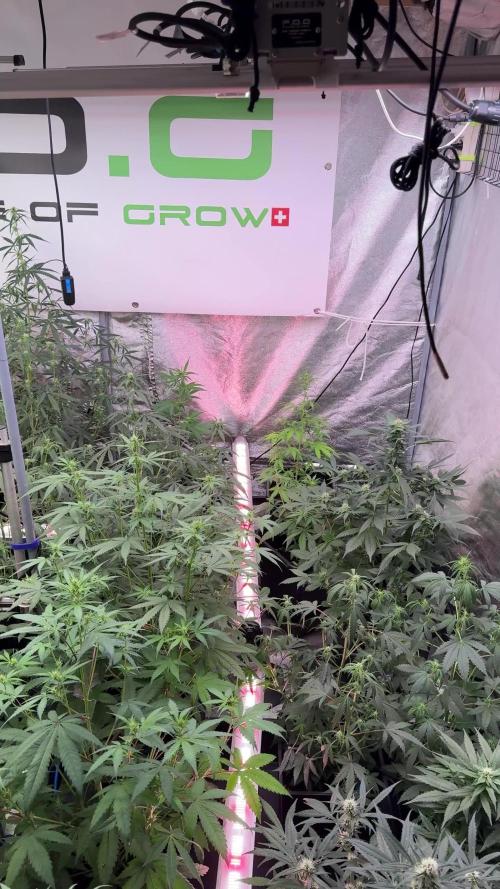
💜 Purple Haze by Zamnesia – Pheno A
Week 7 | A Lush Beauty Finding Her Rhythm
Welcome back to another chapter of the 8×8 Adventure!
Week after week, this room continues proving why phenotype hunting is one of the most fascinating parts of growing from seed.
Every plant shares the exact same environment.
The same lighting.
The same nutrients.
The same irrigation.
The same care.
Yet every diary tells a completely different story.
Purple Haze Pheno A continues writing hers with elegance.
She isn't the tallest plant in the room.
She isn't the smallest either.
Instead, she's quietly becoming one of the healthiest and most balanced ladies in the tent, and every time I unzip the door she's one of the first plants my eyes are drawn toward.
🌱 One Room. One Method. Twelve Different Personalities
If this is your first visit to the diary, welcome!
This entire project is built around the 12/12 From Seed growing technique.
Rather than giving plants a long vegetative period before flowering, every seed was placed directly under a 12/12 light schedule from the very beginning.
It's a technique that naturally keeps plants more compact while allowing them to reveal their genetic personality surprisingly early.
Every phenotype in this room receives exactly the same opportunity.
• The same Plagron nutrition
• The same lighting from the Future of Grow Black Series LED
• The same environmental control through TrolMaster
• The same AutoPot irrigation
• The same soil
• The same temperatures
• The same humidity
There are no favourites.
No special treatment.
No individual feeding.
The only thing that changes...
...is genetics.
Purple Haze Pheno A is beginning to show exactly what hers have in store.
🌿 A Plant You Can't Help But Admire
Some plants impress you with explosive growth.
Others with incredible colours.
Purple Haze Pheno A immediately catches my attention for another reason.
She's simply beautiful.
Her foliage is exactly what every grower hopes to see.
Large fan leaves.
Deep, healthy green.
Excellent turgor.
Strong petioles.
Every leaf looks like it's working exactly as nature intended.
Healthy leaves are far more than decoration.
They're the plant's solar panels, capturing light energy and converting it into the carbohydrates that fuel root growth, flower development and eventually resin production.
When foliage looks this healthy, it's usually a reflection of everything happening beneath the surface.
Healthy roots.
Balanced nutrition.
Stable environmental conditions.
She truly looks comfortable in her home.
🌸 Flowers Are Beginning to Tell the Story
Week 7 is where flowering really starts becoming exciting.
Every branch now carries clusters of bright white pistils emerging from small groups of swollen calyxes.
Those little white hairs are the pistils—the female reproductive organs of the flower.
In nature, their purpose is to catch airborne pollen.
Inside a grow tent they simply become one of the best visual indicators that flowering is progressing exactly as it should.
The calyxes surrounding those pistils are equally important.
Each one is the tiny building block that eventually forms the finished buds we harvest.
Right now they're still small.
But over the coming weeks they'll begin stacking together, swelling and filling with resin until individual flowers merge into the long, beautiful colas Purple Haze genetics are famous for producing.
Judging by how evenly the flowering sites are developing, she's laying an excellent foundation for the weeks ahead.
🍃 Letting the Plant Do the Work
One thing I've continued to avoid is unnecessary defoliation.
Throughout the early flowering period I've relied mostly on careful leaf tucking, allowing light to reach developing bud sites without removing perfectly healthy fan leaves.
Every healthy leaf is producing energy.
Removing them simply because they're large isn't always the best solution.
Sometimes the best training is simply understanding when not to intervene.
Purple Haze has responded beautifully to that approach.
Her canopy remains open.
Airflow is excellent.
The branches have plenty of space.
Nature has done most of the hard work for me.
💡 Lumiflora Under-Canopy Lighting
One exciting addition to this grow is the use of Lumiflora under-canopy lighting.
Traditional grow lights do an incredible job illuminating the tops of the plants, but lower flowering sites naturally receive much less usable light as the canopy becomes denser.
Under-canopy lighting helps change that.
By gently illuminating the lower sections of the plant, these fixtures help those secondary flowers receive additional energy without forcing aggressive defoliation.
They're not a magic solution.
They won't suddenly transform small buds into giant colas overnight.
What they do offer is another opportunity for lower flowering sites to remain productive while helping create a more evenly developed plant from top to bottom.
I'm genuinely excited to watch how they influence the remainder of this project.
💧 Feeding This Week
As flowering progresses, nutrition continues supporting the increasing demand for flower production.
This week's feeding schedule includes:
• Terra Bloom – 2 ml/L
• Power Buds – 1 ml/L
• Green Sensation – 1 ml/L
• Sugar Royal – 1 ml/L
• Pure Zym – 1 ml/L
• Careful pH adjustment using pH Plus and Lemon Kick
Everything remains balanced and consistent across the entire room, allowing each phenotype to express itself naturally.
🌡️ A Stable Environment Builds Strong Plants
Consistency continues to be one of the biggest successes of this project.
Current environmental conditions remain remarkably stable:
• Flower Week 7
• Height: 120 cm
• Day temperature: 29°C
• Night temperature: 25°C
• Relative humidity: 60%
• pH: 5.8
• EC: 1.95 mS/cm
• Solution temperature: 22°C
• Root zone temperature: 21°C
• CO₂: 639 ppm
When plants don't need to constantly adapt to environmental swings, they can dedicate their energy to what matters most—building flowers.
📷 This Week's Gallery
This week's photographs showcase exactly why I'm enjoying this phenotype so much.
The close-up shots reveal healthy clusters of fresh white pistils emerging from every flowering site, while the wider images highlight her beautifully balanced architecture and outstanding foliage.
One of my favourite details is the colour.
The rich green leaves frame the developing flowers perfectly, giving the entire plant an incredibly healthy appearance.
She isn't trying to steal the spotlight.
She's simply growing with confidence.
And sometimes that's even more impressive.
🔮 Looking Ahead
Over the next week I expect the stretch to begin slowing noticeably.
More energy should shift toward flower production as the calyxes continue stacking and the buds gradually start gaining volume.
I'm also very curious to observe the ongoing influence of the Lumiflora under-canopy lighting as the canopy becomes denser.
What I don't expect is explosive overnight change.
Purple Haze doesn't feel like that kind of plant.
She seems determined to improve steadily, week after week, building quality before quantity.
If she continues along this path, I have a feeling she'll become one of the most rewarding plants to harvest—not because she grows the fastest, but because she grows with remarkable consistency.
💚 Thank You
Thank you so much for following another chapter of this 8×8 Adventure.
Every week reinforces why documenting each individual phenotype has become one of the most rewarding parts of this journey.
Watching twelve unique plants express themselves under identical conditions continues to teach me something new every single week.
A huge thank you to:
💚 GrowDiaries for providing a platform where growers from around the world can learn, share knowledge, and inspire one another.
🌱 Zamnesia for providing the outstanding Purple Haze genetics that make this phenotype hunt possible.
💜 Plagron for supplying the nutrition supporting every stage of this grow.
💡 Future of Grow LED for delivering the light driving this entire project.
🌿 TrolMaster for helping maintain a stable environment where every phenotype can perform at its best.
✨ Lumiflora for bringing an exciting new dimension to this grow with their under-canopy lighting, and giving these lower flowering sites every opportunity to shine.
And finally...
Thank you to everyone following these diaries, leaving comments, asking questions, and sharing this journey with me.
Every week Purple Haze Pheno A becomes a little more impressive.
Not because she's trying to stand out...
But because she's quietly showing what healthy, well-balanced genetics are capable of.
Growers Love! 💜🌿
Likes
7
Share


@Suchy329
Follow
so weit alles schick hat ein guten Sprung gemach hoffe bleibt so und das sie weiter so gut kommt

Processing
Likes
5
Share


@sercultiveta
Follow
35 dias de actividad en el indoor, foto periodo de 20 horas de luz y 4 de oscuridad


Likes
4
Share


@18six12twelve
Follow
Euphoria Week 5 Of Veg Starting To Pick Up A Bit Now But No One's Fault But By Own As I Had My Lights A Little To Far Away, But Starting To Pick Up A Little Bit Now
Likes
4
Share


@KambleFrost
Follow
So happy with the amount of tops there are going on in here!
Buds are pretty big for only being 3 weeks in!
Great even canopy, and a nice under skirt!
Got some small tiny WPM spots, I think it’s just a little crowded. But will be treating it asap.
Likes
15
Share


@DudeGrowsWeed
Follow
October 22, 2021
Dinafem Quick Critical is looking great. Amazing growth this week!!! CBD Medi Kush is growing slowly and is a little twisted, it might not mean anything at this stage we'll see how she performs in the upcoming week. Critical Sour finally popped around 9 days after planting the original seed, I had planted a second seed when there was no seedling after 7 days. that new seed popped in 6 days and looked much healthier than the first seedling. I pulled the first Critical Sour seedling and will be growing out the second seedling only. Dr Bruce Banner has not popped either of the two seeds, its now 14 days since the first seed was planted and 14 days since the second seed was planted. I'm going to leave the pot in the tent for a few more days to see if a seedling appears, but if nothing happens soon I'll pull the pot out of the tent and just grow out the other three.
Cya next week!👍


Likes
Comments
Share

@LoveTerps
Follow
May 26 2026
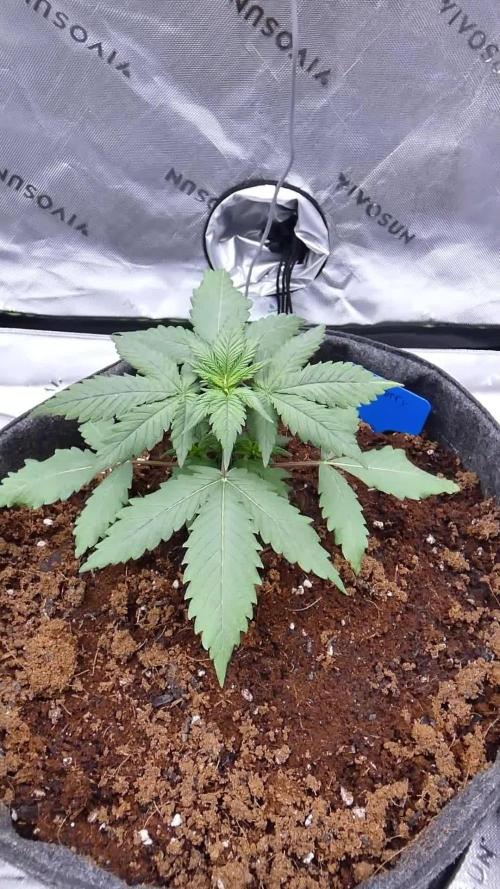
She's been repotted into a 5 gallon grow bag, and that will serve as her home for the remainder of the grow. The soil in the bottom half is pro-mix all purpose, and the top half is a combination of coco coir, perlite, worm castings, biochar, blood meal, bone meal, Epsom salts, and a bit of cal-mag.
Healthwise she is doing good, and also putting off a very faint aroma.

Likes
17
Share


@EXZELENS
Follow
Bud wet weight : 168,1g of trimmed medium to big sized buds
25,4g of tiny tiny buds/larfs = 193.5 grams of trimmed wet buds.
Details on genetics and smoke report above.
This, as my first grow, is way more than I ever expected it to be. I haven´t had that much fun and enthusiasm in a very very long time.
I can´t even explain the feeling it is to harvest your own cannabis, but I know most of you know what I´m talking about haha.
It was really nice to practice LST, even tho it was SO HARD, ´cause I didn´t had barely any space to work since I used a hard pot and did not fill nearly half the size of it and the walls of the pot were really high. It was even difficult to water without dropping water on the lower buds.
I haven´t learnt much about defoliation tho, I feel I need to study a little more about the phases you should or should not do it.
Also, I discovered thrips are a pain in the ass. I had 2 tough weeks dealing with thrips, but in the end it was alright.
I don´t have any humidity control device, which I intend to buy for the next grows.
Growdiaries was really helpful for me, it kept me motivated everyday (not that I wouldn´t have had it anyways), the Grow Questions are REALLY useful and all the community is awesome. Thanks to all people that helped me here on GD during this first grow!
To conclude it: I am really happy and satisfied with how the grow turned out. They look incredible, it almost feels like I can´t believe it still.
Peace.
UPDATES:
07/10 : The buds are now dry and already in curing jars, one of them with a Boveda 58% humidity pack.
The total grams of the dry buds are: 41.4g (medium to big sized buds)
4.1g (tiny buds) = 45.5 grams!
I´m really happy with the results, I thought it would be around 30g so yeah, that´s a really good surprise!
In 2 weeks I´ll be back to update the smoke report.
Thanks so much for reading! Peace.
09/10 : I managed to fit everything in the same container with some space between them, so now every bud is with the Boveda pack.
14/10: It´s been a week and the smell improved, it still smells a little like hay/plant ( even tho it´s not too dry neither too wet ).
21/10: Now it´s been two weeks and even tho the smell isn´t anymore hay, it´s a lot herbal. I really think the aroma can get better, but the taste is already good enough for me. The smoke report has been done and in case I have something to add, I´ll report here.
Thank you so much for reading! Peace.