


Likes
Comments
Share


@Fronti89
Follow
Der Stretch is ist im vollem Gange und den Lady geht es soweit gut ! 2 Der Damen haben ein etwas schlechteres Wachstum,sie wurden etwas mehr aufgebockt um nicht unter zu gehn.Teils wurde ein wenig etwas Untergestellt um das Höhenwachstum den größten Pflanzen anzupassen.Nachdem ich die Pflanzen überprüft habe musste ich leider feststellen das zwei Damen von oben bis unten voller Säcke waren.Diese wurden sofort entfernt ! Bei allen anderen passt alles soweit. 😉

Likes
101
Share


@DogDoctorOfficial
Follow
All going kind off as planed, appart from the SuperGlue Girl. just did a big 2,5 gallon Flush on her and now waiting for the soil to dry and start over the feedings. clean her good so i'm hopping for the best 😅 lets see how they react and if they cacth up 😍😋
Loving this LED Tec 😍
Girls:
1-BlueBerry
2-Alaskan Purple
3-Poyote Gorilla
4-Hindu Kush
5-Whitw Mango
6-Super Glue
7-Badazz Cookies
8-S.A.D.
tent -8x8 / 2.4x2.4 but i'm only using 1/2 so 4x4 / 1.2x1.2
Led - Lumatek 465w Compact Pro at 100%
All i Grow is medicine for myself,
Stay safe, stay tuned and B Happy
Peace out
D


Likes
4
Share


@Phatlad187
Follow
Week 5 from seeds and they are grow fast and started to LST, looking good and health growing perfect under 24 of light set at 400watts
@growerchoice ..
@shogun
All shogun feed to be used
@ShogunA&B coco
@Shogun calmag
@Shogun active boost
@Shogun zamzym

Likes
12
Share


@Fleetwood
Follow
The plant grew easily enough, with a few bouts of deficiencies, but it hermed out on me and basically wasted 11 weeks on me. Hopefully the fucking thing didnt compromise the other plants i had with it


Likes
2
Share


@Hontsa
Follow
Pretty much the same week as last... Just more rain showers... Temperature stayed the same and humidity increased...☀️⛈️🍀💪🌱

Likes
1
Share

@ElCapitol
Follow
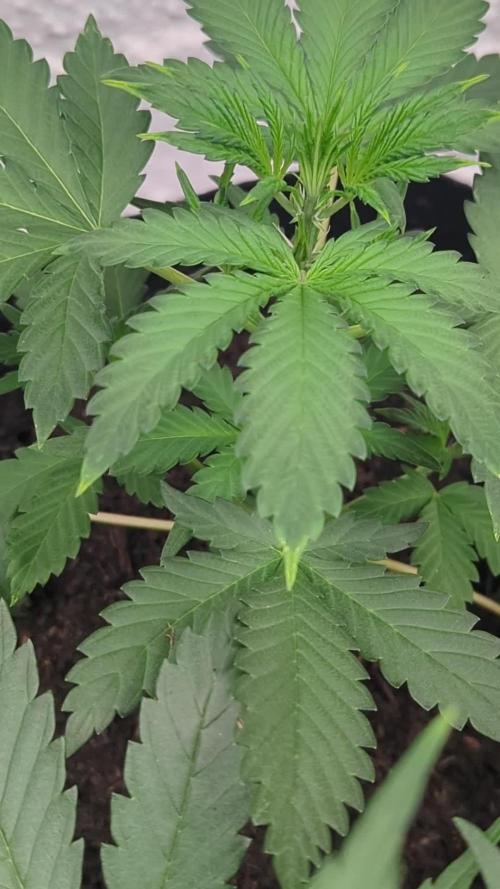
Little bit of nute burn on this one :( The compost is quite hot, after reading a little on autos that should be avoided.
Well it's all learning and she's recovering ok. Nice shape and no lasting damages.

Likes
Comments
Share


@Chamed33
Follow
Getting close harvest!! The fan leaves 🍃 started releasing nitrogen and buds are starting to ripe
I have have decreased amount of nutrients since she’s getting closer to harvest I’ll be watering her with water to remove any excess nutrients buildup from the bottom and to allow her to take the rest of nutrients left till her times comes..
I also did not add plant Height because I had done LST on her so I will be hard to know exact Height on mine
Likes
2
Share


@Takeaims
Follow
I cant beilve how big hybrids and xxl auto grow these are the best results I've ever had i won't be going back to autos again sweet seeds have a really good range of f1 hybrids and autos I haven't had a problem with any of there seeds so easy to grow and loads of fun can't wait to start more
Processing
Likes
4
Share


Likes
8
Share


@trichomhunter
Follow
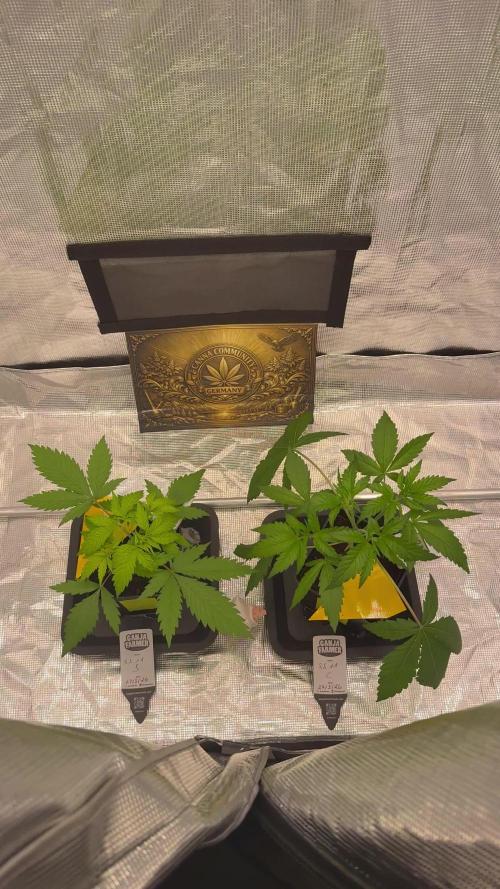
After 48 hours of darkness, the time had come and the Purple Lemonade were ready for harvest. Since she reacted very well to the training and grew with enough space between the buds, I decided to dry upside down.
Dry weight and smoke report follow after curing. Stay tuned...


Likes
9
Share


@crystal_garden_0
Follow
Great week, fast plant to grow. Nice dense buds. Strong candy smell . Flushing has already begun. These will be ready soon . Light and genetics on point. Thanks everyone
Likes
5
Share

@Naujas
Follow
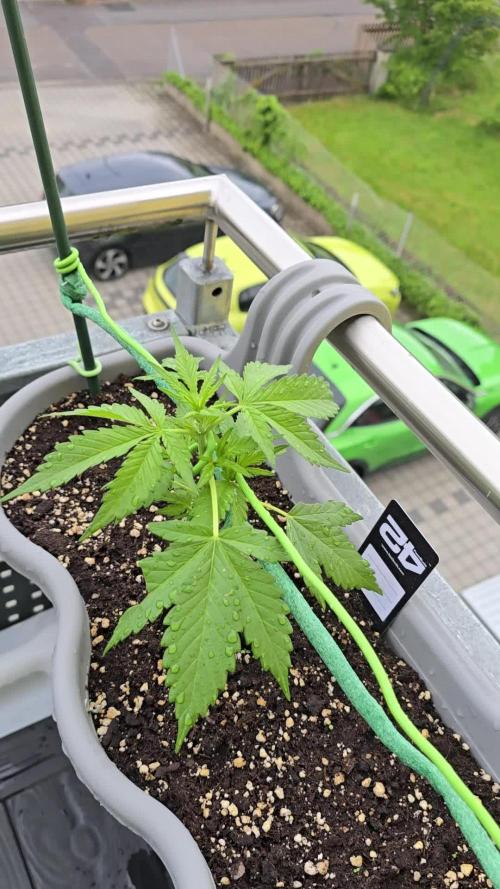
28 dienas!!! Mergaitė ištvėrė šią savaitę, naktį buvo tik 4°, o dieną lijo ir pūtė stiprus vėjas. Įdomus projektas mano šiauriniame balkone: Ačiū visiems :).
Likes
35
Share


@SmokingTiki
Follow
My plants grow well! The leaves issue I get during last week seems to be ok now.
I trained the 4 plants. O.G. Kush and Honey Melon Haze in the begining of the week and the 2 Mandarin Punch on the last day.
O.G. Kush & Honey Melon Haze : topping + LST.
Mandarin Punch : topping only.
I struggled a little bit to maintain a good air humidity. It was oscillating between 50 and 70% but most of the time it was around 60%. I had to use a dehumidifier.
The fan is now "ON" at the same time as the light.

Likes
86
Share


@Hawkbo
Follow
Couple got a little burn I think maybe a little too much soil in there with the coco on top of the light feed? I got all the final pots filled up today they will go in 3 gal bags either today or tmm. It's a Greentree pro ultra coco/perlite mixed with some roots organic soil about 70/30.


Likes
110
Share


@SlowpokeFuegobud
Follow
💜 💚 😍🥤💜💜 💚 😍🥤💜💜 💚 😍🥤💜💜 💚 😍🥤💜💜 💚 😍🥤💜
Dear growmies, welcome to week 9!! ❤️
She is fantastic, if you rub her, she releases a fairly strong lemon aroma, actually she smells lile this famous lemon lemonade which has no color and comes from Santa's (or Satan's) company.. the one with the cough syrup.. 💜.. really nice! 😋
DAY 58
Watered with 2ml bloom + 4ml growzyme + humics + big fruits 💧
DAY 60
Watered with 2ml pk + bloom + 4ml growzyme + humics + big fruits 💧
DAY 62
Watered with 2ml pk + bloom + 4ml growzyme + humics + big fruits 💧
Thanks @Fast_Buds for your awesome genetics, growing Fastbuds is always a bit like riding a ferris wheel! Woohooo!! 😜 🙏 💚
Thanks to my sponsors @Green_Buzz_Nutrients, their nutes never ever let me down!! Check out my diaries on how well they work! 💚 😘 In case you want to give them a try, you can find a generous discount code in the setup description further down the road ⬇️
You can find more brand hot updates on my IG, where I share real time events from my growroom, don't miss this! 😝
_______________________________________________________________________
Purple Lemonade FF
As refreshing as cold lemonade on a hot Summer day. 🌞
• Quench your thirst. Just as good as lemonade on a hot Summer day.
• The gentle giant. Up to 550 g/m2 of gorgeous pinkish-purple buds.
• Refreshing for the mind and body. The ideal all-day strain with a perfectly balanced effect.
• Sweet n’ sour terps. Mouth-puckering lemon flavors that’ll hypnotize your taste buds.
• Properly purple. The perfect choice for purple hash and extractions. As refreshing as cold lemonade on a hot Summer day.
Arising from a cross between purple and citrus Cali genetics, Purple Lemonade FF (Fast Flowering) offers a complex high made up of perfectly balanced cerebral and body effects that are ideal for daytime use. Expect an extremely enjoyable high that boosts your mood while deeply relaxing your whole body and getting
rid of muscle pain. This meticulous cross produces up to 550 g/m2 of some of the most beautiful purple buds, with pinkish and reddish hues that will catch everyone’s attention. The beautiful purple buds are ready for harvest in 7-8 weeks and come hand-in-hand with unbelievably sugary citrus terps that are just as refreshing as a cold lemonade on a hot Summer day. It’s the ideal variety for the sweet-tooth stoner seeking strains that deliver both in quality and quantity of resin.
Bud Description 🦔
Purple Lemonade FF grows chunky, spade-shaped buds that boast a whole range of pinkish-purple hues with rich, dark orange pistils shooting out of every direction. This variety stands out for the, oftentimes, lilac trichomes that give them a gorgeous pink tint and make for outstanding purple concentrates. The buds give off a delicious tart lemon aroma that reveals a sweeter, more fruity scent as you break the buds open. Definitely a must for flavor chasers and those looking for pungent terpene profiles.
Smoke Reports 💨
Purple Lemonade FF offers an effect that’s just as unique as the flavor. Expect a potent uplifting high that gives you that energy boost you need to get things done while 100% happy and stress-free. The effect gradually transforms into a wave that works its way along the limbs and through the muscles, deeply relaxing your body and putting you in the right mindset to go through a busy day with a huge smile on your face. This is an excellent all-day smoke as it not only increases energy but can also help combat chronic pain, migraine and stress.
Plant Appearance 💄
This feminized photoperiod variety develops a thick and strong structure, growing a medium-sized main cola with multiple shorter side branches, typical of hybrid strains. Purple Lemonade FF develops fairly short internodal spacing with gorgeous purple buds growing stacked on top of each other, making it the perfect choice for growers of all levels looking to get lots and lots of top-shelf purple weed, as this variety can produce up to 550 g/m2 in a 7-8 week flower cycle.
Grow Tips 🤓
This is a super fast feminized photoperiod version that takes approximately 7-8 weeks to flower with a 5-week vegetation cycle,, this means you can have faster harvests by shortening the veg cycle or have a longer veg cycle for bigger yields. Purple Lemonade FF (Fast Flowering) makes for a great candidate for growers of all levels as it’s a vigorous strain that will thrive with basic maintenance both indoors and outdoors. This is a resin powerhouse so make sure to have your trim bin close by as all the resinous sugar leaves will make for the most mouth- watering hash and extracts.
Flavor 😋
Expect a long-lasting citrus zest that taste just like it smells. Purple Lemonade FF reeks of a delicious blend of sweet fruits and tart citrus that’ll make your mouth water. On the inhale, expect sour flavors that taste just like lemon candy with hints of orange and a really subtle earthy background. And on the exhale, the citrus flavors open up, giving place to a more sugary berry fruitiness that leaves your whole mouth tasting like an extremely sweet weed-infused lemonade.
https://2fast4buds.com/seeds/purple-lemonade-fast-flowering
_______________________________________________________________
Setup:
140x70x200 cm Spiderfarmer tent
2x Monkey 16W fans (not oscillating)
1x Secret Jardin 30W
1x box fan 50W oscillating (on lowest level)
LED
Full Spectrum 320W AGLEX AGL-320W-MA
5,6 kg
foldable, dimmable
864 pieces Samsung LH301H
864umol/s
2,7umol/J
full spectrum white + RED 660nm + IR 740nm
wavelength range 380-780nm
covering 3x4ft
Green Buzz Nutrients https://greenbuzzliquids.com/
❗ Use code GD42025 for generous 25% discount (for orders of minimum 75€)
Biobizz Lightmix + coco + wormcastings + perlite
Carbon Active Granulate Filter 125/360 cm³/h
PrimaKlima exhaust EC 125-400/240 cm³/h
Likes
Comments
Share


@ForFun
Follow
Starting to look good. Taken out the Grow food. Not a lot to do😎😎
Started to think about what to do next, will be a full 4 pot tent tho. Got a nice tin full of different strains, poor me, the choices I have to make😂🤣😂🤣

Likes
31
Share


@BigBadLion
Follow
Hey guys! Another update!
The flowers are growing big and strong, the smell is stronger too. 👽
This week I also decided to add the Phosphorus and Potassium supplements to the plants... but I'm trying to do it slowly, I don't want to stress my plants thanks to the nutrients so I'll add little of each and see how things develop! Some small trichomes are also starting to develop, which looks quite beautiful.
Besides that not much happened so I'm glad. I also missed some waterings (no surprise, more can be seen in the timelapse) but once again the girls recovered rather fast! Damn you heeeat! 😅
Anyway, see you all in my next update! 👋

Likes
8
Share


@valiotoro
Follow
A wonderful genetic thank you Fast Buds ❤️🔥🤩
The trim was super easy the buds are FAT & FROSTY full of resin 🤤
I’m very happy with the harvest 96g !!
For the light i’ve used the Spider Farmer SE-7000💡