Likes
Comments
Share


@eldruida_lamota
Follow
Venga familia que ya viene la cosecha de estas Pink Runtz de RoyalQueenSeeds , que ganas que tenia ya de darles machetazo.
No veas que pinta que tienen estas plantas.
Las flores aparte se ven bien resinosas, y con unos tonos muy llamativos.
a sido una genética con la que disfruté mucho cultivarla, es algo complicada cultivarla pero merece la pena si eres cultivador con experiencia no te será problema cosechar.
Hasta aquí es todo , espero que lo disfrutéis, buenos humos 💨💨.


Likes
2
Share


@Ninjabuds
Follow
Not a lot to update the seedlings have came up out the soil at this point they are still to small to tell any visible differences.
I started all the seeds from all 10 packs and and I put 26 of them in soil I now have about 20 of them left I still have atleast one left if every strain. I just kept the 20 plants that all started off at the same time it’s so much easier when there is not some plants behind from the rip. In a few days I will pick out the best one from each of the 10 strains and toss the rest so sad there is a plant count here.
Likes
6
Share

@JolliGrowz27
Follow
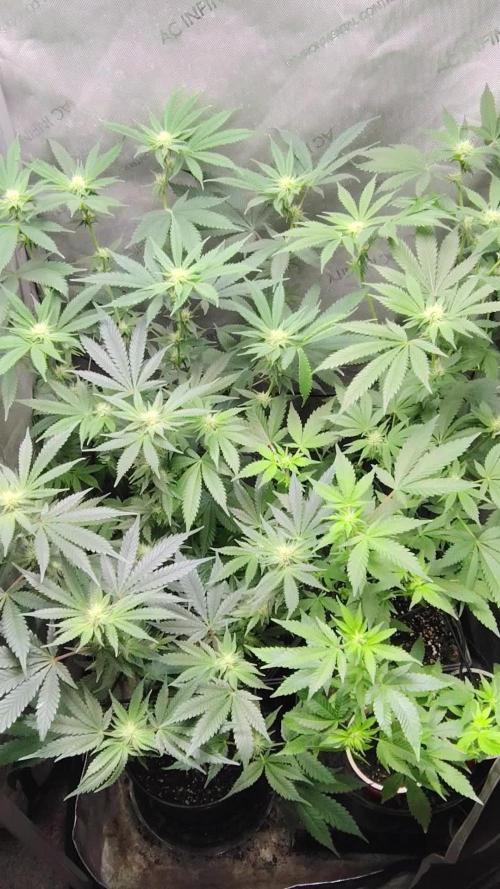
Smells and terps came out blasting on day 28 of flower. Sweet candy terps like strawberry or something. Just water and recharge. Some defoliation for light and air flow. I am happy with the pack I have. I have 2 seeds left.
Likes
50
Share


@DogDoctorOfficial
Follow
🌟 Eternity Grow Cup – Week 3 Veg Report 🌱
Another week in the books, legends, and though the temps aren’t perfect, our Runtz babies are growing strong! 💪 This week marks a pivotal moment as we get serious and start to push these girls toward greatness.
🌱 Growth Update:
• The girls are officially showing their third pair of leaves, and while they’re growing slow due to cooler temps, they’re consistent. Standing at 6 cm tall, these beauties are ready for the next steps in their journey.
• The yellow sticky traps have also done their job, catching some gnats—always a win for pest management!
Let’s talk about the unexpected guests making an appearance in the grow room—gnats! These tiny critters can be a common nuisance for growers, especially in environments with moist soil. While they’re not devastating, they can be a sign that things need a bit of tweaking.
Why the Yellow Stickers?
Yellow sticky traps are like candy for gnats—they’re irresistibly attracted to the bright color, which mimics flowers. These traps are a simple, non-toxic way to monitor and control the population. It’s not just satisfying to see them stuck (though, let’s admit it, it kind of is)—it’s also a great way to keep tabs on how many are lurking around and take action if necessary.
What Causes Gnats?
Gnats love moist environments, and overwatering or humidity that’s a bit too high can create their perfect breeding ground. Using high-quality soil like Pro-Mix HP with Mycorrhizae helps, but these little critters can still sneak in.
How to Handle Them?
While yellow stickers are a great first line of defense, staying vigilant with watering practices is key. Letting the top layer of soil dry out between waterings can disrupt their life cycle. Plus, products like beneficial nematodes or soil conditioners can help keep them under control.
They may be tiny, but we’ve got our eye on them! Let’s not let the gnats steal the show—our Runtz have got all the spotlight! 🌟
Nutrient Regimen:
This week, we’re sticking with the Aptus Clean Mineral Line for Veg, a powerful combo designed for optimal plant health:
• Regulator: 0.15 ml/L – This keeps the plants strong, aids in stress tolerance, and boosts nutrient uptake.
• RO Water Conditioner: 0.8 ml/L – Balances the water profile and improves nutrient delivery.
• All-in-One Liquid: 1.25 ml/L – Provides a balanced mix of essential macro and micronutrients for sustained growth.
📌 Key Stats:
• pH: 6.05
• EC: 1.0
• Temp: 18.3°C
🔧 Tech, Tools & Building the Dream Studio
Behind the grow, I’ve been fine-tuning my workspace. Using just a piece of wood, carefully cut feet, and some imagination, I’ve elevated my monitors for better editing. It’s not fancy, but it works! 💻✨
For the grow, my trusted TrolMaster gear (from the Tent-X to the AMP-3) has been my go-to for precision. Every measure—pH, EC, temps—is logged and tracked to keep these plants thriving.
🌟 Exciting Milestones:
💚 Huge thank you to the community for helping me reach:
• 500 YouTube Subscribers 🎥 – Weekly episodes are dropping, so make sure to tune in for detailed updates!
• 4.5K Instagram Followers 📸 – Join the fun as we share the Runtz journey and so much more!
💨 Welcome, Ziggi Papers!
A warm welcome to Ziggi Papers, our newest sponsor! 🌟 Ziggi’s high-quality rolling papers are the perfect addition to any smoke session. They’re all about sustainability and precision—just like this grow. Check them out at ziggioriginal.com.
💚 Shoutouts:
To the diary sponsors, to my sponsors and this incredible community:
• @GrowDiaries, @Plagron, @Zamnesia, @AptusHolland, @ProMixSoil, @TrolMaster, @ThinkGrowLED, @FutureOfGrowLED, @CannaKan, @ZiggiPapers
Thank you for believing in the craft and making this journey possible!
To the community—supporters, lovers, and yes, even the haters—you all inspire me to give my best every day. Together, we’re writing history with this grow.
This week, I’m dropping:
• A photo set of all 5 phenos, showing their progress.
• Behind-the-scenes shots of my workspace build.
• A closer look at the tools and products making this grow epic and more.
For next week only God knows but one thing is for sure this promisses to be epic 💚
Let’s keep the momentum going, legends. This grow is more than just a competition—it’s a journey of learning, growth, and passion. Good luck to all the participants—may your grows be epic, your spirits high, and the journey fun for everyone involved! Stay tuned, and let’s make history together!
Genetics - Runtz https://www.zamnesia.com/6000-zamnesia-seeds-runtz-feminized.html
Nutrients - Plagron https://plagron.com/en/hobby
- Aptus Holland https://aptus-holland.com/
Controls - Trol MAster https://www.trolmaster.eu/
LED - https://www.futureofgrow.com/en
LED - https://www.thinkgrowled.com
Soil - https://www.promixgardening.com/en
Germination - Cannakan https://cannakan.com/?srsltid=AfmBOopXr-inLXajXu3QFgKXCXXos4F1oEvScjMKIB5MR5dk8-GJ-F49
DOGDOCTOR 15% off
Smoking Papers - https://ziggioriginal.com/
Terpene saver - https://grovebags.com/
As always thank you all for stopping by, for the love and for it all , this journey of mine wold just not be the same without you guys, the love and support is very much appreciloved and i fell honored with you all in my life
With true love comes happiness Always believe in your self and always do things expecting nothing and with an open heart , be a giver and the universe will give back to you in ways you could not even imagine so
As always, this is shared for educational purposes, aiming to spread understanding and appreciation for this plant. The journey with nature is one of discovery, creativity, and respect. Let’s celebrate it responsibly and continue to learn and grow together!
Growers Love To you All 💚
#EternityGrowCup #RuntzHunt #GrowersLove #CannabisCommunity #AptusHolland #ProMixSoil #TrolMaster #Zamnesia #Plagron #ZiggiPapers

Likes
2
Share

@Pipapole
Follow
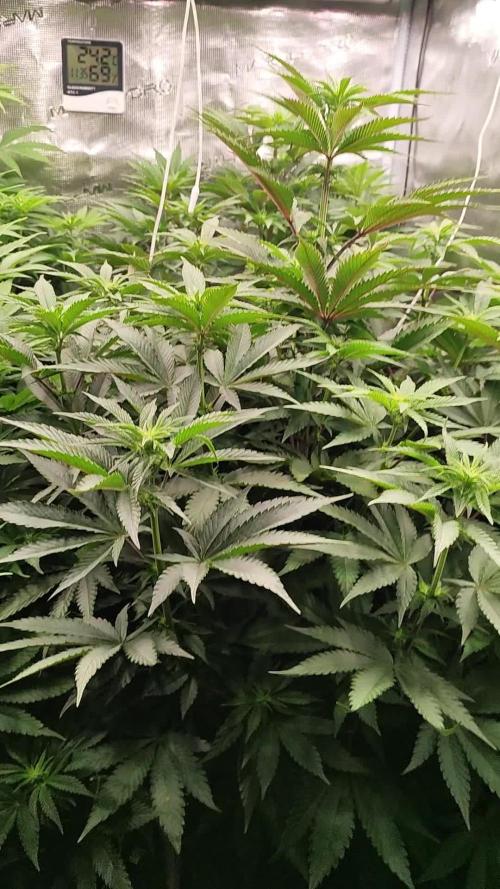
Der stretch hat ordentlich losgelegt ich hoffe ich kann mich auf das Versprechen von serious seeds verlassen dass die Pflanzen nicht größer wie ein Meter werden 😜

Likes
31
Share


@TheStrainAlchemist
Follow
This is my first induced flowering growth.
I always grow weed outdoors with big satisfaction on yield and nature contact, But I have to say that training plants is real fun and I can’t wait to see the buds first appear and then fatten up.
On day 5 of flowering she started to appear a little stressed, I think is a little overfeeding because her leaves are a little burned on the tip and a little underwater too but this morning end of day 6 appear to be recovering has the timelapse show on the end.
Happy growing to you all brothers and sisters ☮️☮️☮️✌️🏼
Likes
63
Share


@AsNoriu
Follow
Day 126. Really day 90 from seed, part of Control Garden.
Amazing how they Bulk, 3 weeks of veg only, crazy strain !
If i ever wanted anything from this strain, she was like "Let's do it ! "
8 sisters were amazing, now i used last two biggest beans and those had no training, no light, nothing, but went into absolute overdrive smells amazing, branches hard to hold while trimming ...
Love them, maybe this time taste will be better, different nutes used ...
Its so funny to hear branches slowly bending and cracking under own weight with no support left ... Amazing sound for grower ;))
Control Garden is an absolute success even with Strawberries hermie part ..
Cure day. 250 g total. Insane for 3 weeks veg, one cola lost to budrot, no direct light and early harvest which led to a bit airy Monster Bulk buds, she could make 150 easy without budrot and one more week of flower ...
Will update on night shift ;)
Day Unknown. Decided to try out finally last girls for diary records, but ...
After a month of intense cure buds got angly/pyramid type forms ... ?????
Any idea ?
First two weeks moved at least twice a day.

Likes
Comments
Share


@Jbcultivates
Follow
The grow was smooth, employed some new techniques when growing and they performed well! Nice bush plants


Likes
Comments
Share


@VividLeaf
Follow
(Ignore the plant tag - I found out this week from the person who gave me the clone that I had heard completely wrong)
She is growing so fast now. I topped and tied down the main stems that were out-growing the lower branches as an experiment but also defoliated the leaves covering any under canopy nodes that could be of potential to catch up.
I also turned on the Autopot system this week. The airdomes have been running 18/6 since week 2.
Likes
17
Share


@Mastr
Follow
Smell beautiful I think she will be one off my favourite so sticky and smell so fruity recommended everyone try it happy growing

Likes
129
Share


@DreamIT
Follow
🎲➕ VLC Critical Plus + by PEV Grow➕🎲
➕13.6 Speak for itself. is almost ready to start mainlining 😆
➕14.6 Nothing interesting at the moment, it grows well
➕15.6 even today nothing special to say, yeah
➕16.6 All very nice. It will look so soft in the picture
➕17.6 Yesterday I discovered 3D photographs. What do you think about it? if you are not just a serial commentator, please leave me your opinion, i would appreciate it very much 🙏🦄
➕18.6 with these photos I caught a little cursed insect that goes around the leaves, as a precaution I give two sprays of neem oil in the box. I live behind closed doors with mosquito nets and bug catching cat, I really want to know where they came from. In one year of Indoor cultivation I have never had any problems 😤
➕19.6 Week ended without problems, very fast this plant. Great job PEV Grow 🤘🦄
__________________________________________
❓ Are you new to the world of cultivation and don't know where to safely buy your seeds?
😮On the Pevgrow site, you can find the best-feminized seeds indoors and outdoors. Achieved through totally natural stress methods and with guaranteed superior quality.
✅http://bit.ly/PevGrow
ℹ️Check out the marijuana dictionary
✅http://bit.ly/CannabisDictionaryPEVGrow
__________________________________________
👀 Are you looking for a good lamp to start with? 👀
🌞Viparspectra has something more than the others, take a look at their site.
⏩ Use "GDVIP" for an extra discount or "ViparDreamIT" for an extra 5 %% discount
👀 Search for it on Amazon
✅Amazon US: https://amzn.to/30xSTVq
✅Amazon Canada: https://amzn.to/38udUVe
✅Viparspectra UE: bit.ly/ViparspectraUE
👀 Watch my ViparSpectra XS1000 unboxing on YouTube, leave a like and write to the channel 🦄
✅http://bit.ly/UnboxingViparSpectraDreamIT
______________________________________________
📷🥇 Follow the best photos on Instagram 🥇📷
https://www.instagram.com/dreamit420/
🔻🔻Leave a comment with your opinion if you pass by here🔻🔻
🤟🦄💚 Thank you and enjoy the growth 💚🦄🤟

Processing
Likes
20
Share


@UK420
Follow
Been a slow week for root development, but finally witnessing roots moving towards solution. Also been a slow week for height growth. But plenty of sideways and new growth
2/9 Update. Completly changed res today and cleaned system. Added a humidifier and move air pump to under room floor


Likes
18
Share


@Dunk_Junk
Follow
Wow she's still growing nicely!!
27cm more this week!
She's looking nice.


Likes
33
Share


@LouShott
Follow
8/10/2018
Day 15 - ppm=605 ph=5.6 Temp=27.6c-26.0c
Day 16 - ppm=605 ph=5.6 Temp=26.4c-25.6c
Day 17 - ppm=613 ph=5.6 Temp=27.3c-26.7c
Day 18 - ppm=623 ph=5.5 Temp=27.6c-22.8c
Day 19 - ppm=630 ph=5.5 Temp= 27.4c-22.6c
Day 20 - ppm=640 ph=5.4 Temp=28.0c-23.6c
Day 21 - ppm=652 ph=5.6 Temp=27.6c-22.8c
I havent had to do much with her at all this week, she looks healthy and ppm of nutrients is rising nicely there is about 10l of feed left of the 20l reservoir so i will probably top it up next week at some point.
Check out the time-lapse of the week, turn the volume up 👌👍
Likes
Comments
Share

@eldruida_lamota
Follow
Vamos familia, actualizamos la segunda semana de floración de estas Fruit cake de Seedstockers, salieron las 3 de 3, 100% ratio éxito.
Aplicamos varios productos de Agrobeta, que son increíbles para aportar una buena alimentación a las plantas.
Temperatura y humedad dentro de los rangos correctos dentro de la etapa de floración.
La tierra utilizada es al mix top crop, por cambiar.
De 3 ejemplares seleccioné los 2 mejores para completar el indoor, también cambié el fotoperiodo a 12/12 y apliqué una buena poda de bajos, se ven bien sanas las plantas, tienen un buen color y progresan a muy buen tanto que se me fueron de altura un poco, la solución fue doblar un poco las plantas, también empezaron a formarse las flores.
Agrobeta:
https://www.agrobeta.com/agrobetatiendaonline/36-abonos-canamo
Hasta aquí todo, Buenos humos 💨💨💨

Likes
27
Share

@Cyrusdavirus
Follow
Hello y'all 👋
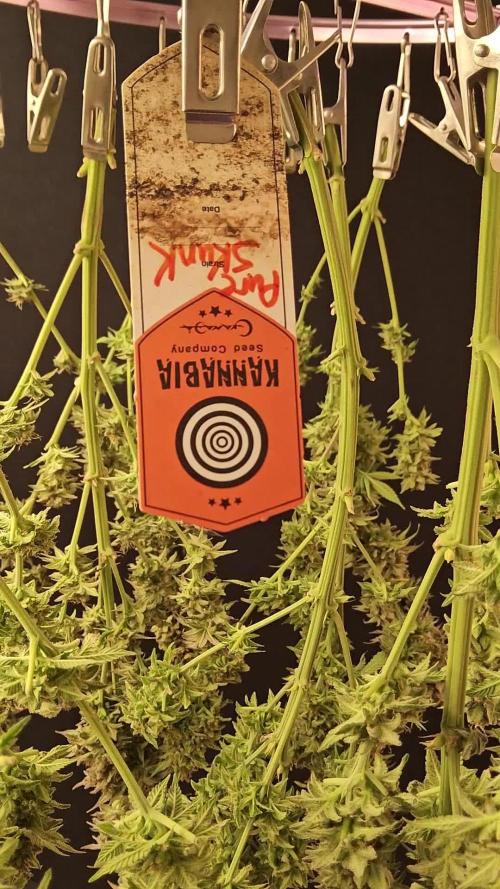
Obviously this one is chopped and hanging out by her toes 😎🔥❄️ she is a beauty even upside down
There are only a few left to harvest. I am working on them as they get ripe and I will continue to do the defoliation on them to prepare them for the chop ?🌴
Thanks so much for visiting the growroom...Cyrus
PS: again I apologize for missing last week's update and now being late this week. I'm starting to feel a bit better but need surgery in hopes to fix the problem