



@DisTentAint4Campin
Follow
She growing great i kept her nice and short to maintain space i took 3 nice healthy cuts already rooted and transplanted into budtrainer bud cups go to www.budtrainer.com and use cupon code DISTENTAINT4CAMPIN and save you 10% at checkout help a growmie out 🤙⛺️ but can't wait to see what she ha to offer


@DeadwebsiteBoringcommunity
Follow
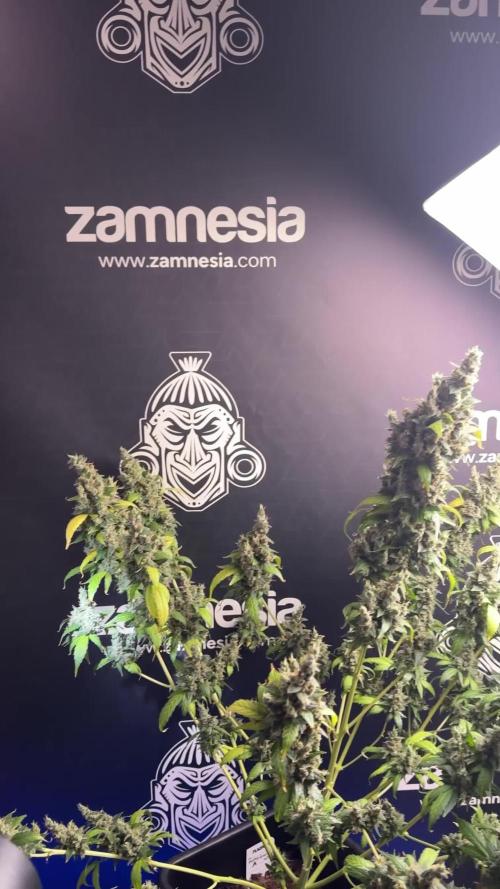
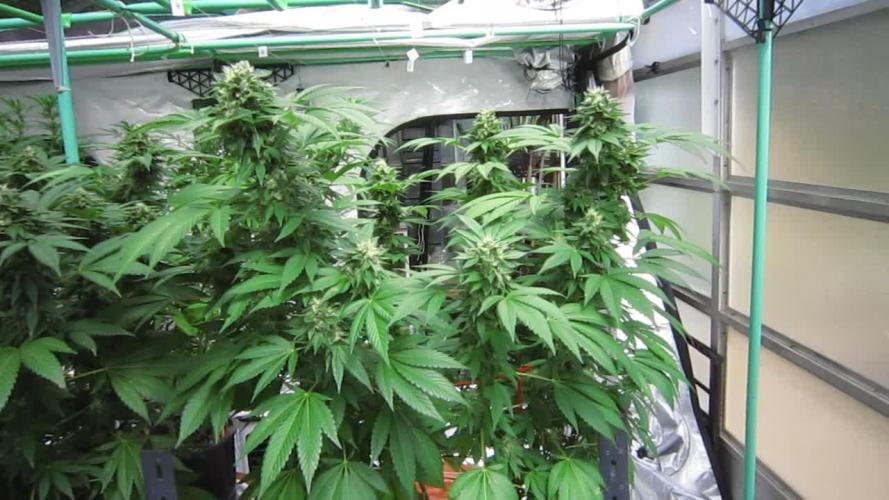
so tall some yellowing.. lots of leaves we can lose a few.. good yield expected from both plants.. Zamadelica is in the tent.. I should update the zam diary.. Look at how much she has stretched.. Crazy sauce... Sativa alittle bit me thnk ha ha ha.,


@DogDoctorOfficial
Follow
🦄🌿 8×8 Adventure – Week 14
Frosted Guava Auto by Zamnesia | Pheno A
The Little Unicorn Has Left the Tent… But Her Story Is Far From Over! 🦄👑🌸✂️
Welcome back to another chapter of the 8×8 Adventure! 🌱💚
And today, my friends…
We have a different kind of update.
Because our beautiful Frosted Guava Pheno A has officially left the tent.
😂🦄🌿
That's right.
Our little unicorn.
Our beautiful foxtailing freak.
Our girl who spent week after week doing things her own way, building her unusual flowering structures, surprising us with her development, and reminding us that genetics don't always follow the script we expect.
She finally told me:
"Doc… I think we've done enough in here."
😂😂😂
And who am I to argue with a queen?
So I listened.
We took the final photographs inside the tent.
We gave her some time in the studio for more photographs and photo stacking.
We documented her beautiful flowering structures from different angles.
We enjoyed a little moment with our girl.
And then…
It was time.
✂️🌸
Frosted Guava Pheno A was harvested.
But before anyone asks…
Yes, I know we're posting a harvest-day update under a flowering week.
😂
And yes, there's a reason for that!
We're going to explain everything, because this isn't the final harvest report. We still have drying to document, and there's more to come after that.
Today is about the last day of our little unicorn in the tent, her final photographs, the studio session, the photo stacks, the harvest process, and the beginning of her drying journey.
So let's give her the spotlight she deserves.
Because this girl has earned it.
🦄👑💚
────────────────────────
📢 A QUICK APOLOGY – WHY IS HARVEST DAY IN A FLOWERING WEEK?
Before we get into the beautiful photographs, let's explain something for anyone wondering why we're documenting harvest day in a flowering-week update.
GrowDiaries has a limit of 30 photos per update.
And when you're documenting an entire harvest, trimming, drying, and eventually the final report, thirty photographs can disappear very quickly.
😂📸
Especially when you're someone like me who enjoys documenting everything!
We have photographs from inside the tent.
We have photographs in the studio.
We have photo stacks.
We have different views of the plant.
We have details of the flowers.
We have the harvest itself.
And we still have the drying process to document.
So, rather than trying to squeeze the entire story into one update and leaving important parts out, we're spreading the journey across the available diary updates.
That's why we're using this flowering week to document the final day in the tent and the beginning of the harvest story.
Please consider this the first part of her harvest journey.
We'll continue with the drying process and the remaining details in the next chapter or chapters, depending on how much material we have to share.
And eventually, we'll bring everything together in the final report.
This isn't us pretending she's still flowering.
😂
It's simply the most practical way to document her journey properly within the platform's limits.
We want to show you the story, not just the final photograph.
Thank you for understanding, my friends! 💚🌱
────────────────────────
🦄 A QUICK RECAP – FROM SEED TO STUDIO
Let's take a moment to remember how we got here.
Frosted Guava Auto was grown as part of the 8×8 Adventure, where multiple plants share the same general environment while expressing their own individual genetic characteristics.
And this girl?
She certainly gave us something different to follow.
From the beginning, she developed her own personality.
We watched her grow.
We watched her flowering structures develop.
We watched those unusual foxtailing formations become increasingly noticeable.
And week after week, she continued doing her own thing.
😂🦄🌸
She didn't need to look exactly like her sister.
She didn't need to behave like the other plants.
She didn't need to follow somebody else's rhythm.
She simply needed to be Frosted Guava Pheno A.
And that's precisely what she did.
One of my favourite things about following a plant from seed is that you gradually stop thinking about her as just a name on a label.
You start recognizing her.
You know her structure.
You remember the way she developed.
You notice her little differences.
And eventually, when you walk into the room, you can spot her without even needing to look at the label.
That's when a phenotype becomes a character in the story.
And our little unicorn?
She's been one of those characters throughout this adventure.
🦄💚
────────────────────────
🌿 THE LAST DAY INSIDE THE 8×8
Before taking her out, we spent some time documenting her final moments inside the tent.
These photographs are important to me because they capture the plant exactly where she completed her flowering journey.
No studio background.
No special photographic arrangement.
Just Frosted Guava, standing in the environment where we've watched her develop.
🌿📸
The room has been home to all these different personalities.
Some plants have been faster.
Some have been slower.
Some have developed unusual structures.
Some have surprised us with their size.
And some have made us stop and look a little closer.
Frosted Guava belongs firmly in that last category.
😂🦄
Those flowering structures have always made her interesting to photograph, and I wanted to make sure we had a proper record of her final day in the tent before moving on to the next stage.
Because once she's harvested, that particular view is gone.
The plant changes.
The environment changes.
The next chapter begins.
So we take our photographs, appreciate the journey, and make sure the story is documented.
And then…
We take our girl to the studio.
────────────────────────
📸 STUDIO TIME – THE LITTLE UNICORN GETS HER MOMENT
Once Frosted Guava left the tent, we took her to the studio.
And this is where I get to enjoy another part of growing that I absolutely love.
Photography.
😂📸🦄
I don't only want to remember how a plant looked from across the room.
I want to look at the details.
The shape of the flowers.
The structure of the main cola.
The way the individual flowering sections developed.
The little differences between one part of the plant and another.
And that's why I spend so much time photographing these girls.
It's not simply about taking one beautiful picture.
It's about documenting the plant from different perspectives.
A wider photograph tells one story.
A closer photograph tells another.
And a carefully made photo stack can reveal details that are difficult to appreciate in a single photograph.
Frosted Guava gave us plenty to work with.
Her unusual structures make her especially interesting to photograph, and the studio allowed us to give her the attention she deserved before moving on to the harvest itself.
🦄🌸📸
────────────────────────
🔬 PHOTO STACKING – PATIENCE, LIGHTS & A LOT OF PHOTOGRAPHS
Let's talk about photo stacking for a moment.
Because I know that when people see a finished stacked photograph, it can look like something that happens with the click of a button.
😂
Well…
Not quite!
Photo stacking is a process in which multiple photographs of the same subject, captured at slightly different focus distances, are combined to produce a final image with greater apparent depth of field.
In simple terms, the camera captures different parts of the subject in focus, and the software combines those focused areas into one image.
The result can reveal a remarkable amount of detail.
But getting there takes time.
It takes patience.
It takes careful positioning.
And it takes lighting that works for the subject.
For these photographs, I use several SmallRig LED lights in the studio to shape the light the way I want it.
I adjust the lighting to bring out the texture, colours, and details without losing the character of the flower.
The position of the lights matters.
The angle matters.
The focus matters.
And the individual photographs need to work together.
Some of the stacks we're sharing from this adventure contain hundreds of photographs.
With Frosted Guava, we're showing stacks made from 78, 84, 105, 108, 111, 147, and 206 photographs.
And that's only part of the story!
😂📸🔬
Each stack has its own purpose.
Sometimes I want to show the main cola.
Sometimes I want to capture a smaller flower.
Sometimes I want to explore an interesting section of the plant.
And sometimes I'm simply curious to see how much detail I can bring out of a particular subject.
I love this process.
It's another way of appreciating the plant beyond the grow room.
Growing gives us the subject.
Photography gives us another way to explore it.
And the more I do it, the more I enjoy it.
────────────────────────
📸 THE STACKS ARE PART OF THE STORY
You'll see several different kinds of photographs in this update.
Some show Frosted Guava while she was still in the tent.
Others show her in the studio.
Some are wider views of the plant and her flowering structures.
Others are closer photographs of individual flowers.
And then we have the stacked images.
Each one documents a different part of the journey.
One of the fun stacks includes a trimming scene with a flower in the trim bin, scissors, and a lighter.
That particular stack contains 78 photographs.
It's not the biggest stack in the collection, but I enjoyed making it because it captures a little moment around the harvest process.
😂📸✂️
And that's something I like about photography.
Not every photograph needs to be a technical masterpiece.
Some are experiments.
Some are made to learn something.
Some are simply fun.
And sometimes the smaller projects are the ones that make you smile the most.
We also included a video showing part of the photo-stacking process, because I wanted to give everyone an idea of what actually happens behind the final image.
It's not instant magic.
It's a series of photographs, careful setup, lighting, focus, and processing.
And yes…
A fair amount of patience!
😂💚
────────────────────────
🌸 HARVEST TIME – OUR LITTLE UNICORN LEAVES THE STAGE
After the photographs, it was time to move on.
Frosted Guava had completed her flowering journey, and I decided it was time to harvest her.
We took our final moments in the studio, documented the process, and then chopped the plant down.
✂️🌿
It's always a strange moment.
On one hand, it's exciting because you get to see the result of everything you've followed throughout the grow.
On the other hand, you've spent weeks watching this plant develop.
You've seen the changes.
You've photographed the flowers.
You've made observations.
You've given her a name.
And now, suddenly, the plant you recognize from the tent is entering a completely different stage.
The flowering chapter is finished.
The post-harvest chapter begins.
And our little unicorn is no longer standing in the room with the others.
She's moving on to the next part of her journey.
🦄🌸💚
────────────────────────
✂️ A LITTLE TRIMMING – BUT NOT A FULL WET TRIM
Once the plant was harvested, I broke her down and removed the fan leaves and other leaves I didn't want to keep around the flowers.
We also did some initial trimming.
But I want to make one thing clear.
I'm not really calling this a full wet trim.
It's more of a partial initial trim before drying.
The idea was to remove the leaves we didn't need while preparing the flowers for the next stage, without trying to complete every part of the final trimming process immediately.
Most of the material went onto the drying rack.
However, I also kept some colas intact so we can enjoy the experience of seeing a larger cola after drying.
Because let's be honest…
Sometimes you just want to see that big, beautiful cola sitting there after the drying process.
😂🌸👑
We don't have to turn every part of the harvest into the same shape or presentation.
Different pieces can be handled differently depending on what we want to document and enjoy later.
For this update, the important thing is that Frosted Guava has been harvested, the initial breakdown is complete, and most of her flowers are now resting on the drying rack.
The rest of the process is still ahead of us.
────────────────────────
🌬️ THE DRYING JOURNEY BEGINS
And now…
We wait.
😂🌿
Frosted Guava is no longer growing under the lights.
She's no longer sharing the tent with the other plants.
She's now in the drying stage, in a separate space away from the flowering room, where the next part of her journey will take place.
Our current plan is to keep the drying environment around 20–21°C.
For the initial period, we're aiming for relative humidity around 45%, then bringing it up towards the 60% range and keeping the conditions as stable as we reasonably can.
These are our intended conditions, not a guarantee that every reading will remain identical throughout the process.
Drying is influenced by several things, including the environment, the amount and arrangement of plant material, airflow, and how the flowers lose moisture over time.
And that's why I don't want to promise an exact number of days.
A typical drying period can fall somewhere around one to two weeks, but the actual duration can vary.
We'll monitor the process and document what happens rather than deciding in advance that every plant must be ready on a particular day.
The goal now is to let Frosted Guava rest while we keep an eye on the drying process.
🌬️🌸
────────────────────────
⏳ HOW LONG WILL SHE TAKE?
That's the question, isn't it?
😂
And the honest answer is…
We'll see.
One week?
Possibly.
Two weeks?
Also possible.
The exact timing depends on how the flowers dry under the conditions we maintain.
I don't want to make a promise today and then pretend the plant has to follow it.
The drying process deserves patience just as much as the flowering process did.
We'll continue monitoring the environment and the flowers, and we'll share more information in the next update.
For now, Frosted Guava has started her drying journey.
She's resting.
We're observing.
And the next chapter will come when we have something meaningful to report.
🦄💚
────────────────────────
🌿 SAME 8×8 ADVENTURE – ONE MORE GIRL MOVES ON
There's something worth remembering here.
Frosted Guava was part of a room full of different plants, all sharing the same general growing environment.
But she has now completed her flowering journey and moved into the next stage.
The rest of the room is still going.
The other girls are continuing their own stories, each at her own pace.
And that's one of the reasons we document these plants individually.
They don't all finish at the same time.
They don't all develop in the same way.
And they don't all have the same personality.
Frosted Guava was our little unicorn.
She gave us her unusual flowering structures, her own rhythm, and plenty of beautiful details to photograph.
Now she has left the tent, and the rest of the adventure continues around her.
Same project.
Same room for the plants still flowering.
Different stages.
Different stories.
🌿🦄💚
────────────────────────
🔬 WHY I LOVE DOCUMENTING THE PROCESS
For me, this is about more than showing the final result.
I enjoy documenting the entire journey.
The early growth.
The flowering stages.
The changes in structure.
The unusual characteristics.
The photographs.
The harvest.
The drying.
And eventually, the final report.
Each stage gives us something different to learn from.
And because I'm also interested in photography, I enjoy documenting details that might otherwise be overlooked.
That's why we have the studio photographs.
That's why we have the stacks.
That's why we show a little of the process behind the images.
I want people to see more than the finished photograph.
I want them to understand the time, patience, and curiosity that went into making it.
The same applies to the grow diary itself.
A harvest is not the end of the story.
It's the beginning of another stage.
And Frosted Guava still has more chapters to come.
────────────────────────
🦄 THE LITTLE UNICORN HAS EARNED HER NAME
Looking back at this girl's journey, I think the nickname fits her perfectly.
😂🦄
She's been unusual.
She's been interesting.
She's given us those beautiful foxtailing structures.
And she has kept me curious throughout the flowering process.
I never wanted her to look exactly like another plant.
I wanted to see what this particular phenotype would do.
And she showed us.
That's the beauty of following individual plants.
You get to know their characteristics, document their differences, and appreciate each one for what she actually is.
Frosted Guava Pheno A doesn't need to be another plant.
She has her own story.
And now, even though she's left the tent, that story continues.
The next part will be about drying, and after that we'll have more to share.
So don't go anywhere, little unicorn fans!
😂🦄🌸
We're not finished yet.
────────────────────────
🔮 WHAT COMES NEXT?
The flowering chapter is complete for Frosted Guava Pheno A.
But the overall journey isn't finished.
Next, we'll continue documenting the drying process and see how long she takes under the conditions we're maintaining.
We'll share more details as the process progresses.
And eventually, we'll bring together the remaining observations in her final report.
That means more photographs, more information, and another opportunity to look back at the entire journey.
For now, she's resting.
The rest of the room is still flowering.
And I'm already looking forward to the next chapter.
🦄🌿💚
────────────────────────
💭 FINAL THOUGHTS – THE LITTLE UNICORN HAS LEFT THE TENT
Frosted Guava Auto by Zamnesia.
Pheno A.
Harvest day.
🦄👑🌸✂️
What a beautiful journey this girl has given us.
She started as a seed.
She grew into her own personality.
She developed those unusual foxtailing structures.
She kept surprising us.
And now, she's completed her flowering journey and moved on to drying.
We've documented her last day inside the tent.
We've taken her to the studio.
We've photographed her from different angles.
We've created several photo stacks.
We've shared a little of the process behind the photographs.
We've harvested her.
We've removed the leaves we didn't want to keep.
We've placed most of the flowers on the drying rack.
And we've kept a few beautiful colas intact so we can appreciate them after drying.
But we're not calling this the final report.
There's still more to come.
The drying process is underway, and we'll document that journey in the next update or updates, depending on what we have to share.
The rest of the room is still going, and the 8×8 Adventure continues.
So, little unicorn…
Thank you for the show.
Thank you for the beautiful photographs.
Thank you for the strange and wonderful flowers.
Thank you for keeping me curious.
😂🦄💚
You have left the tent, but you haven't left the story.
We'll keep following your journey through drying and beyond.
And when the time comes, we'll bring everything together in the final report.
Until then…
Rest well, little unicorn.
Your next chapter has begun.
🦄🌸✨
────────────────────────
🙏 THANK YOU
As always, a massive thank you to everyone following the 8×8 Adventure. 💚🌱
Thank you to GrowDiaries for giving us the space to document these individual journeys and share the experience with growers around the world.
And thank you for understanding why this harvest-day update appears under a flowering week. The platform's photo limit means we need to divide the material into manageable updates, and I would rather share the full story across several chapters than leave important parts undocumented.
Thank you to Zamnesia for the Frosted Guava genetics and for giving us this beautiful little unicorn to follow.
Thank you to Plagron for supporting the growing-media and nutritional side of this adventure.
A huge thank you to Future of Grow for supplying the additional Black Series 600W fixtures and allowing us to explore the expanded lighting setup in the 8×8. 💡☀️🌿
Thank you to Lumiflora for helping illuminate the deeper areas of the canopy.
Thank you to TrolMaster for helping us monitor and manage the environment behind the scenes.
And thank you to everyone who follows these diaries, comments, asks questions, shares experiences, and enjoys the journey with us.
Every bit of support means a lot. 💚
🌿 COME JOIN OUR COMMUNITY!
If you're looking for a place to talk, learn, share experiences, ask questions, or simply hang out with fellow plant enthusiasts, you're more than welcome to join us on Discord.
💚 DogDoctorOfficial Community:
https://discord.gg/dogdoctorofficial
The community keeps growing, and we're building something I genuinely love being part of.
We have conversations, community discount codes, competitions, prizes, giveaways, and plenty of opportunities to share experiences with people who enjoy this plant as much as we do.
But the most important part isn't the discounts or the prizes.
It's the people.
It's the conversations.
It's the friendships.
It's the feeling that you can come in, say hello, ask a question, share something you've learned, or simply listen.
There's no experience level required.
You don't have to be an expert.
You don't have to know every technical term.
You don't even have to speak all the time.
Everybody is welcome, and nobody needs to prove themselves before joining the conversation.
We want a community where people can learn from each other, enjoy the subject, and feel comfortable being part of the group.
For me, it's becoming something that feels like family.
And we'd love to have you with us.
💚🌱🤝
Growers Love, my friends. 💚🌱
See you in the next chapter of the 8×8 Adventure…
where one little unicorn has left the tent, the rest of the room continues its journey, the studio lights are finally cooling down, and DogDoctor is already looking forward to the next set of photographs.
😂📸🦄
The harvest is done.
The drying journey has begun.
And the story continues.
Let her shine. 💚🦄🌸



@pifflestikkz
Follow
Day 29
29/07/24 Monday
Nice feeding today with De-chlorinated tap water pH 6.
Gave her 300 ml and she had a small run off.
Getting chunky in the stem now 💪💚
Day 31
31/07/24 Wednesday
De-chlorinated water pH 6 today with Plagron pk13-14 5ml to 5L
Plagron power buds 5ml to 5L
Used 300ml of the 5L solution.
I will be using these on water days from now on as they are advised to be used every irrigation.
We'll see how they perform 💪💚
Day 32
01/08/24 Thursday
Another feed today using de-chlorinated tap water pH 6, there now taking 300ml every evening.
Day 35
04/08/24 Sunday
END OF WEEK 😁
De-chlorinated tap water pH 6 today with Plagron products. 300ml each.
Had a issue with leaf invaders this week, I have treated and am checking every 48 hrs so far seems ok and not progressive.


@TheBulldozerSicily
Follow
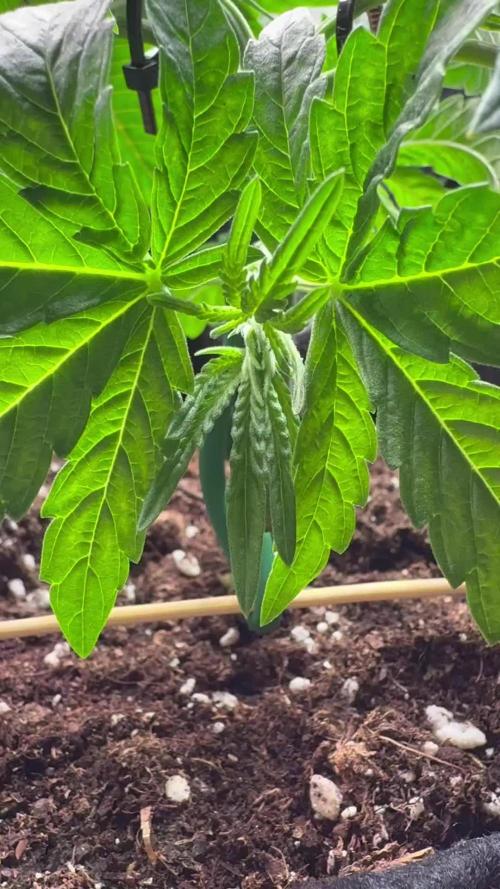
Nel frattempo che i semi Germinavano, ho pulito e disinfettato la box, ci é voluto più di un giorno, tra lavare l'argilla e lasciarla in ammollo con acqua e cloro, a pulire tutti gli accessori singolarmente e le pareti della box.
Bene, adesso siamo pronti per un altro ciclo!!!



@hassehujasse
Follow
LST Main-Lining White Runtz @Barneys Soil with coco to soft. Had to invent wood sticks.
She is felling well after topping. Se esta recuperando mejor de lo esperado
My wife topped her plant last day third week. plants looks good and we walking ahead
MI mujer se ha hecho topping en ultimo momento del tercera semana. entramos bien en la quarta


@Hawkbo
Follow
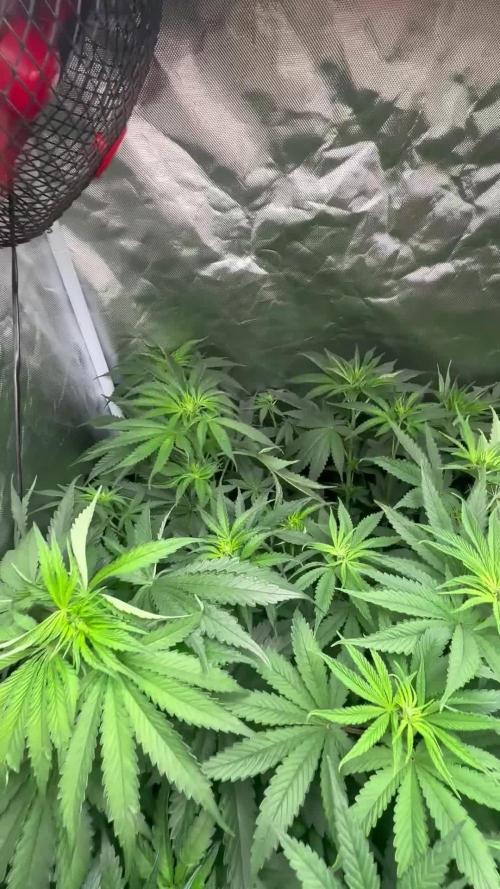
They are all putting on weight quickly and taking shape very impressed with all of them and they prob have another week or so before flush/harvest.
REMEMBER , IF YOUR SHOPPING FOR GEAR YOU CAN USE THE CODE “BANGDANG” FOR 10% OFF YOUR ENTIRE PURCHASE FROM ANY OF THE FOLLOWING COMPANIES.
@greenbuzzliquids
@rainscience_growbags
@gorilla_grow_tent
@growlightscience.led
NEW* @Rocbudinc Seeds on his website *
*****Gorilla grow tent discounts extend to all companies affiliated with grow strong industries which include..*****
@super.closet
Lotus Nutrients
Kind LED grow lights


@Cannamethodz
Follow
🗓️ Semana 2 de Floración (Día 9 a 12/12) — Estirón de Verano y Nutrición de Precisión (Multivariedad)
¡Buenas a todos, comunidad! Actualizo el diario tras 9 días desde el cambio de fotoperiodo al 12/12. El jardín está en un momento espectacular y las tres genéticas que tengo en el armario —Gary Payton, Mimosa y Queen of Soul— están respondiendo de lujo al inicio de la fase de floración.
✂️ Evolución de la Poda, Canopy y Diferentes Estructuras
La defoliación y el lollipop que les hice justo al pasar a 12/12 han sido un éxito rotundo en las tres variedades. Ninguna ha mostrado signos de estrés; al contrario, han canalizado toda la fuerza hacia las puntas principales:
Gary Payton: Mantiene una estructura súper robusta y compacta, con ramas laterales fuertes y hojas de un verde oscuro precioso.
Mimosa: Muestra un vigor excelente en este inicio de estiramiento, preparándose para formar esas puntas tan características de la variedad.
Queen of Soul: Como buena heredera de su linaje, es la que muestra un estirón más estilizado y elegante. He tenido que jugar un poco con las alturas para mantener la canopia homogénea bajo el panel LED.
Toda la canopia está súper bien nivelada y las hojas lucen increíblemente firmes, apuntando hacia arriba ("rezando") y mostrando una turgencia impecable.
🌡️ Parámetros Ambientales (Cultivo de Julio ☀️)
Cultivar en pleno julio siempre es un reto, pero los parámetros se mantienen bastante controlados gracias a la eficiencia del LED:
Temperatura: 28 °C (bastante estable para la época de verano en la que estamos).
Humedad Relativa (HR): 40%.
Estrategia VPD: Al estar en un ambiente seco y cálido típico de esta época, controlo muy de cerca la transpiración. Para evitar que las plantas absorban demasiadas sales por la alta evaporación foliar, estoy manteniendo riegos muy equilibrados e intercalando agua sola con pH regulado.
Plan de Alimentación (Fase de Transición)
He comenzado esta semana con la primera toma de nutrientes específicos para esta fase:
1. Aptus Regulator (0.15 ml/L): Mi salvavidas para combatir el estrés térmico de los 28 °C y aportar ese silicio clave que dará rigidez a las ramas (vital para la Queen of Soul y la Mimosa en sus fases de estiramiento). (¡Siempre mezclado el primero en el tanque!).
2. BAC Organic Bloom (1 ml/L): Entrando con una dosis suave y orgánica para alimentar el sustrato sin saturarlo.
3. Bud Candy (2 ml/L): Empezamos a aportar carbohidratos y azúcares sencillos para dar energía a la planta y alimentar la microvida.
Nota: El Bloombastic se queda guardado en el armario hasta la semana 4 o 5, cuando los cogollos estén formados y listos para engordar.
La salud general es de 10/10. Las preflores están a punto de estallar en las puntas de todas las genéticas y el flujo de aire en la zona baja es perfecto. ¡Esto promete!
¡Dejad vuestras opiniones, consejos sobre estas variedades y buenas vibraciones en los comentarios! 🌿👇


@PTrain
Follow
I will call this the 2nd annual Polar Express grow. Really happy with the result of the grow over all. She did 3 days dark before I chopped her. I put her into dry whole, a little slower drying time. I'm hoping for a good solid couple oz from this harvest. The first tile I ever grew was this strain, the stress of the first grow was really unwarranted. If you are looking for a first grow strain, Polar Express from Auto Seeds should be on your list. 2.3 OZ trimmed , pretty happy over all.


@Skunkiest_bender39
Follow
Der Harvest war erfolgreich, alle bis zum maximalen Ende stehen lassen. Alles gleichzeitig zu ernten war ein bisschen unentspannt, da der Indoorgrow gleichzeitig zum trocknen hängt! Dennoch mega glücklich!!! Jetzt beginnt das Aushärten, die meisten Behälter sind zwischen 67-73% bleiben aber noch 1-2Tage offen.☮️


@adam_pawloski87
Follow
This grow was pretty simple ! They went a total of 103 days from seed! Very trichomy dense buds with the smell of Berries vanilla and skunk ! This is a must try for you all Fastbuds has the greats!!!


@Gruenerfinger85
Follow
Heute habe ich meine Girls ein 2 mal getoppt, und einwenig entlaubt. Vor 2 Tagen habe ich von jeder Pflanze 2 Stecklinge entnommen da das Wachstum sehr gut ist, und sie mit dem Stress gut zurecht kommen, bis jetzt zeigen sie keine Mangelerscheinungen. Futter gab es heute nur einwenig da ich sie nicht übersättigen will.
Ich werde sie ein drittes mal toppen wenn meine Girls in den nächsten Tagen keine stress Symptome anzeigt.



@Chucky324
Follow
Hello. This is the end of week 7 and the beginning of week 8 of flowering for Gorilla Gelato - GG -
This is the end of week 2 and the beginning of week 3 of flowering for Sister GG.
Huge buds on the Gorilla Gelato that will get bigger with this last week of nutrient.
After touching a bud my fingers smell of musky kushy desert and some citrus in there too.
I've got some white powdery mildew on some of the other plants in here, but not on this one so far.
So I might harvest after only one week of flush... I'll see how it goes.
The Sister GG is just starting to show flowers.
I tightened up her strings that are holding down her super cropping, getting read for some stretching.
OK Be Great.
Chuck.


@Dysons12
Follow
Plants have taken well this week to the extra nutrients I added. Rhizotonic, cannazym and Boost accelerator.
Ppm has increased and we are one step closer to finished product.
Stems have thickened up and has grown about 10-12 inches in one week. I feel that LST worked wonders on these plants. And will always do it on every grow I ever do.
There are about 10-12 Bud sites with the main one on top the biggest of the bunch.
I replaced the HPS with a Spider farmer LED 1000w. I have another LED arriving tomorrow to help cover more area.
This is my favourite hobby out of anything else I do. I have thoroughly enjoyed every step of the way. Weeks 3 and 5 so far are my favourite, that being the size increase in week 3 to 4 and then the flowering stage to where we are now.
I defoliated a lot of these plants to deal with high humidity and to bring that down to 45-50% and for it to focus on thickening the buds up. Which it seems to be doing
Here’s to next week 🍻

shorts_status_processing


@Silverback_Guerilla
Follow
WW#1:
Opening the jar stinks up the whole house...kinda like if you had a basket full of lemons, limes, and oranges...and left them in the trunk of your car for a week of 100 degree weather...very sour/funky.
Only one week of cure so far, so can't give a full review on taste, but it's pungent and kinda tastes like it smells...sour and funky with a hint of fresh cut oak (or is it mahogany??)
I've gotten a little bit noseblind to the pungency, and now I'm saying that an upclose sniff of a bud smells kinda like a mix of the funky rotten citrus fruit I mentioned before, but doused with a little turpentine.
Short/stocky, good branching able to support it's own bigass buds. The main cola was 100g, wet, and just under a foot long.
Total dry weight was 85g.
WW#2:
Murdered on 8/26!
Main cola was almost 15 inches and weighed 120g, wet.
She's bigger and badder...can't wait to taste her...😍
Total dry weight was 90g.
I updated my lighting to reflect actual draw wattage and my grow room space to 4 square feet because that's all that these two plants required. I think the numbers are a more accurate representation of the truth about my yield for the two White Widows in this grow.
Can't wait to smoke her!


@Vegasgrowermx
Follow
Well one month of life for this hopefully female i was supposed to top thos weekend but got busy so im gonna have to top next weekend she already has 5 nodes and still getting natural sun light with no vegetative nutrients yet only pest prevention SNS 209



@Ultraviolet
Follow
High UV-B radiation can necessitate increased magnesium because it plays a crucial role in mitigating the stress and damage caused by UV-B exposure. High UV-B can lead to the production of harmful reactive oxygen species, and magnesium helps the plant's antioxidant systems and chlorophyll function to cope with this stress, making adequate magnesium supply essential for plant health under such conditions.
Why UV? To do with the way anthocyanin is different from other pigmentations in that its colouration is not attached to the cell itself, it's a pH thing, if you force the color through high dose, as soon as she stops being in that environment, it will begin to revert back to chlorophyll, nitrogen deficiency causes anthocyanin to be produced in the first place, and nitrogen is needed to create new chlorophyll. When plants have a nitrogen deficiency, they produce anthocyanins to protect the leaves from stress while they try to salvage remaining nutrients, like nitrogen, before leaf drop. 24:1 C:N carbon&nitrogen ratio in medium will trigger autophagy, which will begin the dumping of nitrogen into the soil to feed micros as they FEED on nitrogen to convert carbon sugars into chemical energy via cellular root respiration (calcium/phosphorous VITAL for sugar processing). Couple the UV with a nitrogen dump for all the colors of the rainbow, and remove the possibility of allowing the conversion back to chlorophyll. 10/14 mimics late autumn, winter is coming, maximizing genetic expressions of desired purple genes if they do exist, I have seen no indications that I'd expect from previous grows. Oxygen is the oxidizer; if a soil cannot breathe, nothing good will EVER happen.
Raised UV to lower the dosage.
The leaves begin producing a protein hormone called florigen (produced via the Flowering Locus T gene). DELLA proteins.
The plant measures the duration of the night by monitoring the amount of Pfr that has reverted to Pr.
I imagine it like an egg timer with sand. You can speed up the flow of sand one way or another, determined by what type of red light and the ratio overall.
The standard flowering cycle for many indoor plants is 12 hours of light and 12 hours of darkness. By applying a short pulse of far-red light at the very beginning of the dark cycle, a grower can trick the plant's internal clock. Forcing the conversion: A pulse of far-red light (730 nm) rapidly converts the active (P_{fr}) back into the inactive (P_{r}) form, simulating several hours of dark reversion. This amplified "sleep" signal causes the plant to believe the night started hours earlier than it actually did. For a short-day plant, this rapid reset means it can perceive a 14-hour night even though it only received 10 hours of darkness. This allows growers to use a 14/10 light cycle (14 hours of light, 10 hours of dark) without disrupting the flowering of short-day plants, as the far-red pulse makes the night effectively "long enough". This provides plants with more light for photosynthesis and can speed up the flowering process.
What about all night? Or a pulse (15-30min)?
High Pfr (Far-Red) overnight mimics a short night:If you maintain a high Pfr:Pr ratio overnight, the plant never receives the signal that a sufficient dark period has occurred. This mimics the conditions of a short night, during which Pfr levels remain high. Flowering is inhibited: As a result, the plant will not flower. This is the same effect that is observed when a flash of red light interrupts a long night, which instantly converts any Pr back to Pfr and resets the dark-reversion clock. But it's not that simple, I do not necessarily want a 14/10 for the entirety of the flower. Suppose you give a 12/12 with the pr/pfr conversion to make her more of a 10/14. It may not be the best option for the entirety of flower.
A photoperiod cannabis plant will develop differently under a 14/10 light cycle compared to a 10/14 cycle during the flowering phase. The differing lengths of light and darkness trigger different hormonal responses, influencing the plant's growth, final yield, potency, and maturation time. A faster maturation time in flowering cannabis offers quicker harvests and lower potential risk, but can result in diminished potency, lower yields, and a less complex flavor and aroma profile comparatively. The trade-offs depend on the grower's priorities and the specific cannabis genetics.
14/10 physical light cycle with pr/pfr conversion for optimal yield to make the plant think it's on a 12/12. After the first 4/5 weeks of flower, when trichomes ramp up, I will change it to 12/12, keeping the pr/pfr conversion. I should switch her to a more 10/14. Although this is stressful, make sure she is not suffering from undue stress from other areas. If enough stress accumulates, there is a chance the increased levels of jasmonic acid will make her pop a few seeds. Be aware, play it by how she is at the time.
If you want to make the 10/14 make sure one also applies a second pulse of far-red light (15-30min) two hours into the dark period. This mimics an even longer night, causing the plant to perceive a very short day of 10 hours and a long night of 14 hours. A pulse of only far-red light during a short-day plant's dark period will not disrupt its sleep. Unlike a pulse of red light, which would actively interrupt the dark period and inhibit flowering, far-red light promotes the biochemical state that signals a long, uninterrupted night.
This simulates the shortening days of late autumn/winter and can stress the plant, triggering a defensive response. Some growers report that this low, controlled stress can increase resin and trichome production as the plant works to protect its flowers. This mimics a natural outdoor harvest cycle where days get progressively shorter and nights longer. Reduce relative humidity during the late flowering stage to around 30%. This is another controlled stressor that can boost trichome production while reducing the risk of mold.
Unlock the full genetic potential and allow for maximal expression of desired genes during critical times.
Autoflowers contain genetics from the Cannabis ruderalis subspecies, which evolved to flower automatically based on a predetermined internal clock, or age that flowers based on age rather than light triggers, red and far-red light do not play a role in initiating the flowering stage. However, they significantly affect other aspects of the plant's growth and morphology. The premise that autoflowers do not use phytochrome red (Pr) to phytochrome far-red (Pfr) conversion for any function is incorrect. Like other plants, autoflowers utilize the phytochrome system to sense their light environment and manage processes like germination, shade avoidance, and vegetative growth, even if the phytochrome system isn't what signals them to flower.
Thank you 🙏
Almost time. Sound the horn! Maintaining 12-1600ppm by the morning's compensation point alone. She is consistently experiencing noticeable growth every day. Sulfur is in prior to flower, medium loaded with abundance, CEC charged, as the plant grows, so does its respiratory footprint. The exhaust fan starts to flare up at night far more often. The pH is unlocking hydrogen, allowing the plant to cycle CEC for its needs, which is optimal for soil microorganisms. It is charged with controlled doses of sucrose at optimal uptake temperatures. Full negative pressure diffusion setup linked to RH for nights, with negative pressure linked to daytime heat extraction. Just need to throw in the second net, switch spectral ratio and enjoy the show.
The struggle of the butterfly to escape through its caterpillar sac strengthens its wings; without this struggle, it would not be able to fly.


@420DeepGrow
Follow
Gracias al equipo de Seedsman y XpertNutrients sin ellos esto no sería posible.
💐🍁 Bubba Cheescake:
Bubba Cheesecake es un cruce de Bubba Kush anterior al 98 con Cheese Cake (Wedding Cake x Exodus Cheese). Se trata de un híbrido 70% índica con muy buenos rendimientos, alto en THC y bajo en CBD. Bubba Cheesecake prospera en interiores y exteriores. En interior se aconseja un corto periodo de crecimiento vegetativo debido a la cantidad de estiramiento que presentan las plantas. Las plantas pueden crecer hasta una altura de 250 a 350 cm. cuando se deja crecer naturalmente al aire libre. En interior, la floración dura entre 60 y 65 días, con rendimientos entre buenos y altos, de 400 a 550 gr/m2. Las plantas de exterior son capaces de producir entre 700 - 800 gr. peso seco. En las latitudes norteñas, en exterior, los productores pueden esperar cosechar a principios de octubre. Los cogollos son grandes y duros como piedras. Las plantas maduras muestran atractivos colores púrpuras y azules y brillan con una resina pegajosa que cubrirá las manos del cultivador si no tiene cuidado. El componente Wedding Cake agrega dulzura al sabor del regaliz y el aroma es terroso y musgoso. La producción de THC es muy alta con un nivel bajo de CBD. El efecto es intensamente narcótico, fuerte y duradero.
🌻🚀 Consigue aqui tus semillas:
🍣🍦🌴 Xpert Nutrients es una empresa especializada en la producción y comercialización de fertilizantes líquidos y tierras, que garantizan excelentes cosechas y un crecimiento activo para sus plantas durante todas las fases de cultivo.
Consigue aqui tus Nutrientes:
https://xpertnutrients.com/es/shop/
📆 Semana 12:
Continua el buen tiempo y ella sigue creciendo de forma considerable, continúo con las dosis de nutrientes recomendada por el fabricante.


@CheeRz
Follow
It's vegi week 4, and the two lemon ladies are doing splendidly. If they continue to grow like this, they should be ready to switch to the flowering stage by the end of week five.