


Likes
Comments
Share


@Organic473
Follow
Down to two plants gave away one to a grower friend of mine...Hopefully I have a male and female here. I need more Skunk #1 seeds for a massive grow.

Likes
44
Share


@Chedderbob112
Follow
Thanx for al the Support guys well appreciated there are some people on hear that a seriously do respect and consersider 💯 percent real deal growmies but hit me up ye never wee might end homies stay safe stay blessed n stay baked @chedderbob112


Likes
10
Share


@FourTwentyFarm
Follow
Shots of the girls on the end of week 6. Had problems with one of them the leaves were crisp and brown spots showing so i flushed the root zone and add a lighter nutrient mix to the coco. And hoping that fixes it.. apart from that the others are swelling up nicely coming to the end soon. Some shots of the Trichomes too :-)

Likes
6
Share


@Tezza2
Follow
The purple lemonade is getting some beautiful sticky fat dank buds and the gorilla cookies is flowering nicely the node spacing is super close so i will be looking at some super dence fat sticky buds the smell is amazing i cant wait to have a joint with the two strains combined in it .

Likes
9
Share


@Luv2Grow
Follow
Day 43 - Starting week 7 and she’s looking good. She’s starting to stretch more every day and flowers are starting to fatten up a bit. Gonna continue with the foxfarm feeding schedule. Can’t wait for her to finish!
Day 44 - The room is really starting to smell amazing. Just keeping on with the foxfarm nute schedule until she’s ready to be cut in a couple more weeks. Still plenty of fattening
and growing to go.
Day 45 - No major changes, she’s just chugging along. Gave a feeding of just water today and tomorrow will be the foxfarm feeding. I love her look and the smell starting to really come from her.
Day 46 - No major changes, just continuing to fatten, grow and definitely getting really frosty!
Day 47 - What can I say? This thing is an amazing grow and smelling amazing. She just growing and fattening each day. Still to early to really look at the trichs but wanted to look anyway. Got a few decent pics and there’s a few cloudy ones in there. Gave her straight pH’d water today and tomorrow and will give another feeding on Saturday.
Day 48 - No big changes, just continuing to fatten up. Held off on watering today, she didn’t really drink munch compared to the GC. Will give her an actual “feeding” tomorrow.
Day 49 - All is looking good and she’s plumping up each day. Gave her the foxfarm feeding today. Tomorrow starts week 8 so will continue with the feeding schedule until the end. She’s really starting to smell up the room in my house and loving it.
Likes
145
Share


@Salokin
Follow
Hello Growmies,
The final chapter of this incredible journey has unfolded, and it's time to share the bountiful harvest and reflections on the entire cultivation process. Trimming the plant was a joy, and with gentle fingers, I removed all the large fan leaves. The precision in this process revealed the true beauty of the buds, setting the stage for a smooth harvest. With care and gratitude, the plant was chopped, and the buds were hung to dry. The anticipation for what lies ahead only adds to the sense of accomplishment. The wet weight, excluding fan leaves, stands at an impressive 782 grams. The buds are massive, a testament to the efficacy of the nutrients used, particularly the Power Buds. The name seems apt, as the result is a collection of sticky, dense buds with subtle lemon notes and sweet pungent undertones. In the final moments, the plant unveiled some delightful purple hues. While I wish I could have allowed them to intensify further, it's a reminder that each grow is a learning experience. In hindsight, a slightly longer fading period would have accentuated those beautiful colors. We live and learn, and that's the essence of this journey.
A heartfelt thank you to Plagron and Zamnesia for hosting this amazing contest. The quality of the products and the support throughout the journey have been invaluable.
As this chapter concludes, I'm left with a sense of fulfillment and gratitude for the collective experience we've shared. The plant's growth, from seed to harvest, has been a testament to the art and science of cultivation.
Feel free to check out my other adventures in my bigger environments, until then...happy growing!
Stay Lifted
Salokin

Likes
25
Share


@Sators
Follow
Day 36. topping for seven branches.
Day 38. Water with 2L nutrients mix.
Day 39. does super cropping for four brunches.
Day 40. Switch to 12/12h
Likes
2
Share


@PhatRobs
Follow
Lots of bud site growth over the last week! Still stretching also! Going to be dense nugs!

Likes
8
Share
@Chrisandweed
Follow
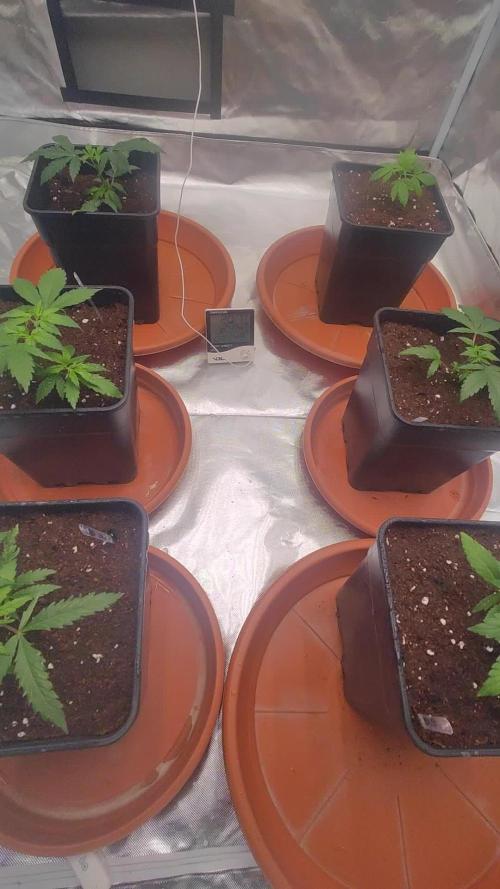
Poda apical hecha y brotes y hojas que no pintan na, fuera, a crecer 4 brotes con fuerza, que de estos sacaremos 8 y así sucesivamente.
La estructura que va teniendo esta planta está genial, se la ve muy sana.
Edito domingo 22/02: cambio de armario, de luces y de maceta.
El armario es la leche, se nota la calidad joder jajajajajaja es de la marca Vevor, poco conocida de momento... Pero dadle tiempo, uso también su extractor y de verdad que funciona de lujo y muy silencioso.
Las luces las tengo a 300W ya que es lo minimo pero bastante alejadas, a unos 40/50 cm. Les llega una media de 11,12k de ppfd.
Y lo dicho, trasplantadas a maceta todas.
Likes
5
Share


@MG2009
Follow
04/29/2021
GSC, is Fairing well against PM Blue Dream not so much going to have to physically wash leaves to take care of that. Watered in with
Seed & Plant (mychoriza).
Likes
20
Share


@MrWolfe
Follow
The stretch is real, they are being fed every other day, 1gal/plant basically. Nice uniform stretch along both rows.


Likes
14
Share

@HazeLiebhaber
Follow
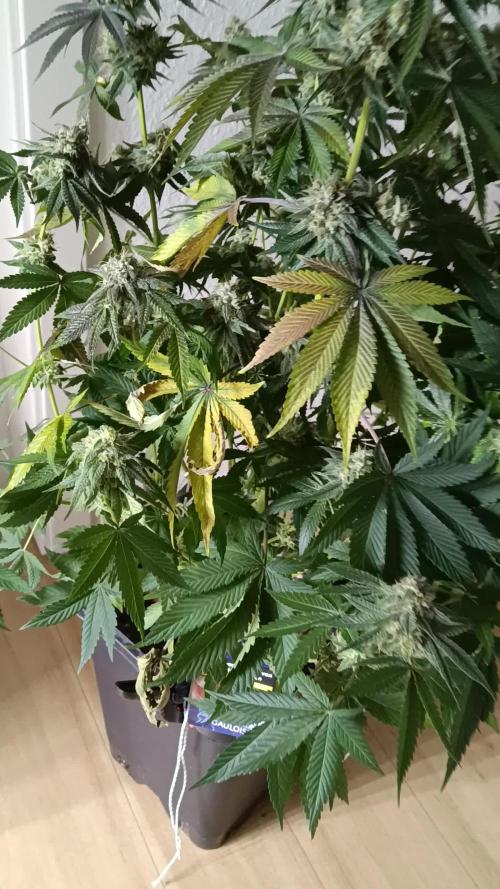
Die Grapefuel Gelato ist als erstes fertig geworden. Habe ein paar Bilder der Trichome von einer AI analysieren lassen und laut der ist der Anteil der Amber-Farbenen ca. 27% im Durchschnitt. Jetzt wird erstmal abgeholzt und dann nass angezogen.
Update nach dem Ernten:
Es scheint sich um einen gassy Pheno zu handeln 😋 an manchen Stellen haben sich anstatt 2 gleich 3 Buds gebildet 😍 bin echt auf den ersten Rauchtest gespannt 💚


Processing
Likes
154
Share


@CBD_Sweden
Follow
@FAST_BUDS,
Hi all the happy people here in GrowDiaries.
This is my second cultivation ever and it will be fun to try a bigger space than my closet grow.
First, I'm just going to say I'm done with the construction of my new growroom.
I put some pictures on the construction here in week one.
The room is 2.14 meters by 1.7 meters and has a ceiling height of 2 meters.
It provides a floor area of 3.6 square meters.
I use a 54 Watt Lightwawe T5 for germination and 2 Pcs 400 Watt HPS lamps.
I have a channel fan that replaces the room air about 40 times an hour to get a comfortable environment in the room, the air enters a fresh air intake from the outside.
The air is purified through a carbon filter to then leave the room to the rest of the basement.
Then I use that heat to heat the rest of the basement.
I will use 8 pcs 15 liter Autopots to grow with and a 100 liter water tank that supplies the pots of water and nutrition.
I will grow completely organically in soil and will watercure my buds to get the best possible medicine for me.
But there are no cultivation rooms to be displayed here, so I continue with what is most important.
Today I have put my seeds in my moisture dome and hope the seeds have germinated within a few days.
I am very excited to see how the new growroom will work and how this new secret CBD plant from @FAST_BUDS, will turn out.
..............................................................................................................................................................................................................................................................................................................................................
Update 2017-08-15. Both seeds have germinated and planted in small pots inside the humidity dome.
I'm so glad it worked so well and now it's just hoping they'll start growing and become 2 big healthy girls :)
...............................................................................................................................................................................................................................................................................................................................................
Update 2017-08-16. I have mixed my own soil today. Its 40% sieved peat harrow H2-H4 0-30 mm, 45% sieved peat harrow H4-H6 0-30 mm. 5% sand and 10% of compost soil. And i use 15% of perlite and mix it all together.
....................................................................................................................................................................................................................................................................................................................................................
2017-08-21 The 2 sisters are doing great, Nr2 is a bit after Nr1 . Some new pics.
............................................................................................................................................................................................................................................................................................................................................................................
2017-08-23. Transplanted from humidity dome and the small germinating pots to 15 liter autopots.
................................................................................................................................................................................................................................................................................................................................................................................
2017-08-27. The girls have settled in to there new home of the 15 liters autopot after a little transplant chock. Now the real week 1 starts for me and the girls. 4 new pics.
---------------------------------------------------------------------------------------------------------------------------------------------------------------------------------------------------------
2017-08-29. New movie of the girls. Its no water for 3 days now so the roots develop more and match the plant above the soil. The temp controlled fan is awesome, its easy to set what temp you like to have in the room. Right now its 28 celcius. And humidity is 56%.
--------------------------------------------------------------------------------------------------------------------------------------------------------------------------------------------------------------------------------------------------
2017-08-29.
Hello to you who read my diary, I just want to say that I am pleased that you have chosen to check in with me and in my diary.
I just want to say that I do this for myself and for a steady flow of my medicine.
Everything you read and see in my diary is 100% honest and I will never distort or beautify anything here.
I document my crops so that I can learn from my mistakes and also to look back at those different crops.
I try to update with pictures every day and with text if something special has happened in the garden.
This is my strainhunt for the best medicine and the beginning of my journey with cannabis and the cultivation of it.
-----------------------------------------------------------------------------------------------------------------------------------------------------------------------
2017-08-30. Cleaned the room this morning, just vacuuming and cleaning with chlorine solution. Im testing the fan to control temp and humidity, it works great.
Added some pics with measurements and a movie. Everything is looking great right now.
-----------------------------------------------------------------------------------------------------------------------------------------------------------------------------
2017-08-31. New video of the girls.
-------------------------------------------------------------------------------------------------------------------------------------------------------------------------------
2017-09-01. New pics and videos. Gave each of the girls with 2 ml Alg-A-Mic, 4ml Bio-Grow, 4ml Bio-Heaven and 10 ml Formulex mixed in 2 liters of water.
I hope they like it :)
-------------------------------------------------------------------------------------------------------------------------------------------------------------------------------------------------------------------------------------------
2017-09-02. New pics and the girls liked the water and nutrients yesterday.
-----------------------------------------------------------------------------------------
2017-09-03. Video of the girls this morning.
Kl 16.00. Did some defoliation on the girls. Videos added.
KL. 23.00. New video.
----------------------------------------------------------------------------------
2017-09-04. The start of week 3. New pics. Im trying to LST the girls.
KL 23.00. Added new video.
--------------------------------------------------------------------------------------------
2017-09-05. KL 08.00. Cleaned the room this morning, just vacuuming and cleaning with chlorine solution.
KL 12.00. The girls got 2 liters of water each with nutes in it, added a video.
-----------------------------------------------------------------------------------------------------------------------------------
2017-09-06. KL 08.00. The girls woke up after their beauty sleep, the leaves are always a bit down after 6 h of darkness, but they will stretch now when the HPS lamp starts.
Everything looks good and I keep trying to tuck the leaves so they get the maximum amount of light where needed. Added pics and video.
KL 23.30. Did some LST and leaftucking.
--------------------------------------------------------------------------------------------------------------------------------------------
2017-09-07. This is day 21 from sprouting. I have never tested PH in my grows, when growing organic in soil iv learned that it adapt PH by it self. But im curious by nature so i had to test.
Kl 10.00 Tested PH in the soil, it was 6.9 and tested my tap water and it was 6.8. Added video/pics of the girls, its 10 H after defoliation, LST and leaftucking. I think its looking good.
Kl 22.30. New pics
-------------------------------------------------------------------------------------------------------------------------------------------------------------------------
2017-09-08 KL 08.00. Good morning, added new video.
2017-09-08. Kl 23.50. Gave every girl 3 liters of water and nutes, added new video.
-----------------------------------------------------------------------------------------
2017-09-09. Kl 21.00. Defoliated a lot today, new pics.
---------------------------------------------------------------------------------
2017-09-10. Kl 08.00. Last day of week 3. New video.
2017-09-10. Kl 23.00. 3 New videos.
---------------------------------------------------------------------------------------------
Likes
43
Share


@inversi0n
Follow
Hello, readers!
Branches keep falling down, because of it's weight. I'm trying to manage them. Very hard positioning them.
One of big brunches broke somehow... It's still on the plant, layd on the ties
I think next week will be last for her.
I didn't change solution, so i decided to fed her with TA only this week, so as not to accidentally overdose her.
Feeding that's not from TA is in gr/l
Likes
36
Share


@ganjameister
Follow
The buds are bulking and a slight defoliation was done to expose the inner buds. The next week will be the last week of Nitrogen and flush will begin soon. Harvest in approx. 3 weeks
Processing
Likes
26
Share


@GrowGuy97
Follow
Day 7 & 2 of the NHLs still havnt popped, transplanting the one NHL that did pop today!
Day 12 think 1 of the orange sherbet have nute burn so flushing it out and dropping the dose a little hopefully that helps!






Likes
3
Share

@AestheticGenetix
Follow
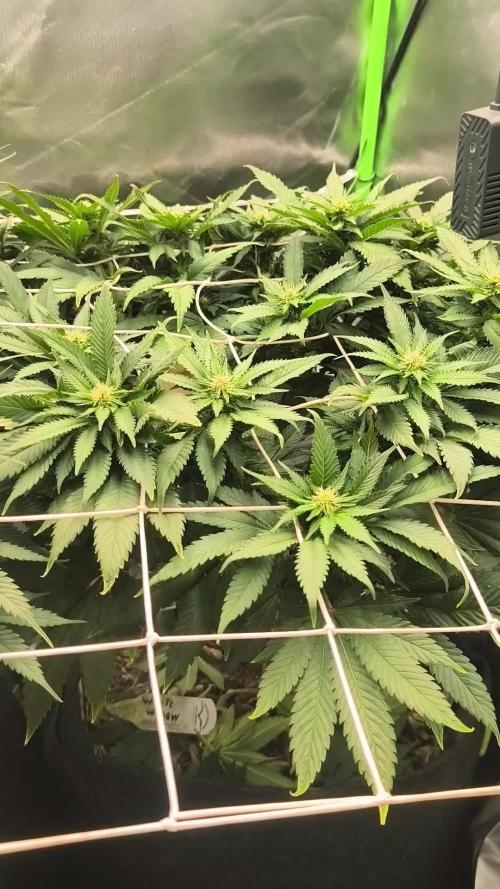
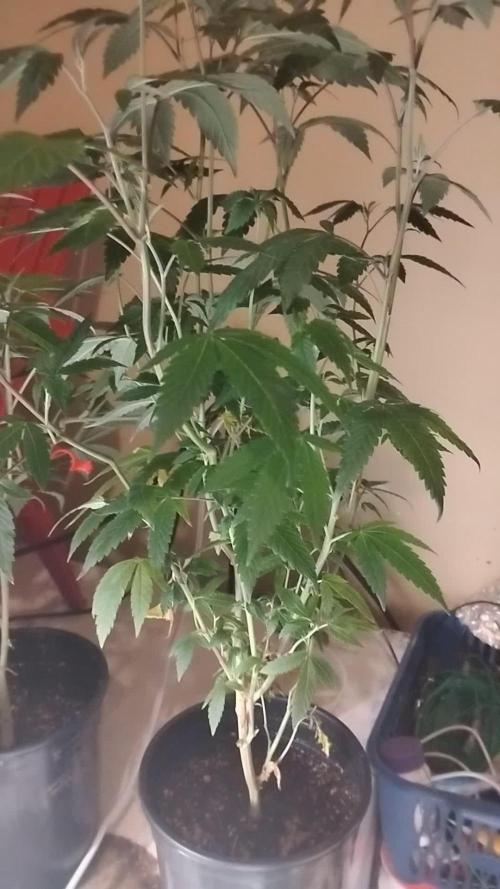
Oh man I'm excited about this one now. I think I may try and fill this tent out with this just this one plant.
Earth box and manual scrog on this Gelato. After getting her in there and realizing how easy she is to bend over and how easy it will be to get a monster plant with this set up, I'm super stoked. This will probably end up being a super long veg time but that's okay.
This is exciting for me. Something different.