Likes
12
Share
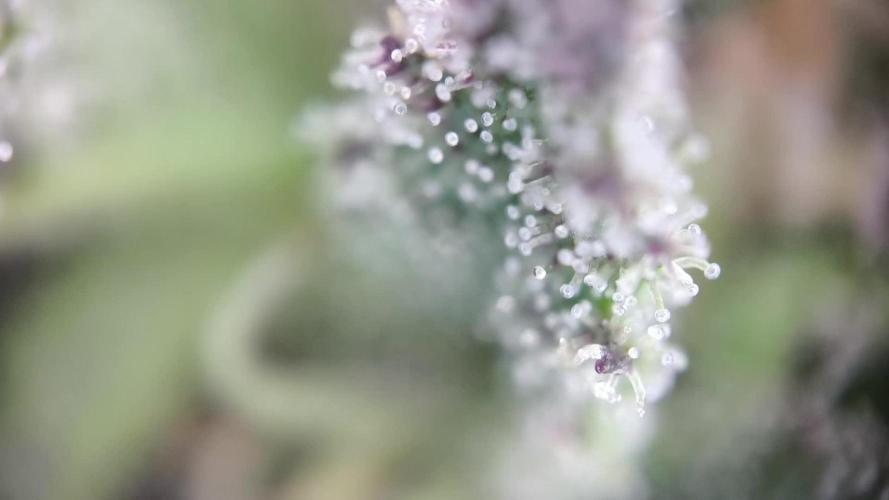
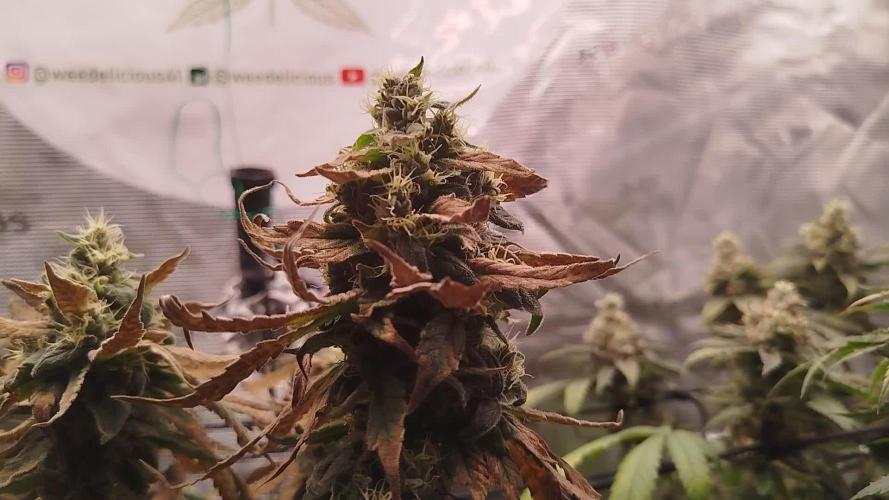
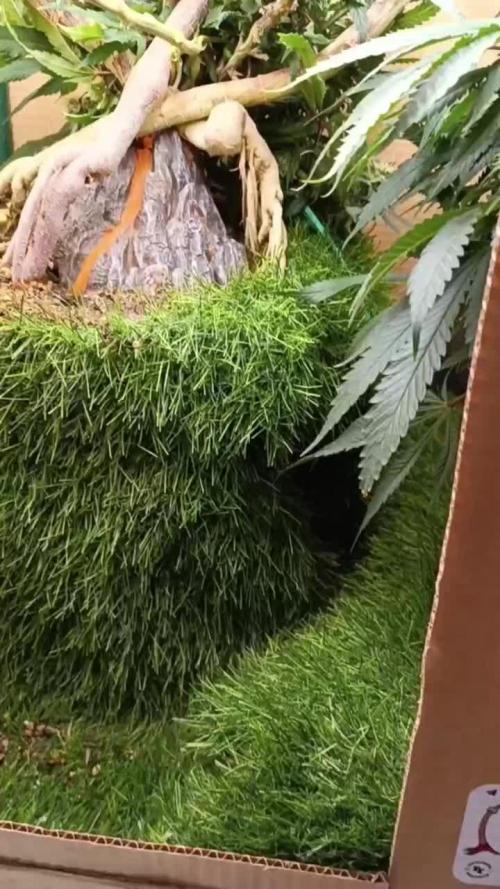
Looking good no issues to report. Watching flowers develop rapidly CO2? The light? The tent? Not sure what but loving the set ups effect on my babies added my red growstar light to head into week 5 Smells and swells time. Also the sprayed branch has male flowers in currently waiting to extract pollen
Likes
97
Share
January 24, 2019 The girls are doing WELL. My autos (Blackberry and NYC Diesel) are mid-flush now and will be chopped down this weekend. The Blackberry is a beautiful purple and smells lovely. This week she's been getting water only as a flush. I'm going to flush her one more time tomorrow, then chop her down over the weekend. 👍 ***January 26, 2019 update*** Cut down the FastBuds Blackberry and Barneys Farm NYC Diesel today and added a pic of the hanging branches. The NYC Diesel buds are much more dense than the Blackberry. The Blackberry buds are pretty loose and airy. I'm curious to see what they look like after drying for a week. Stay tuned...
Likes
13
Share
Likes
5
Share
Se me descalabro el medidor de ec, otro dwc que estaba a más de 3 de ec . Calibre el medidor y solucione el problema.
Likes
11
Share
@Jayndre69
Follow
Everything seems to be coming along nicely feed them some great white today, steady growth after topping and no sign of flower so all good.
Likes
45
Share
2nd net is up. Early bud formations are promising. holding up to the extremes pretty well, some leaves taking minor damage, but overall, she is holding up, gave her 1 night at 50F see how she would react, stressful. Not advised as it messes with her metabolism, but I want to see if it triggers any anthocyanin response. Love to see her purp up but no signs yet. My homework. Rubisco regeneration is intrinsically linked to nitrogen supply because Rubisco is a major sink for nitrogen in plants, typically accounting for 15% to over 25% of total leaf nitrogen. The regeneration phase itself consumes nitrogen through the synthesis of the Rubisco enzyme and associated proteins (like Rubisco activase), and overall nitrogen status heavily influences the efficiency of RuBP regeneration.Structural Component: Nitrogen is an essential building block for all proteins, and the sheer abundance of the Rubisco protein makes it the single largest storage of nitrogen in the leaf. Synthesis and Activity: Adequate nitrogen supply is crucial for the synthesis and maintenance of sufficient Rubisco enzyme and Rubisco activase (Rca), the regulatory protein responsible for maintaining Rubisco's active state. Nitrogen deficiency leads to a decrease in the content and activity of both Rubisco and Rca, which in turn limits the maximum carboxylation rate, Vmax, and the rate of RuBP regeneration Jmax, thus reducing overall photosynthetic capacity. Nitrogen Storage and Remobilization: Rubisco can act as a temporary nitrogen storage protein, which is degraded to remobilize nitrogen to other growing parts of the plant, especially under conditions of nitrogen deficiency or senescence. Nitrogen Use Efficiency (NUE): The allocation of nitrogen to Rubisco is a key determinant of a plant's photosynthetic nitrogen use efficiency (PNUE). In high-nitrogen conditions, plants may accumulate a surplus of Rubisco, which may not be fully activated, leading to a lower PNUE. Optimizing the amount and activity of Rubisco relative to nitrogen availability is a target for improving crop NUE. Photorespiration and Nitrogen Metabolism: Nitrogen metabolism is also linked to the photorespiration pathway (which competes with carboxylation at the Rubisco active site), particularly in the reassimilation of ammonia released during the process. To increase RuBisCO regeneration, which refers to the process of forming the CO2 acceptor molecule Ribulose-1,5-bisphosphate (RuBP) during photosynthesis, the primary methods involve optimizing the levels and activity of Rubisco activase (Rca) and enhancing the performance of other Calvin-Benson-Bassham (CBB) cycle enzymes. Biochemical and Environmental Approaches: Optimize Rubisco Activase (Rca) activity: Rca is a crucial chaperone protein that removes inhibitory sugar phosphates, such as CA1P (2-carboxy-D-arabinitol 1-phosphate), from the Rubisco active site, thus maintaining its catalytic competence. •Ensure optimal light conditions: Rca is light-activated via the chloroplast's redox status. Adequate light intensity ensures Rca can effectively maintain Rubisco in its active, carbamylated state. •Maintain optimal temperature: Rca is highly temperature-sensitive and can become unstable at moderately high temperatures (e.g., above 35°C/95F° in many C3 plants), which decreases its ability to activate Rubisco. Maintaining temperatures within the optimal range for a specific plant species is important. •Optimize Mg2+ concentration: Mg2+ is a key cofactor for both Rubisco carbamylation and Rca activity. In the light, Mg2+ concentration in the chloroplast stroma increases, promoting activation. •Manage ATP/ADP ratio: Rca activity depends on ATP hydrolysis and is inhibited by ADP. Conditions that maintain a high ATP/ADP ratio in the chloroplast stroma favor Rca activity. Enhance Calvin-Benson-Bassham (CBB) cycle enzyme activity: The overall rate of RuBP regeneration can be limited by other enzymes in the cycle. •Increase SBPase activity: Sedoheptulose-1,7-bisphosphatase (SBPase) is a key regulatory enzyme in the regeneration pathway, and increasing its activity can enhance RuBP regeneration and overall photosynthesis. •Optimize other enzymes: Overexpression of other CBB cycle enzymes such as fructose-1,6-bisphosphate aldolase (FBA) and triose phosphate isomerase (TPI) can also help to balance the metabolic flux and improve RuBP regeneration capacity. Magnesium ions, Mg2+, are specifically required for Rubisco activation because the cation plays a critical structural and chemical role in forming the active site: A specific lysine residue in the active site must be carbamylated by a CO2 molecule to activate the enzyme. The resulting negatively charged carbamyl group then facilitates the binding of the positively charged Mg2+ion. While other divalent metal ions like Mn2+ can bind to Rubisco, they alter the enzyme's substrate specificity and lead to dramatically lower activity or a higher rate of the non-productive oxygenation reaction compared to Mg2+, making them biologically unfavorable in the context of efficient carbon fixation. The concentration of Mg2+ in the chloroplast stroma naturally increases in the light due to ion potential balancing during ATP synthesis, providing a physiological mechanism to ensure the enzyme is activated when photosynthesis is possible. At the center of the porphyrin ring, nestled within its nitrogen atoms, is a Magnesium ion (Mg2+). This magnesium ion is crucial for the function of chlorophyll, and without it, the pigment cannot effectively capture and transfer light energy. Mg acts as a cofactor: Mg2+ binds to Rubisco after an activator CO2 molecule, forming a catalytically competent complex (Enzyme-CO2-Mg2+). High light + CO2) increases demand: Under high light (60 DLI is a very high intensity, potentially saturating) and high CO2, the plant's capacity for photosynthesis is high, and thus the demand for activated Rubisco and the necessary Mg2+ cofactor increases. Mg deficiency becomes limiting: If Mg2+ is deficient under these conditions, the higher levels of Rubisco and Rubisco activase produced cannot be fully activated, leading to lower photosynthetic rates and potential photo-oxidative damage. Optimal range: Studies show that adequate Mg2+ application can enhance Rubisco activation and stabilize net photosynthetic rates under stress conditions, but the required concentration is specific to the experimental setup. Monitoring is key: The most effective approach in a controlled environment is to monitor the plant's physiological responses e.g., leaf Mg2+ concentration, photosynthetic rate, Rubisco activation state, and adjust the nutrient solution/fertilizer to maintain adequate levels, rather than supplementing a fixed "extra" amount. In practice, this means ensuring that Mg2+ is not a limiting factor in the plant's standard nutrient solution when pushing the limits with high light and CO2. Applying Mg2+ through foliar spray is beneficial to Rubisco regeneration, particularly in alleviating the negative effects of magnesium (Mg) deficiency and high-temperature stress (HTS). While Mg can be leached from soil, within the plant it is considered a mobile nutrient, particularly in the phloem. Foliar-applied Mg is quickly absorbed by the leaves and can be translocate to other plant parts, including new growth and sink organs. Foliar application of: NATURES VERY OWN MgSO4 @ 15.0g L-1 in a spray bottle. Foliar sprays are often recommended as a rapid rescue measure for existing deficiencies or as a supplement during critical growth stages, when demand for Mg is high. Application in the early morning or late evening can improve absorption and prevent leaf burn. The starting point [of creativity] is curiosity: pondering why the default exists in the first place. We’re driven to question defaults when we experience vuja de, the opposite of déjà vu. Déjà vu occurs when we encounter something new, but it feels as if we’ve seen it before. Vuja de is the reverse—we face something familiar, but we see it with a fresh perspective that enables us to gain new insights into old problems. Come walk in the enchanted forest.
Processing
Likes
8
Share
After defoliating both Barbarian (=AK-47 x Barbara Bud) plants after week 11 they now develop more and amore flower clusters, since the light can penetrate deeper int the canopy now. The plants are producing trichomes like crazy, even the bigger sugar leaves are covered in them! VERY FROSTY PLANTS! The flower clusters clearly form colas now along all side branches and both plants fill up nicely. The smell is now strong and sweet with a clear peach aroma to it, it makes me smile every time I look into the tent. The plants love the Advanced Nutrients feeding schedule and are getting the recommended dose every watering.
Likes
15
Share
2/7: Did a thorough feeding today, and also foliar fed with Microlife Maximum Blooms. Added humic acid. 2/12: Fed today..no time for anything else..
Likes
10
Share
Likes
20
Share
@Hawkbo
Follow
Flushed these out a little yesterday to prevent build up. Starting to swell up a little bit.
Processing
Likes
Comments
Share
Hello everyone, Well the greenhouse is packed.and hard to move around in so I did a little video... See you guys next week.... 🤘🤘🤙🤙👍👍
Likes
16
Share
During the middle of this week I decided to stop the outward training of the branches & the allow vertical growth for beginning bud site formation . I don’t want to miss the beginning flower stretch kinda need it 😂. Decided to break the apical dominance of the main stem by LST’ing down . I noticed it was leagues ahead of the rest of the plant because it hung over the side of the pot so since I need to start slowing it’s vertical growth I figure now Is also time to get the rest of the canopy to catch up leaving me to space things accordingly later when/if necessary . Also decided to go ahead and do my 1st & last additional feeding since these girls where planted all I’ve had to do this grow was water when dry & train her to the best of my abilities. Week 6 on the GreenSceene in the books 📚 thanks for stopping by .
Likes
2
Share
Run two with pineapple muffins! And my cure from run one is smelling absolutely delicious. This first Pheno of pineapple muffins is showing the same traits of my Pheno 1 first run. I’m going to cross breed this Pheno with humboldt headband or possibly grape odder popz depending on how those Pheno hunts are looking as well.
Likes
16
Share
Hi to all friends of the green leaf, So, the move to the big tent went well, you can see the strawberries like the space, they started to expand immediately. Today I gave them one last "big" training, they are all starting to bloom nicely. Oh, and lest I forget, for the first time I'm experimenting with adding CO2, I used the normal fermentation process, using yeast, sugar and water. I mixed it all up in a bottle, made a hole in the cap for the tubing, and placed the end of the tubing in a circulation fan. So, have a nice time and keep it growing ! Peace✌️
Likes
3
Share
This cherry cola from fastbuds is already on a good start. They may have been a bit better if I had the light dialed in.
Likes
6
Share
@Ninjabuds
Follow
Permanent marker the 1st thing that comes to mind when I think about these seedlings is the stem out of all 12 seedlings I have going in the tent the 2 Permanent Marker seedlings stems are think when the fan blows on them they don't sway at all. 1 of the 2 seedling has some interesting wide leaves Last grow I overwatered and had to toss them because growth got stunted and a bunch if fungus knats got to the soil. This time I'm trying promix potting soil wish I had tried promix hp but the store close by isn't a hudro store and that's what they had. So this time I'm being very cautious with the watering I'm only useing a spray bottle I'm currently giving 45 spray per solo cup every few days when it dries out. This promix soil seems to hold water decent so the 45 spray there is 0 water coming out the bottom the cup yet. Here soon I think I'm going to double the amount of spray to 90 and start letting the soil get dry dry before watering again. Probably will hold off on any nutes quite yet. I'm going from 24/0 to 20/4 light schedule this week. There getting to the point they won't strech as much is 4 hrs of darkness and I'm rasing the light intensity a little it's been around 150 I'm upping it to around 175. Most likely by the end of the week I'll probably be pushing 200 or close. Hopefully I can get them into the big tent soon At this stage I like to alternate having the fan blowing on them I feel it gives them time to recover and get stronger instead of wind stress. Also every few days I will turn the plants so they are facing away from the light making them grow back towards the light I fell it makes them stronger
Likes
23
Share
Likes
15
Share
Having some bad issues with maybe a deficiency. Learning I need to examine my plants more closely more often!
Likes
11
Share
This week has been great! Germination on all 4 Pre 98 Bubbas and 2 Dirty Blondes was a success!! We planted them in there pots an through out the week we gave em each a very light spray down of pure water phd at 6.5 and by Friday they all popped out the soil Let’s go!!!!! Next week we will start light feed on nutrients , so y’all keep them eyes peeled for next updates an I appreciate y’all for following my grow !!😶‍🌫️💨💨💨🙏🏻💚💯🤙🏻