


Likes
Comments
Share


@DomanAtrik
Follow
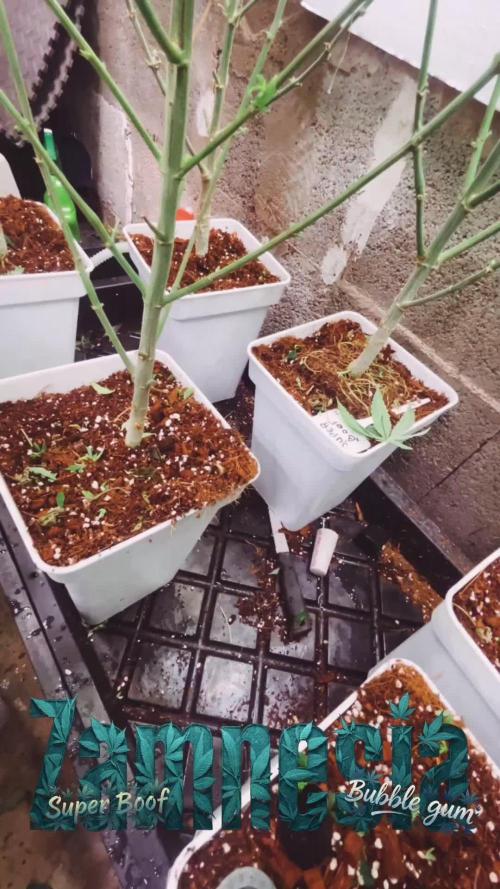
Harvest went well. Chopped them down. Hanging now with a gentle fan. Chopped a few lower branches to dry and smoke while waiting. Havent weighed anything yet. Will add weights to this week soon. A total of 14.3 oz.




Likes
80
Share


@RickJames_Mcdank
Follow
Everything is going fine now in week 2. I gave her only 2ml / 700 ml once. And after that just plain water. She started to stretch now. But she has recovered very well after the slow start. So finally she has a even canopy and thats what I wanted to achieve. For now she will get plain water till the Batmix runs out and I need to start give her Alga Blome. next week I will start giving her Green Sensation.

Likes
4
Share


@m0use
Follow
***Sponsored Grow*** = Medic || https://medicgrow.com || Grow = ***Sponsored Grow***
This plant has been doing great, when I am in working with it it releases lovely peppery notes into the air. It has a super short compact structure I'm curious to see what it will be like in stretch.
Still giving them a 2:1 or 2.5:1 grow vs bloom nutrient. Its helping with some of the pink stems from last week. Feeding strength is up .2 point to reach 900ppm or aorund 1.8EC will leave it here fro the remainder of Veg. Prob will do for 2 more weeks then flip to flower as I just topped them and want to give them some time to recover.
NPK ratio of 7-7-14 1:1 equal parts grow/bloom.
Grow=8-4-15
Bloom=6-10-14
Boost=1-15-30 "not yet used it yet"
Also took some clones from the plants as well, took two main cuttings from each plant, forgot to do the one so its not shown in the first video up the updated clone pics later in the week. If any of these impress me then the clones will go outside and grow there all year for a extra special harvest. Or I'll give them out to some friends and family maybe a little gorilla gardening project, but I will wait before getting ride of them all as I'm still kicking my self in the ass over the Blue Cindy loss. really liked that plant and wish its clones I gave out where still aorund.
Lights doing well. The V1 spectrum is good on the medic grow mini sun-2's 240w. No issues so far, dimmed at 80% till flower is initiated then up to 100%, Will test out 13/11 I think as the schedule to give them some more photons for an extra hour vs 12/12
.
Till next week.
***Sponsored Grow***
Official Website:
https://medicgrow.com/
+
https://seedstockers.com/
Facebook:
https://www.facebook.com/medicgrowled
+
https://www.facebook.com/SeedstockersBarcelona/
Twitter:
https://twitter.com/medicgrow
+
https://twitter.com/seedstockersb
Instagram:
https://www.instagram.com/medicgrow420/
+
https://www.instagram.com/seedstockers_seeds
YouTube:
https://www.youtube.com/channel/UCNmiY4F9z94u-8eGj7R1CSQ
+
https://www.youtube.com/channel/UC4GiFYrIWeNtwtXjcivCmfw
Growdiaries:
https://growdiaries.com/grower/medicgrowled
https://growdiaries.com/grow-lights/medic-grow
+
https://growdiaries.com/grower/seedstockersofficial
https://growdiaries.com/seedbank/seedstockers


Likes
11
Share

@Borberad
Follow
Woche 4
Das neue Töpfchen wurde akzeptiert. Bisher sehr unkompliziert die kleine.
Tag 24 Wir haben uns für 6 Triebe entscheiden und entsprechend beschnitten. Toppen über der gewünschten Nodie muss noch etwas warten. Tag 25 Die Internodie ist lang genug. Toppen!
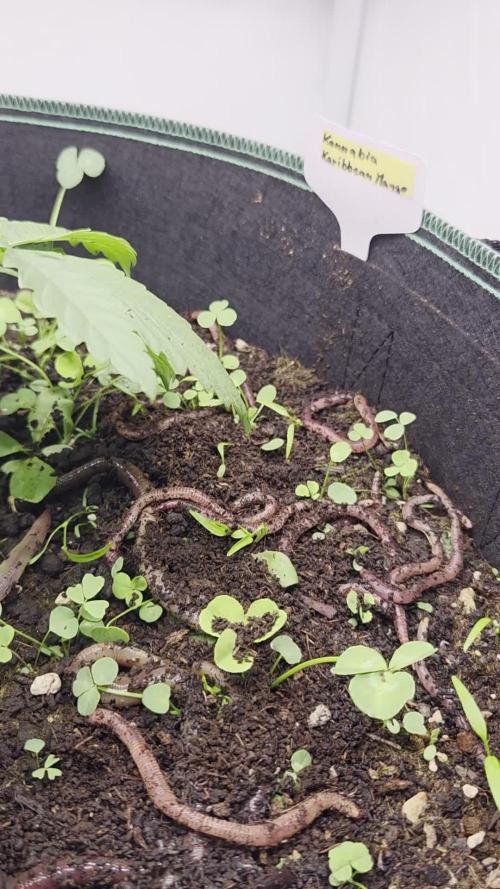
Tag 26 Kommt Zeit kommt Wurm. Das zusätzliche Leben ist angekommen: 10 Tauwürmer 20 Rotwürmer und 15 Dendrobena finden nun ein neues Zuhause und wollen gepflegt und gehegt werden.
Tag 28
Es gibt Bio Seemandelblätter als Langzeitfutter und etwas Kelp für die Würmer.

Processing
Likes
14
Share


@Okie4
Follow
Girls have really taken off this week with explosive growth. All of these photos and videos are on day 21 of the grow. Plan on doing some low stress training shortly.
Increased the nutrients by a bit this week! Lowered lights to 22ish inches.
Cal mag 2ml
Micro 2.5ml
Gro 2.5
Bloom 1ml
And slowly increasing the water amount each feed. They are reacting nicely to this approach so I will continue to do so.
Likes
16
Share


@JUNGLE_B4RNS
Follow
Indica/Sativa Hybrid. Chitrali #1 (IBL) x Skunk no.1. Tall growing kush with a high yield. Lemon zest aroma with a sweet kush flavor.
Lemon Cream Kush was cloned straight from original Chitrali #1 seeds, which we got from Pakistan (Hindu Kush valley) and stabilized using one of our proven Skunk #1 fathers. By extensively selecting and backcrossing the Chitral we have formed a very stable strain; stress proof and with only a few phenos.
Our Lemon Cream Kush is an Indica/sativa hybrid with rock hard nugs and massive resin production. She has been long time favoured strain in Holland.
Lemon Cream Kush is taller in stature and stretches a lot during flowering. She gives long dense kush buds. She is ideal for SCROG and very well suited for growing in more moderate climates, Indoor flowering takes 8-10 weeks, outdoors she is ready for harvest in October.
Her smell is lemon with a piney twist. Delicious tasting bud with a sativa euphoric high and a mild bodystoned effect. There is no raciness or paranoia whatsoever, making her ideal for daytime medication against chronic pain and stress.


Likes
7
Share


@fabialien
Follow
Lunes 11 de marzo 7 am de 2024:
Se dejaran hidratando las semillas por 24 hrs.
Martes 12 de marzo 7 am de 2024: pasamos a papel dejamos por 24 hrs.
Miércoles 13 de marzo 10 am de 2024: revisamos las semillas y vamos preparando macetas pequeñas para transplante.
Miercoles 13 de Marzo 3:30 pm se traspasa a tierra.
Viernes 15 de marzo 11:47 pm 2024, ya que abrieron bien se pone bajo lámpara 100w a 30 cm de distancia, tienen domo protector! El lunes en la nueva semana subimos el avance, hasta el Lunes...
Sábado 16 de marzo 2024, de las 3 semillas la 1 ya abrió completamente, 2 y 3 están por abrir completamente.


Likes
26
Share


@Hydro_Bins
Follow
New grower, always looking to improve.
Continuous drip, expanded clay system with an 80L reservoir.
Nutrients mixed to a 40L ratio. (Half strength)
Recovering from accidentally leaving the drip feed for about 18 hours, and then nutrient locking the clones the previous week.
Likes
44
Share


@Chedderbob112
Follow
Waiting on a full plant hang dry so will wait at least two weeks maybe three hope ma vegging station holds up n can dae tge damage the now as av said guys this is definitely not the perfect set up am not on good terms with land lord so basically squatting here lol and growing and a got caught with one in this house the land lord doesn’t even know lol 😂

Likes
5
Share


@JazzBerries
Follow
Organic, I'm on day ~55, but the flash photo was taken on day 50. I've had some problems, but it's looking like they'll hold out until fully ripe. Trichs are starting to look cloudy, but new pistils are still forming aggressively. I'll try for 1 more week.
Lower nugs are taking their time to finish.

Likes
5
Share


@CannaIGrow
Follow
This plant seems to have grown much denser and better than my first plant. I just got the ac infinity ventilation setup with controller 69 for my 2x2, still trying to learn, hopefully grow #3 goes even better. Stay tuned
Processing
Likes
6
Share


@Flydope21
Follow
I will probably veg these an extra week or two before flipping them. Was going to make this the final week but I don’t think they’re quite there yet.

Likes
29
Share


@JeyGanesha
Follow
Un altra settimana è passata senza problemi...grazie alla mia perseveranza nel curarla e debellare i ragnetti Rossi che bastardelli mi sono arrivati anche dentro al box... sicuramente c'è li ho portati io involontariamente quando sono andato a vedere delle piante di un amico che erano impregnate di ragnetti e ragnatele sui fiori....vabbè ora devo sbattermi un po' più ma non lascerò che mi rovinino la mia terapia 💪👍🙏🕉️🙏... Boom Shiva Shankar 🕉️ belle le mie coccinelle 🐞 che mi tengono pulita la mia terapia


Likes
12
Share


@prebiancagrower
Follow
Hello lads! How are you doing?
So, week 8 and the ladies are amazing, the buds are getting fat is this stage, and I am very happy with it.
Gonna start the harvesting in two weeks.
Thanks for following me!

