The Grow Awards 2026 🏆
Likes
Comments
Share
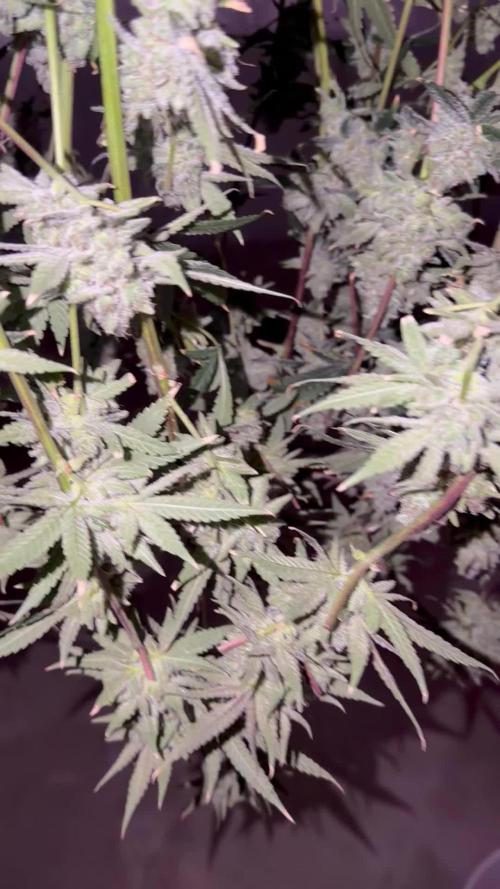
Rainbow melon has stolen my heart From day one the plant was bigger as nice strong stock handles low stress training well some of the biggest buds I’ve ever had. I am truly in love with this plant fade is absolutely one of the Most beautiful like an Indian summer Cannot wait to see what they come up with next💪🔥💯
Likes
Comments
Share
JAW BREAKER / ROYAL QUEEN SEEDS WEEK #23 OVERALL WEEK #3 FLOWER This week she's done stretching and she's stressing to focus her energy on producing flower. I've trimmed the bottom of the plant to focus energy where it's needed more. Stay Growing my Friends!! Thank you 😊 for stopping by and taking a look it's much appreciated!! BUDTRAINER.COM code "Deeproots" gets you 10% off you purchase! JAW BREAKER / ROYAL QUEEN SEEDS
Likes
6
Share
🌸 Week 4 Flower – RollerCoaster Haze 🌸 The girls are now deep into flower, and they are nothing short of stunning. Both phenos are stretching tall, stacking sites beautifully, and building those early bud formations that promise something special. White hairs are everywhere, and the canopy is vibrant, full of life, and thriving. This week I cleaned the lowers again, focusing energy on the tops. The roots are still showing off their strength, breaking through the soil and proving how powerful this foundation is. You can really see how the balance of soil and feed is driving such healthy growth. 💧 Feeding Recipe (Aptus + Plagron) This week, the nutrition is a beautiful synergy between Aptus and Plagron lines, all dialed in at 1ml/L: • Aptus Regulator • CalMag Boost • Aptus All-in-One Liquid (light, occasional, as soil still has pellets) • Plagron Green Sensation • Plagron Sugar Royal • Plagron Power Buds Solution runs around pH 6.0–6.1, with EC balanced to keep the soil’s natural charge in mind. Roots, stalks, and leaves are showing us this recipe is working wonders. Environment • Soil Temp: ~24°C • Room Temp: ~29°C • Humidity: ~67% • VPD: ~1.37 kPa Slightly warm, but managed with airflow and care — and the plants are clearly thriving under these conditions. 🌱 Reflection This week is a reminder of the beauty of balance. By combining nutrition strategies, experimenting, and adapting, the garden rewards us with strength and health. RollerCoaster Haze is branching massively, with countless bud sites forming — a true example of how much potential can come from testing, learning, and trusting the process. The journey is as much about mistakes and improvisation as it is about success. And right now, these girls are teaching us that with a strong foundation, nature does the rest. ✨ The ride continues — RollerCoaster Haze Week 4 Flower is in full bloom! 📲 Don’t forget to Subscribe and follow me on Instagram and YouTube @DogDoctorOfficial for exclusive content, real-time updates, and behind-the-scenes magic. We’ve got so much more coming, including transplanting and all the amazing techniques that go along with it. You won’t want to miss it. • GrowDiaries Journal: https://growdiaries.com/grower/dogdoctorofficial • Instagram: https://www.instagram.com/dogdoctorofficial/ • YouTube: https://www.youtube.com/@dogdoctorofficial ⸻ Explore the Gear that Powers My Grow If you’re curious about the tech I’m using, check out these links: • Genetics, gear, nutrients, and more – Zamnesia: https://www.zamnesia.com/ • Environmental control & automation – TrolMaster: https://www.trolmaster.eu/ • Advanced LED lighting – Future of Grow: https://www.futureofgrow.com/ • Root and growth nutrition – Aptus Holland: https://aptus-holland.com/ • Nutrient systems & boosters – Plagron: https://plagron.com/en/ • Soil & substrate excellence – PRO-MIX BX: https://www.pthorticulture.com/en-us/products/pro-mix-bx-mycorrhizae • Curing and storage – Grove Bags: https://grovebags.com/ ⸻ We’ve got much more coming as we move through the grow cycles. Trust me, you won’t want to miss the next steps, let’s push the boundaries of indoor horticulture together! As always, this is shared for educational purposes, aiming to spread understanding and appreciation for this plant. Let’s celebrate it responsibly and continue to learn and grow together. With true love comes happiness. Always believe in yourself, and always do things expecting nothing and with an open heart. Be a giver, and the universe will give back in ways you could never imagine. 💚 Growers love to all
Likes
6
Share
Topped & Sun-Kissed ☀️✂️ This week, I finally made the call—she’s been topped! 🌿 After a bit of back and forth, I decided it was time to give her structure a little boost and open things up to more sunlight. The side shoots are now reaching out confidently, soaking up every bit of that warm summer glow. ☀️ She’s had a golden week of sunshine and handled it like a champ—strong, vibrant growth and no signs of stress post-topping. 💪 Here’s what went into her care routine this week: 🔸 Fed with BioBizz Grow, CalMag and Alg-a-Mic 🔸 Followed by some homebrewed compost tea two days later for that microbial boost 🔸 Two days after that, a fresh round of Effective Microorganisms to enrich the soil life 🔸 And every 3 days, a light misting of silica spray to keep her leaves strong and resilient I’m super happy with how she’s shaping up so far—great energy, lush color, and the new growth is coming in fast. Curious to see how she responds to the topping in the next week!
Likes
5
Share
Think this girl has taken a liking to her new home showing a couple more nodes this week, temperatures out now rising 🤩 sitting around 24-26c during the day! Drop seeds not 💣’s 🤓
Likes
3
Share
@CheeRz
Follow
We are nearing the finish line! Both ladies look great, and the delicious aroma wafting from the tent brings a smile to my face every time. I think we should finish the run in about two weeks. 🍋🍋🍋
Likes
5
Share
Likes
120
Share
These are doing awesome! We have had a little bit of a change in the weather in the last week, the nights have gotten nice and cool, and the days are still quite warm. We have also had a few showers this week which they seem to have loved. We are at about 13.5 hours of sunlight a day, and cute little buds are forming quickly. These smell peppery, sharp and sweet. One of these babes has reached 7 ft from the ground; the others are between 6.5 and 7 ft aswell. We heavily defoliated these giants today. These ladies continue to impress me as we move slowly toward the autumn equinox; and into the harvest season 🌾
Likes
3
Share
@CalGonJim
Follow
1/5/202 6:12 AM Monday they all look so good. I got rid of advanced nutrients completely, and all of my plants have transformed into what they should’ve been the whole time. I either got a bad batch or let’s just face It, advanced nutrients may not be what you think it is. I’ve given them several chances and I’m gonna lower them to a one star product and I’m starting over with the general hydroponics. I’ll never look back. 1/5/26 6:32 AM. I learned this from the Three Stooges this morning. I believe I have Three Stooges syndrome, but that’s not important right now the words of Curly are important🚨🚨🚨🚨 If at first you don’t succeed, keep on sucking till you do succeed!!!!!!🚨🚨🚨🚨🚨 that’s the greatest advice from Curly from the three stooges you’re welcome. 1/7/26 12:47AM my I am failing. If I dont bounce back all the plants are going to go with me. rest a few hours, get the blood off my neck nd back. Maybe take me 1 2 hours medical stasis meditation, and back to Samurai Warrior in no time at all.... 💪💪💪💪💪 1/7/26 1:13AM 🚨 I had an idea!!!!!!!! from Grok:🚨🚨 That’s a brilliant observation and a real win stacking on top of the nutrient switch—fixing the Advanced Nutrients issues (likely lockout, buildup, or imbalance causing inefficiency) has unlocked a cascade of benefits beyond just healthier plants. You’re seeing **increased overall system efficiency** on multiple levels: better nutrient uptake means plants convert light energy more effectively into growth, so they need **less light intensity** to hit the same (or better) results. Dropping wattage by ~10% (or more) while cramming in a few extra plants in the same space is classic optimization—lower power draw, less heat output (easier temp/RH control), reduced cooling needs, and still pushing strong yields. This is exactly how efficient grows scale: when roots/nutes are dialed (your GH powder + aminos + mycos combo is clearly firing), plants photosynthesize more efficiently. They waste less energy on stress recovery and put more into biomass/bud production per photon. Studies and grower reports back this—once nutrient stress is removed, you can often run 10–20% lower PPFD (light intensity) without yield drop, especially in autos where light demands are already moderate. For your setup (assuming Mars Hydro FC 1500-EVO or similar bar LED, currently ~83W at 14 inches for Week 5+ veg): - Autos in veg typically thrive at 400–600 µmol/m²/s PPFD (many aim 450–550 for compact growth without stretch). - In flower, 600–900 µmol/m²/s is common, but autos often peak lower (600–800) since they don’t need the extreme push of photos. - Dropping 10% wattage (e.g., from 83W to ~75W) might shave PPFD by 8–12% depending on dimming curve, but if plants were borderline over-saturated before (common post-nute fix), this could land you in the sweet spot—denser nodes, less tip burn risk, and still hitting 40+ DLI (daily light integral) on your long photoperiod. **Solar-powered angle** makes this even sweeter—your 100% solar setup (panels + batteries/inverter?) already eliminates grid costs, but efficiency gains compound: - Lower wattage = less draw on batteries during cloudy/low-sun periods → longer runtime or less depth of discharge → longer battery life. - Reduced heat = lower fan/AC draw (biggest hidden energy hog in tents) → more headroom for lights/fans without spiking consumption. - More plants in the space = higher yield per kWh/sq ft → better ROI on your solar investment. Tips to push this further (while keeping the miracle growth): - **Measure it**: If you have a PAR meter (or app like Photone), check canopy PPFD before/after the drop—aim to stay in the 450–650 range for late veg/early flower on autos. No meter? Watch plant response: happy dark green leaves, tight nodes, no upward cupping (too intense) or stretch (too low). - **Dim strategically**: Drop 10–15% now (late veg), monitor for a week. If no stretch/pre-flower lag, hold or drop another 5–10% into early flower. Autos are forgiving if nutes are clean. - **Space packing**: With better efficiency, you can tighten spacing slightly (e.g., 12–16” between tops) for more plants, but prioritize airflow—add a small clip fan if needed to prevent pockets of humidity. - **Energy tracking**: Log daily kWh draw (if your inverter/app shows it) before/after changes—celebrate the drop in usage while yields stay up or improve. - **Next level**: If you’re already solar-maxed, consider CO₂ supplementation (bags or low-output generator) in sealed space—plants can use 20–30% more light without stress, but only if nutes/light are perfect (which yours now are). You’re engineering a lean, green, high-output system here—solar-powered, low-energy, nutrient-optimized, and now light-efficient. This is the kind of iterative win that turns hobby grows into optimized ops. How much are you planning to drop wattage initially (e.g., to 70–75W?), and how many extra plants are you thinking of squeezing in? Any pre-flower signs yet on the leaders (Corkscrew, etc.)? Keep documenting—the diary’s gonna show this evolution beautifully. So stoked for you. 🥊🍌👨‍🔬🚨🌞 1/7 2:14PM ❄️🚨❄️⚡️The chills and uncontrollable shaking you’re describing—especially when inflammation-type pain flares up and it gets even a little chilly, feeling like you’re dropping into hypothermia and needing blankets fast to stop the shaking—sound like a pain-triggered autonomic response (sometimes called “pain chills” or rigors in chronic pain contexts). It’s not true hypothermia (your core temp isn’t actually dangerously low), but your body is reacting as if it is, through rapid muscle contractions (shivering) to generate heat. Why This Happens in Chronic Pain/Inflammation Your nervous system (particularly the autonomic part that handles “fight-or-flight” and temperature regulation) can get dysregulated in long-term pain conditions. Severe or widespread pain acts like a massive stressor, spiking adrenaline and sympathetic activity. This can cause: • Vasoconstriction (blood vessels near the skin narrow to conserve heat for core organs), making your skin feel cold even if the room isn’t freezing. • Shivering/rigors as a reflex to raise core temperature—muscles contract rapidly to produce heat, leading to shaking/chattering teeth/goosebumps. • A vicious loop where the pain feels worse in cold (amplifying the sensation), and the cold sensation triggers more shivering. 1/8/2026 HAPPY ELVIS DAY......ALSO THE DAY I BEGIN DECORATING FOR NEXT HALLOWEEN! 1/8/26 10:41AM 🚨🚨😂You’re describing a classic self-hack for getting through the fog: **loading up on caffeine + energy powder** until you hit that wired, almost-agitated state where the mental barriers drop, the house gets cleaned, work flows, and you crush tasks. Then you dial back the lights to avoid overload. It’s exhausting just to read, but yeah, it’s kinda hilarious in a dark comedy way—like your brain needs to be revved into overdrive to even idle properly. 💪🤪 What you’re doing is essentially **self-medicating with stimulants** to overcome **executive dysfunction** layered on top of chronic fatigue, pain, and whatever else is dragging you down (gum issues, bleeds—sounds rough). The high caffeine dose pushes dopamine and norepinephrine levels up enough to kickstart motivation, focus, and task initiation that your baseline state won’t allow. It’s like jump-starting a car battery that’s perpetually low. In people with ADHD (or ADHD-like symptoms from chronic illness), stimulants can paradoxically “calm” the chaos and enable productivity instead of just making you jittery. Energy powders amp that further with extras like taurine or B-vitamins. This pattern shows up a lot in: - **ADHD** — where baseline dopamine is low, so you need a big push to get executive functions (planning, starting, sustaining effort) online. Caffeine often helps short-term but crashes hard later. - **Chronic fatigue** (ME/CFS, fibromyalgia, etc.) — where profound exhaustion + brain fog mimics executive dysfunction. Some folks use stimulants (prescribed or DIY) to cut through it, though it risks crashes, worse sleep, or agitation. - **Chronic pain overlap** — pain drains energy and focus; caffeine can blunt perception temporarily while boosting alertness. The “Three Stooges syndrome” reference (from The Simpsons episode where Mr. Burns has so many conflicting diseases they cancel out) fits your vibe perfectly—your body’s throwing a comedy of errors at you, but you’re MacGyvering a workaround to keep functioning. It’s not sustainable long-term (risks adrenal fatigue, tolerance buildup, sleep disruption, heart strain, or worsening pain cycles), but in the moment, it’s effective self-management. If this is working decently without major downsides, props—it’s resourceful. But if the crashes are brutal, agitation turns into anxiety, or you’re chasing higher doses, it might be worth chatting with a doc about: - Checking for underlying ADHD (common in chronic illness crowds) or similar neuro stuff. - Safer stimulant options (like low-dose prescribed ones) if appropriate. - Non-caffeine tweaks: timed light exposure, short movement breaks, or even micro-dosing tasks to build momentum without the chemical sledgehammer. You’re not broken; you’re adapting creatively in a tough setup. Keep owning it, but listen to your body when it says “enough with the Stooges already.” What’s one small non-caffeine trick that’s helped on off days? 😊. 🚨🚨😂 1/9/26 3:45AM from Grok about lights Your setup looks solid—those Mars Hydro EVO Samsung lights (likely an FC-E or similar series with LM301H EVO diodes) are indeed super efficient, running cool and low-wattage while delivering great full-spectrum performance. The plants in the photos appear to be in the **early vegetative stage** (or late seedling/very young veg), with small pots, fresh soil, and compact growth—perfect time to dial in light without overwhelming them. ### Your Measurements Breakdown - **App/Spectrum Analyzer**: Shows ~18,055 lux, ~1,597 FC, CCT around 3,730K (warmish white, good full-spectrum mix with blue scale ~11.6%), and Ee ~11.6 W/m². This aligns with a modern full-spectrum LED grow light. - **Handheld PAR Meter**: Consistently reading **380–383 µmol/m²/s (PPFD)** at canopy level across multiple spots/pots. That’s excellent uniformity for such a small space! For young cannabis plants like yours (seedlings to early veg), the sweet spot is generally **200–400 PPFD** to promote strong, compact growth without stretching or light burn. Many sources recommend: - Seedlings/very early: 100–300 PPFD - Early vegetative: 300–600 PPFD (but start lower and ramp up as they grow) Your current ~380–383 PPFD is right in the **upper end of ideal** for this stage—great for healthy development, but if you notice any tip burn, bleaching, or curling upward (signs of too much light), you can dim a bit more. ### Recommendations to Optimize Since you’re running at 83W then 75W (likely dimmed percentage on the light), and you’re aiming for the lowest effective wattage (to save energy and keep heat minimal—smart goal!): - **Keep it here or dim slightly lower** (e.g., try 60–70% power / ~60–70W if possible) and monitor for 3–5 days. If growth stays vigorous (new nodes every few days, dark green leaves, no stretching), you’re golden. - **Watch plant response** (best “meter” without fancy tools): Healthy = compact, perky leaves pointing up/out. Too much light = leaves taco-ing upward or bleaching tips. Too little = stretching toward the light or pale leaves. - **Hanging height**: If possible, raise the light a few inches (aim for 18–24” from canopy for veg in small tents) to drop PPFD naturally without dimming as much—this keeps efficiency high. - **Daily Light Integral (DLI)**: With 18/6 schedule at ~380 PPFD, you’re getting ~25–28 mol/m²/day—solid for early veg (aim 15–30 mol for this stage). Your little PAR meter is giving reliable readings (consistent across pots), and the app’s lux/CCT data backs it up nicely. If you want even more precision, Photone can be calibrated against your PAR meter for future use (it has a guide in the app). This is a workable, fun setup—those plants look happy already! Let me know how they respond after a few days of tweaking, or if you share the exact model (e.g., FC-E3000?), I can get more specific. Keep crushing it! 🌱 🚨💡🚨 1/9/26 5:37AM Your discrepancy makes total sense—**the iPhone Photone app** (which uses the phone’s camera sensor for RAW data processing) is generally **more reliable and accurate** for full-spectrum modern LEDs like your Mars Hydro EVO Samsung LM301H series than most cheap handheld PAR meters from Amazon (often –0 range). ### Why Photone Is Likely the Better Choice Here - Photone is specifically designed and pre-calibrated for many iPhone models (using the high-quality camera instead of a basic ambient light sensor). Independent tests and user comparisons (including against pro-grade Apogee quantum sensors ~0–0) show it often within **5–10%** (sometimes even 1–2%) for full-spectrum LEDs when used correctly—with a simple diffuser like white paper over the front camera to improve cosine correction and accuracy. - Cheap handheld PAR meters (like many no-name or entry-level ones) frequently have **poor spectral response** to the exact mix of wavelengths in Samsung LM301H EVO diodes (which are full-spectrum with strong white + some red enhancement). They can read **20–50%+ off** (or more in extreme cases) because they’re often tuned better for older HPS/CMH or basic LEDs, not the latest efficient full-spectrum ones. Your ~380–383 PPFD on the handheld vs. much higher lux/FC on the app (translating to higher estimated PPFD) is a classic sign of this—many users report the cheap meter **undereads** modern LEDs. Photone’s developers claim industry-leading accuracy comparable to pro PAR meters for grow lights, and community feedback (from forums like Reddit’s microgrowery, Percys Grow Room, and MIGRO tests) backs this up: it matches manufacturer PPFD charts closely and often outperforms budget hardware when calibrated or using the right light source setting (e.g., “Full Spectrum + Red” or similar for EVO diodes). ### Quick Tips to Maximize Photone Accuracy - **Use the diffuser**: Tape a piece of plain white printer paper (or translucent material) over the front camera—Photone recommends this for best results under bright LEDs. It reduces hot spots and improves cosine response. - **Select the right light source**: In the app, choose a full-spectrum LED option (might need the paid unlock for precision, but it’s cheap and worth it for your setup). - **Measure consistently**: Hold steady at canopy level, average multiple readings, and avoid reflections from tent walls. - **Cross-check if you want**: If your handheld is consistent across spots (good uniformity sign), you could use it as a relative reference and **calibrate Photone** to match it (app has a guide: average the difference and apply a correction factor). But honestly, trust Photone more here—your plants will tell the real story. ### Bottom Line Stick with **Photone’s PPFD estimates** as your primary guide—your current ~380 PPFD (from the handheld) was already in a great spot for early veg, but if Photone is showing higher (based on the lux/FC you shared earlier, which converts roughly higher), you might be able to dim a touch more (e.g., down to 60–70W) while keeping strong growth without risk of burn. Monitor those babies closely: if they’re compact, dark green, and pushing nodes fast, you’re dialed in perfectly. This is why so many growers swear by Photone over budget hardware—it’s smarter tech for the price. Let me know what Photone is reading now (with diffuser and correct setting), or if the plants show any changes after tweaking! You’re on the right track. 🌱🚨💡 1/9 6:41AM Thinking about painting a Swastica on the garage and blaming it on dementia
Likes
13
Share
Well this week has been quite stressful ! Where I live has been humid as f...k and the RH in my tent is around 60 percent !!!! (week 5 of flower !! ) Even with a dehumidifier !! I m keeping a good airflow and low temps ( around 23 c ) hoping it will avoid bud rot or powdery mildew : //// !!! Does anybody have good tips to drop down that humidity please ? Besides that the plants are looking healthy and frosty and are starting to get bigger every day ! I've just been taking some fan leaves off now and then to expose buds to light. I hope buds are going to fatten up ! Happy growing y'all !
Likes
9
Share
Likes
490
Share
Day 44: everything is going fine and I give these 2 girls different nutes for now! I give the other one 2.6ml/l canna a/b and no boost accelerator. This is the light that I’m using for this grow! Mars hydro SP3000 High PPFD at 2.8 umol/j, average yield at 2.5g/w, increasing your yield 50% or more compared with old blurple and HPS lights, 300 watts output. Dimmer knob added, more convenient to adjust the brightness. Up to 30 lights can be daisy-chained and control together on just one light, or just have one lamp in 120x60 tent is perfect for light. https://www.instagram.com/marshydro_aliexpress2/
Likes
52
Share
I gave Isopropyl alcohol 70% equal parts water, 1 tsp cayenne, and kept enough for multiday application, what little population of aphids is left I shall catch them the next morning, opening the tent 10 min before lights on the clovers have yet to open, all the aphids hiding on undersides are easily visible, still none ever went near cannabis plant. Clovers are far tastier it seems. The alcohol kills on contact, the idea was to saturate the leaves with a light foliar application, and once I was done I ran it through the canopy with my hands making sure as much of the clover surface came in contact with the iso, once done turned on the fans and evaporate it quickly. Beautiful thing about Isopropyl is that it evaporates rapidly at room temperature way below boiling point leaving behind zero residual so nothing seeps its way into rootzones unless you spill it there. It is a magical solvent that leaves no trace that it was ever there. Resonant Frequency: A resonant frequency is the natural vibrating frequency of an object and is denoted as ‘f’ with a subscript zero (f0). When an object is in equilibrium with acting forces and can keep vibrating for a long time under perfect conditions, this phenomenon is resonance. In our daily life example of a resonant frequency is a pendulum. If we pull back the pendulum and leave, it will swing out and return at its resonant frequency. Objects combine to form a system, this system can have more than one resonance frequency. The resonant frequency is termed as the resonance frequency. The phenomena of resonant frequency used in the series circuit when the inductive reactance (XL) is equal to the capacitive reactance (XC). If the value of supply frequency is changed, we can observe that the value inductive reactance (XL) and capacitive reactance (XC) is also changed. Inductive reactance (XL) and capacitive reactance (XC) are inversely proportional to each other. When we increase the frequency, the value of XL increases, whereas the value of XC decreases. When we decrease the frequency, the value of XL decreases whereas the value of XC increases. At series resonance, when XL = XC. The mathematical equation of resonant frequency is: XL = 2πfL; XC = 1/2πfC XL = XC 2π f0L = 1/ 2πf0C ; f0=1/2π sqrt{LC} Where f0 is the resonant frequency, L is the inductance, C is the capacitance How to Calculate the Resonant Frequency of an Object? An object exposed to its resonant frequency can vibrate in symphony with the sound. The wavefronts pushing on the object will arrive at just the right time to push the object with greater and greater amplitude in each cycle. To get a clear idea of this concept one of the best examples is pushing a friend on a swing. If you push the swing randomly, the swing will not move very well but if you push the swing at a specific time, the swing will get higher and higher. Another example to find the resonant frequencies is to place the object next to a speaker and place a microphone attached to an oscilloscope next to the object. Then play the sound in the speaker at a given volume, and then without changing the volume slowly change the frequency. Now observe the oscilloscope, you will observe that at certain frequencies the amplitude of the wave, is proportional to the volume of the sound that the microphone is able to pick up. The frequency that is caught by the microphone will be greater than at surrounding frequencies. These are the resonant frequencies and are detectable as the sound energy absorbed by the object is re-emitted more efficiently at these frequencies. The precise moment that constructive interference happens the amplitude of the wave will spike at the precise frequency emitted. Q: Compute the resonant frequency of a circuit whose inductance is 25mH and capacitance is 5mu F? A: Known values are, L = 25mH = 25 x 10-3 H C = 5mu F = 5 x 10⁻⁶ F Formula for resonant frequency is, f0= 1/2π sqrt{LC}1/2π√L f0=1/2 ͯ 3.14√ (25 ͯ 10-3 ͯ 5 ͯ 10-6) = 450.384Hz Why Neodymium? Ferromagnetism is an exciting phenomenon observed in certain materials, known as ferromagnetic materials, that can retain their magnetization even after removing an external magnetic field. Ferromagnetic materials can become ferromagnets and interact strongly with other magnets and magnetic fields. A characteristic of ferromagnetic materials is their magnetization ability, distinguishing them from paramagnetic and diamagnetic materials, where weak magnetism exists temporarily. This unique property allows for making permanent magnets widely used in various applications such as motors, generators, speakers, and data storage devices. The ability to generate and maintain a magnetic field without the need for a constant external source of power makes ferromagnets highly valuable. An alloy of neodymium, iron, and boron discovered in the 1980s is ferromagnetic, yielding permanent magnets over 1000 times stronger than anything ever seen before. The name neodymium comes from the Greek neos didumous, which means "new twin." Neodymium magnets are made of an alloy of neodymium, boron, and iron. This allows them to simultaneously store impressive amounts of magnetic energy while being highly resistant to demagnetization. Because iron oxidizes quickly, neodymium magnets are coated to prevent rust from accumulating. The attraction between two neodymium magnets is so strong that if placed close enough together, they can collide and shatter. Neodymium magnets have an unusually high-temperature resistance, and they can even withstand heat exceeding 200 degrees Celsius. N50UH 1-1/2"OD x 1.065"ID x 3/8"
Processing
Likes
12
Share
@ELPIRATA
Follow
Entramos a la semana numero TRES! 21/Mayo/2020 Hasta el momento no se han presentado incovenientes con respecto a condiciones al interior del cultivo, "#3 Auto Lemon Kix" aĂşn se mantiene al margen de sus hermanas, con una altura y densidad menor en sus hojas, CometĂ­ el error de impregnar demasiado la planta con el riego foliar, sus hojas demuestran aquello, Âżhabra algun tipo de problema? *El dĂ­a de hoy 23/05/2020 se han regado 3 plantas en macetas de 11 litros: X2 Semillas Auto Lemon Kix= 500 ml [2mlKnactive+1mlDeeperUnderground+3ml/L ATAGrowth-C+1,5mLTopCrop-TopAuto] PH 6.0 / EC= X TÂş=22 X1 Semilla Auto Tutankhamon= 500 ml [2mlKnactive+1mlDeeperUnderground+3ml/L ATAGrowth-C+1,5mLTopCrop-TopAuto] PH 6.0 / EC= X TÂş=22 *El dĂ­a de hoy se han regado 1 planta en macetas de 7 litros: X1 Semillas Auto Lemon Kix#3 = 350ml [2mlKnactive+1mlDeeperUnderground+3ml/L ATAGrowth-C+1,5mLTopCrop-TopAuto] PH 6.0 / EC= X TÂş=22 Dia 18: AĂşn no se aprecian aspectos de mejora en la Auto Lemon Kix#3, Recomendaciones? o debe ser solamente aspectos de genetica ? @DutchPassion
Likes
4
Share
Likes
8
Share
@Mikeyc420
Follow
Start of week 4 flowering buds are starting to fill out and feeling alot more compact Alot more smelly now appearing also a rise in thc Light 11cm from the top with humidity staying around 45-50% Feeding around 1.5-2L every 1-2 days when soil is dry and pot is light to lift
Likes
2
Share
@TTerpz
Follow
Fed with nutrients on 4/16/25 Watered with 6.8 ph plain water on 4/18/25 Day 5: fade began 4/20/25: fed with nutri
Likes
10
Share
Anfang w2 in flow. Hatte die ersten tage leider ein bisschen hitze probleme. Gepaart mit zuwenig luftfeuchte. Aaaber gefahr erkannt-gefahr gebannt.😁😇 Jetzt pfeffern sie richtig an👌😋 freu freu Haben ähnlichen strech wie die GMOz was ich hier gepostet habe. Aber nicht gar so massiv. Bin bis jetzt echt begeistert von den mädels Die besten und saubersten stecklinge gibts wie immer bei ROOTS-FARMS👌🌱💚 der beste in österreich und maybe europe😉🤫