


Likes
Comments
Share


@Topshelf_only
Follow
Not having any problems except a few bugs not enough to worry about.

Likes
96
Share


@Tropicannibis_Todd
Follow
💩Alrighty then Growmies We Are Back At it 💩
Well folks we just finished up the last run and so we are bad to do it all over again 😁
So what do you say we have some fun 👈 We got some Z & Z 🚗 🚘 🚗 🚘 👉 From Exotic Seeds
Well we are just 35 days and folks shes doing pretty good 👌
It's been a crazy few weeks 👉 huge storm rolled in and we lost power for around 4 days😳 so I had to get creative and then i has some uptake issues over the weekend 👈
So I gave them a light flush and then switched to there new brand of nutrients and began there new regiments 👌Just need to remind myself to take it easy 🤔
FC4800 from MarsHydro Lights being readjusted and chart updated .........👍I've added a UR45 to the mix👈
www.marshydro.ca
👉I am using Agrogardens for nutrients for my grows and welcome anyone to give them a try .👈
👉 www.agrogardens.com 👈
Agrogardens Cal MAG
Agrogardens Grow A+B
Agrogardens Bloom A+B
Agrogardens Bud Booster
Agrogardens PK13/14
I GOT MULTIPLE DIARIES ON THE GO 😱 please check them out 😎
👉THANKS FOR TAKING THE TIME TO GO OVER MY DIARIES 👈
Would you like to hang with the growdiary community 👉 https://discord.gg/gr4cHGDpdb 👈

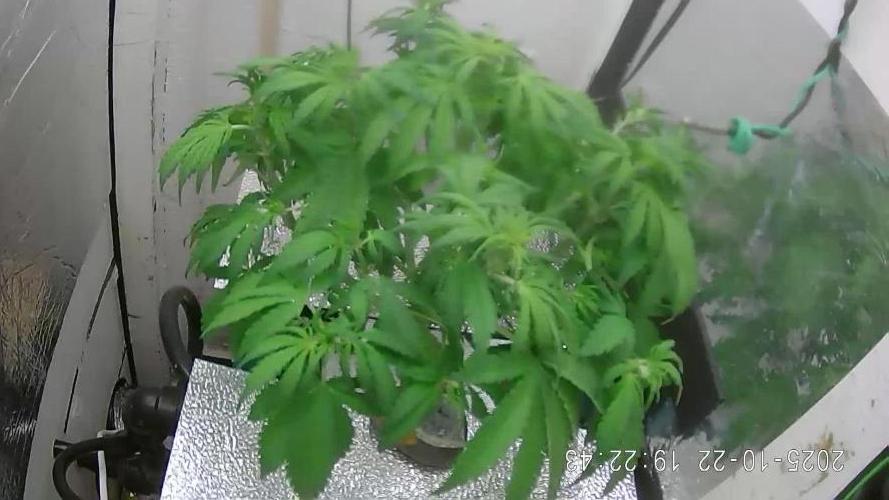
Likes
2
Share


Likes
9
Share


@Rock_n_Roll_Randy
Follow
IM SLOWLY MOVING ALL THE PHOTOPERIODS INTO THE 8X8 TENT. THEY HAVE BEEN IN VEG FOR TOO LONG AND STARTING TO SHOW ROOT BOUND SYMPTOMS, SO IM HOPING I DIDNT WAIT TOO LONG TO FLOWER THEM🙏🙏🙏🤞🤞🤞
FOR EVERYTHING MARS HYDRO VISIT:
www.mars-hydro.com
www.marshydroled.ca
PROMO CODE: rocknroll
VISIT THE ALIEXPRESS STORE:
@marshydro_aliexpress
Instagram: @marshydropenny
Thanks for taking the time to read and check out my diary🤜🤛
TS3000 FEATURES:
WIDEBAND SUNLIGHT FULL SPECTRUM LED GROW, Infinite close to natural sun light, suit for all plants whole stages indoor growing, rapid plant response from seed to flower, achieve maximum quality and quantity, much better than traditional HPS grow systems.
HIGH REFLECTIVE & NOISE FREE-Fanless LIGHT BOARDS design will make your growing life easy and quiet, quickly heat dispersing material aluminum reducing light lost to aisles and walls, increase the light intensity up to 20%, allowing your plants receive more energy and without burning your plants for maximum headroom.
HIGH EFFICIENCY ENERGY SAVING PLANT LIGHT, high-power NEW LED grow, Compares to traditional 3000 watt HPS lamp and other brand led grow light while only 450 watts true output with 1016 LEDs, more scientifically and energy-efficient! Perfect for 5' x 5' veg stage, 4' x 4' bloom stage, higher intensity in a MARS HYDRO grow tent, reflective area, or by crossing over using multiple TS3000.
BOOM YIELD LARGE GROW LIGHT, NEWEST SMD LED technology provide highest PAR/LUMEN output(1095.6umol/), makes you get 30% higher yield compare OLD led lights, can get max yield at 2.5g/watt, less pay but get more yield, bring a amazing grow trip to any home grower as it beams huge amounts of light energy to plants below.
COMMERCIAL LED GROW LIGHT, Updated easy dimming & daisy chain function, main light controlled, especially come with two waterproof and dimmable Mean Well Drivers, auto sensing power supply works on both 120VAC and 240VAC and 277VAC, suit for Large Rooms and Commercial Setups.
Low Energy-Consuming LED Grow Light: Consuming 300w and also mounted with 1016 chips, TS3000 has the ability to replace a 450w HPS light while reducing 40% power intake.
High Efficiency LED Grow Light: With overall light output PPF 343umol/S as well as amazing PPE 2.3 umol/j, it's 50% even more photon efficient and can assure a 30% more return than the old HPS/MH lights.
Patent Highly-Reflective Hood Shape: The reflector design on TS3000 is patented, which can effectively gather the light dispersed in all directions to enhance its light intensity as well as assist plants in absorbing more light.
Full Spectrum Plants Favorite Spectra: By the unique mix of spectra that makes most light in the 400-700nm waveband, incredibly conducive to plant photosynthesis. Adequate IR(730-740nm) is additionally consisted of in the range to generate larger buds.
Dimming And Daisy Chain Feature Available: Upon an independent dimming button on the external driver, backing 0-100% settings adaptation and up to 30 LEDs daisy-chained in a group, it supplies different light levels for various plant stages meanwhile saving energy.
Safety Certifications And Service Warranty: CE, ETL, RoHS, UKCA security certifications accepted, 50,000 hours durability, 5-year service warranty, and local after-sales repair
5x5 GROW TENT:
LOCK ALL LIGHT INSIDE MARS HYDRO Indoor Grow Tent interior is made of diamond mylar which is highly reflective. (Other brand's mylar and reflective rate is as low as 50%, won't provide efficient light. )MARS HYDRO 1680D canvas, being double stitched, it is tear proof and has perfect light locking. Mars Hydro's grow tent keeps 100% lighting beams inside and helps your plant absorb more lights. EXTRA-THICK --No light leaks or rips at all
DURABILITY GROW TENT Stable metal corner adapters and poles are the trustful supporters of the tent, standing sturdy, neither rusting nor paint-falling, quick easy tool-free installation. Mars Hydro's heavy-duty metal zippers, with double layer black lining, are the best on the market which create a light-proof seal
EASY OBSERVATION FOR YOUR PLANTS. Special observation windows are made by double layers of cloth. Observe the growing conditions of your plants without opening the tent and avoid disturbing plants. The observation window also serves to dissipate heat and ventilate air
AUTOMATIC 6 INCH EXHAUST FAN KIT W/ CONTROLLER:
Mars Hydro 6'' Inline Fan uses a mixed-flow design to maintain peak performance in a high static pressure environment.
GROW TENT FAN: MARS HYDRO inline fans are designed to ventilate hydroponic grow rooms, transfer heating/cooling, cool AV closets, and exhaust odors.
EFFECTIVE VENTILATION: Variable speed controller for easy fan speed adjustment. Optimal ventilation for your planting.
LOW NOISE LEVEL: Durable plastic fan housing and blades for extremely low noise(32dB-A); create a truly quiet growth environment.
EASY INSTALLATION: Removable duct ends with locking tabs for quick removal and easy maintenance and a cord length of 4.9 feet for hassle-free setup. This grows tent fan with a controller for easy fan speed adjustment.
BASIC PARAMETERS: Ventilation exhaust fan size: 6” | Dimensions: 315mm*225mm*210mm. | Weight: 2.7. | Airflow: 402CFM | Noise: 32dB-A | Bearings: Dual Ball.
Likes
48
Share


@CrazyHorse
Follow
At this point, my diaries are up to date. The photos are not the highest quality, but as you can see A.N.Q is ready to go and tomorrow is the day : D
A.L.K. need 2 and a half weeks more, so she will be ready soon ; )

Likes
27
Share


@simps
Follow
Brain damage grower choice genetics
This plant is growing great definitely one of my favorites she is in flower very excited this strain has high resin production so we should see some nice frosty buds loaded with tricomes this is a high thc variety with heavy yields she bushed up beautifully set up great ready for flower she is very healthy no problems to speak of what so ever there are hundreds of tops on this plant so we should have a really nice yield if you go on the growers choice genetics website they have a great disruption of this strain run you through the different affects and smells and thc% really a nice strain the seeds came in a really cool little case with velvet liner and little folded up paperwork that tells you all about the strain your about to grow i in joyed that when the seeds came in so definitely a cool little package anyways the root system on this plant is huge completely took over this 50 gallon pot the roots are busted through the bottom of the cloth pots and firmly planted in the ground where u Literally have to rip the pots off the ground to move the plants around I’m going to be taking lots of pictures through this flower stage to document the bud growth and development closely having a great time growing this one

Likes
13
Share

@masterofsmeagol
Follow
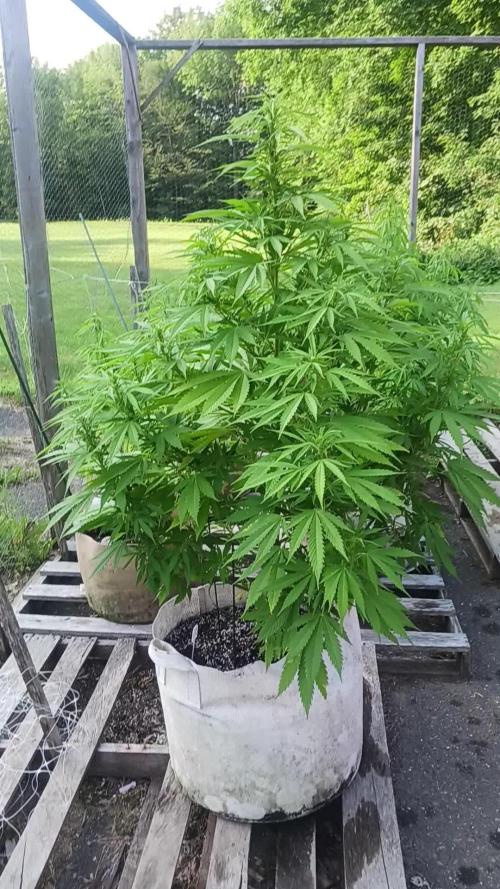
7/27 My phone ran out of storage and wouldn't let me take a video. I tried deleting several other videos bit that didn't work either. Finally I wad able to upload a few RANDOM pictures from the "website" camera. But no video. Everything looked so beautiful tjis morning too. Not watering was the right choice. I defoliated a couple septoria leaves on the reveg 10th planet that wad about to receive its third dose of Plant Doctor. The chem dog #4 and mk ultra this will be their second treatment. Seeing the positive impact of the product and finding a few septoria leaves I decided to treat every plant in the garden with plant doctor. I'm still going to do the diy Dr. Zymes but Plant Doctor had been working good and I want to suppress as much as possible. Everything looks great. I started by giving the thirstiest plants a half gallon of water. I then did a root drench of 3tsp per gallon on every plant but the 10gal. A gallon of solution was used on each plant. I really feel like this is a good mood. Previously AFTER I applied Plant Doctor the plants would have a noticeable positive effect shortly after. I'm hoping this will be the case here. I think stretch has stopped. I have one special Kush that has buds already but EVERYTHING is in early flower. I'll fix the phone and get a video up there.


Likes
6
Share

@Nedizzle
Follow
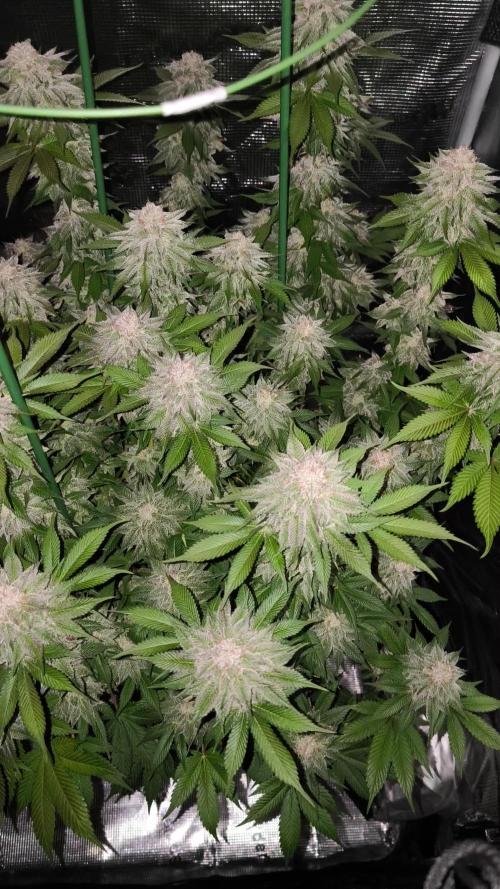
One more week. Everything is changing colors. It smells and looks beautiful.
Likes
4
Share


@Crwfz1
Follow
This thing is a monster for how young it is i can belive how it turned very happy with this company's first grow easy resistant smells good good tricome production with little to no feed just kept it simple no topping she's currently hanging in the grow room now 😊 gonna be a harvest week and thats it for this girl happy growing

Likes
12
Share


@Jays_Not_Here_Man
Follow
Just fattening and stacking this week! ❤️ the colours are popping, the tricomes are carpeted, these ladies are just beautiful 😍 I’ve been keeping the airflow high, it’s been hot and humid here, making sure these beauties don’t develop any issues in the last few weeks. No signs of pests, or PM, I did a small defoliation to help increase the airflow, as well as unblock some sites for that last push at growth. Can’t wait for these to be wrapped up, some of the best development I’ve seen with my homegrown yet!

Likes
25
Share


@Jimmy89
Follow
These all seem happy enough to say i let them dry out and wilt yesterday.. my fan controller has been acting up too so they were sat at 99% humidity for a day then at 45%.. think I’ve got the humidity settled at 65% now. All photos taken on the last day of veg, tonight will the the first 12hours of darkness for these ladies

Likes
22
Share


@Stork
Follow
Day 65 Mon
PH 6.1
EC 0.1
DLI /11h/
PPFD/
Water 20
Day 66 Tue
PH 6.0
EC 0.1
DLI /11h/
PPFD/
Water 20
Day 67 Wed
Add flawless finish and soda for oh up
PH 5.3/6.0
EC 0.1/0.3
DLI /11h/
PPFD/
Water 20
Day 68 Thu
PH 6.3/
EC 0.1/0.3
DLI /11h/
PPFD/
Water 20
Day 69 Fri
PH 6.0
EC 0.3
DLI /11h/
PPFD/
Water 20
Day 70 Sat
PH 6.1
EC 0.3
DLI /11h/
PPFD/
Water 20
Day 71 Sun
PH 5.8
EC 0.3
DLI /11h/
PPFD/
Water 17c
Likes
6
Share


@NLHydroponics
Follow
Been awhile since I posted here just because the activity on this site kind of sucks. There is no real interaction making it worth my while to come here. I love the setup here and ease of use otherwise but the community is kind of lame and lacks community support.
This is day 66 flower she's starting to wrap up and will come down in a week or so.
Likes
3
Share

@Mrs_Larimar
Follow
2025-10-16
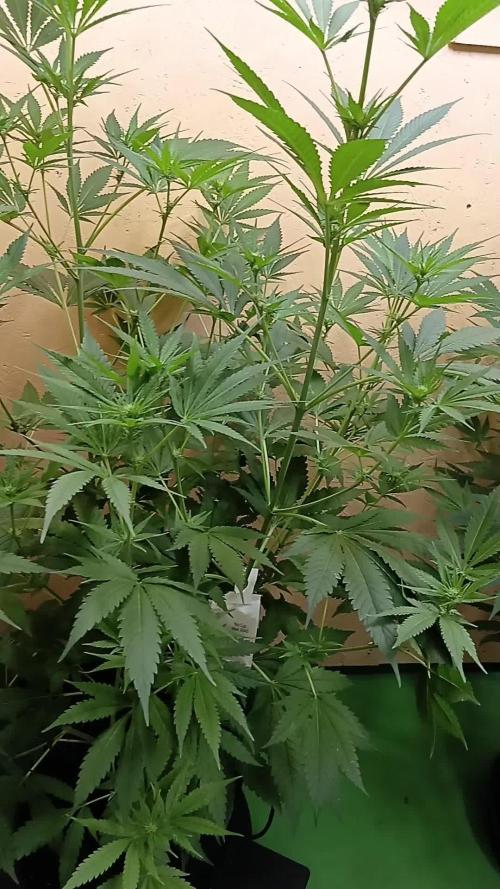
The kush´n Cookies plant does really well,
i was tucking some leaves and shoots- she spreads like she gets it paid.
RH was lowered,
Predaors were added for pestprevetion
watertank was filled
The fun can start.
Container: 35L Smart Pots
Growing Method: Autopot System with "Water-Only" strategy
🌿 Soil Preparation
Base Mix Recipe:
5g per liter soil - Startrex
5g per liter soil - Silicium Flash
Mixed thoroughly for optimal distribution
5x Fertilizer Tabs - strategically placed near bottom (20cm height) for autopot compatibility
1 tsp Mycotrex - applied directly in planting holes
Bactrex solution - used for initial watering
🏗️ Layer Construction
Bottom Layer (10cm): Drainage material (clay + perlite)
Air Circulation: Airdomes positioned
Growing Medium: Pre-mixed soil with embedded fertilizer tabs
Root Zone: Mycotrex application + seedling placement
Initial Watering: Bactrex solution
⚙️ System Activation
✅ Setup Complete - Autopot system now delivering automated water-only feeding
From this point forward: Pure water automation via Autopot system
🙏 Acknowledgments & Partnerships
Special Thanks:
Biotabs - Premium nutrient solutions
🏭 Puraplants - Autopot system provider
💰 Exclusive Discount Codes
🌐 Puraplants (Hamburg, Germany)
www.puraplants.de
Code: GrowBigger → 10% OFF
Biotabs Webshop
biotabs.nl/en/shop
Code: GDBT420 → 15% OFF

Likes
4
Share


@Brentb2607
Follow
10 days of darkness during the flush begins. Had great results with Wanda and her genetics. Blessed for a first grow. Cut Wanda down at the end of the week. She’s now drying. I will be giving a thorough review for my harvest diary. Excited to share what I’ve experienced and learned from this grow.

Likes
17
Share


Likes
38
Share


@DaddyPrime
Follow
6/29 we had 3 super hot days in a row. 112, 115, and then 118 degrees. This is the only plant that didnt end up with heat damage/burns from the extreme temperatures. Top dressed with a cup of one shot.
7/3 watered with slf-100 and recharge

Likes
21
Share


@GrowBro503
Follow
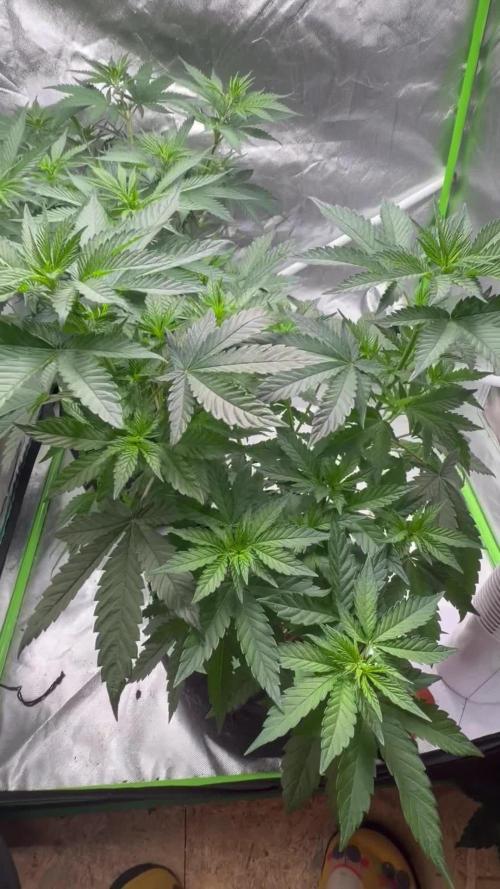
I've been on vacation for a week and I got a new puppy, I will upload a better video this weekend going to do some mid leafing Saturday. Next video will drop Sunday. I'll send two Coup de Grace seeds to the person that can guess who's talking, what sport he competed in, or what country he's from. Here's your obvious hint; WSM.


Likes
12
Share


@MadeInGermany
Follow
Harvest day 70
since time switch
to 12 / 12 h
Hey guys :-)
Finally it's time 💚
The lady is done the large leaves have been removed and hung upside down to dry in the dark drying room.
You can now stay there for 13-15 days at a temperature of 18-20 degrees and 55-62% humidity.
After 13-15 days it is neatly trimmed by hand and placed in jars with boveda packs 62.
After 4 weeks Boveda 58% come in and are ready for testing ;-).
After everything has been cut cleanly, the last update comes with the smoke report and the finished pictures.
Let's get to the plant 💚.
First of all I would like to compliment Green House for this genetics.
Unfortunately, the rating system at Growdiaries is a bit strange because I have to give the stars before the Smoke Report and in the end it might have led to more stars in terms of taste.
The growth was great from start to finish.
She had no problems at all and also had no problems with animals 👍.
I'm amazed at the great smell the beautiful buds give off😀.
Of course I cut cuttings and if the taste is as good as the smell it will be grown again ☺️.
A final report comes with the Smoke Report.
Until then, I would like to say thank you to the whole Green House team and wish you all the best fun with the diary 💚🙏🏻
Have fun and stay healthy 💚🙏🏻
👇🏼👇🏼👇🏼👇🏼👇🏼👇🏼👇🏼👇🏼👇🏼👇🏼👇🏼👇🏼
‘Powered by GreenHouse Feeding’
Copy the link for 10% off all Nutrients 👇🏼
http://shop.greenhousefeeding.com/
affiliate/madelngermany_passiongrower/
👇🏼👇🏼👇🏼👇🏼👇🏼👇🏼👇🏼👇🏼👇🏼👇🏼👇🏼👇🏼
Water 💧 💧💧
Osmosis water mixed with Cal/Mag (24 hours stale that the chlorine evaporates) to 290 ppm and Ph with Ph- to 5.8 - 6.4
MadeInGermany
