The Grow Awards 2026 🏆 









Likes
Comments
Share
@nijuana
Follow
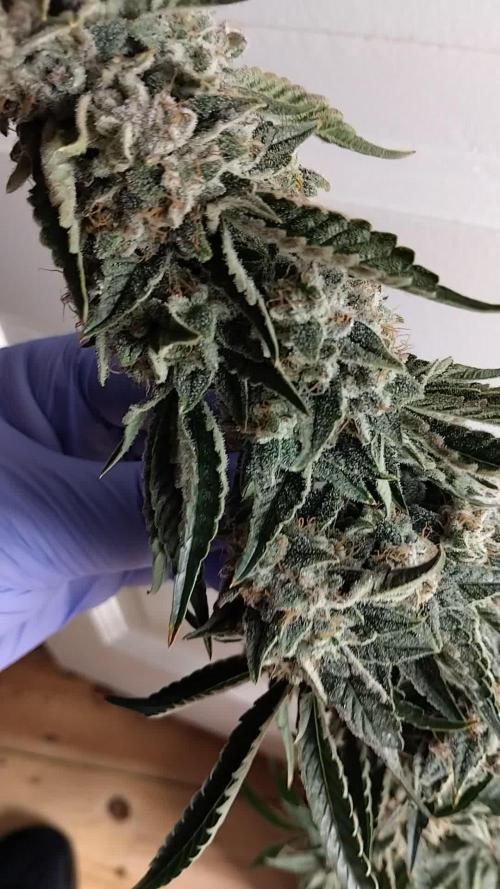
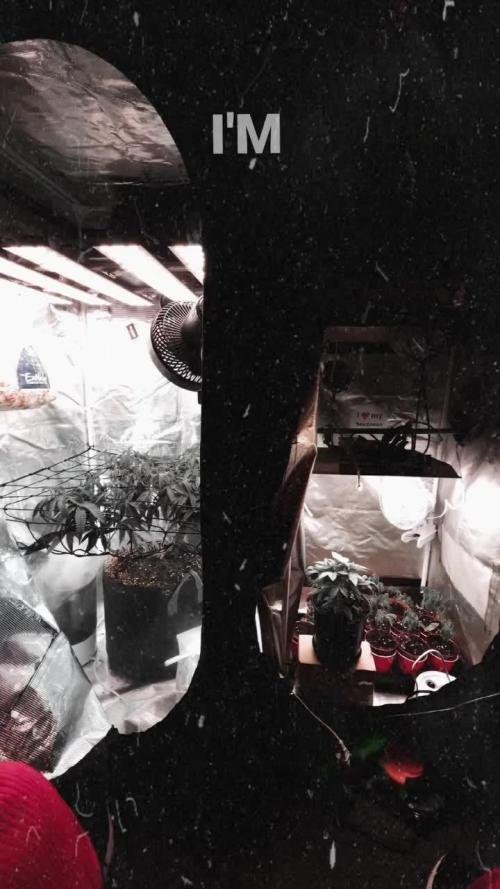
First week of veg ! First true 🌿 😁
Just Moved too the vegging room.

Likes
35
Share
@XperencdGmanXG
Follow
Due to early germination issues this one missed the boat on grow space and is now waiting for room in the tent which is at least 3 weeks away. So I will be limiting it's pot size and nutrient uptake until I have some room for it. Will also be adding a hood upgrade to the seedling station to allow much larger plants allowing me keep plants there longer. Should resolve this particular issue

Likes
13
Share
@IQuSX
Follow
Hi, topman!
It’s 56 days from start of bloom, we had offed light 💡, and change nutrients on the Flawless finish!
Its has 3 days in dark box-for extra blooms power.
You can catch the next week three days before the harvest.
Thank you for your time, and see you!

Likes
8
Share
@Pistachios
Follow
Despite so hot outside flowers are doing okey , I over watered for 2/3 days so I took out the flowers out the tent for 6/8 hours to allow better ventilation .

Processing
Likes
Comments
Share
@MG2009
Follow
06/01/2020
Time to make the seeds!
First my Cookie Cake F1 plant is a 7 star cookies male
(Top dawg seeds) X a female Captains cake clone
(Captains connection) and will be growing TLO Style.
7 Stars Cookies Strain | Marijuana Strain Reviews
50% Sativa /50% Indica
THC: 22% - 27%
7 Stars Cookies is an evenly balanced hybrid strain (50% indica/50% sativa) created through a potent cross of the classic F1 Durban X Girl Scout Cookies strains. This potent bud is infamous among cannabis users for its super high potency and long lasting effects that are perfect for any hybrid lover. The 7 Stars Cookies high starts with a rush of cerebral effects that rush though your mind, lifting your spirits and leaving you blissfully happy and unfocused. As your mind flies higher and higher, your body will begin to slip away into a state of deep relaxation that leaves you totally stoned and out of it. A sharp pang of hunger comes next, leaving you with a ravenous case of the munchies as your mind slips in and out of calming sedation. Thanks to these effects and its super high 22-28% THC level, 7 Star Cookies is often chosen to treat those suffering from conditions such as chronic pain, insomnia, stress, depression, and migraines or headaches. This bud has a sweet citrusy flavor with hints of spicy earthy grape upon exhale. The aroma follows the same profile although with a light pungency to it. 7 Star Cookies buds have fluffy dense popcorn-shaped olive green nugs with bright orange hairs and golden crystal trichomes.
Captain's Cake Marijuana Strain Information
About Captain's Cake
Hailing from the beautiful land of Maine, Captain’s Cake is brought to us by The Captain’s Connection. This indica-dominant strain boasts two pretty incredible parents, Girl Scout Cookies and White Fire Alien OG, making her a bud that offers great effects for both recreational and medical patients. While Captain’s Cake typically acts as a true hybrid, user sensitivity may dictate that your experience comes with the roll of the dice.
A fairly potent strain in her own right, Captain’s Cake averages around 21% THC. Rumor has it that CBD levels can vary dramatically, with some reports showing a range between 1% and 15%. While that data remains to be confirmed, you can instead relish in beautiful buds that are bright green, featuring orange pistils and lovely amber trichomes. Oddly enough, flavors and scents do vary a bit with this strain, and you’ll notice it smells much worse than it tastes. A sour and earthy fragrance that includes lemon, nuts, and berries will hit you right away while your mouth enjoys a nutty vanilla cookie experience that’s slightly citrus-like.
Captain’s Cake is awesome for those times when you need a boost of energy to get through a particularly trying task. Whether you’re experiencing the three o’clock workday slump or you simply have to clean the house before it gets any worse, this strain is here to help. Users note a euphoric boost that helps you to focus on your tasks while having a huge smile on your face, but keep in mind that this joyful experience can only last so long. Soon the munchies will hit, and after you’ve had your fill of snacks, you’ll be ready to settle in during a sedating comedown.
Even if Captain’s Cake doesn’t have an astounding amount of CBD, medical patients still note that she’s a strain that is practically magical. Users find that mental woes are easily dissolved after taking a few hits, making stress and depression a thing of the past. Bodily aches and pains are also treated with a slight feeling of physical sedation, and those who struggle with their appetite will likely turn to this bud time and time again.
This plant is an ideal choice for new and experienced growers, and the ability to cultivate inside or out makes her pretty versatile. Said to be a quick flowering strain, you’ll be gifted with a nicely sized yield after 8 to 9 weeks. Plants tend to grow fairly large, so make sure you have enough space dedicated to your crop before you begin.
Depending on how you handle marijuana, Captain’s Cake may knock you out for an amazing nap or in some cases may fire you up with tons of energy. Others will experience a nice set of hybrid effects, so it’s best to know yourself before lighting this one up.
Red Sky is
Description
The (paternal P1) father is the legendary Cherry Hemmingway male. A hybrid of a landrace Bhutan, and Rez Dog’s Firecracker (Williams Wonder x NYC Diesel).
The female KOS’s own Skyanchor (Bogglegum x PSI) a cross using a prime selected male of BOG’s Bogglegum. A bad ass old-school hybrid made using a Northern Lights #5 (real deal) crossed to a Bubblegum (real deal). The female used to make the Skyanchor was my clone only PSI (Purple Salem Indica) that I was given by my good friend Keith, in Salem, OR, USA. Some kind of crazy old Purple Kush variant; potency is not only severe with this baby, but supernaturally intense.
The Cherry Hemmy is well known by me to relate large yields and incredible vigor along with increased resin production, and also usually relates cream soda, vanilla, or cherry-ish terpenes, making exotic and addictive combinations when used as part of any hybrid. So, the Red Sky yields well—very well.
Some truly legendary strains involved in this Small Batch Seed run.
Great genetics equals great end results.
I put video of Red Sky #3's brothers #2, and #4.
Likes
150
Share
@Ferenc
Follow
Day 106, 17th of November 2020:
We need to say goodbye to her very soon. The judgement is harvest.
Time has come and she is old enough to be cut. I have checked trichomes all good some days darkness and no more water also and she will be just outside on the table for some days.
Really nice little plant not strong smell. I really wanna try the smoke the ratio 1:1 CBD:THC and only 7.5% CBD and 7.5% THC haha :)

Likes
13
Share
@Robeeriegenetics
Follow
First week of flowering in the bag, trying out a new deep voice in my videos does it sound sexy? Let me know in the comments. seeing a little bit of stress on the leaves, but nothing major. The new developing growth is green so everything seems to be going well. I’m gonna give it another week and then I’ll defoliate. So far so good. having a little trouble reversing the wrath rock, candy icy cuts. but I’m not worried. I have backups of the mothers and I have backups of those backups so I’ll definitely still be able to take another shot after seeing the results from this grow ….


Likes
37
Share
@Smoking_Joe_Frasier
Follow
Grow Diary Update: Week 5 - Pre-Flowering and LST Evaluation
Entering Pre-Flowering Stage
At the end of last week, the first pistils appeared, marking the beginning of the pre-flowering stage for my plants 🙌 There's much to manage now. To support optimal stretching, I've adjusted the nutrients following 2/3 of the Terra Aquatica feeding schedule:
CalMag: 2 ml/l (Starting EC before adding nutrients: 0.45 mS/cm)
Grow: 1.33 ml/l
Bloom: 1.0 ml/l
Micro: 1.33 ml/l
The nutrient solution now has an EC of 1.3 mS/cm (638 ppm PPM-500/TDS) with a pH of 6.1. These adjustments aim to promote vigorous growth and prepare the plants for flowering.
Weather and Growth
With significant weather improvements, my plants are thriving at full speed. Every centimeter gained now counts towards maximizing the final yield, turning around from the challenging weeks prior.
Pest Management
I'm fortunate not to have encountered pests like spider mites, aphids, or thrips. However, the persistent snail issue remains. Nightly patrols with a flashlight have been effective, and placing old lettuce leaves away from the plants has helped trap and remove snails, ensuring the plants remain undisturbed.
LST Experiment Results
The two plants I trained with LST have responded admirably, showing healthy adaptation to the bending and vigorous growth. Yet, I'm at a crossroads regarding the upcoming stretch phase: should I continue to tie down branches to maintain an even canopy or allow natural upward growth to potentially boost vertical yield?
Your Feedback Matters
I value your insights on this critical decision. Should I proceed with low-stress training to control canopy height, or should I let the plants stretch upwards for increased productivity? Your experiences and advice are invaluable to me as I navigate this stage of my grow. Share your thoughts below!
Stay tuned as I continue to document the pre-flowering stage and learn from the ongoing LST experiment in my grow diary!
Likes
13
Share
@Crusty_Juggler
Follow
Grown it many times, clear favorite.
Sweet baked gas, spicy, hashy, some have a subtle smooth lemon sherbet aftertaste.
Relaxing happy and mellow effect.
22-28% Rosin return

Likes
36
Share
@OGTrauma
Follow
The plants are coming Back to life (except for two g13 that it's production Will be heavily affected) AND some branches already providing Big Fat BUDS , but it's clearly that this shit whacked uo calendarization as stated on the previous week ; Now it can he bulletproof checked by watching More closely the flower maturity . As there we're different strains i understand that some had slight different reaction to previous glitched schema , I'm stating with hesi boost AND top candy that gives me the confidence that Will not cause a nutrient burn ... Again ... Peace niggas!
Peace homies !

Likes
2
Share
@GREENPHOENIX6262
Follow
02/15 - She suffered a slight burn but since has bounced back - I removed the burnt leaves - topped her 2 top colas - will top a couple more colas in the next coming days - I will only top 2 or 3 more times.
Likes
8
Share
@STAYINGONMYMAINCBATORUNTWO
Follow
I’m so proud of the transition. I gave them a defoliation during and it didn’t slow them down! They’ve shot their worst pistols now so I’m so glad to be officially in bloom!

Likes
2
Share
@Yiyis_Grow
Follow
Lámpara: Bestva Quantum Board LED LM301B
Sustrato: 2 Jiffy fino : 1 Floragard
Especies: Charlotte Dream CBD - Auto Dark Purple - Purple Kush - Triping 25 - Gelato Ice
Acontecimientos:
1. Se empezaron a suministrar fertilizantes a 5 de ellas, las otras 5 van un poco retrasadas.
2. Se puso tierra diatomea en el sustrato para evitar así plagas. En casa hay muchas plantas y las plagas abundan.
3. Luz 20h/día, viento, agua y nutrientes.
Buenos humos


Likes
1
Share
@ThickFreakness
Follow
Tues pm: raised light 4” and turned up to 80%. PPFD 750 center to 350 on the edges.
Used to trash bag from mulch cover.
Wed: yesterday trimming up BB#1 I took 6 cuttings. Tnite I put them in CloneX; then into Root Riot cubes. Under a 15W 24hrs light cycle. Maybe I’ll have roots on a few in 10 days.
Fri: Refill Earthbox 2.5G, raised light to 22in from canopy and 100% power.


Likes
4
Share
@KCChiefers
Follow
Day 65 Update: Watered both plants with almost a gallon until runoff. Plant #2's water was dosed with Terpinator at 25ml/gal. 11 days left of flushing on Plant #1. This will be Plant #2's last nutrient watering, as she will start the flushing process next watering. Also added two yoyo hangers and two stakes to Plant #2 as her branches are getting heavy (not complaining 🤷♂️)
Day 68 Update: Starting flush on Plant #2 today. Plant #1 has 8 days left of flushing. Watered both plants with almost a gallon of pH balanced water until runoff.

Likes
11
Share
@TiRobotProds
Follow
Nous sommes à la 7ème de fruits gros colas principal, tête des tiges secondaire moyennement gros. Je n'envoie plus de nut irrigation a l'eau uniquement.
Likes
11
Share
@CanarianGrow92
Follow
Week 3 for our banana purple punch 👊 from fastbuds 🍁
We removed the 2 lower branches and leaves. We gave some master root this week.
Some of the plants already showed the first preflowers, flowering is starting soon!
We also placed a net above just in case we need to sustain the buds in later flowering
Likes
29
Share
@TheGourmetWeed
Follow
In general I'm very happy growing this strain. The germination rate was 100%, all 3 sprouted, even though one ended up dying after some weeks. My fault here, she grew upside down and when I moved her she didn't reacted well.
The growing conditions were initially a little unstable as I couldn't find the right balance between temperature and RH, having the latter one constantly too low, making me buy an humidifier to keep the level higher. Well, too high in the lights off period, and when distracted could reach up to 99% RH, which isn't good. Again, lesson learned for the next grow.
Maybe I've defoliated the plant a little too much and that might have also affected the crop a little.
When it comes to feeding, didn't use so much plain water, the feeding were nutrient based all the time. Not sure if this had any negative effects in the plant.
Was fun to train the plant and I could see actually some benefits in doing some LST in her.
After all this, being able to finish with this amount of bud makes me generally happy and positive for the coming grows.
Overall I think I made a few beginner mistakes that affected the plant growth and flower, but again, having no pests, plagues, or any diseases was already a very good accomplishment and I'm really looking forward to start the next grow, and enjoy the smoke from this little one.
As it was the first diary ever, was very fun to do it, and helped a lot controlling crucial parts of the growth. Definitely will keep posting here my future grows.
Thank you all for following this diary, for the likes, all comments and answers to my questions. Without your feedback wouldn't have got this far.
Smoke report will follow when the bud is ready, now is hanging and drying.
Thank you all


Likes
42
Share
@Pr3m_85
Follow
Go go go to the flo !
😎😁🤞
Day 5 : EC up to 1,77
Peace to all ✌️🏻✌️🏼✌️🏿✌️🏾✌️✌️🏽