


Likes
Comments
Share


@CampaCavallo
Follow
7ª Settimana di Fioritura 💐
Eccoci qui con la bella Lemon OG 🍋🌊 che é diventata grande! I suoi fiori sono sempre più carichi di neve ed il raccolto si avvicina sempre di più!

Likes
5
Share


@CreoWeed
Follow
Hey guys,
The week went pretty smoothly and flowers are starting building up.
I'll soon introduce Bloombastic for 10 days, increasing from 0.5 to 1.5 ml per liter.
Other than that, this phenotype are bringing out some gorgeous color, and they are starting to smell.
Now she's finally alone in the tent so I hope she will build up a little more.
For now, thats all lads.
Stay tuned, stay high!


Processing
Likes
2
Share


@dubmusicrocks
Follow
The plant with calmag looking issues is growing height still the others seem to be not, one I didnt trim much is growing much denser nugs, with Crystal's sprinkling out much more than the trimmed /more trained plants. The middle plant is yellowing hard after I fed it tapwater for the first time in a long time. Lots of pistols starting to darken, I'll check trichomes next week.. might feed once more at least.
Likes
3
Share


@Joaka
Follow
como preventivo aplique tierra de diatomea via foliar. solo realice un apical por variedad de semilla ya que las otras aun según mi criterio les faltaba. se espera realizar la otra semana apical en las otras dos para dejar 2 sin manejo para comparar.

Likes
23
Share


@SirDillton
Follow
Day 30 of flower. Do sweet dos strain. Plants in front right. Roughly 30 days left to go in flower.
Lights 1212 par value roughly 1000. I keep lowering my light no signs of light burn yet at 19 inches. Day temp 21-26 night 17-21. Rh% is set to 45-55%. Watering every third day. 4L per plant . No runoff. Every third water I give technaflora nutrients at 1400ppm. Water ph 6.2
Ive learned my plants love a water ph around 6.2. Even slightly altering this to 6.7 you can tell they don’t grow as much. Very excited for the next few weeks as you just sit back and watch them fatten up.
See y’all next week.
Likes
14
Share


@Downunder90
Follow
## Week 10 Update: Flowering Phase Transition 🌿🌟
### 🌱 First Signs of Flowering 🌱
Welcome to Week 10! The transition to the flowering phase is well underway. We’re starting to see some promising developments as the plants move from vegetative growth into the flowering stage.
---
### 🌿 Current Plant Status 🌿
**Greenhouse Super Lemon Haze 🌞**
- **Growth:** The plant has reached a robust and healthy canopy. The stretch phase is noticeable, with the plant reaching its full height.
- **Flowering Progress:** Early signs of flowering are starting to appear. Look for the first signs of pistils or calyxes in the coming days.
**Humboldt Seed Bubba Kush 🌿**
- **Growth:** This plant is maintaining its dense and bushy structure, which is great for future bud development.
- **Flowering Progress:** Initial flowering traits are emerging. The plant is slowly transitioning into the flowering phase with early bud formation visible.
**Blueberry Muffin 🥞**
- **Growth:** The canopy remains strong and dense, ready to support upcoming flower production.
- **Flowering Progress:** The plant is beginning to show its first signs of flowering. Calyxes and pistils are starting to form as it adjusts to the light cycle.
---
### 🌱 Nutrient and Supplement Update 🌱
**Current Nutrient Regimen:**
- **Power Roots (PLAGRON):** 1 ml/l to keep enhancing root health and overall plant vigor.
- **Pure Zym (PLAGRON):** 0.5 ml/l to continue supporting root health and improve nutrient uptake.
- **Terra Bloom (PLAGRON):** 2 ml/l to supply essential nutrients for bud development.
- **Power Buds (PLAGRON):** 0.5 ml/l to stimulate bud formation and increase flower density.
- **Orgatrex (Bio Tabs):** 2 ml/l for a balanced nutrient profile.
**Feeding Schedule:**
- Adjusting the nutrient mix to support the early stages of flowering and ensure the plants are getting balanced nutrition for optimal flower growth.
### 🌱 Environmental Conditions 🌱
**Temperature & Humidity:**
- Conditions are being carefully monitored and adjusted to support flowering and prevent issues such as mold or nutrient deficiencies.
**Training & Defoliation:**
- Continuing with LST (low-stress training) and selective defoliation to maintain an even canopy and ensure light penetration to all parts of the plant.
---
### 🌸 Looking Ahead 🌸
As we enter Week 10, the flowering phase is becoming more apparent. The first signs of flowers are emerging, and the plants are adjusting to this crucial stage. Over the next few weeks, we’ll continue to monitor their progress closely and make adjustments as needed to ensure healthy flower development.
Stay tuned for next week’s update to see how the flowering process is progressing and to check out any new developments in the grow!
Happy growing! 🌟💚


Likes
12
Share


@GREENPHOENIX6262
Follow
Starting week 2 Veg - See below for specs
Nutrient feeds remain the system
Height - 2 inches (Not much progress in height) Width has definitely grown out
Water feeds continue to be everyday - Have a gallon+Nutes
Light Intensity - 100%
*Mid-week review - 8/18*
Introduced Cal-Mag (4 ml/Gal)
Plants grown approximately .5 inches in height - 2.5 -3.0 inches in width
Light Intensity 100%
*End of week recap* (08/20)
Both have grown about 1 - 1.5 inches in height and 2 - 2.5 inches in width.
Fan leafs deep lushes green
Bud sites topped
Thus far all is running smoothly.
Likes
48
Share


@TheCannaProphet
Follow
~ WEDDING CHEESECAKE FAST FLOWER by FastBuds ~
Well fam, here we go again with another epic strain from FastBuds Fast Flowering stable. After having such tremendous success growing their Gorilla Cookies Fast Flower outdoors last year, I've decided to run another of their fast flowering strains outdoors this year... Wedding Cheesecake Fast Flower!
The best description of this awesome cultivar comes directly from my friends at FastBuds which is as follows:
"A delight for the mind and body: Wedding Cheesecake FF (Fast-Flowering) is a delicious strain that offers XXL yields in a 7-8 weeks flowering cycle. This terpene powerhouse produces loads and loads of mouth-watering vanilla-creamy-cookie-scented terps with hints of citrus and cinnamon. In addition to its delicious aromas, this variety grows very well in both indoor and outdoor setups, yielding up to 650 g/m2 without extra maintenance, making it the ideal strain for beginners as it allows you to maximize yields while minimizing work. This super-fast feminized photoperiod version offers upbeat and energetic yet deeply relaxing effects that are perfect for consumers looking for a heavily focused, motivating, and creative high. It’s the ideal strain for those needing that extra energy boost to start a busy day on the right foot.
Wedding Cheesecake FF boasts chunky, large-sized buds with a thick layer of silvery-white resin and bright orange hairs scattered all over: that just screams ‘quality’. The lime-green flowers sparkle with an array of hues ranging from dark to light green, to magenta and purple, and reek of a delicious aroma that’ll remind you of fresh store-bought cheesecake.
This is an XXL hybrid that grows extremely tall in height, reaching up to 3m with one huge main cola and multiple long side branches that can withstand enormous yields of up to 650 g/m2 with ease. Wedding Cheesecake FF is extremely resilient to the elements and can be grown in almost every climate as long as you’ve got the space and basics covered, making her an excellent choice for those looking for large-scale harvests with a quick turnaround time without much effort."
________________________________________________________________________________________________________________________________________________________________________________________________________________________________________________________________________________________________________________________
The Setup:
This is going to be an outdoor grow, but I have started the Wedding Cheesecake FF indoors as our weather is still too cold to put her outside (nighttime temp's dipping regularly into the 30's℉).
The plan is simple... let her grow inside under a 19/5 light schedule until the nighttime temperatures stay above the mid 40's℉, at which point she'll be moved outside and transplanted into the soil which I have already setup and inoculated with beneficial microbes, and then let the fun begin!🤪💚
________________________________________________________________________________________________________________________________________________________________________________________________________________________________________________________________________________________________________________________
Weekly Updates:
7/4- 🎉HAPPY 4th of JULY!🎉
Week Fourteen of veg and things have really heated up here! Our weather is continuing with exceptionally HOT days having heat indexes over 100℉ so I've maintained my regime of watering the Wedding Cheesecake FF every day with 5-8g of straight well water from the garden hose in the late afternoon once the plant is in the shade.
The FastBuds Wedding Cheesecake Fast Flower has taken the heat like a champ and is transforming into a very LARGE and bushy lady! She's at over 5 1/2 feet tall now and is still stretching! She has maintained excellent vigor, color and has shown great resistance to pests and other stressors!
7/6- Yesterday we had a thunderstorm pass through early in the day, which provided about an inch of rain in a short time. I went ahead and watered in the afternoon, but only gave the Wedding Cheesecake FF approx. 3g of water from the well.
7/8- The daily watering continues, as does our blistering hot🔥weather. All is well with the FastBuds Wedding Cheesecake Fast Flower and today, after watering, I got under the trellis net and removed a bunch of shade leaves that were growing straight down through the net... bye bye!
7/10- Well the weather and the Wedding Cheesecake FF are both on fire! Hopefully the weather will cool down soon, and the Wedding Cheesecake FF will continue to explode!🤩 There's another week of veg for this beauty and I can't wait for the flowering to begin!
Thank you for checking out my diary, your positive comments and support make it all worthwhile! 💚Growers Love!💚😎🙏
Processing
Likes
3
Share


@cmstacker01
Follow
Week 3 flowering.
Buds are
slowly forming, plants still going good, cold weather is hitting my area now, hope it won't last long, might extend flowering period by a couple days if it stays this cold.


Likes
34
Share


@Canna96
Follow
Hey now, hope everyone is having a great week, the Glueberry OG Auto is finally in full blown flower at week 8 and I believe her vertical growth is just about done at 36" which is about perfect for this setup. She may grow a couple more inches but I'm hoping not too much because I have about 16" between her and the light. She is getting straight flower nutrients now as I transitioned her slowly over this past week. She is now feeding on silica, cal mag, and GH maxibloom. I will start to add some GH PK booster later this week slowly. I use GH KoolBloom to boost the PK of the maxibloom and continue with that mixture until I start to flush her around 4-5 days before harvest.
I also have the Medic Grow Spectrum X set at 100% in the F1 Flower cycle, and I am now up to 90 minutes per day of UV/IR before lights off. My PH meter got a little crazy this week, but I think I caught it in time as I didn't really see any spots on the lower leaves. If I suspect my meter is off, I just test some of my well water because it has been steady at 6.3 since I moved in like 10 years ago.
I will probably do one last light defoliation in the next couple of days and that will be about it other than keeping the reservoir full and in the correct PH range. The tomatoes outside are absolutely loving the runoff from these autos, as that is all they have had to drink since they were about 3 weeks old.
Thanks for stopping by, Stay Safe and Blaze On!!! 💪
Website: https://medicgrow.com/
https://growdiaries.com/grower/medicgrowled

Likes
11
Share


Likes
209
Share


@Rock_n_Roll_Randy
Follow
CHANGED MY EMAIL ADDRESS ON GROW DIARIES AND IT WONT LET ME DO A CONFIRMATION FOR MY NEW EMAIL, SO NOW I CANT LIKE ANYTHING, COMMENT ON ANYTHING OR CHAT. SORRY MY FRIENDS. I HOPE GROW DIARIES TEAM WILL HELP ME OUT SOON🙏🙏🤞🤞
EVERYTHING IS CHOPPED NOW FROM THE:
8X8 GROW TENT WITH THE NEW FC-E6500, FC4800 AND TSW2000 AND THE NEW 5X5 GROW TENT WITH A TSW2000 AND AUTOMATIC EXHAUST FAN WITH CHARCOAL FILTER KIT👍and they were being fed GREEN BUZZ LIQUIDS all organic/vegan fertilizers🤘.
I only pinched the tops on 2 or 3 plants but I defoliated every plant ALOT. it slowed the vertical growth alot but it's exactly what I wanted. I can keep track of the plant sizes, how they grew, how healthy they were, how easy they were to grow and how good the final product is👍 every plant was given the same strength of GREEN BUZZ LIQUIDS and I'm keeping track of which plants were happy with the suggested amounts and which plants seemed to want more or less🤘
I chopped 22 photoperiods at 125 days. I chopped 8 more at 130 days of growing. And the last 13 were chopped at 141 days of growing. I'm impressed with how good my mars hydro gear is. Always gets em nice and frosty and everything stinks alot.
VERY HAPPY WITH GREEN BUZZ LIQUIDS. I've used lots of brands and this is my NEW favorite brand. And with it being vegan/organic, it makes it even better. Joints burn soo clean👍
The girls are loving their 8x8 MARS MANSION and THE 5X5 INLAW SUITE and everything is doing good and looking nice and getting bigger👍 They are all starting to finish now and the bud sacs are swelling and they are all getting nice and frosty and starting to stink ALOT. MARS HYDRO ALWAYS GETS EM FROSTY👍.I AM NEVER DISAPPOINTED With how awesome these lights are🤘. KEEP KILLING IT MARS🤘👏👏
BREEDERS AND SEEDS:
DIVINE SEEDS:
MAZAR, OPIUM, WHITE WIDOW, OG KUSH, PABLO ESCOBAR, DIVINE INDICA.
AUTO WHITE WIDOW
AUTO PABLO ESCOBAR
AUTO WHITE RUSSIAN
AUTO FRACTAL
AUTO MONTREAL
AUTO OPIUM
AUTO KABUL
AUTO MAZAR.
WEEDSEED EXPRESS:
GREEN CRACK, GHOST TRAIN HAZE, LITHIUM OG, CHEESE.
DOCTORS CHOICE:
DC KUSH, AUTO NIAGARA, AUTO ROCK MACHINE.
EXOTIC SEEDS:
HIPPIE BERRY, MALASANA GELATO, EXOTIC ANIMAL.
GENE/MEME SEEDS:
BLACK HELL.
ORIGINAL SENSIBLE SEEDS:
PURPLE PUNCH COOKIES, WEDDING CAKE, PURE KUSH, GORILLA COOKIES.
SWEET SEEDS:
BLACK JACK, GORILLA GIRL, SWEET ZKITTLES.
EMERALD TRIANGLE SEEDS:
GORILLA GLUE, MASTODON KUSH.
SEEDSMAN SEEDS:
BLACK SUGAR, PEYOTE FORUM, PEYOTE WIFI, BADAZZ COOKIES OG, PURPLE GHOST CANDY, STRAWBERRY BANANA GRAPE, L.A. PEYOTE KUSH, PEYOTE WIFI CBD, FUEL DOG, CRITICAL PURPLE KUSH.
AMSTERDAM MARIJUANA SEEDS:
GIRL SCOUT COOKIES EXTREME, GREEN CRACK.
QUEBEC CANNABIS SEEDS:
BRUCE BANNER, GREEN CRACK, QUEBEC CBD 20:1.
I 💚 GROWING MARIJUANA:
SKYWALKER OG, BANANA KUSH, BLUEBERRY CBD.
FOR EVERYTHING MARS HYDRO VISIT:
www.mars-hydro.com
www.marshydroled.ca
PROMO CODE: rocknroll
VISIT THE ALIEXPRESS STORE:
@marshydro_aliexpress
Instagram: @marshydropenny
https://youtube.com/channel/UChU5ZWwNi-DvnO3oWVU3ceA
https://greenbuzzliquids.com/
#greenbuzzliquids
@GreenBuzzLiquids
https://greenbuzzliquids.com/en/shop/
PROMO CODE: rocknroll
https://www.youtube.com/watch?v=8hEqyS1jPpI
https://growdiaries.com/diaries/112437-grow-journal-by-rock-n-roll-randy/week/593118
Thanks for taking the time to read and check out my diary🤜🤛
FC-E6500 LED GROW LIGHT:
FC-E6500 grow light with 3978pcs OSRAM BridgeLux Diodes & Moso Driver, market-leading PPF 2.7 µmol/J, Max 2.5g yield/watt with 30% higher Average PPE, more cost-effective when compared to same style type lights. Only consumes 650W, perfectly cover 5x5ft (personal), 4x4ft (commercial) grow space. Innovative Precise Uniform Lighting-Built-in removable bars interval & dimmability enable the exact & dynamic PPFD control over each of the plant growing stages, FC-E6500 detachable bars deliverSuperior Heat Dissipation: Real Aluminum heatsink together with 6 slim profile passive cooled bars (THINNER & LARGER surface) and detachable Meanwell Driver, create less heat. save 50% hydro than other old grow lights! Driver can be mounted remotely on the side of a grow tent/rack or on an adjacent wall to remove heat from grow space. Full Spectrum UV IR LED: With Yield Max spectrum (660nm Osram enhanced Deep Red,2800k-5000k,730-740nm IR,380-410nm UV LEDs), Average PPFD the FC-E6500 LED grow lamp enables cultivators to produce BIG FAT Dense Buds, perfect for full-cycle hydroponic, soil, grow tent/grow room.
Dimmable Commercial Grow Light: Cost-efficient, easy dimming & daisy chain With a max up to 20 lights, IP65 Waterproof, master light easily controls the rest. Perfect for commercial & home horticulture.
FC4800 LED GROW LIGHT:
GET THE MAX FROM MARS👍: Welcome one of the newest members of the Mars Hydro family🤜🤛🤘. The Mars Hydro FC 4800 480W LED Grow Light can accommodate up to a 4' x 4' area for flowering. It has OVER 2000 LED chips consisting of the best selling Samsung LM301B diodes which has a Luminous Efficacy of: 220 lm/W
0.2 W, 3 V mid power,
Osram 660nm Diodes, Infrared light and UV LIGHT👍. It boasts the incredible efficiency of 2.8 µmol/J, maximum 2.5gram yield per watt with 30% higher Average PPFD. This High-intensity spectrum is beneficial for plants at all stages - from veg to bloom, and creates Big dense Buds👍. achieve 50% higher yields & quality compared with the old lights! Only consumes 480W for 4x4ft personal grows, and 3x3ft for commerical grow. It comes with a dimmer and daisy chain function with a maximum of up to 15 lights, the master light controls the rest👍. Wide 6-bar design offers even & wide canopy coverage and can maximizes your grow space. slim 180° FOLDABLE DESIGN... YES I SAID FOLDABLE🤘🤣 , making it compact and easy to install, it's IP65 WATERPROOF and will give you no worries while growing in a humid environment and makes it a flexible high performance commercial grow light for enormous SUPER FROSTY yields.😛😛😛. MARS GETS EM FROSTY BOYS👍
AWESOME HEAT DISSIPATION: The Low energy consumption FC4800 growing light has 6 passive-cooled bars and an aluminum heat-sink a removable driver you can upgrade later or have it outside your tent. with zero noise you can save up to 50% in your electricity bill compared to HID's or HPS lights!
It also has a removable driver so you can upgrade it in the future or have it outside your grow space for better heat control in your growroom👍
UPGRADED FULL SPECTRUM: Yield Max Spectrum with enhanced red (Top-Bin Samsung 3000k-5000knm, Osram 660nm Deep Red), speed up blooming & fruiting, perfectly suited for full-cycle growing. The FC4800 LED grow lamp was born for Big Buds, perfect for commercial, grow tent, grow room, hydroponics, and all soil grows.👍
THE BEST SAMSUNG DIODES: THE FC4800 has Top Bin genuine Samsung Osram Diodes, combined with remarkable 2.8 µmol/J Efficacy, 30% higher Average PPFD, 50% less energy consumption, to maximize your yields. They give you a TRUSTED 3 years warranty 100% Satisfactory guaranteed!!!
X2 TSW2000 LED GROW LIGHT:
INCREASE YIELD AND CROP QUALITY WITH MARS HYDRO LED GROW LIGHTS: NEWEST SMD LED technology provides the highest PAR/LUMEN output (1122umol@18") and can make you get 30% higher yield compared to OLD blurple led lights. Max 2.5g yield per wattage and achieve maximum quality and quantity, much better than traditional HPS grow systems
LOW ENERGY CONSUMPTION LED GROW LIGHT: Consuming only 300W true output with 684 LEDS! It saves up to 50% energy than other led grow lights. Perfect for 3.5x3.5ft bloom stage, 4x4ft veg stage. Over 90% light energy can be absorbed by plants, it will have higher intensity in a MARS HYDRO grow tent with diamond design mylar, or by crossing over using multiple TSW2000
HIGH EFFICIENCY FULL SPECTRUM INDOOR GROW: 3000K 5000K and IR 660nm 760nm RED, makes it close to natural light, highly engineered to provide improved growing performance for plants at all stages of growing, rapid plant response from seed to flower; Uniform and wide-beam light distribution for your plant's optimal growth
Likes
8
Share


@frogDUDE
Follow
Really looking forward to harvesting this girl. Trichomes and Terps are showing up nicely - very fruity - not detecting pineapple yet but really nice. On the grow - I can definitely see how it is not a nitrogen hog - actually would change the nutrients next time around as she’s darker than I would prefer at this stage so I’ve scaled back the nitrogen.
Anyway - What started off as a really small, runt of a plant has blossomed into this magnificent 2 foot tall solid bud - not really bothered that I didn’t get time to top + LST
Likes
15
Share


@Siriuz
Follow
Very good very fast and very smelly
Some lemony smell I can pick
But also very sweet so we are really down to try this one from sweet seeds
I think I could have waited two more weeks.
But then again I ran out of soil and had to recycle this one to get red poison auto going on this big pot all set with mega super mix soil and nutes
The red poison was amazingly F1
Growing on roots super heavy rooting
And yes we finally got her on this pot
So yeah that's why we took gelato out
And also because it got 9 weeks flowering so it's actually set
If maybe one more week or two could have change the high potency or effect we will discover on our next grow stay tuned and always check on my Instagram
@cannagrowersiriuz
For real time activity and blazin
Also talking sht and what not
Come along leave your comments
Blaze it and just let us know what the f is
Up my dudes
Keep growing and thanks again sweet seeds and grow diaries for everything always you rock and the community as well is dope
UPDATED MAY 8TH 2021
FINALLY GOT MY DRY BUDS
TOTAL WAS 30G
FOUND OUT MY GROW LIGHT IS NOT FULL SPECTRUM SO I AM TRYING TO UPGRADE SINCE I ALREADY KNOW IM GETTING TOP QUALITY BUDS WITH MY TECHNIQUES BUT NOT QUANTITY DUE TO LIGHT ISSUES OF COURSE PHLIZON IS NOT FULL SPECTRUM AND FOR A INDOOR GROW YOU NEED THAT MUCH FOR YIELD
ANYWAYS TASTE IS BOMB
CURING ONE JAR FOR A MONTH TO EXPOSED FLAVOR AND HIGHNESS
AS IT IS RIGHT NOW YOU GET A VERY GOOD HIGH AND ONE G CAN GET YOU TWO TO THREE JOHNSONS WHICH IS AWESOME
ON THE OTHER HAND IS ORGANIC
AND IM FLATTERES WITH MYSELF FOR THIS ACHIEVEMENT BUT I DO NOT FORGET AND I THANK TO ALL COMMUNITY AND JAYPP FROM SWEET SEEDS WHO HAS HELPED ME OUT SO FAR IN GETTING STRAINS AND TIPS
I APPRECIATE KINDLY ALL GROWERS IN THE COMMUNITY WHO ADDED ME OR FOLLOWED ME AT THE INSTAGRAM CANNAGROWERSIRIUZ ALSO THANKS TO ALL THE FORUM GROUPS AND WHAT NOT
JUST ONE WORD
THANKFUL FOR THIS DREAM COME TRUE
I WILL KEEP GROWING KEEP SHARING
KEEP LEARNING AND TEACHING
GOOD VIBES JAH BLESS WEED
BLESSINGS TO YOU ALL
SWEET GELATO IS BOMB
TO ME SCORE IS 9/10
Likes
1
Share


@Pestitel
Follow
Amazing experience with the Mix Pack, I will try it again next summer for sure. Love the variety.
Likes
45
Share


@AsNoriu
Follow
No training, just hope for them to deliver.
Day 57 . All is good, small doubts about FD3 but she has to make it or bin it ...
Future looks brighter, other girls form some buds and 50 g is looking achievable at least on couple of them ;) Future will show ;))
N went down as feed chart, still no huge hopes from them....
Some leaves look hungry, couple redish stemps with mini Mag def on FD and thats all for now....
Day 58 Morning. Girls starts to love it 4 sure. Droped down temp by 2 degrees from 28 to 26, they liked it even more. Hope it will stop pistils going amber in begining of flower ...
In the midle of the day all will get molasses and cal mag, leaves a bit too bright, hope molasses will boost bacterias and last bits of N will be used. Increasing level of Top-Max aswel.
So feed looked like :
Heavy feed
Water with silica
Water
Water with molasses and CalMag
At the end of the week they will get heavy feed again.
Day 58 Evening. New attack system ;)) instead of 2-3-3 , girls regrouped into two heavy rows and now go like 2-2-2-2 ;))))
Girls are drinking really fast, still get only around 1.5 liters every second day. For auto i quess its ok. In couple hours afer feed they pray, so its a good sign always ...
Day 60. Heavy feed day, they started to bulk up everyday, really nice to see them everytime.
Day 61. They are bulking up. Thats all i have to say and i really really like it ;)))
Day 63. End of week. Everything looks fine, just i really would want to defoliate them a bit, but dont want to stress at the same time. They look too sensi for me.
All 3 FastDiesels started to show Mag def even on stemps, gave stronger cal mag water mix just for them. They need it often and a lot.
Happy growing !


Likes
14
Share


@Dieselnutz
Follow
5 weeks since flip. Switched from house and garden to jacks321, had some salt build up so flushed medium w some drip clean, got ppms down to 950-1000 from 1600. Everything is comin along pretty well.
Processing
Likes
20
Share


@BudXs
Follow
"Chugging" along this week. Weather is hot, girls are loving the all time drip system. Forgot that my nutes and hot sun dont mix well and created a bad case of algae. Will monitor more often and maybe increase the drip flow


Likes
2
Share

@pickonme2002
Follow
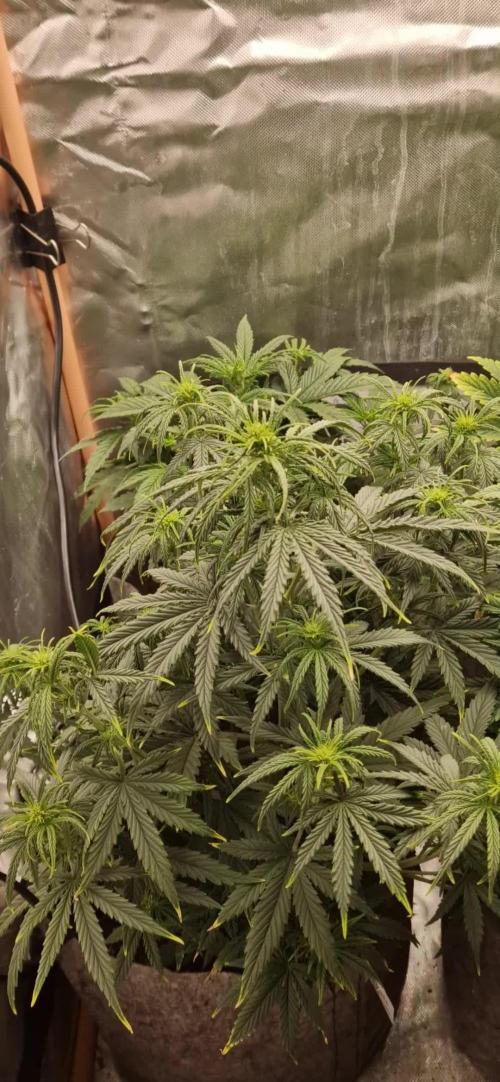
The front left Royal Crit has taken a huge stretch almost as tall as the F1 Orion which had a couple of weeks head start. The zombie is blooming beautiful is growing well no problem. F1 Orion and Royal Crit at the back are smaller in height not worried about the F1 Orion aka the zombie as it is behind the others but the Royal Crit back right is smaller than its sister front left. I may play around with light positioning.
