
The Grow Awards 2026 🏆
Likes
104
Share
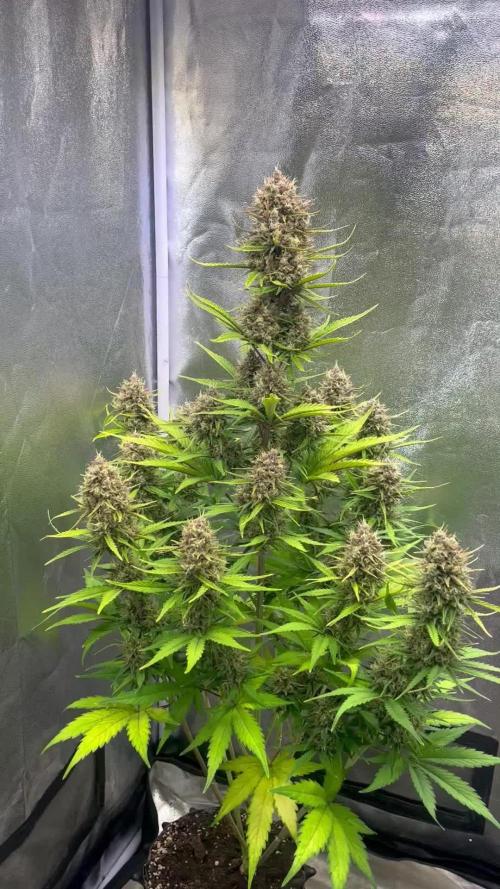
Olá pessoal, nova semana, Purple Punch está uma verdadeira árvore 🌲 esta semana voltou a surpreender-me cresceu 15cm de altura está com 1,65m e cada vez mais ramificada, as ramas laterais querem ir ao topo como a haste principal, tive que adicionar uns tutores para suportar o peso das ramas, esta semana adicionei growth-c e alga-c, tudo vai muito bem, Fico maravilhado a cada dia que passa. 🤩 🌲🌱🍀 Bons cultivos companheiros
Likes
39
Share
Day 48. She’s huge!!! Eating like a beast. Drinking like there’s no tomorrow. I’m stoked for her she’s getting hard to move around. Heavy girl impressive.
Likes
144
Share
@roro_204
Follow
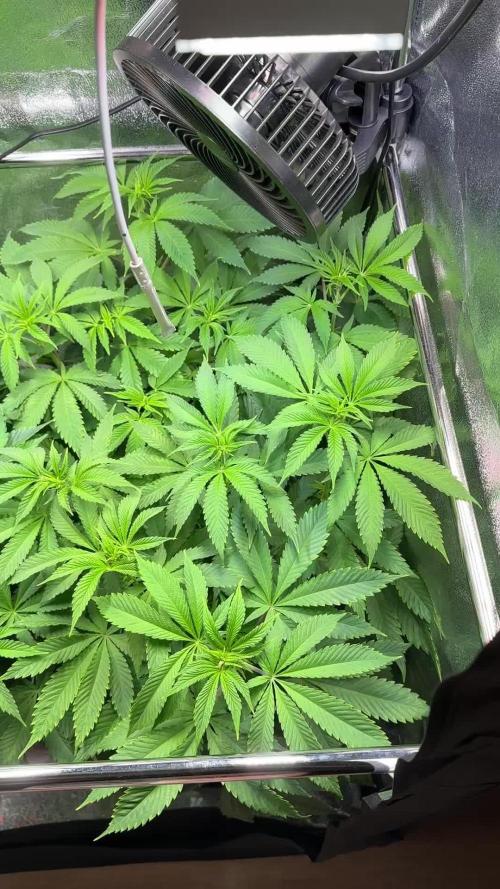
They grow fast at this Age . Transferred them to 3gal pots this week I miss how the grow room used to be so clean lol before the huge hose was installed :p
Likes
39
Share
Half gallon nute feed. Trichomes still a little glassy. Dense budding 👌🏾. 60-65 days for both ladies will open the window. Flushing soon.
Likes
22
Share
@Chucky324
Follow
Hello. I'm starting my Dos Si Dos #33 diary here. These clones have been growing in the veg tent all summer. I had stuff growing in the greenhouse all summer and it gets really hot in that cement room in the middle of summer, so I shut down that grow room till now. I got it up and running last week but I was a little embarrassed to make a diary starting last week because I had treated the clones badly and they looked rather leafless. They look much better this week, so I'll start. I would like to start playing around with making feminized seeds. So, I need some extra clones to spray to make the feminized males. I've read about it, now it's time to try. Some of these clones I take will be turned to males next year. I gave some clones to my friend Jerry for his summer crop. I was over to his house the first week in October, to take pictures of his plants. Some of the lower plants that were not getting sun anymore were just starting to show some powdery mildew on some of the big fan leaves, so he decided to cut them down. He did a real good job on growing them this year. I think he said he was going to cut the big bud off the ends of the branches and let the smaller buds fatten up, under cover, in the sun, on the deck. This is the strongest plant I grow. It gets me pretty baked with 5 or 6 tokes. It grows on the taller side, so I'll make lots of tops to slow the growth down. And it tastes like fruity ice cream!!! Yummy!!! The other plants in the room are Amnesia Lemon by Barney, Pink Kush the original clone I found 27 years ago, Nova OG by Anesia Seeds, Sweet Sensations by Sweet Seeds, The White (Whitey) by Dr Greenthumb. I will put in next week more Fat Freddie's Cat cartoons and I have some more puzzles to finish off that puzzle book. Then when that's finished, I'll put in some Fabulous Furry Freak Brothers cartoons. Man, the spiders are getting big around here. We've had 1 mm of rain in 3 months and it's very warm for this time of year, so they are getting big!!! Keep Growing Straight. Chuck.
Likes
8
Share
@jmodelo
Follow
Transplanted and increased nute concentration to prepare for flower.
Likes
3
Share
Finalmente corté. La verdad que sl estar sin stock siento que me corrió más el tiempo. La próxima camada será con otra disposición.
Likes
18
Share
im literally seeing them once a week. growth exploded since last week. started giving pk booster by hand watering. buds start to form. defoliated lots of fan leaves. first compost tee is being brewed.
Likes
30
Share
Bananas are doing great, very nice, big, fast-growing ladies. Especially one of them has a very peculiar smell, I definitely get it why they are called Bananas :D I flipped them to 12/12 after 47 days of veg. I was a bit afraid that they were getting too large, I hope they will fill up the remaining space nicely.
Likes
17
Share
Day 10 Of 12-12, defoliated 75% of canopy will leave untouched until day 21 Flower. Running 1250 ppms of cropsalts, light dimmed to 75% @15-18” of canopy
Likes
24
Share
Update the to a 4x8 this week and added a HLG 300 V2 RSpec with the futur vert FM8 flora max 660watts pumping 960 watts now .. Every thing is stacking up an fattening up beautiful in week 4 , The frost is coming out like a snow storm now in to week 5 flower ... I’m very impressed with the bud size on the slurricane ix this early on !!
Likes
32
Share
19-11-2021: Still 4 weeks left... Buds are starting to swell, I think I have to harvest the Runtz a week earlier. Lowered CO2 to 800PPM. Lowered EC to 1.8. Will replace the water by end of the week. 21-11-2021: Some people suggesting I should use PK13/14... But they are not telling why.. Honestly... I have no clue what it could do for me. Already using Green Sensation from Plagron with clearly says..."When you use Green Sensation you don't need a PK fertilizer, enhancer, booster or enzymes!". So I am just continuing as I do. @Hazeydays... Was just rereading your comment but cannot find any grow diary from you :(. Why do you think I should add PK13/14?You said (3 weeks ago) your ladies are in week 7 and 3 times as big as mine. What do you mean by that? Because I think it is quite normal that plants in week 7 flower are bigger then plants I week 1 flower. Do you have a link to your diary? Thanks in advance 23-11-2021: As you can see some buds seem already to be ready for harvest. Very strange, only 56 days of 12/12 now. (I started counting flower on day 27 of 12/12 so only 29 days of real flower. I was told this might be due to adding Green Sensation too early but I would expect all the ladies would suffer from it then. It is just one. Even the lady which is in the same bin doesn't show any signs of amber trichomes. Very Very strange. 24-11-2021: Buds seem to swell very fast now overnight. Looking and smelling great. Today my fans will arrive so from tonight on they will have some windy conditions I hope.
Likes
9
Share
This new week since the soil is a soil improver specifically formulated for lawns, its task is to keep the pH around 8 and stabilize, there is peat that also acts as a buffer, I did a flush giving 2 liters of water since the vase is 3.2L at pH 5 to balance it with the runoff pH which is pH 8, since the pH is 8 the plant is unable to take nutrients as it should and therefore problems with curled leaves begin, which discolor, lose vigor (I wanted to do this experiment also for those who are new to it)
Likes
3
Share
@Achim026
Follow
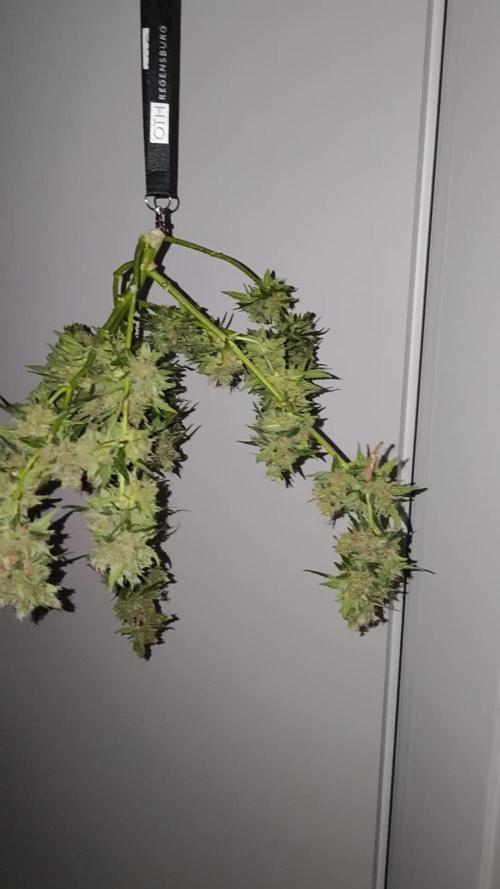
Scheisse aber am Ende noch hash also
Likes
67
Share
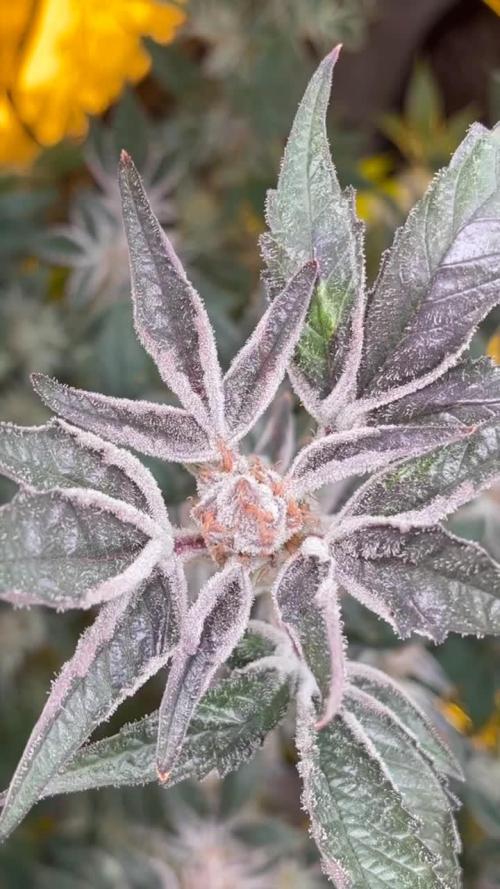
Removed autoflower and put her in her own pot outside the tent. Foliars applied in strong blue 430nm with 4000Hz tone. 20-minute dose prior to application. In essence, you're seeing a combination of the infrared light reflected by the plant, which the camera perceives as red, and any residual visible blue light the plant reflects, which results in a purple hue. I was doing more stretching of the stems, adjusting weights, just a little too much, and it snapped almost clean. I got a little lucky in that it was still connected, wrapped her almost instantly while holding her in place with yoyo's. The core framework is now in place. If your soil has a high pH, it's not ideal; you want a pH of 6.4, 6.5, or 6.6, which is ideal. If you are over a pH of 7, you have no hydrogen on the clay colloid. If you want your pH down, add Carbon. If you keep the pH below 7, you will unlock hydrogen, a whole host of new microbes become active and begin working, the plant will now be able to make more sugar because she has microbes giving off carbon dioxide, and the carbon you added hangs onto water. Everything has electricity in it. When you get the microbes eating carbon, breathing oxygen, giving off CO2, those aerobic soil microbes will carry about 0.5V of electricity that makes up the EC. The microorganisms will take a metal-based mineral and a non-metal-based mineral with about 1000 different combinations, and they will create an organic salt! That doesn't kill them, that the plant loves, that the plant enjoys. This creates an environment that is conducive to growing its own food. Metal-based: Could include elements like iron, manganese, copper, or zinc, which are essential nutrients for plants but can exist in forms not readily accessible. Non-metal-based: Examples like calcium carbonate, phosphate, or sulfur are also important for plant growth and potentially serve as building blocks for the organic salt. Chelation in a plant medium is a chemical process where a chelating agent, a negatively charged organic compound, binds to positively charged metal ions, like iron, zinc, and manganese. This forms a stable, soluble complex that protects the micronutrient from becoming unavailable to the plant in the soil or solution. The chelate complex is then more easily absorbed by the plant's roots, preventing nutrient deficiency, improving nutrient uptake, and enhancing plant growth. Chelation is similar to how microorganisms create organic salts, as both involve using organic molecules to bind with metal ions, but chelation specifically forms ring-like structures, or chelates, while the "organic salts" of microorganisms primarily refer to metal-complexed low molecular weight organic acids like gluconic acid. Microorganisms use this process to solubilize soil phosphates by chelating cations such as iron (Fe) and calcium (Ca), increasing their availability. Added sugars stimulate soil microbial activity, but directly applying sugar, especially in viscous form, can be tricky to dilute. Adding to the soil is generally not a beneficial practice for the plant itself and is not a substitute for fertilizer. While beneficial microbes can be encouraged by the sugar, harmful ones may also be stimulated, and the added sugar is a poor source of essential plant nutrients. Sugar in soil acts as a food source for microbes, but its effects on plants vary significantly with the sugar's form and concentration: simple sugars like glucose can quickly boost microbial activity and nutrient release. But scavenge A LOT of oxygen in the process, precious oxygen. Overly high concentrations of any sugar can attract pests, cause root rot by disrupting osmotic balance, and lead to detrimental fungal growth. If you are one who likes warm tropical high rh, dead already. Beneficial, absolutely, but only to those who don't run out of oxygen. Blackstrap is mostly glucose, iirc regular molasses is mostly sucrose. Sugars, especially sucrose, act as signaling molecules that interact with plant hormones and regulate gene expression, which are critical for triggering the floral transition. When sucrose is added to the growth medium significantly influences its effect on floral transition. Probably wouldn't bother with blackstrap given its higher glucose content. Microbes in the soil consume the sugar and, in the process, draw nitrogen from the soil, which is the same nutrient the plant needs. Glucose is not an oxygen scavenger itself, but it acts as a substrate for the glucose oxidase (GOx) enzyme, effectively removing oxygen from a system. Regular molasses (powdered if you can), as soon as she flips to flower or a week before, the wrong form of sugar can delay flower, or worse. Wrong quantity, not great either. The timing of sucrose application is crucial. It was more complicated than I gave it credit for, that's for sure. When a medium's carbon-to-nitrogen (C:N) ratio reaches 24:1, it signifies an optimal balance for soil microbes to thrive, leading to efficient decomposition and nutrient cycling. At this ratio, soil microorganisms have enough nitrogen for their metabolic needs, allowing them to break down organic matter and release vital nutrients like phosphorus and zinc for plants. Exceeding this ratio results in slower decomposition and nitrogen immobilization, while a ratio below 24:1 leads to faster breakdown and excess nitrogen availability. Carbon and nitrogen are two elements in soils and are required by most biology for energy. Carbon and nitrogen occur in the soil as both organic and inorganic forms. The inorganic carbon in the soil has minimal effect on soil biochemical activity, whereas the organic forms of carbon are essential for biological activity. Inorganic carbon in the soil is primarily present as carbonates, whereas organic carbon is present in many forms, including live and dead plant materials and microorganisms; some are more labile and therefore can be easily decomposed, such as sugars, amino acids, and root exudates, while others are more recalcitrant, such as lignin, humin, and humic acids. Soil nitrogen is mostly present in organic forms (usually more than 95 % of the total soil nitrogen), but also in inorganic forms, such as nitrate and ammonium. Soil biology prefers a certain ratio of carbon to nitrogen (C:N). Amino acids make up proteins and are one of the nitrogen-containing compounds in the soil that are essential for biological energy. The C:N ratio of soil microbes is about 10:1, whereas the preferred C:N ratio of their food is 24:1 (USDA Natural Resource Conservation Service 2011). Soil bacteria (3-10:1 C:N ratio) generally have a lower C:N ratio than soil fungi (4-18:1 C:N ratio) (Hoorman & Islam 2010; Zhang and Elser 2017). It is also important to mention that the ratio of carbon to other nutrients, such as sulfur (S) and phosphorous (P) also are relevant to determine net mineralization/immobilization. For example, plant material with C:S ratio smaller than 200:1 will promote mineralization of sulfate, while C:S ratio higher than 400:1 will promote immobilization (Scherer 2001). In soil science and microbiology, the C:S ratio helps determine whether sulfur will be released (mineralized) or tied up (immobilized) by microorganisms. A carbon-to-sulfur (C:S) ratio smaller than 200:1 promotes the mineralization of sulfate, when the C:S ratio is low, it indicates that the organic matter decomposing in the soil is rich in sulfur relative to carbon. Microorganisms require both carbon and sulfur for their metabolic processes. With an excess of sulfur, microbes take what they need and release the surplus sulfur into the soil as plant-available sulfate A carbon-to-sulfur (C:S) ratio higher than 400:1 will promote the immobilization of sulfur from the soil. This occurs because when high-carbon, low-sulfur materials (like sawdust) are added to soil, microbes consume the carbon and pull sulfur from the soil to meet their nutritional needs, temporarily making it unavailable to plants. 200:1 C:S 400:1: In this range, both mineralization and immobilization can occur simultaneously, making the net availability of sulfur less predictable. This dynamic is similar to how the carbon-to-nitrogen (C:N) ratio regulates the availability of nitrogen in soil. Just as microbes need a certain amount of nitrogen to process carbon, they also require a balanced amount of sulfur. Both mineralization and immobilization are driven by the metabolic needs of the soil's microbial population. Sulfur is crucial for protein synthesis. A balanced ratio is particularly important in relation to nitrogen (N), as plants need adequate sulfur to efficiently use nitrogen. A severely imbalanced C:S ratio can hinder the efficient use of nitrogen, as seen in trials where adding nitrogen without balancing sulfur levels actually lowered crop yields. Maintaining a balanced carbon-to-sulfur (C:S) ratio is highly beneficial for plant growth, but this happens indirectly by regulating soil microbial activity. Unlike the C:N ratio, which is widely discussed for its direct effect on nutrient availability, the C:S ratio determines whether sulfur in the soil's organic matter is released (mineralized) or temporarily locked up (immobilized). Applied 3-day drought stress. Glucose will hinder oxygenation more than sucrose in a solution because glucose is consumed faster and has a higher oxygen demand, leading to a more rapid decrease in oxygen levels. When cells respire, they use oxygen to break down glucose, and this process requires more oxygen for glucose than for sucrose because sucrose must first be broken down into glucose and fructose before it can be metabolized. In a growth medium, glucose is a more immediate and universal signaling molecule for unicellular and multicellular organisms because it is directly used for energy and triggers a rapid gene expression response. In contrast, sucrose primarily acts as a signaling molecule in plants to regulate specific developmental processes by being transported or broken down, which can be a more complex and slower signaling process. Critical stuff. During wakefulness (DC electric current) life can not entangle electrons and protons. During the daytime, the light is sensed as multiple color frequencies in sunlight. Coherence requires monochromatic light. Therefore, at night, IR light dominates cell biology. This is another reason why the DC electric current disappears during the night. The coherence of water is maintained by using its density changes imparted by infrared light released from mitochondria in the absence of light. This density change can be examined by NMR analysis, and water is found to be in its icosahedral molecular form. This is the state that water should be in at night. This is when a light frequency is lowest and when the wave part of the photoelectric effect is in maximum use. 3600
Likes
7
Share
Strawberry Gorilla has grown great given its limited space. I moved her and added supplemental lights.
Likes
103
Share
@MG2009
Follow
10/17/2018 Last bit of defoliation,supercropping finished up,and now let her do her thing
Likes
10
Share
Its been topped She does look a bit tired hopefully she’ll pick up
Likes
9
Share
@Rizik86
Follow
Day 1 - TC600 is 36 inches from seedling. Veg 100% Flower 100% 17 hours on 7 off. PAR/PPFD 170 DLI 10.05 Day 2 - Mylar Emergency Blanket DIYed into 2 by 3 foot tent. PAR/PPFD 240 (41% increase) DLI 14.5 (44% increase) Nutrients: Advanced Nutrients 2 mL of each Micro Grow Bloom Base Nutrients and 2 mL BotaniCare CalMag. 3 Gallon bucket filled with 2 gallons of RO water. No more notes for rest of the week. The TC600 is 260w from the wall. Not 600w.