The Grow Awards 2026 🏆 








Likes
Comments
Share
@Bread_n_Buds
Follow
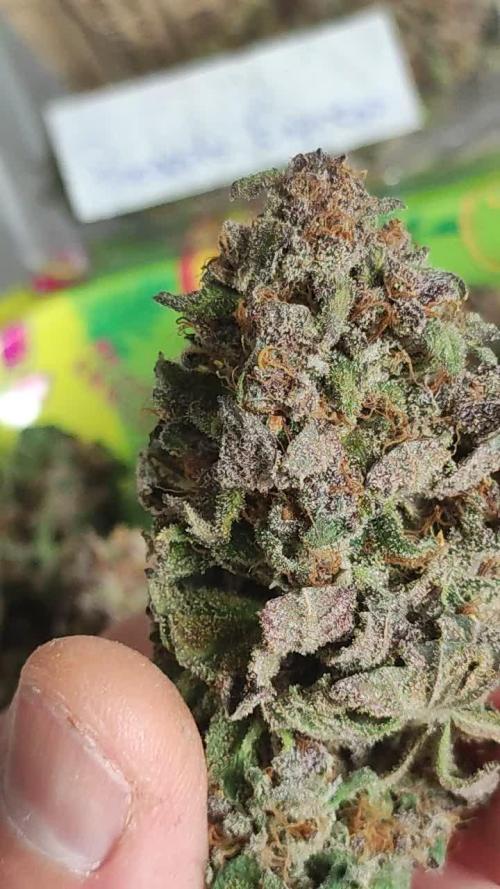
Our Test #3 has already made me fall in love.
It is one of those plants that is doing well I would already promote it but to avoid the risk of speaking too soon, let's see what grass it will give us.
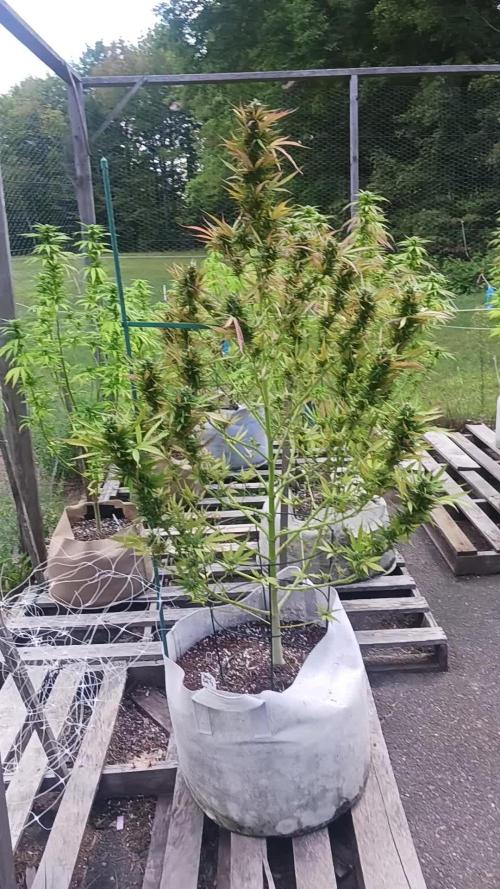
For each strain we have at least two plants there is also a specimen that is growing straight that you don't see in the photo for now for each strain of her I have two both excellent.
The plant that you see in the photo responded excellently to topping from the beginning and did not suffer the stress that this technique brings the fertilizers for flowering that go from a few days after I made the switch to mid-week (it is therefore considered vegetative the plant is still understanding that it is going to flower). I find myself very well when it comes to flowering with Palgron in vegetative I have some difficulty I have to ask the experts for advice on how to prepare the soil with their products. I think I will use Bat Mix or Super Mix next time or the excellent pellet from Zamnesia going to integrate Alga grow if necessary.
We did our best Zamnesia has put superb genetics and at home B&B we are working to show you the plants in all their possible meanings.
This plant like all the other photoperiodic ones has been worked with a topping x16 buds, simply repeating the topping technique without doing anything else than cleaning the leaves from time to time and now the branches that I believe do not give me good flowers at the bottom.
The 16 buds are perfectly aligned and it is very regular in growth.
The fertilizers for flowering have helped us to return in a very short time to a good balance now we go straight to making great buds.
We are still using soil, fertilizers and all the additives recommended by Plagron 100% organic.
The plant has been flowering for 3 days, in the diary I leave it indicated as the last week of vegetative but we move on to the fertilizers for flowering.
We have now moved on to the early flowering program that keeps the same additives Power Roots, Sugar Royal, Pure Zym and adds the flowering stimulant Power Buds. Now the basic fertilizer is now Alga Bloom with which I get along very very well even more than Alga Grow that sometimes I have to understand well how to dose in some particular cases (
topping). Probably try to prepare the soil with Plagron Super Mix or with the Zamnesia Pellet.
The Green Sensation will arrive as the hero of the late flowering and at the same time it will be time to remove power roots and a week later the Pure Zym enzymes.
---- Decide on the right soil and calculate your fertilizer card based on the soil on the official website.
-- www.plagron.com
Try a seed of this strain that drives us crazy..
-------- Strain Coming Soon! Try another Zamnesia Masterpiece instead
Zamnesia Description // Strain Coming Soon! Stay Tuned!
All the best that mother nature can offer is on ---- www.zamnesia.com
Likes
10
Share
@tokesly
Follow
Germinating with RO Water + Liquid Seaweed. Using shot glass for 48 hours to break open the shell, and a paper towel for 24hrs to grow the taproot. Then transport to Jiffy peat pellets (soaked in 300PPM seaweed + camg) for initial vegging.

Likes
179
Share
@StarLorr
Follow
Welcome to my Øpium diary.
In this diary:
Seeds: sponsored by Ðivine Șeeds
Media: Promix HP
Nutrients: Advanced Nutrients, Diablo Nutrients, Gaia Green Power Bloom.
Light and Weather: Şun☀️and Mother Earth.🌎
___________________________
Feeding:
Tue 06Aug: 4L nutrients pH'd 6.5 and 4L water not pH'd
Wed 07Aug: 8L water not pH'd
Thu 08Aug: top dressed Gaia Green Power Bloom 6 tbsp
Sat 10Aug: 2L water not pH'd
Sun 11Aug:6L water not pH'd
Mon 12Aug: 8L water not pH'd
___________________________
*please note that most water only feedings are 2L at the time throughout the day in bottom saucer*
___________________________
Øpi survived the wrath of Debby(Tropical Storm)she stood her ground(in her pot)😂Monday I added a piece of wood to the anti-tipping device to hold up the lower branches as they pull the plant sideways and will only get worse as the buds gets bigger and now Øpi look more straight than leaning sideways.😃
______________________________
Øpi and other sisters got the defoliation treatment, mostly fan leaves.
_______________________________
Top dressed her up with Gaia Green Power Bloom about half a 3/4cup as i can't keep up feeding her liquid nutrients in such industrial amounts😅but the results are already showing and she seems to like it, i will continue liquid nutrients feeding once or twice a week.
______________________________
Thanks for stopping by, likes and comments are appreciated!👊🏻😎
Keep on growin!
Keep on tokin!!!
😙💨💨💨💨💨


Likes
9
Share
@Lazuli
Follow
2 weeks max then its time, the colours are fading now.
This plant is in an autopot i only fill up the reservoir. I do see she drinks way less now. After this water i feed with only ripen in it lol. I cant believe how easy this was i havent touched the plant once or waterings

Likes
35
Share
@Bncgrower
Follow
Another successful harvest. This time it was my perfect girl, a very good strain, easy to grow, fast, and without many demands. Besides the controlled environment, it has a wonderful smell. The buds were very dense and sticky. Every time I touched the scissors, a strong smell emitted that filled my room. I really liked the result, and this will definitely be the first of many. My favorite so far! ✌️💪🌿🍁

Likes
9
Share
@TheBulldozerSicily
Follow
Belle e robuste già alla seconda settimana, infatti le abbiamo toppate per portarle tutte alla stessa altezza,aspetto massimo un altra settimana e mando in fioritura, voglio farle crescere con più aria libera nel box questa volta.
15/10
Ho toppato dinuovo 2 piante, per restare tutte alla stessa altezza,


Likes
14
Share
@eldruida_lamota
Follow
Vamos familia tercera semana de vida de estás Punch Pie de RoyalQueenSeeds .
Que ganas tengo de ver el progreso de esta variedad, las plantulas están sanas, se ven con buen color.
La cantidad de agua cada 48h entre riegos.
Esta primera semana ya añadimos nutrientes de la gama Agrobeta.
Tuve problemas de trips en un indoor y tengo todas plagadas pero ya las e tratado con aceite de neem y un insecticida genérico, también añadí tiras de color azul para controlarla, trataré esta semana y la siguiente.
Trasplanté directamente a macetas de 7 litros.
Estas próximas semanas veremos cómo avanzan.
Mars hydro:
Code discount: EL420
https://www.mars-hydro.com/
Agrobeta:
https://www.agrobeta.com/agrobetatiendaonline/36-abonos-canamo
Hasta aquí todo, Buenos humos 💨💨.
Likes
17
Share
@masterofsmeagol
Follow
8/30 Rained yesterday and pretty much all night. Plants looked happy this morning. I'm thinking about feeding today or tomorrow. The late flowering special kush doesn't have much longer and it will be done. I'm going to need to do another treatment for the thrips. Nights are so cold that I think they aren't a major problem. No signs of septoria either. No signs of ANY molds or mildew. Even where I took the pillar out but I removed a lot. I am noticing (especially on the pink kush and the special kush in the back) the wierd "top hat" lower buds like I previously did. I don't think it's the chipmunk. It's like they eat fresh buds and leave the top there. I think it might be earwigs but I haven't seen ANY. Birds have been keeping my garden pretty clean. Almost everytime I walk down there it's like a flock of birds takes off lol. I was watching the little finches all perched on my cage. I've seen them dart in and grab a snack. It's pretty cool how it works. Symbiotic relationship. I feed the birds amd they help keep my garden pest free.
EDIT: Went to check the girls around 430. It seems like everytime I see the flowers they've swelled in size. Especially the natural mk ultra. Everything is really coming together. Pink kush is behind but it's starting. I'm getting lots of fall colors but I'm losing lots of leaves too. I wouldn't have defoliated as good as I have if I hadn't had problems. I thought the plants were done getting taller or stretching but after this rain they ALL seem taller. The buds are swelling as well. I'm on the home stretch with the early special kush. Few more weeks. Everything looked amazing tonight. I wanted to take some pictures but I left my phone. Smell is greatly increasing.
8/31 I don't get how we got NO rain the ENTIRE summer but it's rained the past few nights? Maines bipolar weather I guess. I see the same shit as prior years. Something crawls up and eats small shoots and developing buds but leaves larger ones alone. I thought it was earwigs before. I'm not sure now. I'll have to go look at night and figure out what's eating shit. It's just small secondary shoots mostly. Stuff I should've pruned but I leave on so the won't eat my fucking colas. I got some work to do but I'm getting closer.
9/1 Well we made it to September. Pink kush is finally STARTING to form little buds. After some research (and watching those fucking locusts try to fly into my cage but can't because they are to fucking big. I was lucky I found that enormous one on the stalk of the furthest special kush right where the tip cola starts. Luckily I was able to get him. Didn't have to take pics or a video or even check if they need water. It rained a little last night and the buds were a little wet. I'm planning to feed when I get back. If they need water I'll give it to them. My early special kush is getting real close. I want to harvest at peak timing but sometimes exigent circumstances screw that up. However i think I'll be able to let this girl finish properly.
EDIT: Went back over to check weights and everything was super heavy. Plants are all turning fall colors. I checked the trichs on my special kush, mk ultra and 10th planet. Everything looked great in the sun! Everything is swelling and getting frostier everyday. I'm hoping that the pink kushs will finish. My early special kush LOOKS like it should be done but it's not. Looking at the trichs and stigmas it needs more time. I've found on several plants that between the; giant caterpillars, earwigs and pillars that they can take a whole branch and pretty much decimate it in a night. I chased one of those giant locusts around my Cafe and it finally got out. Bastard was almost the size of a small bird! I should feed tonight and possibly do a treatment for pests.
9/2 Had to shake to plants off again. Bags are still heavy. I'll probably feed tonight. I'm noticing tons of damage on lower and interior branches. The grasshoppers or locusts or whatever they are can strip a whole branch! They can even bite through little stems. I'll never grow outside without floating row covers again. The special kush is getting really close. Sometime this week I'll look for a mature tester bud. Both MK ULTRAS are exploding in flower and getting frostier daily.
9/3 We are going to be getting some rain. I noticed the grasshoppers or whatever really like the special kush. After seeing her in the sun I made the executive decision (after one more peak at the trics) and decided to chop her. I feel like that was a good decision. Even more so as I got going. I bet if I let it ride I would've ended up with half as much. The fan leaves had all dropped. I wish I would've kept a clone of this pheno. Smells amazing! I did a quick wet trim with branches and cut little buds (which there weren't many) went in a paper bag the rest was hung to dry. Minus the top cola and a bud or two I brought home to look at and manicure. The roots were really dry. The others seen heavy but I haven't watered in a while. I'm planning on watering and feeding tomorrow. Things are really exploding and conibgvti life! I feel so much better having that plant inside.
9/4 I was definitely right to take that plant. It just SEEMED to early. Went over today and found more damage from those grasshoppers or locusts, whatever the fuck they are. I used to just hear that noise at night but now it's morning noon and night. Some can't hear it but it's this high pitched buzzing (them rubbing their legs together) which wad heard occasionally with crickets at night. This hear it's a CONSTANT sound. Considering I'm in late flower I'm not sure what to do. I don't think there's much u can do. At least it seems like they prefer the special kush and target that. So at least that huge mk ultra and the natural one and the 10th planet's should be fine. Pink kush is finally flowering. Whether they'll have any nodes left by the time they finish is an unknown. WATERED TODAY. EVERYTHING GOT A GALLON BUT THE 10S. EVERYBODY GOT A QUART OF FOOD. IM CONSIDERING UPING KOOL BLOOM. Didn't take pictures or do a video. I will later. I'll review the special kush I took when I take the others. I'll be back over later and I'll update. No rain as of 2pm. I watered because I took the rootball apart of the special kush I harvested and it was dry as a popcorn fart! I lifted a couple and they were light bit I didn't lift everything. The water sat on the top for quite before it would drain. At least they had a good dry cycle. That plant I took looks and smells amazing. I can't wait to try it.


Processing
Likes
29
Share
@Grey_Wolf
Follow
Ginger Nut Cookies & Aussie Music Videos
4 weeks of flowering completed
26th March 2020
Hi Everyone I hope you are well , This Plant is starting to get some frosting happening and the smell has elvolved a little once again 😏
It's still got the tropical fruit like aroma but has got an underlying smell almost like honey.
I had to get up Early this morning as an impending thunderstorm threatened to drench my plants which I wasn't going to let happen 😡 bloody rain 😆
It's all good now they are under cover and protected from any more showers we may have .
She had a good feed yesterday of some Liquid potasium, Seaweed solution , Epsom salts and Mollasses so she should be content until the sun returns .
Ph is still keeping stable at 6.4 so that's about it for the plant update Now It's time for the Weekly Aussie Music Videos 🙌
Last Week was jimmy Barnes and his song Working class Man
This week I am playing The Angels as requested from @Lovemabud .
The Angels are an Australian rock band that formed in Taperoo, a small beachside suburb in Adelaide South australia in 1974
There biggest hit "Am I ever gonna see you face again?" became iconic because of the pub chant that followed which was "No Way , Get Fucked! Fuck Off!" 😆
If you watch the 2nd vid preview you will understand what I'm on about .
Sadly the lead singer Bernard "DOC" Neeson Passed away in 2014 from a Brain tumor.
First link is to the original version of "Am I ever gonna see your face again"
and the 2nd link is to one of the final performences before Docs death with the full Pub chant
Link 1
https://www.youtube.com/watch?v=xj_QkLrW3qc
Link 2
https://www.youtube.com/watch?v=3-VZP1pCIL8
I hope you enjoy this weeks Aussie Music Video and I'll be back next week with another one .
Take care 👍👊 Stay positive 👍
Likes
10
Share
@PolezGardn
Follow
week seven flower everything looks crazy so far :D
buds are filling out & terps going crazy!!
the fade comes through!!
I water them with 1.5l every 48h
the light I use was set to 100% and it hangs 80cm away from the tops
Gelato 1: smells creamy
Gelato 2: smells creamy and sweet a bit like candy

Likes
19
Share
@BB_US
Follow
Ladies are looking fabulous and getting frosty. The smells of sweet skunk is in the air

Likes
4
Share
@Osavv_OTGUK
Follow
Week 6 this is of flower. The trichomes are showing cloudy/ clear so now it’s just a waiting game


Likes
32
Share
@Platinouuu
Follow
El secado fgue bantante rapido, olorosas, sabrosas al comsumo y asotan como toda una verdadera indica. la cosecha es poca, pero la sepa es exotica. Muchos terpenos, los colores de la sepa son violetosos y verde flourecente. La recomiendo altamente, solo que su cosecha por planta es poca.
Processing
Likes
4
Share


Likes
12
Share
@BrMarijuana
Follow
Ótimas plantas, floração ok, alimentação ok, rega e alimentação todos os dias, plantas satisfeitas, verde bonito, ótimos buds se formando, cheiro doce

Likes
4
Share
@Ageddd
Follow
Last week, fed the plant the plant with a dose of Top Bud, just at the begginning of this week, and then, i will be flushing until she is done...so last photos with nutrients, next days she should be yellowing :)
Hairs were like 50% orange at the beggining of the week, but some buds need to develope more so i think the timming will be fine im trying to flush for 1 to 2 weeks, until she is done, with like 90-100% of brown hairs
Good vibez GD !!!
