


Likes
Comments
Share


@GrowFunMD
Follow
Harvested Plant #2 and Plant #3 at 11 weeks. Still have #4 and #5 to go. They are just about ready. Been waiting until the leaves turn purple. These plants have been flushing for weeks because I thought they were going to be done sooner, but they haven't missed a beat. They have a very strong, sweet smell. I highly recommend Cobbler Crisp!!!

Processing
Likes
13
Share


@William38
Follow
This week was good plant looks better add root farm bloom 10 ml....what went wrong well making video I snapped a branch off 🤔...tryed honey to try and root it seen on YouTube some guy did it so I tryed need to get clone x or something like that any ideas???

Likes
2
Share


@DogDoctorOfficial
Follow
💙 8×8 Adventure – Week 14 🌿
Blueberry Muffin – Pheno A
❤️ Seeing Red Before Bed — Beautiful Flowers, Slow Motion, and a Little Light Science
Welcome back to another chapter of the 8×8 Adventure! 🌱💚
And our little Blueberry Muffin is still doing her thing.
Beautifully.
Slowly.
And, apparently, in absolutely no hurry whatsoever.
😂💙
Seriously, girl...
Could we perhaps pick up the pace a little?
Just a little?
No?
Okay. Fair enough. 😂
The funny thing is that while she may be slow as fuck compared with some of the other girls in this room, I really cannot complain about what I'm seeing.
The colours are beautiful.
The flower structures are beautiful.
The overall development is beautiful.
And she's still evolving.
That's the important part.
We're not seeing a plant that has simply stopped doing anything. We're seeing a plant that continues to develop, but follows a much slower timeline than many of her neighbours.
And it's not just Pheno A.
Both Blueberry Muffin sisters are taking their sweet time compared with much of the 8×8 Adventure.
Same room.
Same general environment.
Same lighting ecosystem.
Same overall nutritional approach.
Yet these girls are clearly following their own clock.
😂💙🌸
So, this week, we're not making dramatic changes.
Actually, we're not changing anything at all in the general setup.
We're continuing to observe, document, and let the plants do their thing.
But we do have something interesting to talk about today:
❤️ Red light at the end of the lighting period.
And, because I love understanding what happens behind the scenes, we'll also have a quick look at the science behind the Emerson effect.
Let's get into it!
────────────────────────
💙 STILL SMALL, STILL BEAUTIFUL, STILL MOVING
Blueberry Muffin Pheno A continues to look beautiful.
And that's what I want to focus on this week.
Not her height.
Not how quickly she's progressing compared with the others.
Not whether she should already be somewhere else in her flowering journey.
Let's look at the actual plant.
The colours.
The flowers.
The structure.
The details.
Because there's plenty to appreciate.
Her flowers continue developing, and the overall structure is looking lovely. There's a visual character to this girl that I really enjoy, and the photographs help show it much better than simply looking at her from across the room.
She's compact.
She's taking her time.
But she's still giving us something beautiful to follow.
💙🌸✨
And honestly, that's what these diaries are about.
We're documenting the plant we have in front of us, not the plant we imagined we'd have when we started.
────────────────────────
🐢 THE BLUEBERRY MUFFIN SISTERS ARE IN SLOW MOTION
Let's be honest for a moment.
😂
These two girls are slow.
Not just a little slower.
Compared with much of the room, they're moving in their own time zone.
While some of the other plants seem to be racing through their flowering development, the Blueberry Muffins are taking the scenic route.
And yet, both are still evolving.
That's an important distinction.
Slow development doesn't automatically mean something is wrong. Different genetics and phenotypes can follow different timelines, and the environment being shared doesn't make every plant develop at the same speed.
That's one of the things this project keeps reminding me.
We can create a shared environment, provide consistent care, and observe the differences.
But we cannot expect every plant to read the same calendar.
😂💙
The Blueberry Muffin sisters clearly didn't get that memo.
And that's fine.
We're watching their actual development rather than trying to force them to match the faster plants.
────────────────────────
🌸 THE COLOURS AND FLOWER STRUCTURE ARE BEAUTIFUL
This is where I really want to give her the spotlight.
Because when I look at this girl, the first things that catch my attention are the colours and the flower formation.
There's something very satisfying about seeing a plant continue to develop while maintaining such a beautiful overall appearance.
The flowers have their own character.
The structure is interesting.
And the photographs capture little details that can easily be overlooked when you're checking the room quickly.
📸💙
This is also why I like keeping individual phenotype diaries.
If we only looked at the room as a whole, it would be easy to focus on the biggest plants or the fastest-moving ones.
But that would mean missing some of the interesting details happening elsewhere.
Blueberry Muffin might not be winning any speed competitions.
😂
But she's still worth looking at.
She's still worth photographing.
And she's absolutely worth documenting.
────────────────────────
🌱 SAME ROOM, SAME CARE, DIFFERENT CLOCK
The 8×8 Adventure continues to demonstrate one of its central ideas.
Different plants can respond differently even when they're sharing the same general growing environment.
We're not creating a separate room or an entirely different program for every phenotype.
We're observing individual plants within a shared setup.
The Blueberry Muffin sisters are a good example of why that matters.
They are moving more slowly than many of their neighbours, but they're still developing.
That difference is part of the story.
And rather than treating it as something that must be corrected, I'm interested in documenting it.
The plants don't have to be identical to make the experiment interesting.
In fact, the differences are precisely what make it interesting.
💙🌿
────────────────────────
💡 THE LIGHTING SETUP — NOTHING NEW THIS WEEK
We're keeping the lighting setup unchanged.
The Future of Grow Black Series LEDs remain the main lighting system in the room, with the two additional Black Series 600W fixtures still contributing to the upgraded setup.
After adding those fixtures, we reduced the output to approximately 59% from the plug rather than simply running everything at maximum.
Our working reference remains around:
☀️ Approximately 1,500 PPFD across the upper canopy.
Actual intensity varies with plant height and position, of course.
And Blueberry Muffin Pheno A continues to share this lighting environment with the rest of the room.
No special lighting arrangement just for her.
No dramatic changes because she's slower.
The setup remains the same, and we're continuing to observe how each plant develops within it.
A huge thank you to Future of Grow for supplying the additional fixtures and giving us the opportunity to explore the capabilities of this lighting setup. 💡🙏
────────────────────────
❤️ RED LIGHT BEFORE BED — A NEW LITTLE DETAIL
Now let's talk about the red lights.
One of the things we're doing at the end of the lighting period is giving the room an additional 15 minutes of red light after the main lighting period.
The idea is to explore how this end-of-day lighting treatment fits into the lighting routine.
And because this is a topic that often gets discussed in growing communities, I want to separate what we know about plant light responses from what we might hope to achieve with a particular setup.
🌱 Plants don't simply experience light as bright or dark.
They respond to different wavelengths, and those wavelengths can influence different physiological processes.
Red and far-red light are particularly relevant to the way plants perceive their light environment and regulate responses associated with the day-night cycle.
But there's an important distinction here:
**Red light and far-red light are not the same thing.**
A red LED treatment isn't automatically equivalent to a far-red treatment, and the exact response depends on the wavelengths involved, the intensity, the duration, and the plant's condition.
So, for our 15-minute red-light finish, I'm treating it as an additional part of the lighting routine that we're exploring, rather than claiming it will automatically produce a specific result.
❤️💡🌱
────────────────────────
🔬 QUICK SCIENCE BREAK — WHAT IS THE EMERSON EFFECT?
Time for a little science!
😂🔬
The Emerson effect comes from research into photosynthesis.
In simplified terms, researchers found that when plants were illuminated with certain combinations of red light and far-red light, photosynthetic activity could be greater than expected from the effects of the two wavelengths used separately.
This helped scientists understand that photosynthesis involves two cooperating photosystems:
🌿 Photosystem II (PSII)
🌿 Photosystem I (PSI)
These systems work together in the photosynthetic electron transport chain.
The classic Emerson enhancement effect is associated with the complementary contribution of different wavelengths to the two photosystems, particularly when red and far-red light are combined under the appropriate conditions.
In other words, the wavelengths can complement each other.
That's the interesting part.
But here's where I want to be careful.
The Emerson effect is **not simply another name for giving plants 15 minutes of red light after the main lights switch off**.
And it doesn't automatically mean that a short red-light treatment at the end of the day will increase growth, improve flower development, or make a plant finish faster.
Those outcomes depend on the actual light spectrum, intensity, timing, and plant response.
The classic effect concerns photosynthetic activity under particular illumination conditions. An end-of-day treatment is a different lighting scenario, and we shouldn't assume the same result without evidence.
So, yes, the science is fascinating.
But we shouldn't stretch the explanation further than the evidence allows.
🔬💡🌱
────────────────────────
❤️ SO, WHAT ARE WE TRYING TO ACHIEVE WITH THOSE 15 MINUTES?
For this run, we're adding a short red-light period after the main lighting period.
The important thing is to be precise about what we're saying.
Red light can influence plant photoreceptors, including phytochromes, which participate in sensing the light environment.
However, the effect of a red-light treatment depends on its spectrum and timing, and red light alone does not guarantee that the plants will interpret the treatment as a signal to enter darkness or "go to sleep."
The transition into the dark period involves a broader set of plant responses.
So I like the idea of exploring an additional end-of-day lighting treatment, but I'm not going to claim that those 15 minutes automatically improve the plants' sleep, boost yields, or trigger the Emerson effect.
That's not how good experimentation works.
We try something.
We understand what it is intended to do.
We keep track of the setup.
And we avoid turning a plausible explanation into a guaranteed result.
💚🔬
That's how I prefer to approach new ideas in the grow room.
Curiosity first.
Evidence always.
And no magic claims.
😂🌱
────────────────────────
🌙 THE LIGHTS GO OUT — AND THE PLANTS CONTINUE THEIR RHYTHM
The plants' dark period remains an important part of the overall lighting cycle.
For our 12/12 setup, the main light schedule continues unchanged.
The additional 15 minutes of red light is a separate finishing period after the main lighting period, not a reason to assume that the plant's normal night-time responses can be reduced to one simple switch.
Plants have internal rhythms and respond to changes in their light environment.
The spectrum matters.
The timing matters.
And the conditions surrounding the treatment matter.
That's why I want to document what we're doing accurately rather than simply repeating something we've heard.
We're experimenting with the lighting routine.
We're observing the plants.
And we're keeping the rest of the setup stable.
That gives us a much clearer picture of the overall run than changing multiple variables at once.
────────────────────────
🌿 SAME NUTRITIONAL PROGRAM — NO CHANGES
And on the nutritional side?
Nothing new this week.
We're keeping the current program unchanged rather than making adjustments simply because the Blueberry Muffin sisters are progressing more slowly than the others.
The current recipe remains:
🌱 Plagron Pure Zym — 1 ml/L
⚗️ Plagron pH Plus — 0.03 ml/L
🍋 Plagron Lemon Kick — 0.03 ml/L
🌸 Plagron Terra Bloom — 2 ml/L
🌱 Plagron Power Buds — 1 ml/L
🍯 Plagron Sugar Royal — 1 ml/L
🌿 Plagron Green Sensation — 1 ml/L
We're keeping the nutritional approach consistent with the current room program.
No sudden changes.
No attempts to force a faster timeline.
And no assuming that a slower phenotype necessarily needs a different recipe.
The plants are still developing, and we're continuing to observe their individual responses.
────────────────────────
🌡️ WEEK 14 — ROOM OVERVIEW
🌸 Flowering: Week 14
💡 Main lighting schedule: 12/12
❤️ Additional end-of-day red-light period: 15 minutes
💡 Lighting system: Future of Grow Black Series LEDs
⚡ Fixture output: approximately 59% from the plug following adjustment
☀️ Upper-canopy PPFD reference: approximately 1,500
🌱 Pot size: 15 L
The overall room setup remains unchanged this week.
We're keeping the environment and general care consistent while observing the differences between the plants.
────────────────────────
😂 THE GROWER IS NOT TRYING TO MAKE HER WIN A RACE
I think this deserves its own section.
Because sometimes it's tempting to look at a slower plant and start wondering what we should change.
Should we do something different?
Should we push harder?
Should we change the environment?
Should we try to make her catch up?
And sometimes, those questions are absolutely worth investigating.
But not every difference means that something needs fixing.
Blueberry Muffin Pheno A is still developing.
Her flowers are beautiful.
Her colours are beautiful.
And she continues to show us her own rhythm.
So I'm not going to change the whole approach just because she's slower than some of the other girls.
She's not competing against them.
She's not trying to win the 8×8 Olympics.
😂💙
She's simply growing.
And we're letting her do that while continuing to observe what happens.
────────────────────────
📸 THE CAMERA STILL HAS A JOB TO DO
One of my favourite parts of this project is looking back through the photographs.
Because individual images capture moments that can be difficult to appreciate when you're standing in the room.
A particular flower.
A change in structure.
A different colour.
A new detail.
And with the Blueberry Muffin sisters, those comparisons are especially interesting because their progress is slower than much of the room.
That gives us a chance to document their development over time rather than rushing toward a conclusion.
I want to see how their flowers continue to change.
I want to see what their individual structures look like as they progress.
And I want to keep those records so that we can compare the actual journey later.
That's what these diaries are for.
Not just the final result.
The whole story.
💙📸🌱
────────────────────────
💙 FINAL THOUGHTS — SLOW AS FUCK, BEAUTIFUL AS EVER
Week 14.
Blueberry Muffin Pheno A.
And she's still doing her thing.
😂💙
We're not changing the setup this week.
We're not changing the general nutritional approach.
We're not trying to force her to catch up.
The Blueberry Muffin sisters are both moving more slowly than much of the room, but they're still evolving.
And the colours?
Beautiful.
The flower structures?
Beautiful.
The development?
Still happening.
So we're going to keep observing.
We're going to keep documenting.
And we're going to let these girls follow their own timeline.
We've also added that 15-minute end-of-day red-light period to the lighting routine, and we've taken a moment to discuss the science behind red light, far-red light, and the Emerson effect.
Because I enjoy exploring these things.
But I also want to be honest about what they mean.
The Emerson effect is a real photosynthesis phenomenon involving complementary contributions from different wavelengths under suitable conditions.
It isn't proof that a short red-light treatment after the main lighting period will automatically improve the plants' performance.
And that's okay.
We don't need to make extraordinary claims to find the science interesting.
We can experiment.
We can observe.
We can learn.
And we can let the results speak for themselves.
💡🔬🌱
As for our little Blueberry Muffin?
She's still slow as fuck.
😂💙
But she's beautiful.
She's developing.
She's giving us something worth documenting.
And she absolutely deserves her spotlight.
So let's keep watching.
Let's keep learning.
Let's keep appreciating the differences.
And let's give this girl the time she needs to finish writing her story.
💙🌸✨
────────────────────────
🙏 THANK YOU
A huge thank you to Zamnesia for the Blueberry Muffin genetics and for giving us the opportunity to follow these individual phenotypes throughout the 8×8 Adventure. 💙🌸
Thank you to Plagron for supporting the nutritional side of the project. 🌱
A big thank you to Future of Grow for the Black Series lighting and for supplying the additional fixtures that have expanded the lighting capability of the room. 💡🙏
Thank you to LumiFlora for helping illuminate the deeper parts of the canopy.
Thank you to TrolMaster for helping keep the environment stable behind the scenes.
And, of course, thank you to everyone following the journey on GrowDiaries.
Every comment, every question, every observation, and every person taking the time to follow these girls means a lot.
And to Blueberry Muffin Pheno A?
Keep doing your thing, little lady.
Keep evolving.
Keep showing us those beautiful colours and flowers.
Take your time.
We're watching. 💙🌸
Growers Love, my friends, and happy growing! 🌱💚💙
See you next week in the 8×8 jungle...
where the faster girls keep moving,
the Blueberry Muffin sisters continue taking the scenic route,
the red lights get their 15 minutes of fame...
😂❤️
and we keep learning something new along the way.
Let's grow, observe, and let every plant tell her own story. 🌱💚💙


Likes
28
Share


@Esoteric_growing
Follow
My first attempt at a scrog and only started it at day 7 of flower so a real rush job. Very happy with the outcome, bud quality is very high as is flavour and all from a 20L pot.

Likes
3
Share

@Bdog7878
Follow
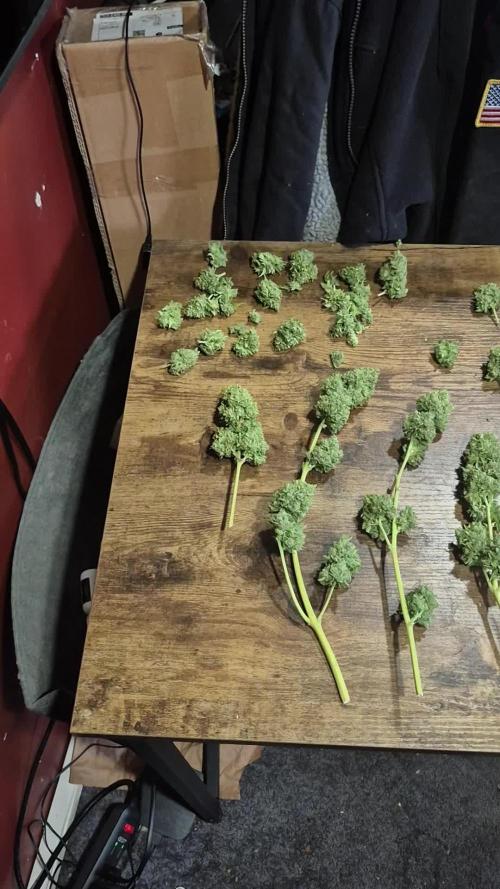
don't have a lot of experience growing but it was easy to grow my only issue was some bud rot caused by catapilars. It's life seed to harvest was 100 days flowering was 52 days. The buds are nice it smells good i feel like it could have been better im not sure what it needed but its pretty good for my first time. Will report back after it dries and cures for a bit. Weighed 317g wet trimmed no main stalk just buds on branches


Likes
7
Share


@Nikkov
Follow
Well, another week has passed and it has been growing not exactly as I expected, but they warned me about using only base fertilizers with an inert soil and a higher ambient temperature, I could have a not so good result, well, it's one more experience and I liked it and let's see how it will be until the end of the cycle because the next one I already ordered a starter kit from the advanced nutrients line! Let's Go!
Likes
16
Share


Likes
17
Share


@GoodTimesOrganics
Follow
Hi liebe Community and Welcome Back! 💚
Nach der siebten Blütewoche ist es Zeit für die Cali Orange Bud! Also sind es nun genau 8 Wochen plus 2 Tage.
Heute ist auch noch Erntetag!
Ein Klassiker aus den early Days!
Bei dem heutigen Cali Hype finde ich es ein besonderes wesentlich auch Mal wieder zu den ursprünglichen Cali Strains zurück zu gehen!
Diese hier finde ich dafür besonders geeignet, da sie einfach ein Klassiker ist!
Das Aroma ist ein klassische Cannabisaroma mit einer dezenten süße und leichten Lakritz ähnlichem Aromen.
Was ich in diesem Grow wieder bestätigt bekommen habe ist, dass reguläre Samen nicht ReVegitiert werden sollten!
Also damit meine ich die Pflanze zur Geschlechtsbestimmung ein kurzes Zeitfenster auf den 12/12 Lichtzyklus zu stellen, damit sie schneller ihr Geschlecht zeigt.
Tut es nicht! Wartet lieber ab, bis die Pflanze sich selbst offenbart. Meist nach 5 bis 6 Wochen Wachstum geht sie von ganz alleine in die Vorblüte und dass auch bei einem 18/6 Lichtzyklus.
Durch das ReVegitieren, hat die Pflanze an Stabilität verloren, daher tragen die Seitäste nun das Gewicht der Blüten nicht gut und die Blätter verkrüppeln zudem.
Außerdem liegt die Pflanze mehr zum Foxtailing!
Die Umgebungsgegebenheiten sind aktuell hot and dry:
—————
🌞 Temp: 27°C
🌚 Temp: 18°C bis 19°C
💨 RH: 49%
VPD: 1,42 kPa
💡ppfd: 830 mpm
—————
Viele Grüße 👋

Likes
4
Share


@TheSurfBud
Follow
Nice sweet smell... could say what strain it is because its from sweetseeds sweet auto mix 10 pk of the best..
Definitely going to enjoy this one ...
Grow went well and fast 62 days flat...
Likes
11
Share


@New_Guy9000
Follow
Week 6 going strong - no slowing these plants down. Smell is pretty intense - even with 6 inch fan and carbon filter my entire house smells dank 😎😎😎

Likes
14
Share


@GanjaReaper
Follow
Day 7 of Veg:
They have not stretched that much this week because there was not much sun, colder temperatures at night.
Hopefully they invested their energy in rooting. I do expect them to grow alot in the comming week.
Might LST them or even HST, not sure yet.

Likes
54
Share


@AsNoriu
Follow
Day 115 since seed touched soil. What a pain to trim it was , almost 5 hours wasted
and still see yellow ;(((( .... Journey is almost over ...
This girl taught me few things for sure ;)
Few month later : very important and lovely news, Seeds Mafia just transfered promised money for diary, so one more huge respect to them !!!! Great house, strong genetics and most important - they follow theirs promises !!!! Highly recommend !!! My first earned cash for growing , it was lovely !!! Check germination week if you dont get it ;))))
Happy Growing !!!


Likes
18
Share


@AuntMeanie
Follow
Praying my girls are not all in different stages of dying 😭More to follow...
1/9/21 These girls were finally dry enough to water I weighed each post before and after watering. I am going to try weighing the pots and water when the weight is about half as dry.as I normally do. So Maybe I should water @ 3lbs heavier... somewhere between 8-9lbs
1/10 I changed the light cycle so that my "night time" is in the middle of the day for heating reason, so this morning when I woke up, after being under the lights for 18 hours I actually had growth on two plants. Gorilla Glue and my photo plant Chocoloope that is growing with the autos. They were both under the VIPARSPECTRA 2020 Pro Series P1000 LED Grow Light. The other two plants were under BLOOMSPECT Double Chips Series 1500W LED Grow Light Full Spectrum.
I wish I hadn't made so many mistakes with this grow because I know there is no way to know if it is the light that made them grow better than the other two or they were just a little healthier. I don't think so because Gorilla Glue is the worst plant and she actually grew but who knows. Anyways I switched the plants around so they are under the opposite light when their day time starts and we will just have to see.
PE
Length 8'
Height 7'
Width 8.5"
Dry weight 6lb 4oz
Wet weight 13lb 11oz
GG
Length 8"
Height 7"
Width 8.5"
Dry weight 5lb 14 oz-
Wet weight 11lb
NB
Length 11"
Height 10 "
Width 10.5"
Dry weight 6lb 9 oz
Wet weight 12lb
Choco
Length "
Height
Width "
Dry weight
Wet weight
1/11/21 DAY 46S HELP if ANYONE SEES THIS .... last night I decided not to switch the plants around after all, but I did rearrange the tent because I had a plug running through door and I am still struggling to regulate the humidity and temp. I thought I still had good air circulation but apparently I did not and the plants are not happy. Gorilla Glue is not going to make it. She turned real dark green after watering her on Saturday, she had a small amount of growth Sunday but now all the leaves are laying down. I don't know if I should use Sledge hammer but after flushing a week ago letting her dry for a week and then watering Saturday I don't know if I flushed her with sledge hammer if that would finish her off or perk her back up. I weighed her and she was 4 pounds lighter than when I watered her on Saturday and still 2+ pounds lighter than when she is the driest.
Some background on how I tried to kill my plants... 😭
I started this grow by watching a zillion videos with my key take away being
1-don't over water
2- don't transplant autos
3- don't feed full strength.
I took it seriously, so my tiny little sprouts were put into 3 gallon pots of Fox Farm happy frog potting soil. (didn't realize this already had enough nutrients to last several weeks so I started nutrients in the 2nd week of Veg) I use Fox farm nutrients and follow their soil feeding schedule. I bought the Dirty Dozen starter kits and it did not have 2 products in that the feeding schedule but since they were not in the kit I assumed they must not be too important. They were.... Wholly Mackerel & Marine Cuisine fertilizer.
I used a turkey baster to slowly drip a couple ounces of water around each plant I water just like in this picture. https://prnt.sc/wjq0gi for over a month. I didn't realize by watering like this for a month that I was making the nutrients build up just below the the root line each watering. I waited to water till the plants were very dry. Now looking back Way way to dry before watering. I am sure that is why they were not growing. I was only giving them enough to stay alive not thrive. So a little more back info
Day 14 I watered the plants with plan water
Day 23 after not having to water the plants for 9 days I watered them, 1/4 gallon each with week 2 schedule, with the addition of calmag+(2-0-0) @ 50% strength
Day 27 they were light and needed to be watered and they had grown a little. so I gave them nutrients same as above
Day 30 The plants were not quit as dry as usual but I was beginning to think I was underwatering them so I gave them 1/2 gallon of
THIS IS WERE IT ALL GOES WRONG...(Actually after reviewing my grow journal just now my problems started Day 1 and was showing signs I just didn't know it and I still am not sure how to fix any of it Almost makes me think I should scrap it all and start over. These poor plants will be lucky to produce anything) Someone could seriously use my grow journal as a "everything not to do" guide.
Day 35 since the plants were finally big enough to soak the pots fully. I also decided since they had used 1/2 gallon water in 3 days and they grew a ton I upped the nutrients to full strength and the calmag plus as well. This was the first time I had any runoff sadly I let the plants sit in the runoff and reabsorbed all the runoff.
Day 38 Flushed each plant with with 5 gallons of tap water that had a PH of 6.4 & water temp was 62 degrees. My run off started at 4300ppm with a ph of 6.2. The PH was consistent in every plants runoff and all of them had off the chart PPMs. I brought NB down to 250ppm. Gorilla Glue and Pineapple express I brought the runoff down to 450. For some reason I decided that since my plants were probably in shock from no water and nutrients to more water and a whole lot of nutrients and I figured flushing them would reset the soil and I reasoned they would need food after not getting any from being in shock so I gave them each a half strength nutrients. I waited a full week then posted this question.
Day 45 I have each plant plain water and checked the run off. The Gorilla Glue had a run off of 584ppm with a ph of 6.47 , The northern lights X had 750ppm and 6.38ph pineapple express had 1170ppm runoff so I ran a less less than an extra half gallon of water and that brought the ppm down to 706. PH was 6.3. I have a photo period that I didn't add to this dairy but has been with these plants and it is starting to show the same signs as the others they are just all in different phases of whatever I did to almost kill them. I started the next week on Friday so I will be adding pictures and a couple videos I took from today in my grow dairy tonight. I don't know what to do next.

Likes
6
Share

@leithsffs
Follow
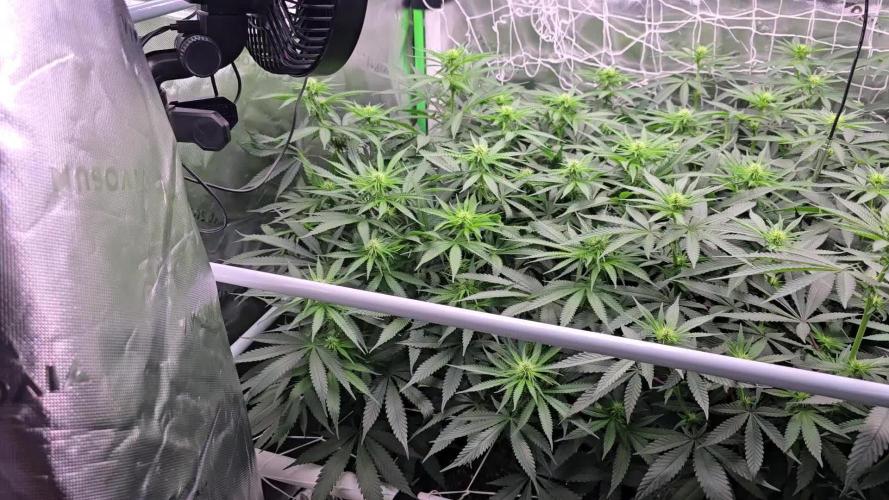
Not much to report this week. Just added some Fish Bone Meal and started on the Kool Bloom, too.
Likes
55
Share


@BodyByVio
Follow
Just got done with trimming the 4x4 @greenhouseseedco Super Silver Haze / @blimburnseeds Silver Surfer Haze tent.
The final yield is exactly 1000g plus some (kind of a lot)that I smoke in the last 2 weeks 😃
Also got 6, gallon size ziploc bags filled with good quality trim for concentrate.
To be honest I was expecting a little more but keeping in mind that this grow I did not supplemented with bottled CO2 I think I’m good with the results.
Definitely I enjoyed a lot this grow and I’ve learned even more.

Likes
6
Share

@420DeepGrow
Follow
📆 Semana 9
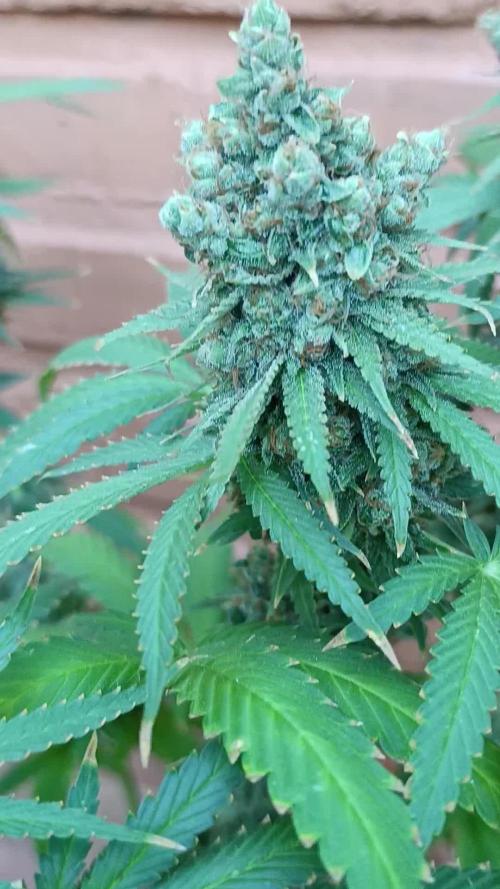
Llegó el momento de la cosecha tras una semana completamente atípica, marcada por la evacuación de la zona debido a los incendios. A pesar de las circunstancias y de varios días sin poder atender el cultivo, las plantas completaron su maduración y llegaron al corte con un excelente estado general.
Los cogollos terminaron de endurecerse, alcanzando una gran densidad y una abundante cobertura de resina. Los aromas se mostraron intensos y bien definidos, mientras que los cálices finalizaron su engorde, ofreciendo flores compactas y de gran calidad. La maduración fue muy satisfactoria, dando como resultado una cosecha con un gran potencial tanto en producción como en perfil aromático.
🔥 Nota de cultivo: Una cosecha marcada por la evacuación, demostrando la resistencia de las plantas incluso en condiciones complicadas. Tras el regreso, llegó el momento del corte y de iniciar el secado para preservar al máximo la calidad obtenida.
¡Seguimos creciendo fuerte! 💪

Likes
10
Share

@RooftopFarmer
Follow
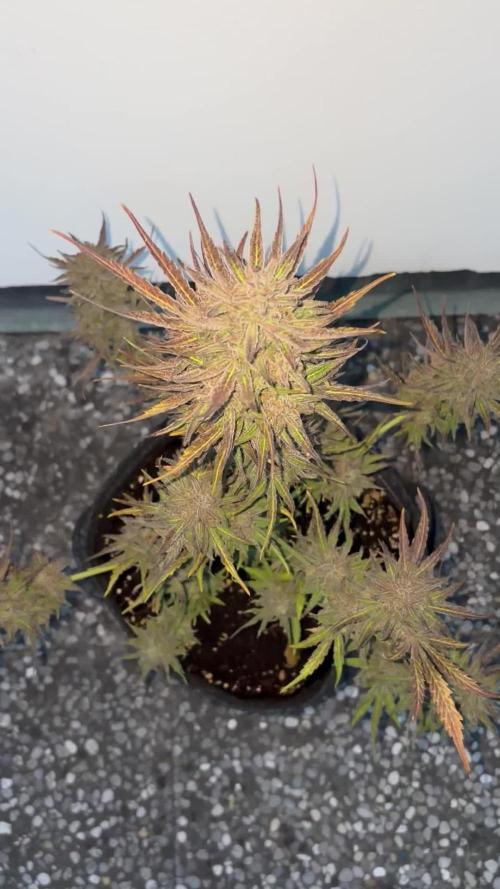
Guava Runtz – Week 11 (Fast Buds Outdoor 2026)
Guava Runtz is done. She was harvested and lightly wet trimmed, then properly trimmed after drying. She is now in the jar for curing.
Final dried weight came out at 34 g. Beautiful red colors throughout and a strong fruity smell that hits hard. Really happy with how she turned out.