


Likes
Comments
Share


@madlangs
Follow
They are plodding along in the 2x4 tent, waiting for space in the drying tent. The tent should be free in about 7 days then I can up the ppfd and give them a better environment. Cant control the high humidity in this small tent
10.2.25
Ppfd 800ish
Dli 34
15.2.25
Jelly 44cm
Jelly 74
Slurricane 75cm

Processing
Likes
15
Share


@AK1210
Follow
Things are going really well for this lady. She has continued to produce copious amounts of tricombes and the smell is just unbelievable. I've had to source some air fresheners to hang around the garden to try and mask it.
I've removed a few of the new growth at the bottom of the main stem a some they are only going to suck energy that can be better used.

Likes
22
Share


@PitteJasKorels
Follow
Girls are growing and showing really nicely for 3 weeks of flower.
Smells now starting to eminate from both. The Sugarcane smells like passion fruit punch and the orange Velvet is still to complex to call but amazing nonetheless.
Defoliated more. Didn't have a choice since the canopy was still so dense.


Likes
32
Share


@MadeInGermany
Follow
Info:
Unfortunately, I had to find out that my account is used for fake pages in social media.
I am only active here on growdiaries.
I am not on facebook instagram twitter etc All accounts except this one are fake.
Flowering day 1
since time change to 12/12 h. Hi everyone .
Actually I wanted to let it grow for another 1-2 weeks and top it, but slowly it stops with that Growing up so I decided to put it in bloom today.
It was poured twice a week with 0.8 l.
Next week she will get her first batch of flower fertilizer.
Until then, I wish you a lot fun and stay healthy 🙏🏻
You can buy this Strain at :
https://www.zamnesia.com/de/5165-zamnesia-seeds-kalini-asia-feminisiert.html
Type:
Kalini Asia
☝️🏼
Genetics:
Black Domina x Purple Kush
👍
Vega lamp:
2 x Todogrow Led
Quantum Board 100 W
💡
Bloom Lamp :
2 x Todogrow Led
Cxb 3590 COB 3500 K 205W
💡💡☝️🏼
Soil :
Canna Coco Professional +
☝️🏼
Fertilizer:
Green House Powder Feeding
☝️🏼🌱
Water:
Osmosis water mixed with normal water (24 hours stale that the chlorine evaporates) to 0.2 EC. Add Cal / Mag to 0.4 Ec Ph with Organic Ph - to 5.5 - 5.8 .

Likes
27
Share


@Reaper
Follow
THE critical got harvested. these are the girlscout coockies at WEEK 8
ill wait 2 more weeks

Likes
49
Share

@squalino
Follow
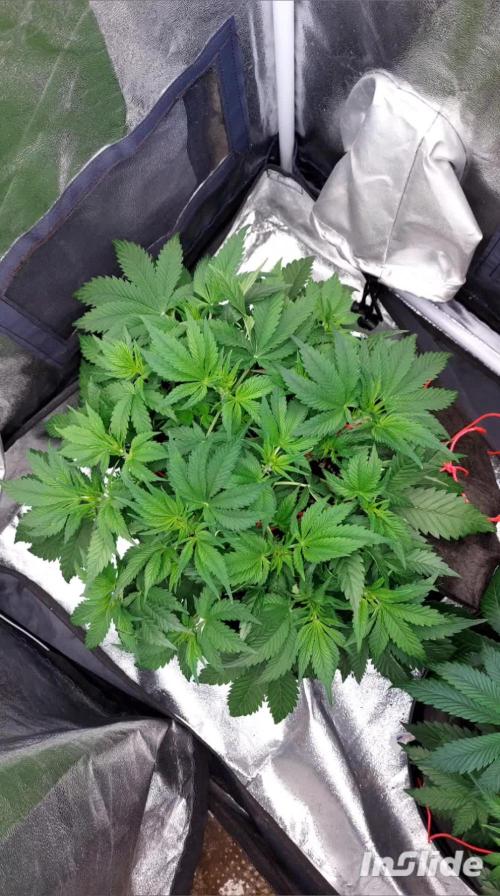
🌿 Journal de Culture : Cherry Cola (Auto)
Date : 12/03/2026
Âge : 49 jours (Semaine 7)
Phase : Pleine floraison (Production de résine intense)
📊 Paramètres de l'Environnement
Température : 24°C (Jour) / 20°C (Nuit).
Humidité : 55% (Parfait pour éviter la moisissure alors que les têtes se densifient).
Éclairage pureled 240 w 75% intensité) :
Distance Plante #1 : 69 cm.
Distance Plante #2 : 79 cm.
💧 Nutrition & Soins (pH 6,3)
Plante #1 : 1 Litre d'eau + 2 ml de PK 5-8.
L'ajout du PK (Phosphore et Potassium) va booster le gonflement des fleurs et la densité des bourgeons.
Plante #2 : 1 Litre d'eau pure. robinet
📏 Suivi des Plantes
Plante #2 (La Petite )
Taille : 26 cm (+4 cm depuis le 05/03).
État : Elle est devenue extrêmement touffue. Les fleurs sont d'un blanc immaculé avec des pistils bien vigoureux.
deldues signe de brulure sur les pointes mais rien d'alarmant.
Plante #1 (La Grande)
Taille : 38 cm (+6 cm depuis le 05/03).
État : Magnifique structure en "lustre" grâce à ton palissage. Les têtes sont plus avancées, plus larges et commencent à former des grappes denses. On voit clairement sur les gros plans que les trichomes (la résine) envahissent déjà les "sugar leaves" (petites feuilles de têtes). Le vert des feuilles reste sombre et sain.
🔍 Analyse
Le Stretch : La croissance verticale ralentit (seulement quelques centimètres cette semaine), ce qui signifie que l'énergie est maintenant presque totalement redirigée vers la production de fleurs et de THC.
Gestion PK : Plante #1. Elle est à son pic de demande en minéraux. Pour la Plante #2, l'eau permet de voir comment elle finit de digérer son dernier apport d'Orgatrex avant de lui donner aussi du PK .
Aspect visuel : Les têtes sont très "électriques" avec tous ces pistils blancs. C'est le signe d'une plante qui n'a subi aucun stress majeur. juste quelques légères brulures sur quelque pointes mais rien de sérieux.
15/03
plante 1 et 2
j'ai retiré les cordes qui formaient mon LST afin d'atteindre le tronc et pouvoir defolier endessous de la plante. pour que l'air circule mieux et couper quelque branches qui ne prenait pas la lumière et n'aurait rien donné de bon .la plante peux mieux diriger ses ressources au autre branche.
plante 1
le pot étant léger je vais lui donner 1,5 litres d'eau PH 6,4 .
MUSIQUE : FAST BUD NO 2
Likes
57
Share


@SmokieMcPot
Follow
PSA!! PSA!! PSA!!
WATCH those ZeroWater pitchers... when the filter goes, it goes FAST. Leaves you with a ton of undesirables, and AN EXTREMELY ACIDIC PH!! Acidity in the body leads to CANCER! will kill your plants fast as fuck too.
========================================================================================================
2 Girls 1 Cup week 11? We should come to a finish this week... oh the excitement. Can't wait to see WG without her leaves. Going to have to cut each branch and hang individually due to the density of its structure. Got this far, don't want to risk moldy weed.. damn I'm gonna get bored while drying/curing not having a plant or diary to occupy the time.
Day 77- currently flushing the girls. GC isn't ready for it, but she isn't in charge here. She should have stuck with WG when she extended a helping hand. Since falling behind, WG has thrown up a peace sign to GC as to say "see ya sucker". It's my favorite bud by far on WG. Bitch has got an attitude 🤣. RES sitting at 87ppm @5.9. Yellowing has started.. going to have to check trics more often so I get that sweet spot I'm looking for.
========================================================================================================
Day 78- these girls are starting to stink! Come on WG... ripen up so we can get this over with.. lowered lights power a bit today. RES climbed from 87 to 137. Drained 2gal, added 2gal RO. down to 38ppm. Forgot to mention the ice probe has been unplugged for over a week now. Been putting a 3/4 full 1L frozen bottle in the RES to chill. Rotate out every 12hr with a fresh. At lights on, and 12hr later. Full bottle got Temps too low for my liking.
========================================================================================================
Day 79- tick tock.. tick tock.. come on WG.. she's showing a little fade on her leaves. Seeing more of a calcium difficiency on her fans than fading honestly. Trichomes taking their time ripening as well. I'm SURE this strain ambers up.. taking their time for me though.. dont know how long I feel comfy flushing hydro though.. I did notice a few exploded trichomes up top, which has me thinking I need to go ahead and chop within the next couple days. If I notice any more ruptured anywhere else I haven't poked it with the scope.. I'm hanging the bitch that night. May give her 24hr dark period, since I've tried some other bro-science and it seemed to help.
*edit* felt bad starving WG and she's not more amber coated. Gave her a bit of nutrition tonight. GHE aggressive ripen. M-2.8mL/g G-2.8mL/g B-4.5ml/g and 5mL calmag (using RO). Came out high @ 867 so I pulled 2L and dumped 2L RO in. Sitting at 613 @ 5.9.
========================================================================================================
Day 80- well, the 3 days starving the girls kicked their metabolism back in gear. I want more amber before chop chop. They quit eating and were drinking MUCH less signaling the end. Was down to topping off once a day, maybe a liter to a liter and a half. Since feeding yesterday, they've started eating and drinking like they were on week 10 again. Topped off 3.5L in the last 16hrs. TDS dropping with water level, even more when topped off with straight RO. I'm not giving em any more nutes. Last push for some extra weight before the end. ALLOT more frosty today than yesterday as well.
========================================================================================================
Day 81- Started flushing again. Maybe starting their metabolism again will help ripen these trics. If not, they're getting chopped @ day 84. Don't want to let em go too long and regret it. I may have f'd em up feeding again after the 3 days starving. Time will tell
========================================================================================================
Day 83- still waiting... 💤
Going to order some bubble bags. Freezing all GC and trim/larf from WG for some bubble hash. GC is frosty and all white like WG, just tiny popcorn shit everywhere since it's been neglected and abused over and over and over and over 🤣.
========================================================================================================
As always, thanks for stopping by and checking out my current grow. full timelapse added to this week 27-70 (looks better on YT.. https://youtu.be/8JdUkR36Wfc)
Likes
11
Share


Likes
Comments
Share

@Oldwied
Follow
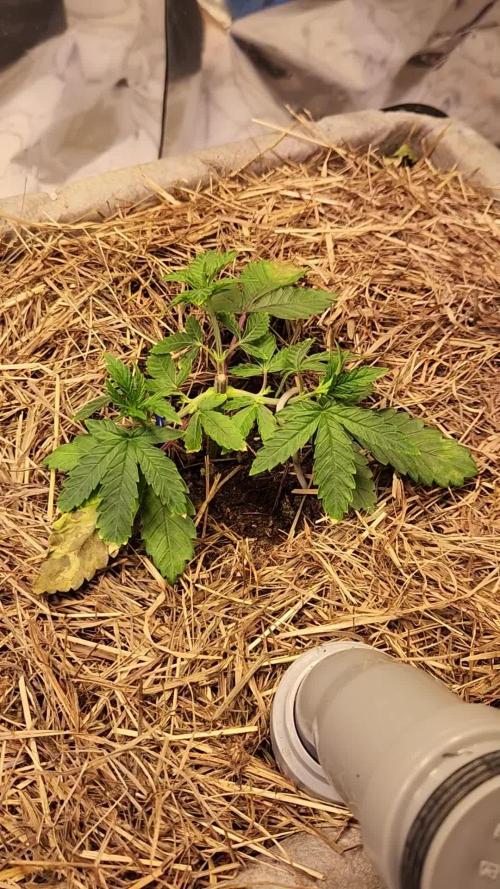
Day 25
Fotoshooting
Topping
Day 30
Fotoshooting
LST
Light Power: 60%
In the beginning of the week I topped the girl above the 2nd node. (The upper internodes did not grow uniformly.)
The lush green is returning, and the little one has weathered the stress well.
Unfortunately, after pruning, the three-branch structure reformed into a classic two-branch structure. On the bright side, the base looks nice.
Likes
128
Share


@PapaNugs
Follow
Another good week. They got their first real water twice this week. They are enjoying the high humidity and temps. Right on track so far and hoping they keep it up!

Likes
17
Share


@MG2009
Follow
08/23/2023
Starting week 2 flowering
AK #1 is now 17" tall
AK #2 is now 12.5" tall
Bruce Banner is 16" tall
All going well no more bug issues fed a little bit of nitrogen this week in the form of
(901 C release) 1/4 strength
trying to push some Carbon on her, no more Nitrogen will be used after week 2 of flowering, only P-K will be from Fox Farms Big Bloom
0-0.5-0.7 mixed with Bio-Remedy
Hope that they have more stretch in them but time will tell. Either way flower are exploding all over her!
Going to give them some Fresh Aloe Vera water, there loaded with Amino acids other good stuff.
08/27/2022
Not sure if auto flower goes through different flowering stages, if they do phase one is fleeting first flush of pistils fading and fresh ones popping up everywhere . Bruce Banner is a resin monster even some bigger leaves getting resin rails.

Likes
8
Share


@SmashDabz
Follow
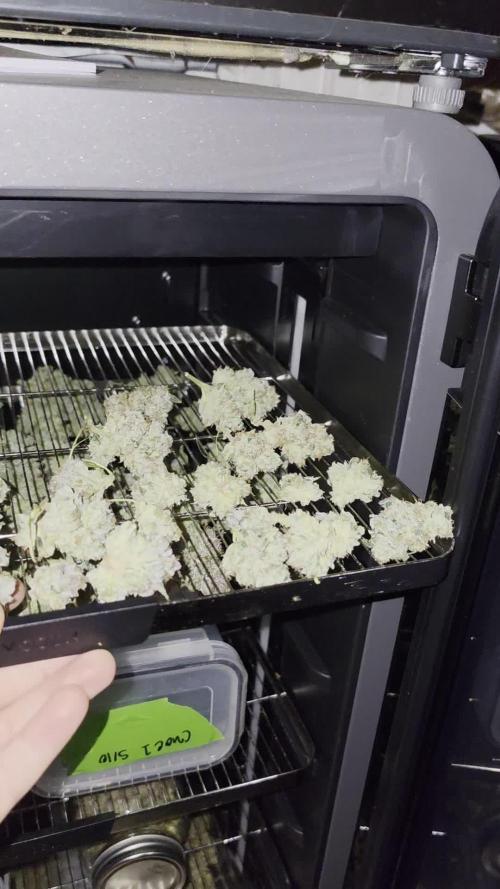
The thrips are gone. It is taking more nutrients it’s more hungry these days still cutting off lots of defoliation lots of buds growing in so I’m having to keep her close eye and make sure I take out anything that’s not worth spending energy on buds are getting huge but it’s not growing any taller it’s going to be a short stocky plan

Likes
14
Share


@Hempface86
Follow
Day 54 and as you can see guys she is finally producing trichomes and starting to look like blueberry if that makes sense.. if you look up close the buds have almost a bluish tint so I'm super excited and very pleased with Sensible Seeds so far.. they are two for two obviously I have not harvested or smoked this yet but this has been a breeze to grow from beginning to end or up until now anyway all I do is top dress every week and a half to two weeks and go between silica and recharge in between.. as you can see nitrogen levels are low but that is okay I'm used to synthetics so I'm very excited to see the fade I hope it looks like fall in my tent ... Big shout out to Sensible Seeds they are your place for bulk seeds I think they are the world's biggest Warehouse don't mark my words but they have a massive selection.. I hope everybody is doing well God bless and happy growing ✌️😎

Likes
11
Share


@Paradox_1ste1
Follow
Up to now they looking pretty good and strong, even tho some of the plants are not as dense and is maybe a bit late to date with the other ones. Ill have to give them another 1 or 2 other weeks until harvest. The trichromes look preety good even tho.in the picture dosent show well. They starting to consume less water and the leaf colour is starting to fade slightly .
Likes
11
Share


@Professor_Daank
Follow
Helllllo!
Fuck that storm! Almost had no power, luckily... and I mean LUCKILY, the power stayed on, but dayyyum was it nasty.
Had issues with 1 plant not getting enough light... so I got another 600w. The 450w is great, for 1 plant. No longer a problem, but had some leggy ladies on 1 plant due to this issue. Buds are forming nicely, but non-the-less, MOAR LIGHTS.
Advanced Nutrients is fuckin' ridiculous. I can't say enough good things. Just keep up with the diary, it's gonna get nusto pretty soon.
8/19: One of my AK-47 seeds all just showed their taproot. She's been put in her jiffy pellets and I will be creating another diary shortly. The rest is on cruise control bayyybayyyy!
***At this stage, being my first grow, I finally visualized what and why the "Scrog Method" works. It's fucking insane how you can build a canopy to bush out and be so top-friendly. I'll be sure to use this method... eventually! It was just a nice "lightbulb" moment of understanding reality vs. research.

Likes
34
Share


@PrairieFrostGrow
Follow
**** Week 12 growth - February 27 to March 5, 2021 - Week 4 Flower *****
These two girls are getting frosty and pheno 1 stacking up beautifully. The second pheno does a funny thing with growing horizontal leaves when happy and not point way up😃
Light intensity increased this week. Pushed up to 525 watts and then to 550 watts at the end of the week. This got the a little hot by the end of the week though. Working with a new light and finding the sweet spots takes a run or two. Learning how the girls grow anyway so the whole run is a lot of learning......its all good😀
Nutrients were pushed a little at the end of last week and the start of this week so backing off a bit more again. Given that they were pushed with light intensity they started showing some signs of nutrient issues. It’s good though as there is reaction time and back off to plain water feed for a couple of days at the end of the week and into week 5. Week 5 is going to be the start of the last stage of flower feed and work with that for two weeks, then stop feeding at the end of week 6........the plan so far anyway. Mimosa is longer strain though so they may get another week.👍
Little more detail.......
Feb 27/21 - Day 22
- big feed day
- all IPP line plus silica @ 1ml, CalMag @ 1ml, Rezin @ 1.5ml, enzymes @ 1.5ml
- 1650ppm and 6.1pH
- 4L for MM1 and 3L for MM2
- MM2 grows some horizontal leaves at the top.
- MM1 is swelling and getting frost now!!💪😎
Feb 28/21 - Day23
- Microbe day but also added some CalMag
- 3L for MM1 and 2L for MM2
- Natures Candy @ 1.5ml, Recharge @ 1/2 tsp/gal, Magnifical @ 1.5ml, Micro @ 1ml, Bloom 1.5ml, Terpinator @ 2ml
- 950 ppm and 6.0pH
- leaf colour almost looks light today.
Mar 1/21 - Day 24
- dry out day.
Mar 2/21 - Day 25
- plain water
- 300ppm and 6.1 pH
- 4L in MM1 and 3L in MM2
- light power pushed up to 550 watts today.
- (too much from 16” to 20”........note!!)
Mar 3/21 - Day 26
- plain water with two suppliiments
- 4L for MM2 and 2.5L for MM2.
- Terpinator @ 3ml, Rezin @ 2ml.
- 525ppm & 6.0pH
- stripped some leaves today......sticky in the middle😃😃👍👍
Mar 4/21 - Day 27
- no water added today
- light power reduced today 450 watts.
- been going too hard with intensity. Seeing leaf curl on other girls in the tent.
- MM2 is showing light stress or Potassium deficiency.....related to CalMag??
- joys of diagnosing cannabis😂
- starting with backing off light and reduce ppm going in but not the ml👍
Mar 5/21 - Day 28
- hit with microbes again to help with stresses.
- recharge @ 1 tsp/gal, Nature’s Candy @ 1.5ml
- 375ppm and 6.0pH
- 3L for MM1 and 2.5L for MM2
Moving right along we are through 4 weeks now and moving past the middle of flower.

Likes
3
Share

@ScouseCityLX
Follow
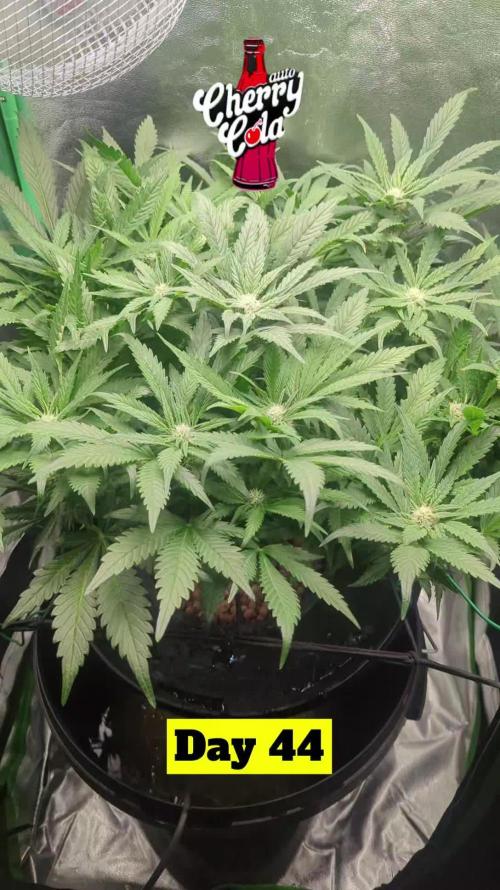
This grow was well over a year ago, Im just updating it fkr my self tbh, I can't remember too much about it.
The Boeing 757-200 is powered by rolls Royce rb211 engines, it's known as the Ferrari of the sky.
Processing
Likes
7
Share


@CityFarmer
Follow
Hello everyone,
Been busy this week working around the house so not much I can say. Heres a little video of there growing...
See you guys next week
