







Likes
12
Share


@TSXpress
Follow
Purple punch auto Harvested! Everything went fine and was an easy growing season for me. I’ll come back and update on the dry weight result :)

Likes
16
Share


@HowtoBubatz
Follow
Today marks the 7th week of flowering for my cannabis plant, and it's truly fascinating to observe the changes that are taking place.
The stretching phase has officially come to an end, and now the plant is fully focused on developing its buds.
I can see that the buds are starting to swell and gain size, which is a promising sign of a healthy flowering process.
I've adjusted the feeding schedule with BioBizz products to match the plant's current needs.
Overall, the plant looks healthy and vigorous. The pistils are turning a beautiful shade, and the resin production is beginning to increase.
I’m excited to see how the buds will continue to develop over the next few weeks. I’ll keep monitoring closely and make sure everything stays on track.
Be excited for the coming weeks 💚🌱🌱

Processing
Likes
4
Share


@Barcelona_Farmers710
Follow
Mientras yo me divertía en la spannabis las niñas se ponian cada vez mas resinosas farmers!! Solo basta ver la shining haze para darse cuenta que el mammoth p es brutal!!👌🏻

Likes
6
Share


@HappyGrower420
Follow
i was using bottle water since the firat day but dint realise that the water was filtered (probably) and had only 7mg/l of calcium ,mag and iron.
Instead of buying cal +mag (which i will buy for my next grow) i checked other brands of bottles water and found Evian that has 80 mg/l calcium ,25mg/l mag (i know its not worth it but i was feeling safer to use "bottle" water at the begining because it was also phd at 6.5)
so my question now is : plant had a cal+mag def . Considering that before i was giving it only 7mg/l of cal+mag now that im giving it 80mg/l of calc and Around 40-50mg/l magnesium just by changing water brand also 4 ml of alg a mic that has cal+mag + molasses that iv started this week 1(tablespoon has around 100mg of calcium) .Do you think it will be enought to fill the needs of the plant? As i said buds are still growing normally and plant has another 14-17 days to still fatten the buds :) Today if seen some orange hairs on them .
thank you
thank you.

Likes
13
Share


@STAYINGONMYMAINCBATORUNTWO
Follow
04/01/21
Amazing colours have came through during cure showing off her red and purple! And she’s frosty all over and tastes like a tropical dream!mango pineapple tones with a side of lime! Would defiantly recomiod
Update; colours are coming through got some amazing hues just uploaded some vids 😍
Got the green pheno on both???! But it’s but either way I love this strain tastes a lot like the black cream auto I’ve done of sweet seeds too. So many colours in the bud and the flavour is immense throughout! Tastes like tropical mango and slight pineapple with a lovely pungent limeish taste it’s so nice and the high sent me to sleep when I tested the result! Just had to lay there and close my eyes and enjoy it and woke up to the end of my film ahahah would defiantly recommend Anyone growing very easy and amazing results!

Likes
119
Share


@DogDoctorOfficial
Follow
Hello, my green connoisseur! The moment we've all been eagerly awaiting has arrived—the Harvest Report for our botanical queen, Jealousy, in the Power Buds competition. This has been a journey filled with anticipation, and now, we stand on the shores of botanical triumph.
Jealousy, in her final act, bestowed upon us a generous yield of 195 grams of dry bud. It's like a cornucopia of green abundance, a testament to the meticulous care and strategic decisions made throughout this green saga. Each nugget is a jewel, a culmination of weeks of growth, love, and dedication.
But the story doesn't end there. Jealousy, in her love for the trim bin, gifted us a beautiful golden pollen. This precious powder, transformed into ash via the French Cannoli style. Also gave me a Charas/Finger Ash ball. It's like capturing the essence of the plant in a tangible form—a botanical relic that encapsulates the spirit of our green empress.
Now, let's talk about the auditory symphony that accompanied the harvest. The sound, reminiscent of a tree making timber, is like nature's applause for the bountiful harvest. It's the soundtrack to a successful cultivation venture, a melody that resonates through the grow room, echoing the grand finale of this green symphony.
The drying process, carried out over two weeks with a temperature of 17°C and humidity at 58%, is like the slow and methodical crafting of a fine wine. Each day, the buds undergo a transformative journey, evolving from freshly harvested flowers to dried and cured masterpieces.
And now, the pièce de résistance—the preservation of terps with the Grove Bag featuring Terploc technology. It's like locking the aromatic essence of Jealousy in a time capsule, ensuring that every toke carries the full spectrum of flavors and aromas. The anticipation for the smoke report is palpable, as the strawberry candy profile promises an exquisite sensory experience.
Reflecting on this entire journey, from germination to harvest, it's like turning the pages of a botanical epic. The decisions, the challenges, and the moments of sheer joy have shaped the destiny of our green empress. It's a narrative that will be retold, shared, and cherished in the annals of our horticultural adventures.
As we conclude this harvest report, let's extend our heartfelt thanks and shout-outs to Zamnesia, Plagron, Grow Diaries, and the vibrant community. Your support and contributions have been the guiding lights on this extraordinary green expedition.
To my fellow contestants and growers, may your own harvests be as abundant, flavorful, and joyous as this one. Here's to the culmination of our shared green dreams, the thrill of the harvest, and the anticipation of what lies ahead. Stay green, stay inspired, and keep cultivating those dreams!
With true love comes happiness. Always believe in yourself and always do things expecting nothing in return, with an open heart. Be a giver, and the universe will respond in ways you can’t even dream of .
Friendly reminder: all you see here is pure research and for educational purposes only.
Genetics - Jelousy @Zamnesia
Nutrients @Plagron
Light - @viparspectra P2000
Room size - 3x3 - 0,9x0,9

Likes
12
Share


@eldruida_lamota
Follow
Hola de nuevo familia, dejamos la última semana de playa power plant xL.
Aquí si vemos cómo la carencia de Nitrógeno afectó las hojas bajeras, pero nada serio.
Solución: alimentar más .
Lo demás lo podéis observar en las fotos y videos.
todo va bien a excepción de una pequeña carencia .


Likes
4
Share

@Daris_Growmance
Follow
Wintergrow – kleines Update ❄️🌱
Gestern stand im Zelt tatsächlich mal ein ruhiger Tag an – nichts geschnitten, nichts gebogen, einfach nur beobachten.
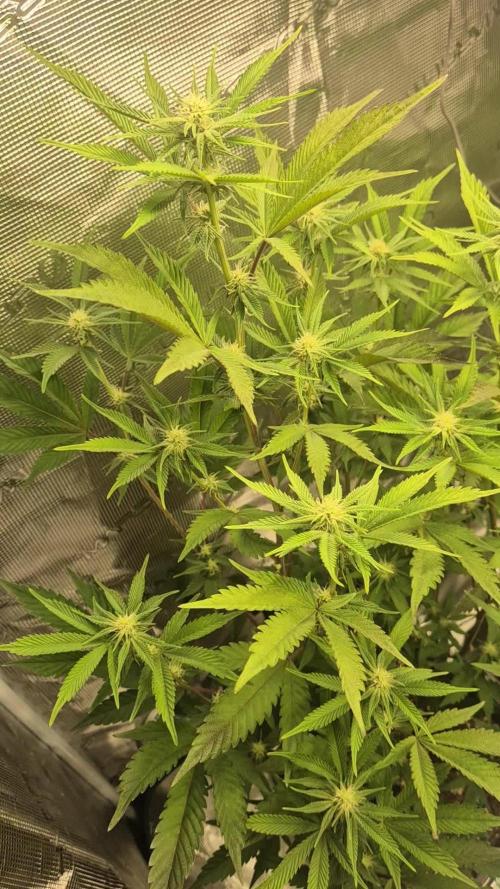
Der Stretch scheint jetzt so gut wie durch zu sein. Die meisten Pflanzen haben ihre Höhe erreicht und konzentrieren sich jetzt immer mehr auf die Blütenbildung. Man sieht langsam, wie sich überall kleine Budsites entwickeln.
Besonders freut mich das ehemalige Sorgenkind im hinteren Bereich. Die hat sich deutlich gefangen und sieht inzwischen wieder deutlich vitaler aus. Mal schauen, wie sie sich in den nächsten Tagen weiter entwickelt – aktuell sieht es auf jeden Fall vielversprechend aus.
Die hinteren Pflanzen könnten eventuell noch minimal nachstretchen, aber ich denke, der Großteil des Wachstums ist jetzt abgeschlossen. Jetzt geht es langsam in die Phase, in der die Buds anfangen richtig aufzubauen.
Heute wird wieder kurz nach dem Rechten gesehen und dann schauen wir, wie sich das Ganze weiter entwickelt.
Wintergrow läuft stabil 🌱
Likes
35
Share


@madlangs
Follow
Looks like I have been under feeding and thinking the plants was going pale because the light was to low. Now feeding full strength and lowered the light a bit today
11.10.21
Dg 4L
Wc4L
Gb4L
Chem4L
Cream.4L
Gave all full strength week 2 flower with fish mix. Recharge mammoth p. Silica 1ml/L calmag 0.5mlL. Ec 1700 ph ph6.4
Hubba.4L
Orange. 1 3L
0range 2 4L
Gave all week 1 flower with fish mix. Recharge mammoth p. Silica 1ml/L calmag 0.5mlL ec1500. Ph6.4
13.10.21
Dg. 3L
Wc. 2.5
Gb
3L
Chem. 3
Cream. 3
Hubba 3
Gave all week 2 flower apart from hubba got week one flower full strength silica 1ml/L. Calmag 0.5L/L ph6.4 ec1700 hubba ec1500
15.10.21
Dg. 5.5L
Wc. 3L
Gb 4.5
Chem. 4.5
Cream 4.5
Hubba. 3.5
Orange. 1 4.5
0range 2 5
Gave all full strength full strength week 2 flower gave grow instead of fish mix
Calmag 0.8ml/L for some reason ec was ec2.3 so added more water to bring down to ec1.9. Watered dg with it and added more water to bring down to ec1.8 ph6.4 for rest of the plants
Run off
Wc ph5.7 ec3.4
Hubba. Ph5.9 ec3.0
Orange no2. Ph5.9 ec3.6
Orange no1 ph6.0. Ec3.8
Chem. Ph5.8 ec3.1
Dg ph5.7 ec4.5
Cream ph5.9. Ec4.3
Gb ph5.5. Ec4.3
15.10.21
Dg 60cm
Wc 54cm
Gb 58.5cm
Chem
66cm
Cream. 61cm
Hubba. 50cm
Orange. 1 28cm
0range 2 38cm
16.10.21
Spectrum king 90cm
Lumatek 70cm

Likes
35
Share


@nonick123
Follow
Día 80 (19/08) Riego 1 Litro H2O pH 6,55
Día 81 (20/08) Riego 250 ml H2O pH 6,55
Día 82 (21/08) Riego 500 ml H2O pH 6,55
Día 83 (22/08) 💥Comienza la floración! 💥
No riego. Día nublado y de bajas temperaturas
Día 84 (23/08) Riego 500 ml H2O pH 6,55
Día 85 (24/08) No riego. Día nublado y de bajas temperaturas
Día 86 (25/08) Riego con 1 Litro de Té Floración de Lurpe Solutions. Preparación: 24 horas con bomba de aire (oxigenación) con ingredientes:
Healthy Harvest 8 ml/L + Insect Frass 16 ml/L + Hummus Lombriz 8 ml/L + Melaza 1 ml/L + Kelp Hidrolizado 0,25 g/L
💦Nutrients by Lurpe Solutions - www.lurpenaturalsolutions.com
🌱Substrate PRO-MIX HP BACILLUS + MYCORRHIZAE - www.pthorticulture.com/en/products/pro-mix-hp-biostimulant-plus-mycorrhizae

Likes
8
Share


Likes
3
Share

@Bdog7878
Follow
So we been had a lot of rain all week. One of the skunks got some bud rot and the 2 widows and other skunk had some pm. I did a big defol on skunks and widows and cut out all the bud rot from the one skunk. The end games rarely need any defol and dont have a drop of rot or pm. They are growing great. I could tell the skunks were gonna be a rot issues the buds grow so close and compact and with all the rain it was certain I was getting some on them. Both end games are super frosty already the skunk is getting pretty frosty and the widows are taking a little longer to build trics but they are definitely starting to. The end games have the strongest smell the skunks and widows smell but not super strong yet. Just been feeding every 5 days and recharge once a week plus they take 2 gallons of water every day if its sunny out. The end games as of now are definitely my favorite but they all coming along nicely

Likes
6
Share


@Kannamar
Follow
Apologies, I hadn't time to report and share my experience on the 3rd year of indoor grow.
I even didn't took photos from the beginnings, shame on me!
I finally decide to post the few I did to share with a friend... and I began last week to keep records.
So, this is week 6. but I'm currently on week endig week 9.
Almost the same setup as the previous indoor.
- MyPot (a mix between hydro & areo)
- small tent 60x60x160
- Lumatek ATS 200 PRO, but at 75% or 50%
- Nutrients TA Tripart
- 3 autos from Sweet Seeds,
I changed some part of the setup, I'll explain later on.
Now, I'll prefer to post the next weeks...
Likes
4
Share


@JarvisfromChina
Follow
Just watch video and have fun!
And I want to have my own marijuana farm~
My youtube channel: https://www.youtube.com/@VPNuseryoooo
Likes
12
Share


@Socal6pak
Follow
Received TWO 5packs of rhino Ryder as freebies. Gonna grow these outdoors and see how they do. Gonna take advantage of socal sunshine. Only 4 out 5 sprouted. It’s old beans I think. So that’s a good pop rate. I think.
Processing
Likes
29
Share


@Hasard
Follow
Starting week 7 in heat. What a weather ! 30°C ! But how are they pretty despite that hot temperature 💋 They are soldiers ! They will be the best of all time, they will beat that heat 💪💪💪 They will stay strong and elegant until Harvest. No one will defeat these Gorilla and Pineapple flowers. Light everywhere, excellent bio nutrients and CO2 against this dark weather. This will be the weapons of my plants. LET'S FIGHT !!!!🤝

Likes
15
Share

@masterofsmeagol
Follow
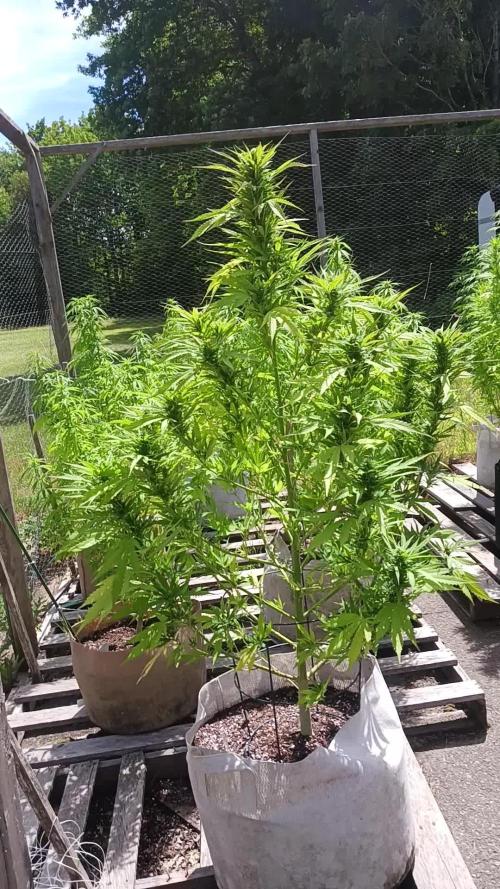
8/17 Watered everything but the 50. Found two leaves with sep markings on the pink kish in the 50. Definitely not using old soil again. I'm pretty sure THIS plant contracted it from the soil and not the way the others did with the lawn mower and birdseed hijinx. It's supposed to rain for the first time basically all summer. It's am 80% chance so I HELD OFF ON PLANT DOCTOR AND DID NOT APPLY as I'm supposed to have a clear day after. I'll apply the plant doctor in the morning. I'm hoping this rain will knock down a bunch of those thrips. They seem to be on a small branch on a plant or two. One or two leaves show damage and I'll pick them off. I figure I'll get them after I apply plant doctor. I'll use either citric acid or just my regular bt-k pillar treatment with Castille or liquid soap. That will kill them as well. I'm on really worried about it. I also might just buy a bunch of lady bugs and unleash them once things get further along.
EDIT: TOOK A QUICK VIDEO AND A COUPLE PICS. HOPEFULLY WE GET THIS RAIN. IF NOT IM GOING TO TREAT THE THRIPS THAT ARE ON TWO PLANTS NOW. I THINK IM GOING TO GO WITH BT-K FOR NY PILLARS AND HOPE THAT THE DISH SOAP IN THE MIX KILLS THE THRIPS. I HAVE LOTS OF DIFFERENT OPTIONS SO ILL FIGURE SOMETHING OUT. BUDS SEEM TO BE EXPLODING IN GROWTH. OH AND THANKS TO THE OUTDOOR GROWER THAT MESSAGED OFFERING TO HELP. I APPRECIATE THAT. THANKS.
8/18 We got the rain we were expecting. It was sheet rain for a few hourscand rained during the night. Everything was drenched and it was cold (50°F). I shook off the special kush that's way further in flower. I decided to use the leafblowrr despite the risk of spreading anything. I did it so that it wasn't ever blowing TOWARDS another plant but still. I was hoping it might blast off some thrips that might have survived that torrential rain. We've never had a dry summer like this. I'll moniter things. My water day is tomorrow so I assume that's when the girls will get their plant doctor dose. It's a great time of year for cannabis growers. We get to watch all the hard work we've put in literally pay off. It's very peaceful in the garden.
EDIT: Went over at about one to check things out and do some minor defoliation. I checked on the thrip situation and I dont know if I blasted them off with the leafblower or if the rain washed them away bit I doubt it. Ivecmade the decision to treat these little bastards. It's on one plant but it's started to spread to another branch on another plant. I probably just overlooked it but still. Seeing that it rained like he'll and I'm seeing like zero signs of septoria I'm going to treat everything. At least I think I am. I haven't decided what to use. I think I could just use bt and soap and I'd probably be alright. I'd feel better doing that as it's something I'm familiar with. Outdoor growing. It's always something.

