The Grow Awards 2026 🏆
Likes
Comments
Share
@GroloCup
Follow
She's moving along into flower and I've started using a little bloom nutes now that the stretch is tapering off. Took off a few fan leaves that were blocking some bud sites and removed some lower growth that wouldn't make much more than underdeveloped larf. She's definitely crowded in the tent, but she's continuing to go through her paces and should stay on track. She's starting to effervesce and it's a sweet earthy note with a more skunky stem rub. Lets see where this week takes us!
Likes
11
Share
@Rwein93
Follow
Ciao ragazzi e bentornati in una nuova pagina del diario della colazione 🥐🥛☕ La settimana è andata molto bene, le ragazze hanno reagito magnificamente all allenamento, sviluppando belle linee secondarie.🔝 Ho fatto dell altro training nel giorno 21, abbassando ancora la linea principale e allargando bene anche i rami secondari👍 Sempre nel giorno 21 ho pulito bene le ragazze dalle foglie che facevano ombra, per pompare di più i siti in basso.🤙 Ed infine sempre nello stesso giorno, ho aumentato i nutrienti a 1g/L, perché sono in polvere, e ho bagnato bene tutto il vaso con 2 litri, fino a farla uscire da sotto, per far radicare bene e ovunque.👊 Questa settimana si è conclusa alla grande, le ragazze sembra che abbiano apprezzato l LST e sembrano esplose dopo che sono state aperte.💪 Grazie a tutti per aver guardato e restate sintonizzati per nuovi dolci aggiornamenti.🙏 Buona settimana e felice crescita🌱🌱🌱
Likes
6
Share
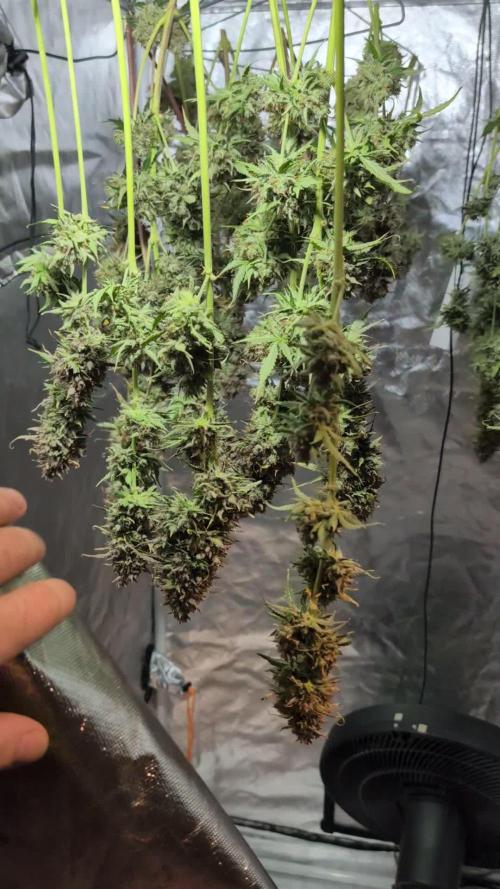
The time has come!!!! I was gonna give it a couple more days but I’m too antsy and want to get this girl drying already. I will be cutting her down at the end of today she has been getting straight water these past week she isn’t getting any color just yellowing of the leaves. She smells minty when defoliating but the buds smell skunky and dank asf. Light green buds remind me of old school weed I used to smoke in HS shits amazing.
Likes
2
Share
@MatthewVC
Follow
This is where I really started to take a lot more pictures! Everything was coming along great, I had some slight nutrient lockout starting this week but I took care of it quickly! They respond very well to the training.
Processing
Likes
14
Share
Всем тем, кто следит за мной здоровья и удачи. Наступило время вновь обновить дневник легендарного «AK-47» от «Serious seeds». Уже четвёртая неделя от прорастания семечек. Прогресс очевиден. Но к сожалению, одно из растений показывает болезнь. Судя по всему, его корни немного пострадали при пересадке и так как оно не успело восстановиться я ему дал такой же состав раствора, как и другим растениям, после чего он начал показывать передозировку удобрениями, его листья пожелтели и начали слегка закручиваться, боковые отростки практически не развивались за это время, я был вынуждает отрезать несколько пар нижних отмерших листьев. Так же я пролил больное растение чистой водой с пониженным P.h и замерил выход раствора из горшка, и он показал повышенные P.h и повышенное PPM. После чего я я продолжил промывать субстрат растения чистой водой с пониженным P.h, пока его значения не снизились до 6.2P.h. и 850ppm, а также я не стал прикрывать в горшке субстрат, чтоб лишняя влага смогла испаряться из горшка. У здоровых растений я обрезал большие листья, чтоб развивались боковые ветви, так как я буду подготавливать эти растения к клонированию, так же как и остальные два штамма которые стоят в этой палатке.
Likes
12
Share
@Pedro_88
Follow
Vamos rumbo a la cuarta semana ya Ya está empezando a tener un olor débil
Likes
25
Share
ANTHOCYANIN production is primarily controlled by the Cryptochrome (CR1) Photoreceptor ( !! UV and Blue Spectrums are primary drivers in the production of the pigment that replaces chlorophyll, isn't that awesome! 1. Diverse photoreceptors in plants Many civilizations, including the sun god of ancient Egypt, thought that the blessings of sunlight were the source of life. In fact, the survival of all life, including humans, is supported by the photosynthesis of plants that capture solar energy. Plants that perform photosynthesis have no means of transportation except for some algae. Therefore, it is necessary to monitor various changes in the external environment and respond appropriately to the place to survive. Among various environmental information, light is especially important information for plants that perform photosynthesis. In the process of evolution, plants acquired phytochrome, which mainly receives light in the red light region, and multiple blue light receptors, including his hytropin and phototropin, in order to sense the light environment. .. In addition to these, an ultraviolet light receptor named UVR8 was recently discovered. The latest image of the molecular structure and function of these various plant photoreceptors (Fig. 1), focusing on phytochrome and phototropin. Figure 1 Ultraviolet-visible absorption spectra of phytochrome, cryptochrome, phototropin, and UVR8. The dashed line represents each bioactive absorption spectrum. 2. Phytochrome; red-far red photoreversible molecular switch What is phytochrome? Phytochrome is a photochromic photoreceptor, and has two absorption types, a red light absorption type Pr (absorption maximum wavelength of about 665 nm) and a far-red light absorption type Pfr (730 nm). Reversible light conversion between the two by red light and far-red light, respectively(Fig. 1A, solid line and broken line). In general, Pfr is the active form that causes a physiological response. With some exceptions, phytochrome can be said to function as a photoreversible molecular switch. The background of the discovery is as follows. There are some types of plants that require light for germination (light seed germination). From that study, it was found that germination was induced by red light, the effect was inhibited by subsequent far-red light irradiation, and this could be repeated, and the existence of photoreceptors that reversibly photoconvert was predicted. In 1959, its existence was confirmed by the absorption spectrum measurement of the yellow sprout tissue, and it was named phytochrome. Why does the plant have a sensor to distinguish between such red light and far-red light? There is no big difference between the red and far-red light regions in the open-field spectrum of sunlight, but the proportion of red light is greatly reduced due to the absorption of chloroplasts in the shade of plants. Similar changes in light quality occur in the evening sunlight. Plants perceive this difference in light quality as the ratio of Pr and Pfr, recognize the light environment, and respond to it. Subsequent studies have revealed that it is responsible for various photomorphogenic reactions such as photoperiodic flowering induction, shade repellent, and deyellowing (greening). Furthermore, with the introduction of the model plant Arabidopsis thaliana (At) and the development of molecular biological analysis methods, research has progressed dramatically, and his five types of phytochromes (phyA-E) are present in Arabidopsis thaliana. all right. With the progress of the genome project, Fi’s tochrome-like photoreceptors were found in cyanobacteria, a photosynthetic prokaryotes other than plants. Furthermore, in non-photosynthetic bacteria, a homologue molecule called bacteriophytochrome photoreceptor (BphP) was found in Pseudomonas aeruginosa (Pa) and radiation-resistant bacteria (Deinococcus radiodurans, Dr). Domain structure of phytochrome molecule Phytochrome molecule can be roughly divided into N-terminal side and C-terminal side region. PAS (Per / Arndt / Sim: blue), GAF (cGMP phosphodiesterase / adenylyl cyclase / FhlA: green), PHY (phyto-chrome: purple) 3 in the N-terminal region of plant phytochrome (Fig. 2A) There are two domains and an N-terminal extension region (NTE: dark blue), and phytochromobilin (PΦB), which is one of the ring-opening tetrapyrroles, is thioether-bonded to the system stored in GAF as a chromophore. ing. PAS is a domain involved in the interaction between signal transduction-related proteins, and PHY is a phytochrome-specific domain. There are two PASs and her histidine kinase-related (HKR) domain (red) in the C-terminal region, but the histidine essential for kinase activity is not conserved. 3. Phototropin; photosynthetic efficiency optimized blue light receptor What is phototropin? Charles Darwin, who is famous for his theory of evolution, wrote in his book “The power of move-ment in plants” published in 1882 that plants bend toward blue light. Approximately 100 years later, the protein nph1 (nonphoto-tropic hypocotyl 1) encoded by one of the causative genes of Arabidopsis mutants causing phototropic abnormalities was identified as a blue photoreceptor. Later, another isotype npl1 was found and renamed phototropin 1 (phot1) and 2 (phot2), respectively. In addition to phototropism, phototropin is damaged by chloroplast photolocalization (chloroplasts move through the epidermal cells of the leaves and gather on the cell surface under appropriate light intensity for photosynthesis. As a photoreceptor for reactions such as escaping to the side of cells under dangerous strong light) and stomata (reactions that open stomata to optimize the uptake of carbon dioxide, which is the rate-determining process of photosynthetic reactions). It became clear that it worked. In this way, phototropin can be said to be a blue light receptor responsible for optimizing photosynthetic efficiency. Domain structure and LOV photoreaction of phototropin molecule Phototropin molecule has two photoreceptive domains (LOV1 and LOV2) called LOV (Light-Oxygen-Voltage sensing) on the N-terminal side, and serine / on the C-terminal side. It is a protein kinase that forms threonine kinase (STK) (Fig. 4Aa) and whose activity is regulated by light. LOV is one molecule as a chromophore, he binds FMN (flavin mononucleotide) non-covalently. The LOV forms an α/βfold, and the FMN is located on a β-sheet consisting of five antiparallel β-strands (Fig. 4B). The FMN in the ground state LOV shows the absorption spectrum of a typical oxidized flavin protein with a triplet oscillation structure and an absorption maximum wavelength of 450 nm, and is called D450 (Fig. 1C and Fig. 4E). After being excited to the singlet excited state by blue light, the FMN shifts to the triplet excited state (L660t *) due to intersystem crossing, and then the C4 (Fig. 4C) of the isoaroxazine ring of the FMN is conserved in the vicinity. It forms a transient accretionary prism with the tain (red part in Fig. 4B Eα) (S390I). When this cysteine is replaced with alanine (C / A substitution), the addition reaction does not occur. The effect of adduct formation propagates to the protein moiety, causing kinase activation (S390II). After that, the formed cysteine-flavin adduct spontaneously dissociates and returns to the original D450 (Fig. 4E, dark regression reaction). Phototropin kinase activity control mechanism by LOV2 Why does phototropin have two LOVs? Atphot1 was found as a protein that is rapidly autophosphorylated when irradiated with blue light. The effect of the above C / A substitution on this self-phosphorylation reaction and phototropism was investigated, and LOV2 is the main photomolecular switch in both self-phosphorylation and phototropism. It turns out that it functions as. After that, from experiments using artificial substrates, STK has a constitutive activity, LOV2 functions as an inhibitory domain of this activity, and the inhibition is eliminated by photoreaction, while LOV1 is kinase light. It was shown to modify the photosensitivity of the activation reaction. In addition to this, LOV1 was found to act as a dimerization site from the crystal structure and his SAXS. What kind of molecular mechanism does LOV2 use to photoregulate kinase activity? The following two modules play important roles in this intramolecular signal transduction. Figure 4 (A) Domain structure of LOV photoreceptors. a: Phototropin b: Neochrome c: FKF1 family protein d: Aureochrome (B) Crystal structure of auto barley phot1 LOV2. (C) Structure of FMN isoaroxazine ring. (D) Schematic diagram of the functional domain and module of Arabidopsis thaliana phot1. L, A’α, and Jα represent linker, A’α helix, and Jα helix, respectively. (E) LOV photoreaction. (F) Molecular structure model (mesh) of the LOV2-STK sample (black line) containing A’α of phot2 obtained based on SAXS under dark (top) and under bright (bottom). The yellow, red, and green space-filled models represent the crystal structures of LOV2-Jα, protein kinase A N-lobe, and C-robe, respectively, and black represents FMN. See the text for details. 1) Jα. LOV2 C of oat phot1-to α immediately after the terminus Rix (Jα) is present (Fig. 4D), which interacts with the β-sheet (Fig. 4B) that forms the FMN-bound scaffold of LOV2 in the dark, but unfolds and dissociates from the β-sheet with photoreaction. It was shown by NMR that it does. According to the crystal structure of LOV2-Jα, this Jα is located on the back surface of the β sheet and mainly has a hydrophobic interaction. The formation of S390II causes twisting of the isoaroxazine ring and protonation of N5 (Fig. 4C). As a result, the glutamine side chain present on his Iβ strand (Fig. 4B) in the β-sheet rotates to form a hydrogen bond with this protonated N5. Jα interacts with this his Iβ strand, and these changes are thought to cause the unfold-ing of Jα and dissociation from the β-sheet described above. Experiments such as amino acid substitution of Iβ strands revealed that kinases exhibit constitutive activity when this interaction is eliminated, and that Jα plays an important role in photoactivation of kinases. 2) A’α / Aβ gap. Recently, several results have been reported showing the involvement of amino acids near the A’α helix (Fig. 4D) located upstream of the N-terminal of LOV2 in kinase photoactivation. Therefore, he investigated the role of this A’α and its neighboring amino acids in kinase photoactivation, photoreaction, and Jα structural change for Atphot1. The LOV2-STK polypeptide (Fig. 4D, underlined in black) was used as a photocontrollable kinase for kinase activity analysis. As a result, it was found that the photoactivation of the kinase was abolished when amino acid substitution was introduced into the A’α / Aβ gap between A’α and Aβ of the LOV2 core. Interestingly, he had no effect on the structural changes in Jα examined on the peptide map due to the photoreaction of LOV2 or trypsin degradation. Therefore, the A’α / Aβ gap is considered to play an important role in intramolecular signal transduction after Jα. Structural changes detected by SAXS Structural changes of Jα have been detected by various biophysical methods other than NMR, but structural information on samples including up to STK is reported only by his results to his SAXS. Not. The SAXS measurement of the Atphot2 LOV2-STK polypeptide showed that the radius of inertia increased from 32.4 Å to 34.8 Å, and the molecular model (Fig. 4F) obtained by the ab initio modeling software GASBOR is that of LOV2 and STK. It was shown that the N lobes and C lobes lined up in tandem, and the relative position of LOV2 with respect to STK shifted by about 13 Å under light irradiation. The difference in the molecular model between the two is considered to reflect the structural changes that occur in the Jα and A’α / Aβ gaps mentioned above. Two phototropins with different photosensitivity In the phototropic reaction of Arabidopsis Arabidopsis, Arabidopsis responds to a very wide range of light intensities from 10–4 to 102 μmol photon / sec / m2. At that time, phot1 functions as an optical sensor in a wide range from low light to strong light, while phot2 reacts with light stronger than 1 μmol photon / sec / m2. What is the origin of these differences? As is well known, animal photoreceptors have a high photosensitivity due to the abundance of rhodopsin and the presence of biochemical amplification mechanisms. The exact abundance of phot1 and phot2 in vivo is unknown, but interesting results have been obtained in terms of amplification. The light intensity dependence of the photoactivation of the LOV2-STK polypeptide used in the above kinase analysis was investigated. It was found that phot1 was about 10 times more photosensitive than phot2. On the other hand, when the photochemical reactions of both were examined, it was found that the rate of the dark return reaction of phot1 was about 10 times slower than that of phot2. This result indicates that the longer the lifetime of S390II, which is in the kinase-activated state, the higher the photosensitivity of kinase activation. This correlation was further confirmed by extending the lifespan of her S390II with amino acid substitutions. This alone cannot explain the widespread differences in photosensitivity between phot1 and phot2, but it may explain some of them. Furthermore, it is necessary to investigate in detail protein modifications such as phosphorylation and the effects of phot interacting factors on photosensitivity. Other LOV photoreceptors Among fern plants and green algae, phytochrome ɾphotosensory module (PSM) on the N-terminal side and chimera photoreceptor with full-length phototropin on the C-terminal side, neochrome (Fig. There are types with 4Ab). It has been reported that some neochromes play a role in chloroplast photolocalization as a red light receiver. It is considered that fern plants have such a chimera photoreceptor in order to survive in a habitat such as undergrowth in a jungle where only red light reaches. In addition to this, plants have only one LOV domain, and three proteins involved in the degradation of photomorphogenesis-related proteins, FKF1 (Flavin-binding, Kelch repeat, F-box 1, ZTL (ZEITLUPE)), LKP2 ( There are LOV Kelch Protein2) (Fig. 4Ac) and aureochrome (Fig. 4Ad), which has a bZip domain on the N-terminal side of LOV and functions as a gene transcription factor. 4. Cryptochrome and UVR8 Cryptochrome is one of the blue photoreceptors and forms a superfamily with the DNA photoreceptor photolyase. It has FAD (flavin adenine dinucle-otide) as a chromophore and tetrahydrofolic acid, which is a condensing pigment. The ground state of FAD is considered to be the oxidized type, and the radical type (broken line in Fig. 1B) generated by blue light irradiation is considered to be the signaling state. The radical type also absorbs in the green to orange light region, and may widen the wavelength region of the plant morphogenesis reaction spectrum. Cryptochrome uses blue light to control physiological functions similar to phytochrome. It was identified as a photoreceptor from one of the causative genes of UVR8 Arabidopsis thaliana, and the chromophore is absorbed in the UVB region by a Trp triad consisting of three tryptophans (Fig. 1D). It is involved in the biosynthesis of flavonoids and anthocyanins that function as UV scavengers in plants. Conclusion It is thought that plants have acquired various photoreceptors necessary for their survival during a long evolutionary process. The photoreceptors that cover the existing far-red light to UVB mentioned here are considered to be some of them. More and more diverse photoreceptor genes are conserved in cyanobacteria and marine plankton. By examining these, it is thought that the understanding of plant photoreceptors will be further deepened.
Likes
69
Share
@Natrona
Follow
The Divine ladies Afghan Bullet and Pablo Escobar are getting close to harvest. I'm going to water only for the remainder. Tps1 30 ml Ph 7.01 Ppm 505 each received 3 ltrs Thank you @DivineSeeds Thanks for the visits, likes and comments, I appreciate all the plant love💚. Have fun & love what you grow 💚 Sending you good vibes of love, light, and healing 💫 💫Natrona 💫
Likes
154
Share
💩Holy Crap Growmies We Are Back💩 Code Name FBT2311 Well growmies we are at 49 days in and everything is going as good as it can 👌 👉Shes been doing really good , lots of buds and some nice colors and smells 👌💪she's the top of of the lot 💪 Lights being readjusted and chart updated .........👍rain water to be used entire growth👈 👉I used NutriNPK for nutrients for my grows and welcome anyone to give them a try .👈 👉 www.nutrinpk.com 👈 NutriNPK Cal MAG 14-0-14 NutriNPK Grow 28-14-14 NutriNPK Bloom 8-20-30 NutriNPK Bloom Booster 0-52-34 I GOT MULTIPLE DIARIES ON THE GO 😱 please check them out 😎 👉THANKS FOR TAKING THE TIME TO GO OVER MY DIARIES 👈
Likes
12
Share
Prossime settimane via....anche queste forbidden runtz sono pronte da conciare,🤣❤️💛💚... quest'ultima settimana la notte la sto lasciando fuori in balcone per fargli un buon sbalzo termico..,,....... Ho tagliato anche quest'ultima forbidden runtz
Likes
28
Share
Hello my fellow growmies, Please find this week pictures and updates. I am into the final stretch with Runtz Muffin & Wedding Cheesecake. After this week I will put them onto ripen for there last couple feeds before I then start the flush process. The smell coming off these plants is ridiculous lol it makes the room smell like a fruity cake factory 🏭 🤣. Grape gusher is a little behind the other girls but that is fine because she is a giant with so many bud sites perfect! I will update next week. Peace and love people!
Likes
17
Share
Welcome to week 6 of flower! Things are starting to shape up quite nicely and some of the plants are starting to get colourful! Its hard to capture on the current camera I'm using but my new one that's on its way should be much much better! Overall really excited to see what this week will bring! I will be checking some of the ladies trichomes to see how far along we are either this week or next week to give me an approximate harvest window! Huge shout outs to @MarsHydroLED for all their outstanding work on lighting and grow spaces that make it fun and easy to grow! Huge shout outs go to @Seedsman , @PyramidSeeds and @GreenHouseSeedCo for all their outstanding work developing genetics that give us that fine medicine! HUGE HUGE shout outs to all my followers and to the people who stop into the diary alike! Keep inspiring to grow! -The Projexx Day#36F Pictures N/A. Ladies are starting to fade but they're still putting on mass daily! Day#37F Pictures N/A. The terpenes an nose coming off the plants its INSANE we got lots of nice and unique smells going hard here! Day#38F Removed some of the leaves blocking nodes, cleaned up the bottoms abit more. Day#39F The ladies continue to put on mass and some of the leaves are really starting to turn purple! Day#40F The ladies continue to cruise along. Fuel D.og#2 is starting to come back to a nice green Day#41F Kings Juice#1 is really starting to show her fade now! Ladies continue to put mass on. Day#42F Water increased to 5L each at 550PPM. Stalks are getting massive! Recap: Things went really well this week, the ladies continue to put on mass on their rock solid flowers! With some of the plants starting to show signs of an open window for harvest Im going to break out the microscope next week to see exactly how far along we are! Over all really really pump about the plants , looking like its going to be a great harvest!
Likes
17
Share
It's been steady so far, I'm excited about this lady right here. I just Transplanted her into the living soil bed!! I'll be giving the plant PH balanced water the next couple days! So today I also decided to super crop her and get this Plant started on some training she's gonna love it! Let's
Likes
2
Share
Hi folks, hope you are doing great! Here pretty much everything is under control. We are trying some LST and it's getting better ans better. We have found the screen, so why don't use it ans test some scrog after all? I will use the screen just to disciplinate the colas, but I won't cut any branch or leaf. Normally this is going to be the last week of veg, knowing that they will stretch quite a bit normally :) Stay safe folks!
Likes
29
Share
Now they are a bit bigger , this is the start of week 2 , now day 19 in real time from germination. I would appreciate any help to maximise the yield. I feed around 500-600 ppm. How much should the drain be ? I have to plants struggling, one had 500 run off , should I give nutes or flush them more ?
Likes
7
Share
Shes chugging along like a steam engine! I'm so excited to have this in my arsenal. I'm also very content with the way she handled the LST. I'm sure she would be very tall without the training all of that energy would have went to the main cola. Shes budding quickly at this stage shes very happy with less soil than more as it dries quickly I hope others learn this as well. I've found using less soil is producing my largest autos with fox farm ocean forest. It's not how deep the roots go but rather how wide. Check back next week to see just how fast she buds & remember its 4:20 somewhere!!!!!!
Likes
13
Share
@MistaOC
Follow
23.01. Tag 64 Die Lady vorne rechts wurde heute im ganzen geerntet und hängt nun im Trocknungszelt. Die anderen fallen in den nächsten Tagen —————————————————————— 26.01. Tag 67 Heute hat die zweite Pflanze ihr Ziel erreicht. Vorne links hängt nun auch Kopfüber ——————————————-
Processing
Likes
84
Share
@Smokwiri
Follow
Wow, looking great, buds have taken shape and can start with filling up a bit. This Mars Hydro light is amazing, the buds are quite big for week 4. Cant wait to see next weeks development. The boosters name is Pro Bloom, most have new names in europe, same company, different names
Likes
40
Share
@valiotoro
Follow
Brocoli buds!🥦 Super sticky & delicious smell its just sweet🤤 When you smell the amnesia Z she seems to be kind but trust me roller coaster effect !🎢