


@Rangaku
Follow
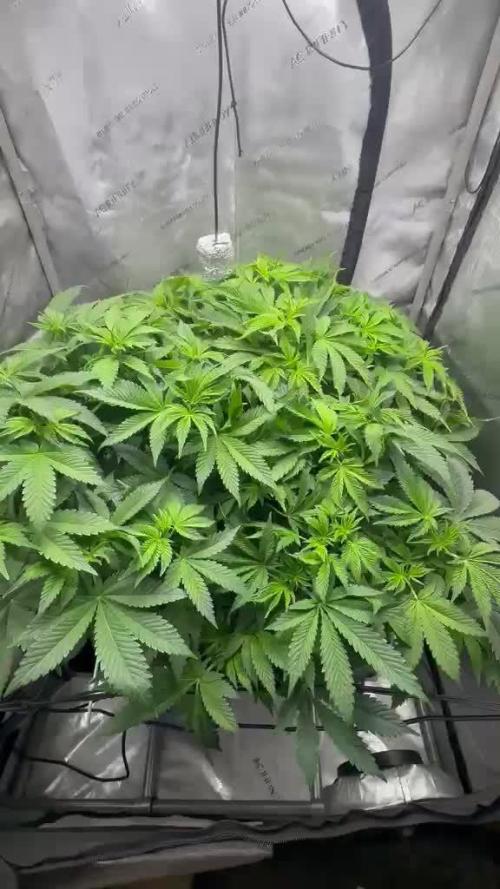
XL livin the XL life and just dominating the tent with her phatness , she’s a frosty big gurl , fruity and sticky . I smoked a bit already and it was intoxicating, really sat me back like a good kush . Luckily enough I love it coz there is a lot of it to smoke and I plan on smoking it all 💨XL life is good .
Another week or so to go and, I can’t move her around anymore to defol coz the weight of the buds is bending over all the branches ( good problems) banger of a XL



@Duke88
Follow
Grow Report – Black Domina | Die Drama Queen Edition 😂
Setup:
Grodan Hugo 15x15 | Tropfsystem | SCROG | LED
Aktuelle Woche: Blüte Woche 2
Der bisherige Film:
Dieses Miststück hat mich in der Vegi-Phase fast in die Psychiatrie gebracht.
pH ist hochgegangen wie mein Blutdruck (Spitze bei 6,8), Drain-EC war teilweise so tief wie meine Motivation um 3 Uhr nachts (0,6). Blätter erst hellgrün, dann olive-grün, als hätte sie Depressionen.
Einmal hab ich aus Versehen 1000 PPFD gegeben… die Pflanze hat mich angeguckt wie „Willst du mich verarschen, Bro?“
Aber wie eine echte Black Domina eben: hart im Nehmen. Hat alles überlebt, den Stretch ordentlich hingelegt und füllt jetzt langsam das Netz wie eine dicke Indica das Sofa.
Aktuelle Lage:
Drain-pH: 6,2 (endlich mal nicht mehr auf Drogen)
Drain-EC: 1,0 (sie frisst immer noch wie ein verhungerter Wolf)
Blätter: Von „kranker Spinat“ zu „geht so“
Geruch: Schon jetzt dreckig-süß, als hätte jemand Haschisch mit alter afghanischer Erde vermischt
Nächste Vorhaben:
Woche 2 Defoliation (die große Blätter-Opferung)
EC langsam hochfahren, bevor sie wieder hungert
Beten, dass sie nicht wieder einen pH-Anfall bekommt
Vibe-Check:
Von „Ich verkaufe alles und werde Mönch“ zu „Okay, vielleicht wird doch noch was Geiles“.
Black Domina bleibt halt eine Diva. Aber die fetten, steinharten Buds am Ende sind es wert. Hoffe ich zumindest… 😭😂


@marceloski
Follow
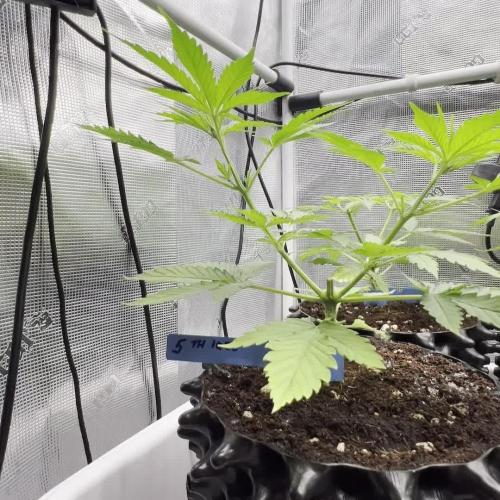
Día 70. 30 días de floración.
Siguen las Bajas temperaturas, principalmente cuando es de noche y cuando amanece.
He regado con 1lt de agua destilada con los siguientes + abonos detallados más arriba.
Claramente la floración se tardó,las condiciones climáticas de invierno han afectado.
Creo que Instalaré foco HPS junto al COB para tener mayor temperatura en la carpa.
Saludos!



@AustinRon
Follow
TH 1Q2025 - Week 5 - Bolt 2
(ON Haze X Original Haze) X Northern Lights #2
“Todd’s Haze”
Objective
- 8 Female Plants, Topped ONCE @ Flip, 12” when topped
- Modified Sea of Green
Seeds Wet: 1139PM, 28.2.2025
Germinated: 2.3.2025
Flip: 21.3.2025
Harvest: 77 Days, DATE: 6.6.2025
Weeks Summary
- Continuing slow increase of EC & PPFD - Achieved EC: 1.8
- Allowing natural PPFD Increase (STRETCH), and providing modicum of intensity increase.
_________________________________________
__
Fri Apr 4, 2025
TH 1Q25 15:B:2:1
Light Intensity: [ 400, µMol/m2/s]
EC: [ 1.1, mS/cm]
Foliar: # 1 pt Spray Bottle @ Lights ON
- [x] CalMag Fuel: [ 2.5, ml]
- [x] Lush Green: [ 0.67, ml]
- [x] Kelpak (Auxins): [ 1, ml]
- [x] Photosynthesis Plus: [ 1.5, ml]
- [x] Quillaja 60 Powder: [scant]
- [x] Fertigation: 5:2:2:2:2:2:0
__
Sat Apr 5, 2025
TH 1Q25 16:B:2:2
EC: 1.3
- [x] EC: 1.3
- [x] Fertigation: [5.8:5.8:2.3:2.3:2.3:2.3:2.3] # [Primer A:Primer B:CalMag Fuel:Silica Skin:Lush Green:Root Anchor:Peak Bloom]
__
Sun Apr 6, 2025
TH 1Q25 17:B:2:3
- [x] EC: 1.4
Foliar: # 1 pt Spray Bottle @ Lights ON
- [x] CalMag Fuel: [ 2.5, ml]
- [x] Lush Green: [ 0.67, ml]
- [x] Kelpak (Auxins): [ 1, ml]
- [x] Photosynthesis Plus: [ 1.5, ml]
- [x] Quillaja 60 Powder: [scant]
- [x] Fertigation: [6.3:6.3:2.5:2.5:2.5:2.5:2.5] # [Primer A:Primer B:CalMag Fuel:Silica Skin:Lush Green:Root Anchor:Peak Bloom]

__
Mon Apr 7, 2025
TH 1Q25 18:B:2:4
EC: 1.5
Raised Dimmer to 77%
LightIntensity: [ 517, µMol/m2/s]
- [x] Fertigation: [6.3:6.3:2.5:2.5:2.5:2.5:2.5] # [Primer A:Primer B:CalMag Fuel:Silica Skin:Lush Green:Root Anchor:Peak Bloom]
__
Tue Apr 8, 2025
TH 1Q25 19:B:2:5
EC: 1.6
LightIntensity: [ 517, µMol/m2/s]
Foliar: # 1 pt Spray Bottle @ Lights ON
- [x] CalMag Fuel: [ 2.5, ml]
- [x] Lush Green: [ 0.67, ml]
- [x] Silica Skin: [ 2, ml]
- [x] Fertigation: [7.1:7.1:3.5:3.5:2.8:2.8:2.8] # [Primer A:Primer B:CalMag Fuel:Silica Skin:Lush Green:Root Anchor:Peak Bloom]
- [x] Terps Plus: [ 0.2, ml]
- [x] Photosynthesis Plus: [ 6, ml]
__
Wed Apr 9, 2025
TH 1Q25 20:B:2:6
Looking Relaxed, Happy, Lifted, Supple.
EC: 1.7
- [x] Fertigation: [7.1:7.1:3.5:3.5:2.8:2.8:2.8] # [Primer A:Primer B:CalMag Fuel:Silica Skin:Lush Green:Root Anchor:Peak Bloom]
- [x] Kelpak: [ 4, ml]
- [x] Photosynthesis Plus: [ 6, ml]
- [x] Terps Plus: [ 0.2, ml]
- [x] Quillaja 60 Powder: [scant]
__
Thu Apr 10, 2025
TH 1Q25 21:B:2:7
Light Distance: [ 23, in]
HOME Depot Run
- [x] Tube Insulation (Re-Fresh Chiller Insulation)
EC: 1.8 # MAX EC for GROW
Foliar: # 1 pt Spray Bottle @ Lights ON
- [x] CAL106 (Micronized Calcium Carbonate): [ 0.125, g]
- [x] Lush Green: [ 0.67, ml]
- [x] Kelpak (Auxins): [ 1, ml]
- [x] Photosynthesis Plus: [ 1.5, ml]
- [x] Quillaja 60 Powder: [scant]
- [x] Fertigation: [8:8:4.8:4.8:3.2:3.2:0.0:0.0:3.2] # [Primer A:Primer B:CalMag Fuel:Silica Skin:Lush Green:Root Anchor:Peak Bloom]
- [x] PCAL 1660: [ 0.5, gm] # Once or Twice/Week
- [x] Kelpak: [ 4, ml]
- [x] Photosynthesis Plus: [ 6, ml]
- [x] Terps Plus: [ 0.2, ml]
- [x] Quillaja 60 Powder: [scant]


@J_diaz420
Follow
Esta semana todo tranquilo, en un par de días más haré poda de bajos y defoliación .
También se colocaran tutores de vara a cada planta




@Organic_G
Follow
Wachsen, seit gestern wieder CO2 am Start für letzte VEG Woche und dann ersten 3 Flower Wochen


@agustinnnv
Follow
Buena semana para todos!! Esta planta también surgió de un esqueje que intercambié. Al momento de recibirlo tenia 1 mes de vida y lo pasé a una maceta "Air Pots" de 10L. Tuvo 40 días de vegetación en esta maceta, se le hizo podas apicales y Supercrooping para regular su altura. Al día de la fecha (29/5) lleva 17 días florando. Está hermosa. Calculo que en 3 semanas más estará para corte. Saludos y buenos humos.




@adam_pawloski87
Follow
It has been another great week for these Fastbuds ~ Wedding Cheesecake Autos!! Today is day 22 from seed and this upcoming week all 5 will be getting Tied down for LST ! All are getting same veg feed just but make sure if you are using rapid start your gonna have to mix in PH up in your feeds! Light is at same height and is at full power just letting the plants grow into it! Well hope you all enjoy, and please let me know if y’all have any questions I’ll be glad to answer! Bless y’all and stay tuned for next week! Peace y’all


@Ultraviolet
Follow
Green light is radiation with wavelengths between 520 and 560 nm and it affects photosynthesis, plant height, and flowering. Plants reflect green light and this is why they appear green to our eyes. As a result, some growers think that plants don’t use green wavelengths, but they actually do!
In fact, only around 5 – 10% of green light is reflected from leaves and the rest (90 – 95 %) is absorbed or transmitted to lower leaves [1].
Green wavelengths get used in photosynthesis. Chlorophyll pigments absorb small amounts of green wavelengths. Light that doesn’t get absorbed is transmitted to leaves that are shaded out from direct light. This means that leaves at the bottom of the canopy get more green light than leaves at the top. A high proportion of green wavelengths compared to other colors tells lower leaves that they are being shaded out, so they are able to react accordingly. Lower leaves may react by opening or closing their stomata or growing longer stems that help the leaves reach brighter light [1, 2, 3].
When it comes to growing cannabis, many cultivators are interested in the quality of light used for the flowering stage. In many plants, flowering is regulated by two main photoreceptors: cryptochrome and phytochrome. Both photoreceptors primarily respond to blue light but can also respond to green, although to a lesser extent. Green can accelerate the start of flowering in several species (although cannabis has yet to be tested) [1, 4, 5]. However, once flowering has begun, it’s important to provide plants with a “full spectrum” light that has high amounts of blue and red light, and moderate amounts of green, in order for photosynthesis to be optimized.
Green light mediates seed germination in some species. Seeds use green wavelengths to decide whether the environment is good for germination. Shade environments are enriched in green relative to red and blue light, so a plant can tell if it is shady or sunny. A seed that senses a shaded environment may stay dormant to avoid poor growing conditions [1]. Some examples of plant species where researchers have documented this response are: ryegrass (a grass that grows in tufts) and Chondrilla (a plant related to dandelion) [1, 6].
Although green wavelengths generally tell plants NOT to germinate, there are some exceptions! Surprisingly, green wavelengths can stimulate seed germination in some species like Aeschynomene, Tephrosia, Solidago, Cyrtopodium, and Atriplex [1, 6, 7].
Of course, light is not the only factor affecting seed germination – it’s a combination of many factors, such as soil moisture, soil type, temperature, photoperiod, and light quality.
When combined with red and blue light, green can really enhance plant growth [1, 8]. However, too much green light (more than 50% of the total light) can actually reduce plant growth [8]. Based on the most current research, the ideal ratio of green, red, and blue light is thought to be around 1:2:1 for green:blue:red [9]. When choosing a horticultural light, choose one that has high amounts of blue and red light and moderate amounts of green and other colors of light.
Not many studies can be found about the effect of green light on cannabis growth or metabolism. However, if one reads carefully, there are clues and data available even from the very early papers.
Mahlberg and Hemphill (1983) used colored filters in their study to alter the sunlight spectrum and study green light among others. They concluded that the green filter, which makes the environment green by cutting other wavelengths out, reduced the THC concentration significantly compared to the daylight control treatment. It has been demonstrated that green color can reduce secondary metabolite activity with other species as well. For example, the addition of green to a light spectrum decreases anthocyanin concentration in lettuce (Zhang and Folta 2012).
If green light only reverses the biosynthesis of some secondary metabolites, then why put green light into a growth spectrum at all? Well, there are a couple of good reasons. One is that green penetrates leaf layers effectively. Conversely red and blue light is almost completely absorbed by the first leaf layer.
Green travels through the first, second, and even third layers effectively (Figure 2). Lower leaf layers can utilize green light in photosynthesis and therefore produce yields as well.
Even though a green light-specific photoreceptor has not yet been found, it is known that green light has effects independent from the cryptochrome but then again, also cryptochrome-dependent ones, just like blue light. It is known that green light in low light intensity conditions can enhance far red stimulating secondary metabolite production in microgreens and then again, counteracts the production of these compounds in high-intensity light conditions (Kim et al. 2004). In many cases, green light promoted physiological changes in plants that are opposite to the actions of blue light. In the study by Kim et al. blue light-induced anthocyanin accumulation was inhibited by green light. In another study it has been found that blue light promotes stomatal opening whereas green light promotes stomatal closure (Frechilla et al. 2000). Blue light inhibits the early stem elongation in the seedling stage whereas green light promotes it (Folta 2004). Also, blue light results in flowering induction, and green light inhibits it (Banerjee et al., 2007). As you can see, green light works very closely with blue light, and therefore not only the amount of these two wavelengths separately is important but also the ratio (Blue: Green) between these two in the designed spectrum. Furthermore, green light has been found to affect the elongation of petioles and upward leaf reorientation with the model plant Arabidopsis thaliana both of which are a sign of shade avoidance symptoms (Zhang et al. 2011) and also gene expression in the same plant (Dhingra et al. 2006).
As mentioned before, green light produces shade avoidance symptoms which are quite intuitive if you consider the natural conditions where the plants grow. Not all the green light is reflected from the highest canopy leaves in nature but a lot of it (50-90%) has been estimated to penetrate the upper leaves at the plant level ((Terashima et al., 2009; Nishio, 2000). For the plant growing in the understory of the forest green light is a signal for the plant of being in the shade of a bigger plant. Then again, the plants growing under unobstructed sunlight can take advantage of the green photons that can more easily penetrate the upper leaves than the red and blue photons. From the photosynthetic pigments in higher plants, chlorophyll is crucial for plant growth. Dissolved chlorophyll and absorb maximally in the red (λ600–700 nm) and blue (λ400–500 nm) regions of the spectrum and not as easily in the green (λ500–600 nm) regions. Up to 80% of all green light is thought to be transmitted through the chloroplast (Terashima et al., 2009) and this allows more green photons to pass deeper into the leaf mesophyll layer than red and blue photons. When the green light is scattered in the vertical leaf profile its journey is lengthened and therefore photons have a higher chance of hitting and being absorbed by chloroplasts on their passage through the leaf to the lower leaves of the plant.
Photons of PPFD (photosynthetic photon flux density) are captured by chlorophyll causing an excitation of an electron to enter a higher energy state in which the energy is immediately passed on to the neighboring chlorophyll molecule by resonance transfer or released to the electron transport chain (PSII and PSI). Despite the low extinction coefficient of chlorophyll in the green 500–600 nm region it needs to be noted that the absorbance can be significant if the pigment (chlorophyll) concentration in the leaf is high enough.
The research available clearly shows that plants use green wavelengths to promote higher biomass and yield (photosynthetic activity), and that it is a crucial signal for long-term developmental and short-term dynamic acclimation (Blue:Green ratio) to the environment. It should not be dismissed but studied more because it brings more opportunities to control plant gene expression and physiology in plant production.
REFERENCES
Banerjee R., Schleicher E., Meier S. Viana R. M., Pokorny R., Ahmad M., Bittl R., Batschauer. 2007. The signaling state of Arabidopsis cryptochrome 2 contains flavin semiquinone. The Journal of Biological Chemistry 282, 14916–14922.
Dhingra, A., Bies, D. H., Lehner, K. R., and Folta, K. M. 2006. Green light adjusts the plastic transcriptome during early photomorphogenic development. Plant Physiol. 142, 1256-1266.
Folta, K. M. 2004. Green light stimulates early stem elongation, antagonizing light-mediated growth inhibition. Plant Physiol. 135, 1407-1416.
Frechilla, S., Talbott, L. D., Bogomolmi, R. A., and Zeiger, E. 2000. Reversal of blue light -stimulated stomatal opening by green light. Plant Cell Physiol. 41, 171-176.
Kim, H.H., Goins, G. D., Wheeler, R. M., and Sager, J. C. 2004.Green-light supplementation for enhanced lettuce growth under red- and blue-light emitting diodes. HortScience 39, 1617-1622.
Nishio, J.N. 2000. Why are higher plants green? Evolution of the higher plant photosynthetic pigment complement. Plant Cell and Environment 23, 539–548.
Terashima I., Fujita T., Inoue T., Chow W.S., Oguchi R. 2009. Green light drives leaf photosynthesis more efficiently than red light in strong white light: revisiting the enigmatic question of why leaves are green. Plant & Cell Physiology 50, 684–697.
Zhang, T., Maruhnich, S. A., and Folta, K. M. 2011. Green light induces shade avoidance symptoms. Plant Physiol. 157, 1528-156.
Wang, Y. & Folta, K. M. Contributions of green light to plant growth and development. Am. J. Bot. 100, 70–78 (2013).
Zhang, T. & Folta, K. M. Green light signaling and adaptive response. Plant Signal. Behav. 7, 75–78 (2012).
Johkan, M. et al. Blue light-emitting diode light irradiation of seedlings improves seedling quality and growth after transplanting in red leaf lettuce. HortScience 45, 1809–1814 (2010).
Kasajima, S., et al. Effect of Light Quality on Developmental Rate of Wheat under Continuous Light at a Constant Temperature. Plant Prod. Sci. 10, 286–291 (2007).
Banerjee, R. et al. The signaling state of Arabidopsis cryptochrome 2 contains flavin semiquinone. J. Biol. Chem. 282, 14916–14922 (2007).
Goggin, D. E. & Steadman, K. J. Blue and green are frequently seen: responses of seeds to short- and mid-wavelength light. Seed Sci. Res. 22, 27–35 (2012).
Mandák, B. & Pyšek, P. The effects of light quality, nitrate concentration and presence of bracteoles on germination of different fruit types in the heterocarpous Atriplex sagittata. J. Ecol. 89, 149–158 (2001).
Darko, E. et al. Photosynthesis under artificial light: the shift in primary and secondary metabolism. Philos. Trans. R. Soc. B Biol. Sci. 369 (2014).
Lu, N. et al. Effects of Supplemental Lighting with Light-Emitting Diodes (LEDs) on Tomato Yield and Quality of Single-Truss Tomato Plants Grown at High Planting Density. Environ. Control Biol. 50, 63–74 (2012).


@Serhiosaez
Follow
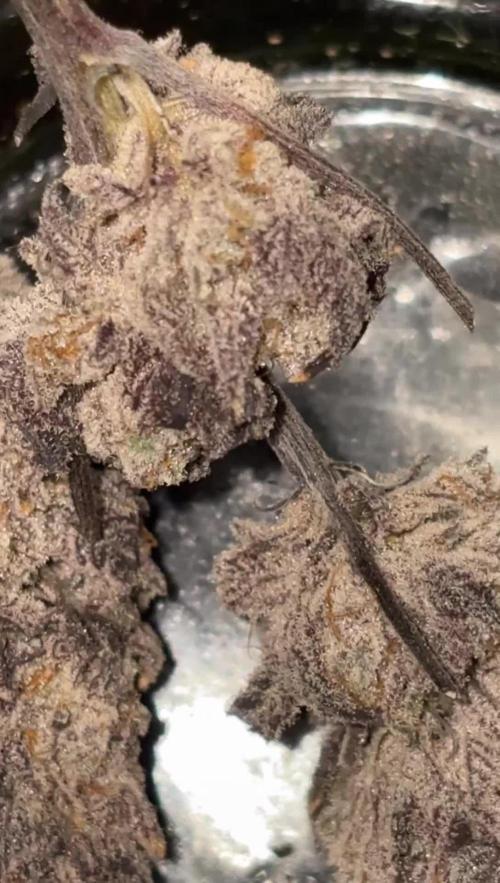
Día tan esperado de esta cosecha de crítical mas con cogollos muy duros y muy apretado y compactos y grandes con un aroma muy fuerte con un olor a diesel


@Grow4Releaf
Follow
*Jan26th-#plant2 was ready to cut Tuesday she's In the dry tent goon for a few days then will jar up. *
Plant 1 is goin strong still. But they both are on a tap water diet till the end.
We're at week 14 from seed and 8th week flower so should be done growing and filling out from here on hopefully..
Just glad the tents set up fully now with exhaust and dehumidifier so no more crazy spikes (would get up to 80% rh and 55°f .. cold and humid had me freaking out lol. But that's all sorted)
All in all I'm happy with the lil test run on these, seeing how they did with minimal nutrients and light gives me hope for the next go.
Still debating on running these with growdots , my next set will be with ganja farmer seeds and growdots. Should be fun may throw in a plat jelly or two aswell. We shall see once the beans get here..
As always tho. Appreciate anyone thst may leave suggestions or feedback. Always like gearing what u see or don't see . Helps get better so its mainly why I'm here .
And thanks to anyone goin thru my rambles ,videos and photos.
Hope everyone's grows are doing well, I'll be skipping around checking out what is going on .! Till next update take care gang !


@High_And_Hydro
Follow
- Ich hab die erste Woche des Biobizz Allmix Düngeschemas gestartet und gebe wie immer erstmal vorsichtige 100%, da meine Erde an sich durch den Kompost recht potent sein sollte.
- Außerdem hab ich mit meinem Calmag-Rechner mein Leitungswasser angepasst. Die Werte könnt ihr auf den Bildern sehen.
- Den PH-Wert passe ich ebenfalls auf 6,5 an.#
- Die Lampe bringt zur Zeit etwa einen PPFD-Wert von 350 - 360 µmol/s/m² bei 18 Stunden Beleuchtungszeit (DLI von 22 - 23 mol/d/m²). Sie wird aber nur eingesetzt bis es warm genug draußen bleibt. Tagsüber stehen sie jetzt schon draußen, sofern es nicht regnet oder stürmt.
Die Tropicana Cookies macht sich hervorragend und sie ist sehr uniform mit den anderen Fastbuds Strains bis jetzt. Sieht gut aus finde ich 💪😁👍
YT: www.youtube.com/@High-And-Hydro