





Likes
Comments
Share

@fridge
Follow
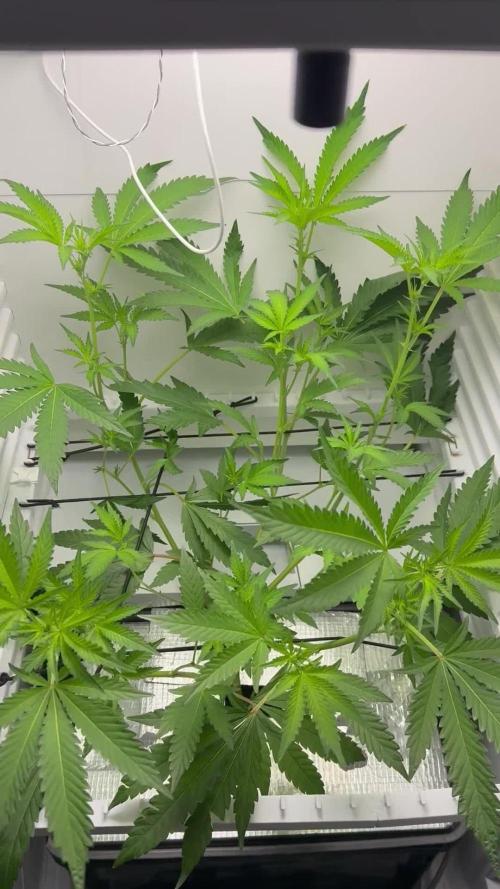
end of week 1 flower | everything looking good so far | managed to create quite some budsights | hope i will be able to control the stretch
pics are from 13.04.
Likes
17
Share


@Grey_Wolf
Follow
Mexican Joker
Cannabiogen seeds Purple Mexican
21st August 2020
This is a seed that took ages to germinate , but looks quite healthy now 😎
I'll be growing it 12/12 from Seed and with my 100% Organic soil mix
I'm not expecting to get lots of weed, for me it's pretty much just a quick run to sample
the genetics before deciding what to grow this summer.
Also I'll be extremely busy moving Houses halfway across the state and all of my
grows may get neglected for a few days here and there whilst that happens.
Basically If I really like the strain after Ive finished growing it and the smoke is great then I will
Run it again in higher numbers to maybe find a keeper plant 👊
I named the Diary after the Hilarious South Park episode "Mexican Joker"
And I absolutely mean no offence to anybody from or living in mexico
I just couldnt resist after getting this strain and then I saw that episode 😆 Old Randy Marsh is the best Lol
As for the Purple Mexican Variety it's from an awesome mob called Cannabiogen &
Ive heard quite a few good reports regarding them and this variey in particular as it is created from a cross with an oaxaca Strain 👌
Anyway That's enough talk.. Lets Grow!!
Thankyou For Stopping By 👍

Likes
13
Share


@smokeycropping
Follow
Regando solo con agua ya 2 semanas, sin necesidad de lavado el cultivo probiotico me lo permite las flores ya están maduran y se nota una densidad enorme en las special queen y en las green gelato de royal queen seeds

Likes
5
Share

@UnitedStrainsGermany
Follow
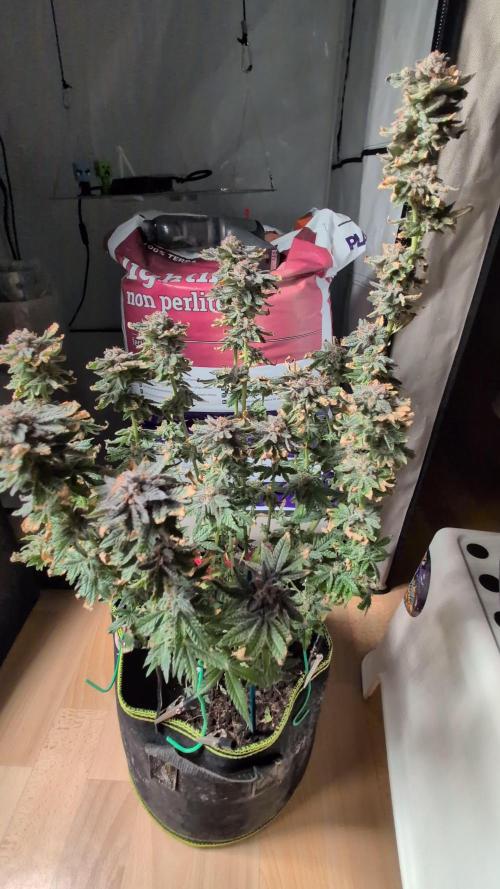
Es wird jetzt in den Dryfembags getrocknet, aber es sind max 30g trocken

Likes
7
Share

@jellyjelly
Follow
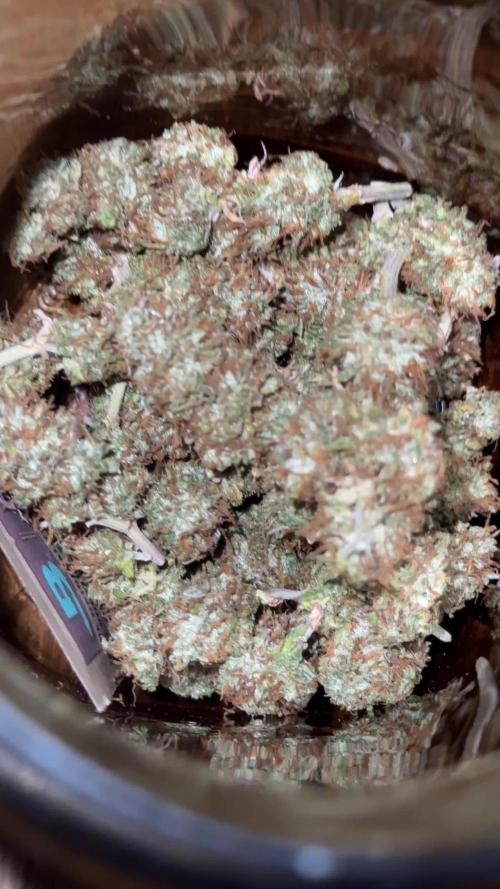
WOW! The plant I pulled early and was showing necrosis too early ends up being my most incredible this run
I wish y’all could smell or try this one. Very unique and memorable
Smell: tropical guava, Bakery, Fuel, Warm Dumpster
Taste: very garlic forward on inhale.. exhale followed by Sour Plums, Kush and icing notes
Very resinous, sticky, loud and effect wise, is very potent (feels like a 50/50)
I’ll have to redo this properly in a future run, it’s truly so memorable

Likes
21
Share


@OGTrauma
Follow
took some feedback from other media where i published this shit and it's a must that i need to improve a bit my uniformity, energetic efficency, air flow and hygiene as key factors ( the previows grow this setup references besides lighting and results itself it's like ok thats something to keen in a positive way because every other aspect looks like a old blanket full of crusty dry cum stains from your bf/gf and a big mass of cheetos crumbs as soil medium ), so i need to visually depict a bit of the setup as this is some legacy shit and it's on my shitty tent.
there are 6 usb fans that take 2,5w of comsumptions, i preffer to do this rather than oscillating ventilators because DB noise is way less and got a decent CFM flow by numbers , and the 5w profan its now working as a very quiet yet active intraction as some dude told me to correct that and was right. i use 15/25w (2 level of power) house fans that just fit on my ducts by luck, pretty caveman setup.
i obviously cleaned with the vacuum from the previous grow and im starting from scratch with fresh seeds, buy some ... just decent substrate to avoid any plague that could come from my own smegma. because fuck im a dirty cheap bastard and i need to do my bare minimum here by stating the shit that is exposed on the ppt slide, as i change and improve things i forgot some other shit and i dont want to get sloppy results, i would totally like to get like the best results and reduce negative & i told you risks.
DAMN SHAWTY, IM TALKING A LOT ABOUT HYGIENE AND HAVING BECAUSE I GOT JUST ONE DAMPING OFF( a seedling died) AND I SWEAR BY MY DICK THAT WAS CAUSED BY MY DIRTY VENTILATION as germination was 100% dope, and that's the only logical explanation as if i over watered them, they could be like way more casualities so its not that . (hope autotranslates well as i know the slide won't translate and require a bit of english. Not all my Chilean/Latam/Worldwide niggas that read this shit are 666% fluent unlike my case a lot of reeferman dialect was scavenged from my old magazines, forums and random indian dude youtube video tutorials.
Coming back to the gig , this week was 24/0 photoperiod, just considering that i want to stabilize and keep my best killer kush fv exemplars and at the same time not fuck them like previous paragraph as i can count them like ... 12 of 9 , if i go below 9 it means is a orange flag for me & my big cock is not as big as i think . nevertheless, they are taking very small doses of top crop's top veg now and next week i will change photoperiod (20/4) to give them a bit of resting time for physiological processes of the newborn plants , and lifespan / fatigue of the electronic devices as well.
BIG GAS LEAKS MOTHERFUCKERS !!!!

Likes
11
Share


Likes
9
Share


@JardineiroBr
Follow
3 plantas diferentes e lindas , duas menores e bem densas de botões grossos e muito perfumados e uma esticou e agora está enchendo os botões , achonqie as pequenas em duas semanas colho a grande vai demorar mais parece.

Likes
21
Share


@NG420
Follow
Fattys are growing and seem to be thirstier.Used foliar spray to help the leaves and also started tucking. When the plant was topped pistils were seen for first time.
Likes
16
Share


@Mrg7667
Follow
About day 38 i am just realizing that i am stupid and been feeding the biogrow for cocoa coir 🤦♂️ way iver nuting with soil it says never to go over 1ml/L
So i will be flushing for at least 1 or two waterings. Looking for the tip burn to stop spreading and the tips to not look like there clawing

Likes
5
Share


@HoffmanShulgin
Follow
Hoy quiero compartir mis pensamientos sobre el estado de mis plantas. Sinceramente, quería creer que no habían sufrido mucho por el frío, pero desafortunadamente la realidad resultó ser diferente. Algunas de ellas parecen un poco deprimidas y su crecimiento se ha ralentizado. Pero no me doy por vencido y sigo esforzándome por su recuperación. Además, no me gusta el régimen de luz que se ha utilizado desde el inicio de la siembra de las semillas, 12/12. La próxima vez utilizaré 18/6. Espero que esto ayude a estimular su crecimiento y desarrollo.
Ayer empecé a darles a las plantas PK13/14 en una dosis de 1 ml/l y Diamond Nectar en una dosis de 2 ml/l. Espero que estos aditivos les ayuden a obtener los nutrientes necesarios y a estimular el proceso de floración y crecimiento. A pesar de algunas dificultades, no me doy por vencido y sigo cuidando de mis plantas. Creo que con el cuidado adecuado y las condiciones apropiadas, podrán superar las dificultades y crecer saludables y fuertes. Sigo siendo optimista y seguiré creciendo junto con ellas.
Likes
24
Share


@SensiMiller
Follow
25-2:
Throughout the week, I'm observing two phenomena simultaneously: a portion of the upper leaves turning a lighter green and/or appearing to have a yellowish hue.
One plant has curled leaves at the top of the plant but limited to one layer of leaves. The tips are yellowed with dark spots. Due to rapid growth, the plant flew too close to the sun and burned its wings, was my assessment. In other words, light burn.
The leaves becoming lighter are located in several layers from the top to halfway down the plant. I suspect there is a deficiency and perform a slurry test. The EC is low at 0.24 and the pH is good at 6.3. The soil is still too wet to feed, which presents a dilemma: feed with the risk of wet feet or wait a bit longer with the risk that the deficiencies become more severe?
To mitigate this, I gave foliar feeding (Terra Bloom 0.5 ml per liter) by spraying the leaves without really wetting them. I did this just after the lights were out. A day later, I first flushed the plants with a few liters of water pH 6.4 and then gave them nutrients with EC 1.3 and pH 6.4: Terra Bloom (+/- 4 ml per liter), Sugar Royal (1 ml per liter), and a tiny bit of Great White and orthosilicic acid. And hung the lights back at 30 cm. It seems to be working because I see the color coming back slightly and the yellowing has at least stopped.
Furthermore, I'm keeping the day and night temperature a bit higher at about 25 degrees Celsius during the day and around 21 at night. This is to limit the humidity at night and during the day to increase the VPD to about 1.45.
At the end of the week I see the end of the stretch and standing 87 cm tall at average.
The gas is on, and ready to go full throttle to the finish!
SensiMiller
Dr. Green Thumbs Plant Wizz GPT has the day off :)
23-2:
"At week 9, our Skunk #1 Feminised plants have shown notable progress. The journey so far has been a blend of anticipation and strategic care. This week, we observed a robust growth spurt, a testament to the nurturing they've received. The balance of water, light, and nutrients has been key. Reflecting on the journey, it's clear that each decision, from the lighting schedule to the nutrient mix, played a crucial role in their current state. Their resilience and growth are not just a result of our efforts but a dance with nature itself." Dr Green Thumbs
I can concur with my artificial assistant that the ladies are looking good and the strategy worked. However, this also required constant care, monitoring, observation, discussing the state of the plants, options, and mitigation with Dr. Green Thumbs GPT, and thinking ahead. SensiMiller

Likes
33
Share


@LouShott
Follow
This grow has been sooooo easy apart from a slight bit of nutrient burn that you can see, she has been a pleasure to grow, she is taking longer than expected but i wouldnt have her any other way lol.
Ive noticed that the pistils really turn bright orange even red 😁- i hope she tastes and smells as citrusy as she looks😝 - also getting frosty 👍
Merry Christmas Everyone!!😉

Likes
2
Share


@AZTERPHUNTER
Follow
trimmed them up little topped at 3 nodes on main and others. Defoliation little by little over time.

Likes
39
Share


@G4NJAG4NG
Follow
Week 8 - day 50! Day 8 of flower.
All of them are still going on strong! Loving there feed and no complaints whatsoever! Gonna raise the light over the weekend as it's a little too close for my liking, girls don't seem to mind! This is definitely a jungle 😂
Getting a heater when I'm paid to keep humidity low during lights off, lights on the humidity sits around 55% which is perfect but lights off it's getting far too high! Don't want to put in all the effort only to let mold ruin my entire crop! I will also get another fan, they need plenty of air circulation because they are all so close together! The flowers are starting to come through the scrog now, each of them are beginning to stretch too!
Exciting times ahead! Feeding 2 litres every 2-4 days! I'm really impressed with these 3 gallon fabric pots too! I just hope the roots don't get root bound!!! They seem to be doing fine so far 😁
Happy growing guys and gals! The buds are coming!!
Day 56 - video upload, looks pretty beautiful 😍

Likes
10
Share


@DeepRootsGrowTrees
Follow
ROYAL QUEEN CBG AUTO
ROYAL QUEEN SEEDS
Week #3 Overall June 19th-26th
Week #2 Veg
This week no issues she's growing well medical CBD grow so it's a all organic grow. Stay Growing!!
ROYAL QUEEN SEEDS
ROYAL QUEEN CBG AUTO
Likes
19
Share


@TylerBud
Follow
hey all😎
im in a middle of vacation and finally had a moment at least to check on the ladies.
they are .. awesomee 😎
big too high , reaching between 2 to 3 meters,
just started to flower , got to make big big maintenance soon. 🤞

Likes
4
Share


@SamDo
Follow
Vegetative Week 3
This third week of vegetative growth was expected to be a turning point, but it turned out to be another difficult one.
The plant did gain a bit of height, roughly a couple of centimeters, which shows that growth hasn’t completely stalled.
However, foliage development remains poor, and overall vigor is clearly lacking.
The plant is growing, but it doesn’t look healthy or strong.
No additional watering was done this week, as the medium did not justify it.
Humidity management appears to be a key issue.
Under the dome, humidity was still around 95%, which is excessive.
The dome has now been fully opened to allow better gas exchange.
Removing the small support revealed another concern:
the stem lacks strength, as the plant fell over once unsupported.
This points to weak structural development and possibly limited transpiration and nutrient uptake.
Condensation droplets were observed on the leaves, confirming that the plant is likely oversaturated with moisture.
Excess humidity may be preventing proper respiration, which could explain the lack of nutrient absorption and overall stagnation.
At this stage, no drastic action is taken.
The focus is on observation, environmental adjustments, and understanding the root cause of the stress.
This plant should normally be much larger by week three, so close monitoring will continue into next week.
See you next week!

Likes
7
Share


@OwlGang_Uk
Follow
Gorilla Glue #1 - Harvest Comment - I Am Very Satisfied With What I Got, I got 3 ounce 7 grams - I Uses Advance Nutrients PH perfect In veg then I switch to the iguana juice organic juice for the flowering stage. I notice a much more slower growth when I switch to organic nutrients.00