





Likes
5
Share


@Ninjabuds
Follow
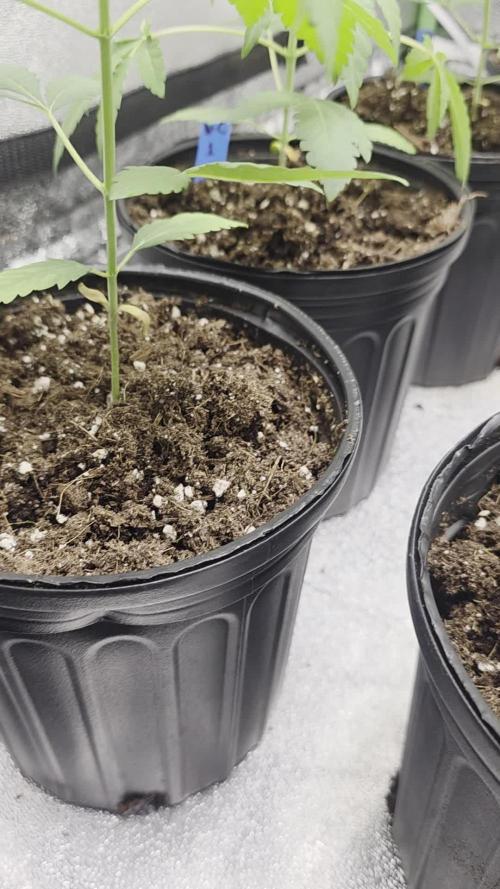
The gas tax x obama runtz is a disappointment so far just like my skunk apple runtz starting to realize how much work legit breeders actually put in to make a good strain. The plant liked being topped it just has not hit its stride yet it definitely going to be a skiny lady
The day has come and it's time to flip these ladies to flower. I was planning on letting them go untill Friday and let the smaller ones grow just a bit more but they will be fine. I have the eternity cup contest in mind and I'm thinking timing so I need to get these lady done and out my tent lol. This past week I turned the light up alot getting them ready to flower they have grown a bunch inhavendone lst maybe 5 it 6 times on the branchs and they arw nit bendy anymore that will help durring flower.
Likes
17
Share


@Mroizo
Follow
Beginning of the sixth week. The first trichomes have already begun to appear. Now it's waiting for the buds to get fat.

Likes
8
Share


@LonelyStonerz
Follow
I had to top a few of these because they were hanging so far out, making lots of new space for bud sites I really like to bush/stretch out my plants making as many colas for flowers. Im seeing small pistils popping out here and there.

Likes
5
Share


@Bdawg
Follow
Flipped with net about 90% full almost full now after abit of stretch. Gots change the rez today.
Likes
56
Share


@Master_weeda
Follow
Bonjour à tous les padawans et maîtres jedis
Jour84 arrosage avec 2 litres d'eau ph6.3
Jour86 arrosage avec 2. 5litres d'eau ph6.3
Jour89 arrosage avec 2 litres d'eau ph6.3
LE MEILLEUR MOMENT POUR RINCER SON CANNABIS
Le rinçage commence en général deux semaines avant la récolte. Si le plant a une période de floraison de huit semaines, le rinçage doit commencer six semaines après le début de la période de floraison. Il est préférable de regarder de près les trichomes sur le plant pour déterminer quand votre cannabis est prêt à être récolter. Si les petits trichomes commencent juste à passer d’une couleur transparente à une teinte laiteuse et blanche, c’est une bonne indication que les plants peuvent commencer à être rincés. Il faut s’arranger pour que la majorité des trichomes aient changé vers la couleur désirée pour la récolte après deux semaines – ça devient plus facile à faire avec l’expérience, alors accrochez-vous !
Le rinçage peut également être un bon moyen de remettre à zéro la terre quand un plant est toujours en phase de croissance végétative. Parfois, un cultivateur suralimente par accident son cannabis, ce qui provoque un changement de couleur et un flétrissement du bout des feuilles. Ceci est appelé une « brûlure par nutriments ». Rincer la terre peut éliminer les nutriments excédentaires, ce qui aide à résoudre le problème. Cependant, c’est une mesure drastique à ce stade de la culture, alors assurez-vous que le problème soit bien une brûlure par nutriments et non quelque chose d’autre.
Le rinçage ne concerne pas que le moment de la récolte. Cette technique peut aussi être mise en place durant la phase de croissance afin de débarrasser le sol des nutriments. Bien évidemment, les nutriments permettent à votre plante de rester en bonne santé et vous assurent des rendements maximaux, mais une trop grande quantité peut causer une accumulation et un état statique durant lequel la plante ne peut plus y accéder.
Le blocage des nutriments peut être causé par une accumulation saline ou des niveaux de pH incorrects. Ces deux causes peuvent être résolues par un rinçage de votre plante à l’eau claire. Les fluides viendront pousser les nutriments en dehors du substrat et le débarrasseront de l’accumulation, permettant ainsi aux racines de pouvoir accéder à nouveau aux nutriments.
EMPÊCHER LE BLOCAGE D'ABSORPTION DES NUTRIMENTS AVANT QU’IL NE POSE PROBLÈME
Au mieux, le blocage des nutriments peut être un problème, au pire, il peut être un vrai désastre. Comme le dit l’adage, il vaut mieux prévenir que guérir. Il vaut mieux prendre de l’avant pour empêcher le blocage des nutriments plutôt que de s’y atteler lorsque c’est trop tard.
Empêcher le blocage des nutriments peut se faire par le biais d’un rinçage de routine. En rinçant vos plantes une fois avant la floraison et une fois au milieu de cette dernière, vous minimiserez l’accumulation de nutriments.
LES ENZYMES À LA RESCOUSSE
Après le rinçage pour contrer l’accumulation ou le blocage des nutriments, vous remarquerez peut-être que vos plantes ont une apparence vert foncé, c’est le signe d’un excès de nutriments. Dans ce cas, certains cultivateurs choisissent d’ajouter une formule riche en enzymes à leur substrat.
Au cas où vous auriez oublié vos cours de biologie, les enzymes sont des protéines qui catalysent les réactions. Elles aident à rincer le substrat en décomposant l’amidon, les glucides et les nutriments. Il existe sur le marché toute une variété de produits qui contiennent des formules d’enzymes très efficaces.
Si l’eau ne suffit pas à vos plantes, ces petites protéines ne feront qu’une bouchée de l’accumulation de nutriments !
COMMENT BIEN RINCER SON CANNABIS
Rincer votre plant de cannabis est un processus simple. À chaque fois que vous apporteriez normalement des nutriments, vous rincez à la place. De l’eau du robinet non traitée est tout ce dont vous avez besoin pour rincer, assurez-vous juste que son pH est sans danger pour le cannabis. La plupart de l’eau de puits a un pH sain et ne nécessite pas de traitement, mais s’il est nécessaire de traiter l’eau de rinçage pour avoir un pH adapté, faites-le. Les ajustements du pH seront donc la seule chose à considérer.
Inonder la terre avec autant d’eau fraîche qu’elle puisse contenir. Laissez l’eau durant quelques minutes pour qu’elle puisse absorber les nutriments, puis inondez la terre encore pour rincer les nutriments loin du plant. Si vous cultivez en intérieur dans des pots, notez la couleur de l’eau qui s’échappe du fond des pots. Elle sera tâchée et aura une couleur sale. C’est à cette étape qu’un appareil de mesure des TDS (Total des Solides Dissous) est utile. Si vous récupérez et mesurez le TDS de l’eau « évacuée », elle devrait avoir un taux de 1300ppm, ce qui est assez élevé. Il est important de rincer le plant jusqu’à ce que total baisse à un niveau de 50ppm, ou du moins qu’il s’approche du TDS de l’eau fraîche que vous utilisez pour rincer le plant. La couleur de l’eau d’évacuation va s’éclaircir et apparaîtra plus propre. Vous devez tirer autant que possible de minéraux dissous du plant.
Comment et Quand Rincer les Plants de Cannabis
Rincer les plants de cannabis avant la récolte peut faire la différence entre les meilleurs têtes ou la plus rude pour la gorge. Cette petite tâche est simple et facile à faire. Ajoutez juste de l’eau ! Attention car le moment du rinçage joue un rôle critique.
Le b.a.-ba du rinçage de ses plants de cannabis.
Sommaire:
1. Qu’est-ce que le rinçage ?
2. Le meilleur moment pour rincer son cannabis
3. Empêcher le blocage d'absorption des nutriments avant qu’il ne pose problème
4. Les enzymes à la rescousse
5. Comment bien rincer son cannabis
6. Comment rincer ses plantes en hydroponie
7. Les résultats du rinçage de son cannabis
8. Quand éviter de rincer son cannabis
Vous avez enfin fini vos cultures et vous vous retrouvez avec un magnifique plant couvert de super têtes, maintenant sèches, vous avez fait le curing et vous êtes prêt à fumer – et pourtant quelque chose ne va pas. La weed semble ne pas vouloir se consumer et quand vous tirez une bouffée, c’est comme si on vous avait donné un coup de poing dans les poumons et vous toussez en craignant pour votre vie ! Le goût est rude et décevant. Si c’est une situation que vous avez vécue, il y a des chances pour que vos plants n’aient pas été rincés correctement avant la récolte.
Cette fumée bien loin d’être agréable est provoquée par la présence dans le plant des nutriments et minéraux utilisés lors de la culture, ce qui altère la façon dont le plant se consume. Rincer le plant élimine ces nutriments restants, ce qui améliore la qualité des sensations. Heureusement, le rinçage des plants de cannabis se fait facilement et sans effort, et cela vous permet de produire des têtes douces et délicieuses en un rien de temps.
ARTICLE LIÉ
Comment Utiliser les Nutriments pour Cannabis
QU’EST-CE QUE LE RINÇAGE ?
L’acte de rincer un plant implique d’utiliser de l’eau pour éliminer tout nutriment présent dans la terre. Une grande quantité d’eau est passée à travers la terre et drainée sur une base régulière. Tous les minéraux et nutriments présents dans la terre sont rincés avec le temps avec l’eau, ce qui laisse une terre propre.
Mais pourquoi vouloir éliminer tous les minéraux de la terre ? N’est-ce pas mauvais pour la récolte ? En fait, cela aide à la récolte de manière significative. Quand les nutriments sont éliminés de la terre, ceci force le plant de cannabis à utiliser tous les nutriments toujours présents dans le plant. C’est comme pour le corps humain. Quand on consomme beaucoup d’aliments, ce que nous n’utilisons pas est transformé en graisses. Dans les situations extrêmes où la nourriture est rare, le corps s’appuie sur cette graisse stockée pour tirer de l’énergie.
Comme rincer force le cannabis à utiliser tous les nutriments restants dans le plant, aucun ne devrait rester et altérer les têtes récoltées. Cependant, si vous le faites trop tôt, cela peut nuire à la santé du plant, le moment est donc clé.
LE MEILLEUR MOMENT POUR RINCER SON CANNABIS
Le rinçage commence en général deux semaines avant la récolte. Si le plant a une période de floraison de huit semaines, le rinçage doit commencer six semaines après le début de la période de floraison. Il est préférable de regarder de près les trichomes sur le plant pour déterminer quand votre cannabis est prêt à être récolter. Si les petits trichomes commencent juste à passer d’une couleur transparente à une teinte laiteuse et blanche, c’est une bonne indication que les plants peuvent commencer à être rincés. Il faut s’arranger pour que la majorité des trichomes aient changé vers la couleur désirée pour la récolte après deux semaines – ça devient plus facile à faire avec l’expérience, alors accrochez-vous !
Le rinçage peut également être un bon moyen de remettre à zéro la terre quand un plant est toujours en phase de croissance végétative. Parfois, un cultivateur suralimente par accident son cannabis, ce qui provoque un changement de couleur et un flétrissement du bout des feuilles. Ceci est appelé une « brûlure par nutriments ». Rincer la terre peut éliminer les nutriments excédentaires, ce qui aide à résoudre le problème. Cependant, c’est une mesure drastique à ce stade de la culture, alors assurez-vous que le problème soit bien une brûlure par nutriments et non quelque chose d’autre.
Flushing
Le rinçage ne concerne pas que le moment de la récolte. Cette technique peut aussi être mise en place durant la phase de croissance afin de débarrasser le sol des nutriments. Bien évidemment, les nutriments permettent à votre plante de rester en bonne santé et vous assurent des rendements maximaux, mais une trop grande quantité peut causer une accumulation et un état statique durant lequel la plante ne peut plus y accéder.
Le blocage des nutriments peut être causé par une accumulation saline ou des niveaux de pH incorrects. Ces deux causes peuvent être résolues par un rinçage de votre plante à l’eau claire. Les fluides viendront pousser les nutriments en dehors du substrat et le débarrasseront de l’accumulation, permettant ainsi aux racines de pouvoir accéder à nouveau aux nutriments.
EMPÊCHER LE BLOCAGE D'ABSORPTION DES NUTRIMENTS AVANT QU’IL NE POSE PROBLÈME
Au mieux, le blocage des nutriments peut être un problème, au pire, il peut être un vrai désastre. Comme le dit l’adage, il vaut mieux prévenir que guérir. Il vaut mieux prendre de l’avant pour empêcher le blocage des nutriments plutôt que de s’y atteler lorsque c’est trop tard.
Empêcher le blocage des nutriments peut se faire par le biais d’un rinçage de routine. En rinçant vos plantes une fois avant la floraison et une fois au milieu de cette dernière, vous minimiserez l’accumulation de nutriments.
LES ENZYMES À LA RESCOUSSE
Après le rinçage pour contrer l’accumulation ou le blocage des nutriments, vous remarquerez peut-être que vos plantes ont une apparence vert foncé, c’est le signe d’un excès de nutriments. Dans ce cas, certains cultivateurs choisissent d’ajouter une formule riche en enzymes à leur substrat.
Au cas où vous auriez oublié vos cours de biologie, les enzymes sont des protéines qui catalysent les réactions. Elles aident à rincer le substrat en décomposant l’amidon, les glucides et les nutriments. Il existe sur le marché toute une variété de produits qui contiennent des formules d’enzymes très efficaces.
Si l’eau ne suffit pas à vos plantes, ces petites protéines ne feront qu’une bouchée de l’accumulation de nutriments !
Comment et Quand Rincer les Plants de Cannabis
COMMENT BIEN RINCER SON CANNABIS
Rincer votre plant de cannabis est un processus simple. À chaque fois que vous apporteriez normalement des nutriments, vous rincez à la place. De l’eau du robinet non traitée est tout ce dont vous avez besoin pour rincer, assurez-vous juste que son pH est sans danger pour le cannabis. La plupart de l’eau de puits a un pH sain et ne nécessite pas de traitement, mais s’il est nécessaire de traiter l’eau de rinçage pour avoir un pH adapté, faites-le. Les ajustements du pH seront donc la seule chose à considérer.
Inonder la terre avec autant d’eau fraîche qu’elle puisse contenir. Laissez l’eau durant quelques minutes pour qu’elle puisse absorber les nutriments, puis inondez la terre encore pour rincer les nutriments loin du plant. Si vous cultivez en intérieur dans des pots, notez la couleur de l’eau qui s’échappe du fond des pots. Elle sera tâchée et aura une couleur sale. C’est à cette étape qu’un appareil de mesure des TDS (Total des Solides Dissous) est utile. Si vous récupérez et mesurez le TDS de l’eau « évacuée », elle devrait avoir un taux de 1300ppm, ce qui est assez élevé. Il est important de rincer le plant jusqu’à ce que total baisse à un niveau de 50ppm, ou du moins qu’il s’approche du TDS de l’eau fraîche que vous utilisez pour rincer le plant. La couleur de l’eau d’évacuation va s’éclaircir et apparaîtra plus propre. Vous devez tirer autant que possible de minéraux dissous du plant.
COMMENT RINCER SES PLANTES EN HYDROPONIE
Le rinçage des plantes en hydroponie est bien plus simple que de se débarrasser des nutriments en terre. Les cultivateurs en hydroponie pourront simplement drainer leur système et le remplacer par une eau au pH neutre.
Le rinçage des plantes en hydroponie est aussi un processus bien plus court. Une fois que la réserve d’eau aura été modifiée, les plantes en hydro n’auront pas accès aux nutriments externes. Pour cette raison, un rinçage de deux jours suffira.
LES RÉSULTATS DU RINÇAGE DE SON CANNABIS
Après la récolte des têtes, prenez du temps pour bien faire le curing pour atteindre le potentiel le plus élevé. Un affinage correct par curing permet de réduire encore plus le côté rude des têtes, en éliminant des choses comme un excès de chlorophylle. Vous serez étonné de voir la différence que ce petite effort peut avoir sur votre produit. Tout votre travail se sentira dans la première bouffée de cette weed douce comme de la soie, qui caresse la gorge comme du miel. Le plus doux de la nature. Vous pouvez donc améliorer la qualité de votre cannabis en ajoutant juste de l’eau !
QUAND ÉVITER DE RINCER SES PLANTES
Le seul moment où nous recommandons d’éviter le rinçage de son cannabis est lorsque l’on travaille avec une terre biologique amendée ou un super soil. Ces substrats ont été développés avec précaution afin d’héberger des micro-organismes bienfaisants tels que des bactéries ou des champignons. Cette délicate biodiversité pourrait être éliminée et endommagée par le rinçage.
Une fois de plus, l’absence de rinçage ne devrait pas poser de soucis, car aucun nutriment externe ou synthétique n’aura été ajouté au substrat. À la place, les plantes comptent sur les micro-organismes pour décomposer la matière organique et la livrer aux racines.
May the force be with you 💪

Likes
19
Share


@Poleeg1986
Follow
I used this supplement 4th time. All was good but we need use 150-200% of recommended dose as i sad for better results. So the day 71 was harvest day) the buds really frosted and dense.. . Thanks "fastbuds" for good marijuana genetics... they did good work. Thanks guys for this. During season I hadn't any serious problem. Thank for all followers and friends who watched my grow and I wish you all have a good harvest brothers! When buds will be treated I add results) see you later;)
Hi friends!) So 7 days took for drying buds. And we have not bad results -255 grams dry buds from two plants. 130.5 from one and 124.5 from another. Good quality and taste. I put them in my fridg for next 4 weeks for treating) so see you soon in my next grow;)


Likes
19
Share


@adam_pawloski87
Follow
Let’s go Day 85 from seed !! This has been another great week ,ladies are coming close to the finish line an looking so beautiful!! This week we will continue flushing on these 3 ladies an jump em into there 48 hrs of darkness on Friday or Saturday will see ! Let’s have another great week ,, peace love an positive vibes to all y’all Keep them eyes peeled for next weeks update !! Cheers 😶🌫️💨💨💨💨💨🤙🏻

Likes
37
Share


@MrJones
Follow
OSS Ghost Train Power
🔹⊱╮🔹╰⊰🔹 GROW Started 03.10.24 INFORMATION 🔹╰⊰´🔹⊱╮🔹
🌞Environment - Maintaining 80F and 65%Humidity
🌾Training - The girls are recovering from last week's Pruning and Defoliation,
⚱️2-Gallon 📊6.2 PH
💧 Feeding - Using Horti Bloom and Horti Cal 12-0-0
🌞Medic Grow Smart 8 760 Watts
🕷️ IPM - CannControl from Mammoth and Mosquito Bits as needed
🔹⊱╮🔹╰⊰🔹 PLANT UPDATES 🔹╰⊰´🔹⊱╮🔹
📝 Notes - On 🗓️05.11.24, This week, we are on Auto-Pilot and just Fertigating as needed; the ladies are stacking up nicely, and the leaves have grown back not sure if it is the genetics or the new nutrients; I would like to see less and will evaluate if more defoliation will be needed.
📝Fertigation injects fertilizers into an irrigation system to supply dissolved nutrients to crops.
🗓️05.11.24 Just feeding daily, sometimes twice; today, fed with Hort-Bloom @ 2.7 GRMS Per Gal and Horti-Cal @ 2.5 GRMS Per Gal.
🗓️05.12.24 Just feeding daily, sometimes twice; today, fed with Hort-Bloom @ 2.7 GRMS Per Gal and Horti-Cal @ 2.5 GRMS Per Gal.
🗓️05.13.24 Just feeding daily, sometimes twice; today, fed with Hort-Bloom @ 2.7 GRMS Per Gal and Horti-Cal @ 2.5 GRMS Per Gal.
🗓️05.14.24 Just feeding daily, sometimes twice; today, fed with Hort-Bloom @ 2.7 GRMS Per Gal and Horti-Cal @ 2.5 GRMS Per Gal.
🗓️05.15.24 Just feeding daily, sometimes twice; today, fed with Hort-Bloom @ 2.7 GRMS Per Gal and Horti-Cal @ 2.5 GRMS Per Gal.
🗓️05.16.24 Just feeding daily, sometimes twice; today, fed with Hort-Bloom @ 2.7 GRMS Per Gal and Horti-Cal @ 2.5 GRMS Per Gal.
🗓️05.17.24 Just feeding daily, sometimes twice; today, fed with Hort-Bloom @ 2.7 GRMS Per Gal and Horti-Cal @ 2.5 GRMS Per Gal.
╰⊰🔹╰⊰´🔹⊱╮🔹╰⊰🔹╰⊰🔹STRAIN INFORMATION🔹⊱╮🔹╰⊰🔹╰⊰🔹╰⊰🔹⊱╮
Powerful West Coast genetics Ghost Train Haze x Pellezino combine to create this exceptional Cali weed strain Ghost Train Power. This exceptional strain exhibits dominant terpenes like Limonene, Linalool, and Terpinolene that produce a tempting citrus, herbal, floral scent with a fruity taste that is a flavor sensation.
Ghost Train Power comes from powerhouse parentage and produces extreme levels of THC up to and over 30%, and when you consider her substantial production, this strain is unprecedented. The potent effects are surreal and intoxicating, and the harvests are a treat. Indoors, this beauty will reward you with a generous 650 gr m2 of tantalizing frosted bud; outdoors, she can produce more than 1 kilo per plant. Ghost Train Power is USA genetics that will live up to its acclaimed reputation and have you coming back for more over and over again.

Likes
Comments
Share

@DogDoctorOfficial
Follow
🌿 Week 4 – Purple CousKush Auto #12 | Plant B
The Quiet Strategist Begins Her Move | 8×8 Adventure
Every plant has its own story, even when they share the same tent, the same light, the same feeding schedule, and the same care.
That’s one of the reasons I decided to document each phenotype individually throughout this 8×8 Adventure. Every seed carries its own personality, its own pace, and its own way of expressing the genetics hidden inside.
Today the spotlight belongs to Purple CousKush Auto #12 – Plant B.
While a couple of her sisters are already sprinting into flower much earlier than expected, this lady is taking a slightly more measured approach. She’s clearly entering pre-flower, showing her first pistils and announcing that the transition has begun, but she’s doing it on her own schedule. There’s no rush here… just steady, confident progress.
And honestly… I like that.
Sometimes the plants that don’t demand attention early become some of the most rewarding later on.
⸻
🌱 Life inside the 8×8 Adventure
The room continues running under the 12/12 From Seed experiment, a method that constantly surprises me with how differently each cultivar reacts.
Even under identical environmental conditions, every plant interprets that limited photoperiod in its own way. Some immediately focus on reproduction while others continue building structure before committing fully to flowering.
Purple CousKush B seems to belong to the second group.
She continues investing energy into producing new growth while gently stacking pre-flowers across the upper nodes.
Watching these differences unfold is exactly why I enjoy documenting every individual plant instead of only reporting on the room as a whole.
⸻
🌿 Training without forcing nature
This week has mostly been about leaf tucking and a little gentle Low Stress Training.
Rather than removing healthy fan leaves, I’ve simply been moving them out of the way to expose lower growth sites to the LED. It’s amazing how much additional light reaches the interior of the plant with just a few careful adjustments.
LST continues following the same philosophy.
No aggressive bends.
No unnecessary stress.
Just guiding branches into better positions so the canopy can develop naturally while allowing more future flowering sites to receive direct light.
With autoflowers, timing is everything. Every day counts, so I prefer making small corrections instead of major interventions.
Purple CousKush B has responded beautifully, opening her structure while continuing to push healthy new shoots from every direction.
⸻
☀️ Summer is definitely here…
The biggest challenge this week hasn’t been nutrition.
It hasn’t been watering.
It hasn’t been training.
It’s simply been the weather.
Outside temperatures continue climbing, making it surprisingly difficult to keep the grow room perfectly stable—even with the air conditioning working around the clock.
Despite seeing daytime temperatures touching 33°C, humidity has remained reasonably controlled, helping prevent excessive stress while maintaining healthy transpiration.
Considering the conditions, I’m genuinely happy with how all the ladies are responding.
Strong stems.
Healthy green foliage.
Excellent turgor.
No signs of heat damage beyond the normal environmental challenge that summer inevitably brings.
Sometimes growing isn’t about chasing perfect numbers…
It’s about adapting and helping the plants stay comfortable despite Mother Nature trying to make things interesting.
⸻
💧 Week 4 Feeding
The feeding schedule remains simple and consistent:
• Terra Grow — 1.8 ml/L
• Power Roots — 1 ml/L
• Pure Zym — 1 ml/L
• Sugar Royal — 1 ml/L
Solution parameters:
• EC: 1.35 mS/cm
• pH: 6.1
The plants continue responding extremely well, with lush green foliage and vigorous new growth showing that the nutrition remains well balanced.
⸻
🌸 Looking ahead
With pre-flower now clearly underway, I’m expecting Purple CousKush B to begin stretching over the next week.
Unlike some of her faster sisters, she’s building a slightly more open architecture before committing fully to flowering, which could translate into excellent light penetration later in bloom.
Every day brings another surprise inside this tent, and that’s exactly what makes this project so enjoyable.
One room.
One environment.
One feeding program.
Yet every phenotype writes its own story.
I can’t wait to see what chapter Purple CousKush B has planned next.
⸻
As always, a massive thank you to everyone following this adventure, leaving comments, sharing knowledge, and supporting these journals week after week. Your encouragement genuinely makes documenting every phenotype worthwhile.
A huge thank you as well to Plagron for the outstanding nutrition, Zamnesia for the incredible genetics, and everyone helping make this 8×8 Adventure possible.
Growers Love and see you all next week for another chapter. 🌱💚
Likes
2
Share


@FourTwenty_Plants
Follow
Been on the Spananbis so I wasnt able to check on them but they did really good the last few days. Put a net on them to spread them out a bit cause im scared of not enough airflow between the plants
Likes
102
Share

@Xonidan
Follow
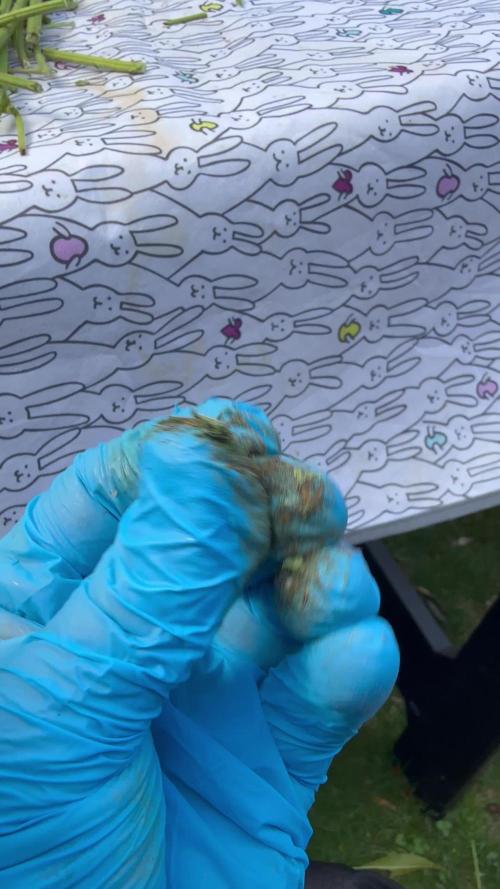
Auch wenn ich sie etwas früh geerntet habe ist sie stark genug.
Der Schimmel ist einfach zu gefährlich.
Dieser Bud Rot ist wie die Pest.

Likes
25
Share


@NONSENSE
Follow
Good day, everyone!!!
My Phoenix still in VEG. Looks great, I made Main-lining this time, the plant looks like octopus :)
I use Grow Powder Green House Feeding + Hybrid powder. ( one by one). It is enough for now.
The Phoenix looks more sativa dominant, already about 35cm .
Two times a week I add extra CalMag .
Please check the pictures and this week short video.

Likes
4
Share


@JennK82
Follow
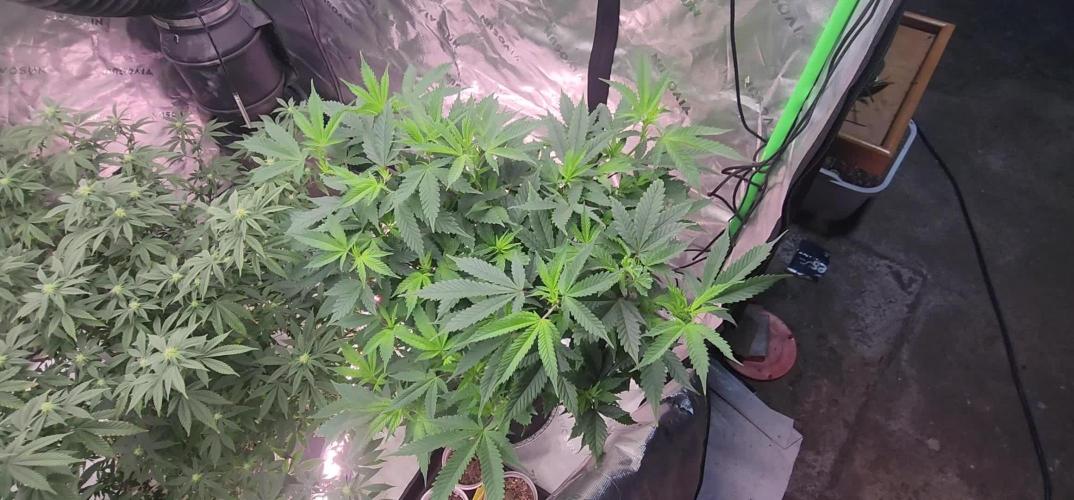
I had bugs but gone now since plants are out of room and a cleaning was done


Likes
3
Share


@CalGonJim
Follow
MONDAY 5/26 4am put up some readings from last night. I did 10, 10 Con Bloom PLUS 2mL of Bud Factor X. 1230pm WOW I hit the gears just right on BUD FACTOR X!!!... In FIVE YEARS...NEVER GOT IT RIGHT.... This combo worked the chloroplast tanks seemed flat, the X made a visible difference in how puffy the top sugar leaves are and the amount of resin is exactly like the advertisements....finally. There was something I thought was "sludge" in using X with Con. There IS a reaction between Con Bloom Part A, the color one and X. A reaction with amino acids, and protein binding from my observation, not a spoilage or rancid issue.
245pm What a day, I hope my Cuban robot girlfriend has Frank Sinatra playing, oh wait thats Bladerunner.
5/28 The tumor on my neck is getting horrible, I dont go to doctors and I dont call 911 so im going to get several bottles of whiskey and then I will open up the cysts. if I dont die from the infection I should be ok.
350pm Mars Hydro FC1500-EVO 150W 🚨👍 soon
5/29 420am. I HAVE BEEN UPLOADING AND SCREAMING ABOUT VIDEOS NOT WORKING....they ONLY work in NEW VIEW.....goddamnit!!!!!! I just figured it out........ PLANTS LOOK GREAT
5/30 Wating for the new light, should be here soon!! plants are getting top heavy. 4 cola design means I can do a diamond wire shape and they will be self supporting no external SCREENS or messes from that.
5/31 Saturday. MARS-HYDRO got the Samsung version of this light in TENT 2!!! I put on the BLUTOOTH ADAPTER it works great. I measure the amount of WATTS not percent of light but still very very nice works perfectly. MAKE THE APP PASSWORD FIRST OR IT WONT WORK RIGHT!!!!
🚨THE NEW LIGHT IN TENT 2: FC1500-EVO 150W SAMSUNG LED FOR MY RICKY PLANTS!!! The Grimm Seeds are strong as hell and can take the new lights, even at 93W might be too much, I might get to lower the overall wattage and save even more energy that way👍
6/1 SUNDAY THE NEW LIGHT IS MAKING MASSIVE DIFFENCE NICE with the new light!!!

Processing
Likes
24
Share


@Hawkbo
Follow
Finally got the temps up to an average of 78°F with the lights on and things turned right around. Someone on here reccomended I try putting a small 250w heater inside the tent with a fan behind it and it worked so shootout to @lionsshare. I took the autos and clones out and put them in the other tent. I have to take cuts of everything in here in case there is something special. It's been non stop work. The video was taken on day 2 of flower. I gave them a 36 hour dark period as well so they should stretch a little more and I might throw a few more plants in if there is room.
These crosses I got 2 females which are in 1 gal pots but I might throw them in a 3 gal half full so they dont dry out as fast and throw my feeding schedule off.
Likes
14
Share


@Groweedo
Follow
Les bourgeons qui grossisent de jour en jour, encore 2 bonnes semaines avant rinçage je penses

Processing
Likes
3
Share


@mr_smooke
Follow
we pass 6 weeks of flowers. buds are getting fulled and the smell is so so beautiful. Here on pics is day 35 of flowering. On feeding menu is again Iguana Juice Bloom, I spend all Mother earth. it is awesome nutrients. will buy it again.
