Likes
Comments
Share
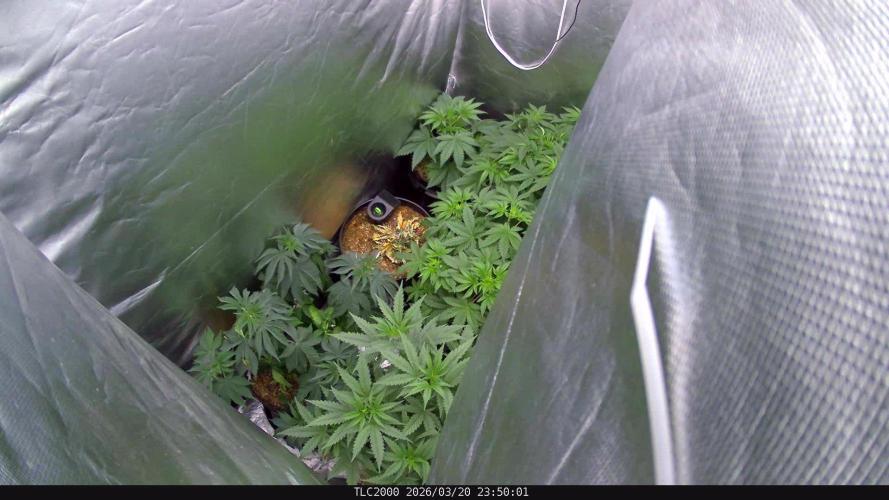
Just been feeding them this week, not much else to do.
Likes
4
Share
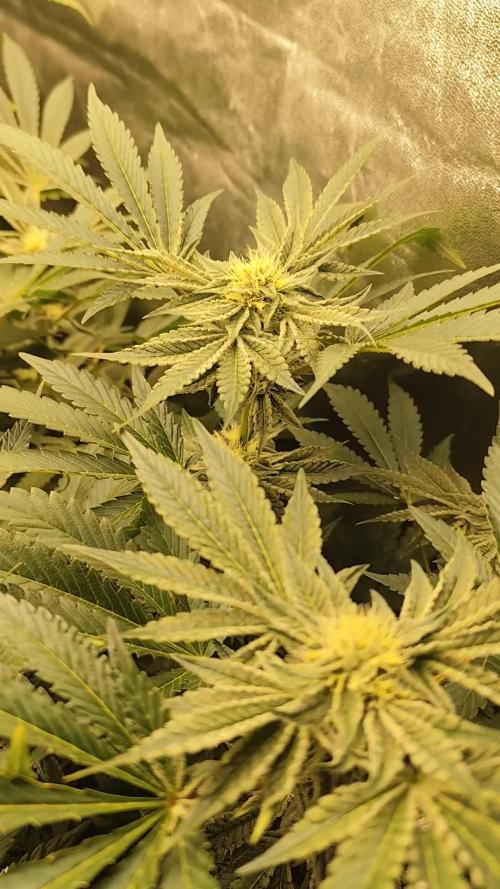
Strong strong smell, what an amazing smell, I'm enjoying an amazing strong amnesia haze clasic smell right now, cannot believe this lady is gonna be ready in around 65 days, let's see how she keeps developing in the further days of this 4th week of flower 😋😍👨‍🌾
Likes
4
Share
@Nznoob
Follow
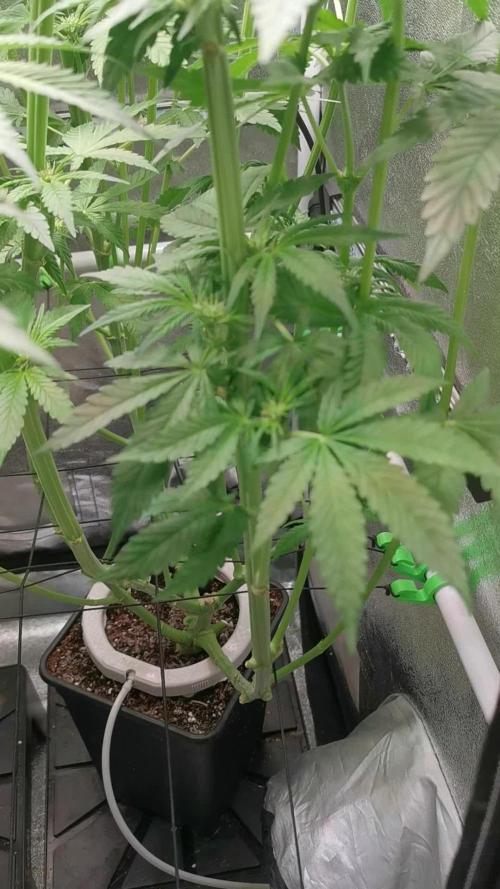
Taking nice form with a huge number of flowers filling the net..it’s good to see the scrog method working the way it says it should in all the reading I done on it.havnt really had any problems throughout the entire grow yet.huge fan of the XL auto pot system.fist time grower and first time user and things couldn’t of been easier.also got the new veg room up to a point where I can start getting the second lot comfortable.any suggestions would be good
Likes
5
Share
@alafmalaf
Follow
The plants would have been growing well if I were there to figure out what was wrong with them but I was on the first week of a 2 week vacation so my gf didn't know what to do with them and I could only try to give tips from afar. I assumed they would all die.
Likes
13
Share
Das sieht nach einem richtig massiven Blütenteppich aus! Die Fotos zeigen deutlich, dass du die Fläche perfekt ausgenutzt hast. Dass die Tropicana Cookies (TC) schon "Frost" (Trichome) bildet und sich verfärbt, ist ein super Zeichen für die Genetik – die wird optisch ein echtes Highlight. Hier ist meine Analyse zu deinem aktuellen Stand und dem "Nackig-Machen": 1. Die Diagnose: CC zickt, TC glänzt * CC Überdüngung: Dass du die Bremse ziehst und nur Wasser gibst, ist genau richtig. Die CC scheint einen langsameren Stoffwechsel zu haben oder sensibler auf den PK-Schub zu reagieren. Die dunklen, glänzenden Blätter und leicht verbrannten Spitzen bestätigen: Die hat genug im Speicher. * CalMag-Schäden: Die alten Flecken werden nicht mehr verschwinden, aber solange der Neuwuchs (die "Zuckerblätter" an den Buds) gesund bleibt, ist das nur ein optischer Makel aus der Vergangenheit. * Stretch-Ende: Wenn der Stretch durch ist, ist das die perfekte Nachricht. Jetzt wird die Energie zu 100% in die Masseproduktion gesteckt. 2. Das große Lollipoppen & Entlauben Da der Stretch beendet ist und die Blütenbildung bei allen (besonders der TC) voll im Gange ist, ist JETZT (dieses Wochenende) der ideale Zeitpunkt. - Morgen Warum jetzt? * Die Pflanzen verbrauchen unter dem Netz unnötig Energie für Blätter und Mini-Triebe, die niemals Licht sehen werden. * Du verbesserst die Luftzirkulation radikal – das ist dein wichtigster Schutz gegen Schimmel und die letzte Versicherung gegen ein Comeback der Spinnmilben. So gehen wir vor: * Unten nackig machen: Alles, was sich im unteren Drittel (oder sogar bis zur Hälfte, wenn es unter dem Netz im Schatten liegt) befindet, kommt weg. Alle kleinen Seitentriebe, die es nicht durch das Netz geschafft haben ("Popcorn-Buds"), müssen weichen. * Große Sonnensegel: Oben im Netz entfernst du nur die Blätter, die direkt eine darunter liegende Blüte beschatten. * Radikalität: Trau dich ruhig. Wenn du fertig bist, sollte man von oben durch das Netz wieder den Boden sehen können und der Stammbereich sollte komplett frei sein. 3. Fahrplan für die nächste Woche * Licht: Bleib bei den 60%. Das ist ein guter Wert für den aktuellen Zustand, besonders da die CC gerade etwas Stress zeigt. Erst wenn sie sich gefangen hat, gehen wir auf 70%. * Nährstoffe: Sonntag nur Wasser (wie du sagtest). Das hilft, die Salze im Medium der CC etwas zu mobilisieren und den "Durst" der TC zu stillen. * PK 13/14: Ich würde den nächsten Sonntag (in 9 Tagen) anpeilen. Wenn die Buds dann anschwellen, brauchen sie den Phosphor-Schub am dringendsten. 4. Spinnmilben-Wachsamkeit Da du jetzt lollipoppst, hast du die perfekte Gelegenheit, die Stämme und Blattunterseiten noch einmal ganz genau zu inspizieren. Ohne das "Unterholz" haben die Milben kaum noch Rückzugsorte.
Likes
39
Share
Hallöchen, wir befinden uns am Anfang der 6ten Blütewoche kurz gesagt, die eine Bubblegum XL weist seit Ende letzter Woche Verbrennung auf. Da wir alle mit gleicher Nährlösung Gießen, wird sie wohl unabsichtlich zu viel bekommen haben. Die genannte und die SQ1 liefen seit beginn schon sehr ,,scharf,, da wie zu Anfang benannt die Erde per Handgemischt und zwecks der Literanzahl in 2 Gängen gemischt wurden ist, hatten die durchaus mehr Dünger abbekommen. Deutlich wurde dies durch die erhaltenen Messwerte. Nächste Idee hierzu ein Zwangsmischer, Rührsparten :-) Auch zu benennen ist, dass die Bubblegum XL für Ihre Schnelligkeit hätte doch noch eher in der Blüte, ins HST/SCROG verfahren gekonnt hätte (nicht mehr so gut darauf angesprungen) Die Bubblegum XL benötigen wohl auch nicht mehr so lange... Auch um nur der Erfahrungswerte wegen haben wir in diesem lauf einiges anders gemacht wie vor. Z.b hatten wir jetzt einmal absichtlich die ersten 14 Tage der Blüte 600 Watt statt schon die 720 Watt. Das Toppen von bis zu vier mal, aber da können wir nur nen Tipp geben, weniger ist mehr. Obwohl im LST- Training könnte es ggf. noch mal anders aussehen (noch keine Erfahrung). Ein Endgültiges Resultat steht ja noch aus, daher später bestimmt noch mal aufgegriffen. Ansonsten ist nur noch zu berichten, dass eine nicht so ,,Süße,, uns dann ganz sicher doch verlassen durfte. Wenn die Gutmütigkeit stets zu groß ist, wird man hinterher meist immer belehrt oder wie war das? Aus anderer Erfahrung hatte ich wohl im Gegensatz zu diesen Zwitter eine recht Süße, aber hier die Pink Mist war echt arg hinterhältig und wurde daher auch entfernt. Wirklich schade, da die Tops nicht ganz so schlecht aussahen... 😪 Allen Growmies eine schöne Woche und viel Erfolg Gewünscht! Danke auch fürs vorbeischauen VG
Likes
13
Share
@Rob691
Follow
D-15 : Repotting girls from a 1L hard pot to a 11.8L smartpot, turned light to 100%. D-16 : Feeding with Biobizz, stop humidifier. Everything is ok right now. Leaves are growing fast. They have a beautyful green color, I love this color ! D-20 : Everything seems to be ok.
Likes
24
Share
Once the drying process is done I'll be coming back to update the smoke report. Her terps are off the charts and she looks very resinous to the naked eye. UPDATE 02/02/24 The dry and curing process left with some of the most amazing nugs I ever seen and the most is like none other. A pungent smell of lime, diesel, piney and sweet. Pulled 13G worth of kief which wow I'm impressed by all means.
Likes
1
Share
Esqueje de gorilas glue y de blue berrys Me las dieron en flora crecieron arto ya van super bonitas las flores bien olorosas y pegajosas se les iso el scrog y an abierto los brazos a todos lados
Likes
3
Share
Sembra che inizia a riprendere forza e pure le foglie stanno sempre meglio
Likes
38
Share
@B4niTa
Follow
Sorry i'm stoned, Tomorrow i'll add comment😎 She grow really crazy, and she need some defoliation. At next run for sure Topping for babies. I expect that she will be taller than wider😃
Likes
3
Share
So finally this week the plan was looking strong enough to be trained, initially I've lift the plant from his seedling bed, i moved her more on the side of the tent to have more space to bend her and give more open space to the lowest branch, after just 12 hours the plant was already fighting the training pointing the top cola to the closest source of light
Likes
20
Share
Alle 3 Babys haben sich von der Größe her nochmal verdoppelt in der Blütephase. Habe gestern noch CANNA Terra Flores Düngemittel für die Blütephase gekauft. Ich hoffe dass es jetzt nicht schon zu spät ist für die Anwendung?
Likes
29
Share
Hope you are well. Thanks for taking the time. Little main line defoliation to focus growth. A cell is a quantum measuring device for light’s frequency to make order from the chaos that light frequencies bring from our environment. A cell performs mechanical resonance, where its intrinsic structures vibrate at specific resonant frequencies when exposed to external mechanical stimulation. Cells possess the ability to sense and respond to mechanical cues from their environment, a process known as mechanosensing. This can involve the activation of signaling pathways and changes in gene expression. Cellular resonance is a component of mechanotransduction, the process by which cells convert mechanical force into a biochemical signal that triggers a cellular response. Plants perceive mechanosensory stimuli, such as vibration and touch, through structures like trichomes (hairs) and specialized ion channels embedded in their cell membranes. Plants are sensitive to frequencies ranging from ultrasound to lower sound waves, such as 250 Hz. The perception depends on various factors, including the stiffness of the underlying tissue, which can be tuned by the plant to perceive specific frequencies associated with environmental cues like insect herbivory. While the exact molecular mechanisms are still being explored, scientists have identified several potential pathways that may be affected by acoustic vibrations in this frequency range: 4000-5000 Hz. Enzyme activity: Sound waves can increase the activity of certain enzymes, such as amylase, and elevate the content of soluble sugars and proteins. Increased stomatal opening in response to specific frequencies can optimize photosynthesis by increasing the plant's absorption of water and CO2. In addition to enhancing drought tolerance, sound vibrations can strengthen plants' overall resistance to stress. Studies have shown that some genes related to stress response can be activated by sound stimulation. The Emerson effect is a phenomenon where the combination of red and far-red light increases the rate of photosynthesis beyond the sum of the two wavelengths used separately. This synergy is important for understanding Extended Photosynthetically Active Radiation (ePAR), which includes the far-red spectrum, because it means a more comprehensive measurement is needed to fully understand light's effect on plant growth. ePAR meters measure light up to 750 nm, which is necessary to capture the far-red light that participates in the Emerson effect. The human eye can detect more shades of green than any other color due to a combination of our cone cell sensitivity and evolutionary history. Our eyes are most sensitive to the yellow-green part of the spectrum, which is the peak of our visual sensitivity, and a large part of our ancestry was spent needing to distinguish subtle variations in greenery for survival. or our primate ancestors, being able to discern subtle differences in green was crucial for survival. It helped them identify edible plants and avoid poisonous ones, as well as detect predators hiding in foliage. This constant need to distinguish shades of green drove the evolution of our color perception to become most sensitive to it. S-cones: Detect short wavelengths, perceived as blues and violets. M-cones: Detect medium wavelengths, perceived as greens. L-cones: Detect long wavelengths, perceived as reds and yellows. The primary reason for our enhanced sensitivity to green is that the peak sensitivities of the M-cones and L-cones are very close together in the green-yellow region of the visible spectrum. This overlap means that green light stimulates both the M-cones and L-cones, creating a more robust and detailed signal for the brain to interpret. In contrast, the S-cones are more isolated and respond to a much narrower band of light, leading to less sensitivity for blues. The brain's visual processing pathways also play a role. Our visual system processes color differences through "opponent channels," which compare the signals from different types of cones. The opponent channel that processes red versus green has a more precise and intricate system than the blue versus yellow channel, leading to finer discrimination in the green part of the spectrum.
Likes
44
Share
@RakonGrow
Follow
Note : + jegliches Zubehör wird in der GermniationsWoche aufgelistet . Zeitraffer Videos folgen immer nachträglich. + videos werden so geschnitten das nur ein geschlossenes Zelt erscheint , ergo Fehlen paar reale Minuten (ca 1 Std) . + Feuerzeug ist 7.5cm hoch und 1.7cm breit + WEIHNACHTS ZEITRAFFER 2024- SPEZIAL HINZUGEFÜHGT !!! Ich hab keine Ahnung was es wiegt , da ich keine Zugwage hatte. Ich hoffe die Bilder geben ungefähr wieder was es wohl werden wird . Eigentlich hab ich nur gegossen und gedüngt, den Rest hat der Zwerg selber gemacht. Hätte nie gedacht soviel aus dem Zwerg zu bekommen. Update : hochgerechnet waren es 550g nass. Getrocknet : 99g mit Popkorn Buds aber weitgehenst von Stängeln befreit bzw jede knospe einzelnt abgeschnitten, ausser bei den TopBuds .