


Likes
Comments
Share


Likes
21
Share


@BigBudWolf
Follow
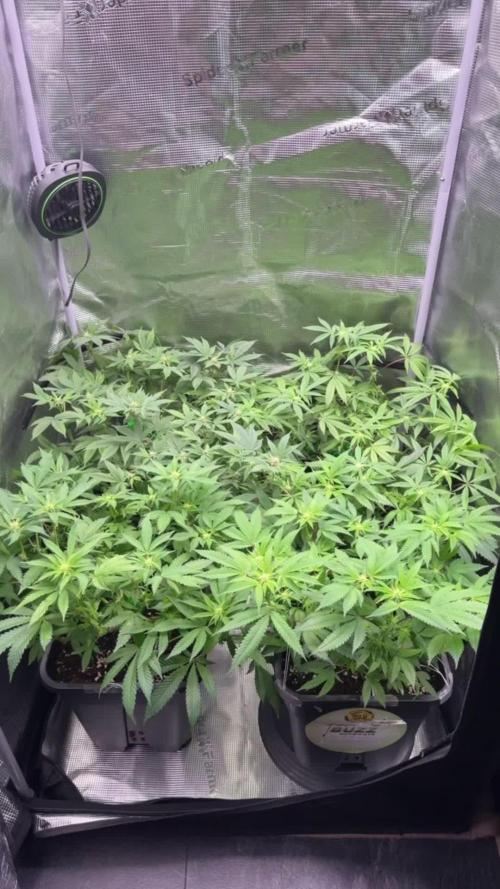
The plants hung in the grow tent with the exhaust fan running low for 10 days with an RH between 45-50%.
80 grams at trim from 3 Blueberry Autos.
For a first time grower, I tried to let the plants do their own thing mostly, aside from some lite defoliation and tucking. In doing this I see ways I can improve.
After curing for 10 days, first sample was not disappointing. (I intend to cure it at least 1-2 months.)
Sweet berry aroma when chopping up the bud. Smooth burn with white ash. Can get a hint of berry flavor in the smoke however it also is not ready yet. But I can almost predict the possible flavors after curing.
I believe a strain like Blueberry benefits from longer cures of a few months or more. I will attempt to give it as long as possible.
Overall impressed with the grow and look forward to the final smoke. Ready to apply what I've learned and improve on my next grow.




Likes
3
Share

@Smev1337
Follow
This week is all good and stable 😄 both ladys are growing good and having a healthy canopy also huge leafes! 😝 this will be some fun later with those plants 😉 happy growing all 💚✌️

Likes
42
Share


@Theia
Follow
Sad news. Due to no fault but my own the sherberts were subjected to some very badly managed environmental factors.
I have been busy building our new grow space and was not checking the plants at the back of the space. The 2 sherberts were there at the back and the RH went on a roller coaster over 4 days with temps swinging massively also due to an unmanaged dehumidifier.. the end result was both sherberts stressed out and grew some pollen sacs and I did not see so the burst and pollinated my entire flower room.
Gutted. But I will push through the last few weeks of flower with all the current grows and see what we get.
I had to chop alot of lower bud. Sacs had burst so I just did a very have clear.
Have I mentioned I'm gutted. And this is not a reflection of weedseedsexpress genetics. I have looked at the data logs for last 9 days and it's so up and down with rh and temp it's no wonder they stressed. Next round less plants and I have to stop with the clones.. no room.
Thanks for looking.
Stay safe😷
Happy grows.🌱🌱

Processing
Likes
5
Share


@DodgyOG
Follow
Growing tall. Kuchi is growing half day indoor and half day outdoor. check out the micro-topping slowmo!😵

Likes
2
Share


@C_More_Budz
Follow
Things are goin on as they should the girls are getting more bushy than tall which is what I wanted but everything is on cruise control. Only watering when soil is dry and I’m about to start giving them silica on a routine basis in low doses just for added nutrient uptake. Enjoy the pics and video and I will upload to YouTube once I’m done editing video. Any suggestions are greatly appreciated thanks and happy growings

Likes
28
Share


@TrickzGrowz
Follow
Bis jetzt ist Sie die mit den dicksten und am meisten festen Buds. Bin gespannt was da noch für Prügel dran wachsen! 😆😅 Mittlerweile riecht Sie auch nicht mehr so stark nach Erde.

Likes
25
Share


@Ultraviolet
Follow
ANTHOCYANIN production is primarily controlled by the Cryptochrome (CR1) Photoreceptor ( !! UV and Blue Spectrums are primary drivers in the production of the pigment that replaces chlorophyll, isn't that awesome!
1. Diverse photoreceptors in plants
Many civilizations, including the sun god of ancient Egypt, thought that the blessings of sunlight were the source of life. In fact, the survival of all life, including humans, is supported by the photosynthesis of plants that capture solar energy. Plants that perform photosynthesis have no means of transportation except for some algae. Therefore, it is necessary to monitor various changes in the external environment and respond appropriately to the place to survive. Among various environmental information, light is especially important information for plants that perform photosynthesis.
In the process of evolution, plants acquired phytochrome, which mainly receives light in the red light region, and multiple blue light receptors, including his hytropin and phototropin, in order to sense the light environment. .. In addition to these, an ultraviolet light receptor named UVR8 was recently discovered. The latest image of the molecular structure and function of these various plant photoreceptors (Fig. 1), focusing on phytochrome and phototropin.
Figure 1
Ultraviolet-visible absorption spectra of phytochrome, cryptochrome, phototropin, and UVR8. The dashed line represents each bioactive absorption spectrum.
2. Phytochrome; red-far red photoreversible molecular switch
What is phytochrome?
Phytochrome is a photochromic photoreceptor, and has two absorption types, a red light absorption type Pr (absorption maximum wavelength of about 665 nm) and a far-red light absorption type Pfr (730 nm). Reversible light conversion between the two by red light and far-red light, respectively(Fig. 1A, solid line and broken line). In general, Pfr is the active form that causes a physiological response. With some exceptions, phytochrome can be said to function as a photoreversible molecular switch. The background of the discovery is as follows. There are some types of plants that require light for germination (light seed germination). From that study, it was found that germination was induced by red light, the effect was inhibited by subsequent far-red light irradiation, and this could be repeated, and the existence of photoreceptors that reversibly photoconvert was predicted. In 1959, its existence was confirmed by the absorption spectrum measurement of the yellow sprout tissue, and it was named phytochrome. Why does the plant have a sensor to distinguish between such red light and far-red light? There is no big difference between the red and far-red light regions in the open-field spectrum of sunlight, but the proportion of red light is greatly reduced due to the absorption of chloroplasts in the shade of plants. Similar changes in light quality occur in the evening sunlight. Plants perceive this difference in light quality as the ratio of Pr and Pfr, recognize the light environment, and respond to it.
Subsequent studies have revealed that it is responsible for various photomorphogenic reactions such as photoperiodic flowering induction, shade repellent, and deyellowing (greening). Furthermore, with the introduction of the model plant Arabidopsis thaliana (At) and the development of molecular biological analysis methods, research has progressed dramatically, and his five types of phytochromes (phyA-E) are present in Arabidopsis thaliana. all right. With the progress of the genome project, Fi’s tochrome-like photoreceptors were found in cyanobacteria, a photosynthetic prokaryotes other than plants. Furthermore, in non-photosynthetic bacteria, a homologue molecule called bacteriophytochrome photoreceptor (BphP) was found in Pseudomonas aeruginosa (Pa) and radiation-resistant bacteria (Deinococcus radiodurans, Dr).
Domain structure of phytochrome molecule
Phytochrome molecule can be roughly divided into N-terminal side and C-terminal side region. PAS (Per / Arndt / Sim: blue), GAF (cGMP phosphodiesterase / adenylyl cyclase / FhlA: green), PHY (phyto-chrome: purple) 3 in the N-terminal region of plant phytochrome (Fig. 2A) There are two domains and an N-terminal extension region (NTE: dark blue), and phytochromobilin (PΦB), which is one of the ring-opening tetrapyrroles, is thioether-bonded to the system stored in GAF as a chromophore. ing. PAS is a domain involved in the interaction between signal transduction-related proteins, and PHY is a phytochrome-specific domain. There are two PASs and her histidine kinase-related (HKR) domain (red) in the C-terminal region, but the histidine essential for kinase activity is not conserved.
3. Phototropin; photosynthetic efficiency optimized blue light receptor
What is phototropin?
Charles Darwin, who is famous for his theory of evolution, wrote in his book “The power of move-ment in plants” published in 1882 that plants bend toward blue light. Approximately 100 years later, the protein nph1 (nonphoto-tropic hypocotyl 1) encoded by one of the causative genes of Arabidopsis mutants causing phototropic abnormalities was identified as a blue photoreceptor. Later, another isotype npl1 was found and renamed phototropin 1 (phot1) and 2 (phot2), respectively. In addition to phototropism, phototropin is damaged by chloroplast photolocalization (chloroplasts move through the epidermal cells of the leaves and gather on the cell surface under appropriate light intensity for photosynthesis. As a photoreceptor for reactions such as escaping to the side of cells under dangerous strong light) and stomata (reactions that open stomata to optimize the uptake of carbon dioxide, which is the rate-determining process of photosynthetic reactions). It became clear that it worked. In this way, phototropin can be said to be a blue light receptor responsible for optimizing photosynthetic efficiency.
Domain structure and LOV photoreaction of phototropin molecule
Phototropin molecule has two photoreceptive domains (LOV1 and LOV2) called LOV (Light-Oxygen-Voltage sensing) on the N-terminal side, and serine / on the C-terminal side. It is a protein kinase that forms threonine kinase (STK) (Fig. 4Aa) and whose activity is regulated by light. LOV is one molecule as a chromophore, he binds FMN (flavin mononucleotide) non-covalently. The LOV forms an α/βfold, and the FMN is located on a β-sheet consisting of five antiparallel β-strands (Fig. 4B). The FMN in the ground state LOV shows the absorption spectrum of a typical oxidized flavin protein with a triplet oscillation structure and an absorption maximum wavelength of 450 nm, and is called D450 (Fig. 1C and Fig. 4E). After being excited to the singlet excited state by blue light, the FMN shifts to the triplet excited state (L660t *) due to intersystem crossing, and then the C4 (Fig. 4C) of the isoaroxazine ring of the FMN is conserved in the vicinity. It forms a transient accretionary prism with the tain (red part in Fig. 4B Eα) (S390I). When this cysteine is replaced with alanine (C / A substitution), the addition reaction does not occur. The effect of adduct formation propagates to the protein moiety, causing kinase activation (S390II). After that, the formed cysteine-flavin adduct spontaneously dissociates and returns to the original D450 (Fig. 4E, dark regression reaction).
Phototropin kinase activity control mechanism by LOV2
Why does phototropin have two LOVs? Atphot1 was found as a protein that is rapidly autophosphorylated when irradiated with blue light.
The effect of the above C / A substitution on this self-phosphorylation reaction and phototropism was investigated, and LOV2 is the main photomolecular switch in both self-phosphorylation and phototropism. It turns out that it functions as. After that, from experiments using artificial substrates, STK has a constitutive activity, LOV2 functions as an inhibitory domain of this activity, and the inhibition is eliminated by photoreaction, while LOV1 is kinase light. It was shown to modify the photosensitivity of the activation reaction. In addition to this, LOV1 was found to act as a dimerization site from the crystal structure and his SAXS. What kind of molecular mechanism does LOV2 use to photoregulate kinase activity? The following two modules play important roles in this intramolecular signal transduction.
Figure 4
(A) Domain structure of LOV photoreceptors. a: Phototropin b: Neochrome c: FKF1 family protein d: Aureochrome (B) Crystal structure of auto barley phot1 LOV2. (C) Structure of FMN isoaroxazine ring. (D) Schematic diagram of the functional domain and module of Arabidopsis thaliana phot1. L, A’α, and Jα represent linker, A’α helix, and Jα helix, respectively. (E) LOV photoreaction. (F) Molecular structure model (mesh) of the LOV2-STK sample (black line) containing A’α of phot2 obtained based on SAXS under dark (top) and under bright (bottom). The yellow, red, and green space-filled models represent the crystal structures of LOV2-Jα, protein kinase A N-lobe, and C-robe, respectively, and black represents FMN. See the text for details.
1) Jα. LOV2 C of oat phot1-to α immediately after the terminus
Rix (Jα) is present (Fig. 4D), which interacts with the β-sheet (Fig. 4B) that forms the FMN-bound scaffold of LOV2 in the dark, but unfolds and dissociates from the β-sheet with photoreaction. It was shown by NMR that it does. According to the crystal structure of LOV2-Jα, this Jα is located on the back surface of the β sheet and mainly has a hydrophobic interaction. The formation of S390II causes twisting of the isoaroxazine ring and protonation of N5 (Fig. 4C).
As a result, the glutamine side chain present on his Iβ strand (Fig. 4B) in the β-sheet rotates to form a hydrogen bond with this protonated N5. Jα interacts with this his Iβ strand, and these changes are thought to cause the unfold-ing of Jα and dissociation from the β-sheet described above. Experiments such as amino acid substitution of Iβ strands revealed that kinases exhibit constitutive activity when this interaction is eliminated, and that Jα plays an important role in photoactivation of kinases.
2) A’α / Aβ gap.
Recently, several results have been reported showing the involvement of amino acids near the A’α helix (Fig. 4D) located upstream of the N-terminal of LOV2 in kinase photoactivation. Therefore, he investigated the role of this A’α and its neighboring amino acids in kinase photoactivation, photoreaction, and Jα structural change for Atphot1. The LOV2-STK polypeptide (Fig. 4D, underlined in black) was used as a photocontrollable kinase for kinase activity analysis. As a result, it was found that the photoactivation of the kinase was abolished when amino acid substitution was introduced into the A’α / Aβ gap between A’α and Aβ of the LOV2 core. Interestingly, he had no effect on the structural changes in Jα examined on the peptide map due to the photoreaction of LOV2 or trypsin degradation. Therefore, the A’α / Aβ gap is considered to play an important role in intramolecular signal transduction after Jα.
Structural changes detected by SAXS
Structural changes of Jα have been detected by various biophysical methods other than NMR, but structural information on samples including up to STK is reported only by his results to his SAXS. Not. The SAXS measurement of the Atphot2 LOV2-STK polypeptide showed that the radius of inertia increased from 32.4 Å to 34.8 Å, and the molecular model (Fig. 4F) obtained by the ab initio modeling software GASBOR is that of LOV2 and STK. It was shown that the N lobes and C lobes lined up in tandem, and the relative position of LOV2 with respect to STK shifted by about 13 Å under light irradiation. The difference in the molecular model between the two is considered to reflect the structural changes that occur in the Jα and A’α / Aβ gaps mentioned above.
Two phototropins with different photosensitivity
In the phototropic reaction of Arabidopsis Arabidopsis, Arabidopsis responds to a very wide range of light intensities from 10–4 to 102 μmol photon / sec / m2. At that time, phot1 functions as an optical sensor in a wide range from low light to strong light, while phot2 reacts with light stronger than 1 μmol photon / sec / m2. What is the origin of these differences? As is well known, animal photoreceptors have a high photosensitivity due to the abundance of rhodopsin and the presence of biochemical amplification mechanisms. The exact abundance of phot1 and phot2 in vivo is unknown, but interesting results have been obtained in terms of amplification.
The light intensity dependence of the photoactivation of the LOV2-STK polypeptide used in the above kinase analysis was investigated.
It was found that phot1 was about 10 times more photosensitive than phot2. On the other hand, when the photochemical reactions of both were examined, it was found that the rate of the dark return reaction of phot1 was about 10 times slower than that of phot2. This result indicates that the longer the lifetime of S390II, which is in the kinase-activated state, the higher the photosensitivity of kinase activation. This correlation was further confirmed by extending the lifespan of her S390II with amino acid substitutions. This alone cannot explain the widespread differences in photosensitivity between phot1 and phot2, but it may explain some of them. Furthermore, it is necessary to investigate in detail protein modifications such as phosphorylation and the effects of phot interacting factors on photosensitivity.
Other LOV photoreceptors Among fern plants and green algae, phytochrome ɾphotosensory module (PSM) on the N-terminal side and chimera photoreceptor with full-length phototropin on the C-terminal side, neochrome (Fig. There are types with 4Ab). It has been reported that some neochromes play a role in chloroplast photolocalization as a red light receiver. It is considered that fern plants have such a chimera photoreceptor in order to survive in a habitat such as undergrowth in a jungle where only red light reaches.
In addition to this, plants have only one LOV domain, and three proteins involved in the degradation of photomorphogenesis-related proteins, FKF1 (Flavin-binding, Kelch repeat, F-box 1, ZTL (ZEITLUPE)), LKP2 ( There are LOV Kelch Protein2) (Fig. 4Ac) and aureochrome (Fig. 4Ad), which has a bZip domain on the N-terminal side of LOV and functions as a gene transcription factor.
4. Cryptochrome and UVR8
Cryptochrome is one of the blue photoreceptors and forms a superfamily with the DNA photoreceptor photolyase. It has FAD (flavin adenine dinucle-otide) as a chromophore and tetrahydrofolic acid, which is a condensing pigment. The ground state of FAD is considered to be the oxidized type, and the radical type (broken line in Fig. 1B) generated by blue light irradiation is considered to be the signaling state. The radical type also absorbs in the green to orange light region, and may widen the wavelength region of the plant morphogenesis reaction spectrum. Cryptochrome uses blue light to control physiological functions similar to phytochrome.
It was identified as a photoreceptor from one of the causative genes of UVR8 Arabidopsis thaliana, and the chromophore is absorbed in the UVB region by a Trp triad consisting of three tryptophans (Fig. 1D). It is involved in the biosynthesis of flavonoids and anthocyanins that function as UV scavengers in plants.
Conclusion
It is thought that plants have acquired various photoreceptors necessary for their survival during a long evolutionary process. The photoreceptors that cover the existing far-red light to UVB mentioned here are considered to be some of them. More and more diverse photoreceptor genes are conserved in cyanobacteria and marine plankton. By examining these, it is thought that the understanding of plant photoreceptors will be further deepened.

Likes
42
Share


@FlorChaquena
Follow
Semana 10 - desde 27/12 hasta 03/01
*Luna Nueva el 02/01*
27/12: hoy realicé aplicación foliar Jabón Potásico. 1L con dos tapitas de producto.
28/12: hoy aplique Top Barrier. 10L de agua con 5ml de producto. Encontré muchas chinches chicas, se nota que salieron del huevo hace poco tiempo, máximo 2 o 3 días. Según me dijo un amigo Top Barrier ayuda mucho al transporte de nutrientes dentro de la planta… veremos que sucede ya que el 30/12 debo fertilizar fuerte con Top Veg y Green Explosión.
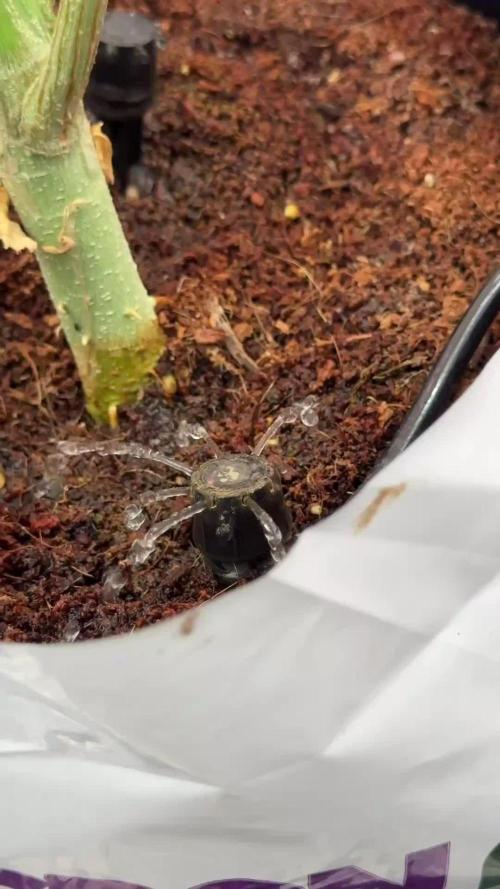
30/12: hoy tocó fertilizar con Top Veg y Green Explosión. 2ml+1ml x 1L de agua. En total apliqué 17lts de agua con producto y 5 litros de agua sin producto. El fertilizante lo apliqué con un riego por goteo improvisado; leí en internet que con la manguera para suero hospitalario se puede improvisar algo útil. No hay rastros de plagas por el momento. También ajusté los hilos de varias ramas. Ya que es mi primera vez cultivando una planta en suelo, me surgen dudas, hasta cuando debo seguir atándola? Es conveniente cortar en esta luna nueva los brotes internos mas cercanos al tallo?
01/01/22: hoy es la noche previa a la luna nueva. A las 18.30hs regué sólo con agua, directo desde el grifo. Regué el suelo y las hojas. Increíble lo vigorosa que se la veía después del riego.


Likes
3
Share


@Burndylugs
Follow
Day 49. Selective defoliation couple leaves here and there. Only plain water from here on. Maybe 1-2 weeks left. Still Throwing out white pistols


Likes
19
Share


@CultoCannabiss
Follow
En esta primera semana mantuve las luces muy alejadas lo que provocó un estiramiento prematuro lo que a mi gusto no me gusta mucho a sí que para la siguiente prepararé un transplante.
In the very first week I kept the light so far so the it create a early grow on the structure but for me its not so good so I prepare a transplant for The next week.


Likes
12
Share


@UK420hydrogrow
Follow
Ok so had a lot to do this week harvested the large critcial mass to which I got 6 n half 0z from one plant so happy with that i also had a few issues with enviroment mainting right temp and humidty as been a lil issue but think all is well now so there all now on the 7 week of flower think I may push these as far as I can to maximise yield potential overall a real good plant to grow had very few issues from start to finish a top strain a deffo keeper for the garden of mothers in my opinion

Likes
4
Share

@DogDoctorOfficial
Follow
💙 Project Blue Tent – Week 10
🥒 Pickle Lemon Haze F1 – Pheno B
🌸 The Week Where We Let Her Shine
Hello everyone, and welcome back to another chapter of Project Blue Tent! 💙🌱
And this week...
I'm going to start by saying something that has become increasingly obvious while watching this project develop:
These girls are incredible.
😂💙
Not because they're doing something completely different from each other.
Actually...
quite the opposite.
They're becoming remarkably similar.
Same room.
Same environment.
Same lighting.
Same irrigation.
Same nutrition.
Same training philosophy.
Same major interventions.
And now, as we reach this stage of flowering...
they almost look like copies of each other.
And that is fascinating.
Today we're putting the spotlight back on Pickle Lemon Haze F1 – Pheno B.
And honestly?
She's looking absolutely beautiful.
🌿 WEEK TEN – NOTHING TO FIX
After the amount of work we did during the previous weeks, this week was refreshingly simple.
We didn't perform another major defoliation.
We didn't change the structure.
We didn't move branches around.
We didn't install another SCROG.
We didn't start chasing the canopy.
We didn't try to force anything.
We simply watched.
And that's because there really isn't anything screaming at us for attention.
Pickle Lemon Haze Pheno B is approximately 145 cm tall.
She's healthy.
She's vigorous.
She's flowering.
She's supported.
And she's settling beautifully into the structure we created for her.
Sometimes...
doing nothing is actually doing something.
😂🌱
🌸 LOOKING AT THE RESULTS OF THE PREVIOUS WEEKS
This is the part of the project I find particularly satisfying.
During the previous weeks, we were constantly making decisions.
The girls stretched.
We ran out of vertical space.
The LEDs needed to be raised.
The carbon filter and extractor were moved outside the tent.
The canopy became extremely dense.
We performed a deep defoliation.
We installed the second SCROG.
We added additional airflow underneath the canopy.
We adjusted the nutrition.
There was a lot happening.
But now?
We get to watch those decisions play out.
And Pickle Lemon Haze Pheno B is giving us a very nice answer.
She's standing there with a beautifully organized flowering structure.
The branches are visible.
The canopy is open.
The flowers are developing.
The support system is in place.
The airflow is moving.
And the plant looks comfortable.
That's what we wanted.
🌿 THE DEFOILIATION IS NOW IN THE REAR-VIEW MIRROR
One of the biggest things I'm watching this week is how beautifully the plant has settled after the heavy defoliation.
At the time, the room looked completely different.
We had an enormous amount of vegetative material.
The plants had stretched aggressively.
The interior of the canopy was extremely dense.
So we opened everything up.
Not because leaves are bad.
Quite the opposite.
Leaves are essential.
But the structure had become so crowded that we needed to manage the density and make the flowering architecture more functional.
And now...
we're seeing the result.
The plant has had time to recover.
The remaining foliage is doing its job.
The flowering sites are much easier to see.
Air can move through the structure.
And the entire plant feels more organized.
That's the beautiful part.
The intervention is finished.
Now the plant gets to tell us what it thought about it.
And so far?
I like the answer.
💡 LUMIFLORA – LIGHTING THE LOWER CANOPY
The biggest new addition to the setup is still the LumiFlora under-canopy light.
We're now running the **LumiFlora 150W full-spectrum fixture**, with additional emphasis toward the red portion of the spectrum.
And with these girls becoming this large, it makes perfect sense to explore supplemental lighting underneath the canopy.
The main Phytonaut LEDs continue providing the primary light from above.
But with a plant this tall and this developed, the lower portions naturally receive less direct light.
So instead of constantly removing more foliage to try to expose every single flowering site to the overhead fixtures, we're taking another approach.
We're bringing supplemental light to the lower canopy.
The LumiFlora is there to complement the overhead lighting.
Not replace it.
Not compete with it.
Simply add another layer of light where the structure naturally creates more shade.
And now...
we watch.
🌸
I'm particularly interested in seeing how the lower flowering areas develop over the coming weeks.
That's one of the reasons I love documenting these experiments.
We make a change.
Then we wait for the plant to answer.
🕸️ THE SECOND SCROG IS RIGHT WHERE WE WANT IT
The second SCROG remains in place and, just like the rest of the setup, we're not touching it unnecessarily.
It has already done what we wanted.
The first SCROG helped us organize the vegetative canopy.
The second SCROG is now there to provide additional support as flowering continues.
With Pheno B reaching approximately 145 cm, she's built a substantial framework.
As those flowers continue gaining weight, having that extra support available becomes increasingly useful.
We're not trying to reshape her anymore.
We're not trying to force branches into new positions.
The structure is established.
Now we support it.
And then we let her do her thing.
🥒💙
🌬️ AIRFLOW – KEEPING EVERYTHING MOVING
The airflow system also remains unchanged.
We have airflow working through different levels of the canopy, with the additional Zamnesia clip fan underneath helping move air through the lower portion of the plant.
That becomes particularly interesting now that the LumiFlora has been introduced.
We're adding light underneath the canopy, so naturally we want to make sure the lower portion of the room continues to have good air movement as well.
The goal isn't to create a hurricane.
😂
It's simply to avoid stagnant pockets of air inside a very mature flowering structure.
The canopy is open.
The air is moving.
The extraction system is outside the tent.
And the room feels much more balanced than it did a few weeks ago.
NUTRITION – CONSISTENCY IS KING
The nutrition remains exactly where the plants are telling us they want it.
We're continuing with the PLAGRON Hydro program:
PLAGRON Hydro A — 2.2 ml/L
PLAGRON Hydro B — 2.2 ml/L
🌱 PLAGRON Hydro Roots — 1 ml/L
🌸 PLAGRON Power Buds — 1 ml/L
pH adjusted as required
Current EC is approximately 2.49 mS/cm.
And again...
we aren't changing things just for the sake of changing them.
The plants are happy.
They're consuming.
They're flowering.
They're maintaining beautiful foliage.
So we're staying consistent.
This is something I've always enjoyed about working with plants:
They tell you when they're comfortable.
You just have to pay attention.
Don't feed a number.
Watch the plant.
🌸💙
🥒 PHENO B – LOOKING MORE AND MORE LIKE HER SISTERS
Here's the really fascinating part.
Pickle Lemon Haze Pheno B is beginning to look remarkably similar to the other girls in the tent.
And that's something I find genuinely interesting.
These are individual plants.
They're being documented separately.
We're watching their individual personalities develop.
And yet...
under the exact same environmental conditions...
they're showing an incredible amount of uniformity.
The same general height.
The same aggressive vegetative development.
The same flowering transition.
The same response to the structural work.
The same need for support.
The same beautiful recovery after defoliation.
It's almost like looking at several versions of the same plant.
😂💙
Of course, there will still be phenotype differences.
That's what we're here to discover.
But right now?
The uniformity is impressive.
And that's making me even more curious about what happens as they mature.
🔬 SAME ENVIRONMENT – LETTING GENETICS SPEAK
This is exactly why Project Blue Tent is so interesting to me.
We're keeping so many variables consistent.
Same tent.
Same lighting.
Same irrigation.
Same nutrition.
Same environmental conditions.
Same general training.
And then we watch.
The more consistent the environment remains, the more interesting the individual differences become.
Or, in this case...
the lack of obvious differences.
😂
The Pickle Lemon Haze F1 girls are behaving remarkably similarly.
And that's giving us a very interesting picture of how these genetics are expressing themselves in this particular environment.
But we're not jumping to conclusions yet.
We're still early enough in the flowering development that the final differences may become much more obvious later.
So...
we watch.
🌿 THE PLANT DOESN'T NEED US TO CONSTANTLY TOUCH IT
One of the biggest lessons from this stage of the grow is knowing when to step back.
There is always something a grower can do.
You can remove another leaf.
Move another branch.
Change another setting.
Adjust another number.
Add another product.
But that doesn't mean you should.
😂
At this point, Pheno B looks like she doesn't need another intervention.
She needs stability.
She needs time.
She needs light.
She needs nutrition.
She needs airflow.
And then...
she needs to be left alone to do what plants do.
Grow.
Flower.
Develop.
Finish.
And that's exactly what we're doing.
💡 FROM OVERHEAD LIGHT TO A COMPLETE LIGHTING ENVIRONMENT
The introduction of LumiFlora is also changing how I'm thinking about the lighting inside this tent.
Previously, the main story was always the overhead LEDs.
How high are they?
How far from the canopy?
How much stretch?
How much vertical room?
Now we've added another dimension.
We're thinking about the plant in three dimensions.
Light from above.
Supplemental light underneath.
A canopy occupying the space between.
And that's particularly interesting with plants that have become this large.
The LumiFlora 150W full-spectrum fixture gives us another tool to explore how supplemental lower-canopy lighting can fit into the overall system.
We're not expecting miracles.
We're not claiming it will automatically transform the plants.
We're simply giving the lower canopy another source of light...
and watching.
That's what this whole project is about.
Observation.
Experimentation.
Documentation.
🌸 CURRENT GROW CONDITIONS
🌸 Flowering: Week 10
📏 Height: approximately 145 cm
💡 Light schedule: 12/12
☀️ Day temperature: 27°C
🌙 Night temperature: 27°C
💧 Relative humidity: 61%
⚗️ pH: 6.0
⚡ EC: approximately 2.49 mS/cm
🌡️ Solution temperature: 24°C
🌱 Substrate temperature: 24°C
🌬️ CO₂: approximately 666 ppm
💦 Watering: approximately 1.6 L per plant / 24h
? Pot size: 8 L
💡 LumiFlora Under-Canopy: 150W Full Spectrum
The room is stable.
The plants are stable.
And that's exactly what we want right now.
🔭 WHAT I'M WATCHING NOW
At this point, the questions have changed.
I'm no longer asking:
"How do we control the stretch?"
We've already dealt with that.
I'm no longer asking:
"How do we fit them into the tent?"
We've created the space.
I'm no longer asking:
"How do we open the canopy?"
We've already done that.
Now I'm asking:
How quickly will the flowers develop?
How will the lower canopy respond to the LumiFlora?
How will the second SCROG perform as the flowers gain weight?
Will the Pickle Lemon Haze phenotypes continue looking this similar?
And finally...
what are these girls going to look like when maturity really starts showing?
Those are much more exciting questions.
😂💙
🌸 LET THEM WORK
This week is really about one thing:
Let them work.
We've already spent weeks building these plants.
We've created the structure.
We've managed the canopy.
We've opened the room.
We've improved airflow.
We've raised the lights.
We've added support.
We've adjusted nutrition.
We've now introduced supplemental under-canopy lighting.
There isn't much more I want to manipulate right now.
I want to see what the plants do with everything we've given them.
And Pheno B is making that decision very easy.
She's looking fantastic.
🥒💙
🌸 FINAL THOUGHTS – THE QUIET WEEKS ARE SOMETIMES THE BEST ONES
This week might not have been dramatic.
There was no major training session.
No emergency.
No broken branch.
No big room rearrangement.
No massive intervention.
And honestly?
That's wonderful.
😂
Because sometimes the best grow updates are the ones where you can simply stand back and say:
"Look at her."
And that's exactly how I feel looking at Pickle Lemon Haze Pheno B.
She's standing there at approximately 145 cm.
She's healthy.
She's vigorous.
She's flowering.
The canopy is open.
The branches are supported.
The airflow is moving.
The nutrition is consistent.
The overhead lighting is doing its job.
And now the LumiFlora is giving the lower canopy another source of full-spectrum light.
Everything we've done over the previous weeks is now becoming visible.
This is the payoff phase.
Not the harvest yet.
Not the finish line.
But the point where all those earlier decisions start becoming the plant we're looking at today.
And that's incredibly satisfying.
💙🌸🥒
The most fascinating part?
She looks remarkably similar to her sisters.
Four girls.
One room.
Same environment.
And somehow...
they're developing like they're reading the same instruction manual.
😂
Maybe that's the beauty of these F1 genetics.
Maybe it's simply the environment.
Maybe we'll see more differences later.
That's exactly why we're documenting everything.
We don't need to decide the story today.
The plants will tell us.
And Pickle Lemon Haze Pheno B?
She's telling us she's very happy.
So we're listening.
We're keeping everything stable.
We're giving her the light, nutrition, support and airflow she needs.
And we're stepping back.
Now let's see what the future has waiting for this beautiful girl.
🌸🥒💙
🙏 A HUGE THANK YOU
A huge thank you once again to Zamnesia for making Project Blue Tent possible and for giving us the opportunity to explore these beautiful Pickle Lemon Haze F1 genetics phenotype by phenotype.
Thank you to PLAGRON for the Hydro nutrient line supporting these vigorous girls throughout this incredible flowering journey.
A massive thank you to Zamnesia for the Phytonaut LED lighting, curved scissors and clip fans that have become such important parts of this project.
Thank you to Mars Hydro for the automatic drip irrigation and drainage system that keeps these girls consistently supplied throughout their very thirsty journey.
And a special thank you to LumiFlora for the 150W full-spectrum under-canopy light that we're now introducing into the setup to explore supplemental lighting underneath this beautiful flowering canopy.
And of course, thank you to GrowDiaries for giving us the platform to document this entire adventure.
Most importantly...
thank you to everyone following Project Blue Tent. 💙
This week was quiet.
But sometimes quiet is exactly what you want.
The plants are doing beautifully.
The room is stable.
The structure is established.
The support is ready.
The lighting is working from above and below.
The nutrition is consistent.
And now...
we wait.
Four plants.
One environment.
Different phenotypes.
And an increasingly fascinating amount of similarity between them.
😂💙
Let's see what the future has in store.
For now, Pickle Lemon Haze Pheno B is exactly where I want her to be.
Healthy.
Happy.
Supported.
Flowering.
And shining.
🥒🌸💙
Until next week...
Less intervention.
More observation.
More flowers.
And hopefully...
a little more of that beautiful Pickle Lemon Haze F1 magic.
Growers Love, happy growing, and take care everyone! 🌱💙


Likes
Comments
Share
@PapaTerps
Follow
Wizard Fuel - Wizard Trees
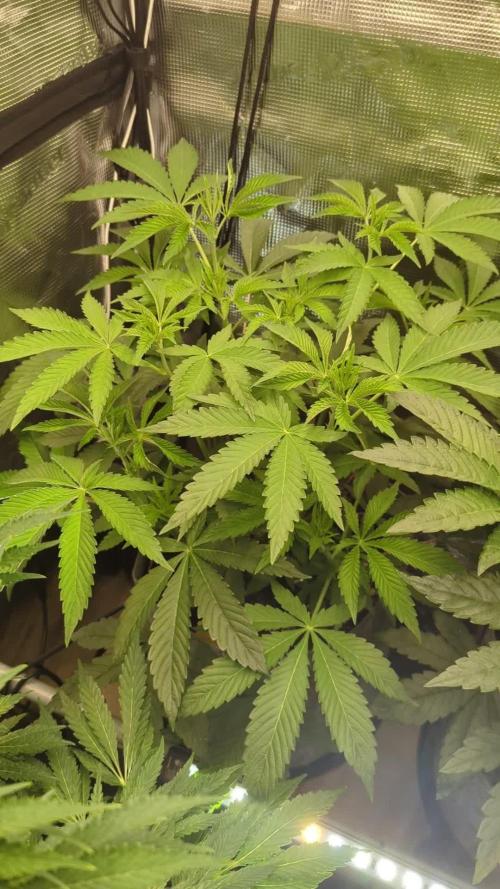
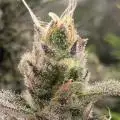
Day 48 - Watered with 2L of RO tap water with nutrients mixed individually and in order, then finally pH'd to 6.3, watered over three phases to allow the water to penetrate the soil slowly.
She is still in her stretching phase, so I haven't done anything with her just yet. The topping I performed on her a week or so before I put her into flower, has allowed her to grow a nice even canopy with six distinct stems. When she finishes her stretch, I will lollipop her and defoliate to improve both light penetration and airflow 👍🏻

Likes
9
Share


@Darth_Cha
Follow
Day 15 (7/1) - I missed day 14 but here are some hopefully good pictures of Day 15. First day of week 3 since sprout! I decided to FIM the CP just because it was growing so much taller than the XLK. I added a picture if the result. The FIMing actually took place on Day 14 so these photos are 1 day after.
The XLK is staying low and getting a little bushy under rather but it’s still thriving so far. I still have not fed the plants anything other water with calmag added then PHed out so far. I think this one is going to be really compact. I don’t want to star real LST on it yet due to its low height. It’s about 4-5 inches.
CP is thriving the day after its FIM session. The growth looks good to me..?? I don’t honestly know or have any experience to go off of. It grew a little taller and I was able to adjust the tie on it so more underleaf was exposed. This all took place on day 14. These pictures are the result. I like how much new green I see under after just one night.
Day 17 (7/3) - Provided a few updated pictures. I won’t be able to provide another update until Sunday night so I will be posting another video at that time. FIMing has produced a lot of new growth in the lower nodes as I read it should do. I’m glad that it seems like the process went well. We will see how much they’ve grown on day 19.
Day 20 (7/6) - I was away from the grow for a few days longer than I thought I would be but they still seem to be doing their thing. The soil was dry but that’s only about two or three days worth of drying out which is completely fine and the humidity was a little low but when I got back I refillEd the humidifier and everything seems to be going smoothly. Tomorrow will be the last day of week three and then after week four. I hope to see some height from these cause the tallest is still at about 6 inches due to LST.

Likes
16
Share


@Naujas
Follow
77 dienos!!! Mergaitė atrodo labai gerai:) 1 dieną daug lijo, o visas kitas dienas daug saulės ir daug šilumos +30–35 °C. Mergaitė kasdien išgeria 2 litrus 6,3 % vandens. Su @Plagron maistinėmis medžiagomis:) Sėkmės visiems.
