





Likes
47
Share


@GanjaReaper
Follow
Day 56:
Nothing special this week other then I found out another reason for the stretching of the plants.
They did not stretch that much as the Gorilla's but they still did some.
I don't know where i was of what i was doing but suddenly it came into my mind.
Well normaly i use seperate veg and flower basic nutrients. This time, I used a new basic nutrient i never used before.
This basic nutrient has veg and flower nutrients for the whole cycle. So the growth of the plants where stimulated to longer.
This is fun when you grow huge plants for a long time, not if you plan to only veg for 3-4 weeks, 1-2 weeks preflower with maybe 6 to 9 weeks of flowering.

Likes
89
Share


@nonick123
Follow
Antes del resumen, decir que el controlador Tent-X de TrolMaster es una pasada. Puedo ver y controlar la VPD en tiempo real con la app de mi Smartphone
Una maravilla en esta fase de floración avanzada! 😍
_______________________________________________________________
Día 69 (25/03) Su hermana Gorilla Cookies FF muestra una ligera necrosis... me preocupa...
Día 70 (26/03) Necrosis en Gorilla Cookies muy avanzada en solo 2 días. Hablo con el gran @dogdoctorofficial y me hace ver que estoy regando mal...
He dejado que se seque demasiado el sustrato! (como en la fase vegetativa) Y la Gorilla Cookies FF al ser la planta más grande y que más agua pide, está demasiado sedienta...
Voy a modificar los patrones de riego para que el problema no persista en Gorilla Cookies FF ni aparezca en las otras plantas!
Riego 0,5 Litro H20 sin nutrientes. TDS 225 PPMs - pH 6,6
Día 71 (27/03) Riego 1,25 Litro H20 + Wholly Base 3 ml/l + Solid Green 1,75 ml/l + Early Flower 0,75 ml/l + Big Bloom 1,5 ml/l de Gen1:11
TDS 1150 PPMs - pH 6,2
Día 72 (28/03) La necrosis en Gorilla Cookies FF se ha detenido 😁 y las flores siguen creciendo
Observa alguna mancha de necrosis también en Wedding Cheesecake FF y decido a subir un poco la lámpara
Ahora el PPFD en apical es de unos 830 PPFD
Día 73 (29/03) Riego 0,5 Litro H20 sin nutrientes. TDS 225 PPMs - pH 6,6
Día 74 (30/03) Riego 1,25 Litro H20 + Wholly Base 3 ml/l + Solid Green 1,75 ml/l + Early Flower 0,75 ml/l + Big Bloom 1,5 ml/l de Gen1:11
TDS 1150 PPMs - pH 6,2
Día 75 (31/03) Detecto una ligera necrosis en Purple Lemonade FF y en Wedding Cheesecake FF.
Voy a aumentar un poco la distancia de la lámpara para tener un DLI de 37, por si fuese estrés por luz.
💦Nutrients by Gen1:11 - www.genoneeleven.com
🌱Substrate PRO-MIX HP BACILLUS + MYCORRHIZAE - www.pthorticulture.com/en/products/pro-mix-hp-biostimulant-plus-mycorrhizae
🎚️Controlled by TrolMaster TCS-1 Tent-X System Main Controller - https://www.trolmaster.com/Products/Details/TCS-1
Likes
Comments
Share

@Zengrower
Follow
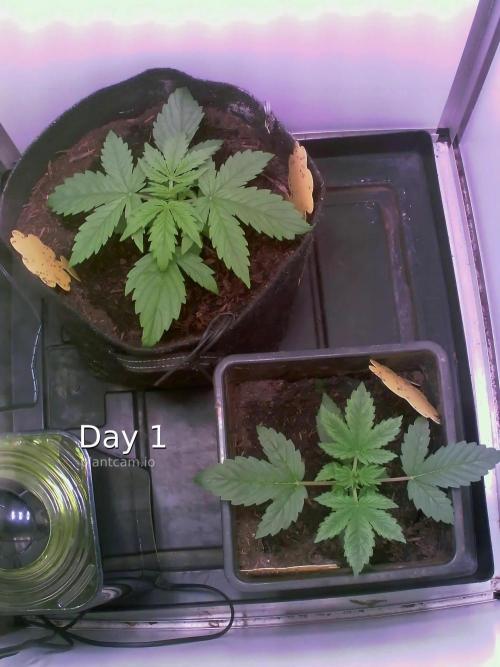
☘️ Gaining Body & First Signs of Flower ☘️
Week three marks a clear shift in development.
Both plants are really starting to gain some body now. Even the more compact, bushy pheno is beginning to stretch out slightly and find her balance. The structural differences are still there, but they’re both building a solid framework that feels strong and healthy.
I received a useful tip from the breeder this week: the plants could use a little extra nitrogen. Based on that advice, I started adding 4 ml of Plagron Alga Grow daily as a gentle boost. The response has been very noticeable. The leaf color has deepened into a rich, healthy green compared to the previous weeks — always a reassuring sign that they’re getting what they need.
The fungus gnats are almost completely gone now. The nematodes I introduced last week are clearly doing their job beneath the surface, interrupting the larvae cycle, while the remaining adults are being caught on the sticky traps. A nice example of working with biology instead of against it 😉
Another interesting development this week is the sudden growth of the side branches. They’ve really taken off and are now nearly matching — or even slightly overtaking — the main tops. No complaints there. In a G-tools cabinet with limited vertical space, strong lateral growth is actually very welcome… although the real stretch phase is likely still ahead of us.
And then, the moment every auto grower watches for…
Very subtle but unmistakable: the first early signs of flowering. Tiny pistils are beginning to appear, and preflower became visible this week. It’s still early and delicate, but the transition has officially begun.
Overall, it’s been a smooth and relatively carefree week. If everything continues like this, we should have some beautiful, clearly visible pistils to photograph next week ✌️🌿
More soon.
Likes
3
Share


@CaliJ
Follow
Day 60: cookies gelato 1: in the shape of tennis balls, and a golf ball, magnificent, 268 grams wet🇺🇸🔥. Cookies gelato 2: 197,6 grams Wet🇺🇸🔥 Cookies gelato 3: 217,7 grams wet🇺🇸🔥


Likes
Comments
Share

@Growitworldwide
Follow
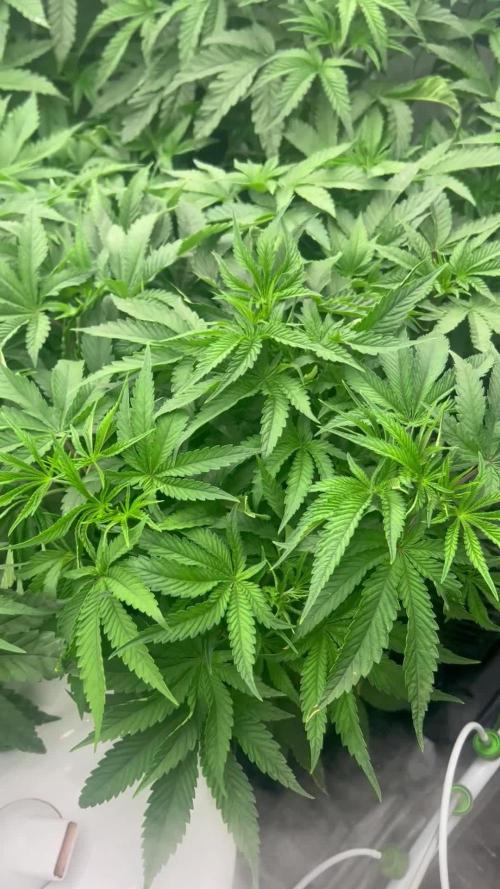
They are huge. I think I will start doing defoliation 2 times per week.
PH 5,5 - 5,7
EC 2,50 - 2,75
Likes
25
Share


@MadeInGermany
Follow
Hey guys :-)
This week the growth was going strong but nothing else great happened this week :-)
Watering was done twice, each time with 1 l (nutrients see table above).
LST will be applied and topped again next week.
have fun and stay healthy 🙏🏻💚
👇🏼👇🏼👇🏼👇🏼👇🏼👇🏼👇🏼👇🏼👇🏼👇🏼👇🏼👇🏼
You can buy this Nutrients at :
https://greenbuzzliquids.com/en/shop/
With the discount code: Made_in_Germany you get a discount of 15% on all products from an order value of 100 euros.
👇🏼👇🏼👇🏼👇🏼👇🏼👇🏼👇🏼👇🏼👇🏼👇🏼👇🏼👇🏼
You can buy this strain at :
www.Zamnesia.com
Water 💧 💧💧
Osmosis water mixed with normal water (24 hours stale that the chlorine evaporates) to 0.2 EC. Add Cal / Mag to 0.4 Ec Ph with Organic Ph - to 5.8 - 6.4
MadeInGermany

Likes
18
Share


@PEAKYPLANTERS
Follow
Hello friends!
Welcome back to the enchanted gardens of PEAKY
These sweets seem to develop differently
My God ... It looks like a meteor fell from uranium into my tent
It gives off radiation ... be careful!😎
Likes
11
Share


@Eddjack
Follow
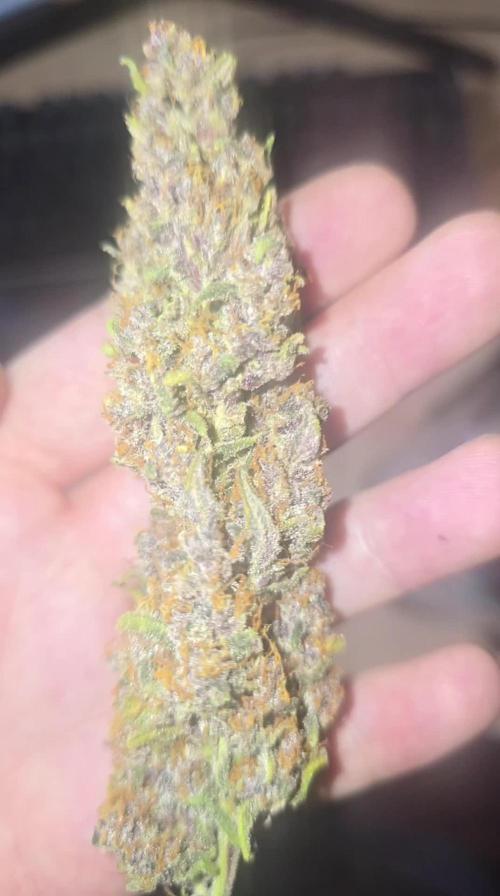
Si presenta bene veramente bene ...un po' lenta nel gonfiarsi ma promette bene. È piena di tricomi e presenta popcorn rosa e arancioni. Ora devo solo aspettare il mio nuovo giocattolo mars hydro ts 1000 sicuramente avrà una marcia in più! Alla prossima settimana
Dajeforte growers!
Likes
16
Share
Likes
10
Share

@Mo_Powers
Follow
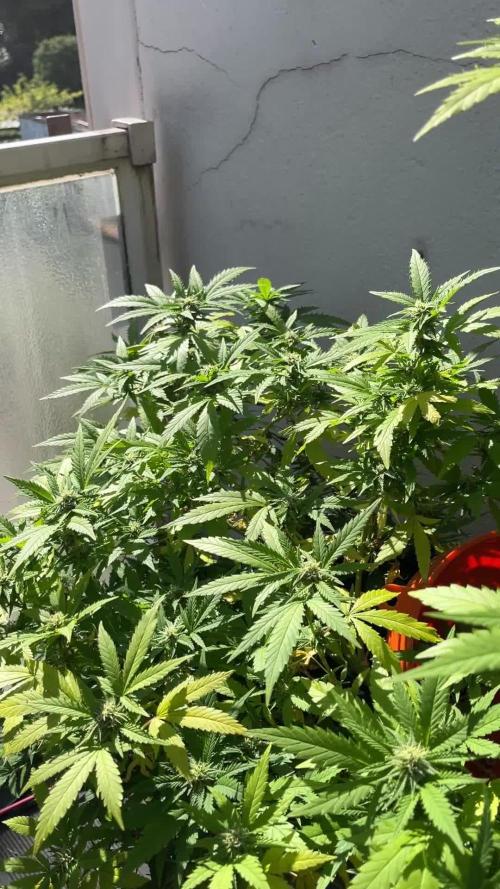
Last week was just too rainy and stormy. It was in danger of being completely lost. I harvested it now to save what I could. I can't even imagine how big the harvest would have been if I had harvested the whole plant? Definitely over 1 kg. A really great landrace.
Likes
10
Share


@SwissKush
Follow
Day 43
Alles gut! she is huge, exploded!
Day 44
2000ml of full preflowering blend, 850ppm
Day 45
Alles gut!
Day 46
2000ml of full preflowering blend, 850ppm, 200watts light
Day 47
Drinking alot, alles gut, removed Trump plant, will be installing the ScrOG net
Day 48
2000ml of full flowering blend, 1000ppm
alles gut!
Day 49
extreme explosion! The Gorilla is enormous!
really liking that 1000ppm flowering blend, it also gets same alpine stream water as Sour Jealousy
Likes
8
Share


Likes
8
Share


@Chubbs
Follow
Week 4 for these girls. They've doubled in some since last week. I took a couple of the bigger fan leafs off this week, also raised my lights up allowing some stretch. Starting to see some preflowers and pistols. So next week will be off to the flower stage.
Happy Growing.
Likes
35
Share

@nonick123
Follow
Día 66 (05/08) Cerrado por vacaciones
Día 67 (06/08) Mi amigo viene a casa a hacer un riego con 1 Litro de H2O pH 6,5
Día 68 (07/08) Cerrado por vacaciones
Día 69 (08/08) Vuelta de vacaciones! A ver como están después de 5 días sin verlas... 😱
Riego con 1 litro de H2O pH 6,5
Añado 3 cm de sustrato nuevo porque se ha compactado y se ven las raíces! 😢
Día 70 (09/08) Riego 500 ml H2O pH 6,55
Eliminación de algunas ramas bajas
Día 71 (10/08) Riego 500 ml H2O pH 6,55
Sesión de fotos semanal!
Día 72 (11/08) Riego con 1 Litro de Té Vegetativo de Lurpe Solutions. Preparación: 24 horas con bomba de aire (oxigenación) con ingredientes:
Green Sunrise 8 ml/L + Insect Frass 16 ml/L + Hummus Lombriz 8 ml/L + Melaza 1 ml/L + Kelp Hidrolizado 0,25 g/L
Aplicación foliar Kelp hidrolizado de Lurpe Solutions a 0,25 ml/l
💦Nutrients by Lurpe Solutions - www.lurpenaturalsolutions.com
🌱Substrate PRO-MIX HP BACILLUS + MYCORRHIZAE - www.pthorticulture.com/en/products/pro-mix-hp-biostimulant-plus-mycorrhizae

Processing
Likes
9
Share


@Kushizlez
Follow
Harvest:
Everything dried up to 347 grams + 96 grams of super high quality trim. Overall I am not too pleased with the smoke of the product. Although the bud size, bag appeal, smell and taste are pretty much all there, the shitty burn is a deal breaker for me and the majority of this weed is quite frankly useless. Another downside is while smoking I’ve found 4 seeds in an ounce from almost every strain. Light leaks? At least I learned a ton, including how to get super good burn for my next crop. I’m hoping that curing for a month or so will improve the burn but I wouldn’t really count on it. I have seen weed dried for 4 days with no cure and no flush smoke clean and not go out once. I have been told that the key to white ashes/clean burn is proper mineral content in the soil and there is tons of scientific studies on cigar ash going back 100 years. Plants grown in a medium with high levels of decomposing organic matter, phosphorus, magnesium, chlorine and heavy metal ratio tend to produce black/grey ash. Whereas plants grown in a medium with a higher ratio of trace minerals like calcium carbonate and potassium in the form of wood ash, rock dusts, oyster shell flour and lower levels of decomposing organic matter will produce a dense, uniform white ash that rarely goes out. But this is still all theory until I test it to confirm for myself a few times. My last few outdoor harvests did not improve with curing at all so I’m hoping this will be the missing link. Plain peat moss and coco clearly lack essential minerals that help burn. If said theory is correct I should find a synthetic nutrient line with more trace minerals. Makes me wonder if growing if rockwool/basalt rock could improve burn in a hydro setup.
I think I did a fairly decent job for my first grow. I went wrong in a million different places but I still stuck it out and got some decent herb. Things went wrong early when I got black spot mold, nitrogen/magnesium deficiencies and powdery mildew. I corrected most of it but things didn’t get really bad until mid veg when I intentionally skipped a few feedings and defoliated quite heavily stunting the plants. I also didn’t even top or start LST until the 6-9th node which was really stupid and hurt my yield. My temperatures were all over the place from the learning curve. I was severely overwatering without realizing it. 100% peat moss is a shitty medium. I also fed way too late in flower (not what caused shitty burn). I also used synthetic nutrients in soil.
Zkittlez bonsai
Yield: 1.9g
Smell: 7/10 - sweet, candy, berry, gassy, piney hints
Bag appeal: 7/10 - slightly leafy/stemy
Crystal coverage: 7.5/10 - very impressed
Ash: 6/10 - flaky, mostly white/grey
Fire holding: 4/10 - stays lit for 10-30 seconds
Smoke: 6/10 - taste is decent, needs curing
High: 6/10 - indica dom
Comment: looks nice, smells nice, tastes nice, burns like shit.
43.5/70 = 62% 👎🗑️
Black Garlic #1
Yield: 53.6
Smell: 8/10 - gassy, piney, earthy, skunky
Bag appeal: 7/10 - slightly leafy/stemy
Crystal coverage: 7.5/10 - very impressed
Ash: 8/10 - thick, uniform white ash
Fire holding: 7.510 - stays lit for 45+ sec
Smoke: 7.5/10 - taste is good until the end
High: 7/10 - sativa dom
Comment: looks nice, smells nice, tastes nice, burns great but quite leafy.
52.5/70 = 75% 👍🔥
Black Garlic #2
Yield: 42.3
Smell: 7/10 - woody, earthy, tea
Bag appeal: 6.5/10 - slightly leafy/stemy
Crystal coverage: 7/10 - impressed
Ash: 6/10 - flaky, mostly white/grey
Fire holding: 4/10 - stays lit for 10-30 seconds
Smoke: 6/10 - taste is decent, needs curing
High: 8/10 - sativa dom
Comment: looks nice, smells nice, tastes nice, burns like shit.
44.5/70 = 63% 👎🗑️
Zkittlez
Yield: 39.4
Smell: 7/10 - sweet, candy, berry, gassy, piney hints
Bag appeal: 6.5/10 - slightly leafy/stemy
Crystal coverage: 7.5/10 - very impressed
Ash: 8/10 - thick, uniform white ashes
Fire holding: 8/10 - stays lit for seconds
Smoke: 7.5/10 - taste is decent, needs curing
High: 7/10 - indica dom
Comment: looks nice, smells nice, tastes nice, burns great but smalls didn’t fill out.
51.5/70 = 73% 👍🔥
Blackberry Breath #1
Yield: 57.5
Smell: 9/10 - sweet, grape, berry, gassy, earthy, hashy
Bag appeal: 8.5/10 - dense, sparkly buds
Crystal coverage: 9/10 - super impressed
Ash: 5/10 - flaky, mostly grey/blackish
Fire holding: 4/10 - stays lit for 10-30 seconds
Smoke: 5/10 - tastes like chalky shit
High: 6/10 - indica dom
Comment: looks amazing, smells amazing, tastes like shit, burns like shit.
46.5/70 = 66% 👎🗑️
Blackberry Breath #2
Yield: 76.1g
Smell: 6/10 - musky, tea, berry, herbal
Bag appeal: 8/10 - slightly leafy/stemy
Crystal coverage: 7.5/10 - very impressed
Ash: 5/10 - flaky, mostly grey/black
Fire holding: 4/10 - stays lit for 10-30 seconds
Smoke: 5/10 - taste is shit
High: 6/10 - indica dom
Comment: looks nice, smells shitty, tastes shitty, burns like shit.
41.5/70 = 59% 👎🗑️
Slurricane #4
Yield: 34.5g
Smell: 8.5/10 - gassy, deep piney, fuel, earthy,
Bag appeal: 8.510 - slightly leafy/stemy
Crystal coverage: 7.510 - impressed
Ash: 6/10 - flaky, mostly white/grey
Fire holding: 4/10 - stays lit for 10-30 seconds
Smoke: 6/10 - taste is decent
High: 6/10 - indica dom
Comment: looks amazing, smells amazing, tastes nice, burns like shit.
46.5/70 = 66% 👎🗑️
Badazz OG Cheese
Yield: 43.5g
Smell: 6.5/10 - musty, woody, cheesy, piney hints
Bag appeal: 6/10 - slightly leafy/stemy
Crystal coverage: 6/10 - very impressed
Ash: 5/10 - flaky, mostly white/grey
Fire holding: 4/10 - stays lit for 10-30 seconds
Smoke: 6/10 - taste is decent
High: 6/10 - sativa dom
Comment: looks like shit, smells decent, tastes decent, burns like shit.
39.5/70 = 56% 👎🗑️

Likes
13
Share


@Robeeriegenetics
Follow
Week 15 going good…not bad …switching to bloom nutrient… and did a ton of defoliating to loosen up the canopy hopefully they won’t grow too much when I flip them to 1212 in a week I’ve seen these plants three times the size. Hopefully I can stunt that growth during the initial stretch by switching to Bloom nutrients early. Defoliating a week before flipping. I may decide to top them more but I probably won Do I have to type here for it to be green this is crazy. I’ve done more than a paragraph now at this point it’s kind of weird that it’s not green be green what the hell can it still not be green


Likes
5
Share

@Abendkraut
Follow
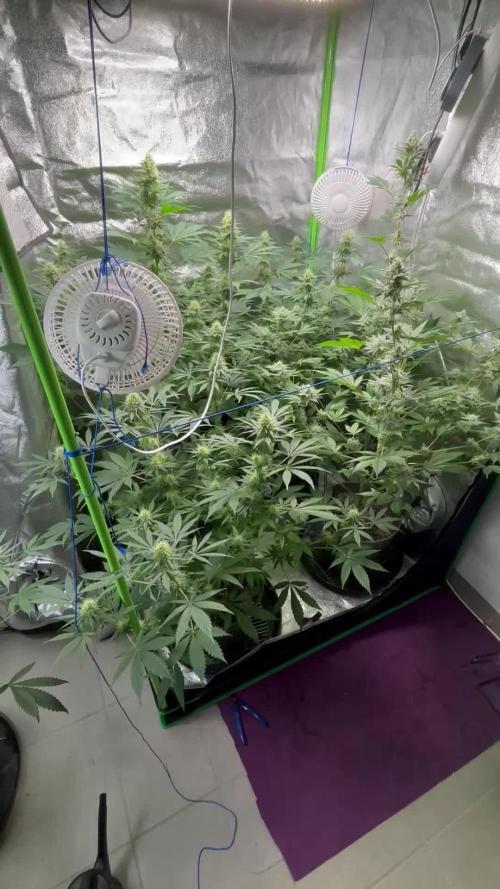
Buds keep growing bigger and compact, I haven't changed anything regarding the nutrients and kept it to every 3rd watering cycle.
Not doing much, just keeping an eye on humidity levels but other than that I don't want to stress them at all so no leaves plucking for 2 weeks.
Likes
2
Share


@MNGROW
Follow
She is getting real frosty and has a real strong Blueberry smell now. The buds and sugar leafs are super sticky and starting to turn purple.