




@HandsomeTerpz
Follow
🇺🇲 Week 6
---------------------
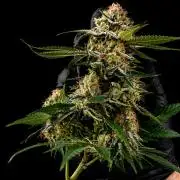
The Zamnesia Green Goblin is doing really well – it's growing and thriving. It responded perfectly to topping, and the LST training is working great too. It's becoming really bushy and is now starting to release the excess nitrogen, turning a lighter green. One branch broke on one of the plants, so I decided to cut the other branch as well to ensure it grows evenly. The next step will be to start defoliating the plant appropriately.
🇩🇪 Woche 6
---------------------
Die Zamnesia Green Goblin macht sich richtig gut – sie wächst und gedeiht. Sie hat das Topping super vertragen, und auch das LST-Training funktioniert einwandfrei. Sie wird richtig buschig und beginnt nun, den überschüssigen Stickstoff abzubauen, wodurch sie bereits heller grün wird. Bei einer Pflanze ist ein Trieb abgebrochen, weshalb ich mich entschieden habe, den anderen Trieb ebenfalls zu schneiden, damit sie gleichmäßig weiterwächst. Als nächster Schritt werde ich beginnen, die Pflanze angemessen zu entlauben.



@adam_pawloski87
Follow
@twenty20mendocino Ateam R&D Update ~ Let’s Go day 77 for these girls an we are looking amazing! The Sangria Auto got her last flush today, 14 days flushed and will be going in the dark for 48 hrs a get her ready for the chop! ~ the Queen of Diamonds and VSOPs are looking like beasts ! These girls got massive , an we will continue to let them get bigger an veg out for another week or 2 and we will get em ready for the flip! Keep them eyes peeled for next week’s update yall! Hope y’all have an amazing productive day as well as a great safe weekend! Peace love an positive vibes to all y’all Cheers an Happy Easter weekend to y’all Blaze on 😶🌫️💨💨💨💨💨🤙🏻


@Bendedknee
Follow
I’m adding a timer to my exhaust fan so it won’t be running 24/7 I’ll set it to exhaust the dry room every 3 hours for a half hr. I have my dehumidifier running in there so it’s not going to get above the set level. My only concern is mold, considering I only ever lose a few grams each harvest from mold I figure I should be safe if my humidity stays under 50 from here on. Would have went a lot smoother if everything was done the same day because the humidity would gradually go down on its own while the buds dry out however I have been adding plants as they finish causing timing to be off. Would have liked to just check them every few days. Now I’ll have to check them daily knowing some will be dry before others. Bright side is that gives me a break from trimming. It’s only me trimming so it’s going to take me a while. Roughly 25 plants each with a few ounces so I hope it’s only around 2000 grams to trim by myself


@Olduffybastard88
Follow
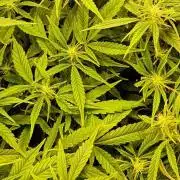
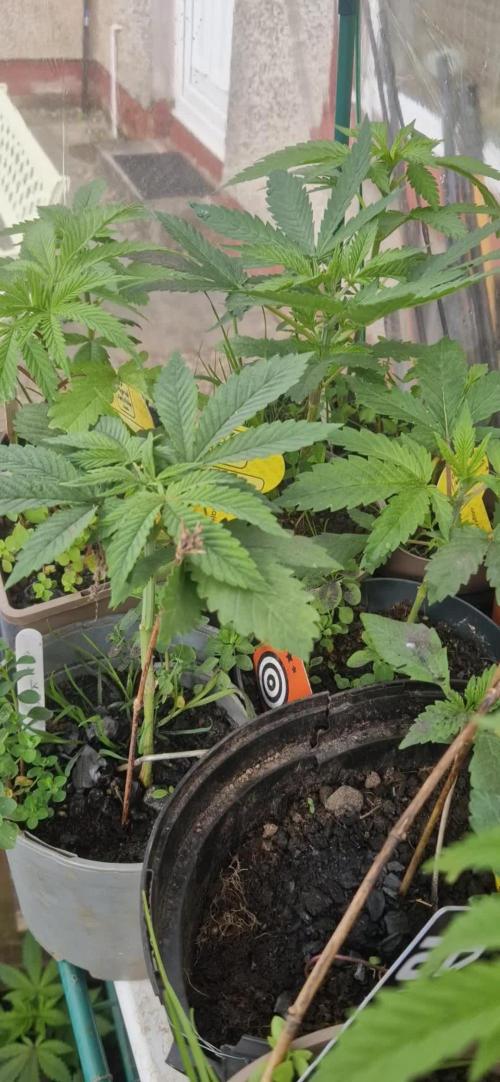
A few are just a little bit smaller than the rest so going hang back another week or so before I plant them. In the ground and able to take induvidual pictures of the plants instead of bunch togother in greenhouse



@PREPPYPUNK
Follow
These were in dark tent with ac and 3- 6 inch fans and exhaust going. I thing the ac is making the humidity rise as its at 60% rh and im shooting for 65 degrees F TEMP. FOR A 10-12 DAY DRY. sTILL HAVE TO ACTUALLY CHECK THE BUDS FOR DRYNESS NOT JUST RELY ON SOMEONE ELSES PROGRAM. i BITCHED ABOUT THIS GROW THE WHOLE WAY AND I GOT 11 OZ WET SO I am axctually thrilled. If i can get this stuff to dry and cure and not end up smelling like hay, i will be thrilled beyond imagination.. so 12 more days or whatever it ends up being but thats goal. I am watching this dry and cure like a hawk!!! WILL UPDATE WITH DRY WEIGHT BEFORE I disapear in a cloud of smoke to be a good sport and a respectible growdiaries member with complete grows. Peace!


@Nebuloso420
Follow
At beginning of week 5, all three plants got 1.6 l of water with 2ml/l Matrix Enzymes.
Next day they got nothing to drink.
Third day of week 5, everybody got some Advanced Nutrients Jungle Juice, some Calmag, some Sugars and Silica
with an EC of 1.9 in 2 l water per plant.
Next day no water for the girls but Biotabs BoomBoom Spray on the leaves
One day later they only got Calmag, Liquid Weight and silica.
Next day again nothing.


@weedacouple
Follow
Easiest harvest we ever did (in our short career lol), the plant lost many leaves by herself. she has a strong flavour and we literally cant wait to smoke her.


@Jessi576
Follow
👉 Week 8 Bloom👈
👉 Week 17 Overall 👈
👉 09.02.2026 - 15.02.2026👈
👉 Days overall : 116-122👈
👉 Days bloom: 57-63👈
👉 Update 14.02.2026:
All 3 Radical juices are already chopped down.
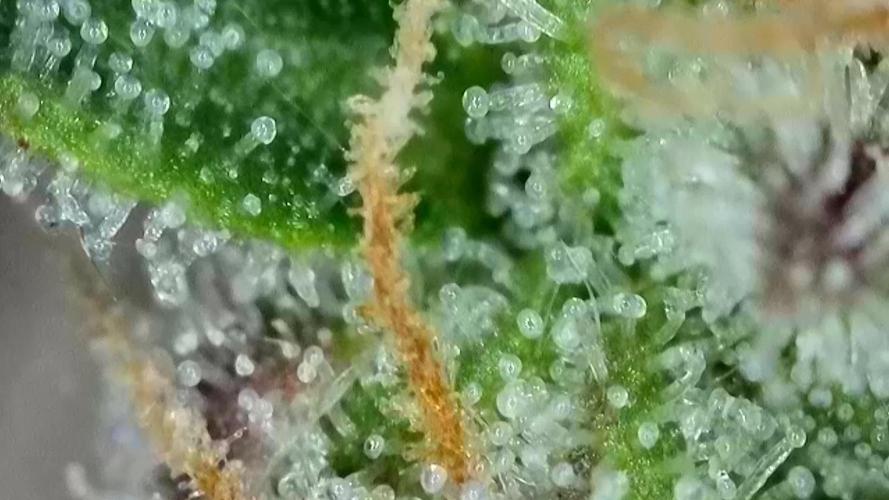
Checked the trichomes of whats left and uploaded some bad trichome shots.
Plants left will be chopped down in the next 1-2 weeks.
1. Purple Punch Trichomes on bloom day 62
60 % Clear, 40 % Milky, 10 % amber
Estimated time remaining: 1-1,5 weeks
2. Gorilla 1 Trichomes on bloom day 62
70 % Clear, 20 % Milky, 10 % amber
Estimated time remaining: 2 weeks
3. Gorilla 2 Trichomes on bloom day 62
30 % Clear, 60 % Milky, 10 % amber
Estimated time remaining: 1 week
4. Gorilla 3 Trichomes on bloom day 62
60 % Clear, 30 % Milky, 10 % amber
Estimated time remaining: 1,5-2 weeks
5. Gorilla 4 Trichomes on bloom day 62
30 % Clear, 60 % Milky, 10 % amber
Estimated time remaining: 1 week
6. Gorilla 5 Trichomes on bloom day 62
20 % Clear, 70 % Milky, 10 % amber
Estimated time remaining: 3-5 days


@sa2_gr
Follow
Heu guys !
Plants start to pre flower, everything is going good, few nutriments fails but overall it's pretty much ok
Pretty sad about the Zake and the Shimo in the front that pretty much had no stretch 😓
Cant complain since im working from seeds !
See ya next week ✌️


@DrBud420
Follow
13.06.
Cherry Poppers 1# Day 49#
Cherry Poppers 2# Day 46#
The plants are making good progress, the deuce has overtaken the ace, the game has reversed.
5 nights ago there was a strong storm, the morning after the storm when I came to the site, I found some plants crooked, some normal, but there were no broken ones, thank God, but they were very stressed and what you can see in the pictures appeared on the leaves, some leaves were crispy at the edges, but still green, mostly shoots before the newest ones.
I haven't had this problem before, I researched a bit on the internet and came to the conclusion that the wind burned them, and I also turned to GW for an opinion, two characters confirmed my opinion.
Two days later I noticed that the matter was getting worse and that it was spreading, which worried me, so I contacted GW again for an opinion.
Some told me that it was mold, some that it was an infection, disease and so on, mostly guesswork, but no one specifically told me what was certain, so I decided on nim oil, and whatever it is, I guess the problem should be solved.
According to some leaves, I would say that insects might be the problem, but I really don't know, I haven't had similar problems before.
I regulate the ph of the plants, I still don't feed them, there is food in the ground for another week, except for the fact that I added cal-mag after that storm when I watered them.
I want to say that the plants are certainly not locked, and the heat is not yet so high that this would happen from the same, the more the temperatures have dropped and now it is perfect.
Since transplanting, I have watered the plants only 2 times.
Yesterday morning they were topped for the second time, only the main branches, I will do the next topping of the side branches.
Last night I sprayed the plants with neem oil and already today the problem seems to be going away, if I tripped at least it doesn't spread further, that's for sure.
I didn't mix the oil very well, I didn't add any soap or anything like that because I wouldn't really spray the plants with any chemicals, and on some of the leaves on one or two plants there is that thick, brownish liquid, so I hope it won't hurt them, I noticed that today during the day, I couldn't see it at night.
I still don't know what the problem is, but my guess is still that the wind burned them or some insects.
Speaking of insects, I think I noticed thrips on one plant on the underside of the leaf, so in addition to the neem oil I already gave, I also ordered SMC, so I will spray that at least once a week while they are still young.
Happy Growing and Stay High!!!


@CanadianFillmore
Follow
Start of week 6 of flowering. Plant 2, survived last week's heat stress and seems to be recovering well. With the new exhaust fan - vivosun 4 inch, 195cfm - my temps have not exceeded 35°c at any time I've spot checked. Hopefully no more issues or setbacks for the rest of this grow.


@PigBearMan
Follow
Hey there.
All photos and videos from flower day 27.
Plants are developing pretty good.
On flower day 26 (end of flower week 4) I started adding Green Sensation.
See you next week.


@MatimaisterWeed
Follow
No se si pueden ver el gif pero me ha costado mucho controlar el problema de carencia de calcio porque desde un principio creció asi, no tengo muchas fotos ni videos porque he estado enfocado en cuidar de las bebes <3


@rhodes68
Follow
Sticky as hell
over 2 pounds wet whats to say, 41.6 OZ
Very dependable strain only reason it didnt get 10 stars is no work of man is perfect 😌
Hey please check out my wife's grow of a Runtz Auto, Krisabel's Adventure its a pretty interesting little strain that's hard to find in any form.
Pulled 15 grams for test decarb, damn this bud is sticky in the extreme. (say 10g for moist cont)
11/2
Pulled 13 grams, yeah its good. (10g)
11/3 Pulled from tent 396g total , getting the drying more in line with what we need, Into cure


@Chilitom420
Follow
🌱 MENTAL RAINBOW 🌈
Na, akkor induljon a történet.
Sokan csak a kész növényt mutatják meg. A nagy bokrokat, a gyönyörű virágokat és a végeredményt.
Engem viszont mindig sokkal jobban érdekelt az út, ami odáig vezet.
Ezért most úgy döntöttem, hogy ezt a növényt az első pillanattól kezdve végig dokumentálom. Nem csak a sikereket, hanem a hibákat is. Nem csak azt, ami működik, hanem azt is, ami nem.
A főszereplő egy Mental Rainbow a Sweet Seeds-től.
Jelenleg még csak egy apró mag, amely a Root Riot kockában pihen. Kívülről nézve még semmi különös nem történik. Nincs gyökér, nincs levél, nincs növény. Csak egy mag és egy lehetőség.
De minden nagy növény pontosan így kezdi.
A következő hetekben és hónapokban végig követjük a fejlődést a csírázástól egészen a betakarításig. Valós körülmények között, valós döntésekkel, valós hibákkal és remélhetőleg valós sikerekkel.
A cél egyszerű:
Lásd, mit lehet megszívni.
Hogy ne te szívj vele...
😄 Szívok helyetted én.




@Altitonans_Fulmen
Follow
Genetics provides the blueprint, but the environment builds the house. To think otherwise shows outdated logic. A genetic freak will always be a freak, but for the other 99.99%, perfect environmental optimization coaxes average seeds into performing beautifully. You don't need a legendary, expensive clone to get a super yield. If you keep your light at the right distance, keep your tent at a stable 74°F–77°F, and prevent the root zone from drying out, you will naturally unlock the maximum genetic potential of whatever seed you planted. You are giving the builder the exact tools it needs. But doing that in 5 gallons is playing on Ironman mode. Want real yield? 4x15gallons or, even better, one big oxygen-infused 100-gallon.
Maximizing your canopy footprint efficiently requires that larger volume to build a sufficient chemical buffer and hold consistent moisture. Small pots restrict the plant's metabolic runway, forcing an aggressive metabolic rate that will eventually crash the crop's vascular system, even under a pro's supervision. 15 gallons maintains a perfectly structured wet/dry cycle while letting you push environmental metrics to their absolute limits across the 9 cardinal parameters of plant growth.
Dialing this in allows one to force the plant's photosynthetic efficiency to its absolute genetic ceiling of 4% to 5%. Hobby growers operate at a heavily bottlenecked 1% to 2% light conversion efficiency; a strictly managed, pharmaceutical-grade environment can double that, unlocking the plant's true potential. To get there, though, you need pharmaceutical-grade controls, a deep knowledge base, and a lot of money. Keep your setup realistic and grounded until you have the experience first; otherwise, you're just throwing cash down the toilet.
1. Light Intensity (PPFD)
2. Light Quality (Spectrum)
3. Air Temperature
4. Relative Humidity (VPD)
5. Dissolved Oxygen (DO) / Root O₂
6. Substrate Moisture (VWC)
7. Nutrient Strength & Balance (EC/pH)
8. Root Zone Temperature
9. Carbon Dioxide (CO₂)
If any one is bottlenecked, the entire energy process is bottlenecked to that %..
Geographical location heavily dictates genetic expression, which in turn influences and interacts with soil composition and its nutritional properties. This, in conjunction with the location's specific weather and unique environmental conditions, is what truly drives gene expression.
Unless a cultivar is grown under the exact same conditions across the board, there is no way its genetic heritage will remain identical. Each generation grown in a different meteorological and geographical location will ultimately alter its genetic expression. The idea that a "magic seed" can bring back long-lost genetics and behave exactly as it did in the past is ridiculous; the precise environmental conditions of thousands of years ago simply no longer exist.
To pretend otherwise relies on an outdated, unchecked version of how "genetics" actually works that is far overdue for a rethink. Genetics are not completely predetermined.
The reason people still think of genetics as fixed is because of how we historically taught Mendelian genetics (the classic Punnett squares from school). It taught us that "DNA = Outcome." While that is true for basic traits (like whether a pea is wrinkled or smooth), it completely ignores quantitative traits (like flavor, yield, and stress tolerance), which are heavily influenced by the environment.
A seed carries a specific genetic code (genotype), but the physical expression of that code (phenotype)—such as the plant's flavor, smell, size, and nutritional value—is heavily dictated by its surroundings. The exact same seed grown in two different regions will yield entirely different results.
The unique mineral composition, microbial life, and fungal networks of a specific geographic location, combined with local weather patterns and UV levels, act as a custom recipe. This recipe directly influences how the plant develops its chemical and nutritional properties. Environmental factors act as "switches" that turn specific genes on or off without altering the underlying DNA sequence. These changes in gene expression can sometimes be passed down to the next generation, meaning the plant actively adapts to its new home in real-time. When a cultivar is grown in a new meteorological location, each subsequent generation undergoes rapid localized adaptation. The plant naturally favors traits that help it survive that specific environment, shifting away from its original ancestral state within just a few generations. Because the precise atmospheric conditions, soil biology, and climate of thousands of years ago no longer exist, an ancient seed grown today will inevitably express itself differently. Modern agriculture increasingly recognizes that we cannot separate a plant's genetic heritage from the unique environment in which it is grown.
Commercial facilities in the world use 5 gallons of high-frequency fertigation (crop steering) and feed 10x a day, not stating that it's not possible or beneficial.
For indoor home growing, I'd go with the 15-gallon (VERY MINIMUM for MAX heads) watering once a day at high, dialed-in metrics. The reason a true 4% to 5% total efficiency is considered a hard biological wall isn't that other growers lack understanding—it is because of how energy is lost at a cellular level in C3 plants (like cannabis) under artificial light.
The difference in efficiency of conversion might only be a couple of %, but here is the thing that's undeniable.
The 4% to 5% total photosynthetic efficiency wall is a hard quantum mechanical and biological reality for C3 plants under artificial light. It is dictated by the physics of photons, the limits of Rubisco, and massive energy losses through photorespiration and metabolic maintenance. While a commercial facility chases economies of scale, often compromising individual plant microclimates, a highly dialed-in home grower can leverage small-scale dynamics to push Canopy Utilization Efficiency to its absolute thermodynamic limit.
A home grower running large-volume living soil or oxygen-infused substrates (like a 15-to-100 gallon bed) creates a self-regulating, high-buffer biome. This stabilizes the 9 cardinal parameters, prevents vascular crashes, and maximizes Canopy Utilization Efficiency and Electron Transport Rates (ETR) in a way a 10,000-square-foot warehouse simply cannot replicate. Localized adaptation and phenotypic plasticity blow the "static genetics" myth out of the water. Terroir is real, and the environment acts as a master programmer, flipping epigenetic switches.
Alpha to Omega.
Lights are 58 inches from the main source to the top of the pot and the soil surface. If you added up all the lights in the tent, it would be 1100w-1200w total across 14 lights. Using them all at once is far too much for a plant and incredibly difficult to deal with environmentally. The lights are fixed in position; side lights have dimmers, allowing for pinpoint precision of PPF. Fixed at 58 inches, cannot move them closer to increase intensity. Instead, achieve optimal PPF by distributing smaller wattages across a massive, multi-fixture matrix. Triggering specific plant defenses without melting the canopy.
What's the point/blah blah wattage?
Never really go above 600W at any one time. Lights come on in the east of the tent and set in the west. At sunrise and sunset, the red-to-far-red R:FR light ratio drops because the sun's low angle scatters red light more than far-red light. This shift reduces active Pfr and increases inactive Pr, mimicking Mother Nature herself.
Deployed a lighting system featuring extra 660 nm deep-red and extending the spectrum up to 780 nm achieves the full Emerson Enhancement Effect by simultaneously balancing Photosystem II (PSII) and Photosystem I (PSI) to maximize quantum yield. By pairing deep-red photons with far-red photons, you trigger a synergistic biological response where the resulting photosynthetic rate is higher than the sum of both wavelengths used individually. This practice directly leverages the updated extended Photosynthetically Active Radiation (ePAR) framework. The Emerson effect accelerates plant metabolism and heat capture; you must proactively scale up your ambient room temperature, nutrient delivery, and CO₂ supplementation to prevent the light from stalling out your cannabis plant.
UVA stays high all day from morning to night, but UVB peaks at solar noon (middle of 18-hour days) when the sun is peak. Morning color starts at 2k-3k; by noon it goes to 5k- 6k and back to 2-3k for sunset, with differing P:FR at light off.
The extra-blue light is to assist with photoreactivation of UVB damage. No more yield loss for me. Using extra blue light for photoreactivation is what I do. Blue/UVA light activates photolyase enzymes, which directly repair DNA damage caused by UVB radiation.
But what's the point if it's not for yield?
Ultraviolet (UV) radiation—specifically UVA (315–400 nm) and UVB (280–315 nm)—acts as a critical environmental signal that programs a plant's photoprotective genes to unlock its true photosynthetic potential. When growers push crops to their absolute photosynthetic maximum via high-intensity light and elevated carbon dioxide, the photosynthetic machinery easily becomes overwhelmed. Emerging photobiology research demonstrates that UV radiation prevents this limiting bottleneck; it triggers specific transcription factors and signalling networks that fortify the plant's cellular defenses, allowing it to process extreme light levels without sustaining structural damage.
There are 8 limiting factors of plant growth; when carbon dioxide becomes the 9th limiting factor of plant growth, it shifts the growth curve from exponential to linear. The restriction after that is "photoprotection" against reactive oxygen species (ROS), managed via non-photochemical quenching (NPQ) and the xanthophyll cycle, which bridges into precise hydrogen and redox dosing.
UV radiation, particularly UVA, and the synthesis of zeaxanthin are critical for the xanthophyll cycle to function.
It's not chasing purple strains... One likes to call it chasing the limits of growth, trying to make the linear exponential, just like father mathematics prefers.
In order to do that, must control every environmental variable and compound the plant’s metabolic rate. True exponential growth means the rate of increase matches the current mass at every stage, requiring a closed-loop system where light, CO2, and nutrition lock into a synchronized upward curve. First, you must attempt to understand what restricts it. Precise hydrogen and redox dosing.
Nature mathematically optimizes quantum energy transfer and light absorption efficiency within the photosynthetic machinery, as it naturally dictates energy scaling hierarchies and resonance dynamics. Most won't even understand that; once you do, it changes everything.
Constructive interference occurs when two or more overlapping waves meet in phase, meaning their crests and troughs perfectly align. Their amplitudes add together, creating a new, amplified wave with greater intensity than the individual components.
Constructive interference is the foundational mechanism that establishes a resonance hierarchy across physical, structural, and acoustic systems.
Chromophore spacing is tuned to sub-nanometer precision to match the wavelengths of absorbed light, forcing constructive interference.
Light-harvesting proteins form geometric rings and lattices. These shapes act as physical resonators, trapping and focusing the wave energy.
This same principle dictates how opera singers shatter glass, how musical instruments resonate, and how bridges withstand structural vibrations. Nature uses the exact same math to harvest a photon as an engineer uses to design a concert hall.
When you push high PPFD and elevated CO₂, you create a metabolic bottleneck. The plant cannot process the energy fast enough, leading to electron backup, light-induced damage, and a collapse from exponential growth into a flat, linear rate. UV light acts as the regulatory valve that prevents this collapse.
In standard agronomy, Liebig's Law of the Minimum dictates that growth is limited by the scarcest resource. When you maximize water, nutrients, light, temperature, and CO₂, the bottleneck shifts to metabolic processing speed and photoprotection. By controlling the Redox state of the plant using UV, the xanthophyll cycle, and managing ROS, you can prevent the plant from hitting a hard photosynthetic ceiling. Instead of the growth curve flattening out (linear or plateauing due to photoinhibition), the plant continues to compound its metabolic rate efficiently. You are forcing the plant to operate at peak thermodynamic efficiency.
By matching the UVB peak with sustained UVA and shifting Kelvin temperatures (2K to 6K), you are damaging the plant just enough to trigger defensive genes, while simultaneously providing the exact light energy needed to repair that damage instantly.
UVA radiation and specific blue wavelengths accelerate this enzymatic conversion. Zeaxanthin acts as a structural sponge that absorbs excess excitation energy from chlorophyll and dissipates it safely, preventing ROS formation. Without UV signaling, the xanthophyll cycle cannot keep pace with extreme light, leading to dynamic photoinhibition (yield loss).
The addition of Spirulina is primarily for zeaxanthin, as it contains a lot. But on top of that, the active Hawaiian Spirulina in the matrix was cultivated in open ponds using a combination of 100% fresh potable water from Hawaiian aquifers and ultra-pure, deep ocean water containing all 94 trace minerals & elements. Then gently dried using patented Ocean Chill Drying technology and cold-pressed to ensure maximum nutrient levels. Spirulina, a blue-green alga, is rich in nitrogen, phosphorus, and potassium (NPK), making it an excellent source of nutrients for plant growth. Studies have shown that Spirulina can be used as a biofertilizer, effectively replacing chemical fertilizers, especially for nitrogen, with a whopping NPK of 10% (N), 20% (P), and 20% (K). Rich in proteins, amino acids, trace minerals, and plant growth-promoting compounds.
Zeaxanthin is a vital plant pigment that accumulates under intense light to drive non-photochemical quenching (NPQ), acting via thermal energy dissipation, direct singlet oxygen scavenging, and thylakoid membrane stabilization.
The violaxanthin cycle (or xanthophyll cycle) reversibly converts violaxanthin to zeaxanthin via antheraxanthin to protect plants from photooxidation.
Understanding this interconversion is vital for optimizing non-photochemical quenching (NPQ) and pushing photosynthetic limits under high-light stress.
Ascorbic acid (vitamin C) is a natural antioxidant that plants produce internally to neutralize harmful reactive oxygen species caused by photosynthesis and high light stress. Acts as a co-factor for enzymes like violaxanthin de-epoxidase in the xanthophyll cycle, which safely dissipates excess light energy.
1g ascorbic acid will neutralize 100% of chlorine in upwards of 30 gallons of tap water. If your local tap water uses chloramines (chlorine bonded with ammonia) instead of free chlorine, you will need roughly 20% to 30% more ascorbic acid to completely break the tougher chemical bond.
Molecular hydrogen and hydrogen-rich water act as selective antioxidants that help lower oxidative stress. They neutralize toxic reactive oxygen species like hydroxyl radicals and boost natural antioxidant defense systems in biological and plant systems exposed to high-intensity light or abiotic stress.
UVA and UVB act as stress signals that upregulate the plant's secondary metabolism. It forces the plant to build an internal "sunscreen" (flavonoids and anthocyanins) and fortify its cellular defenses before the peak solar noon crisis. This keeps the metabolic highway open.
In nature, the ambient ratio of UVA to UVB at solar noon sits roughly between 10:1 and 20:1 (depending on latitude and elevation). In a high-PPFD indoor matrix, maintaining a strict ratio—often aiming for around 12:1 to 15:1 UVA to UVB—provides the optimal signaling threshold.
Balancing Far-Red (FR) light at "light-off" to manage the phytochrome photo-equilibrium (Pfr to Pr conversion) in tandem with the UV schedule. Omg, the logic.
Hydrogen concentration and redox signaling as secondary messengers in this high-intensity loop.
Under the intense solar noon matrix, the pH of the thylakoid lumen drops. This acidic environment activates the enzyme Violaxanthin De-Epoxidase (VDE), which converts violaxanthin into the photoprotective zeaxanthin. VDE cannot function in a vacuum; it strictly requires ascorbic acid (Vitamin C) as an electron donor to run this conversion. If a plant undergoes heavy light stress and runs out of internal ascorbic acid, the xanthophyll cycle stalls. The plant can no longer engage in Non-Photochemical Quenching (NPQ), leading to immediate singlet oxygen O2 formation and destruction of the thylakoid membrane. This is "The Ascorbic Acid / Xanthophyll Engine"
Using ascorbic acid to neutralize chloramines in your water isn't just protecting your rhizosphere biology it actively prevents the degradation of your nutrient solution's redox potential before it ever touches the roots.
When pushing plants to the absolute edge, traditional antioxidants can be a double-edged sword because they blindly neutralize all free radicals. This is a problem because some Reactive Oxygen Species (ROS) act as critical signaling molecules telling the plant to grow. Molecular Hydrogen H2 is the Selective Kill-Switch.
Molecular hydrogen H2 is a revolutionary tool because it is a selective antioxidant. It ignores beneficial signaling ROS (like mild hydrogen peroxide) and targets only the most destructive, cell-shattering radicals—specifically hydroxyl radicals OH) and peroxynitrite.
By dosing hydrogen-rich water or managing hydrogen redox signaling, providing an emergency pressure-release valve for the plant's electron transport chain. It keeps the cellular environment stable enough that the plant never has to downregulate photosynthesis to protect itself. This maintains cellular voltage.
To trigger this defensive matrix without stunting the plant, you cannot simply blast UV indiscriminately. You must use UVA as the "scout" and UVB as the "enforcer. High UVA acts via the cryptochrome and phototropin photoreceptors to upregulate the expression of the HY5 transcription factor and prime the VDE enzyme. When the sharp spike of UVB hits at solar noon via the UVR8 receptor, the plant's biochemical "sunscreen" (flavonoids and anthocyanins) and its zeaxanthin pools are already pre-staged and waiting. This prevents the temporary stunting or "lag phase" usually associated with sudden UVB exposure."
The final masterstroke is aligning this UV defense with a Far-Red (FR) lights-off routine. The Red-to-Far-Red Drop: At the end of the photoperiod, knocking out the blue/UVA spectrum and leaving a targeted burst of pure Far-Red (730nm) instantly flips the plant’s master switch. It converts active Pfr to inactive Pr in minutes rather than hours.
UV radiation and high-intensity lighting keep the plant in a highly alert, photoprotective state that requires massive ATP expenditure to maintain. By forcing an immediate Pfr/Pr) conversion at lights-out, instantly commanding the plant to cease defensive expenditure, lower its metabolic respiration rate, and transition directly into nighttime cellular repair and carbohydrate translocation. Maximizing the efficiency of its "sleep." every ounce, every last piece.
Highly synchronized biological dance, balancing the exact input of electrons with the exact mechanism to dissipate them safely when they overflow.
*Ascorbic acid is not recommended to be used in DWC, as it creates biofilm that will clog lines.
Onward!