


Likes
Comments
Share



Likes
7
Share


@Organic_G
Follow
Tag 1 der 9. Woche der Blüte.
Ich stehe kurz vor der Ernte, die Budds sind saftig und Puderig, starker Geruch und gutes Terpenen Profil.
Werde wahrscheinlich in 3 Tagen ernten.
2. Tage vor der Ernte lasse ich die im Dunkeln stehen, gieße ab jetzt nicht mehr fürs dehydrieren und bringe die Luftfeuchtigkeit auf 35% runter für das Ende.

Likes
5
Share


@GermGrowFox
Follow
3. November
Alle drei Pflanzen weiterhin topfit.
Trauermücken aufgetreten. Habe das abgelaufene Päckchen nematoden für die runtz genutzt. Hoffe es bringt was
4. November
Cookies Gelato hat den harten Mainlinecut bekommen. Spitze wurde entfernt, Seitenteile wurden direkt danach abgeschnitten. Sie wird’s schon wegstecken.
Tropimango und runtz geht’s gut :)
Cookie gelato hat bereits wenige Stunden später die Blätter wieder hoch gestreckt. Stagniert.
5. November
Alles gut. Die Schnitte wurden gut verkraftet. Triebe wachsen wieder
Cookies gelato ist nun 21 Tage alt.
Tropimango ist nun 18 Tage alt.
Runtz ist nun 7 Tage Alt.
7. November
Cookies gelato wächst. Sobald die Klammern da sind wird sie runtergebunden
Tropimango hat schnitte und Lst bekommen. Topping werde ich noch abwarten.
Runtz wächst
8. November
Cookies gelato hat LST + mainlineschnitte erhalten. Wurde nicht mit gießen kombiniert da ich gestern gegossen habe.
Tropimango erneut LST.
Runtz wächst. Sieht aus als würde sie langsam ins Wachstum wechseln. Erster Triebe am einzahnblatt kommen. Dreizahnblatt erst frisch entwickelt.
9. November
Cookies gelato wurde das erste mal zusätzlich mit Sugar Royal und calmag versorgt. Hab’s davor vergessen 😅 Shit Happens.
Wurzeldünger gibt es konstant weiter.
Runtz wurde mit wurzeldünger und calmag versorgt
Tropimango hat noch sehr feuchte Erde. Keine Ahnung wieso.

Likes
6
Share


Processing
Likes
5
Share


@Ensign420
Follow
Week 02 Introduction
This week has been a bit of a struggle. Had my first experience dealing with slime and brown algae. But I think adding enzymes and increasing the beneficial bacteria helped to fix the issue. Also experienced nutrient burn for the first time. My nutrient solution strength got as high as 671 PPMs. So backed it down to about 430 PPMs during the end-of-week reservoir change. Also cut Hydroguard (expired?), CaliMagic, and Superthrive from this grow. Now she's still stunted, but is starting to recover. Hopefully...
[START OF WEEK 02]
Day 01 - Monday - 08/10/20 - Total Days: 008
-----------------------------------
- [0830]: Still looks a bit yellow. But getting larger!
--- Solution strength was at 248 PPMs.
--- Just topped off with a bit of distilled water
--- PH went up to 6.1 so PH'd down to 5.8
--- Ran the top feed for a bit to wet the hydroton.
- [2130]: She's looking even more yellow now.
--- Even the new leaves are really yellow.
--- Decided to add more base nutes.
--- Added 4ml of Sensi A
--- Added 4ml of Sensi B
--- Now at about
--- Solution Strength went up to 304 PPM.
--- PH was at 6,
--- Also raised the water level a bit more.
--- I really hope it's a nutrient deficiency and not an over-watering issue.
--- Please live!
Day 02 - Tuesday - 08/11/20 - Total Days: 009
-----------------------------------
- [0830]: Looking less droopy. But still yellow.
--- Decided to do a reservoir change.
--- 4.5gal of distilled water
--- 8ml of Sensi Grow A
--- 8ml of Sensi Grow B
--- 8ml of Voodoo Juice
--- 4ml of B-52
--- 4ml of CaliMagic
--- 4ml of Hydroguard
--- 4 drops of Superthrive
--- PH'd down to 5.8
--- Solution strength: 302 PPM
--- Since I didn't want to risk over-watering the rockwool, I did not to do a top feed, may do one tonight after the sleep cycle (lights are still set to go off at 10am and back on at 4pm).
--- As I was doing a reservoir change, I noticed that the tubes and bucket were a bit slimy. Didn't really stink or anything. Is this normal? Maybe due to the Hydroguard and Voodoo Juice?
--- I hope she gets better soon!
- [2215]: Getting larger! But still yellow.
--- Also can see a root growing through the net pot! Tiny little thing but it's there! Will have to start dropping water once more appear.
--- After looking over a few DWC diaries using AN nutes, seems like my solution strength is still too low. Most around this stage average around 500 PPMs with about 4ml per gallon.
--- Top fed for a minute to wet the top of the hydroton.
--- Solution strength went down to 263 PPM.
--- Added 8ml more of Sensi A
--- Added 8ml more of Sensi B
--- Now base nutes are at 16ml for 4.5 gal of water.
--- PPMs went up to 411.
--- Still lower than 500 PPMs, but that's okay.
--- PH was at 6. Not sure if I should adjust PH using AN nutes. So going to not ajdust unless PH goes above 6.1.
Day 03 - Wednesday - 08/12/20 - Total Days: 010
-----------------------------------
- [0830]: Looks like more root growth!
--- She still looks yellow. But leaves are perky.
--- PH was at 6.2 so lowered down to 5.8.
--- Solution strength was at 394 PPMs
--- Since roots are still growing, I decide to lower the water level a bit. Now water level is a bit below the net pot.
- [2200]: Root is getting longer!
--- Slime is returning. Not sure why.
--- Solution strength: 357 PPMs
--- PH: 6.1
--- Decided to add an enzyme along with more beneficial bacteria to hopefully cure the slime.
--- Added 16ml of Sensizym
--- Added 5ml of Hydroguard
--- Added 8ml of Voodoo Juice
--- New solution strength: 430 PPMs
--- New PH: 6.1
--- Top fed for a minute.
--- This slimy residue is really freaking me out! I hope the added enzymes will help eliminate the slime.
--- Going to do a full reservoir sterilization/nutrient change over the weekend. Please survive until then girl!
Day 04 - Thursday - 08/13/20 - Total Days: 011
-----------------------------------
- [0930]: I think the enzymes worked! There is little to no slime now!
--- Although I think the root was also dissolved in the process. It's now just a little stub sticking just below the net pot. The enzyme is also suppose to dissolved dead roots too but guess that root was too weak? Not sure what happened there. But I think the slime is cured!
--- Solution strength went down to 395 PPMs. Decided to add more base nutrients.
--- Added 8ml of Sensi A
--- Added 8ml of Sensi B
--- Added 4ml of B-52
--- Solution strength went up to 598 PPMs.
--- PH was at 6.1
--- As long as the PH is between 5.5 and 6.3, I'm not going to use PH Up or Down. But still will monitor PH levels.
- [1715]: Checked up on her after her nap and shes looking alive but stunted. But no slime!
--- Decided to add some sugars to help maintain the enzymes and beneficial bacteria.
--- Solution strength was at 587 PPMs.
--- PH was at 6.2
--- Added 8ml of Bud Candy
--- Solution strength went up to 671 PPMs.
--- PH also went up to 6.3
--- Lowered water level a bit to hopefully promote more root growth.
--- Top fed for a minute.
--- She is getting bigger, but still looks yellow.
Day 05 - Friday - 08/14/20 - Total Days: 012
-----------------------------------
- [0915]: Leaves look a little burnt on the tips. Still no slime.
--- Going to back off on the PPMs to hopefully fix the nutrient toxicity.
--- Solution strength was at 632 PPMs
--- PH was at 6.3
--- Added/Removed water until PPMs were at 536.
--- PH was still at 6.3
--- Raised water up a bit, then top fed for a minute.
- [2200]: Looking better. Still yellow though.
--- Solution strength: 514 PPMs
--- PH: 6.5
--- Added PH down.
--- New solution strength: 518 PPMs
--- New PH: 5.2
--- PH was kind of high. So decided to PH down. Had to use quite a bit to bring it down. But eventually got it to drop down to 5.3. A little low, but so far, the PH has always gone up so wanted to start it really low.
--- Ran the top feed for a minute to re-saturate the top of the hydroton.
Day 06 - Saturday - 08/15/20 - Total Days: 013
-----------------------------------
- [0830]: She looks stunted. leaves are still yellow.
--- Solution strength: 514 PPMs
--- PH: 5.6
--- Top fed for a minute.
--- Not sure what to do at this point. Going to do another reservoir change soon. Hoping she lives until then.
- [2145]: Looking pretty much the same.
--- A bit of slime has returned. Since I've been diluting the nutrient solution, the enzyme ratio has dropped. So I guess this is expected.
--- Also noticed that slime build up was on the air-stones. Never really checked the stones so not sure how long that has been there. Looks brown too, which can't be good.
--- Going to do an H202 sterilization of the system (minus the net pot) tomorrow so did not add anything.
--- Lowered the water level to below the net pot.
--- Then top fed for a minute.
Day 07 - Sunday - 08/16/20 - Total Days: 014
-----------------------------------
- [0900]: STERILIZATION DAY!
--- Decided to skip today's night cycle for a deep clean.
--- I'm hoping that skipping a night cycle won't be too stressful.
--- Temporarily moved her to a new bucket.
--- Used about a half of gallon of straight distilled water to flush out the net pot.
--- Drained the system and wiped up all the brown sludge. Also removed the air stones and cleaned up all the goo.
--- Filled the system with 2 gallons of distilled water and at least 30ml of food grade hydrogen peroxide (35% strength).
--- Yea its a lot, but since I'm not going to sterilize the system overnight, I went with a really high doseage. Basically I kept adding until I started to see little bubbles start to form.
--- Then I ran the water pump.
- [0915]: Boiled the air stones in tap water for about 10 min. Then reconnected them to the airlines.
--- I let the air stones and hose soak in the sterilization solution for about 5 minutes so the peroxide can absorb into the stones. Then ran the air stone to help mix and agitate the solution.
--- Occasionally, I'd repeat the process of turning the air pump off for a few minutes to let the stones soak.
- [1000]: Covered the top two row of holes of the net pot with some aluminum tape. Hopefully this solves the light leaking in through the hydroton.
- [1200]: Used an old toothbrush and scrubbed the pump clean. Then drained the system.
--- Refilled with more distilled water and peroxide. Again added a lot.
--- Ran system again to sterilize even more.
- [1530]: Drained the system and refilled with distilled water to rinse.
--- Ran the system for a few minutes, then drained and rinsed again.
--- Did this a few more times over about an hour.
- [1630]: Added 4 gallons of fresh distilled water.
--- Added 15ml Sensi Grow A
--- Added 15ml Sensi Grow B
--- Added 12ml of B-52
--- Added 16ml of Voodoo Juice
--- Added 16ml Sensizym
--- Solution strength was at 430 PPMs
--- PH was at 5.6
--- I was going to add Hydroguard, but I think the bottle is expired. Since 2017 or 2018!? I think Hydroguard is good for up to 2 years from the date on the bottle or 6 months after opening. So not going to use from now on. I wonder if this could have contributed to the slime build up.
--- Also removed the CaliMagic and Superthrive too. Going to only use AN products to eliminate the chance of incompatible nutrients.
--- Placed her back in the bucket and top fed for a minute.
--- Here's hoping for the best. Going to let it ride until morning! Please feel better!
[END OF WEEK 02]

Processing
Likes
2
Share


@NewbieLearner
Follow
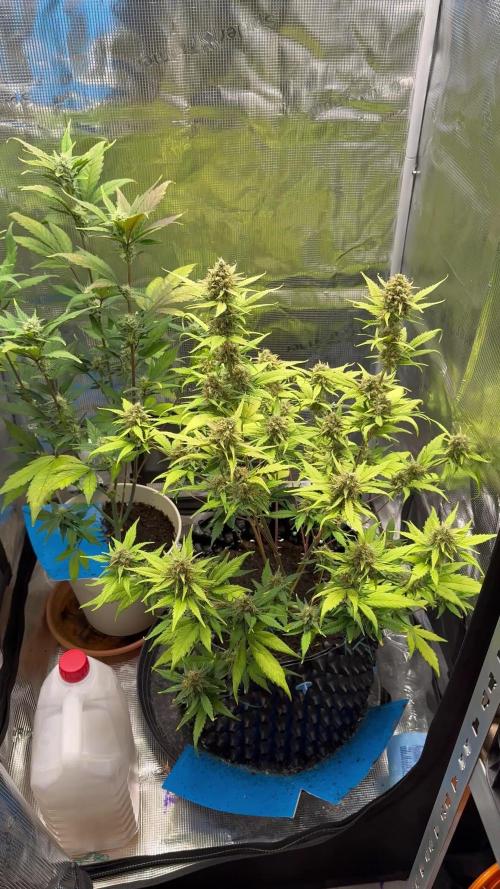
Plants took a few days to get stripped down. Missed the second week of flowering and stretching but oh well there is always next time. Very excited to see this canopy full of uniform buds its going to be a sight to behold haha.


Likes
7
Share


@Sunstonedgrows
Follow
We are staring week 4 of flower! Currently at Day 22 and feeling good. The plant is still getting watered every other day and honestly looks great. Looking forward to seeing when this guys starts getting into deep flower.
This week, we doubled the feed to 2 tbsps of the Flower girl. I also have her about 2 tsp of the kelp meal. I think this will be 1 of 2 kelp meal feedings. Going forward we'll be doing some compost tea now and then to support flower and increase the brix of these flowers.
Cheers until next time
-DJ Sunstone
Likes
3
Share


@MokiPNW
Follow
Switched to ocean Forrest in 5gal buckets with a 40% mixture of perlite to soil. Did some trimming after pics and took clones

Likes
2
Share


@7circleshg
Follow
Algo mejor que volver de un viaje a la costa y encontrar solo avances buenos? Bueno como habrán adivinado nuestro dream team no decepciona y la calidad de las flores sube :)

Processing
Likes
2
Share


@mojogrow
Follow
the 5 ml of trimix were for the euphoria with 2 ml of Bio Heaven.


Likes
16
Share


@GreenMunchkin
Follow
Day 168- 20/11 : She is still swelling some more and the scent is getting stronger and stronger ! An amazing spicey, chocolate smell with hint of berry. When really rubbed the scent turn into a very strong hazey sweet hash scent . Just amazing.
The buds are starting to fall over and so I starter to support them. I think she will be ready within the next 5-7 days.
Day 170 - 22/11 : Looking good ! She is fading nicely and buds are maturing, Harvest is so close I can taste it !
Likes
78
Share


@Hou_Stone
Follow
👌It’s progressing, slowly but surely for my 4 young banana krumble 👶🍌
For this grow, I plan to let each plant grow with a large main bud, without topping.
Next week I will cut the lower branches closest to the ground.
-----------------------------------------------------------
💧Watering:
1L on day 9 and 0.5L on day 12
I use tap water, adjust the ph to around 5.8 and water
------------------------------------------------------------
🤩Equipment of the week :
Light FC3000 Mars hydro. power 80% at 50cm
Extractor 6 inch Mars Hydro. power 1/10. ON 24/24h
2 fans to circulate the air inside the tent. Each on for 30 minutes then off for 1 hour. this rhythm repeats itself in a loop
Heating mat Romberg 95x95cm. ON 45 minutes. OFF 30minutes. In a loop
I am adding anti-midge bird stickers 🐦
------------------------------------------------------------
Thank you for your visit and your support with the likes, comments. It's always nice to see you!💚
------------------------------------------------------------
My Instagram 🌱❤️️ :
https://www.instagram.com/hou_stone420/

Likes
14
Share


@MG2009
Follow
03/10/2021
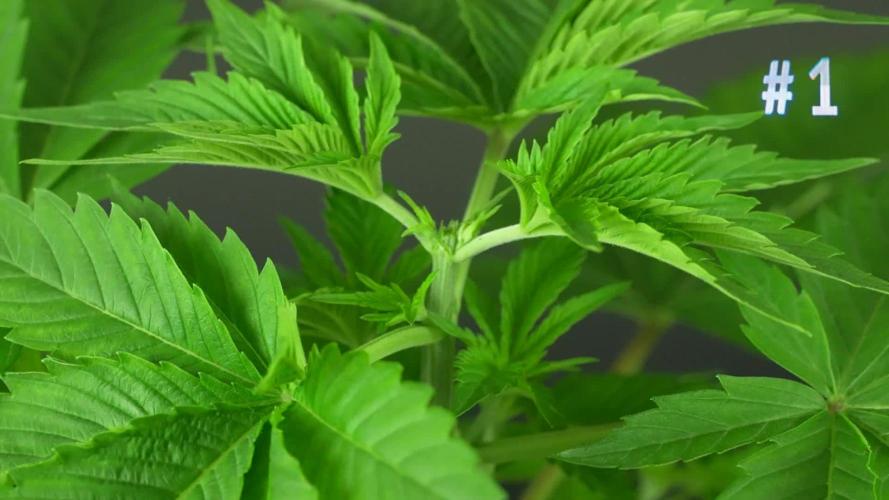
Drastically clipped, and cracked two tops to train as a type of manifold, she will be reppotted next week and then flower.
Second picture shows what I'm going for



Likes
10
Share


@Ieiogrow94
Follow
Eccoci qui...
Tutto va per il meglio, questa settimana si inizia a vedere la resina e ora si inizieranno a formare le cime, per questo aggiungo Sugar Shot di @xpertnutrients vedremo l'evoluzione settimana prossima.
Odore intenso, fortunatamente ne ho messi 2 di semi ed ora posso godermi queste bellezze che sono SPAZIALI. Mi fanno impazzire sia per l'odore che per l conformazione di entrambe.
Grazie a tutti per il supporto🔥🌲❤️

Likes
6
Share


@CaLiGuy420
Follow
Stretched like crazy! Showing sativa dominance. 1 plant had 2 roots stuck in cup and broke off. Hopefully recovery is fine and I can get to the fun of training soon!
Likes
30
Share


@Green_Dream
Follow
I'm quite impressed by this week's development. The girls are starting to show their fatness. I did a flush at the beginning of the week and it helped a lot. Now I'm starting to give them less and less nuts, as they show obvious tip burns.
What a big coincidence that they are both polyploids(gene mutation). I'm starting to question myself if the guys from RQS are making experiments with these types of mutations to increase yield and potency???
Likes
31
Share


@Reaper
Follow
Moved this beast to my 400watt HPS room, blooming really started now finally, this plant wont be ready before week 15 but the yield will be massive