Likes
Comments
Share
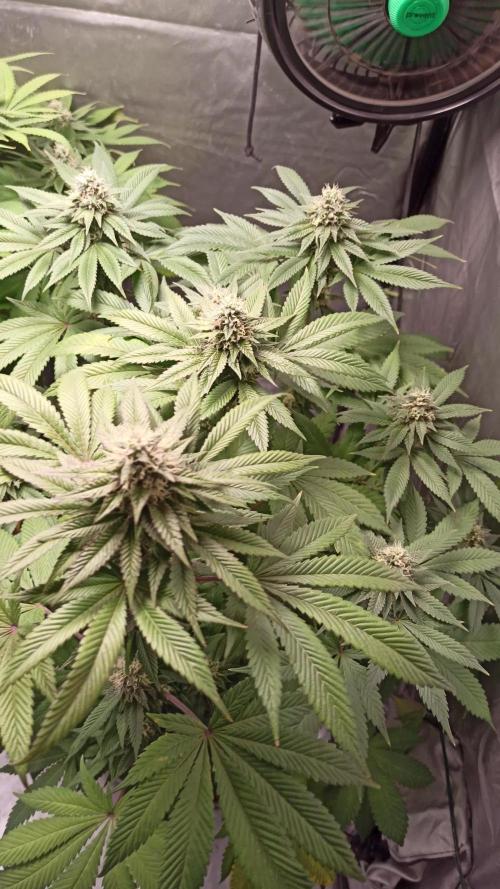
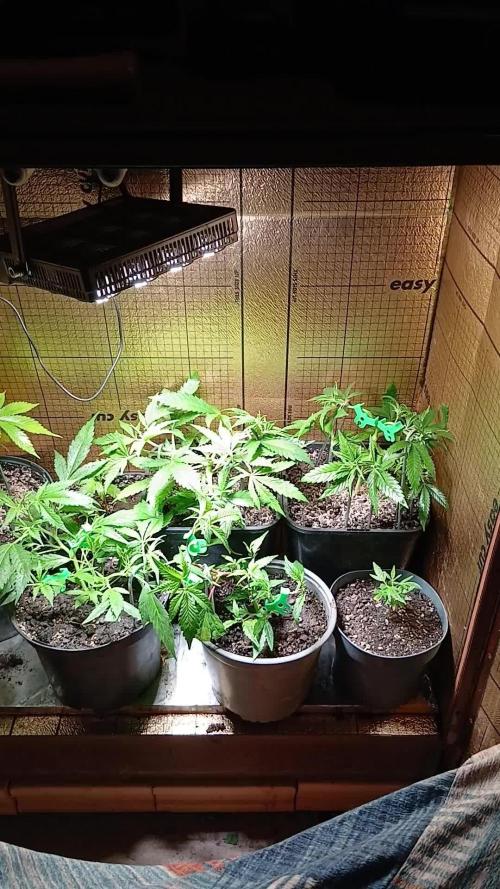
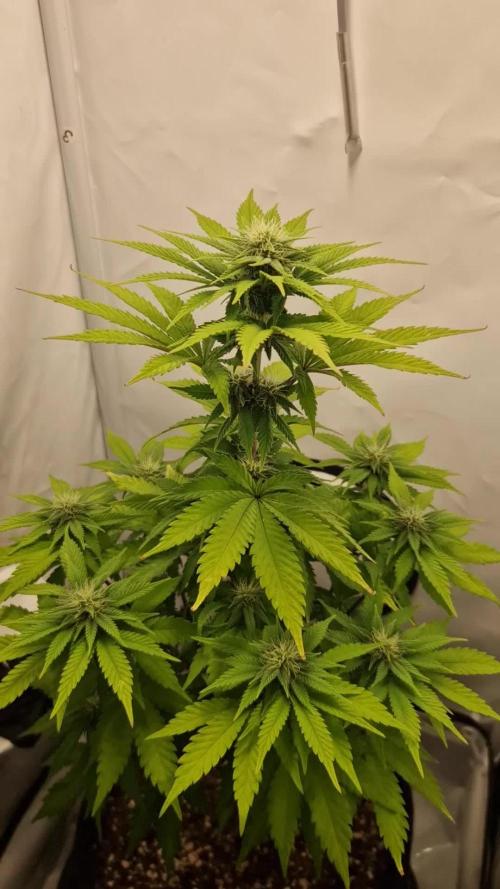
Ya en la recta final familia, están apuntito, solo unos días más. Nuestras lemon kush ya recibieron su lavado de raíces , están sin productos ya solo AGUA. Controlamos de todas formas el Ph igual y que no baje por debajo de 6,2. Bestiales estás flores , un olor muy característico con tonalidades cítricas que recuerdan al limón. Todo un clásico en verdad. Estos ejemplares carecen de brazos laterales, son óptimas para un SOG desde semilla, pudiendo llenar 16 plantas en metro cuadrado.
Likes
10
Share
@Hempcules
Follow
WEEK 13 Both plants have now entered the flowering phase. A large number of pistils have already developed. So far, I’ve managed to maintain an even height, but the plants are currently in the stretch phase and could still shoot up significantly. I’m hoping for compact and balanced growth, as the vertical space in my setup is limited. I’ve increased my light intensity to around 700 PPFD. As a result—and due to the dehumidifier—the temperature in the grow room has risen slightly, but it remains within an acceptable range. The plants are currently watered every two days, with fertilizer added once a week. To improve air exchange, I pump fresh intake air into the tent every 30 minutes for 30 minutes. The coming weeks are bound to be exciting—I’m really looking forward to seeing how things turn out
Processing
Likes
8
Share
Buenos días familia, de nuevo os traigo esta esta 5 semana de floración de nuestras green ak xL de zambezaseeds. Una está algo bloqueada y no quiere comer nutrientes la otra ya va mejor y si come. Ph controlado temperatura y humedad dentro de los parámetros establecidos. Una cepa bastante difícil de dominar muy sensible a los cambios, pero que seguro bien cultivada dará todo de sí, xL su nombre lo dice.
Likes
12
Share
Hello guys 😍👽 This week is the most exciting time of my cultivation. After we grew 10 og creams, today in the third week of flowering, all the seeds showed that they are feminized😍😍 My project has given the right result But more important than this is the final product, which we compare with the father (og kush) and the mother (cake n cream) and the traits it inherited😍😍 Thanks for your comment🙏😍👽 "farah4weed"
Likes
14
Share
Dear Growers , Welcome to Week 6 or Flower week 3 // Day 42-49 from Blimburn Plushberry Auto. Incase of Moving to a New Home . I Decided to skip 3-4 Weeks from every Diarie of the 12x12 Automatic Project . Everything should be Normal in the next Weeks . Whether you're a beginner or an expert, you are warmly invited to join, ask questions, and share your own experiences along the way! Project Setup & Conditions: • Brand/Manufacturer: Blimburn Seeds • Tent: 222cmx150cmx150cm • Light: 2x 720 Watt Full Spectrum • Humidity: 50% • Soil: Narcos Organix Mix • Nutrients: Narcos Products • pH Value: 6 Get Your Epic Blimburn Seeds Genetics or Explore the whole seeds/headshop or Merchandise from This Amazing Breeder. Just Take a look with some time in your pockets with this Link [https://blimburnseeds.com/?blb=dstp8dm] Get another 10% Discount using the code [DSTP8DM] at the checkout. If you want Germinitation results like mine , check out Kannabia Seeds with my link [https://www.kannabia.com/de?ref=61966] and grab the germination device or the strains I used . Trust me – it’s worth it for sure ! Get another 20% Discount at all products using the code [GGD] at the Checkout . Stay curious and keep up Growing —we look forward to welcoming you back for the next chapter soon!
Likes
21
Share
@krewgrew
Follow
Hi I would like to introduce you to my first ever, cobbled together, but so far so good, growers' garden. I welcome and look forward to your ideas and advice. Germination done in between cotton pads. The one seed that didn't germinated was bigger and darker than the others(slightly).
Likes
21
Share
@Excalibur
Follow
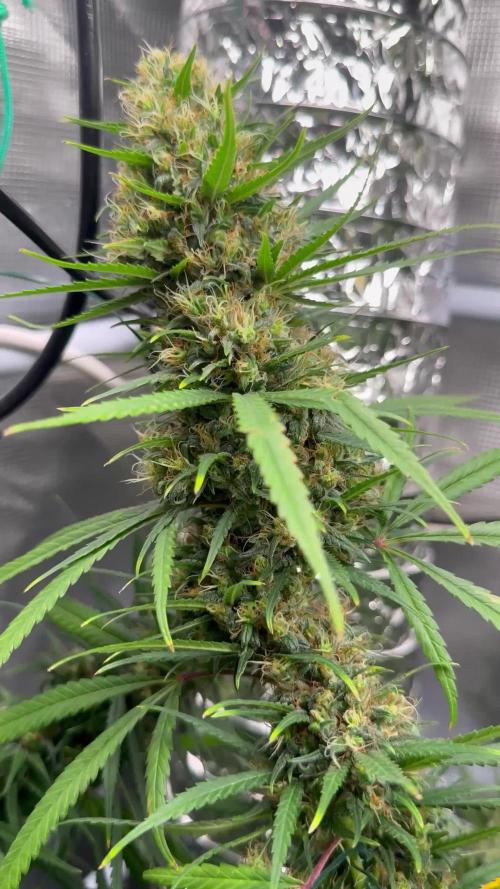
02 October 2018 - Day 99 3rd day of flush and we see her begin to grow nicely. Day 100 - Happy lady as she gets densier and begins to really smell. Day 101 - She is maturing lovely. Day 102 - Orange pistols curl. She is on her way. Day 103 - Mature and ready. has thickened up significantly. Day 104 - Water topped up and pH balanced 5.4 Day 105 - Trimmed after the video.
Likes
9
Share
This was my first time growing a photoperiod and I decided to put her outside along with some autoflowers this past summer. I started Purple Shot Photoperiod Fem. from Exotic Seeds in a one liter air pot and moved her into a 5 gallon phat sack on day 14 when she was 2.5 inches tall.🌱🌱🌱 By the start of week three she was 6.5 inches tall and looking quite happy in her new five gallon home. A short while later she was moved outside to adjust to her new environment.☀️☀️☀️☀️ By day 35 she was 16.5 inches tall and developing a nice bushy structure. She started to flower towards the end of week 10 By week thirteen it was evident this girl was going to be making some nice tight lil nuggets 😁 By week fourteen I could hardly take my eyes off of her as she started to show her fall colors. I harvested her on day 130 18wk 4d She was 43" tall and looking pretty as can be. Her nuggets are not large but they are hard as rocks and sticky as fuck. The original plan was to turn all the outside plants into hash but I like this one too much just the way she is 😋 After a nine day dry and month and a half to cure the dry weight for this girl was 78.50g / 2.80 oz ✌️😎💨
Likes
Comments
Share
@mando5121
Follow
Day1 of week 5 of foower
Likes
Comments
Share
@Slap22
Follow
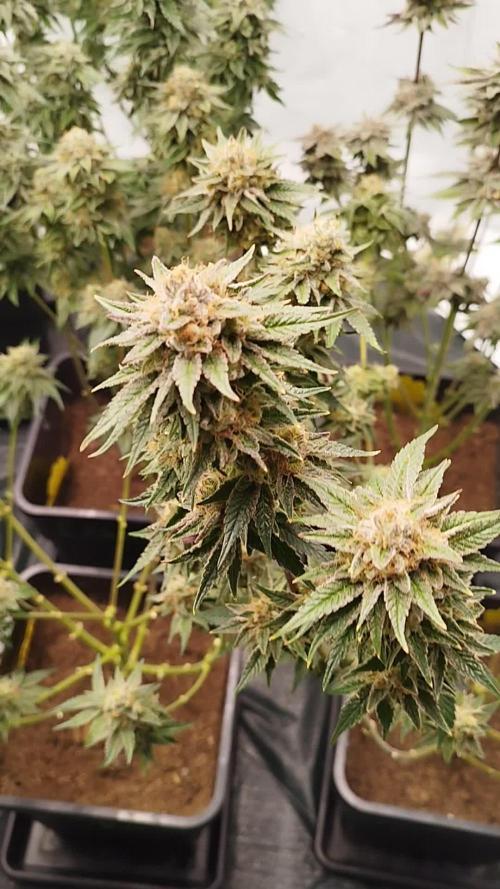
29”x14” canopy around 30 tops
Processing
Likes
20
Share
@Excalibur
Follow
2nd October 2018 - Day 99 Burn slows down Third day of flush and she starts to thicken up. Day 100 - Sweet smell begins as she starts to mature. Day 103 - Begining to mture and dense. Day 104 - Water added and pH balanced 5.4 Day 105 - Last week of Flush
Likes
16
Share
@Mrg7667
Follow
Dont know why i only have a video but Double Ds are just about hitting 23 with the tallest of the 6 and the DD is about 18 inches at the tallest of the 6 Knats seem to be 100% gone pkants are looking amazing definitely getting to the point of needing water everyday tho so transplant before next update is a must! Going into 2gal
Likes
11
Share
@pegonter
Follow
Beginning of week 7 plants faced a severe heat and dryness wave reaching 26°C and 35%hr however irrigation time (and volume) were fast adjusted and the problem was solved. Plants didn't got affected by that as seen. One of 3 early skunks presenting yellowing on leaves and will be chopped soon. Other 2 might wait some more days.
Likes
68
Share
Removed autoflower and put her in her own pot outside the tent. Foliars applied in strong blue 430nm with 4000Hz tone. 20-minute dose prior to application. In essence, you're seeing a combination of the infrared light reflected by the plant, which the camera perceives as red, and any residual visible blue light the plant reflects, which results in a purple hue. I was doing more stretching of the stems, adjusting weights, just a little too much, and it snapped almost clean. I got a little lucky in that it was still connected, wrapped her almost instantly while holding her in place with yoyo's. The core framework is now in place. If your soil has a high pH, it's not ideal; you want a pH of 6.4, 6.5, or 6.6, which is ideal. If you are over a pH of 7, you have no hydrogen on the clay colloid. If you want your pH down, add Carbon. If you keep the pH below 7, you will unlock hydrogen, a whole host of new microbes become active and begin working, the plant will now be able to make more sugar because she has microbes giving off carbon dioxide, and the carbon you added hangs onto water. Everything has electricity in it. When you get the microbes eating carbon, breathing oxygen, giving off CO2, those aerobic soil microbes will carry about 0.5V of electricity that makes up the EC. The microorganisms will take a metal-based mineral and a non-metal-based mineral with about 1000 different combinations, and they will create an organic salt! That doesn't kill them, that the plant loves, that the plant enjoys. This creates an environment that is conducive to growing its own food. Metal-based: Could include elements like iron, manganese, copper, or zinc, which are essential nutrients for plants but can exist in forms not readily accessible. Non-metal-based: Examples like calcium carbonate, phosphate, or sulfur are also important for plant growth and potentially serve as building blocks for the organic salt. Chelation in a plant medium is a chemical process where a chelating agent, a negatively charged organic compound, binds to positively charged metal ions, like iron, zinc, and manganese. This forms a stable, soluble complex that protects the micronutrient from becoming unavailable to the plant in the soil or solution. The chelate complex is then more easily absorbed by the plant's roots, preventing nutrient deficiency, improving nutrient uptake, and enhancing plant growth. Chelation is similar to how microorganisms create organic salts, as both involve using organic molecules to bind with metal ions, but chelation specifically forms ring-like structures, or chelates, while the "organic salts" of microorganisms primarily refer to metal-complexed low molecular weight organic acids like gluconic acid. Microorganisms use this process to solubilize soil phosphates by chelating cations such as iron (Fe) and calcium (Ca), increasing their availability. Added sugars stimulate soil microbial activity, but directly applying sugar, especially in viscous form, can be tricky to dilute. Adding to the soil is generally not a beneficial practice for the plant itself and is not a substitute for fertilizer. While beneficial microbes can be encouraged by the sugar, harmful ones may also be stimulated, and the added sugar is a poor source of essential plant nutrients. Sugar in soil acts as a food source for microbes, but its effects on plants vary significantly with the sugar's form and concentration: simple sugars like glucose can quickly boost microbial activity and nutrient release. But scavenge A LOT of oxygen in the process, precious oxygen. Overly high concentrations of any sugar can attract pests, cause root rot by disrupting osmotic balance, and lead to detrimental fungal growth. If you are one who likes warm tropical high rh, dead already. Beneficial, absolutely, but only to those who don't run out of oxygen. Blackstrap is mostly glucose, iirc regular molasses is mostly sucrose. Sugars, especially sucrose, act as signaling molecules that interact with plant hormones and regulate gene expression, which are critical for triggering the floral transition. When sucrose is added to the growth medium significantly influences its effect on floral transition. Probably wouldn't bother with blackstrap given its higher glucose content. Microbes in the soil consume the sugar and, in the process, draw nitrogen from the soil, which is the same nutrient the plant needs. Glucose is not an oxygen scavenger itself, but it acts as a substrate for the glucose oxidase (GOx) enzyme, effectively removing oxygen from a system. Regular molasses (powdered if you can), as soon as she flips to flower or a week before, the wrong form of sugar can delay flower, or worse. Wrong quantity, not great either. The timing of sucrose application is crucial. It was more complicated than I gave it credit for, that's for sure. When a medium's carbon-to-nitrogen (C:N) ratio reaches 24:1, it signifies an optimal balance for soil microbes to thrive, leading to efficient decomposition and nutrient cycling. At this ratio, soil microorganisms have enough nitrogen for their metabolic needs, allowing them to break down organic matter and release vital nutrients like phosphorus and zinc for plants. Exceeding this ratio results in slower decomposition and nitrogen immobilization, while a ratio below 24:1 leads to faster breakdown and excess nitrogen availability. Carbon and nitrogen are two elements in soils and are required by most biology for energy. Carbon and nitrogen occur in the soil as both organic and inorganic forms. The inorganic carbon in the soil has minimal effect on soil biochemical activity, whereas the organic forms of carbon are essential for biological activity. Inorganic carbon in the soil is primarily present as carbonates, whereas organic carbon is present in many forms, including live and dead plant materials and microorganisms; some are more labile and therefore can be easily decomposed, such as sugars, amino acids, and root exudates, while others are more recalcitrant, such as lignin, humin, and humic acids. Soil nitrogen is mostly present in organic forms (usually more than 95 % of the total soil nitrogen), but also in inorganic forms, such as nitrate and ammonium. Soil biology prefers a certain ratio of carbon to nitrogen (C:N). Amino acids make up proteins and are one of the nitrogen-containing compounds in the soil that are essential for biological energy. The C:N ratio of soil microbes is about 10:1, whereas the preferred C:N ratio of their food is 24:1 (USDA Natural Resource Conservation Service 2011). Soil bacteria (3-10:1 C:N ratio) generally have a lower C:N ratio than soil fungi (4-18:1 C:N ratio) (Hoorman & Islam 2010; Zhang and Elser 2017). It is also important to mention that the ratio of carbon to other nutrients, such as sulfur (S) and phosphorous (P) also are relevant to determine net mineralization/immobilization. For example, plant material with C:S ratio smaller than 200:1 will promote mineralization of sulfate, while C:S ratio higher than 400:1 will promote immobilization (Scherer 2001). In soil science and microbiology, the C:S ratio helps determine whether sulfur will be released (mineralized) or tied up (immobilized) by microorganisms. A carbon-to-sulfur (C:S) ratio smaller than 200:1 promotes the mineralization of sulfate, when the C:S ratio is low, it indicates that the organic matter decomposing in the soil is rich in sulfur relative to carbon. Microorganisms require both carbon and sulfur for their metabolic processes. With an excess of sulfur, microbes take what they need and release the surplus sulfur into the soil as plant-available sulfate A carbon-to-sulfur (C:S) ratio higher than 400:1 will promote the immobilization of sulfur from the soil. This occurs because when high-carbon, low-sulfur materials (like sawdust) are added to soil, microbes consume the carbon and pull sulfur from the soil to meet their nutritional needs, temporarily making it unavailable to plants. 200:1 C:S 400:1: In this range, both mineralization and immobilization can occur simultaneously, making the net availability of sulfur less predictable. This dynamic is similar to how the carbon-to-nitrogen (C:N) ratio regulates the availability of nitrogen in soil. Just as microbes need a certain amount of nitrogen to process carbon, they also require a balanced amount of sulfur. Both mineralization and immobilization are driven by the metabolic needs of the soil's microbial population. Sulfur is crucial for protein synthesis. A balanced ratio is particularly important in relation to nitrogen (N), as plants need adequate sulfur to efficiently use nitrogen. A severely imbalanced C:S ratio can hinder the efficient use of nitrogen, as seen in trials where adding nitrogen without balancing sulfur levels actually lowered crop yields. Maintaining a balanced carbon-to-sulfur (C:S) ratio is highly beneficial for plant growth, but this happens indirectly by regulating soil microbial activity. Unlike the C:N ratio, which is widely discussed for its direct effect on nutrient availability, the C:S ratio determines whether sulfur in the soil's organic matter is released (mineralized) or temporarily locked up (immobilized). Applied 3-day drought stress. Glucose will hinder oxygenation more than sucrose in a solution because glucose is consumed faster and has a higher oxygen demand, leading to a more rapid decrease in oxygen levels. When cells respire, they use oxygen to break down glucose, and this process requires more oxygen for glucose than for sucrose because sucrose must first be broken down into glucose and fructose before it can be metabolized. In a growth medium, glucose is a more immediate and universal signaling molecule for unicellular and multicellular organisms because it is directly used for energy and triggers a rapid gene expression response. In contrast, sucrose primarily acts as a signaling molecule in plants to regulate specific developmental processes by being transported or broken down, which can be a more complex and slower signaling process. Critical stuff. During wakefulness (DC electric current) life can not entangle electrons and protons. During the daytime, the light is sensed as multiple color frequencies in sunlight. Coherence requires monochromatic light. Therefore, at night, IR light dominates cell biology. This is another reason why the DC electric current disappears during the night. The coherence of water is maintained by using its density changes imparted by infrared light released from mitochondria in the absence of light. This density change can be examined by NMR analysis, and water is found to be in its icosahedral molecular form. This is the state that water should be in at night. This is when a light frequency is lowest and when the wave part of the photoelectric effect is in maximum use. 3600
Likes
1
Share
@Zero0
Follow
A bit of (N-P-K) deficiency I added a bit of worm casting and mammoth P as well as recharge I’m gonna keep adding mammoth P every watering which is usually twice a week every 3 days.
Likes
6
Share
@Kannamar
Follow
Well that was a special day, it always make me sad in a way, but this time, I enjoyed the moment a lot. As I wrote in a reply to a comment, things can always be better, and they are with good decisions at the right time. These are the smallest and the biggesr plant, one seed didn't germenated and that's why I had to put a Red Gorilla. Not sure I will try a main mlinning on auto flowering strains any more.... but I think I did it wrong, first I took the one that seemed less strong for the experiment, and having 2 other plants to compete for lights. FIM is definetly a technique I will reuse if needed. It's so nice to have these genetic contrasts, colors, aromas, shapes. Many thanks for all the help you gave, precious. 19/04/2024 lower popcorn buds seems dried already! But still branches don't crack on bends. Will check again on Monday. I finally have received, lately a portable microscope, will be more ususeful next year! But this confirms that lower buds might have need more maturity but did the choice to not over complicate by harvesting in 2 times, my indoor tent is also my drying tent, and I wouldn't have any other place to dry the upper buds separetly while allowing the remaining to harvvest with more maturity. In general I think I might have began the Final part too early. BTW, we smoked the popcorn bud, and it's very promissing, we liked it.
Likes
46
Share
@J4kpvp
Follow
Hello:) I finally harvested today. It all went well, they barely fit in the tent so I had to get a bit creative. Sadly, I actually found mold in the bud that I was suspecting. The big main bud from the sangria in the back right…. I lost about 40g wet but I‘m still happy that I saw it now. Now they have to dry for at least a week, so i‘ll be back with dry weight and stuff like that:)
Likes
13
Share
Day 38- 18/01/22 and we are now in flowering everything is looking good I’m still cutting down the plants from my last grow Afghan kush and once I’m done with that I’ll be moving everything that isn’t chemdawg into the HPS tent!!! Day 41-21/01/22 all critical are now In hps tent!!!!
Likes
19
Share
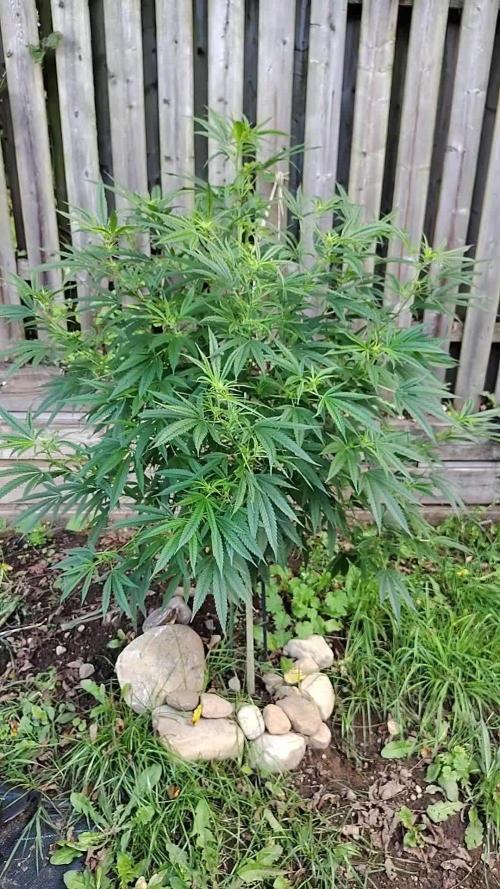
Day 84 The plant appears healthy and vigorous, with broad green leaves arranged in a symmetrical pattern around several strong central stems, The foliage is dense, showing a rich, deep green color that suggests good nutrient balance and sufficient light exposure. The plant is growing in a fabric pot filled with dark, moist soil, which allows for proper aeration and drainage. Several new growth tips can be seen near the top, indicating active vegetative development. Overall, the plant looks well cared for, stable, and in good growing condition.