


Likes
Comments
Share


@Cannabees_grows7691
Follow
The light I had wasn’t strong enough but it worked. Definitely am happy I upgraded to a 720 watt light.


Likes
4
Share


@estevencueto
Follow
Después de unos 4 días málos de lluvia, mucho viento pero nuestras niñas han resistido y se han puesto más fuertes. Solo regados antes con agua de la lluvia y con un poco de botella, sin nada solo pH controlado por última vez antes de proceder al te de compost.
Luego de la lluvia al segundo día de sol procedí a preparar el te de compost aireado.
Basado en 10l.
60g compost de estiércol de caballo
190g hummus de lombriz
Cucharada de harina de algas kelp
Cucharadita de humico fulvicos
47ml de melaza
Aireado por 24 horas ingredientes sólidos en una bolsa de tela así asemejando una bolsa de tela gigante. Lo demas en el agua melaza y humicos. Remover bien disolver melaza luego encender bomba de aire.
La tierra usada de base es una tierra en base de tierra antigua limpiada con agua de lluvia trabajada con humus compost y polvos kraken.. La idea es nutrir la tierra darle vida. Rociado y regado les ha sentado genial. La idea es para todo el jardín un mismo riego.


Likes
11
Share



Likes
21
Share

@rhodes68
Follow
7/27
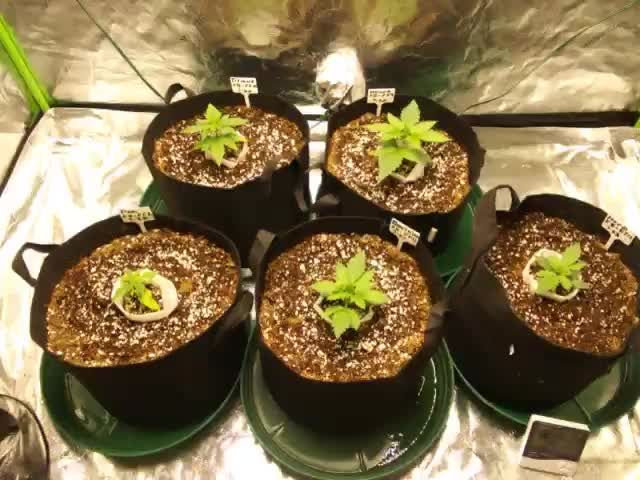
Transplanted as roots beginning to exit the cups on Titania and Pea
Into 5 gal pots one time dose of kangaroots 10ml/gal and Fish SHit 2ml/gal
7/28
They are surprising us with the rapid growth already looking at topping in a few days while still in week since showing green.
Lights on hours reduced due to heat to 16
Nuets increased to next stage
7/31
Being forced to use Cal-Mag per the feeding schedule released by GH was hoping it would not be needed but yes can see the beginnings of def.
Thats one strike on the new nuet line.
Adding 1.5 ml/gal cal-mag on routine basis and not happy about it
8/2
From results we are seeing have decided to go back to the cocotek, this is ok but getting problems we just did not have with the other line.
Some color lightening on her as well as Pea

Likes
16
Share


Likes
7
Share


@Cultivatorcarlos
Follow
everything in the second week of flower went well. she really stretched and the buds quickly started getting fat. also every watering i would notice a very strong odor of weed.
december 22nd 2021: gaver her last half of gallon used in last feeding. also nothing was tested. ph tested at 6.6 last feeding and it usually comes out a little higher after a few days.
january 1st 2022 i noticed the first trichomes.

Likes
10
Share

@420DeepGrow
Follow
📆 Semana 11
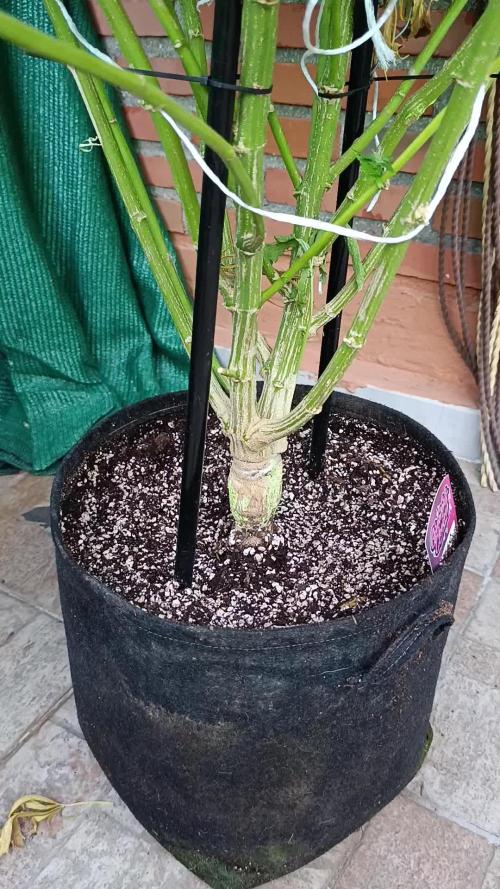
Los cogollos siguen engordando a muy buen ritmo y la estructura de las flores se vuelve cada vez más compacta y pesada. Esta semana incluso encontré la planta en el suelo por el peso de las ramas, así que he tenido que atarlas para mantenerlas sujetas y evitar que sigan venciendo.
Con la floración ya bastante avanzada, reduzco ligeramente la dosis de nutrientes y mantengo el Bloom Booster, buscando acompañar esta última etapa sin forzar la planta. Ahora toca seguir observando cómo continúa el engorde y la maduración de las flores.
⚡ EC de entrada: 1.0
💧 pH: 6.2–6.3
🌡️ Agua: 18–22°C
☀️ Luz: Sol directo
🔥 Nota de cultivo: El peso de las flores ya se empieza a notar de verdad. Los cogollos continúan engordando y las ramas necesitan cada vez más apoyo para mantenerse en pie. Entramos en una fase donde la paciencia vuelve a ser clave y toca dejar que la planta termine de madurar.
¡Seguimos creciendo fuerte! 💪

Likes
18
Share

@Bread_n_Buds
Follow
When the package containing Zamnesia x Tical Nectar Drip arrived, I was so excited I didn't think to save a seed, and now I'm regretting it because it's in my all-time top five. Why?
Because it produces wonderful flowers from every perspective: hardness, density, and weight are unbeatable. The resin production is top-notch, and in a way that only US plants can achieve, the yield is consistently good and lends itself very well to mainlining, topping, mainfolding, and cloning.
This plant is a clone of the already-seeded #1, and it's indeed very similar.
We're talking about a strain with typically American characteristics called Nectar Drip, obtained from the hybridization of a Zamnesia Apple Fritter with a 24K Gold Fangs by Tical. The result is truly explosive, with an apple aroma and a huge amount of resin that makes it perfect for extracting even from residue. The leaves are full of pure resin and smell like heaven.
I'm once again truly embarrassed by her beauty, like when a beautiful girl talks to me and makes me blush. And I have to say, she's not even the best; there are four more epics on the way that might surprise us, one of which is a clone of this one.
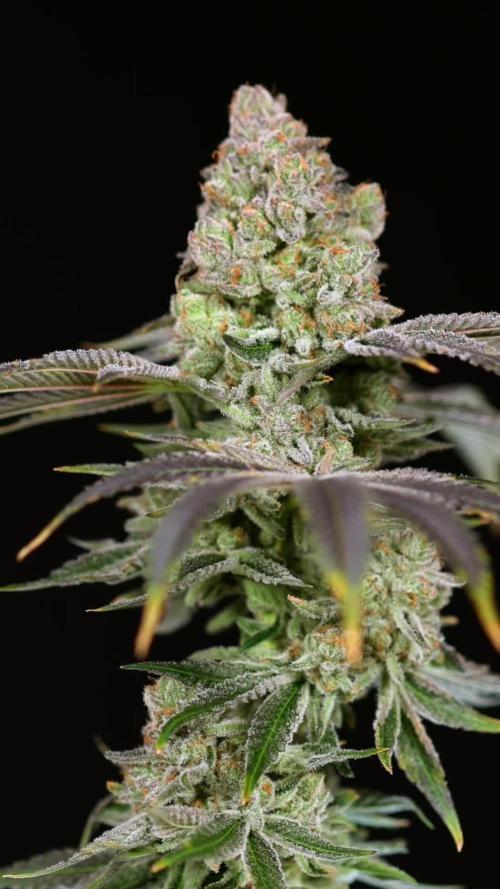
Maturation - The pistils have been looking super ripe for a long time, especially the upper ones, which are very red, and we're still over 90%.
Indica dominant, so we're moving towards the final part of the harvest window compared to usual. The trichomes are about 30% amber, 40% cloudy/milky, and 30% clear, more or less naturally, but I think it's fine; she looks super ripe.
The plant was cloned and left to vegetate for a short while, then directly into flowering. The flowers are all of excellent quality, and the yield is excellent, I think around 50-60 grams.
We chose 100% organic soil, 1000% Plagron, as always.
The soil we chose is the recently launched Plagron Bio LightMix, which will allow us to start with more gradual and consistent watering, without the sudden changes that liquid fertilizers can cause. A week's worth of soil is enough, so don't overdo it.
Choose your preferred style and calculate your results on the website:
www.plagron.com
Visit the new Growshop area on the Zamnesia website:
Z - https://www.zamnesia.io/it/531-growshop
These seeds are sold out and were a limited edition. I'm so sorry I didn't save one, but we can choose from Zamnesia's excellent strains and keep an eye out for exclusive limited editions like this one when they release...
Z - https://www.zamnesia.io/en/35-cannabis-seeds
T - https://www.zamnesia.io/en/35-cannabis-seeds/745-tical
Z - Nectar Drip is a unique cannabis hybrid created in collaboration between Zamnesia Seeds and TICAL. These flowers are pure power, with up to 26% THC and effects that stimulate the mind and stabilize the body. But if you want to try them, you'll have to hurry: only 750 packs are available!
There's nothing better than a good collaboration—we know that better than anyone! For this partnership, we've joined forces with TICAL to create a strain packed with flavor and potency. We brought our delicious Apple Fritter, while TICAL contributed its 24K Gold Fangs. After perfecting the result, Nectar Drip was born. This strain produces potent flowers with up to 26% THC, accompanied by delicious fruity and skunky aromas. Considering one of its parents is Apple Fritter, you can be sure that Nectar Drip has inherited a burst of fruity aromas and flavors. The skunky notes are evident, creating a rich and intriguing profile. Smoking this beauty will leave you feeling relaxed, with a pleasant cerebral euphoria accompanying the experience. It's definitely a great evening smoke, perfect for when you want to take a moment for yourself.
You know it, but I recommend it. You'll find so many wonderful things here, essentially "all the best nature has to offer."
Z - www.zamnesia.com //
Music //
Music by Last Day the Daddy
"Tical 2000 - The Judgment Day" by Method Man.
www.radionula.com
+ Feng Shui Music
+ Frequencies 432 Hz
Likes
2
Share


@PINUFLA
Follow
Día: 78
Riego: 1,5L x Pl.
- Agua
Día: 81
Riego: 1L x Pl.
- FinalFlush 2mlxL
Día: 83
Riego: 1L x Pl.
- Agua


Likes
11
Share


@RandomStreetMerchant
Follow
This is the start of week 8 of flower
The girls are just about done now going to let them ripen for another week then going to snip a lower bud off to check under the microscope to see if they done
The top colas are chunky with the lower buds around the size of golf balls, the left tree has solid buds and the right tree has less so solid buds.
I can smell some amazing aroma emanating from the tent like a gassed up orange HAHAHA, When you agitate the plants they reek like skunk.
Until next time growmies hope your grows are caked in frost 😛 peace ✌️ 09/25/23

Likes
Comments
Share


@eldruida_lamota
Follow
Vamos familia, actualizamos la octava semana de floración y última de estas Forbidden Mochi fast de Seedstockers, Aplicamos varios productos de Agrobeta, que son increíbles para aportar una buena alimentación a las plantas.
Temperatura y humedad dentro de los rangos correctos en la etapa de floración.
La tierra utilizada es al mix top crop, por cambiar.
De 5 ejemplares seleccioné 4 para completar el indoor, se ven bien sanas las plantas tienen un buen color, progresan a muy buen ritmo, ya maduraron las flores y han tricomado mucho, cogieron unos tonos púrpuras rosáceos, están increíbles, ya queda el machetazo, el secado y pasarlas a bolsa TerpLoc , GROVE BAGS, para curarla algún mes.
Agrobeta:
https://www.agrobeta.com/agrobetatiendaonline/36-abonos-canamo
Hasta aquí todo, Buenos humos 💨💨💨


Likes
15
Share


@Lonelygrass
Follow
Strain veramente paura, ho commesso pochi pochi errori e ho gestito tutto molto bene!!!!
Ha un odore allucinante
Barneys farm siete i migliori!
Complimenti!

Likes
79
Share


@bioaccessory
Follow
Оставшиеся две красотки тоже вышли на финишную прямую, и несмотря на мои опасения заметно прибавили за последнюю неделю. Надеюсь, за оставшиеся дни наберут еще.
Одинокая "ракета" в левом дальнем углу бокса навевает мне мысли все-таки попробовать метод SoG, посмотрим, почему бы и нет? Благо орехов достаточно, спасибо спонсорам 😇
Спасибо, что заглянули, и будьте здоровы! 🙏
Продолжение следует...😶


Likes
12
Share


@Learntogrow818
Follow
Going into flower like now I think..🤔 Lol, yes it’s flower time already.🤭
Likes
15
Share


@NiBaMeCa420
Follow
I came to the realization that we forgot to change the height they are now about 50 cm in height and the smell is now pretty strong but nothing out exhaust can't handle
This strain is advertised as fast flowering should be about 6-7 weeks we are in week 4 of flowering at the moment so we really don't see this happening unfortunately, but if it does so we are pleasantly surprised with that being said they develop really nice but slow
And another pleasant surprise is that we have our Trips problem under control
for those whom are following us from the beginning they know how much trouble we had in the past with mites
so very happy to say that the Trips are almost eliminated YAY!
That's all for now
Cheers,
Nibameca

Likes
16
Share


@OrganicPower
Follow
Week 5 flower going well. Nothing much to report. Increased the drip as she is taking in more water. Turned up the fans to 100% for maximum flow, and due to that, the tent got a bit warmer and a bit dryer, so the exhaust fan and humidifier are working a bit harder. 75-77 deg F, 50-60% RH. Not sure if the lights are to intense or if it’s purple coming through, but at the highest tops there seems to be a bit of discolouration on the newest growth, just at the tips of the new buds. But I’m looking really close and it may be purple, not brown. I’ll keep an eye on it and turn the lights down if symptoms worsen. This plant is growing strong and uniform. Average frost so far. Hopefully she keeps growing well until the end. Thanks for the views…keep calm and grow on!

Likes
15
Share


@tokesly
Follow
After reading comments from LoudHouseGrow's videos on YT, saw that drying back in veg helps force roots to expand and search for water. Started drying back plants along with last week's transplant. Plants looked much healthier at the end of this week.

Likes
14
Share


@Xpie77
Follow
Find out that the plants are male and female. Balls right under the female butts. So, it's easy to get rid of the male parts haha