Likes
Comments
Share
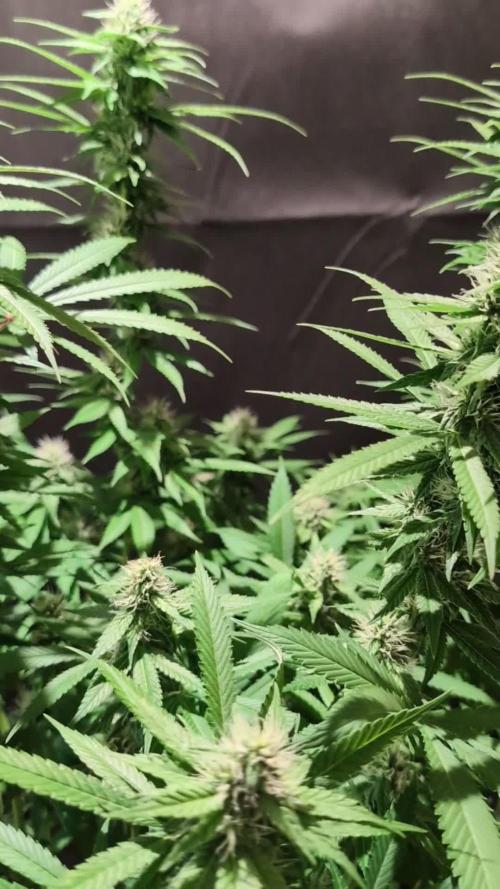
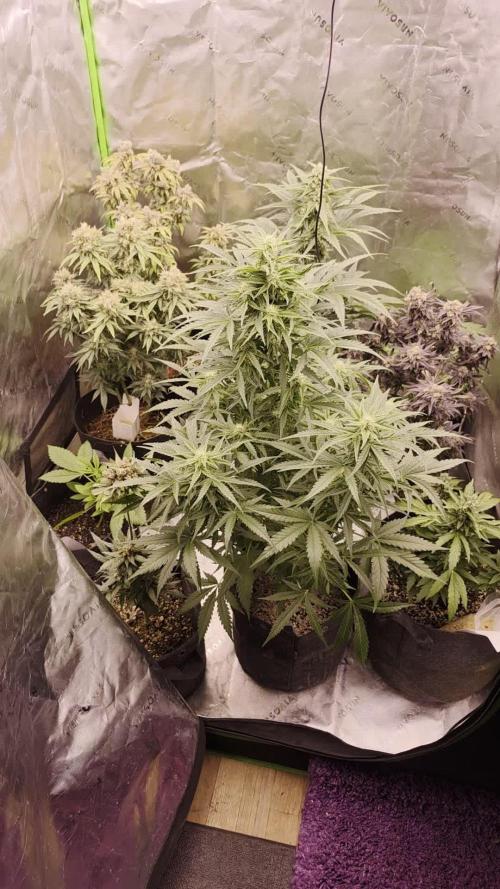
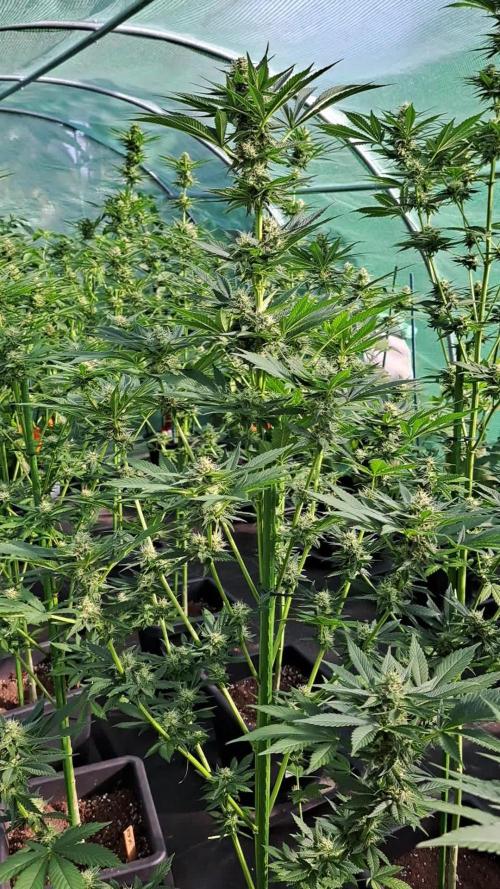
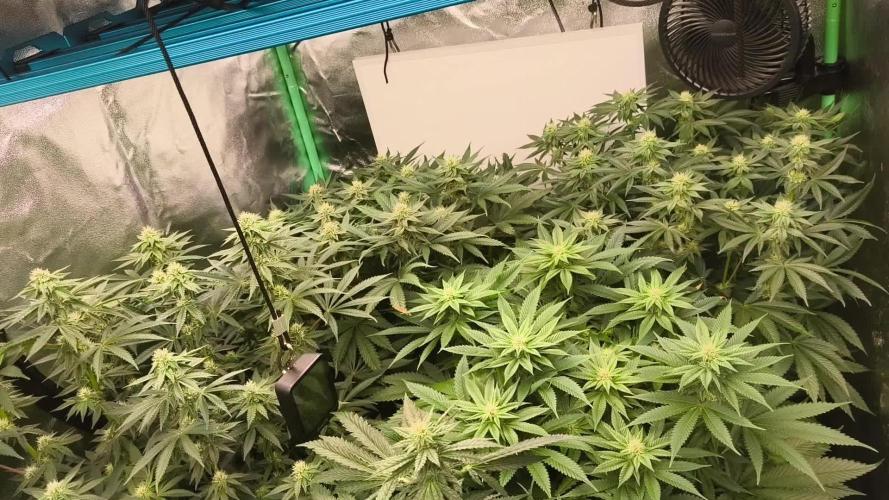
Day 70 - 12/06/2025 Harvest day! 🧑‍🌾 Today I harvested the Strawberry Cola 1. I'm pretty happy with the results. The buds are so big and smell mainly fruity terpenes. Let's see how they will be after the drying process. It was a big harvest with big buds. Expecting to have around 70g dry. 🍁🤞🏽🔥
Likes
2
Share
The nighttime VPD does not need to mirror the daytime VPD. Daytime VPD dictates the pull of water and nutrients, while nighttime VPD acts mostly as a prevention tool. A high nighttime VPD increases the risk of the leaf temperature dropping below the dew point, which can trigger bud rot and powdery mildew. Switched down to 12's hours of light mid-week, changed spectrum, increased light intensity from 840umol up to 1150umol at current height. Overnight from 800ppm to 1500ppm, morning compensation point (microorganisms) 46-47 days from germination, she fills the canopy herself, once the apical dominance is broken. Measuring a plant's overnight CO2 emissions provides an accurate estimate of its dark respiration rate. Because photosynthesis stops in the dark, you are isolating the respiration process, which allows you to gauge how much stored energy (glucose) the plant has consumed and estimate the scale of oxidative phosphorylation. Oxidative phosphorylation is the final stage of respiration that generates the bulk of the plant's ATP (90%) and relies directly on the oxidation of these respiratory substrates NADH and FADH2 along with the consumption of oxygen. From a thermodynamic standpoint. Growth is an energy-capturing process, and the rate of that growth is bound by the available free energy (Gibbs free energy) and the First Law of Thermodynamics. While the ceiling or upper limit is dictated by free energy (such as photosynthetically active radiation), the actual amount of growth relies on how the plant balances that energy with other limiting factors. These are often described as the nine cardinal parameters of plant growth. 4 Above, 5 Below. If any one of the 9 becomes bottlenecked, the entire plant's cycle is restricted. Operating an 80F+ environment at night to force rapid carbon conversion comes with major drawbacks, as the biochemical processes work differently than the deductive logic suggests. While raising nighttime temperatures to 80F indeed accelerates respiration and speeds up the conversion of captured sugars (sink activity), doing so also radically increases the plant's overall metabolic baseline. If the plant's metabolic rate is artificially forced too high via heat, it can actually "burn" through more energy than it managed to assimilate during the day. This leads to carbohydrate starvation, stretching, and a net loss in final biomass yield. 400 ppm is near the standard ambient level; the plant's stomatal intake is the primary limiting factor, not the dark-reaction enzymes. To push 45 DLI without burning out the plant. Trying to force the conversion of a massive daylight DLI in a compressed time frame (12 hours) becomes highly inefficient because the Rubisco enzyme simply hits a saturation limit. To successfully convert a 45 DLI into dense, productive mass, the ambient CO2 generally needs to be elevated to the 1000 to 1200ppm range. This creates a steeper concentration gradient, driving the stomata to inhale CO2 fast enough to match the high photon energy. It's not all about the amount of light, but the ratio too, as this will dictate growth through the ratio of phytohormones. In order for correct bud development, there needs to be a correct ratio of RGB. Different wavelengths have different penetration depths. When one grows using top-down lighting, only the entire canopy is limited to 2-3 layers of leaf, meaning there will only be correct bud development in those layers, regardless of getting 45DLI. The biomass potential of a plant is linked to root mass. Generally, when a plant reaches its maximum biomass, you can help to chop off parts of the plant that are in less than efficient areas of the plant (low light) so that it can create new biomass growing towards the light. Strength is the maximum potential, and power is the rate of conversion. You can have the biggest veg period of 18 weeks, and it means nothing, as soon as you start flowering, the chronological clock starts ticking, the only metric that matters to bud size is how much energy you convert each cycle, not by how long it took you to build the framework, it helps a lot nonetheless. Not saying anyone should not defoliate for a reason, only that you should have one, and at the right time. Don't defoliate 30+% on autoflowers or 4 weeks into the flower period and expect an increase in yields; it doesn't work like that. There is room for dictating growth patterns and clearing out overcrowded nodes, but it needs to be done in veg because once that timer starts and buds start growing, it's all just energy conversion. One barely needs to defoliate at all in a 4x4 because with side lighting, turning a 2d canopy penetration into a 3d, even lower buds are 90% the quality and density of top ones. The rate of photosynthesis and the ultimate density of lower buds aren't just about the sheer number of photons PPFD. The specific ratio of R:G:B dictates canopy penetration and drives different photochemical reactions. The Electron Transport Rate (ETR) measures the speed at which electrons are driven through Photosystem II (PSII) during photosynthesis. The ratio of Red, Green, and Blue (RGB) light heavily dictates this rate. Plant leaves continuously perform cellular respiration regardless of the time of day, using energy and oxygen to fuel essential metabolic maintenance. If you over-defoliate, the remaining canopy may be unable to produce enough net sugars during the day to offset the constant respiratory demands of the plant. Must balance fixation with assimilation; there's no point in capturing 45 DLI if you only convert 20% every cycle due to an extreme lack of respiratory capacity to perform cellular oxidative phosphorylation. You can have a 4x4 canopy or a 4x4x4 canopy, yes, we know that side lights are not as effective at absorption from the sides or underneath, but it's not about DLI, it's never been just about efficiency, it's about the penetration ratios of RGB that drive ETR of/photosynthesis and trigger correct bud development. The size of each bud is its own ability to perform the ETR required for its own personal growth, and bud development is dictated by the ratio of RGB. It drives localised growth and acts as a regulatory switch for that development. Turgor pressure is another very important factor in understanding if you want big buds, for it is the "steam engine" that dictates the rate of bud expansion. Simply, a lot harder to achieve metabolically at ambient 75F than at say 86F Because buds have less chlorophyll, they do not suffer from the same photosynthetic shutdown that over-exposed, light-stressed leaves do. They can soak up direct light energy to swell in density and size. Their tolerance to intense light is heavily limited by the temperature and humidity, but if you can control those temps and keep the rot away, buds have a much, much higher tolerance to high light than leaves. Beneficial to hammer with high light before trichomes appear. Balancing this with trichome maturity is key for rich terpene and flavonoid profiles, want it just right, somewhere in the middle, not too much, not too little. Find cannabis plants can defoliate themselves come harvest, given the right signals. Every last ounce of potential is recycled into buds by the plant itself (senseceance), given you can keep the level of conversion high enough to prompt a need to do so. Get the canopy @ optimal PPFD range, 45-55DLI, then let the plant "stretch" the stems into a "PPFD range much higher, one that leaves don't like to grow in, but buds thrive in. What is optimal for a bud is different from what is optimal for a leaf photosynthetically. Genes provide the blueprint, but the environment dictates how, when, and if those genes are expressed. Must first signal the condition to increase the expression you want to exist through stress and response, cause and effect. A well-buffered CEC medium prevents extreme nutrient swings, allowing plants to maximise their dedicated genetic expression. A plant is either genetically expressing "growing" or "recycling" genes based on its nutrient starvation level in the medium. Constantly toggling between "growing" and "recycling" hormonal states creates a futile cycle that wastes valuable metabolic energy. Plants rely on sophisticated biochemical switches to manage this trade-off and prevent rapid fluctuations that disrupt that balance. This energy inefficiency is a recognised biological challenge. Plants avoid this costly "flip-flopping" by using hierarchical master regulators (like the TOR and SnRK1 protein kinases) that act as strict molecular switches. These networks enforce cellular commitment to either growth or survival, preventing mixed signals. This is something that was missing from previous grows. Under nutrient-rich conditions, TOR promotes protein synthesis, cell division, and structural expansion. Under starvation, TOR is inhibited, and SnRK1 is activated. This triggers autophagy—where the plant breaks down old macromolecules and organelles to scavenge and reallocate essential nutrients to critical sinks. "What's the point in flushing?" The core idea behind a PK booster is to deliver a massive, concentrated surge of P&K exactly when buds are swelling in conjunction with a N starvation. Because these are short, targeted windows, the nutrients must be highly bioavailable so the plant can process them immediately. As soon as you go "organic," that's out the window. Much slower release, uncontrolled, very difficult to "spike". to cause the ratio that will initiate a response. High-volume PK spikes rely strictly on the immediate uptake capabilities of mineral fertilisers. Making it far less efficient in organic/living soil setups. When you use organic nutrients, it changes the dynamic with which the plant delivers and trades its nutrients; organic is always releasing new nutrients into the immediate EC. This prevents a lot of autophagic responses from occurring due to a constant stream of new nutrients into the immediate medium's EC. This can prevent nutrient starvation from being signalled. PK boost is essentially just N starvation, triggering an autophagic response. Concentrated ratio of P&K while tapering off the Nitrogen base. To the plant, the sudden drop in Nitrogen registers as a severe environmental stressor—essentially, the beginning of starvation protocols. She aggressively strips nutrients and proteins from older leaves and vegetative structures and shuttles them directly to the developing flowers and fruit. Ta daaa. Call it a PK booster and sell it. Nothing to do with the P and K itself, it's the ratio immediately available in the medium triggering a nutrient recycling mechanism within the plant itself; all the "booster" sells is the trigger to the signal. PK BOOST with 50% ammoniacal N signals floral maturation. PK BOOST with N starvation signals nutrient recycling/sinking. Very difficult to initiate a response when organic nutes are doing their thing. It takes 4x5x more water significantly to leach or wash ammonia out than it does nitrates. This can prevent triggering N starvation from having its normal impact. Manipulating the C:N ratio in the medium. One autophagic response has multiple potential signal triggers. Nutrient starvation is not an option.
Likes
28
Share
Bonjour à tous les padawans et maîtres jedis Je n'effectue pas de rempotage je décide que le pot de 11 litres sera son pot définitif car la plante mesure déjà 1 mètre et je n'ai malheureusement pas la place pour géré des plantes qui dépasse 150 centimètres Si j'effectue un rempotage dans un pot plus grand elle les dépassera allègrement Cette plante fera toute sa floraison sur mon balcon (elle y est depuis 15 jours) ce sera donc une véritable culture hybride Elle aura effectué la quasi totalité de sa croissance en chambre de culture
Likes
27
Share
@Major
Follow
hello everyone I had a very positive week on my Barney’s Tropicana banana colas are forming and hardening full of resin are on the flowers and leaves the harvest is coming soon I am very happy good luck everyone😘👍👍👌🙏🏻
Likes
86
Share
@CANNASIM
Follow
------GENERAL COMMENT------ Girls are moving forward without troubles, i'm pleased not having to deal with issues. I'm breaking down the feeding schedule like: Sensi Base + Bigbud*(or pk booster) + Recharge > VeloKelp+Natures Candy+Bigbud*. So there is constant feed, every other day mixed in 1.5l water. Once a week i give Cal Mag 2ml /l. Not touching the girls with any HST or stress since I switched to flower. Is the first time i'm running recharge from the beginning to the end, have to say that is solid. ------GG.AK47 COMMENT------ What a pleasure to see that many colas and a vibrant girl giving fruits! 😎👊 I'm very curious to see the results in this one, solid strain! Aroma is gasy and diesel like.
Likes
17
Share
@GutterHoe
Follow
So not nitrogen deficiency. It's light burn. Being that my lights at the highest it can be I am starting to let it have some rest at night. 20/4 now. Already the leaves are less brittle. Ph is balancing. Buds are fattening up nicely.
Likes
7
Share
@Nikkov
Follow
Well, another week has passed and the end of the second week has come and the pistils have already shown themselves and I continue watering with top crop bloom, first time testing this fertilizer and I'm only using two of them, top veg and top bloom, next cycle I'm going to use General Hydroponics fertilizers because I have a friend who uses them and he's having great results, I still want to talk to my friends about this strain because I think it hasn't grown as it should, but anyway we're studying to improve ourselves for the next ones, the rest is all experience for the next ones it grows. =D
Likes
43
Share
@sleeve
Follow
Week 2 of flower. Transitioned into flowering nutes of the General Organics GO Box line as second week starts. Stretching an inch to 2 inches a day right now.
Likes
2
Share
📆 Semana 7 La Papayton de 42 Fast Buds sigue su evolución espectacular. Los cogollos se vuelven más densos y pesados, cubiertos de una resina brillante que resalta cada detalle. Los tonos grisáceos se mezclan con matices rojizos, creando un contraste único que anuncia la madurez avanzada y un carácter muy definido. Las ramas laterales siguen sosteniendo con fuerza el peso floral, mientras la reducción de hojas permite que cada cogollo luzca en todo su esplendor. El aroma tropical se intensifica, dulce y afrutado, impregnando el espacio con notas exóticas y envolventes. La formación de tricomas se acelera, presagio de una floración potente y llena de brillo. 🌸 La planta sigue demostrando equilibrio y vigor, acercándose a su punto álgido con una energía contagiosa. ¡Seguimos creciendo fuerte 💪!
Likes
12
Share
everything is still going great new growth starting to show trying to debate on the veg time due to small pots introduced a slight breeze to strengthen stem
Likes
19
Share
All same strain but growing differently due to different environments. Humidity issues resolved with dehumidifier. Runt had to be pruned and still so many buds. Single GG in tent is short and stocky ... Nice crystals. They smell wonderful.
Likes
29
Share
22/11/22 - Most plants starting to have yellow sites, pre flower approaching soon! Just waiting to see some pistils before moving onto bloom nutes 25/11/22 - last heavy defoliation and light training - moved onto bloom Nutes for the remaining 3 days of the week Per 5L 20ml Bloom A+B 10ml Voodoo 10ml Piranha 10ml Bud Candy
Processing
Likes
6
Share
@Ferenc
Follow
Hi there! First week I have looked after the plants alone and they are excellent. Fruit Tree is getting the fastest and the densest buds plant beyond them so I think she is the fastest. No more ferilization for her just clean water every day I am planning to harvest at the beggining of February. Rest of them look fine maturing with time buds getting thick. All good so far back.next week.
Likes
18
Share
@Budhunter
Follow
Week 7 started, plants are going well, biscotti mints 1 looks a bit behind of biscotti mints 2.. I flushed both plants, one in the beginning of the week 7 and number 2 after it dried out from last watering yesterday.. breeder says plants will be ready in 8-9 weeks so now only water and watch the trichomes to harvest in the best time 🙌🏼
Likes
11
Share
@tangie
Follow
I have started flushing with pH-adjusted Flawless Finish solution, expecting to harvest somewhere around the end of this week, although I will continue monitoring pistils and trichs. Upd: Added back 50% base nutrients and some flowering additives after researching some of the first responses to my flushing question. I learn every day. Even that which was scientifically proven true one day, might be even more scientifically proven absolutely false some time later (not related to flushing specifically). Thank you kings! Upd 2: Okay okay I cooked her with some cosmic rays or whatever those Chinese quantum bars emit — purple rays, I'll call it — that's on me. Turned them 30% down to see what's up. Light burn was not on my mind, because otherwise the leaves were not really curving that much, considering that this is 3 weeks overdue wrt advertised. Sorry about that, did not pay enough attention.
Likes
10
Share
Growth, growth, growth…. They are vegging out now! Definitely seeing the size of my tent getting smaller and smaller this week. Getting ready to bloom soon! I do have to note … the funny guys on the side are from a failed attempt earlier grow this year. We def weren’t ready for them… they got cold, the soil wasn’t right. I got all of that right finally but they instantly went into bloom and def weren’t ready. Oh well!
Likes
64
Share
@Prof_Weed
Follow
Die Sour Jealousy von FastBuds wurde entlaubt damit für die restlichen Tage auch an die unteren Regionen Licht kommt. Zudem habe ich ein Scrog Netz drüber da die Pflanze nun alleine im Zelt steht. Ab heute 2 Tage Flash Clean von Terra Aquatica, dann 8 - 10 Tage Final Part und dann wieder 2 Tage Flash Clean. Mein Cannatrol wartet schon sehnsüchtig auf die Buds. Die Wurzeln riechen ein wenig,liegt aber daran dass ich das Peroxid nun seit 2 Wochen weggelassen habe. Es interessiert die Pflanze aber nicht, sie sieht aus wie aus dem Bilderbuch. Ich schätze mal 150 g Trocken sind das..
Likes
11
Share
Weeks with so many changes. I've passed all this time finding best configuration nuts, adding and removing from every irrigation in little quantity, from infinite different bottles, but EVERY TIME some miss, some deficiency appear. i mean that Plagron doesn't have ALL the necessaries traces for growth, Advance nutrients so difficult to calibrate, and every irrigation was a nightmare until now now i'm using MEGACROP like base nuts with some booster (if girl tell me need it) and plants restart to growth and being beautiful don't want to pay for water in my nuts, don't want to need every time calcs when i need to change rates anymore now girls looks perfect and i'm feeling stupid 'cause it's so easy to don't have problems Just use MEGACROP ------------------------ Purpp #2 and Gelato FB #1 went in flower during this week i think it will stretch next one others (with same birth) have preflowers
Likes
4
Share
Haven't got the hand of the nutrient think it takes to long on my phone so I'll take a pic later when I flush out in 1 or 2 weeks hopefully I make the contest