


Likes
Comments
Share


@DoItBigGrows
Follow
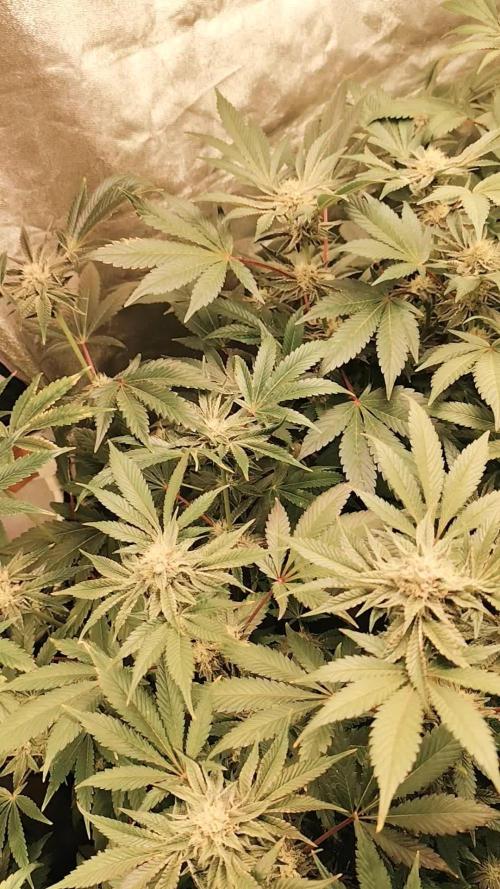
Waiting on my new Opulent Systems 3x3 to come in so I can get these two out of the 4x4.



Processing
Likes
14
Share


Likes
43
Share


@TheBulldozerSicily
Follow
Pronti per iniziare un nuovo ciclo aspettando che queste siano pronte per fumarle... questa sera mi sentirò un po più solo, dato che non andrò a visitare le mie cucciole e non controllero ec e ph... Inizio al più presto.. la pianta é vita!
Likes
5
Share


@Luv2Grow
Follow
Day 15 - Starting week 3 and all is good and seems to be on track. Will up the water intake just a tad and will start giving her a light feeding of Trchnaflora nutrients this week. Gave her a small amount of plain pH’d water today and a foliar spray.
Day 16 - She’s still coming along nicely and gave her her first feeding of nutes today. Only went about a quarter the suggested dosage and only about a cup and a half watered around the base. I’ll keep an eye on her to make sure she takes everything in ok.
Day 17 - Had to give her a bit more water today, the soil was already dry according to the soil meter. She took well to it yesterday so she’s definitely not overwatered so should be good today.
Day 18 - Nothing new today, just some updated pictures and checked to see how much height she gain and very minimal right now, about 1/8 of an inch bit looking nice and heathy. Her “lower” growth is starting to grow a bit but still seems a bit early to start some LST, will probably wait until next week or so.
Day 20 - Almost the end of week 3 and she’s doing great. Gave her about 200ML of plain pH’d water today and I’ve notice she always droops a bit after giving her some but picks right up after a couple hours but will still keep an eye on her to make sure it wasn’t too much. Other than that, she still somewhat short but her lower growth is coming up pretty good so want to start some LST soon.
Day 21 - The end of week 3 and decided to start LST. She’s starting to branch out nicely so wanted to get as much light to the other branches as I possibly could. She’s good on water for a few days but did give her a light mist.


Processing
Likes
6
Share


@ladyjane
Follow
7/18 - Transplanted all three ladies into 3 gallon pots. As I did I sprinkled Oregonism XL (mycorrhizae) to the root ball to assist the roots in adhering happily to the soil. Then I watered with RO water and CalMag.
7/20 - Fed with liquid nutrients
7/22 - Started the brew on Terp Tea Grow. Gave all a light water and a foliar spray of Extreme Serene.
7/24 - Top dressed with Elemental (calcium supplement) and watered with the Terp Tea Grow. Both ladies are looking healthy and strong. They are full and vibrant. Will be flipping to flower at the end of next week!
7/25 - Check out Struggling Jack! She is the biggest one of all three! You would never guess she ever struggled. It's my opinion that the struggle actually made her stronger. Go Jack!

Likes
14
Share


@AndrewC
Follow
So this is the Tear Down week. The timing of it makes it so i will need to the harvest flag in a few days when I can weight and test the plants.
I have included the Cleaning, and Cutting and some Root Porn.
I will make the harvest post in about 4-5 days, when I can trim these plants. There is a lot of Plant here. I got way more than I was expecting. I don't have a scale that measure this amount of plant, without taking like 10 measurements and then adding them together. So I will just be posting the dry weight. I will post the wet weight as dry weight * 1.65.
Autopots: Wow, what a great product. I have been blown away by how well and how easy it was to work with them. They really did solve the watering issues. Excellent product. If you are a beginner, start with Autopots.
-= Lessons Learnt =-
- Overdrive the air to your Autopots. In my control plant, I used a small rectangle air stone (instead of a standard air dome). This lead to root rot and some other issues, it also put significantly less air into the water. The root rot, give the material for the Brown Algae to grow. Using a huge Air-disc-Air-Stone would be an excellent combo to mix in with the air dome itself. Something like this: https://www.amazon.ca/Pawfly-Diffuser-Suction-Hydroponics-Aquarium/dp/B01MY3AQ33 at the bottom and the air-dome on top of it, will be what I do with my next experiment.
- Air stone in the reservoir. I had two instances where algae grew into the res. An air stone would have helped. It would have also helped my control plant get less root rot. Given the amount that the air-domes and air sources got engulfed, having the water have more o2 in it would have only been beneficial.
- Don't grow 6 plants in a 4x4. Since my control plant was about 1/8th the size of the others, I think I could have grown 5 in the shape of a 5 (on a 6 sided dice)⚄ This placement would give a much more spaced canopy for airflow and more importantly light. The sides of some of the plants were lighter green and produced larf due to lack of light penetration.
- This tent was on 19-5 schedule. This worked out very well for this strain. After every lights on, they were in the praying position, so this strain was able to recover in that 5hrs off. If I had more seeds, I would run these again, and try 20-4. I think this strain could handle it. All for all, I think I'm going to 19-5 as my default timing. This kept up a solid DLI.
- Staring at .9EC (really .7 EC cause my water here is .2 EC) Then bumping up at .1 a week, until 1.6EC worked out VERY well. I experimented on this crop all the way up to 1.9EC, which burnt the tips of this plant. I think if I did this strain again, I would do 1.6EC until 3-4 weeks left then crank it to 1.9. It did plump them up when I went to 1.9, however it left them looking rough. Bulk was added though.
- Sticking to 6.0PH for all of veg, and 2 weeks into flower worked great. The plant had solid and consistent color and leaf shape . The plant's did get hurt, due to some issues (as noted on the weeks). I switched to 6.5 PH in the last 3-4 weeks and it helped them recover, and plump up noticeably.
-VPD. The #1 thing I focused on was VPD. I keep it .9kpa range, as best as humanly possible. It was honestly, HUGELY noticeable compared to my other grows. I know truly understand the value of properly dialed in VPD. This is the one lesson that will stick with me forever.
- Super-cropping: On the plants I give the chiropractic treatment too, had much thicker stems as much larger channel internally. I did this treatment to 4 of the 6, and the 4 that had it done has larger buds and recovered from defoliation faster.
TLDR; VPD is king. Super-cropping is worth the time. Keeping PH and EC dialed in were all wins. Autopots kick ass.
Likes
5
Share

@Kardo
Follow
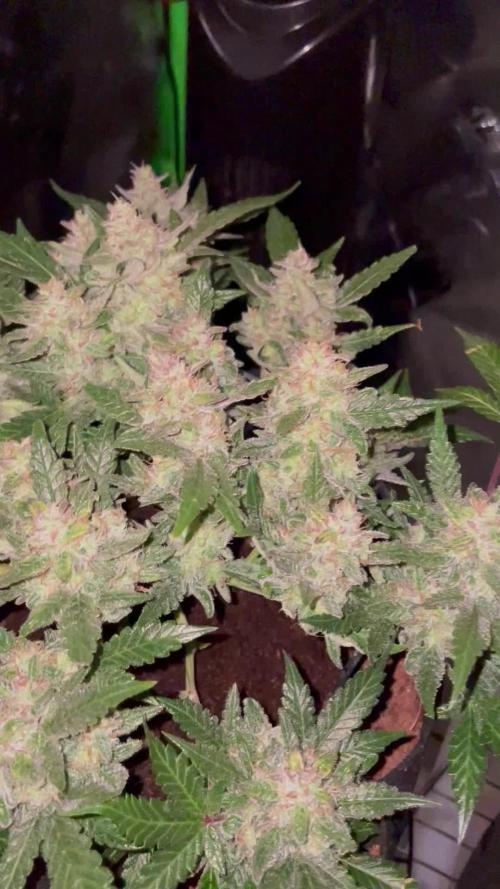
Sie riecht so gut hat einen süßen und leichten erdigen Geruch die Pflanze wird nur noch voller Zucker



Likes
2
Share


@eldruida_lamota
Follow
Vamos familia cuarta semana floración de estás Pink Runtz de RoyalQueenSeeds.
Que ganas tengo de ver el progreso de esta variedad, las plantas están marcando una deficiencia que estoy ya solucionándola aplicando los nutrientes necesarios, y estos días espero que recuperen el color.
La cantidad de agua cada 48h entre riegos.
Esta semana ya añadimos nutrientes de floracion estas próximas semanas veremos cómo avanzan.
Agrobeta:
https://www.agrobeta.com/agrobetatiendaonline/36-abonos-canamo
Hasta aquí todo, Buenos humos 💨💨💨
Likes
19
Share

@BlaKX
Follow
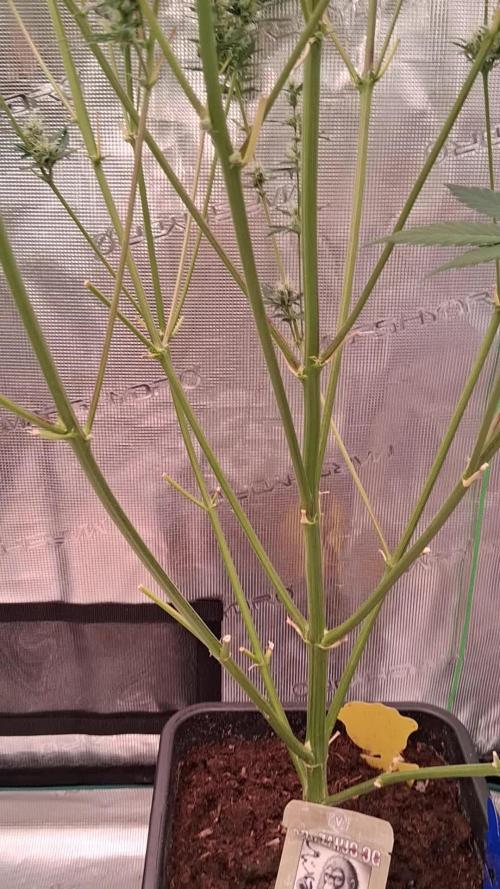
Ai Gude Growmie und Willkommen zur 7 Woche,
Ich habe die Pflanze ein letztes mal entlaubt sowie PK13/14 verabreicht. Mittlerweile sind die terpene extrem ausgebildet und gassy!!!!
Likes
49
Share


@masterofsmeagol
Follow
6/15. Glad I listened to my intuition and held off watering. IT Rained andctheb again last night. Plants seem to be doingvreal well. Slight burn on lower leaves where it was before from being in the garage and I found on spot that LOOKED like it could've been caused by a pillar but it's right on a burn. I sefoliated one leaf. This is minor stuff. Next watering I'll be adding silica. I'm not giving nutes until the plants tell the need them. The 3 gallon ones may receive nutes first as they'll run out. I'll update as I progress.
Went back over at 8:30. It's just overcast with showers. Plants seemed to like it. They all look good. Noticed a chunk out of a leaf and a POSSIBLE pillar spot. I'm going to have to get the BT out and and give the girls an application. I'm waiting until they settle in a bit more though. I need to start LST as well AND the light dep. Unfortunately "life" has made things difficult. I'll get back over there today though and I'll start the light dep. Kinda makes me wonder though. The 1pth planet I wanted to light deo is tge same size as the others in the much bigger containers. The thought came that maybe I should just hold on to them as extras in case something happens. I also am going to start silica next watering but it will be a few weeks before any nutes are given.
UPDATE: WENT BACK OVER AT FIVE AND TOOK ACSHOT TON OF PICTURES. IM TRYING TO UOLOAD NOW. THINGS ARE POPPING OFF AND IM GETTING A NICE SWEET SKUNKY ODOR. WHILE I WASCTHERE WE GOT A QUICK SHOWER. DIDNT LAST MORE THAN TEN MINUTES BUT IT RAINED HARD. I FOUND A TEMPORARY SPOT TO LIGHT DEP THE TWO PURPLE PUNCH AND THE ONE TENTH PLANET. I DONT SEE ANY LIGHT LEALS AND ITS SURE AS HELL DARKER THAN IT IS AT NIGHT. I'LL SEE HOW IT GOES LEQVING THE COVER ON ALL NIGHT. IF IT DOESNT WORK I MAY JEED TO ADD A FAN OR CHANCECTHE SPACE. I ALMOST DIDNT WANT TO DO THIS AS THE 10TH PLANET IS KEEPING PACE WITH ITS SISTERS, DESPITE THE SMALLER POT. OH WELL I WANT TO GIVE IT A SHOT AND I DONT WANT MY CAGE OVER CROWDED. I'M LOOKONG TO DO A 6:30 TO 6:30 SCHEDULE.
6/16 First night of light dep for the three little ones. I won't be able to call them that soon. I'm currently trying to upload a video. My grow buddy mentioned the droopiness of a couple of my plants in this video and how I hadn't been watering. This kinda scared me so I ran over and checked the too few inches on the two that had a little droop and came out dry. I had some water already phed ready to go (I'm hoping that the ph doesn't change if it's stored a day or two) and used the gallon to moisten the dry topsoil. Looking back over my diary we have had nothing but rain. I then tried the "lift the pot method" and came to the conclusion that these bags were indeed still holding moisture. I assumed they would be considering the thunderstorms we've had. I held off on fullt watering because the weather said the next dry day is going to be Monday. Today is Friday so thats two solid days of rain. Three if you count today through the night. I concentrated my watering of the one gallon on the couple plants that appeared to droop. If it doesn't rain like they say it will I will need to water. I need to set up a decent watering schedule but I need it to hold off raining long enough to do so.
UPDATE: I WENT BACK OVER AND PUT THE 3 GALS IN FOR BED AND CHECKED OUT THE REST OF THE GARDEN. I WATERED THE 3 GAL GIRLS A LITTLE MORE SINCE THEY WONT BE OUTSIDE. THE BIT OF WATER I GAVE SEEMED TO HELP LIFT SOME OF THE GIRLS. AT LEAST I THINK IT DID. THE RAIN SHOULDVE COME ALREADY. I WOULDVE WATERED MORE HAD THE BAGS NOT BEEN SO HEAVY.
6/17 Rained all night which is good. Brought the three transplants out but left them under the overhang so they. Dont get soaked. So far light depoing is going good. Well its only been two nights but we'll see. I'll update as I go. Not feeling well today. Went back over and checked on the plants and did a video. Probably won't get uploaded until tomorrow. I'm giving it a shot. It's raining in good shape. Plants looked fine when I was there. I need to get my supports and my trellis in place. Video won't upload. No suprise. I'll get it tomorrow.
6/18 Uploaded videos if they fuck up from me editing I'm gonna be pissed. Anyway it's still pouring with high winds. I added a couple supports where it looked like it needed it. I need to put my trellis up. I've been able to keep up with the light dep and those plants haven't been used and abused. They stay in the building facing the sun when the weather is this bad. I think they're looking great. I may start a new diary just for them. Sun came out around four. Trying to upload a couple videos but doesn't look like it's going to happen. Tucked the three little ones in at six. It had stopped raining and the wind died down some. If adverse conditions create good plants then I'm on the way to a great harvest. Minor bleaching and burns on a few lower fan leaves and some wrinkling on some from wind burn other than that plants seem to be acclimated. Did a video but will have to wait until tomorrow to upload
6/19 It's not raining! We got four inches this past storm lol. Having the bags raised on pollens I believe has greatly helped. As did the high winds that help dry the soil in the bag. Had to add a few temporary supports. Light dep is going good. Adjusted amd found a better spot. I'm considering getting "pool noodles" or some other thing like a Hulu hoops or pvc pipe and making either a frame on the roof for the entire cage or on top of each individual plants posts so I could roll clear plastic over it when it rains. I'm thinking about later on in the fall when this could really help. I found a roll of plastic. Also thought about putting that up on the back wall but I didn't. What I'm doing right now is working. I just need to keep up with it. I also need a solid watering schedule to stick too. It's hard when each plants needs are different. Oh well. I'm just happy to be growing again. I pray to the cannabis gods and the Lord above himself that I'm not plagued with the problems of last year.
6/20. I'm sick as fuck but I got the little girls out in the sun. Light dep is going good. Plants look great. I'll update when I feel better and if I do anything. Still feel like shit. Luckily I looked up just in time to get to the grow and put the little ones to bed. They were thirsty (especially the bushy 10th planet so I gave them about 3/4 of a gallon of water. Got lots of run off from 10th planet. Didn't notice as much from the others but I was hurrying. I'll upload later. Still sick.
6/21 Plants seem to be doing great. I removed some lower growth on a few just to see how they respond. I'm going to do some defoliation down low and I want to see how the plants respond. I'm planning my first full watering Thursday as we have a real good stretch of weather after that. Grow bags are still heavy as hell so they have sufficient water. I'll be adding silica nextcl watering. Not time for nutes but I think it would be okay to start the silica and in another week I might start small doses of nutes. The light dep on the little girls is go8ng great! It's cool I'll get to sample some of these strains before fall. I'll update after I do something. Tucked the girls in at 6. I might need to think about transplanting that 10th planet in the 3 gallon. I watered until runoff yesterday and it's light as hell today. Plus I fimked it and it's bushy as hell. I've Bern turning it si it gets all angles of the sun. I have a bag of 707 left and a 5 gallon bucket with holes drilled all over it like an air pot and a ten gallon grow bag. This will take some thought. Hot af today. I wad able to lift the grow bags so I decided tomorrow will be the girls first real watering. I think I'll be adding silica and possibly kelp me kelp you due to the heat stress I've been noticing. Nothing bad just a few tacoed leaves. I've had several people that have seen my grow in person tell me that this is by far the healthiest (not biggest I've had bigger) but by farcthe healthies5 crop I've grown. They believe I'll have my best year ever this year. I hope they are right. Vid won't be uploaded until tomorrow.
6/22 WATERED TODAY. I'm still a little gun shy with watering. That fusarium last year pretty much traumatized me. I left the container plants alone. I gave them a little water but not enough to do much. I used a pump sprayer on a mist setting and went one by one and back around gently watering the entire medium. This took forever and I'll be finding a different way to water. I hope this was enough water. I'll check later on and if they look like they want more I give it to them. I started LST on the light dep 10th planet and tucked some branches of a another under the tomato cage. I had missed that earlier. I also went around and cleaned up the bottoms on most. Getting rid of things that will amount to nothing. I noticed what looked like thrip damage on ONE leaf on ONE plant. I also saw a chunk missing from a grasshopper bite and a finger of a fan leaf petiol was broken so I'm going to need to get my ipm up and running. I'm unsure whether I'll be using chemicals or predators. Probably BT and spinosad. That's what I've had the best luck with. I also noticed bottom leaves dying off on the bottom of a couple plants. It was where the burns were though so I'm almost 100% its just related to the light burns they got when i first put them up. I'll be updating the diary as I do more stuff.


Likes
10
Share


@barlobruz
Follow
08/09/2021
- Beginning of week 3 flowering, noticing buds forming at almost every node I left from defoliating branches.
08/11/2021
- Watered with molasses

Likes
45
Share

@masterofsmeagol
Follow
9/17 Didn't know this was a new week or I would've taken more pictures. I'm glad I took those two plants. As it dries and I start to trim I could see where it could've turned to rot real easy. It rained enough last night to soak all the girls. The two bottoms I harvest look like the have pm on them. If so I'll wash it or through it in the concentrate bag. Found a few colas a dropped which will go in the concentrate bag. Scoping the toasted toffy and the event horizon and the both look AMAZING! I've scoped the others and I'm extremely impressed. They may be difficult to grow strains but they have high cannabinoid content. The sherb cream pie has really come to life and turned totally purple with beautiful flowers. The girl in the 50 has several soda can sized buds. I hope this weather holds up. I don't like flowers this size getting wet. The sativa leaning hydrid us the only one I may have trouble with. It's only in a 10 gal but it's enormous! If needed I coyld bring it inside at night. The buds look like cat tails. I'm used to growing indica dominant strains. Plant us super healthy though. I'll be intrigued jail for a while and I've gotta make contact with whoever is going to do my extracts. I'll keep this updated. It's a lot of work bur it's worth it.
9/18 WATERED EVERYTHING I GALLON BUT THE BOTTOMS OF THE 2ND EV AND THE TT WHICH EACH GOT A HALF. Since harvest I've noticed some pm spring up on the toasted toffy. Looking at the other event horizon through a scope the trichs are all milky with some amber. I'm just waiting for A LITTLE more amber. And for me to have time and or room. I decided to harvest the tops and majority of one of my event horizon and toasted toffy. Today during an inspection I found a couple grey mold branches and some botrytis on my big GMO on the back. This plant is done. It's by far the furyhest ahead. Septoria effected the yield a little but pistols were retracted and amber was at like 10%. I thought about it and I watched the plant next to it with the pm have a branch I supported just "slough off". Right in my face. I figured if there was a sign tjis was it. I cut that rot off and put the buds from the branch in a bag and froze them then I went around and harvested the limbs on the other plant that were furyhest along. I took about half of it. I could've taken more and maybe I should've but I'm tired. I also noticed a couple spots of grey mold on the plant in the 50. All the leaves were falling off. I finally scoped it and it was right whetr I wanted it to be. Looking at the colors I'm glad I spent so much time the past few days. That one I hung whole. The sherb cream pie has something eating the fresy shoots (probably ear wigs. But the buds are fattening and the trichs aren't quite there. I'm going to let the rest of this stuff go ad long as possible. With the exception of the other event horizon. I finally tried it. It's fucking killer. I could take that plant now. The only reason I'm not is because I have to much work on my husband's as is. I'll do some videos amd pictures but I'm tired as fuck. Got to try event horizon. Very fucking impressed!
9/19 The past 3 days I've been working 5 a.m. to dark. I went back and harvested the bottoms of the toasted toffy and event horizon 1. After injury from harvest they contracted wpm. I used this as a learning experience and put some away in the freezer for concentrates and used a peroxide and water bucket. That's what kills the p.m. anyway. I hung them and they spun in the wind. I blew them lightly with a leaf blower before putting them ok strings I had previously setup with a fan in front of it. I kicked ass today. Toasted toffy got sampled and did NOT disappoint. I had it in a jar though and it was green so I'm not counting this. I do have some dry. I have indoor left too. Like in the video that one GMO looks like it's fucking dying or something. I'd rather cut it and use it for concentrates if it effects my healthy plants. I just checked on that plant in the 50 I hung. It looks amazing under the scope and smells better. Decisions, decisions. I do have a few calls I should make sooner rather than later. We are supposed to be getting rain.
9/20 The past 3 days have been hard. The wife's medical stuff is acting up and I had to tend to harvesting a few. My whole body hurts. I even did my first bud wash yesterday! The ev and tt I took and left some buds on ended up covered in pm. So I decided fuck it and tried bud washing. I also froze some for extracts. Speaking of which I need to male contact with whoever I'm going with this year because I think I've reached the point of diminishing returns on that dieing GMO. When it comes to grey mold and botrytis I don't fuck around. Winds are really high today. Putting the scope to the sherb pie is making me second guess myself too. Oh well. It's not going to rain today. And if needed I can move them in the barn. If I get ahold of Mt processor I'll chop that GMO and bring it right there. The other thing is that I've got tons of weed and a lot of its hanging so I've gotta find someone that will do a batch of live rosin then like a elbow of dry. This is the best part of the year. We'll It's supposed to be. Cutting down good plants us bittersweet. I don't mind chopping that one gmo a little early though because it's close to hitting the point of no return. That little sativa dominant hybrid in the ten is HUGE! The buds are swelling like crazy too. It's got a COUPLE septoria spots but this thing is resilient and easy to move around. This will finish perfectly. So far I'm happy with what I have. I'm GRATEFUL. The two September plants I tried were GREAT. A 90/10 and an 80/20 and they both suprised me and got me exactly whete I wanted to be. I'll keep things updated. I did a video I'll upload.
9/21 Weather is still great and the buds don't even seem wet in the morning. The thing is is that something (rot or ear wigs probably both) have stripped lower interior branches. In some cases stripping them ENTIRELY or chewing the stem right off. It wasnt happening to my favorite GMO or the one in the 30 and the like on in the ten. The Sherb pie I noticed grey mold on 3 different branches. Last time I checked trichs it wasn't ready but I've got to get a handle on this mold/pests or it's going to he taken a little early. We have incliment weather coming Wednesday I think. I'll bring the 10 inside and if I have to I'll bring that perfect GMO in as well. I'm going to scope everything again today. I called a bunch of extractors for prices. I was going to do fresh rosin and just yank and drive but that is looking to be harder. I can get badder made CHEAP from a reputable lab. I think I'll do that. They prefer dry and that way I could through what's left from last year in there. I have this other one GMO that I've had the same issues with. I'm sick of removing bud rot or having to cut interior branches off due to pm. Tried toasted toffy and it was fucking amazing. I'm planning on trimmingvthe ev and if I finish I can bring the other one in. It's done. It's not getting any bigger. Trichs aren't changing. That GMO I am going to scope when I get home and it will be coming down in the next couple days. Otherwise I'll end up with half of what's there. The GMO I took the tops from is finishing up too. If I scope that and it looks decent and I have the time I'll take the remainder. I'm leaning towards doing at least a lb dry for extracts. I've got some frozen. I've got some hanging and most is still in the ground. I sleep on all major decisions. However, I know getting my nice buds soaked when I'm already losing shit to budrot and grey mold isn't the smartest thing. I'll probably take what I can and bring the others inside to keep them safe. I didn't think I'd have this much quantity. I knew quality would be good but this isn't a bad year quantity wise either. I'll keep this updated.
9/22 Busy as hell! Rain coming Tuesday. After a final check of the scope and the flowers and I took the GMO that all the leaves had fallen off of. That plant is going straight to extracts with the one in the thirty. I also "finished" harvesting that GMO that was furthest along. Trichs were getting amber. Been in trim jail. Was going to take the Sherb Pie but I'm not seeing amber yet. I did have to cut off some branches that had rotted. I'll keep an eye on it. It will come down when it's ready. It just sucks losing little bits of it. My favorite GMO is sooooo close to perfect. I should just take it but I'll wait. If we get rain I'll bring that and the sativa looking one in the ten is the barn. Back to work now. Before I forget what strain is what lol.
9/23 Still busy as fuck. I chopped the other event horizon amd hung it whole. It's DONE and it doesn't need to go through the rain storm. I also took the majority of the GMO early pheno. What's left will get plucked off and used for extracts. The big one in the 50 is getting dry. I have finished the event horizon and I'm not "finished" with the toasted toffy but I have it in 5 gal buckets with a food grade lid so u can at least cure correctly. The gmo is still hanging. I'm wondering whether I should wait it out or chop. I'm gonna take care of what I have inside first and hope that shit doesn't eat my plants or that it doesn't rot off. That perfect GMO has one branch with some grey mold. I might cut it off. I'll keep this

Likes
45
Share


@GreenHouseLab
Follow
Hydro will be going in the flower tent once this run is wrapped up. I’m all out of horizontal space which is limiting the goal of gaining more width.
Week 6 flower wrapped up I’ll say she’s the last one showing signs of bulking now from what I’m seeing she might out up the fattest colas in the tent once complete. All n all very happy with this homemade cross from WS.
Likes
12
Share


@2Stones1Bird
Follow
Checkout my Instagram @smallbudz to see the Small budget grow setup for indoor use, low watt, low heat, low noise, step by step.
30/01/2020 - One more week to go ! Trichomes still transparent.
01/02/2020 - Gave her 1,5l RO water


Likes
199
Share


@CRiSPrGrow
Follow
Not bad not bad, by the looks of it she'll be a fatty but i just hope that she'll be ready at the same time as the others. What i want to know is how the bbc can predict when i want my harvest but can't predict when my fucking landlady will break in and faff about it my grow room, long story short 46 makes me 👺 anyways, boucing back from a scare nevermind mind her 46 is my focus lol oh my the things we do... enjoy ! 🚀 Induced resin production by dropping the lightschedule to 10/14 almost immediate effects were smelt, loud and clear : candy shop goodness ! this one is gonna be a sweet one ! 👊
