


Likes
Comments
Share


@Roberts
Follow
Melon Gum has been loosingva lot of leaves. I think something is effecting the roots. I did a solution change and rinsed the roots in a H2O and water mix. 🤞🏻it helps resolve the issue enough to get to the finish. Thanks again Pure Instinto, Spider Farmer, and Athena nutrition. 🤜🏻🤛🏻🌱🌱🌱
Thank you grow diaries community for the 👇likes👇, follows, comments, and subscriptions on my YouTube channel👇.
❄️🌱🍻 Happy Growing 🌱🌱🌱
https://youtube.com/channel/UCAhN7yRzWLpcaRHhMIQ7X4g.


Likes
15
Share


@OrganikTek
Follow
Sorry brothers to be so lait this week... had some problems with may Home Assistant raaspberry. Lost a day and half of photos.
Weather is Getting better
Black Cream Is in senescense. Buds are fattening and getting some color. Shes so Beautiful now.
The other are starting to a lot of pistilis out. Flowering in early stage. didnt train them so much let them grow more vertically.
Chears BrotherHood


Likes
17
Share

@DogDoctorOfficial
Follow
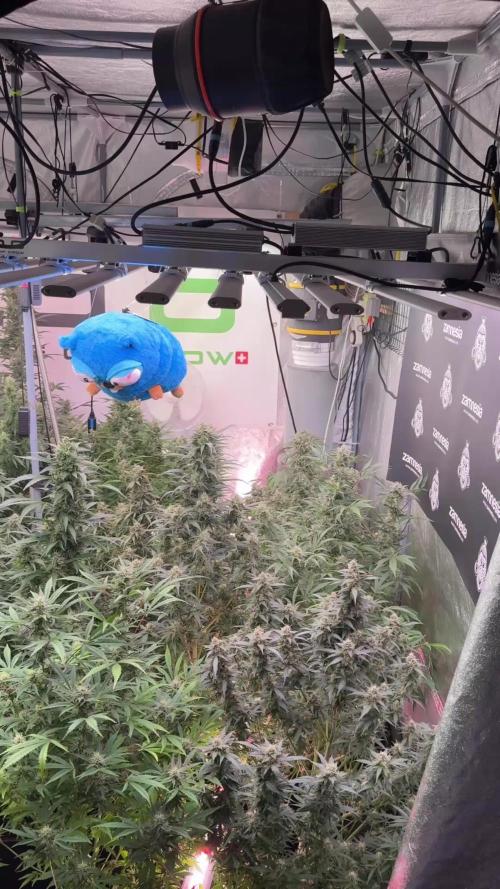
Animal Mints — Week 11 (Week 6 Flower)
“Legends of the Frozen North”
12/12 from seed — no traditional veg phase.
A direct transition from seedling into flowering rhythm.
This run was never about controlling the plant.
It was about creating the conditions… and letting the plant decide the rest.
⸻
🌱 How did we get here — 12/12 from seed
From day one, these plants were placed under a 12/12 cycle.
No extended vegetative phase, no shaping beforehand.
What you see now is the result of:
* Early root establishment
* Immediate flowering signal
* Structural decisions made by the plant itself
This creates a different type of growth:
Less stretch chaos, more compact intention.
Not bigger plants —
but often denser, faster-finishing expressions.
⸻
🌿 The Room — Controlled, but not forced
At first glance, some parameters might look “unusual” for this stage.
But everything is dialed based on leaf feedback (EPD) —
not charts, not assumptions.
* Temps: 26°C day / 18°C night
* RH: ~60%
* Solution & substrate: ~21°C
* PPFD: plant-grown into the light (~600–700 range)
We don’t chase numbers.
We read the plant — and adjust only when she asks.
⸻
❄️ Trichomes — The “Frozen North” is real
This is where she speaks loudest.
Trichome production is not just present —
it’s accelerating daily.
* Sugar leaves fully coated
* Bud surfaces stacking resin layer by layer
* That early frost has turned into visible density
This isn’t just aesthetics.
This is the plant investing heavily in protection and reproduction.
And she’s not done yet.
⸻
🌸 Pistils & Flower Development
White hairs still active, still pushing.
That tells us one thing clearly:
➡️ She’s still building, not finishing
Calyx swelling is underway, but not peaked.
Structure is set — now it’s about mass + resin + final expression.
⸻
⚖️ Weight, Structure & “The Lean”
Branches are starting to give in to gravity.
Not collapse — commitment.
This is the moment where:
* Density becomes visible
* Structure gets tested
* Support decisions begin
No stress signals — just natural load from proper development.
⸻
💧 Nutrition — Simple, consistent, intentional
Current feeding:
* Terra Bloom
* Pure Zym
* Sugar Royal
* Power Buds
* Green Sensation
* CalMag Pro
pH ~6.5 | EC ~2.0
Nothing excessive, nothing reactive.
The idea is simple:
➡️ Feed enough to sustain expression, not to force it.
Stable input = stable output.
⸻
💡 Under Canopy Lighting — Why it matters
This is where things get interesting.
Under-canopy lighting is helping:
* Lower bud sites stay active
* Improved light penetration in dense zones
* More uniform development across the plant
Instead of larf, we’re seeing usable structure deeper into the canopy.
It’s not about pushing more —
it’s about unlocking what’s already there.
⸻
🧠 Observations
This phenotype… has personality.
* Slightly dramatic structure
* Heavy resin production
* Compact but expressive
Not the tallest.
Not the loudest in height.
But easily one of the most present plants in the room.
⸻
🔮 What to expect next week
* Continued trichome stacking
* Calyx swelling becoming more pronounced
* First signs of pistil transition (some darkening)
* Increased weight → more need for support
We’re entering that phase where daily changes become visible.
⸻
🙏 Final Words
To everyone following this journey:
* The OGs who’ve been here from the start
* The new eyes discovering the process
* The skeptics, the questioners — always welcome
* The silent supporters
* The platform for hosting this space
* The sponsors and partners
* The genetics behind this expression
And of course… the plants themselves.
This room is alive.
And we’re just here to witness it.
From grower to growers 🤝🌱
📡 DELETED @ 1K Please stay tuned.we never quit https://www.youtube.com/@TheDogDoctorOfficial NEW 🙏 Thank you for your patience and continued support.
FOR DISCOUNT CODES AND MORE JUST FOLLOW THE LINK https://website.beacons.ai/dogdoctorofficial
📲 Don’t forget to Subscribe and follow me on Instagram and YouTube @DogDoctorOfficial for exclusive content, real-time updates, and behind-the-scenes magic. We’ve got so much more coming, including transplanting and all the amazing techniques that go along with it. You won’t want to miss it.
GrowDiaries Journal: https://growdiaries.com/grower/dogdoctorofficial
Instagram: https://www.instagram.com/dogdoctorofficial/
YouTube: https://www.youtube.com/@dogdoctorofficial Deleted by Youtube - https://www.youtube.com/@TheDogDoctorOfficial NEW
Vimeo : https://vimeo.com/dogdoctorofficial Under construction stay tuned ⸻
Explore the Gear that Powers My Grow
If you’re curious about the tech I’m using, check out these links:
🔆 Lighting & Environmental Control
• Future of Grow — Advanced LED lighting technology
https://www.futureofgrow.com/
DISCOUNT CODE: DOG20
• Lumiflora — Under-canopy LED lighting
https://lumiflorade.com/
• TrollMaster — Environmental controllers and automation gear (past collaboration)
⸻
Genetics
• Zamnesia Seeds — Genetics used in this project
https://www.zamnesia.com/
⸻
🌱 Soil, Substrates, Boosters & Root Support
• Plagron — Substrates, bio mixes, and supportive products
https://plagron.com/en/
⸻
🎒 Storage, Curing & Preservation
• Grove Bags — Curing and storage solutions
https://grovebags.com/
⸻
📸 Photography Equipment & Tools
(Not sponsors, but part of my creative toolkit)
• Sony A6700
• Sony full-frame macro lens + few more
• Stacking photography workflow - learning
• iPhone (for behind-the-scenes shots)
We’ve got much more coming as we move through the grow cycles. Trust me, you won’t want to miss the next steps, let’s push the boundaries of indoor horticulture together!
As always, this is shared for educational purposes, aiming to spread understanding and appreciation for this plant. Let’s celebrate it responsibly and continue to learn and grow together.
With true love comes happiness. Always believe in yourself, and always do things expecting nothing and with an open heart. Be a giver, and the universe will give back in ways you could never imagine.
💚 Growers love to all 💚
📸 P.S. – The Eye Behind the Lens
All photos in this diary (for now — except for the ones showing the camera, which I took with an iPhone) are taken with a Sony A6700 paired with a Sony full-frame macro lens and a few more.
Photography is part of the story — it’s how we share the fine textures, the glow, and the quiet details that words can’t always capture.
I’ve also started experimenting with photo stacking — a technique where multiple images, each taken at a slightly different focus point, are layered together to create one perfectly sharp image from front to back.
It’s not digital enhancement or AI; it’s pure photography — a way to reveal the plant’s beauty in microscopic depth, from trichome to petal.
You’ll even see a few shots of "ghost me" capturing the shots — camera, lens, setup — because every grow deserves not just to be cultivated, but documented like art.
FOR DISCOUNT CODES AND MORE JUST FOLLOW THE LINK https://website.beacons.ai/dogdoctorofficial
NEW DISCORD - Official Server Invite Link : https://discord.gg/ksjAkA5T74
Likes
43
Share


@UnorthadoxDude
Follow
Hello and welcome to week 7 beginning for Nesia, the largest and most advanced 6 week old plant I have ever grown.
I update daily so week 6 is now complete. Please do check it out!
I have added some comparisons shots of Karen, the oldest girl of this [G2] series to show just how impressive Nesia is. Nesia is 25 days younger than Karen and she is already a larger plant. This diary is not very popular or comment filled right now, but as this grow progresses I really think it's going to gain some attention. Nesia is going to be big.
Day 44: Nesia stretching fast now.
Day 45: Flowering is going well. I have adjusted the timer such that the main tent is now getting 20/4 upped from 18/6. After monitoring DLI at 18/6 for a week I am unhappy with the overall level but because of the varying heights of the plants I am limited in what I can do in adjusting the light height. Some areas were only getting 20 DLI. So I have rearranged to have the taller plants on the edges and the lowest in the middle and doing it this way all plants are getting between 35 and 50 DLI at 20/4 - although one or two cola tips here and there are getting 55. Will monitor for a week.
Day 46: Fertigated 5l
Day 47: Nesia is really moving into flower strongly now. Pistil development has started proper, stretching rapidly.
Day 49: Nesia starting to pose me a challenge. She is big. Now by far the largest plant. She has reached 50cm height and 70cm across.
I will add proper photos later and do a week summary.
Day 49: Nesia is stretching really fast now. I hope she doesn't stretch much more but I fear we're only halfway done. She's way bigger than Karen now. Taller, wider. Fertigated 5l
End of week summary... well what can I say Nesia has now surpassed Karen (25 days older) in every size and growth metric. She is following exactly the same pattern except without all the problems. I think she still has 2 weeks of stretching to go, on that basis I am expecting her to grow upto 25cm in the next week and the same again the week after - so I think Nesia is going to end up being about 1m tall. Honestly I hope not though, but let us see.

Likes
Comments
Share

@BenandLippisfinest
Follow
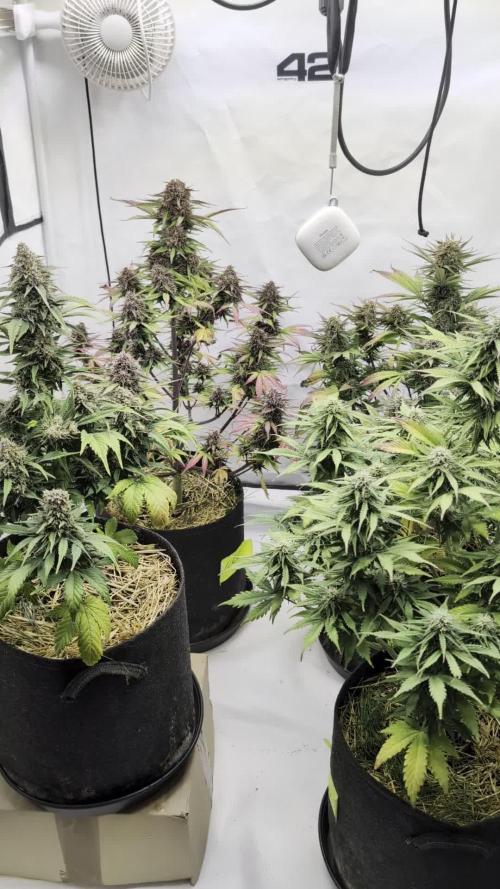
Die terps werden immer intensiver, vor allem die FrostBanger kommt so süß daher. Alle buds sind ordentlich fest und haben eine sehr schöne Größe. Zwei bis drei Wochen werden sie noch brauchen, die Apple-Fritter vorne rechts braucht eher noch 4-5 Wochen, ist halt keine Fastbuds, der Unterschied ist schon sehr deutlich zu erkennen.
The terpenes are getting more and more intense, especially the FrostBanger, which is so sweet. All the buds are nice and firm and a great size. They'll need another two to three weeks, the Apple Fritter in the front right probably needs four to five weeks – it's not a Fastbuds, after all; the difference is already very noticeable.

Likes
119
Share


@DogDoctorOfficial
Follow
my fellow cultivators and Power Buds enthusiasts! It's time to dive into the much-anticipated Week 2 Veg Report for my ever-charming companion, Jelousy. And oh boy, we've got some exciting news to share! Jelousy has been thriving and strutting her stuff with absolute finesse. Those once-freaky leaves have now transformed into fabulous five-fingered beauties. It's safe to say she's becoming a real head-turner in our little green world!
As we venture into the exciting world of nutrient management, I've been providing our leafy superstar with Plagron Sugar Royal at a modest 1ml per liter. Jelousy seems to have quite the appetite, slurping up around 150ml of this delightful concoction every two days. It's like she's sipping on the elixir of life, and I can practically hear her say, "More, please!"
Now, let's delve a bit into the science of it all. Plagron Sugar Royal is a rich source of essential nutrients and sugars, ensuring that our Jelousy gets the royal treatment she deserves. With this specially crafted elixir, we're not just feeding a plant; we're nourishing a green goddess.
Now, before we wrap up, let's raise a virtual toast to the ever-generous Zamnesia and Plagron for making our Power Buds journey a reality. Their support is like a guardian angel watching over our botanical endeavors.
And of course, a big shout-out to the fantastic Grow Diaries community. You're the wind beneath our leaves, the light in our grow rooms, and the heart of this passionate community.
To all the fellow contestants and growers out there, keep nurturing those dreams and tending to your leafy companions with care. Here's to a week of growth, joy, and a sprinkle of laughter as we continue our adventure with Jelousy in the Power Buds contest. Stay green, stay inspired, and keep the good vibes growing!
As always, thank you all for stopping by, for the love and for it all. This journey of mine would just not be the same without you guys. The love and support are very much appreciated, and I feel honored and blessed with you all in my life !!!
With true love comes happiness. Always believe in yourself and always do things expecting nothing in return, with an open heart. Be a giver, and the universe will respond in ways you can’t even dream of .
Friendly reminder: all you see here is pure research and for educational purposes only.
Genetics - Jelousy @Zamnesia
Nutrients @Plagron
Light - @viparspectra P2000
Room size - 3x3 - 0,9x0,9
Likes
21
Share


@STAYINGONMYMAINCBATORUNTWO
Follow
I have made this week as it’s the 4 week mark (28 days) I’ve made a video to show the progress she has made! This is my favourite baby girl! She has shown so much vigor from the beginning! I have only had to adjust the ties this week was considering another top but I won’t as I may not have space! I’ve added a picture of the base of my Airpots and I’m proud to say the roots are all coming through nice and thick (photo example) I have also added my ppm results now and am going to be filtering my water so I lose the initial 200+ in my water already! I will 12-12 when she hits 6 weeks! Hope you enjoy buddies!
Likes
21
Share


@Isle_of_Weed
Follow
Day 36
Ladies look great on the start of week 6. Yesterday’s feed went in well and they both seem stretching their nodes.
Day 37
Watered them with water only today. They look happy and healthy. The red stems on the taller lady are genetics as kindly confirmed by Fast Buds. 🔝
Day 39
Water day today / mixed different cocktails for both with specific needs. Run off Ph and EC improving :)
Day 40
All looking good today 💚 - both plants have some slight rust spots on some leaves but I think it’s Cal/Mag deficiency and yesterday I both gave them some. Today the spots seem to have remained the same so maybe it’s solved.
Day 42
Ladies are stretching their tops during these days and filling up slowly but steadily. All looking good till now for the Gelato Sisters 👯♀️
Likes
10
Share


@mingokoon
Follow
week 5. oct 9
I believe I am getting the calmag deficiency corrected - none on new leaves.
one stretched to 23 inches by 10-16. growing about 1.5" a day. the middle plant is at 15.5" 10-16. growing over an inch per day. hopefully they stop next week when they are flowering.
the back plants definitely show signs of flowers with the hairs starting to grow. Interestingly the plants at the front seem a few days behind.

Likes
3
Share

@Bobaloo
Follow
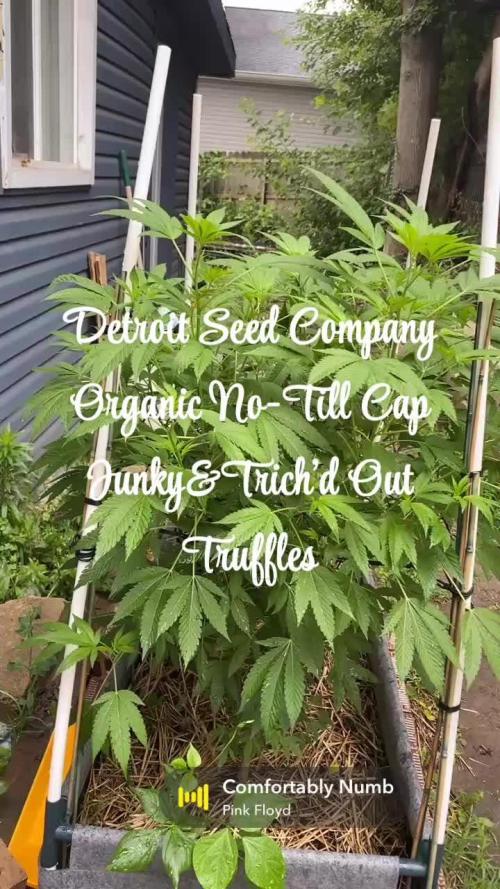
Still pre flower in my area I suspect it will start to bloom in three weeks or less

Likes
4
Share

@420DeepGrow
Follow
📆 Semana 6:
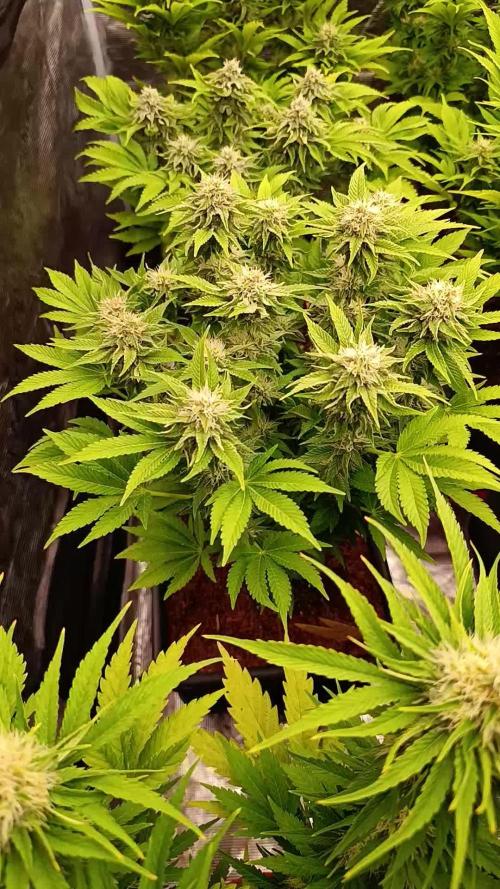
La floración entra en una fase más madura y visible. Los cogollos comienzan a hinchar con más decisión, apilando cálices sobre cálices y ganando volumen real en cada punta. La resina ya no es solo presencia: las flores empiezan a quedar completamente cubiertas, con tricomas expandiéndose por cálices y hojas cercanas.
La estructura sigue estable, sosteniendo bien el peso que empieza a aparecer. La planta mantiene una absorción limpia y constante, señal de que el equilibrio nutricional y radicular sigue funcionando correctamente.
El perfil aromático se vuelve más intenso y complejo, mientras la planta centra su energía en densidad, resina y desarrollo floral.
Semana clave donde el cultivo entra de lleno en la fase de engorde.
Likes
21
Share


@PrairieFrostGrow
Follow
********Week 9 Vegetation- Sept 12 to 18, 2020*******
This will be the last veg week. Flipped to flower cycle at the end of the week:)
These girls are pushing out branch Baby!!!! Getting long and keeping them tied down for now. They want to flower and almost aren’t waiting for the lights to switch😃
LST this week on these girls. Getting them ready to put in a SCROG I think. Pull them down for now to start pulling them wider and make it easier to fill in the canopy’s net. Actually, they were only tied down for this week. At the end of the week I removed the ties.
There were 4 feed days this week and Advanced Nutrients Bud Ignitor was introduced this week.......getting ready for flower👍 Switch to Bloom nutes next week. Going to finish these girls with Advance Nutrients line this run. I may have to use a supplemental from Green Planet to get through to harvest. This lines bottles are getting closer to a year and a half old now........use em uip👌😃 Not buying more Bud Factor X for example (still have a couple of syringes worth) but rather will add Terpinator and Rezin instead.
Little more detail:
Sept 12/20
- CalMag @ 2ml, VeloKelp, Vitrathrive @ 1.5ml, AN Sensi Grow A&B @ 1ml
- 610ppm and 5.9pH
- Each girl given 2L
- Pulled out and cleaned up to get ready for netting
- Canopy height fairly even today.....little more time to fill in though.
Sept 14/20
- Giving them a hearty feeding today with lots of ml’s to rinse off the roots a little more
- Sensi CalMag @ 2ml, B52, Microbial Mass @ 1.5ml, Sensi Grow @ 1ml
- 880ppm and 5.4pH
- Each girl given 4L and they had a nice amount of runoff - maybe 30% this time.
Sept 15/20
- Add some sweetener to feed the microbes today,.
- Sensi CalMag @ 2ml, Bud Candy, B52 @ 1.5ml
- 625ppm and 5.2pH
- 2L each for the girls
- Leaf colour is a little light so getting the Magnesium up and Nitrogen......that’s why using the heigh nitrogen Advance Nutrients Cal Mag.
- pH is a little low but I am cool with it and working on not letting the pH drift too much yet in their run.
- They are ready.........they want to flower😃
Sept 17/20
- Bud Ignitor introduced today as we get ready for Flower phase next week.
- Sensi CalMag, Sensi Grow A&B, Bud Ignitor, all @ 1ml/L
- 485 ppm and 5.7pH
- Each girl given 2L
- Swtich the light cycle tonight to 12/12 and get the party started👊👍
That takes us to the end of Veg for these two girls.
Cheers Growmies and have a great week🙏
Likes
11
Share


@SonomaSungrown
Follow
It's hot as hell right now, so she's back to drinking every 24 hours.
Just fed her with FOOP for the last time (Friday).
Will only give her water for the rest of her grow time.
She's looking almost fully cooked.
Will likely check her trichs on Sunday and start to consider a timeline for chopping.
No pest issues at all.
Smell is absolutely divine.
Likes
34
Share


@PEAKYPLANTERS
Follow
LADIES AND GENTLEMEN,
MASTERS AND BEGINNERS FARMERS!
MY WORK WITH THIS SUMMER LEMON IS FINISHED.
PLANT EASY TO GROW AND ENOUGH RESISTANT
MAINLY IN SATIVA.
HAPPY AND ABUNDANT HARVESTS FOR EVERYONE

Likes
5
Share

@Trichoma
Follow
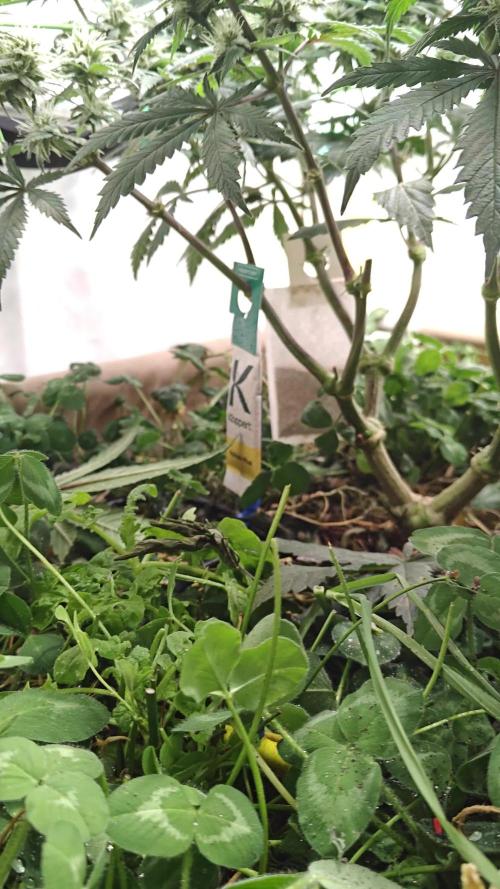
@ 1.2-1.4 kPa
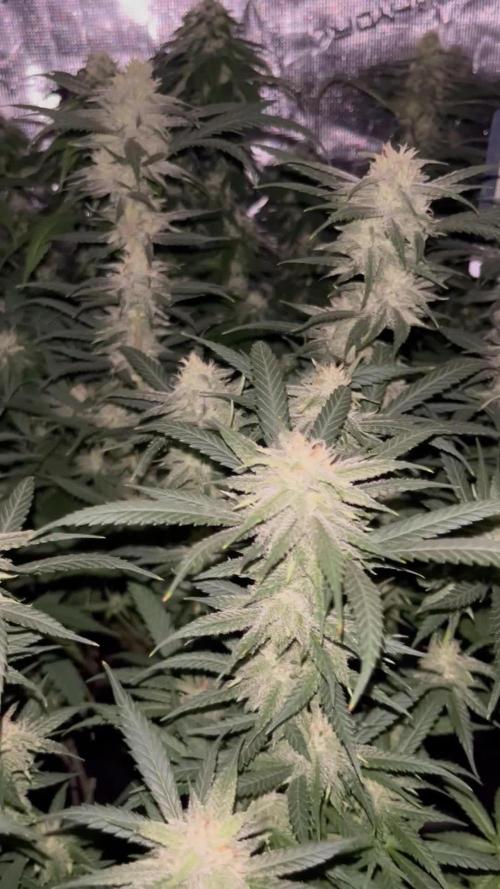
Raspberry parfait smells strong, this instantly noticeable when opening the tent.
The BlueZushi smells good as well but only noticeable when rubbing on the sugar leaves.





Likes
1
Share

@Ninjabuds
Follow
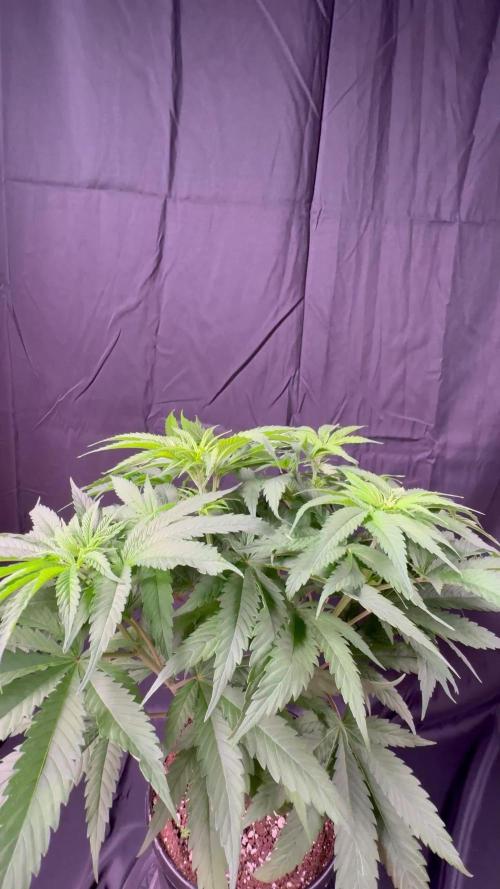
It’s the 1st week of flower I flipped the plants to 12/12 a few days ago. There is a lot going on and a lot of cool and amazing things coming in the near future. Make sure to check out my YouTube page. I bought me a DJI gimbal this week. Might be my new favorite toy. The temps are starting to break for the summer. I don’t see it being very long until winter is here and it’s time to use a heater and not an ac unit. All of the plants are healthy. The plants have all grown so well I turned down the light intensity a bit today the plants didn’t seem like they was starting to strech very much. Hopefully the lower light intensity will make them strech out just a bit
Likes
10
Share

@PrissyGurlzSmoke
Follow
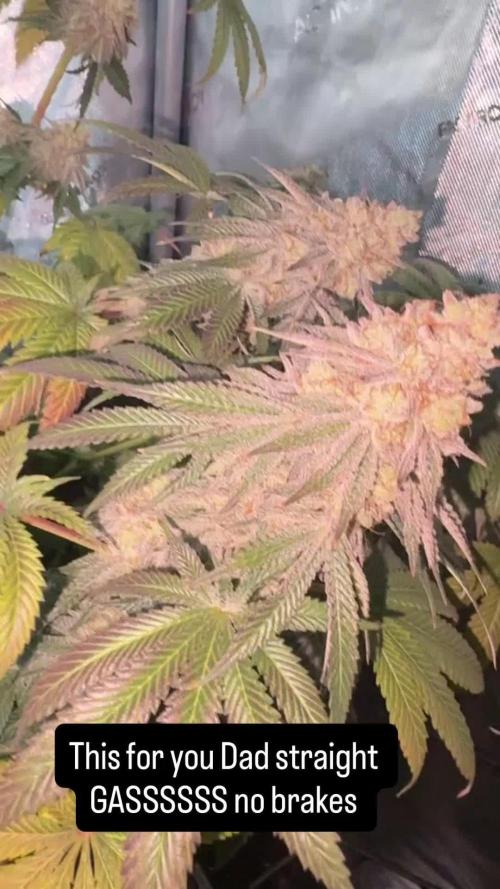
Happy Father’s Day . Rip Dad I grew these plants in your memory .
Likes
19
Share


@Divs_darkroom
Follow
This girl grew for 72 days. She shared a bed with 2 other plants and only used one of the lights in the darkroom (180 watt electric sky). She produced beautiful dark buds that smell insanely sweet. I have only vaporized 1 decent sized bowl through my mighty vaporizer and I must say it tastes pretty good even without a cure. No green earth taste and it tastes just like it smells. Doesn't produce any dry mouth or eyes so that's nice. I Vaped it right before I left for work and I didn't even get chinky eyed when I walked outside into the light. So it's a great daytime smoke. I definitely feel high, I just don't feel like other people can tell :). She grew in living soil And I am convinced that it's the way to be 💪0
Likes
70
Share


@Mrs_Larimar
Follow
2021-10-30
The Chiquita Banana is my Queen.
I am in LOOOOVE
shes sooo ....
she smells nicely deep like oranges, mandarine and some kushlike smells
and some crazy frostiness is going on
here are some Codes
Lights:
https://viparspectra.eu/discount/M.Larimar
And for the Fertilisers:
https://greenbuzzliquids.com/en/shop/
Code: mrs_larimar
Thanks @Theia for this awsome Seed
