The Grow Awards 2026 🏆
Processing
Likes
Comments
Share
Likes
26
Share
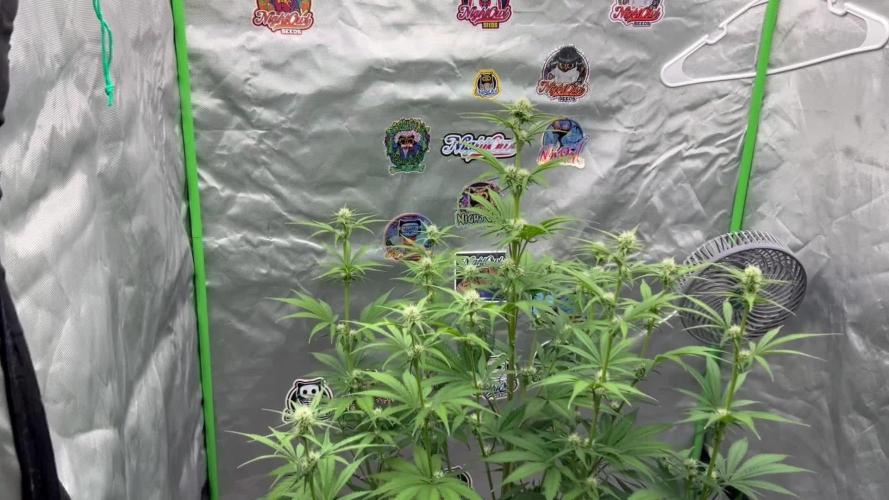
Day 85: First Grow We’re entering a new week, and it’s exciting to see the progress in our first grow. The plants are thriving, and the buds continue to get thicker and frostier. The formation of orange hairs is becoming more pronounced, indicating that we're on the right track. This week, we’ve decided to order a microscope to monitor trichome development more closely. Additionally, we're considering adding CANNAZYM to our feeding regimen to support bud growth and overall plant health. Let’s keep pushing forward and make this a successful grow!
Likes
10
Share
@LPina
Follow
Divided into two boxes 14 in 1x1 20 in 120x120
Likes
11
Share
@Synkery
Follow
Lamentablemente al principio del cultivo tuve algun problema en los transplantes y se estancaron un poco i no crecieron lo que me hubiese gustado, pero con una media de 35g por planta en seco me doy por satisfecho
Likes
228
Share
📆 Week 13, 4-10 January 2024 4 January - Turned light time back 2hrs to a schedule of 14/10, and lowered light power to 50%. This will facilitate ripening by mimicking an autumn environment. 7 January - Flushed system, filled with RO water and 10ml p/gal HG FloraKleen, PH 6.2. 10 January - Turned lights off. 📑 This was the final week of flowering. It will be followed now by 3 days in darkness, giving a total of 7 days in plain RO water. This provides the proper nutrient flush and a small cannibinoid/terpene boost just prior to harvest. Which will be 13 January. She will then be followed by a 7-14 day curing process, where she’ll hang for 5-7 days until the chlorophyll has dried in the leaves, then trimmed, weighed, put into mason quart jars and burped until a RH of 62% is reached/maintained. While in this state the flower will reach its peak potency/flavor in about 30-40 days, and can last for 6-12 months. An overall interesting grow. Especially if you like the color purple. She grew rather rapidly for about 6 weeks as expected from an autoflower, then slowed down and flowered simultaniously. Buds are on the smaller side but tight. There certainly was no problem in resin development as she is quite frosty, sticky and smelly. The trichomes have purple and clear stems with milky heads, about 5-10% amber and 10%(+) clear. All white pistils have turned orange or brown. Genetics are very stable with no signs of foxtailing or hermaphroditism. The only problem I’ve had was with nutrient sensitivity in flower phase - specifically week 8. It will depend on the end product quality as to whether I will grow this strain again or not. My final update will run a few days later than usual, but will include the Harvest and Smoq review information. I want everyone to know I appreciate all the support, likes, looks, follows, mentions and speedy answers to my questions! You are all phenomenal! Muchas gracias! Vielen dank! Спасибо! Merci beaucoup! Thank you! 🍽️ Nutrient change on 4 January 🐲 Feeding schedule updated 4 January 🌊 Using reverse osmosis water with EC/TDS at 0 🐉 Nutrient Solution EC .8 at 60 degrees F 💡 Light power at 50% That is it for this week. Thanks for the look, read and stopping by.
Likes
371
Share
D78. The second LED strip light arrived today, and I installed it to cover the right side of the tent. No clue if these sidelights will contribute much, but it's at least noticeably brighter in the lower canopy now. ------------------------------ D80. It looks like my campaign against the pesky thrips is successful. A few days ago, I could find both adults and larvae within seconds when scouting, but today it took me over five mins to find one single larva. Good riddance! ------------------------------ D83. Almost at the end of week six of flower, the girls are rocking it in the tent, getting fatter and smellier daily. I still haven't been able to find any thrips, so it looks like the lacewings were effective. The predatory mites that I also added are probably not necessary, but I wanna be sure all those pesky thrips are dead. There isn't anything to do in the tent now, and everything is running on autopilot, which is excellent as I'm going out of town tomorrow. I gave each girl 2.5 liters of water @ pH 6.3, with humic acid and FFJ. That'll hold them over until I'm home again in a couple of days. ------------------------------
Likes
13
Share
@Lfuego22
Follow
It’s officially week 4 of flower. It’s day 36 since I flipped to 12/12 and day 25 since we began seeing flowers
Likes
10
Share
@carjos
Follow
48 hours in wet paper towel, after to the coco peat pellet. the pellets really expand, hydrate them first. I am not trying to be an example of coco medium, this is my first time working with it, diary for documentation. Once I had a good menu of nutrients I started to look at the coco. spent a good couple of weeks with free time to read about the coco, not as easy as prepared potting soil but a few have said it is good results once you get the hang of it. so i am set to go. I also have one seed from a retail cannabis package. It is from GAGE - Strawberry fire OG, Packaged AUG 2020, Purchased Sept 2021. One seed inside. I will see, it is in the wet paper towel at the moment. thanks and best to you's' day 7 from number one sprout: I am omitting the pH down 2 feedings now, little yellow tone in the first two seedling, going to balance straight forward from now on. number one seedling has now pushed up, ready for calmag tomorrow , number two is 7 days on thursday but looking like a good push start still a bit tall although straight. i will be rotating calmag - root booster for the first week of feeding. the pH down is a powerful concentrate, 6.5 to a hard 4 with a few drops in a 4L. wow! so I am using one 4L as a pH down to get a rusty orange (that is on pH water drops for the feedings). I have not tested but I think the root booster and calmag will pH down as is, so I am looking to pre-mix each in separate 4L. (20-12-21 4:20PM) ** interesting observation - I am used to wet paper towel to (as some say ) "pop the seed" which in my experience results in a tail like growth, (that is a few drops of water on seed between paper towel between saucers). but with a cup of slightly warmer than room temperature water covered in foil, the result was a seed split down the middle like a clam looks. ok thanks! - number three was germinated in cup of water.
Likes
27
Share
Last week i found some seeds grown in the bids and i released them. Was a bit of work but i think its worth it. I start to give just water for both kush, the haze will get 2 weeks nutrients. Hope that come more seeds. Have a nice week✌️
Likes
142
Share
Hi everyone :-) This week a lot of nice things happened in the flower tent :-) Everyone looks super nice, and is growing stronger and more beautiful week by week 😍👌. The blue cheese smells like a dream ;-) As usual from this variety 👍. The kosher tangie is also very, very tasty 👏🏻. Both got Pk 13/14 this week for the last time :-) Everyone else is developing very well 👍, That will be the last diary with several strains together :-) In future everyone will come individually 👌. I wish you a lot of fun with the videos, have a nice weekend, stay healthy 🙏🏻 and let it grow 😎👌
Processing
Likes
29
Share
@Damonkey
Follow
So starting the 3rd week of flower. All but one plant speeding ahead towards dank. The lights below LED continue at a fast pace, I think it’s the most pistils I’ve seen firing out all over place this early. However one of the OS below the HPS isn’t feeling this groove and is developing at a slower rate. The plants that are being hit by both lights are gonna be fat!!!!! The forming buds are coming together quickly and big, they look swollen before they’ve swollen if ya know what I mean.🤔😂 I love week 3 of flower its where I always hit my plants with Hydrotops Triple F. It’s not a new product I’m using however I am using it in conjunction with two of their other products this time which is supposed to be the ideal way to benefit the plants when using Triple F. Development has seemed quicker during this grow especially from the period of switching the light cycle up to now. I’m happy. Temperature still a problem though a bit. Looking awesome going through week 3. But one plant is so much slower than the rest, I think she stretched a little too much when it was time. It still looks very strong and is covered with flower sites but they’re just not developing at a rate anything like her sisters flowers. The phantom OG in there with them are super fast. Maybe that’s making the Orange seem slower to me too🤔😂 all looking great in there anyway and am loving every moment I get to get in there with my girls. Very productive 3rd week 3 out of 4 growing at an accelerated rate, the 4th is looking fine too, well looking great actually but a lot slower with flower development.
Likes
17
Share
Einen wunderschönen guten Tag, liebe Grow-Community, und herzlich willkommen zur fünften Woche meines kleinen Outdoorprojekts! Wir nähern uns mit großen Schritten der eigentlich interessanten Phase meines Gartenprojekts. Jetzt mag der ein oder andere sagen, dass die Pflanze im Vergleich zur letzten Woche kaum Fortschritte gemacht hat, und evtl. habt ihr recht. Allerdings möchte ich zu meiner Verteidigung sagen, dass das Setup so für mich sehr neu gewesen ist und ich zwar indoor „gelernt“ habe, ich jedoch die letzten Grows fast vollständig outdoor kultiviert hatte (seitdem es legal ist, selbstverständlich ;)). Außerdem sehe ich die letzten Wochen noch als Anzuchtphase, also alles halb so wild :). Aber genug der Ausreden :), was stand diese Woche an? Da sich der „Auswilderungszeitpunkt“ jetzt wetterbedingt doch noch um eine Woche verschiebt und die kleinen Substrat und Topf geschuldet den ersten Mangel aufweisen, habe ich den kleinen mal ihre erste richtige Düngung verabreicht (Greenhouse-Powderfeeding 1 g/L). Eigentlich sollten sie schon rausgesetzt werden, allerdings traue ich diesem ganzen Warm-/Kalt-Mumpitz nicht.  Da gönne ich den Damen lieber noch eine Woche in ihren künstlich beleuchteten vier Wänden. Ebenso musste ich die Pflanzen untenrum etwas ausdünnen, da die älteren Blätter leider mangelbedingt irreversibel geschädigt waren. Der Tee wird für ca. 24 Stunden mittels einer Aquarienpumpe in Kombination mit Sprudelsteinen belüftet. Je nach Dauer der Belüftung enthält das Endprodukt mehr Mikroorganismen (24 h), bei länger gebrauten Tees enthält dieser weniger Mikroorganismen, dafür mehr gelöste Nährstoffe und Enzyme sowie Aminosäuren, welche als Futter für bereits bestehende Mikroorganismen fungieren. Um das beste Ergebnis zu erzielen, müsste ich mein Setup noch mit einem Heizstab ergänzen, welcher die Wassertemperatur konstant zwischen 20 und 23 Grad hält. Für den Tee benötigen wir: Ca. 15 L Wasser   30 g 1 l Regenwurmhumus Eine handelsübliche Aquarienpumpe + Sprudelstein Melasse (fungiert als Nahrung und begünstigt die Vermehrung der Bakterien). Der Wurmhumus steuert die Mikrorganismen sowie Huminsäure bei, welche das Pflanzenwachstum unterstützen. Ich verwende ausschließlich Regenwasser, da es weder Chlorrückstände aufweist noch einen niedrigen EC‑Wert (ca. 0,05) hat. Wo liegen die benefits? Fördern den Gasaustausch der Pflanze, indem sie dafür sorgen, dass sich die Stomata schneller und weiter öffnen (wenn als Blattspray angewandt). – Beimpfen den Boden mit nützlichen Mikroorganismen (Pilze, Bakterien, Protozoen, Nematoden etc.) und sorgen dafür, dass ein Boden-Nahrungsnetzwerk aufgebaut wird, welches die organischen Stoffe im Boden zersetzt und diese für Pflanzen verfügbar macht. Morgen werden die Kleinen dann mit dem Tee gegossen. Alles, was übrig bleibt, benutze ich dann, um die bis dahin hoffentlich fertig gemischte Erde anzugießen, bevor sie eine Woche in den Endtöpfen fermentiert. Aber dazu wie immer im nächsten Bericht mehr. :) Euch wie immer einen schönen Restsonntag Und wir hören uns nächste Woche. Peace.
Processing
Likes
88
Share
@No_Clout
Follow
01/08/18 - I fed them all 1 litre each, one of them seems to be praying up but the other two Seem a little bit droopy still. 02/08/18 - #3 is praying like usual and the other two are getting better Day by day I’m going to be giving them another feeding tomorrow, I have seen roots stretching out to the sides of the pots so I might saturate the whole pot. 04/08/18 - horrible sight today looks like rusty cracks in some leaves , not got a clue what this. 05/08/18 - browning has continued since last night and it’s all on the new leafs not the older ones. i fed them without any calmag , so I think it could be a deficiency of some sort (cal/mag).the mad thing is, it’s only two of the girls, one of them is completely fine nice green leaves not yellow marks that turn orange/brown. It definitely has nothing to do with my ph or all three girls would be showing some symptoms seeing as they all get fed with the same soloution.✌️🏻 07/08/18 - everything’s cleared up their was slight nute burn in the process but everything seems a lot better so I decided to start LST. all the new leaves are the colour they should be with no nute burns or calcium deficiency 🙏🏻
Likes
9
Share
@Trinidad
Follow
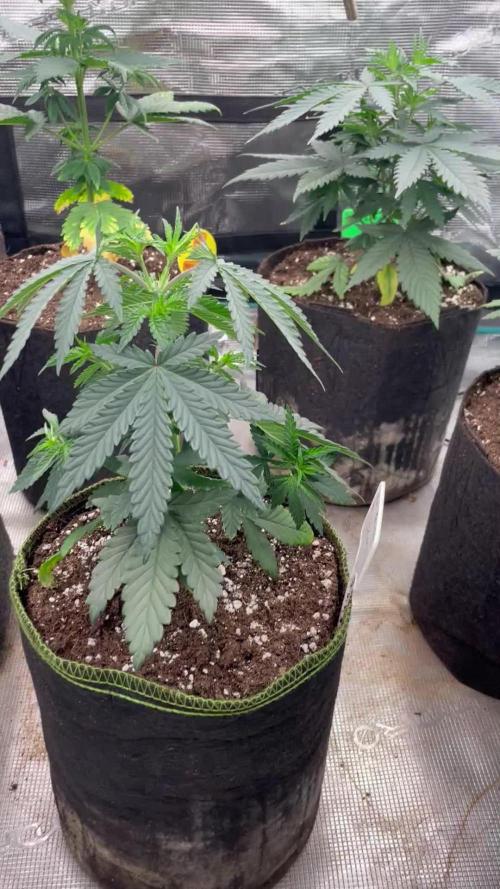
20.06.25. Day 30 Defoliated yesterday and broke a branch trying to LST. Used tape to amend. Recoved nicely.
Likes
26
Share
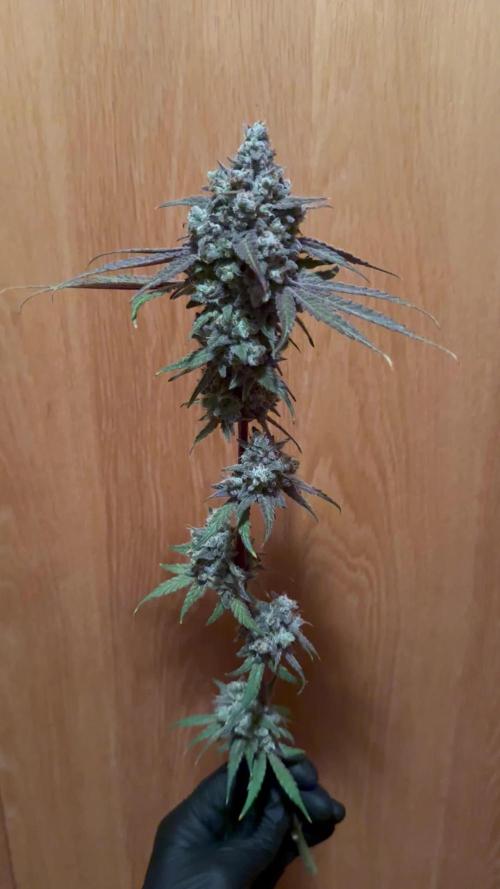
She is starting to swell up and bud growth is at a good pace right now.... I'm really hoping for big things and some dark colors.. Thank you again to divine seeds for throwing this contest together.. Also, good luck to everybody that is in it.. Thank you guys for stopping by God. Bless and happy growing ✌️
Likes
17
Share
Week 8 - we are getting so close. The bud smells so amazing. It’s a citrus earthy smell that I can’t wait to taste. The weather is cooling down and she seems to like that. I wish I had more hours of light, but she’s as big as she is going to get.
Likes
13
Share
They look super happy, nothing to complain about.
Likes
4
Share
20 weeks from flowering
Likes
52
Share
Lacewings seemed to have mostly killed themselves by flying into hot light fixtures. I may have left the UV on which was smart of me :) Done very little to combat if anything but make a sea of carcasses, on the bright side its good nutrition for the soil. Made a concoction of ethanol 70%, equal parts water, and cayenne pepper with a couple of squirts of dish soap. Took around an hour of good scrubbing the entire canopy. Worked a lot more effectively and way cheaper. Scorched earth right now, but it seems to have wiped them out almost entirely very pleased. Attempted a "Fudge I Missed" for the topping. So just time to wait and see how it goes. Question? If I attached a plant to two separate pots but it was connected by rootzone, one has a pH of 7.5 ish the other has 4.5. Would the Intelligence of the plant able to dictate each pot separately to uptake the nutrients best suited to pH or would it still try to draw nitrogen from a pot with a pH where nitrogen struggles to uptake? Food for stoner thought experiments! Another was on my mind. What happens when a plant gets too much light? Well, it burns and curls up leaves. That's the heat radiation, let's remove excess heat, now what? I've always read it's just bad, or not good, but when I look for an explanation on a deeper level it's just bad and you shouldn't do it. So I did. How much can a cannabis plant absorb, 40 moles in a day, ok I'll give it 60 moles. 80 nothing bad ever happened. The answer, finally. Oh great........more questions........ Reactive oxygen species (ROS) are molecules capable of independent existence, containing at least one oxygen atom and one or more unpaired electrons. "Sunlight is the essential source of energy for most photosynthetic organisms, yet sunlight in excess of the organism’s photosynthetic capacity can generate reactive oxygen species (ROS) that lead to cellular damage. To avoid damage, plants respond to high light (HL) by activating photophysical pathways that safely convert excess energy to heat, which is known as nonphotochemical quenching (NPQ) (Rochaix, 2014). While NPQ allows for healthy growth, it also limits the overall photosynthetic efficiency under many conditions. If NPQ were optimized for biomass, yields would improve dramatically, potentially by up to 30% (Kromdijk et al., 2016; Zhu et al., 2010). However, critical information to guide optimization is still lacking, including the molecular origin of NPQ and the mechanism of regulation." What I found most interesting was research pointing out that pH is linked to this defense mechanism. The organism can better facilitate "quenching" when oversaturated with light in a low pH. Now I Know during photosynthesis plants naturally produce exudates (chemicals that are secreted through their roots). Do they have the ability to alter pH themselves using these excretions? Or is that done by the beneficial bacteria? If I can prevent reactive oxygen species from causing damage by "too much light". The extra water needed to keep this level of burn cooled though, I must learn to crawl before I can run. Reactive oxygen species (ROS) are key signaling molecules that enable cells to rapidly respond to different stimuli. In plants, ROS plays a crucial role in abiotic and biotic stress sensing, integration of different environmental signals, and activation of stress-response networks, thus contributing to the establishment of defense mechanisms and plant resilience. Recent advances in the study of ROS signaling in plants include the identification of ROS receptors and key regulatory hubs that connect ROS signaling with other important stress-response signal transduction pathways and hormones, as well as new roles for ROS in organelle-to-organelle and cell-to-cell signaling. Our understanding of how ROS are regulated in cells by balancing production, scavenging, and transport has also increased. In this Review, we discuss these promising developments and how they might be used to increase plant resilience to environmental stress. Temperature stress is one of the major abiotic stresses that adversely affect agricultural productivity worldwide. Temperatures beyond a plant's physiological optimum can trigger significant physiological and biochemical perturbations, reducing plant growth and tolerance to stress. Improving a plant's tolerance to these temperature fluctuations requires a deep understanding of its responses to environmental change. To adapt to temperature fluctuations, plants tailor their acclimatory signal transduction events, specifically, cellular redox state, that are governed by plant hormones, reactive oxygen species (ROS) regulatory systems, and other molecular components. The role of ROS in plants as important signaling molecules during stress acclimation has recently been established. Here, hormone-triggered ROS produced by NADPH oxidases, feedback regulation, and integrated signaling events during temperature stress activate stress-response pathways and induce acclimation or defense mechanisms. At the other extreme, excess ROS accumulation, following temperature-induced oxidative stress, can have negative consequences on plant growth and stress acclimation. The excessive ROS is regulated by the ROS scavenging system, which subsequently promotes plant tolerance. All these signaling events, including crosstalk between hormones and ROS, modify the plant's transcriptomic, metabolomic, and biochemical states and promote plant acclimation, tolerance, and survival. Here, we provide a comprehensive review of the ROS, hormones, and their joint role in shaping a plant's responses to high and low temperatures, and we conclude by outlining hormone/ROS-regulated plant-responsive strategies for developing stress-tolerant crops to combat temperature changes. Onward upward for now. Next! Adenosine triphosphate (ATP) is an energy-carrying molecule known as "the energy currency of life" or "the fuel of life," because it's the universal energy source for all living cells.1 Every living organism consists of cells that rely on ATP for their energy needs. ATP is made by converting the food we eat into energy. It's an essential building block for all life forms. Without ATP, cells wouldn't have the fuel or power to perform functions necessary to stay alive, and they would eventually die. All forms of life rely on ATP to do the things they must do to survive.2 ATP is made of a nitrogen base (adenine) and a sugar molecule (ribose), which create adenosine, plus three phosphate molecules. If adenosine only has one phosphate molecule, it’s called adenosine monophosphate (AMP). If it has two phosphates, it’s called adenosine diphosphate (ADP). Although adenosine is a fundamental part of ATP, when it comes to providing energy to a cell and fueling cellular processes, the phosphate molecules are what really matter. The most energy-loaded composition for adenosine is ATP, which has three phosphates.3 ATP was first discovered in the 1920s. In 1929, Karl Lohmann—a German chemist studying muscle contractions—isolated what we now call adenosine triphosphate in a laboratory. At the time, Lohmann called ATP by a different name. It wasn't until a decade later, in 1939, that Nobel Prize–-winner Fritz Lipmann established that ATP is the universal carrier of energy in all living cells and coined the term "energy-rich phosphate bonds."45 Lipmann focused on phosphate bonds as the key to ATP being the universal energy source for all living cells, because adenosine triphosphate releases energy when one of its three phosphate bonds breaks off to form ADP. ATP is a high-energy molecule with three phosphate bonds; ADP is low-energy with only two phosphate bonds. The Twos and Threes of ATP and ADP Adenosine triphosphate (ATP) becomes adenosine diphosphate (ADP) when one of its three phosphate molecules breaks free and releases energy (“tri” means “three,” while “di” means “two”). Conversely, ADP becomes ATP when a phosphate molecule is added. As part of an ongoing energy cycle, ADP is constantly recycled back into ATP.3 Much like a rechargeable battery with a fluctuating state of charge, ATP represents a fully charged battery, and ADP represents a "low-power mode." Every time a fully charged ATP molecule loses a phosphate bond, it becomes ADP; energy is released via the process of ATP becoming ADP. On the flip side, when a phosphate bond is added, ADP becomes ATP. When ADP becomes ATP, what was previously a low-charged energy adenosine molecule (ADP) becomes fully charged ATP. This energy-creation and energy-depletion cycle happens time and time again, much like your smartphone battery can be recharged countless times during its lifespan. The human body uses molecules held in the fats, proteins, and carbohydrates we eat or drink as sources of energy to make ATP. This happens through a process called hydrolysis . After food is digested, it's synthesized into glucose, which is a form of sugar. Glucose is the main source of fuel that our cells' mitochondria use to convert caloric energy from food into ATP, which is an energy form that can be used by cells. ATP is made via a process called cellular respiration that occurs in the mitochondria of a cell. Mitochondria are tiny subunits within a cell that specialize in extracting energy from the foods we eat and converting it into ATP. Mitochondria can convert glucose into ATP via two different types of cellular respiration: Aerobic (with oxygen) Anaerobic (without oxygen) Aerobic cellular respiration transforms glucose into ATP in a three-step process, as follows: Step 1: Glycolysis Step 2: The Krebs cycle (also called the citric acid cycle) Step 3: Electron transport chain During glycolysis, glucose (i.e., sugar) from food sources is broken down into pyruvate molecules. This is followed by the Krebs cycle, which is an aerobic process that uses oxygen to finish breaking down sugar and harnesses energy into electron carriers that fuel the synthesis of ATP. Lastly, the electron transport chain (ETC) pumps positively charged protons that drive ATP production throughout the mitochondria’s inner membrane.2 ATP can also be produced without oxygen (i.e., anaerobic), which is something plants, algae, and some bacteria do by converting the energy held in sunlight into energy that can be used by a cell via photosynthesis. Anaerobic exercise means that your body is working out "without oxygen." Anaerobic glycolysis occurs in human cells when there isn't enough oxygen available during an anaerobic workout. If no oxygen is present during cellular respiration, pyruvate can't enter the Krebs cycle and is oxidized into lactic acid. In the absence of oxygen, lactic acid fermentation makes ATP anaerobically. The burning sensation you feel in your muscles when you're huffing and puffing during anaerobic high-intensity interval training (HIIT) that maxes out your aerobic capacity or during a strenuous weight-lifting workout is lactic acid, which is used to make ATP via anaerobic glycolysis. During aerobic exercise, mitochondria have enough oxygen to make ATP aerobically. However, when you're out of breath and your cells don’t have enough oxygen to perform cellular respiration aerobically, the process can still happen anaerobically, but it creates a temporary burning sensation in your skeletal muscles. Why ATP Is So Important? ATP is essential for life and makes it possible for us to do the things we do. Without ATP, cells wouldn't be able to use the energy held in food to fuel cellular processes, and an organism couldn't stay alive. As a real-world example, when a car runs out of gas and is parked on the side of the road, the only thing that will make the car drivable again is putting some gasoline back in the tank. For all living cells, ATP is like the gas in a car's fuel tank. Without ATP, cells wouldn't have a source of usable energy, and the organism would die. Eating a well-balanced diet and staying hydrated should give your body all the resources it needs to produce plenty of ATP. Although some athletes may slightly improve their performance by taking supplements or ergonomic aids designed to increase ATP production, it's debatable that oral adenosine triphosphate supplementation actually increases energy. An average cell in the human body uses about 10 million ATP molecules per second and can recycle all of its ATP in less than a minute. Over 24 hours, the human body turns over its weight in ATP. You can last weeks without food. You can last days without water. You can last minutes without oxygen. You can last 16 seconds at most without ATP. Food amounts to one-third of ATP production within the human body.
Likes
5
Share
She's looking absolutely gorgeous, super healthy and as strong as a tree guys! So glad to be working with her, so let's see what the future holds for this beautiful lady! 💚❤️😍