


Likes
Comments
Share


@KonstantinUKR
Follow
Начало 4й недели.
Минигров продолжается 😎
Малышка пьёт компот хорошо. Активно набирает лиственную массу.
Растение выглядит здоровым и крепким, мне нравится!
Пару дней перебои с электричеством, небольшие пауза днем, надеюсь обойдётся без стресса.
Мир всем.

Likes
6
Share

@PhinolaGreen
Follow
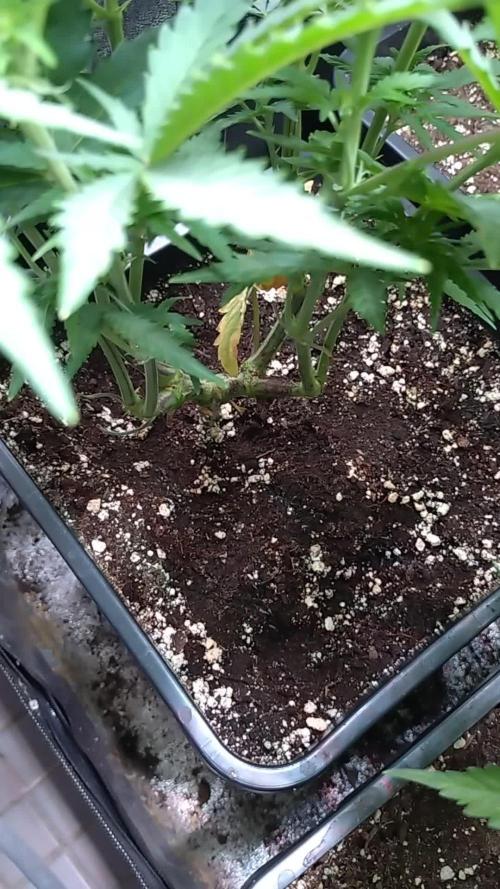
7. Woche
Halbzeit denke ich, North Thunderfuck Auto entwickelt sich gut, sie hat die Umstellung auf den großen Topf noch nicht vollends ausgebaut, die Wurzelstruktur und Masse war bei ihr in dem Stadium am geringsten. Sonst bin ich soweit zufrieden, Morgen gibt es wieder Dünger 😊

Processing
Likes
4
Share


@guspirinhes
Follow
Hello guys, well so the girl is not pretty but not ugly, i do not know fi in the end recovered or not, but she small buds are growing.
I can not feed it with nutrients, because the leaves goin down ( like to much water ). I Imagine it will bé the mix of substrate with a worm Humus, with carries Nutrient to spare. Can not see problems in the leaves.
I Don’t know, we will see


Likes
6
Share

@DogDoctorOfficial
Follow
Week 4 – Vegetative Stage – Mango Kush (Zamnesia Seeds)
Grower: Dog Doctor
Strain: Mango Kush
Breeder: Zamnesia Seeds
Tent: 8x8 Shared Environment
Environment Control:
• TrolMaster Ecosystem (Model One LED by ThinkGrow)
• Future Of Grow Ecosystem (Black Series 600W)
Watering: Hand-fed
Nutrient Line: Aptus Holland (unchanged recipe)
⸻
🌱 Two Paths, One Queen’s Blood
This week marks a defining moment in the journey of our two Mango Kush phenotypes—Pheno #1 and Pheno #2—both sharing the same genetics, but taking very different roads toward flower.
⸻
👑 Mango Kush #1 – The Trailblazer
She’s taken the lead and she knows it.
Currently at her 8th or 9th node, she’s branching out beautifully, vigor, symmetry, structure. This girl is showing early signs of dominance, with a wide frame and a hunger for light. Her architecture screams “future canopy queen.”
📸 We took her to the photo studio again this week and wow. She’s a natural in front of the lens. Her structure is clean, confident, and glowing under the full-spectrum light.
⸻
🌱 Mango Kush #2 – The Rising Sister
Much younger, but full of potential. Currently pushing her 4th pair of leaves, this one was a late germination and is only about 2.5 weeks old since she popped above soil.
Despite her smaller size, there’s something familiar about her. Her leaf shape and structure closely mimic Mango #1 during her early days, tight internodes, round fans, calm posture. Genetics run strong here.
We’re keeping her in veg for as long as possible, but next week we’re flipping everything to flower, which means she’ll start blooming early. It’s not ideal, but it’s necessary, as the older girls (Mango #1, the Lava Cake and the rest of the sisters) are growing fast and space must be balanced.
⸻
💧 Nutrients – No Change, Still Precision
We’re keeping the Aptus Holland formula exactly as it is for this week. The girls are loving it, and there’s no sign of deficiency or excess. Here’s what they’re still getting in each liter:
• Regulator – 0.15 ml: Structure, resilience, and stress defense
• CalMag Boost – 0.25 ml: Building the skeleton
• 💧 All-In-One Liquid – 1 ml: A steady and complete base
• 🌱 Start Booster – 0.25 ml: For root expansion and early shoot development
This balanced, light recipe keeps things clean and focused, supporting both the rapid growth of Mango #1 and the early development of Mango #2.
⸻
🌡️ Lights, Climate, & Ecosystem Balance
Both Mango Kush plants are thriving under dual full-spectrum LEDs:
• TrolMaster ecosystem running the ThinkGrow Model One LED
• Future of Grow ecosystem running the Black Series 600W
Each system is tuned to maintain optimal light intensity for its space and phase. Climate conditions are steady thanks to active airflow, dual controllers, and filtered intake/exhaust setups.
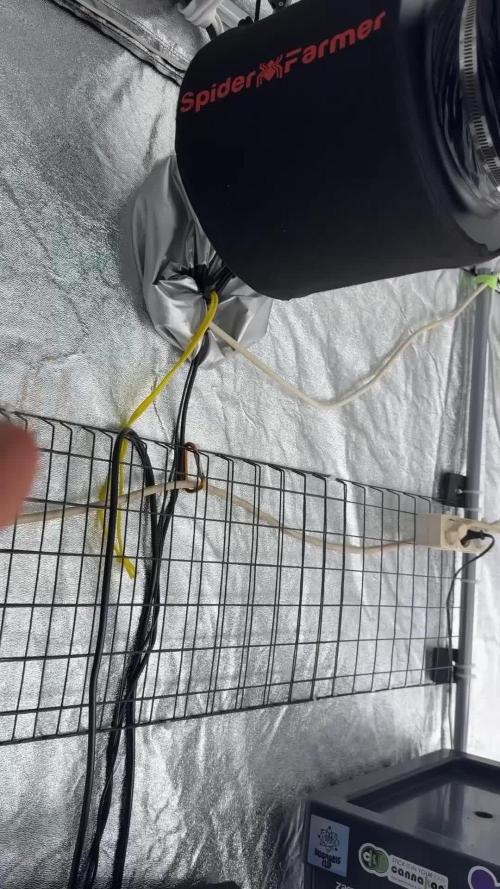
💨 Carbon filters from TrolMaster and Spider Farmer keep the air clean and pure, even though we haven’t reached flower yet, clean air is good air, and early filtering helps prevent environmental noise and pathogens.
⸻
🔮 What to Expect… and What Not To
What to expect:
• Mango #1 will likely dominate flower structure, showing her potential early
• Mango #2 may surprise us with a compact, denser canopy due to earlier light flip
• Structural differences will emerge—same genetics, but different timelines = different expressions
• Visual comparisons will help us understand Mango Kush’s phenotypic range
What not to expect:
• Uniform results—they’re the same strain, but on very different developmental clocks
• Aggressive training—due to the timeline, we’re letting them grow mostly unmanipulated
⸻
📣 Final Words – Community & Curiosity
We thank you all for reading, growing, and following this journey with us.
✨ Every grow is a conversation between light, root, leaf, and time. And we’re sharing it all.
⸻
With light, love, and the rhythm of two sisters in sync but not the same,
Dog Doctor
📲 Don’t forget to Subscribe and follow me on Instagram and YouTube @DogDoctorOfficial for exclusive content, real-time updates, and behind-the-scenes magic. We’ve got so much more coming, including transplanting and all the amazing techniques that go along with it. You won’t want to miss it.
• GrowDiaries Journal: https://growdiaries.com/grower/dogdoctorofficial
• Instagram: https://www.instagram.com/dogdoctorofficial/
• YouTube: https://www.youtube.com/@dogdoctorofficial
There’s a new series blooming—and it’s more than just plants. It’s about process, patience, and paying attention.
⸻
Explore the Gear that Powers My Grow
If you’re curious about the tech I’m using, check out these links:
• Genetics, gear, nutrients, and more – Zamnesia: https://www.zamnesia.com/
• Environmental control & automation – TrolMaster: https://www.trolmaster.eu/
• Advanced LED lighting – Future of Grow: https://www.futureofgrow.com/
• Root and growth nutrition – Aptus Holland: https://aptus-holland.com/
• Nutrient systems & boosters – Plagron: https://plagron.com/en/
• Soil & substrate excellence – PRO-MIX BX: https://www.pthorticulture.com/en-us/products/pro-mix-bx-mycorrhizae
• Curing and storage – Grove Bags: https://grovebags.com/
⸻
We’ve got much more coming as we move through the grow cycles. Trust me, you won’t want to miss the next steps, let’s push the boundaries of indoor horticulture together!
As always, this is shared for educational purposes, aiming to spread understanding and appreciation for this plant. Let’s celebrate it responsibly and continue to learn and grow together.
With true love comes happiness. Always believe in yourself, and always do things expecting nothing and with an open heart. Be a giver, and the universe will give back in ways you could never imagine.
💚 Growers love to all 💚

Processing
Likes
18
Share


@Manic
Follow
Planted in ffof soil sprouted today, they seem really happy and enjoying there environment as well. This is a homade grow tent with the basic pvc pipe and reflective insulation.

Likes
15
Share


@38PLAN
Follow
Non metterò la germinazione me la sono scordata e non metterò nemmeno tante foto,a fine ciclo vi dimostrerò come far uscire 6 autofiorenti da almeno 200g l'una
Ho 2 hps da 600w e 6 vasi/buste da 40 litri
20/4 di luce più luce naturale che entra dalla finestra,la terra é stata fatta da me perche mi ero rotto il cazzo di quella con i moscerini
30% terriccio/ 30% fibra di cocco/ 20% lapillo vulcanico/ 10% humus di lombrico/ 10% perlite e torba bionda

Likes
8
Share


@Froggman
Follow
The ICE is almost done; the NL doesn’t even seem close. Interesting since ICE sprouted a day later than the NL.
Likes
6
Share


@dfgh95
Follow
This week I planted two of them, Juana and María. I used a plastic glass of aprox 350ml, hoping my new babies will grow normally this time. I used a bit of mycorrhizae fungi powder and watered them with the soution described above.
I'm germinating another seed and it will be ready at the end of this week.
Well that seed didn't pop up so a friend gifted me another runtz seed and a critical pruple from Geaseeds. The critical already poped up and Tomorrow 27/06 she will be in her new home, right next to Juana and Maria. The last Runtz is still germinating.,they don't germinate at the same rate, that's strange, is the first time I see that in the same genetics.


Likes
61
Share


@PEAKYPLANTERS
Follow
I had a burn on my central plant, close to the apical top ... I'm really angry.
I admit it, I was an idiot to tinker too much with the lights, and this served me as a lesson .... aaaahh how bad it is when you are inexperienced ... but how do you say: "wrong you learn" .... do not worry ... we are on the wave of the harvest !!


Likes
24
Share


@Mastr
Follow
She is lilly so far I didn't have any problems with her and I'm so exited to know what strain she turns out will find out in 3 or 4 weeks


Likes
5
Share

@GoodTimesOrganics
Follow
Welcome Back!💚
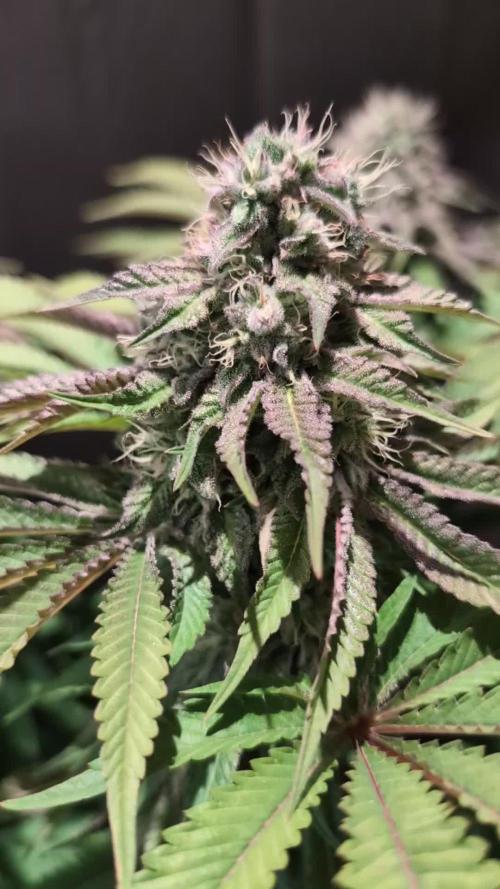
Die Sleepy Joe befindet sich nun in der siebten Blütewoche und die Blütenbildung entwickelt sich wunderbar. Ich bin gespannt ob sie in der 8 Wochen range bleibt.
Nach dieser Woche kommt ein Trichomcheck.
Das Blattwerk habe ich nochmals ein bisschen ausgedünnt.
Der Geruch hat sich auch nochmal stark intensiviert. Aktuell kommen starke Nuancen von süsslicheren düften, kombiniert mit Lösungsmittel oder ähnlichem hervor.
Die Umgebungsgegebenheiten sind aufgrund des nassen Wetters etwas anders.
—————
🌞 Temp: 24°C
🌚 Temp: 18°C bis 19°C
💦 RH: 58%
💨 VPD: 0,91 kPa
😎 PPFD: 830 mqm
—————
Grüne Grüße 🥦

Likes
47
Share


@Mrs_Larimar
Follow
March14th
Smooth sailing here.
Plants are getting closer to Harvest
Buds are stacking, Pistils get orange, Leaves are fading
They smell wonderful
Iam so happy with those mini-grows.
Girls are sitting in around 10g of Soil
Watering // Feeding daily in diving into the Feedingsolution, that has an Ec of 1200
Likes
69
Share


@Natrona
Follow
Fractal week 18 & 19. 7/28 - 8/4-10
I am late for my outside ladies diaries updates. Life has been getting the best of me lately. I’ve been packing my daughter’s room and moving her things to her new home. For those that have followed my since my beginning here, Cancer left me with neuropathy and arthritis in my hands. I can no longer do my glass fusing or flame work. To close this chapter of my life, I’ve been inventorying glass, tools, equipment, molds and supplies to sell. The most stressful has been appealing Medicare claims and receiving the second denials on the same claims. They are the last payer of record so good luck getting any reimbursement you are entitled to.
My apologies to all of you for being so brief on your diaries and not providing many comments.
Photos are from 7/28- 8/9 for both weeks.
For my outside ladies, Opium, Auto Opium, Fractal, and Lemon Cake not much changed. They continue to live in sweltering conditions. Temps are in the upper 80-90s with humidity over 105. In addition to the heat, Hurricane Debby started up the coast but was downgraded to a tropical storm by the time it got to us. Expecting our normal thunderstorms, I waited til morning to bring the ladies inside.
Overnight, we had wind gusts of 25mph. Yeah, then I brought all gals into the house. The photo gals are strong and with thick stalks were able to withstand the winds. Both Opium’s got blown over Auto Opium is thin and spindly and before I could save her from the winds and rain, she got whipped side to side. The top 2 feet bent hard one way and the top 6 inches bent the other direction. The pics show my attempt to bandage the damage 😟 to her top cola with chopsticks and electrical tape.
I top dressed all ladies with Bloom Soil for organic fertilizer. Buds are fattening up, trichomes are minimal at this time but some fragrance is starting to be noticed.
Thank you @DivineSeeds
Thanks for the visits, likes and comments, I appreciate all the plant love💚.
Have fun & love what you grow 💚
Sending you good vibes of love, light, and healing 💫
💫Natrona 💫


Likes
5
Share


@crystal_garden_0
Follow
Great week, plants ready to harvest. Flushing done.very tall plants, nice smell lots of buds. Careful for the stretch.
Likes
37
Share


@Ferenc
Follow
Close to harvest these beauties... I have checked trichomes they are ready but I still give several days more or I week from now:) No more nutrition since week 15... I want to flush them properly:)


Likes
37
Share

@DogDoctorOfficial
Follow
🌱 Week 2: Mutant Magic in Full Swing! 🌱
Hey Grow Fam! Another week, another step forward in the adventure with these Mentha de Croco beauties. Week 2 has been nothing short of fascinating—the variety in leaf shapes is absolutely mesmerizing. These tiny mutants are already showing their unique personality, and I’m loving every second of watching them grow! 🌿✨
Tent Conditions: Consistency is Key
The setup remains the same as last week, keeping these little ones in the perfect environment to thrive:
• Temperature: Stable, warm conditions for steady growth.
• Humidity: Maintaining high RH ensures they’re still enjoying tropical vibes as their root systems develop.
• Lighting: The Future of Grow (FOG) LED at 200 PPFD continues to deliver just the right amount of light to keep the plants growing compact and strong.
Nutrition: Introducing the Organic-Mineral Boost 🌿
This week, I started feeding the plants with the incredible Aptus Holland organic-mineral line. It’s been a game-changer, and here’s why I love it:
What’s Organic-Mineral Nutrition?
• Combines the benefits of organic matter (microbial health and soil vitality) with the efficiency of mineral nutrients (direct uptake by plants).
• Supports balanced, steady growth while boosting plant resilience.
This Week’s Feeding Schedule:
• Regulator (0.15 ml/L): A silica-based product that strengthens plant structure and helps regulate stress, ensuring the plants stay strong and sturdy.
• CalMag Boost (0.25 ml/L): Calcium and magnesium are essential for cell wall development and chlorophyll production, supporting lush, vibrant growth.
• All-in-One Liquid (1 ml/L): A comprehensive blend that delivers all the essential nutrients in one easy feed, perfect for these little mutants finding their stride.
• Start Booster (0.25 ml/L): Packed with root-stimulating microbes and nutrients, this product ensures strong root development and prepares the plants for explosive growth in the coming weeks.
Why Aptus?
I’ve been a huge fan of Aptus Holland because their line truly focuses on building strong, healthy plants from the ground up. The results speak for themselves—happy plants, explosive growth, and vibrant health at every stage. true believer here and way before being sponsored by them .
Mutant Leaf Love: Celebrating the Unique 🌿
The highlight of this week has to be the unique leaf patterns these plants are developing. Each one seems to have its own story to tell—serrated edges, funky symmetry, and a whole spectrum of textures. They’re tiny but mighty, and it’s so exciting to see the potential of these genetics from Terpyz Mutant Genetics come to life.
Mutants always bring surprises, and it’s a beautiful reminder that diversity is what makes this journey so rewarding.
Reflections & Tips for Fellow Growers 💡
💚 Feed Lightly, Grow Strong: For young plants, keep your feed gentle to avoid overloading them. Start slow and adjust as they grow.
🌱 Celebrate Differences: Each plant will grow at its own pace, and unique traits are part of the magic. Patience is key!
💧 Stay Consistent: The foundation you build in these early weeks sets the tone for the entire grow. Stable conditions = happy plants.
Shoutouts & Grower’s Love 💚
Big thank you to @Terpyz Genetics for these funky mutant seeds, @Aptus Holland for their stellar nutrition lineup, @Future of Grow for the lighting that keeps these beauties thriving, @Pro Mix Soil for the best one i have encountered so far and @Grow Diaries for being an amazing platform to share this journey.
And a HUGE shoutout to all of you—followers, growers, or just curious passersby! Your love, support, and shared passion for growing make this experience truly special.
Stay tuned for more mutant magic in Week 3. Let’s grow, let’s grow, let’s grow! 🌟
Genetics - Mentha De Croco
https://terpyz.eu/products/menta-de-croco-fern-type?_pos=1&_sid=e9237cbcb&_ss=r
DogDoctorOfficial Discount Codes @ terpyz.eu - DOCTOR 15% off
Nutrition - @aptusholland
https://aptus-holland.com/
Led Power @ F.O.G. Future Of Grow
https://www.thefuturofgrow.com/en/online-store/BLACK-SERIES-600-p489093171
Controls @ TrolMaster
https://www.trolmaster.eu/tent-x
As always thank you all for stopping by, for the love and for it all , this journey of mine wold just not be the same without you guys, the love and support is very much appreciloved and i fell honored with you all in my life
With true love comes happiness Always believe in your self and always do things expecting nothing and with an open heart , be a giver and the universe will give back to you in ways you could not even imagine so
Growers Love To you All 💚
