


Likes
Comments
Share


@Olduffybastard88
Follow
Starting to see bud formation this week the temperature outside is really high creating good light out temperature around 18c and plants thriving from it been waterd more than usual

Likes
2
Share


@GasStation420
Follow
Super dense already at 36 days of flower full on resin monster ...alot of thricomes ...looks like I found my first mother plant ..definitely running this beast again resin resin resin

Likes
15
Share


@Waveform
Follow
Day 60 and a new week, with lady #2 starting to show her age by getting some more yellowish fan leaves. Sugar leaves on both started to show a very lovely, deep violet color. By breeder information they should be ready in 60–63 days. I guess it will be a few more in my case.
Lady #1 is foxtailing a bit. Summer grow, definitely, and it was over 30 °C outside most of the daytimes, so I couldn’t avoid peak temperatures of more than 31 °C fully. Like every indoor grower – no restriction to this kind of plant only – I like to see self-grown green become big and bushy, but I guess with a 1,60 m tent it‘s better to stick with shorter specimen.
Even some fan leaves are getting into their autumn dress now, and wow, I like their style! Pistils are still white to more than 50%, so ne reason to check for harvest proximity or to feed them pure water only.
Day 62: With their cola foxtailing, tallest bud is now at 91 cm. Color is gaining saturation. A bit more intense leaf curl on very few of the uppermost leaves; nothing to worry about at this stage. Think I can do a microscope tour soon, even if I know it’s too early. ;)

Processing
Likes
23
Share


@SativaSteve88
Follow
Excited and impatient, starting to come on really well now, everything is going ok as it has been all the way through other than a little struggle with keeping the heat down in the grow tent during the first few weeks in veg, bigger tent and all is ok now, small signs of nutrient burn of a feed this week but don't think anything to be worried about from other diaries i have seen. What do you think its going like so far? Any comments with feedback on how its looking or tips for me coming into my final weeks appreciated thanks,, Plant A is at 121cm tall Plant B is at 143cm tall

Likes
12
Share


@sunshinegroww
Follow
This is getting close to flush now and she smells lush very gasy and so sticky lol brilliant genetics

Likes
11
Share


@Telesforo
Follow
terminando la tercera semana de floracion todo tranquilo , la temperatura de la noche de las plantas no anda bien asi que voy a ponerle mas atencion estas proximas semanas asi no se estresan listo¡
Likes
11
Share


@Farmerskr
Follow
Me encanto esta semana, gran avance en las 2 Gorilla Rainbow y gran avance tmb en las 2 White Gorilla.
BSF Seeds sin duda está haciendo un gran trabajo…
Se les hizo más podas apicales y defoliación, y reaccionaron perfecto.
Así damos por finiquitada la 4ta semana de vegetación y espero darle unas 2 semanas mas.
Saludos cultivetas
IG: @farmer.skr 🤙


Likes
27
Share

@PavementPunk
Follow
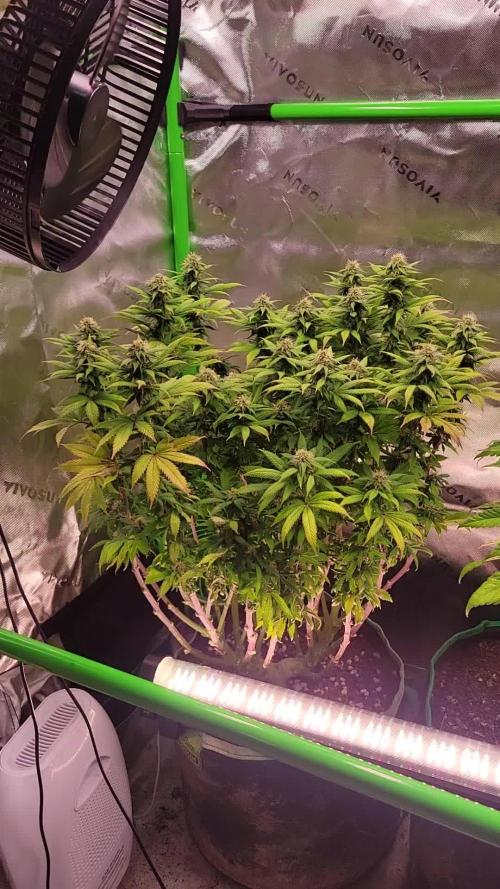
7/8/26 Sixteen weeks in and i get fucking spidermites! Ahhhhh lol. I caught it super early and am actually not too worried. Besides that this baby has been stacking so nice. Some of the lower canopy still seems larfy af but im having faith my underlight is gonna plump those little buds up. She shouldn't be longer than about 3 more weeks 4 tops. Still really waiting for that smell to fully develop and get nice and pungent but until then happy growing friends ✌️

Likes
26
Share


@MG2009
Follow
03/21/2021
All going well with the exception of the broken branch, but she is still looking healthy she(cutting) is in vermiculite and soil blend and soaked with Grow Rich 4-10-3 with IBA,to see if she roots. If not at least mother should have better buds with one less top.
1st video is at lights on, 2nd is just before lights out.
Likes
52
Share


@Mr_Motalovah
Follow
Smooth sailing!
Buds are getting dense, you can notice them getting ready for harvest.
She's got that trichome production going but these cookies aren't done yet...


Likes
14
Share


@SUMAN
Follow
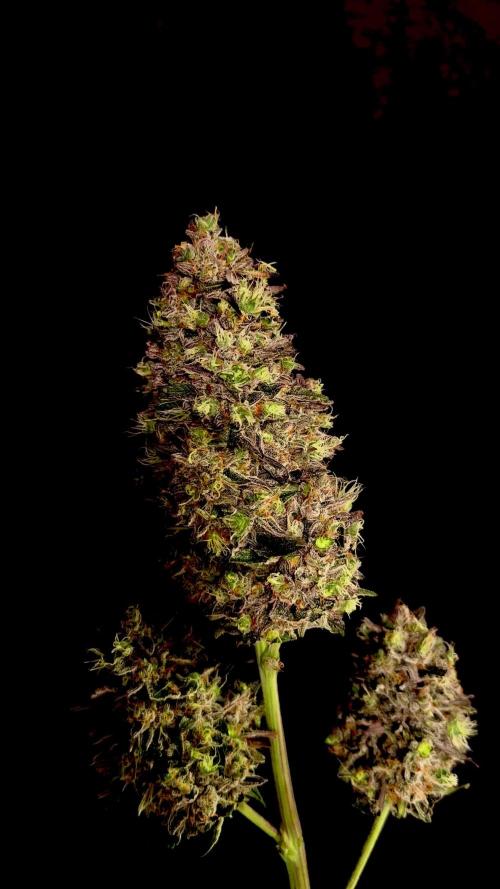
All 3 plants are beginning to fade starting with the runtz muffin hopefully I can harvest at the same time 🙂


Likes
5
Share


@Wobbleysausage
Follow
I'm pretty sure I missed a week on here. Got busy with life and pretty much only watered the girls. Nothing big to report still flowering strong. I changed to feeding tiger bloom within that missed week but had to switch back to big bloom because the smaller pot is just not holding enough nitrogen it seems. She dropped a lot of leaves and you can see both of them seem to have some senescence going on but nothing major. Water and fed 7

Likes
2
Share


@Ninjabuds
Follow
It's a nice change of pace to have these warmer temperatures, even if it's not quite spring yet. Low 40s during the day is a lot more comfortable than what we've been dealing with lately. Hopefully, this is a sign that spring's around the corner.
My Skunk Apple plant sounds like it's finally getting on track. After a rough start, it's good to hear things are looking decent. Hopefully, it'll keep looking better and better.
Likes
11
Share


@Drgreenthumb627
Follow
happy and healthy little plant on day 26, im mostly getting smells of pine off this girl so far. hoping for more blueberry to show out

Likes
6
Share


@eldruida_lamota
Follow
Vamos familia cosecha de Original de GrowBarato.
La verdad que el secado muy bien 7 días en Malla y a los botes, 40% humedad y 24 grados es la temperatura ambiental que han tenido en el secado.
Por lo demás de miedo os la recomiendo.
Gracias Agrobeta y Mars hydro , sin ellos este proyecto no sería igual 🙏.
Agrobeta:
https://www.agrobeta.com/agrobetatiendaonline/36-abonos-canamo
Mars hydro:
Code discount: EL420
https://www.mars-hydro.com/
Buenos humos.

Likes
21
Share


@AutoCrazy
Follow
Week 2
There has been an explosion of growth over the last week. I am amazed by how explosive it was. There are some nice bud sites forming as well. I did get a little bit of yellowing at the tops of a few fan leaves so I don’t think I will go quite as high feeding wise. I’ll go a 100ppm or so lower than what the feeding schedule recommends.
I had a bit of an accident though. I was doing a little LST and I snapped a top clean of 🤦♂️ So now I am down to 15 tops, doh!
Cooler internals for the week were:
6.0 pH
420 ppm on the 500 scale
0.9 EC
66F water temp.
I can’t wait to see what week three brings!
Onward 😎🍻🌱
Likes
16
Share


@osmrducks
Follow
Day 15: Plants looking healthy as can be! I didn't make a rack for the lights but I got em in. Looks jankie, but I think its gonna work. 🙏
Day 16: Trying to work out kinks in my grow. Since I put the other 2 lights in, I'm now battling the heat and humidity. Switch the fans around. Got the cold air coming in down low. Will feed them in the morning.
Day 17: The girls were showing signs of being thirsty this morning for sure! They received their first drain to waste watering. They will be getting some additional nutes on the next feeding (AN B-52, AN Sensizyme, AN CalMag Extra).
Day 18: Looking amazing today! I tried my hand at a little LST. Wish the girls luck.!! 🙏 Tomorrow is the official 2 week mark from breaking ground. So, not sure. I've got the humidity finally dialed in at around 50-55% and the temp around 78°. Also gave them another drink as they were already dry about 1.5" down??
Day 19: This is the official 2 week mark. I think I stressed the girls pretty good yesterday, but they look to be recovered today. Should start seeing good growth in the day to follow. Will just be tucking a leaf here and there for a bit. I will being doing a straight water feed next with Great White.
Day 20: Nothing new to report other than found 2 leaves that had some yellow mottling. I added Sensizyme, Recharge, and Great White to this feeding. Did not do drain to waste. Just watered the outside perimeter. PPM was 260 at 5.8 ph.
Day 21: NO MORE NUTES for these girls! Tips on a couple of em are turning yellow!!! Stupid me. Over watering and giving too many nutes.
Likes
8
Share


@Squaregrouper
Follow
This week was very hot week you were in a heatwave temperatures reached upwords 100 degrees while the heat index was around 120 degrees Fahrenheit.. the triple cheese has probably due to genetics did not grow is much as the others in the garden..I would say maybe it is the blueberry but I have grown blueberry outdoors and the trees reach-around 13 ft which isleading me to believe that this unknown plant in the garden could be leftover blueberry from last year.. I have started to review last Summer's grows to try to identify the plant if indeed the plant was in fact in the garden last Summer (took clones last year like I do every year)