


Likes
Comments
Share


@MindFlowers68
Follow
Well she transitioned into flower this week but she is stretching at a fast rate. I'm hoping she keeps stretching another week or two. Two of the other autos started to bud this week but i was hoping this one would be offset beings that is was germinated a little later so Im wondering if theirs something that triggered them to flower other than its genetics. It did cool down this week from in the 100's, to mid 80's and mid 60's at night. They got more compost tea this week and some rain a few days earlier in the week followed by sunshine.

Likes
12
Share


@ktkoi
Follow
Day 73: Early/mid flower for G. Crack & Mexican.. nearing late for CBD crack. These girls are thirsty, so much watering is happening, but the smell isn't nearly as strong as the first round is even though they are all bigger. This is a test post for videos, next one will be for the contest.
Day 75:
G-crack 58cm
CBD Crack 30cm
Mexican Airlines 20cm
CBD is closest to maturity. Her leggy stature gives ample opportunity for the different buds to get light. Mex is starting to get fuller buds, but she's short and stout and her leaves are in the way. G is way too large for me to get the right amount of light on her, wish I had defoliated her more, will probably harvest in parts.
None of these girls smell as strongly as the previous grow. CBD is a bit diesely but fresh. G is smokey but light right now. Mexican is spicey and woodsy. I can't really place the scents just yet.
Likes
11
Share


@frenchies_farm
Follow
Really happy with this harvest
She grows very well using topping, LST and defoliation
I fed them with half of the recommended dose for a photoperiodic all the growth
Likes
5
Share

@Badbreath
Follow
28/9
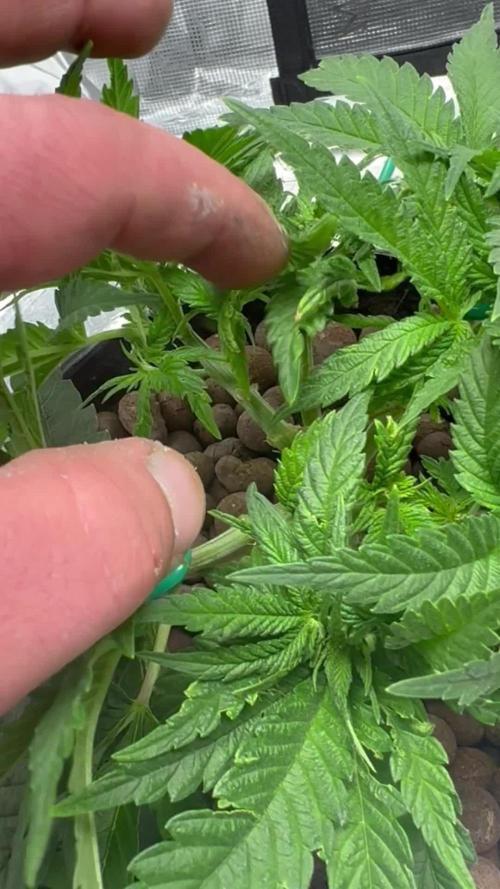
2 veckor kvar i veg innan jag flippar henne. Vad tycker ni, hur ser hon ut? 😎💪🏻
PH 5.8
EC 1.36
DLI 26
Kommer gradvis öka hennes DLI nu under veckan till 30 och slutet av nästa vecka kommer hon få 39/40 i dli under sina 9 veckor i blom.
Uppdatering 1/10

Likes
2
Share

@LovelyTerps
Follow
August 28 2026
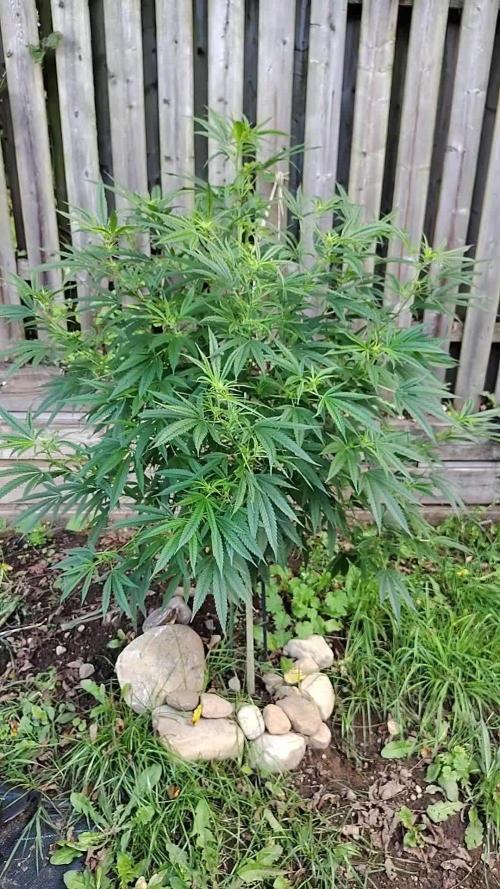
She is starting to stack flowers now, and still stretching. She's actually branching more than stretching, but it has been rainy and cold over the past week, with last night dipping to 9 Celsius. She's looking pretty beaten up at the newer growth from all the cold. The forecast shows it warming up for the next week or two, with warmer nights as well, so with any luck she will get the sun and warmth needed to pack on some weight and finish.


Likes
6
Share


@IamCy
Follow
Week 3. This is where the fun begins. The smell is amazing.
The stretch is crazy and the stems are stiff like bamboo. There's no loss in terps. They're actually getting a lot stronger!!


Likes
8
Share


Processing
Likes
21
Share


@LittleBigTrees
Follow
Put a selection of my own seeds s1's apart from red/purps red Russina Cross straight into soil and mist sprayed them with ph 6.5 water it took them 3-4 days to pop up but all popped up with 12 hrs of each other 🍾.


Likes
141
Share


@bioaccessory
Follow
Полёт в штатном режиме, к концу второй недели сделал пересадку растений в горшки по 12,5л.(можно было на пару дней позже, но и так пойдет).
В процессе использовал средство Jellyfish Plant Success, которое попало ко мне практически случайно, и вот тут не обошлось без сюрпризов можно сказать в прямом эфире - после полива смесью нелицеприятного вида(внутри кокоса и на корни я тоже обильно посыпал) буквально прямо на глазах на поверхности кокоса начали формироваться желеобразные сгустки по типу гидрогеля, размером с горох(см. видео). Поначалу я даже не знал, как реагировать, настолько это было неожиданно.😵 Здравый смысл да и само название(!) продукта подсказывали, что так и должно быть 😐, вот серьёзно, как-будто большую медузу бросили в миксер, а затем высыпали мне на субстрат. Подозреваю, что внутри субстрата творилось то же самое.
Прошли сутки, комочков желе стало меньше, но растворились не все. Теперь я уже вижу, что с растихами всё в порядке, значит всё так и было задумано 😇
Если и дальше всё пойдет по плану - в конце недели будем резать, заходите посмотреть.
Спасибо, что заглянули, и будьте здоровы! 🙏
Продолжение следует ...😶

Likes
4
Share


@DogDoctorOfficial
Follow
🌈 LSD — Week 5 Veg Report
8×8 Tent | 12/12 From Seed & Short Veg Comparison
👋 Quick Welcome
Welcome to everyone joining us now — and thank you for being here.
This diary documents LSD genetics grown under a shared environment, with different early-life strategies (short veg vs 12/12 from seed), allowing us to observe how structure, vigor, and timing express themselves under identical conditions.
⸻
🌱 Overall Status — Week 5
All LSDs are doing beautifully — not as a figure of speech, but in structure, color, and behavior.
• Strong vertical growth
• Active lateral branching
• Clear phenotypic differences depending on early light exposure
• Early signs of pre-flower expression, which is fully expected at this stage
There is no panic, no rush — just plants doing plant things.
⸻
Plant-by-Plant Observations
🌿 LSD #1 — Former Autopot Plant (Short Veg)
• Initially placed in autopots
• Showed early nutrient demand stress (“hangry” expression)
• Removed from autopots and transitioned to regular feeding
• Recovery is excellent:
• Purple stems fading
• Leaf color returning to healthy green
• Strong upward momentum
Structure & Behavior
• 9–11 visible branches
• Lower branches aggressively reaching upward
• Clear sativa-leaning dominance in structure
• Responds quickly to nutritional correction → a demanding but expressive genotype
This plant tells us clearly: “Feed me, and I will perform.”
⸻
🌿 LSD #2 — 12/12 From Seed
• No autopot exposure
• No nutrient issues observed
• Grew entirely under 12/12 from seed
Structure
• 7–8 nodes
• More compact internodal spacing
• Heavy lateral branching
• Balanced, controlled architecture
Roots clearly prioritized first, followed by steady vertical growth — classic 12/12-from-seed behavior.
⸻
🌿 LSD #3 — 12/12 From Seed (More Compact Expression)
• Also 12/12 from seed
• Even tighter internodal spacing than LSD #2
• Similar node count
• Excellent symmetry and branch development
This one reinforces the pattern:
12/12-from-seed LSDs are stacking nodes tightly while still branching hard.
⸻
🔍 Key Insight — 12/12 From Seed Behavior
This run is revealing something important:
• These LSDs are vegging, structuring, and initiating pre-flower simultaneously
• Behavior closely resembles autoflowers, despite being photoperiods
• The same pattern is visible in the autoflowers sharing the room
This suggests:
• Time efficiency without sacrificing structure
• Reduced “waiting” between phases
• Early architectural decisions locked in sooner
This is not a flaw — it’s a different rhythm.
⸻
🌸 Pre-Flower Signals — What to Expect
✔️ Expect
• Continued vertical stretch
• Ongoing lateral branch expansion
• Gradual, overlapping transition into flower
• Plants “deciding” their final shape soon
❌ Don’t Expect
• A sharp, sudden flip
• A clean separation between veg and flower
• Uniform behavior across all phenotypes
These plants are layering growth stages, not switching them.
⸻
🧠 Closing Thoughts
This week confirms something important:
When conditions are stable, plants don’t rush —
they express.
The differences we’re seeing are not problems.
They are information.
And we’re doing exactly what a good steward does:
• observing
• adapting
• and letting the plants teach first
Week 5 Veg/pre-flower | 8×8 Tent | Master Conditions
🌍 External Environment (Context)
• Outside temperature: ~5 °C
• Outside RH: 92–96% (very high humidity)
• Strong seasonal pressure influencing internal stability
⸻
🌡️ Internal Tent Conditions
• Tent temperature: ~21.8 °C
(noted drop due to cold external temps)
• Tent RH: ~58%
→ Very good considering outside conditions
⸻
💨 Airflow & Circulation
• Primary airflow: Bottom → top → wall return
• Pattern: Full-room vortex circulation
• Additional fans: Central airflow to break blind spots and mix layers
• Goal: No stagnant pockets, uniform VPD across canopy
⸻
💧 Water Source & Rationale
• Water: Dehumidifier water + rainwater
• Base EC: force
• Systems designed to support plant intelligence, not override it
FOR DISCOUNT CODES AND MORE JUST FOLLOW THE LINK https://website.beacons.ai/dogdoctorofficial
📲 Don’t forget to Subscribe and follow me on Instagram and YouTube @DogDoctorOfficial for exclusive content, real-time updates, and behind-the-scenes magic. We’ve got so much more coming, including transplanting and all the amazing techniques that go along with it. You won’t want to miss it.GrowDiaries Journal: https://growdiaries.com/grower/dogdoctorofficial
Instagram: https://www.instagram.com/dogdoctorofficial/
YouTube: https://www.youtube.com/@dogdoctorofficial
⸻
Explore the Gear that Powers My Grow
If you’re curious about the tech I’m using, check out these links:
🔆 Lighting & Environmental Control
• Future of Grow — Advanced LED lighting technology
https://www.futureofgrow.com/
DISCOUNT CODE: DOG20
• Lumiflora — Under-canopy LED lighting
https://lumiflorade.com/
• TrollMaster — Environmental controllers and automation gear (past collaboration)
⸻
Genetics
• Zamnesia Seeds — Genetics used in this project
https://www.zamnesia.com/
⸻
🌱 Soil, Substrates, Boosters & Root Support
• Plagron — Substrates, bio mixes, and supportive products
https://plagron.com/en/
⸻
🎒 Storage, Curing & Preservation
• Grove Bags — Curing and storage solutions
https://grovebags.com/
⸻
📸 Photography Equipment & Tools
(Not sponsors, but part of my creative toolkit)
• Sony A6700
• Sony full-frame macro lens + few more
• Stacking photography workflow - learning
• iPhone (for behind-the-scenes shots)
We’ve got much more coming as we move through the grow cycles. Trust me, you won’t want to miss the next steps, let’s push the boundaries of indoor horticulture together!
As always, this is shared for educational purposes, aiming to spread understanding and appreciation for this plant. Let’s celebrate it responsibly and continue to learn and grow together.
With true love comes happiness. Always believe in yourself, and always do things expecting nothing and with an open heart. Be a giver, and the universe will give back in ways you could never imagine.
💚 Growers love to all 💚
📸 P.S. – The Eye Behind the Lens
All photos in this diary (for now — except for the ones showing the camera, which I took with an iPhone) are taken with a Sony A6700 paired with a Sony full-frame macro lens and a few more.
Photography is part of the story — it’s how we share the fine textures, the glow, and the quiet details that words can’t always capture.
I’ve also started experimenting with photo stacking — a technique where multiple images, each taken at a slightly different focus point, are layered together to create one perfectly sharp image from front to back.
It’s not digital enhancement or AI; it’s pure photography — a way to reveal the plant’s beauty in microscopic depth, from trichome to petal.
You’ll even see a few shots of "ghost me" capturing the shots — camera, lens, setup — because every grow deserves not just to be cultivated, but documented like art.
FOR DISCOUNT CODES AND MORE JUST FOLLOW THE LINK https://website.beacons.ai/dogdoctorofficial
NEW DISCORD - Official Server Invite Link : https://discord.gg/ksjAkA5T74

Likes
9
Share


@Martymar021208
Follow
This tent has done amazingly they have veg strong and the branching has been extremely vigorous and lengthy really happy with ethos genetics to

Likes
11
Share


@MadeInGermany
Follow
Info:
Unfortunately, I had to find out that my account is used for fake pages in social media.
I am only active here on growdiaries.
I am not on facebook instagram twitter etc All accounts except this one are fake.
Have fun with the update.
Flowering day 54
since time change
to 12/12.
Hey everyone ☺️.
We are slowly getting closer to the harvest 😍.
You can see that the lady sucks all her energy out of the leaves and passes it on to the flowers.
The buds smell very tasty 😍.
It should be ready to harvest in the next 17 - 25 days.
But of course we will be observing this closely with the microscope from next week.
Otherwise the tent was cleaned as usual and the humidifier refilled.
I wish you a lot of fun with the update. Stay healthy and let it grow 🙏🏻
You can buy This Strain at :
www.Zamnesia.com
☝️🏼☝️🏼☝️🏼☝️🏼☝️🏼☝️🏼
Strain
Gelato clone from mother (Zamnesia )
☝️
Genetics: Wedding Cake x Gelato x Gelato 33
Vega lamp:
2 x Todogrow Led
Quantum Board 100 W
💡
Bloom Lamp :
2 x Todogrow Led
Cxb 3590 COB 3500 K 205W
💡💡☝️🏼
Soil :
Canna Coco Professional +
☝️🏼
Fertilizer:
Green House Powder Feeding
☝️🏼🌱
Water:
Osmosis water mixed with normal water (24 hours stale that the chlorine evaporates) to 0.2 EC. Add Cal / Mag to 0.4 Ec Ph with Organic Ph - to 5.5 - 5.8 .
Likes
26
Share


@DreamIT
Follow
Sponsored by:
🏡GANJA FARMER SEEDS🏡-💡VIPARSPECTRA💡-💐GREEN BUZZ LIQUIDS💐-🛠️WEDRYER🛠️
28/7 all right, soon cutting, cloning and flowering
2/8 I'm not a good grower, as evidenced by the fact that I left this delight in a corner for almost a week. It was wedged between other plants and not enough light passed between the branches, moreover, the same nourishment did not arrive as it did to the other plants because it was also a bit crooked. I recover with a bit of N and let's see how it behaves in flowering
__________________________________________
Personal advertising (contains affiliate links)
__________________________________________
🦄 Huge collection of exquisite genetics since 2009! Anonymous shipping!
✅https: //bit.ly/Ganjafarmer
__________________________________________
Did you know that Green Buzz Liquids fertilizers are 100% vegan? A complete line of products ready to give the best to each of your plants! Visit the site and see my journals to see how they work 🦄
🤯 And with the code "dreami t" you will immediately receive a 15% discount on your purchases
✅https: //bit.ly/GreenBuzzLiquidsPro
__________________________________________
👀 Are you looking for a good lamp to start with? 👀
🌞Viparspectra has something more than the others, take a look at their site.
⏩ Use "GDVIP" for an extra discount or "DREAMIT3" for an extra 5 %% discount
👀 Search for it on Amazon
✅Amazon USA: https://amzn.to/30xSTVq
✅Amazon Canada: https://amzn.to/38udUVe
✅Viparspectra UE: bit.ly/ViparspectraUE
✅Viparspectra USA: bit.ly/ViparspectraUS
______________________________________________
🌈 Tired of blowing on your weed hoping it dries quickly? Check out the Wedryer website! You will find a well-made accessory that will help your weed dry in just 8-10 days without the annoying risk of finding mold or other annoyances! (no affiliate links)
✅https: //bit.ly/Wedryer_
______________________________________________
📷🥇Follow the best photos on Instagram 🥇📷
https://www.instagram.com/dreamit420/
Backup
https://www.instagram.com/dreamit4200/
🔻🔻Leave a comment with your opinion if you pass by here🔻🔻
🤟🦄💚 Thank you and good growth 💚🦄🤟

Likes
7
Share

@TheFamilyShire
Follow
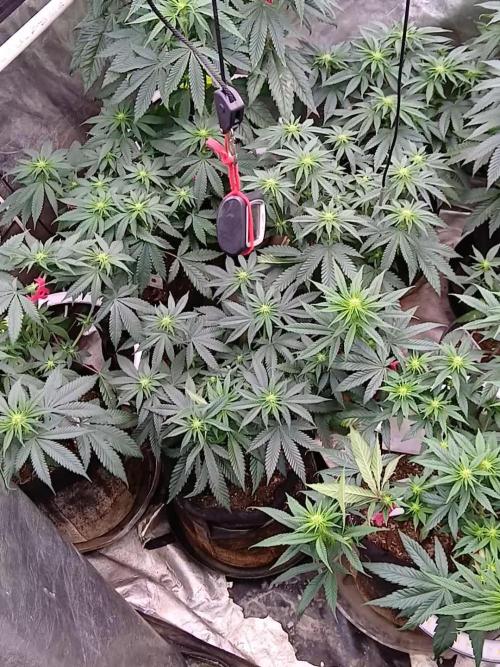
I accidentally left the under canopy lights on like 4 or 5 hours during the dark cycle day 3 or 4 of flower. I caught it and turned them off.
They all looked like they was still sleeping. Fingers crossed. Ive been having to water them every 3 days. I expect now that I turned on the under canopy they will drink faster. Love these Elufah lights.
Made a couple videos.
I also have 3x clones of the 2 b blunt. Im keep her alive for the foreseeable future.
Stay tuned.....


Likes
207
Share


@DogDoctorOfficial
Follow
Third week up we go, for this week i decided to lower my VIPARSPECTRA P2000 and bring the light closer to my canopy, i believe they are strong enough to higher PPFD numbers, so at 50cm this is giving me around 1000 uMol/s, with for this faze i believe is perfect, lets see how they react and if needed i can always adjust 😆 but since they are super healthy and strong af , why not pushing them to higher limits 😅💚😆
And with enormous honor and pleasure that i start collaborating with Zamnezia and Viparspectra
For this run i will have the pleasure of growing some Runtz genetics from Zamnezia seeds that they wore kind enough to send me for test and review 🙏🙏🙏💚💚💚🙏🙏🙏 and for the testing and reviewing i was blessed with the VIPARSPECTRA model P2000💚💚💚🙏🙏🙏 they wore amazing and send me this LED light for me to do some testing and some reviews. Special thanks to Zamnezia and to Viparspectra for this opportunity, lets make magic together 💚💚💚🙏🙏🙏
All i grow is medicine for myself, for me and for my best friend with is me 😆 nothing to sell, so don’t even ask 😅💚💚💚
All info and full product details can be find in can find @
https://viparspectra.eu/collections/grow-lights DISCOUNT CODE 5% - DOGDOCTOR ( all store )
https://www.zamnesia.com DISCOUNT CODE 10% - GROWITGD ( just for seeds )
https://aptus-holland.com/
More info and updates @
https://growdiaries.com/grower/dogdoctor
https://instagram.com/dogdoctorofficial
https://youtube.com/channel/UCR7ta4DKLFMg2xxTMr2cpIg
💚💚💚Growers love to you all 💚💚💚
Likes
2
Share


@Mr_nugs_lover_David
Follow
Absolutely beautiful looking plants, I didn't expect them to become that big honestly, one of the 2 plants is more advanced in flower, the smell it's absolutely incredible, super sweet fragrance coming from the buds, don't even need to get close to the buds, really happy with how this automatic plants by original sensible seeds have performed!


