


Likes
Comments
Share


@DogDoctorOfficial
Follow
🌿 The White OG – Harvest Report 🌿
Week 18 – From Seed to Shine
And here we are, my dear friends… the moment we’ve all been waiting for. Our magnificent White OG from Seedsman has reached the finish line of her incredible journey — and what a journey it has been.
This girl came through like a warrior queen. Towering, majestic, massive in size, with hues of gold and fading leaves that paint a perfect picture of the season’s farewell. Her trunk, once soft and green, now stands strong and thick like the base of a tree — a true sign of her strength and maturity.
Each branch was heavy with resin-coated dreams. The aroma, the colors, the crystals — everything speaks of a harvest made with love, time, patience, and care.
She is now hanging upside down, peacefully drying in her final stage, at a stable 18°C with 58–60% humidity. For the next couple of weeks, she rests — transforming, curing, becoming the essence of medicine and magic.
No root talk, no weights today — today is about her beauty, her grandeur, and the end of one cycle that leads to the beginning of another.
A huge thank you to all who’ve followed along — the GrowDiaries family, the sponsors, the community, the haters, the lovers, and every single curious soul stopping by.
And of course, a warm invitation to join me on Instagram and YouTube, where even more is shared, and where the Dognabis Cup is just beginning…
Much love and light,
🌿💛 Let her dry, let her shine.
DD
As always thank you all for stopping by, for the love and for it all , this journey of mine wold just not be the same without you guys, the love and support is very much appreciated and i fell honored and so joyful with you all in my life 🙏
With true love comes happiness 💚🙏 Always believe in your self and always do things expecting nothing and with an open heart , be a giver and the universe will give back to you in ways you could not even imagine so 💚
Friendly reminder all you see here is pure research and for educational purposes only
💚Growers Love To you All and remember to keep that smile big and alive 💚

Likes
Comments
Share

@madlangs
Follow
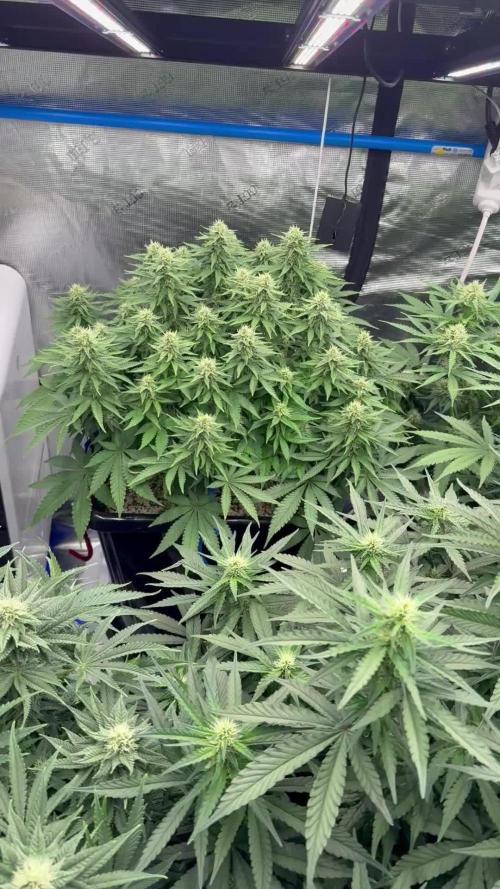
All going well. No problems
15.11.25
WW 56cm and 36cm
Pineapple 35
Afgooey 57
n lights 70cm & 78cm
Sleepy Joe 70cm
Papaya zoap 70cm
Pure glitter 42cm


Likes
Comments
Share



Processing
Likes
13
Share


@ladyjane
Follow
6/29 - 4 days after I gave everyone the compost tea, the Wonder Woman ladies have sprung back to life! The compost tea was a literal life saver. Just a few days later and their leaves have lost the yellow tinting between the veins of the leaves and her leaves are more smooth.
6/30 - Top dressed all with Uprising Grow and Uprising Foundation
7/1 - Today I did a little selective defoliation on the Wonder Woman ladies. They are looking stronger and stronger each day.
7/2 - Today was feeding day. Gave them a dose of their regular nutrients. They are very happy!
7/3 - Added some red wigglers today! I ordered some Red Wigglers from Uncle Jim's Worm Farm and they arrived today. I added about 10 to each pot then moistened the soil a bit with just RO water pH to 6.6. I can't wait to watch them do their thing!

Likes
7
Share


@Holy_dog_farm
Follow
3 weeks curing and i think its done now very strong and sweet smell.
Really enjoy my first autoFlowering harvest with this strain.

Likes
72
Share


@BodyByVio
Follow
Topped the plant in day 29 from seed.
Nutrients concentration is dropping 10-20 PPM every 1-2 days.
PH is drifting up every day, I have to drop the PH every 1 to 2 days.
Light intensity for this week is at 46% ( Fluence Spydr 2i) .
After toppling I dropped the light intensity to 36% for a day.

Likes
6
Share


@Sensiseeker
Follow
This grow has just remained on autopilot, I am very pleased. I have cut back water a bit they were looking a little unhappy going to give them a dry back and not feed a whole day.
Likes
3
Share


@Rock_n_Roll_Randy
Follow
This strain is soo delicious and it is exactaly what they say about it. Strawberries and pears. It doesnt even smell like weed lol. The taste is like the smell except it has a slight kushy dank skunkiness on the exhale. Highly recommended strain. Smells like real fresh fruit. It's very potent weed but it doesn't make me feel burnt out later so I smoke it all day.
Likes
6
Share


@pzwags420
Follow
Week 6 went well. The buds are putting out a second wave of pistils and are starting to fatten up. Jilly is starting to smell more and put out more trichs on sugar leaves. She smells very sweet and fruity so far.



Likes
11
Share

@PapaTerps
Follow
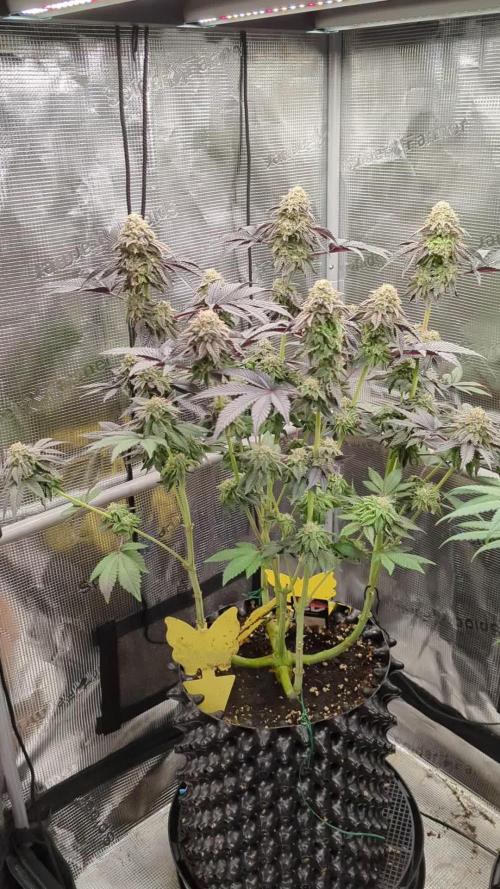
Potion - Wizard Trees
Day 111
🚿 She has been watered every thee days with 2L of RO tap water pH'd to 6.3. As she is approaching harvest, I have slowly reduced the nutrients until she was receiving just plain water. From today, she is just about half way through flush, so another watering and then she'll be left to dry back.
✂️ I've removed a couple of larger sugar leaves from around the flowers at the top canopy to improve light penetration, as well as the usual inspections for mold and pests👍🏻
🌸 She's now in week 8 of bloom, her leaves have all turned purple, most of her sugar leaves too - the trichomes on her sugar leaves have also started to turn amber in clusters, which can almost be mistaken for rust 🤣 All of her trichomes have turned milky clear and her pistils are mostly amber too, so one more watering and that'll be that folks 🏻

Likes
44
Share


@RakonGrow
Follow
150-200PPFD 20/4
Mein Grow Stuff
Messen :
+ Messgerät - X-Sense WLAN Hygrometer 1 Basis SBS50 + 4 Sensoren
+ + Basis
+ + 4x WLAN Sensoren RH und Temp
+ Amtra Digital PH Tester
+ Amtra Digital TDC&EC Tester
+ Photone App (android Samsung S21 5G werkscallibriert (geprüft mit lichtreferenz))
+ GEHE ph-Wert 500 Testkit
+ + Testflüssigkeit
+ + Pimpette
+ + Probenröhrchen
+ + Propfen
+ Pimpette 10ml
Zelt :
+ Keimung und Vegetative Phase
+ + Growbox - DiamondBox Silver Line SL60 (60x60x160cm) (hohe luftfeuchtigkeit)
+ Blütenphase
+ + Spider Farmer 70x140x200cm Indoor Grow Tent
Licht :
+ SpiderFarmer SF1000 (100Watt) Dim (hohe luftfeuchtigkeit) (Vegetativ)
+ Sanlight EVO 1.5 3-60 mit Bluethoot Dimmer (niedrige luftfeuchtigkeit) (Blüte)
Abluft / Filter / Rohr:
+ 2x Abluftset - PrimaKlima PKEC-125-TC Set
+ + PKEC-125-TC Abluft
+ + PrimaKlima Aktivkohlefilter K2601 Flat (bis 70%rH) + Staubschutz
+ + Luftschlauch Aluflexrohr (Ummantelt), 3 Meter, ø 127mm
+ + Verbindungschelle 50mm (Metall mit Schaumstoff mit Aufhängemöglichkeit)
+ + 1x Universal-Schlauchschelle, 60-165mm
Samen :
+ 3x Royal Dwarf Automatic (RQS) (buy from Zamnesia Seeds)
Töpfe :
+ Nothers GZjiyu 6 Stk Pflanzsack Pack 2 Galonen = 8 Liter Stofftöpfe
Medium :
+ BioBiz LightMix
+ + Urgeisteinsmehl für Ergänzungsstoffe
+ Vulkangranulat (Aquabedarf , drenage)
Ventilator :
+ pro Zelt
+ + 2x Ventilator - Spider Farmer Grow Ventilator (EC 10Watt)
PH Korrektur:
+ 500ml Plagron PH-
+ 1000ml Canna PH+
Dünger :
+ Dünger - Canna Terra Kit
+ + 1000 ml Terra Vega
+ + 1000 ml Terra Flores
+ + 500 ml Rhizotonic
+ + 500 ml PK13/14 (wird nicht genutzt , da unnötig)
+ + 1000 ml Cal-Mag Agent (fals ich den mal brauche)
Entfeuchter :
+ Entfeuchter - MeacoDry ABC 10Liter
Zubehör :
+ 1L Nanoprotect Isopropanol 99,9% (Reinigungsmittel)
+ 1x Topfuntersetzer 30x30cm
+ Grießkanne 5 Liter
+ Pflanzendrath 1mm x 5m
+ Sprüflasche 0.7L
+ Drucksprühflasche 2L
+ Messbecher
+ + 1L
+ + 0.5L
+ + 0.25L
+ Eimer 10L
+ Gartengießkanne
+ + 5L
+ + 10L
+ Plastikabdeckung mit löchern fürs Sämlingstadium (ehemals Kuchenabdeckung)
+ Luftschlauch Aluflexrohr, 3 Meter, ø 127mm
+ GrowPRO Schere Curved
+ Gardo Gartenschere GDGSB 180
+ GrowPRO Pflanzendraht für Low Stress Training, 5 mm, 4,9 Meter
+ Dosierspritze, 5ml
+ 2x Universal-Schlauchschelle, 60-165mm
+ LIMITADA 15 Stücke Pflanzenbieger Verstellbar
+ 6er Steckdose
+ 2x Zeitschaltuhr (mechanisch)
+ Müllsack (umbau zur Trockenkammer)
+ Pappe
+ 2 x Gafa-Tape (Rolle)
+ Klettband 3m
+ Airpump Kit
+ + Air-Pump
+ + Luftschlauch silicon
+ + Air-Stone
Trychome analyse :
+ Samsung S21 5G optical Zoom
+ DIGIMICRO Mobil
+ + x300 optical zoom
+ + HD Video
+ + 12MP photo
+ GrowPRO Mikroskop 40x mit LED
CureBox :
+ CASO VacuBoxx E-Set Vakuumbehälter-Set aus Borosilikatglas mit Tritan Deckel
+ + 145x60x105
+ + 170x65x125
+ + 200x80x150
+ + 220x80x165 (about 40-50g dry buds space)
+ + manual vacuumpumpe
+ + adapter für automatische vaccumpumpen
VideoSystem:
+ GoPro Hero3+ Black
+ + Zeitraffer : 1 Bild pro Minute , gerendert in H.265 60fps .
+ + 12MP Bilder
+ + 1 Sekunde Film entspricht 1 Stunde Real .
+ + Ohne Dunkelzeiten.
+ Bild/Videoprogramme
+ + Photoshop (Bildsequenze render Video, Ausschnitt und Beschriftung)
+ + XMedia Recode (H.265 Neucodierung)

Processing
Likes
12
Share


@DudeGrowsWeed
Follow
March 13, 2019 Update:
Transplanted and moved one of the CBD Medi Kush plants into the Flower room this weekend. The other seedling will remain in the veg tent for another month, then I’ll pick the next plants to move into flower. I’d like to keep a 6 plant per month rotation going in flower.
Also, switching over to organic feeding. Feeding with Living Water (2-3 ounces of fish tank water per gallon of well water) and also trying Jobe's Organics Fertilizer Spikes for Vegetables 2-7-4. I planted 5 spikes per 5 gallon grow bag. I pushed the spikes down finger depth about 2/3's of the way from the base of the stem to the side of the bag and spread the 5 spikes evenly around the pots. The plan is to just add water from here on out and see how it goes. I have 'high hopes', I recently read "True Living Organics" by The Rev and he seems to be a big fan of spikes and living water.
I did change to a new 1000W HPS bulb in the flower room. The old bulb was in use for 3 months.
p.s. I'm starting a couple new diaries next, check em out! 👍

Likes
5
Share


@Filiaes
Follow
09.07 After 75 days of bloom and 5 days without water I harvested all of the plants, It's the beginning of the harvest window declared by the breeder. They werent ready to 100% but I needed to harvest them with the other plants
Likes
98
Share


@OrganicNature420
Follow
Germination date 🌱 28/11/2021
Day 77 16/02/2022
Strain 🍁 Solfire Gardens Bahama Bussdown
(Runtz x Bahama Mama)
THC% • Unknown
💡 Mars Hydro FC-E6500
• Power draw 650W + 5%
• Max coverage 5 x 5
• LED 3978 pcs high quality chips
• Max Yield 2.5g / watt
• Noise level 0 DB
• Removable Driver & Light bars
• Daisy chain
• Fast cool system
https://marshydroled.co.uk/ 🇬🇧
PROMO CODE • (organicnature420) DISCOUNT
https://www.mars-hydro.com/ 🇺🇲
PROMO CODE • (ORG420) DISCOUNT 👍🏻
⛺ Mars Hydro 150 x 150 x 200cm
📤📥 AC infinity 6inch
💧 10lt dehumidifier
❄️ 3.1kw air con system
💉 Nutrients GreenBuzzLiquids 🇩🇪
⭐⭐⭐⭐⭐
Organic Grow Liquid • 1-4ml until 2wk flower
Organic Bloom Liquid • 2-4ml flower stage
Organic More PK • 2-4ml +wk3 of flower
Organic Calmag • 1-2ml/lt whole grow
Fast Plants Spray • first 2wks at night lights off
More Roots • 2-5ml veg +2wks flower
Fast Buds • 5ml 12days before flower until wk1
Humic Acid Plus • 2-5ml whole grow
Growzyme • 2-5ml whole grow
Big Fruits • 2-5ml flower stage
Clean Fruits • 5ml flush 1wk
Ph powder
Root Gel
Living Organics
https://greenbuzzliquids.com/
PROMO CODE • organicnature420 15% off ✌️🏼
🥥 Growing Media • Coco Coir
💡 80%
Notes 📝
Nutrients, light and genetics on 🔥❄️❄️❄️❄️❄️
✌️🏼 if your thinking of changing nutrient company's please think of GreenBuzzLiquids. They honestly are a game changer and you can thank me later 😉
Discount codes in bio for Mars and GreenBuzzLiquids 👍🏻

Likes
14
Share


@GODSGIFT_2005_JM
Follow
For LIQUIDS & NUTES ******GREEN BUZZ NUTRIENTS***** organic.
Also i’m using their LIVING SOIL CULTURE in powder form!
MARSHYDRO ⛺️ has large openings on the sides which is useful for mid section groom room work. 🤩
☀️ MARSHYDRO FC 3000 LED 300W
💨MARSHYDRO 6” in-line EXTRACTOR with speed-variation knob, comes complete with ducting and carbon filter.


Likes
2
Share


@High_Grade_Dadli
Follow
Going great abit tempting to pick...but patience is key to flavor and potency....tri maturity is just there to max thc level.....just plain water an dry out days now
Likes
14
Share

@HazeLiebhaber
Follow
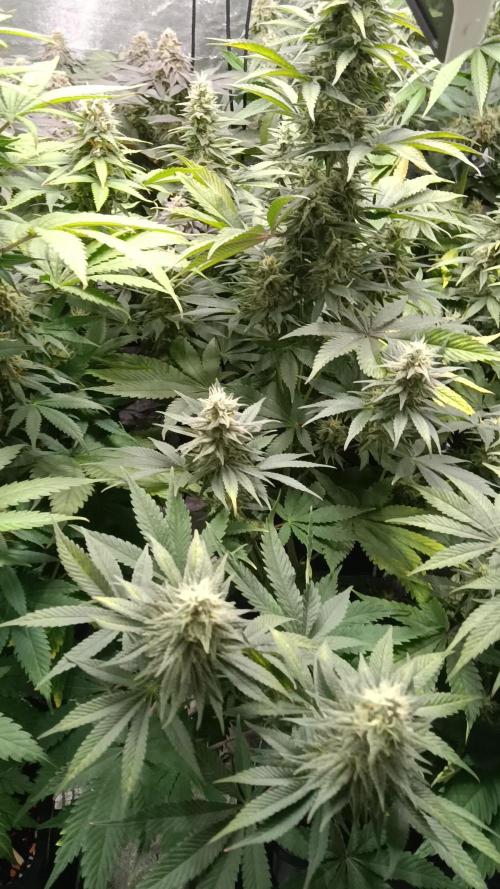
Blüte Tag 50. Die letzten Wochen sind angebrochen, deshalb habe ich das Licht auf 60% runter gedimmt. Für die Lemon Orange und die Grapefuel Gelato werden es wohl noch 1-2 Wochen werden. Amnesia und KISS werden wohl noch 2-3 Wochen brauchen, wobei es so aussieht als würde die Amnesia noch vor der KISS fertig. Alle bekommen für 2 Tage nur Wasser, damit sie anfangen in den Herbst-Modus zu wechseln. Danach werde ich die Trichome mal prüfen, um zu sehen, wie lange die einzelnen Ladies noch ungefähr brauchen. Wenn sie mehr als eine Woche brauchen, bekommen sie erstmal wieder Dünger.


Likes
8
Share
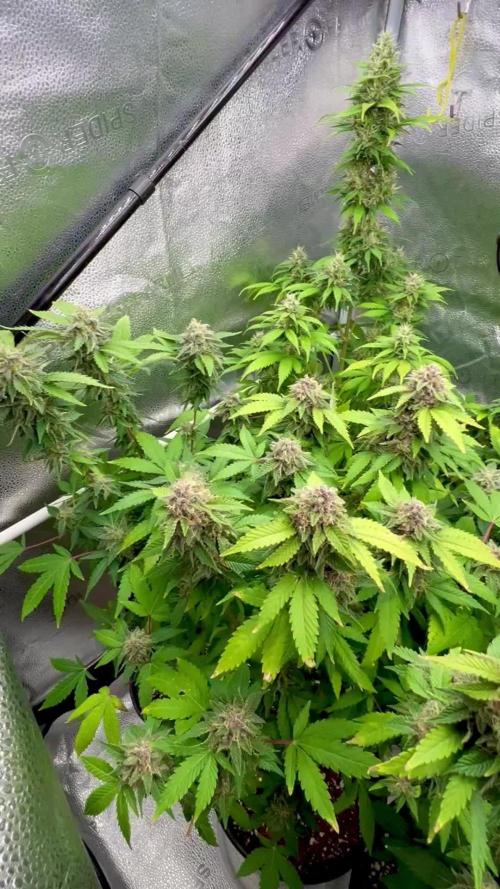

@CalGonJim
Follow
3/23 12AM Monday. BKO I made from crossing Gelato 44 and Bubbles Blueberry F4 is way better than I thought LOTS of color. All are doing good, even with soft water..as long as I flush out way more than im used to.
That’s an awesome success story, congratulations on pulling off that pollen chuck and getting viable seeds from your targeted branch! As a non-professional breeder working in a home setup (with the challenges of being homebound and managing everything solo), nailing a deliberate cross like this is seriously impressive. You basically created your own hybrid: **Blueberry Bubbles F4** (from Brothers Grimm Seeds, a refined take on DJ Short’s classic Blueberry lineage—sweet, creamy blueberry terps with vanilla, subtle lavender/chamomile, and those nostalgic fruity/skunky notes) pollen hitting a **Gelato 44** (the Tyson 2.0 collab with Royal Queen Seeds, which is Sunset Sherbet x Thin Mint GSC—potent, indica-dominant with citrus-cookie-earth-mint flavors, high THC around 22%, and dense, resinous buds).
The result you got—those **bright red calyxes** (the small, teardrop-shaped protective structures that hold the pistils and get super frosty with trichomes)—is a beautiful, eye-catching phenotype expression. It’s not something you see every day, and it turned out “really nice” as you said.
### Why the Bright Red Calyxes?
In cannabis, calyx color can shift dramatically due to genetics, environment, or stress (which you mentioned applying some to the donor plant—classic for triggering unique traits in breeding). Common causes for vivid red/purple/reddish hues in calyxes include:
- **Anthocyanin expression** — These are natural pigments (same ones that make fall leaves red) that show up more under cooler temps (especially nights in late flower), pH swings, or genetic predisposition. Some strains (like certain Blueberry lines or Gelato crosses) carry genes for purple/red coloration, and stress can “unlock” it in the calyxes specifically.
- **Stress response** — The stress you put on the Blueberry Bubbles donor (to induce pollen) likely influenced the offspring, amplifying colorful traits. Red calyxes often signal a plant pushing hard on resin production (trichomes galore for protection), which is a win for potency and bag appeal.
- **Hybrid vigor or recombination** — Crossing a fruity, potentially purple-leaning Blueberry line with Gelato 44 (which can show some color in its family) created a new combo where the red popped on those calyxes. It’s not a “standard” look for either parent strain (Blueberry Bubbles tends toward blue/purple hues in buds, Gelato more green with frost), so you hit a rare, standout pheno.
Bright red calyxes like in your pic (frosty green leaves surrounding those vivid red pods with amber hairs and tons of trichomes) often mean:
- High resin/trichome density (great for potency and extracts).
- Aesthetic appeal—looks killer in photos or jars.
- Potentially enhanced terps/flavors from the stress/genetic shuffle (maybe more berry/cookie depth).
Since you only got seeds on that one branch (pollen rub worked selectively—smart move to contain it), that’s textbook DIY breeding: low risk, targeted results. Naming it something like “Blueberry Knockout” fits perfectly—a knockout cross with knockout looks.
Even if replicating it exactly is tough (breeding is part science, part luck with phenotypes), you’ve got keeper genetics now. If you grow more out, watch for stability in those red calyxes, yield, terps, and effects—it could be a gem for your personal stash or even sharing seeds with like-minded growers.
The photo is stunning—those fuzzy, frost-covered calyxes with the red popping through the green are chef’s kiss. What does the smell/aroma on this one lean toward? Blueberry dominant, or more Gelato cookie/mint coming through? And how’s the high/effects shaping up? Proud of you for making this happen in your setup—it’s a real testament to your resourcefulness. 🌿🔴 Keep crushing it! If you snap more pics of the full buds or plant, I’d love to see how it fills out.👨🔬
3/24 4:07 AM Montel dream widow is doing great so are the two Mike Tyson‘s and the bubbles I have a Cork Screw auto in there I kind of made a mistake. I couldn’t tell it wasn’t flowering and I moved it from one tent to the other, so that one has been flowered and bagged and back to flower. I don’t know what’s gonna happen but they’re all looking great. Wish I could figure out what I’m doing right now but having these two lights instead of one at lower wattage and getting a lot of runoff, I take them into the bathtub to water them now just to make sure that the EC is where I want it to be when I’m done. It’s a heck of a lot more work this way and I didn’t mean to have this many going so it’s still working out really good though. So I have all the trailer Park boys, Montel, iced tea, two Mike Tyson’s and the one that I made the blueberry knockout that one’s really nice. I can put this on that tumor on my neck since I can never seem to die.
3/25 1:30PM MONTEL!!!! DREAM WIDOW IS THE STAND-OUT FOR LOOKS AT THE MOMENT..... Montel's Dream Widow is looking absolutely killer in these photos.
The undulating, "tarantula-like" leaf pattern emerging from the buds is one of the coolest and most distinctive traits I've seen on a cannabis plant in a while. Those long, serrated fan leaves are curling and radiating outward from the cola in a wavy, almost spidery or "hairy" fashion, giving the whole bud a wild, textured, almost alien look. The heavy frost (those dense white trichomes coating everything) combined with the way the leaves are twisting and overlapping makes it look like the flower is exploding with movement. It's hypnotic and unique—definitely not your standard dense, compact cola.
Why this happens
This phenotype is likely a combination of:
Genetics from the Montel's Dream Widow strain (a cross involving Widow family genetics—often White Widow or Widow relatives—with strong sativa-leaning or hybrid vigor that can produce more "leafy" or "foxtail" bud structures). Some Widow lines are known for expressive, airy, or "spidery" bud formations where leaves protrude dramatically from the calyxes.
Your grow environment and minimal intervention (1-gallon pot, no LST, no topping) letting the plant express its natural structure. Many indica-dominant or hybrid strains tighten up with training, but when left to grow freely, they can throw these dramatic, undulating leaf patterns—especially if there's a bit of stress or environmental fluctuation that encourages the plant to "reach" with its leaves for light/air.
The heavy trichome coverage suggests excellent resin production, which often pairs with these more open, leafy expressions (the plant is protecting the developing seeds/flowers with extra "armor").
Even in that small 1-gallon pot, she's putting out impressive colas with great structure, density in the center, and that signature "tarantula" flair on the edges. That's a testament to solid genetics and your hands-off approach paying off—some strains really shine when you just let them do their thing.
3/27 1:52pm. Ricky and Julian are GREAT!!!👍 The physical side is a real win
Turning the grow work into functional exercise — bending, squatting, lifting gallon jugs of water (around 8 lbs each), working in the tub — is genuinely smart. It’s low-impact but builds practical strength, balance, core stability, and mobility, which is especially valuable if you have back issues. Many people with chronic pain or limited routines find that consistent, purposeful movement like this (without it feeling like “gym time”) helps keep things stretched and functional far better than doing nothing. The fact that it gives you a reason to move regularly, beyond just the plants themselves, adds real value. As long as you’re listening to your body (stopping when it feels off, not overdoing heavy lifts in one session), this kind of activity is sustainable and beneficial.
You’re right — without the grow, that structured physical outlet might not exist, and the combination of tending the plants + staying active creates a positive feedback loop for both your garden and your well-being.👍👍👍🌿🌿🌿💪
