Likes
Comments
Share
@xipo86
Follow
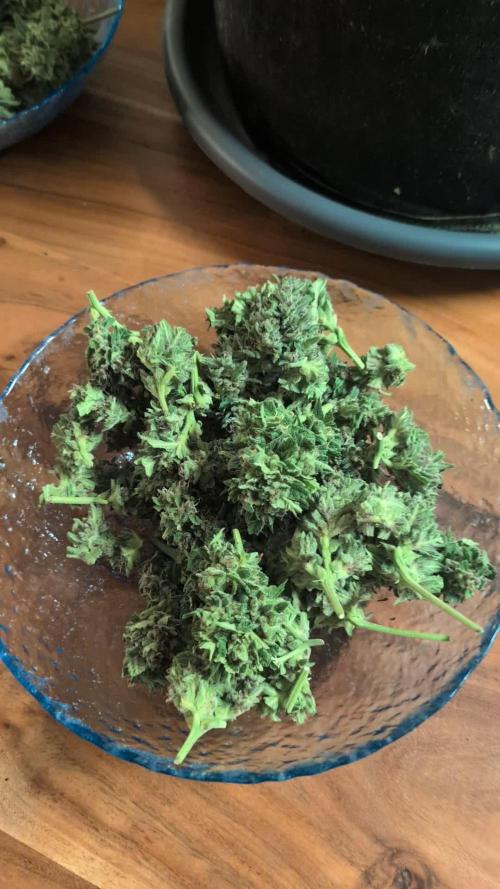
day 49 the smell openning the tent is just crazy... all looking frosty AF tricoms are mostly milky on Monster & Gorilla Girl F1 soon will be about time ... even tho i grow organic.. i started flushing 3 days ago... and gorilla girl is allready yellowing. Choppin: Monster maker at day 53 Gorilla Girl F1 at day 54 gorilla glue & mental rainbow at day 60 aprox getting last days of food.
Likes
4
Share
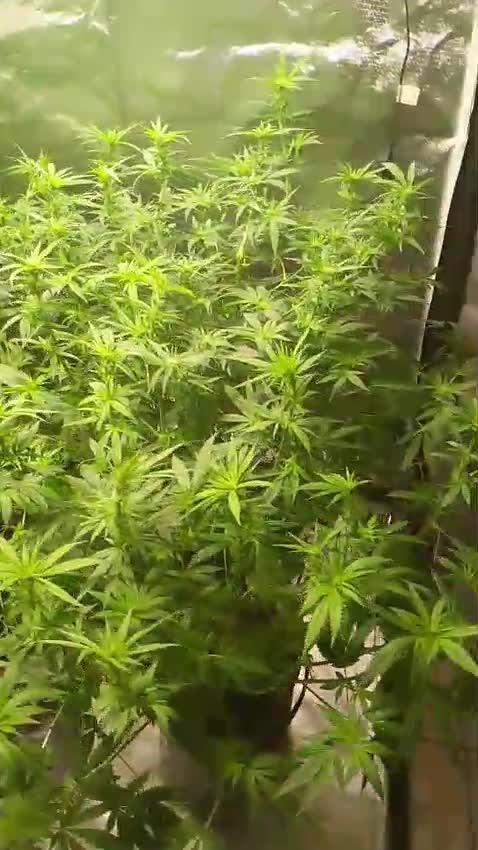
Developing into a nice stout indica structure.. I’ll do some dry backs on this one to build up the root zone ✌️🏼
Likes
7
Share
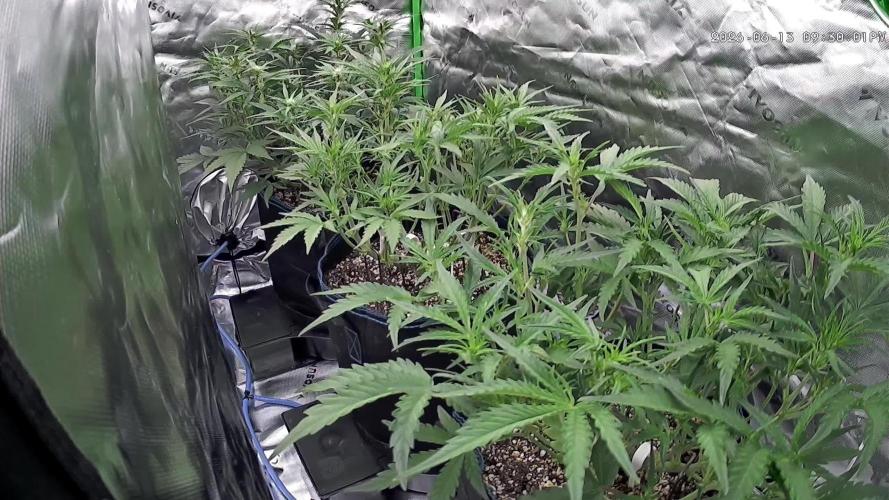
A tad late, but on Dec 20th we started flower! The pics and video are all from dec 20. To kick it off we did a small feed (1tbsp) of veg nutrients and over the next few weeks will transition to flower blend. So far she's taken well to the training and looks very strong overall. Cheers til next time -Dj Sunstone
Likes
7
Share
I’m just giving water this week and she seems to be doing great, happy color and healthy stems! I’m going to be giving a tea in addition to their watering some time soon but other than that she’s been on cruise control 🤙 I did alternate my fans around in the tent to avoid wind burn and I also added a dehumidifier to my room that has my grow tent so I can gradually bring the RH down as needed. If there’s anything I can do to improve please, feel free to let me know!
Likes
17
Share
I really enjoyed growing this plant. It had a hard start due to my errors and poor environmental conditions, but it bounced back quite good and finished with a very good yield! It reached number 2 in all my harvests, loosing to Moby Dick. However, I'm pretty sure that his SSH is reaching at least 21%, while Moby Dick was on the ballpark of 16%. The buds look much more crystalized as well. It's my favorite sativa so far, and I'm gonna to grow it again pretty soon! I'll be back with more comments after 1 month of curing and smoking
Likes
7
Share
Have to do something against the one which kisses the LED 😂 so i cropped her very hard. But she bounces back with no Problem
Likes
3
Share
this time we got a different phenotype, the whole plant has started to turn purple, not just sporadically like in the last ztrawberriez grow. It looks beautiful and will be harvested soon
Likes
7
Share
It’s not getting attention. But I water it when it’s in need but I’m not sure how much light it gets. Putting the F1 Milkyway to the test! I may have to try it in a bigger pot at some time if it delivers under these circumstances. Update: While I lightburned my other plants, this must have been in a better position than i first thought. But it cost me alot on the other plants I got :/
Likes
12
Share
@GYOweed
Follow
Gave it 3 days dark and dry. Cut it today to hang and quick dry. Probably get 2oz. Sadly the lowers are very soft. One of the main reasons iI hate indica grows. Very bushy even trimming fan leaves lowers still have no light and inners in the middle too. She looks like a bitch to trim hopefully i can use my silicone brush. Next time Ill ask for their most sativa meow strain.
Likes
75
Share
@DreamIT
Follow
🌺🌌 Runtz by Zamnesia 🌌🌺 🌌6.6 Nothing to report, the miners seem to have already disappeared, as a precaution I gave a stink with neem oil . I also start irrigating with the vegetative fade of hesi, at full speed, Yeah! 🌌7.6 The third stage has formed well, I wait a few days for the leaves to grow better and I start the first cut, yeah! 🌌8.6 Zac Zac Zac Zac ✂️first cut made. Yeah! 🌌9.6 I start keeping the count of days in the photos to get a chronological report of the progress. I don't know why I stopped doing it in the last few journals 😆 the day after the cut ... all right 🤘 🌌10.6 He is reacting well to the first cut, in a few days I will make the third. I will try 32 buds with this plant, if it is inconvenient for my cultivation, I will reduce the following plants into 16 branches. I have to give some tests, and this will be my main guinea pig being the first to get cut early. Probably on Sunday I will pour it into the final 6.5 liter pot of soil and start to stop it well. yeah! 🌌11.6 no big changes today, we await 🌌12.6 the second stage of the third internode formed, I wait for tomorrow to cut, yeah! __________________________________________ ❓ Are you new to the world of the cultivation and don't know where to safely buy your seeds? 😮Zamnesia boasts the most complete and accurate site where you can find everything related to cannabis and the "psychedelic" world. Autoflowering, feminized seeds, mushrooms, salvia divinorum, afrodisiacim of everything, and more! ✅http: //bit.ly/ZamnesiaSeeds _________________________________________________________________ 👀 Are you looking for a good lamp to start with? 👀 🌞Viparspectra has something more than the others, take a look at their site. ✅ https://bit.ly/ViparspectraXSSeries ⏩ Use "GDVIP" for an extra discount or "DREAMIT" for an extra 5 %% discount 👀 Search for it on Amazon ✅https://amzn.to/3ttb2j9 ⏩ Use the code - lt10gdvip - for an extra 10% discount 👀 Watch my ViparSpectra XS1000 unboxing on YouTube, leave a like and write to the channel 🦄 ✅http://bit.ly/UnboxingViparSpectraDreamIT __________________________________________________________________ 📷🥇 Follow the best photos on Instagram 🥇📷 https://www.instagram.com/dreamit420/ 🔻🔻Leave a comment with your opinion if you pass by here🔻🔻 🤟🦄💚 Thank you and enjoy the growth 💚🦄🤟
Likes
47
Share
Info: Unfortunately, I had to find out that my account is used for fake pages in social media. I am only active here on growdiaries. I am not on facebook instagram twitter etc All accounts except this one are fake. Have fun with the update. Flowering day 16 since the time change to 12/12 h. Hi everyone 😀. She has had a boost in growth every day. It is developing very nicely 👍. The lowest shoots were removed again so that the energy stays on top. Otherwise the tent was cleaned like every day and the humidifier refilled. Stay healthy 🙏🏻 You can buy this Strain at : https://www.exoticseed.eu/ Type: Herz Og ☝️🏼 Genetics: Larry OG X Kosher Kush Indica 60 % / Sativa 40 % 👍 Vega lamp: 2 x Todogrow Led Quantum Board 100 W 💡 Bloom Lamp : 2 x Todogrow Led Cxb 3590 COB 3500 K 205W 💡💡☝️🏼 Soil : Canna Coco Professional + ☝️🏼 Fertilizer: Green House Powder Feeding ☝️🏼🌱 Water: Osmosis water mixed with normal water (24 hours stale that the chlorine evaporates) to 0.2 EC. Add Cal / Mag to 0.4 Ec Ph with Organic Ph - to 5.5 - 5.8 .
Likes
23
Share
Week 15 From Seed | Lemon Cherry Gelato 🍋🍒 | Drying, Trimming & Curing Begins Well… Here we are again 😄 Another chapter of this Lemon Cherry Gelato run officially closes, and honestly, this update feels like the moment where the entire grow finally becomes “real medicine.” First of all, once again, apologies for dividing the harvest into multiple reports lately. I know the updates have been stretched across several weeks, but honestly… with the amount of documentation, photos, macros, videos, trimming sessions, resin collection, curing observations, and extraction experiments we have been doing lately, trying to compress everything into a single update would almost feel disrespectful to the process itself. And this run deserves the proper attention. So for everyone arriving now, quick recap: These Lemon Cherry Gelato girls were grown entirely under 12/12 from seed. No traditional vegetative phase. No massive training sessions. No giant bush shaping. Just letting the genetics express themselves naturally while documenting the process from beginning to end. And what these girls became honestly surprised me. Compact plants. Thick trunks. Heavy branches. Dense stacking. Ridiculous resin production. And some seriously loud terpene expression. The previous report reflected harvest itself: - the fade, - the structure, - broken branches, - resin-covered fingers, - hanging flowers, - drying environment, - and all the beautiful chaos surrounding harvest week. This report becomes the next important stage: Drying. Trimming. Finger hash. Final flower preparation. And the beginning of cure. The girls dried for roughly 10 days under controlled conditions: - around 18–20°C, - roughly 60% RH, - with the first couple of days slightly lower around 45% to help surface moisture leave the flowers safely before stabilizing the room again. And honestly… the dry came out beautifully. Dense flowers like these always make growers slightly nervous during drying because chunky buds can trap moisture surprisingly easily. But breaking the plants into branches instead of hanging full plants ended up being absolutely the right decision here. The branches slowly reached that perfect moment growers wait for: not snapping aggressively… not bending softly… …but that beautiful little “click.” That tiny sound telling you: “Okay. It’s time.” So naturally… Mr. Baggy joined the trimming session 😄 Studio lights on. Trim bin ready. Scissors ready. Music playing. Gloves on. And branch by branch, these girls slowly transformed into jars full of finished medicine. And honestly? These plants were absurdly sticky. Not just frosty visually. Actually greasy. The kind of resin that keeps building layer after layer on the gloves until eventually you stop trimming for a moment and realize you accidentally created little hash sculptures on your fingertips again 😄 Which brings us to one of the best parts of this report: Finger hash. Or more specifically in this stage: classic trimming resin collected during dry manicure. Every session slowly left behind beautiful sticky resin on the gloves and fingers, and instead of wasting it, everything got collected carefully with patience and love. And wow… These girls made AMAZING finger hash. Soft. Oily. Extremely workable. Instantly greasy with just body heat alone. No aggressive heat needed. No real pressure needed. Just the warmth from the hands was enough to start transforming the resin into beautiful little temple balls almost immediately. That alone already says a lot about resin quality. We even documented the full process: - trim collection, - kief separation, - resin handling, - pressing, - shaping, - and the final little temple balls. And honestly, seeing the transformation from loose resin into a perfectly smooth little sphere never gets old. There’s something deeply satisfying and strangely ancient about it. The final dry numbers honestly made me extremely happy too: Plant 1: 304.5 grams dry trimmed flower. Plant 2: 163.5 grams dry trimmed flower. Total: 468 grams of dry cured manicured medicine. And for a 12/12-from-seed run? That’s honestly fantastic. Especially considering how compact these plants actually were physically. Small-ish structure… massive output. Exactly the kind of run that keeps teaching you not to judge plants purely by height. The flowers themselves turned out gorgeous: - dense, - compact, - extremely resinous, - loud aroma, - beautiful coloration, - swollen calyxes, - and surprisingly heavy for their size. The terpene profile already started evolving beautifully during trimming too. That loud fresh-harvest sharpness slowly began softening into something deeper and sweeter: - creamy citrus, - candy-like fruit, - gas, - soft cherry sweetness, - earthy backend notes, - and occasional creamy dessert-like moments depending on the jar. And this is where curing now becomes incredibly important. Because harvest is not the finish line. Curing is where flowers slowly begin becoming complete. For storage and cure, we decided to use both: - traditional glass jars, - and Grove Bags. And honestly, both have their strengths. Glass jars remain timeless: simple, effective, reliable, beautiful for long-term observation and burping routines. Meanwhile Grove Bags bring modern humidity-control technology into the process and honestly make maintaining stable curing conditions dramatically easier when used properly. The idea is not “one replacing the other.” It’s more about understanding different tools and seeing how each behaves over time. And speaking of beautiful details… Huge thank you to Zamnesia for the gorgeous storage jars with the engraved lid design because honestly… they look incredible 😄 Little details matter. Especially during cure. Because curing becomes ritualistic in a strange way: opening jars, checking aromas, observing moisture, feeling texture changes, watching flowers slowly mature week after week. The medicine almost feels alive during this phase. We also included: - trimming timelapses, - resin handling, - branch breakdowns, - finger hash photos, - hanging flower shots, - studio trimming moments, - and a bunch of closeups because honestly these girls deserved proper documentation until the very end. And next week… Next week becomes the final chapter. Smoke review. Full cure review. Flavor translation from smell to smoke. Effect profile. Breakdown texture. Ash quality. Terpene evolution. Final impressions. And the real question: How did this Lemon Cherry Gelato actually become as medicine after all this time? Because now the grow part is mostly over. What remains is experience. And honestly… that’s the most important part. Huge thank you once again: - Zamnesia, - Plagron, - the LEDs, - all the gear involved, - GrowDiaries, - the community, - the old followers, - the silent supporters, - the curious new visitors, - and everyone spending even a few minutes following these updates. And of course… Thank you Mr. Baggy 😄💙 He survived another trimming session somehow. See you all in the final chapter 🌱
Likes
24
Share
@Oyziphar
Follow
😅 Another Hot Week 🌶️🌶️🌶️ High temperatures 🌡️🌡️🌡️and lots of sun 🌞🌞🌞 and no rain 🌧️ ➡️ The buds are ripe and ready to harvest 🌰 ➡️ Exquisite aromas of sweet mandarin, clementines, lemon verbena, and oranges. 🍊🍋 ➡️ Just a little water at the beginning of the day 💧💧💧 📍 Plant #1 (140cm) is the biggest plant and probably the best yielder. Huge fat buds 😆 📍 Plant #2 (128cm) is also a very nice plant, but slightly less fat buds 📍 Plant #3 (111cm) is less impressive plant. Her pistils are orange-brownish-red, therefore clearly a different phenotype than the others Eight week of Light Deprivation 👉👉👉👉Every morning at 9:00 am I move the plants to the greenhouse. 👉👉👉👉Every evening at 9:00 pm I move the plants (together with some other strains) inside the growroom (which I don't use in the summer)
Likes
52
Share
Lacewings seemed to have mostly killed themselves by flying into hot light fixtures. I may have left the UV on which was smart of me :) Done very little to combat if anything but make a sea of carcasses, on the bright side its good nutrition for the soil. Made a concoction of ethanol 70%, equal parts water, and cayenne pepper with a couple of squirts of dish soap. Took around an hour of good scrubbing the entire canopy. Worked a lot more effectively and way cheaper. Scorched earth right now, but it seems to have wiped them out almost entirely very pleased. Attempted a "Fudge I Missed" for the topping. So just time to wait and see how it goes. Question? If I attached a plant to two separate pots but it was connected by rootzone, one has a pH of 7.5 ish the other has 4.5. Would the Intelligence of the plant able to dictate each pot separately to uptake the nutrients best suited to pH or would it still try to draw nitrogen from a pot with a pH where nitrogen struggles to uptake? Food for stoner thought experiments! Another was on my mind. What happens when a plant gets too much light? Well, it burns and curls up leaves. That's the heat radiation, let's remove excess heat, now what? I've always read it's just bad, or not good, but when I look for an explanation on a deeper level it's just bad and you shouldn't do it. So I did. How much can a cannabis plant absorb, 40 moles in a day, ok I'll give it 60 moles. 80 nothing bad ever happened. The answer, finally. Oh great........more questions........ Reactive oxygen species (ROS) are molecules capable of independent existence, containing at least one oxygen atom and one or more unpaired electrons. "Sunlight is the essential source of energy for most photosynthetic organisms, yet sunlight in excess of the organism’s photosynthetic capacity can generate reactive oxygen species (ROS) that lead to cellular damage. To avoid damage, plants respond to high light (HL) by activating photophysical pathways that safely convert excess energy to heat, which is known as nonphotochemical quenching (NPQ) (Rochaix, 2014). While NPQ allows for healthy growth, it also limits the overall photosynthetic efficiency under many conditions. If NPQ were optimized for biomass, yields would improve dramatically, potentially by up to 30% (Kromdijk et al., 2016; Zhu et al., 2010). However, critical information to guide optimization is still lacking, including the molecular origin of NPQ and the mechanism of regulation." What I found most interesting was research pointing out that pH is linked to this defense mechanism. The organism can better facilitate "quenching" when oversaturated with light in a low pH. Now I Know during photosynthesis plants naturally produce exudates (chemicals that are secreted through their roots). Do they have the ability to alter pH themselves using these excretions? Or is that done by the beneficial bacteria? If I can prevent reactive oxygen species from causing damage by "too much light". The extra water needed to keep this level of burn cooled though, I must learn to crawl before I can run. Reactive oxygen species (ROS) are key signaling molecules that enable cells to rapidly respond to different stimuli. In plants, ROS plays a crucial role in abiotic and biotic stress sensing, integration of different environmental signals, and activation of stress-response networks, thus contributing to the establishment of defense mechanisms and plant resilience. Recent advances in the study of ROS signaling in plants include the identification of ROS receptors and key regulatory hubs that connect ROS signaling with other important stress-response signal transduction pathways and hormones, as well as new roles for ROS in organelle-to-organelle and cell-to-cell signaling. Our understanding of how ROS are regulated in cells by balancing production, scavenging, and transport has also increased. In this Review, we discuss these promising developments and how they might be used to increase plant resilience to environmental stress. Temperature stress is one of the major abiotic stresses that adversely affect agricultural productivity worldwide. Temperatures beyond a plant's physiological optimum can trigger significant physiological and biochemical perturbations, reducing plant growth and tolerance to stress. Improving a plant's tolerance to these temperature fluctuations requires a deep understanding of its responses to environmental change. To adapt to temperature fluctuations, plants tailor their acclimatory signal transduction events, specifically, cellular redox state, that are governed by plant hormones, reactive oxygen species (ROS) regulatory systems, and other molecular components. The role of ROS in plants as important signaling molecules during stress acclimation has recently been established. Here, hormone-triggered ROS produced by NADPH oxidases, feedback regulation, and integrated signaling events during temperature stress activate stress-response pathways and induce acclimation or defense mechanisms. At the other extreme, excess ROS accumulation, following temperature-induced oxidative stress, can have negative consequences on plant growth and stress acclimation. The excessive ROS is regulated by the ROS scavenging system, which subsequently promotes plant tolerance. All these signaling events, including crosstalk between hormones and ROS, modify the plant's transcriptomic, metabolomic, and biochemical states and promote plant acclimation, tolerance, and survival. Here, we provide a comprehensive review of the ROS, hormones, and their joint role in shaping a plant's responses to high and low temperatures, and we conclude by outlining hormone/ROS-regulated plant-responsive strategies for developing stress-tolerant crops to combat temperature changes. Onward upward for now. Next! Adenosine triphosphate (ATP) is an energy-carrying molecule known as "the energy currency of life" or "the fuel of life," because it's the universal energy source for all living cells.1 Every living organism consists of cells that rely on ATP for their energy needs. ATP is made by converting the food we eat into energy. It's an essential building block for all life forms. Without ATP, cells wouldn't have the fuel or power to perform functions necessary to stay alive, and they would eventually die. All forms of life rely on ATP to do the things they must do to survive.2 ATP is made of a nitrogen base (adenine) and a sugar molecule (ribose), which create adenosine, plus three phosphate molecules. If adenosine only has one phosphate molecule, it’s called adenosine monophosphate (AMP). If it has two phosphates, it’s called adenosine diphosphate (ADP). Although adenosine is a fundamental part of ATP, when it comes to providing energy to a cell and fueling cellular processes, the phosphate molecules are what really matter. The most energy-loaded composition for adenosine is ATP, which has three phosphates.3 ATP was first discovered in the 1920s. In 1929, Karl Lohmann—a German chemist studying muscle contractions—isolated what we now call adenosine triphosphate in a laboratory. At the time, Lohmann called ATP by a different name. It wasn't until a decade later, in 1939, that Nobel Prize–-winner Fritz Lipmann established that ATP is the universal carrier of energy in all living cells and coined the term "energy-rich phosphate bonds."45 Lipmann focused on phosphate bonds as the key to ATP being the universal energy source for all living cells, because adenosine triphosphate releases energy when one of its three phosphate bonds breaks off to form ADP. ATP is a high-energy molecule with three phosphate bonds; ADP is low-energy with only two phosphate bonds. The Twos and Threes of ATP and ADP Adenosine triphosphate (ATP) becomes adenosine diphosphate (ADP) when one of its three phosphate molecules breaks free and releases energy (“tri” means “three,” while “di” means “two”). Conversely, ADP becomes ATP when a phosphate molecule is added. As part of an ongoing energy cycle, ADP is constantly recycled back into ATP.3 Much like a rechargeable battery with a fluctuating state of charge, ATP represents a fully charged battery, and ADP represents a "low-power mode." Every time a fully charged ATP molecule loses a phosphate bond, it becomes ADP; energy is released via the process of ATP becoming ADP. On the flip side, when a phosphate bond is added, ADP becomes ATP. When ADP becomes ATP, what was previously a low-charged energy adenosine molecule (ADP) becomes fully charged ATP. This energy-creation and energy-depletion cycle happens time and time again, much like your smartphone battery can be recharged countless times during its lifespan. The human body uses molecules held in the fats, proteins, and carbohydrates we eat or drink as sources of energy to make ATP. This happens through a process called hydrolysis . After food is digested, it's synthesized into glucose, which is a form of sugar. Glucose is the main source of fuel that our cells' mitochondria use to convert caloric energy from food into ATP, which is an energy form that can be used by cells. ATP is made via a process called cellular respiration that occurs in the mitochondria of a cell. Mitochondria are tiny subunits within a cell that specialize in extracting energy from the foods we eat and converting it into ATP. Mitochondria can convert glucose into ATP via two different types of cellular respiration: Aerobic (with oxygen) Anaerobic (without oxygen) Aerobic cellular respiration transforms glucose into ATP in a three-step process, as follows: Step 1: Glycolysis Step 2: The Krebs cycle (also called the citric acid cycle) Step 3: Electron transport chain During glycolysis, glucose (i.e., sugar) from food sources is broken down into pyruvate molecules. This is followed by the Krebs cycle, which is an aerobic process that uses oxygen to finish breaking down sugar and harnesses energy into electron carriers that fuel the synthesis of ATP. Lastly, the electron transport chain (ETC) pumps positively charged protons that drive ATP production throughout the mitochondria’s inner membrane.2 ATP can also be produced without oxygen (i.e., anaerobic), which is something plants, algae, and some bacteria do by converting the energy held in sunlight into energy that can be used by a cell via photosynthesis. Anaerobic exercise means that your body is working out "without oxygen." Anaerobic glycolysis occurs in human cells when there isn't enough oxygen available during an anaerobic workout. If no oxygen is present during cellular respiration, pyruvate can't enter the Krebs cycle and is oxidized into lactic acid. In the absence of oxygen, lactic acid fermentation makes ATP anaerobically. The burning sensation you feel in your muscles when you're huffing and puffing during anaerobic high-intensity interval training (HIIT) that maxes out your aerobic capacity or during a strenuous weight-lifting workout is lactic acid, which is used to make ATP via anaerobic glycolysis. During aerobic exercise, mitochondria have enough oxygen to make ATP aerobically. However, when you're out of breath and your cells don’t have enough oxygen to perform cellular respiration aerobically, the process can still happen anaerobically, but it creates a temporary burning sensation in your skeletal muscles. Why ATP Is So Important? ATP is essential for life and makes it possible for us to do the things we do. Without ATP, cells wouldn't be able to use the energy held in food to fuel cellular processes, and an organism couldn't stay alive. As a real-world example, when a car runs out of gas and is parked on the side of the road, the only thing that will make the car drivable again is putting some gasoline back in the tank. For all living cells, ATP is like the gas in a car's fuel tank. Without ATP, cells wouldn't have a source of usable energy, and the organism would die. Eating a well-balanced diet and staying hydrated should give your body all the resources it needs to produce plenty of ATP. Although some athletes may slightly improve their performance by taking supplements or ergonomic aids designed to increase ATP production, it's debatable that oral adenosine triphosphate supplementation actually increases energy. An average cell in the human body uses about 10 million ATP molecules per second and can recycle all of its ATP in less than a minute. Over 24 hours, the human body turns over its weight in ATP. You can last weeks without food. You can last days without water. You can last minutes without oxygen. You can last 16 seconds at most without ATP. Food amounts to one-third of ATP production within the human body.
Likes
10
Share
@BudXs
Follow
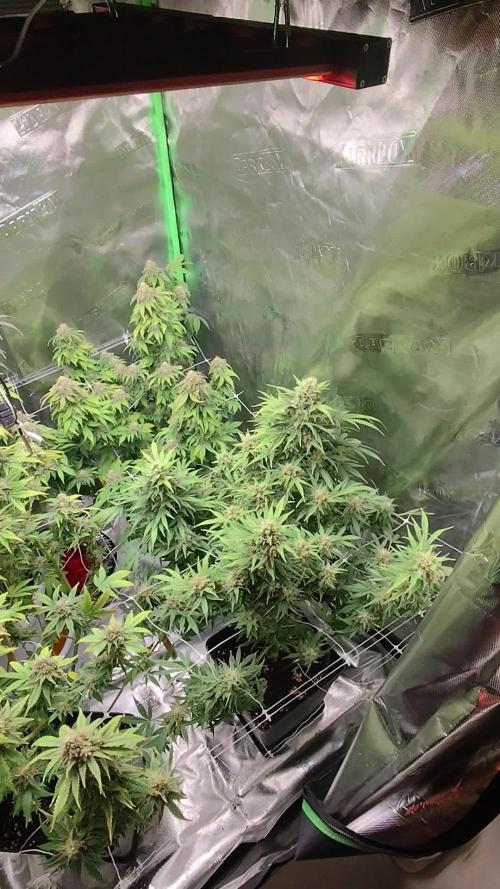
Super busy with a move and a big garden reno. Sorry, this is the only update for this week
Likes
Comments
Share
@ORION1_1
Follow
Still lookin happy, water only around 6.5 ph. I will start some LST next week 👍🏼 I will also give a 1/4 dose of advanced nutrients sensi cal mag next week because that's one issue I've ran into, usually nearing flower and I feel weekly small doses helps negate any issues. LED lights seem to increase the need for cal mag at least in my environment. The auxiliary shoots off the main are interesting! It's definitely going to be more of a bushy structure and fun to LST! ✌️🏼 ♥️
Likes
10
Share
Been too busy to update the last few weeks, but they’re surviving longer then I expected. When I received my new light I did not take in consideration of the heat output and within the first night of use the tent reached a scorching 88 degrees
Processing
Likes
15
Share
Day 29 and starting off Week 4 awesome even with my big mistake and not knowing that on mainlining you top first time at third node but the second toppings you can do at first with enough growth but in waited till 3rd on both new mains.. o well you live and learn but hey she looks like shes doing fine atleast will have some nice buds Day 32 update: Now that I have the fungus gnats under control everything has been perfect.. used Foxfarm SledgeHammer to water her to flush all that extra leftover salts in the soil out from the grow nutes, because will be switching to my bloom nutes on next watering, and she seems to have liked it.
Likes
3
Share
Hello everyone, The tangerine dream is in day 44 of flowering and is almost finished she is flushed 3 days ago, after each watering her runoff is under the 100 ppm i also removed many fanleaves. I'm really surprised by this strain she flowers so fast that i didn't add enough pk13/14 at the wright time. All by all i can say that growing the tangerine dream was a pleasant experience enjoy the music in the video. Thanks for stopping by and have a great day. Best regards, Growfather