The Grow Awards 2026 🏆 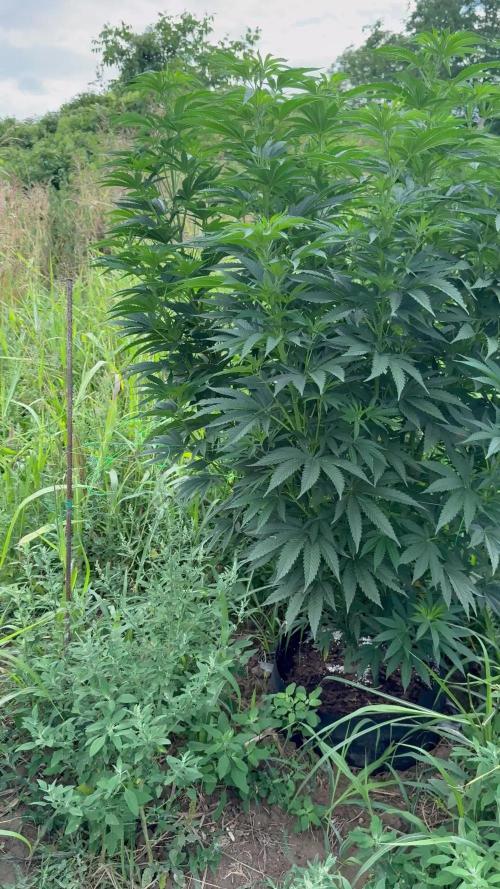






Likes
Comments
Share
@Radagast_
Follow
30.07.
White Runtz
Day 92#
The plant was at the end of its thirteenth week yesterday and slowly started to enter preflower.
She was fed yesterday, and the next two waterings only use clean water to eat what's in the ground, and I'm switching to bloom and boost so she doesn't stretch too much...there's enough nitrogen for stretching, if she needs it, let her pull it out of the leaves.
The weather has returned to normal with the fact that the nights are a little colder, going up to 14 c
Stay High and Keep Growing!!!

Likes
15
Share
@Ginger_gnome
Follow
The plants colors looked great and the trenchomes were at about 20-30% amber and the 70-80% milky. The smell is amazing and I can not wait to see how the end product ends up.


Likes
8
Share
@Blacksheep
Follow
38 Days. They have had their 2nd topping. Will be planting the autos shortly. Using earthworm castings are killing it. They always do.


Likes
9
Share
@Dtech
Follow
1’st time growing Fastbuds Auto Girl Scout Cookies. Looking forward to the spring harvest.
Day 0, after a 24hr soak in paper towel most seeds have cracked and are now in their final resting place.

Likes
8
Share
@Delta_9NPK
Follow
Ciao!
Questo è il mio primo EP su Growdiaries sono davvero entusiasta!
Oggi 8 febbraio ho messo a germinare le tre piccole di casa Barney's.
i semi sono posizionati all'interno di un vassoio da germinazione sto usando un tubo riscaldante e una centralina InkBird per la temperatura così riesco a mantenere la temperatura sui 22/23°C con un RH %80
Sto usando il metodo del fazzoletto umido, spero che in 24/48 ore la radichetta spunterà dai semi!
Oggi 09/2/2023 tutti e i tre semi hanno germinato! Successo del 100%
Mi colpisce il vigore della Tropicanna Banana!
Invece la gelato mi da l'aria che sarà una bella signorina capricciosa! Come si sul dire ogni riccio un capriccio🤣
Ora i semi sono stati inseriti nel soil per la precisione Ligthmix della BIOBIZZ con un aggiunta di micorizze per la precisione Mycos di Xtreme Gardin!
Ho nebulizzato con acqua decantata e ph6.3.
11/02/2023
Ed eccoci con il nuovo aggiornamento del Ciclo TheBarney's!
Le piccole sono tutte e tre spuntate neo tempi previsti sono davvero felice per la loro vigorosità!
La Tropicanna è la Gelato presentano un piccolo problemino nel staccare l'embrione del seme dai cotilodoni, per darle una piccola mano ho nebulizzato a distanza un pò d'acqua.
Ho evitato di provare a toglierlo con una pinzetta per paura di danneggiare le piccole plantule, sono sicuro che riusciranno da sole a risolvere questo piccolo fastidio.
Ho deciso di accendere la lampada impostandola all'incirca al 20% (60W) a una distanza di 50cm circa.
Non ho un misuratore di PPFD per mia sfortuna sarei stato più preciso nel impostare la potenza e la distanza della lampada😓 ho impostato il classico ciclo di luce 18/6.
Ho aggiunto un ventilatore oscillante della Secret jardin per smuovere un pò l'aria.
Ora con tanta pazienza e amore aspetteremo la loro crescita! Sono davvero curioso di vedere quanto tempi ci metteranno ad entrare nello stadio di Vegetativa!
12/02/23
Ciao a tutti growers eccoci qui con un nuovo aggiornamento sul cultivo TheBarney's!!
Le tre piccole si sono allungate un pochino, ho deciso di fare un piccolo refill con terreno e dare una piccola nebulizzata.
Oltre a questo le ho tolte dal box di germinazione e aggiunto un umidificatore collegato a una inkbird per mantenere costante un Rh tra il 70% 80%, pian piano abbassero l'umidità fino a stabilizzarla sui 65% 70% di RH.
Per il resto nulla di nuovo...
Ci sentiamo prossimamente per nuovi aggiornamenti sulle piccoline rimanete connessi e lasciate mi piace🙏💚
17/02/2023
Ecco un nuovo aggiornamento sul ciclo TheBarney's!
Le piccoline pian piano crescono, oggi concludono la prima settimana come plantule!
Si sono un pochino allungate e per sostenerle o fatto un piccolo refill di soil e ho irrigato con 15ml a testa di acqua con ph6.3 e Herba power (Ammendante) 0.5ml per Litro d'acqua.
Per questo aggiornamento è tutto ci sentiamo prossimamente!
20/02/2023
Eccoci con EP nuovo sul ciclo TheBarney's!
Le piccole oggi hanno subito un travaso le ho messe in airpot da 3L e irrigato con acqua ph 6.3, ammendante (herba Power) e un estratto di alghe (Herba Sweed) EC 0.45
Esattamente oggi sono 10 giorni che si trovano nello stadio di Plantula, le prime foglie a 3 punte stanno sbucando speriamo presto di vedere quelle a 5/7 punte e finalmente si inizierà con la fase vegetativa!
Tutto sommato le vedo in salute hanno un bel colore, il vigore della Tropicanna e della Gelato mi sta sbalordendo!
Per ora è tutto! Al prossimo aggiornamento 💚
Likes
53
Share
@AutoCrazy
Follow
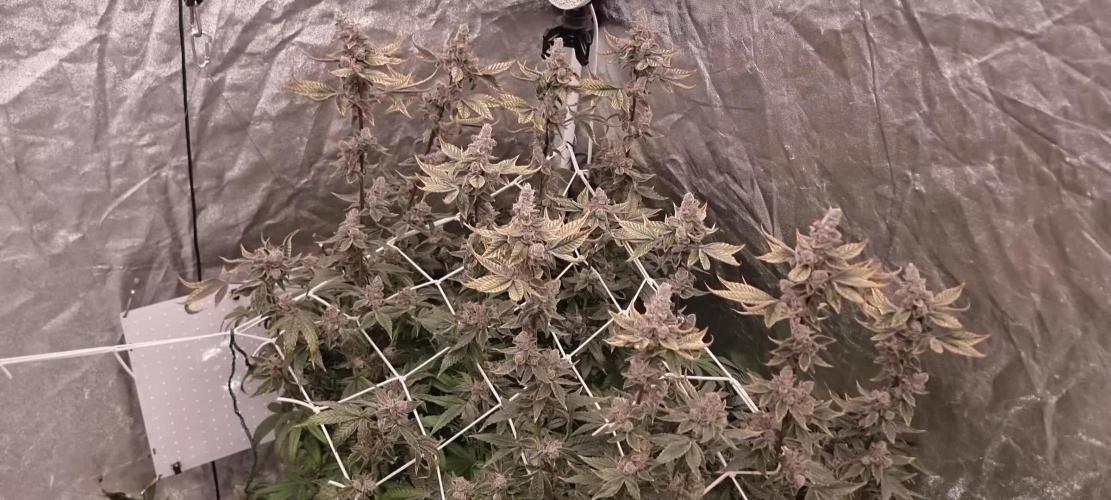
This lady seems to be heading into flowering. She is throwing out pistils like crazy. I did some major defoliation. I likely will be leaving her alone from now on chances are.
😎🍿🍻🌱
Likes
3
Share
@Barcelona_Farmers710
Follow
Booom! Ya tenemos los cogollos formandose Farmers!! Ya casi no se nota la falta de magnesio por problema con el humidificador pero en breves ya empiezo lo buenoo!😜 mis favoritas las de Barneys Farms!!! espero que os guste farmers buen comienzo de semana!!💚
Likes
7
Share
@Rusty_Shackleford
Follow
My 3 Jack Herers' have started to pre-flower. Nutrients will be the transitional between veg and bloom . Lots of side branching on all the plants with Ellie may trailing behind

Likes
321
Share
@Tropicannibis_Todd
Follow
🤔🤔🤔🤔🤔 HAPPY GROWING 🤔🤔🤔🤔🤔
Looks like I've can upload short videos 👉 so I will do what I can my friends
We are now 28 Days in and everything is going great 👍 👈
Update Today DAY 32 and everything is going great 👍 decided to showcase the Mini BigBand , was a extra seed that germed so I kept it as a Mini Me 😊
Except for some watering it's been pretty smooth I've done a little maintenance and manipulation of the canopy 👈
Might do a slight defolation later in the week 🤔
👉Soil Medium Provided by ProMix.ca
👉Nutrients Provided by Agrogardens
👉Lighting Provided by MarsHydro.ca
I would like to thank the many growmies for support throughout the years 🙏 So Let's Do This 👊👊👊 Happy Growing

Likes
46
Share
@Canna96
Follow
I am super happy with this strain, the pictures and videos truly don't do her justice. She absolutely reaks of blueberries, and the buds sparkle like diamonds. I am super excited to squish some blueberries here in a few weeks! I will update with a dry weight and a smoke report in a few weeks, thanks for stopping by, be safe, and Blaze On!!!

Likes
9
Share
@Naujas
Follow
both of my girls were very low in potassium... this mistake has been happening to me for a while now but I finally know the real reason :) she got CANNA kalium 2ml/L . and it seems that there are no more deteriorating leaves :)

Likes
7
Share
@Nikkov
Follow
Well, another week has passed and they are growing very well, now it's a matter of two to three weeks for me to change them to flora, this week I did a little defoliation on the plants and watered them again with top crop top veg fertilizer and I also did some bindings known as low stress training. =D
Likes
6
Share
@Nonem420
Follow
Virtually no larfs, only the very first lower buds.. this trim was way more easy and the yeald pretty amazing for the plant dimension.

Likes
16
Share
@Dr_Rook
Follow
Las niñas siguen su ciclo de vida. Veo que van muy poco avanzadas para llevar ya dos semanas a 12/12 (no sé si por poca luz o algunos errores que cometí)
Le eché el estimulador de floración demasiado tarde por interpretar mal la tabla de nutrición, mejor dicho por no seguir la correcta.
Estuvo varios días muy cerca de la luz con lo que se pudieron estresar.
Le estoy temiendo a la altura, ya que han estirado más de lo que preví en principio, quedándome muy poco margen de error. A unas malas tendré que ingeniármelas doblándolas hacía abajo o algo.
El punto positivo es que estoy controlando mejor la humedad.
A pesar de todo seguiré dando lo mejor para que salga lo mejor posible 💪🏼
Likes
77
Share
@BipolarHellas
Follow
Hello world,
🇬🇷
the previous week was a small disaster...Michelle, the girl who was in flower for 5 weeks is dead...just like that...it begun as rust on the leaves,like a cal deficiency and in 3 days it spread everywhere...the temps were too high for her,35°-38° C...Damn it's too hot for the plants...the other two girls are struggling with the heat but they seem to be OK,although they have some strange spots on some leaves...have to top dress with Bio Grow this week... the truth is I am a bit worried about them because that kind of temps can kill them...so I go on with them...have a nice week...☠️
======================================
WEEK11:"SAD BAT TRUE"
☠️Day 74.. Lucy has burnt leaves because of the heat wave...Angie is fine...today the temps have dropped at 31° c...
☠️Day 75...💧watering day, 3 L each, ph at 6,3...next time I will top dress with Bio Grow again...I think they need nitrogen...
☠️Day 76...Lucy has still new growth coming out despite the big number of leaves burnt...Angie looks healthy...
☠️Day 77...this week has passed...it's been a bad week for all,me and the plants...sorry for the few photos...so,see u next week...☠️
Likes
5
Share
@GrowFunMD
Follow
Week 8 as of yesterday, January 8, 2025. Today is day one (1) of Week 9.
If anyone has any suggestions as to whether or not I should Harvest the one plant, please help. With Mephisto Genetics' new releases there is no picture of what the plant should look like when finished and believe it or not, I am still new at this.

Likes
25
Share
@Merrymoosefamilyfarms
Follow
Hey hey my fellow growers, I hope everyone had an excellent week! It is great to be back here at the beginning of week six, let’s get into it!
Last week I had misspoke- I said I was going to train 5 of the 6 plants I have going from fastbuds, this was false…. What I meant is all 6…
Yes at the time I had only INTENDED on messing with 5 but the last one, the way it was structured with the self top, it was practically BEGGING me to get in there and play with it- and I ask you this- who would I be to deny that little strawberry pie the simple pleasure of a little training? So train I did…
Nothing crazy, but actually for all six plants (despite my best efforts, best being debatable) to not go overboard- I have been going in a doing a little bit of training and taking a leaf off here and there if it’s blocking any potential bud sites. I am trying to be really careful and not do too much at once and upset any of them- but at the same time, after stunting them a bit with the taproot incident (which I will keep referring to until I learn from that mistake) I want to do what I can to maximize yield after tripping up a bit in the beginning.
We will see how it goes, but for now, everything seems to be doing well and responding well to the bit of training I have been doing.
Right now I am seeing a range of sizes among the bunch- the forbidden runtz are both shorter and squatier coming in at about 5.5 inches in height each and I notice everything is spaced a bit tighter on these so I have had some difficulty spreading them out but not to any problematic extent, just in comparison with the rest-
Next we have the strawberry pie- the smaller one coming in at 5.5inches, is the one that I was speaking about that had topped itself. It seems to be doing well and handling the training just fine. However the other one, that one is much bigger and is about 8.5 inches tall. It wasn’t until I busted out the ruler that I saw that this was the second biggest plant of the fast buds.
That leaves the largest which of course was the gorilla cookies! The smaller of the two is coming in at 8 inches and the larger one coming in at 9.5! They are both tied down and doing great, showing growth each day after being trained and having select leaves removed.
We are getting closer and closer to flower I hope to have a bit more time with them but that is totally in their hands, so we will see what happens- the game plan now for me at this point is to keep doing what I’ve been doing- trying to balance on a delicate line.
As far as other news…
I am doing dishes the other day- I have my phone propped up with YouTube on and dude grows playing (my preferred way to do dishes) I hear the dude mention a giveaway they are doing that I had submitted an entry for recently so my ears had perked up…👀 I saw they had the contest page pulled up and on display and I thought to myself, wouldn’t it be cool if I got to see my picture right now, sure enough- I hear them start talking about my pictures! I in no way won (at this point, my fingers are crossed though haha) and I realize that this is debatably anticlimactic however, I listen to these guys everyday at work so I was stoked! I still am!
There are lots of good giveaways going on right now, all the amazing contests going on on this site, Instagram wherever! You have to be in it to win it folks and often it doesn’t take much to enter- I wish you all luck if you participate in any holiday contests and I hope you all have a fantastic holiday week and I will catch you all here at the same time in the same place hopefully with some new goodies and we can continue this fastbuds journey! Growers love and happy holidays everybody!!!
💚🤙🌱
Likes
148
Share
@BioBuds
Follow
An here we are. At the end of another cycle. The end of another year, and what a year it was. For Sunshine and me personally, it was a tough year, with our families sick on multiple occasions, life-threatening. We are very thankful for many things but most of all that all our parents are healthy again.
We wish your families are as fortunate in the coming year.
So we end this Gorilla's life with a swift cut of the scissors, after thanking her again for the companionship, the well-needed distraction, and all the love she has given me already.
I sometimes read that people won't go near their plants when they are angry or sad. Please do go to your plants when you are sad or angry!
They are millions of years old. They have been healers of animals and humans since they were around. Our emotions can not taint something so pure as the spirit of this plant.
She will heal us, give her life for us, sacrifice herself for our healing. She is all-powerful and all-knowing, there is nothing we mere humans can do, except disrespect her powers.
Bask in her glowing light, enjoy her soothing energy, her creative spark when you are in need of love, just don't smoke her at that time, for she will soothe you bit not give her treasures, she will seduce you.
Next to thanking Santa Maria for her healing, we would like to thank our friends here, all who shared their kind words, advice, and attention.
I had made a video to share my thanks on video, but every time I got very emotional. You guys have no idea how tough this year was.
The gorilla is real easy to clean and sticky and cristally. Its amazingly great to smoke!
So a special thanks to: @Sailormoonflowers for being a buddy to talk to, @JamMAKEcan for being there with ideas and always a lot of love, @Roberts for being an inspiration @Cannabeast and @LegendarySeedThumb for always checking out my grows, to all who I forgot who are always here to greet me! @Growdiaries for being an awesome site and community and last but not least: @MarsHydroLED for letting us try their SP-3000.
VERY HAPPY NEW YEAR XXX
We wish all of you freedom, love, happiness, but also the awareness to see many of us are still being repressed, with growing but also with our human rights.
Jah jah gave us life to live, so let us live brothers!
It is time the rastaman made a plan!
We are 99% loving people on this planet, we need no 1% to fuck it up with wars and strife.
We need to stop cooperating, peacefully resist. If you can buy local, ban exploiting multinationals.
Help your local businesses, help your neighbors, we need to wake up and stop funding this black stain on our planet.
Sell your stock in multinationals, invest in local businesses.
Buy local products, speak out when you get taxed higher than millionaires (and you are).
The day is coming my brothers and sisters. Soon a handful of CEO's will find out when billions are done with them.
For now thanks for everything!
Likes
13
Share
@OrthoGrow
Follow
Day 43: after watering it got bigger - the buds are getting bigger, the height of the plant increase aswell. Today I started seeing a bit of snow on the leaves?
Day 44: watered with 1.5l
Day 46: watered again with 2l
Plant is getting sticky. And I finally saw some trichomes!!!!
Day 49: Buds are getting bigger, one the main stem huge one is forming, but just right underneath are two side buds - a bit afraid of mold..
Right now hard to keep humidity under 55, doing a lot of defoliation almost daily. LST should have been better, got unfortunately uneven
