Likes
Comments
Share
@sellem
Follow
Nothing happened this week, was basically just drying. Trimmed her less than her "sister", took 1 day longer to dry BUT also is a bit dry-er with the bovedas now fighting too keep the RH up.
Likes
41
Share
15 Day dry then trimmed using the Trim Bin. Curing with Grove bags, first harvest filled 3, 1/4lb grove bags. *Updating with clone pictures of this pheno in late flower labeled in diary as you look through, If I pop a new seed of this strain Ill start another diary
Likes
45
Share
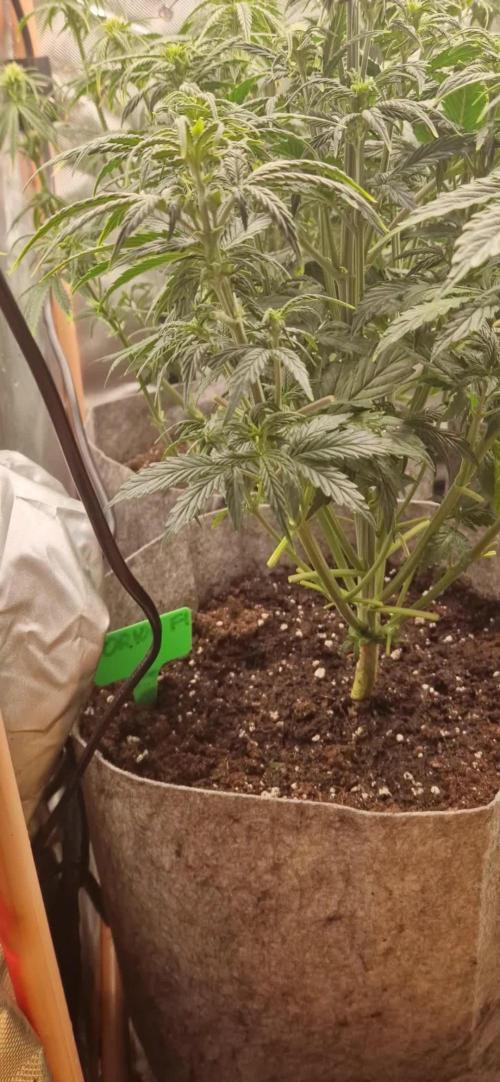
2nd net is up. Early bud formations are promising. holding up to the extremes pretty well, some leaves taking minor damage, but overall, she is holding up, gave her 1 night at 50F see how she would react, stressful. Not advised as it messes with her metabolism, but I want to see if it triggers any anthocyanin response. Love to see her purp up but no signs yet. Homework. If Rubisco activity is impaired and it cannot properly function or regenerate its substrate, the plant's leaves are likely to turn a pale green or lime green, a condition known as chlorosis. Essentially, Rubisco activity is highly regulated and susceptible to various environmental and metabolic factors that can cause it to become inhibited, leading to an apparent failure in RuBP regeneration due to a lack of consumption. Rubisco regeneration is intrinsically linked to nitrogen supply because Rubisco is a major sink for nitrogen in plants, typically accounting for 15% to over 25% of total leaf nitrogen. The regeneration phase itself consumes nitrogen through the synthesis of the Rubisco enzyme and associated proteins (like Rubisco activase), and overall nitrogen status heavily influences the efficiency of RuBP regeneration. RuBisCO is a very large enzyme that constitutes a significant proportion (up to 50%) of leaf soluble protein and requires large investments in nitrogen. Insufficient nitrogen supply limits the plant's ability to produce adequate amounts of RuBisCO, thereby limiting the overall capacity for photosynthesis and carbon fixation. Maintaining the optimal, slightly alkaline pH is crucial for the proper function and regeneration of Rubisco. Deviations in either direction (too high or too low) disrupt the enzyme's structure, activation state, and interaction with its substrates, leading to decreased activity and impaired RuBP regeneration. (LIME GREEN CHLOROSIS) Structural Component: Nitrogen is an essential building block for all proteins, and the sheer abundance of the Rubisco protein makes it the single largest storage of nitrogen in the leaf. Synthesis and Activity: Adequate nitrogen supply is crucial for the synthesis and maintenance of sufficient Rubisco enzyme and Rubisco activase (Rca), the regulatory protein responsible for maintaining Rubisco's active state. Nitrogen deficiency leads to a decrease in the content and activity of both Rubisco and Rca, which in turn limits the maximum carboxylation rate, Vmax, and the rate of RuBP regeneration Jmax, thus reducing overall photosynthetic capacity. Nitrogen Storage and Remobilization: Rubisco can act as a temporary nitrogen storage protein, which is degraded to remobilize nitrogen to other growing parts of the plant, especially under conditions of nitrogen deficiency or senescence. Nitrogen Use Efficiency (NUE): The allocation of nitrogen to Rubisco is a key determinant of a plant's photosynthetic nitrogen use efficiency (PNUE). In high-nitrogen conditions, plants may accumulate a surplus of Rubisco, which may not be fully activated, leading to a lower PNUE. Optimizing the amount and activity of Rubisco relative to nitrogen availability is a target for improving crop NUE. Photorespiration and Nitrogen Metabolism: Nitrogen metabolism is also linked to the photorespiration pathway (which competes with carboxylation at the Rubisco active site), particularly in the reassimilation of ammonia released during the process. To increase RuBisCO regeneration, which refers to the process of forming the CO2 acceptor molecule Ribulose-1,5-bisphosphate (RuBP) during photosynthesis, the primary methods involve optimizing the levels and activity of Rubisco activase (Rca) and enhancing the performance of other Calvin-Benson-Bassham (CBB) cycle enzymes. Biochemical and Environmental Approaches: Optimize Rubisco Activase (Rca) activity: Rca is a crucial chaperone protein that removes inhibitory sugar phosphates, such as CA1P (2-carboxy-D-arabinitol 1-phosphate), from the Rubisco active site, thus maintaining its catalytic competence. •Ensure optimal light conditions: Rca is light-activated via the chloroplast's redox status. Adequate light intensity ensures Rca can effectively maintain Rubisco in its active, carbamylated state. •Maintain optimal temperature: Rca is highly temperature-sensitive and can become unstable at moderately high temperatures (e.g., above 35°C/95F° in many C3 plants), which decreases its ability to activate Rubisco. Maintaining temperatures within the optimal range for a specific plant species is important. •Optimize Mg2+ concentration: Mg2+ is a key cofactor for both Rubisco carbamylation and Rca activity. In the light, Mg2+ concentration in the chloroplast stroma increases, promoting activation. •Manage ATP/ADP ratio: Rca activity depends on ATP hydrolysis and is inhibited by ADP. Conditions that maintain a high ATP/ADP ratio in the chloroplast stroma favor Rca activity. Enhance Calvin-Benson-Bassham (CBB) cycle enzyme activity: The overall rate of RuBP regeneration can be limited by other enzymes in the cycle. •Increase SBPase activity: Sedoheptulose-1,7-bisphosphatase (SBPase) is a key regulatory enzyme in the regeneration pathway, and increasing its activity can enhance RuBP regeneration and overall photosynthesis. •Optimize other enzymes: Overexpression of other CBB cycle enzymes such as fructose-1,6-bisphosphate aldolase (FBA) and triose phosphate isomerase (TPI) can also help to balance the metabolic flux and improve RuBP regeneration capacity. Magnesium ions, Mg2+, are specifically required for Rubisco activation because the cation plays a critical structural and chemical role in forming the active site: A specific lysine residue in the active site must be carbamylated by a CO2 molecule to activate the enzyme. The resulting negatively charged carbamyl group then facilitates the binding of the positively charged Mg2+ion. While other divalent metal ions like Mn2+ can bind to Rubisco, they alter the enzyme's substrate specificity and lead to dramatically lower activity or a higher rate of the non-productive oxygenation reaction compared to Mg2+, making them biologically unfavorable in the context of efficient carbon fixation. The concentration of Mg2+ in the chloroplast stroma naturally increases in the light due to ion potential balancing during ATP synthesis, providing a physiological mechanism to ensure the enzyme is activated when photosynthesis is possible. At the center of the porphyrin ring, nestled within its nitrogen atoms, is a Magnesium ion (Mg2+). This magnesium ion is crucial for the function of chlorophyll, and without it, the pigment cannot effectively capture and transfer light energy. Mg acts as a cofactor: Mg2+ binds to Rubisco after an activator CO2 molecule, forming a catalytically competent complex (Enzyme-CO2-Mg2+). High light + CO2) increases demand: Under high light (60 DLI is a very high intensity, potentially saturating) and high CO2, the plant's capacity for photosynthesis is high, and thus the demand for activated Rubisco and the necessary Mg2+ cofactor increases. Mg deficiency becomes limiting: If Mg2+ is deficient under these conditions, the higher levels of Rubisco and Rubisco activase produced cannot be fully activated, leading to lower photosynthetic rates and potential photo-oxidative damage. Optimal range: Studies show that adequate Mg2+ application can enhance Rubisco activation and stabilize net photosynthetic rates under stress conditions, but the required concentration is specific to the experimental setup. Monitoring is key: The most effective approach in a controlled environment is to monitor the plant's physiological responses e.g., leaf Mg2+ concentration, photosynthetic rate, Rubisco activation state, and adjust the nutrient solution/fertilizer to maintain adequate levels, rather than supplementing a fixed "extra" amount. In practice, this means ensuring that Mg2+ is not a limiting factor in the plant's standard nutrient solution when pushing the limits with high light and CO2. Applying Mg2+ through foliar spray is beneficial to Rubisco regeneration, particularly in alleviating the negative effects of magnesium (Mg) deficiency and high-temperature stress (HTS). While Mg can be leached from soil, within the plant it is considered a mobile nutrient, particularly in the phloem. Foliar-applied Mg is quickly absorbed by the leaves and can be translocate to other plant parts, including new growth and sink organs. Foliar application of: NATURES VERY OWN MgSO4 @ 15.0g L-1 in a spray bottle. Foliar sprays are often recommended as a rapid rescue measure for existing deficiencies or as a supplement during critical growth stages, when demand for Mg is high. Application in the early morning or late evening can improve absorption and prevent leaf burn. The starting point [of creativity] is curiosity: pondering why the default exists in the first place. We’re driven to question defaults when we experience vuja de, the opposite of déjà vu. Déjà vu occurs when we encounter something new, but it feels as if we’ve seen it before. Vuja de is the reverse—we face something familiar, but we see it with a fresh perspective that enables us to gain new insights into old problems. Come walk in the enchanted forest.
Likes
4
Share
@MistaOC
Follow
************** 13.03. Day 1 ************** 🤞🏼😎 I have new cuttings. Sour Frootz from Karma Genetics. I planted the cuttings in 0.2 L pots. I only applied fertilizer to the large pot. So Let’s grow again 💚💯 ******************************************* 18.03. Day 6 sprinkled with bactrex and transferred into the large pots *******************************************
Likes
8
Share
@IQuSX
Follow
Hi, topman!! 10 days have passed since the last report, and during this time the plants have grown and We have bent them down to prepare for SCROG. Defoliation was also carried out 7 days ago, which we will do again before the transfer on 12/12. Added delta 9 from CBG - the best thing to add at the vegetative stage!!
Likes
4
Share
@QixxGrows
Follow
Day8: First day of the new week. I assume still pretty much focusing on roots, as the top didn't really do much today. Day9: Nothing special. But she's growing Day10: Still roots, it seems. Very little happening up top. Day11: Effort being put into growing the top leaves. They increased in size. I assume that the next node will start tomorrow - kicking off the switch into Veg. Day12: Next node already showing :D Day13: I put in a humidifier and changed the cycle of the extractor to keep more moisture in the growbox. My humidity was way too low. Day14: This time the humidity was too high. It was sitting at around 95% when the lights went on.
Likes
10
Share
Week 10* last week messed up,70 days today from seed,what defiency(looks like k)are We looking at on a few of the leafs,any advice tips anything growmies,happy growing
Processing
Likes
28
Share
Buds are getting swollen, smells somewhat like pine trees.
Likes
7
Share
This ladies look absolutely gorgeous and super strong, they're gonna be flipped into flower tomorrow on February 15th when they'll hit the 30th day since they were planted and the first day of flower! As said, I have flipped this ladies into flower on February 15th so now I think we're gonna see a beautiful stretch specially on this 2 plants which are the biggest one in the tent, very nice genetic, cannot wait to see their performance ❤️💛💚👨‍🌾 stay tuned everybody! This is gonna be a beautiful run! ✌️
Likes
43
Share
@Ju_Bps
Follow
I'm a bit deceive by the quantity, But it's a bit my bad, I didn't make the most of the size of my box, it was my first time for indoor photoperiod So next time I won't fill the box anymore. I usually grow 2 auto in 60x60x140, and I'm a little fair in place, I manage to get an average of 50g/plant I could have easily put 4 plants, I would know for next time. Otherwise the buds are well compact, super smell and a lot of pollen 😛 😛 .
Likes
7
Share
Que pasa familia, vamos con la segunda semana de vida de estas Black muffin F1 de Sweetseeds. Vamos al lío , las 4 semillas que germinaron con éxito se colocaron en macetas de 0.6 litros y asomaron 4, 100% ratio germinado. Realmente necesitaré 3 plantas por variedad fast, así que retiraré la más pocha. El ph se controla en 6.2 , la temperatura la tenemos entre 20/22 grados y la humedad ronda el 50%. Hasta aquí todo, Buenos humos 💨💨💨
Likes
1
Share
Likes
36
Share
@SAC87
Follow
Day 14 flower Hey Growers So day 14 of flower, I decided to defoliate as the tent was getting so overgrown. They are drying out quickly and the media is dense with roots. They are going to require daily watering very shortly. They seem quite happy and doing well. You can see in one of the pictures, the leaf edge is raised, which idk exactly what that is. I’ve decreased the light to 70% until I know how they’ll react. Other than that just put in the trellis to support the tops. Happy Growing 🌱
Likes
2
Share
Die beiden Hauptknospen hatte ich schon notgeerntet. Die Pflanze selber Stand auch echt lange das ist auch ca Woche 20 oder so gefühlt insgesamt dachte ich setze aber weiter unten an da ich nicht sicher bin.
Likes
8
Share
El 4 de ocubre se cambia el ciclo a 12-12. El 7 de octubre se pueden apreciar en el video varias marcas de super cropping que hice tratando de controlar la altura, esta hay una planta en concreto que crece rapidisimo y con mucho vigor, después también resultará ser la más sabrosa. Digna de haber hecho madre
Likes
26
Share
Dane, We all should help one another. Human beings are like that. We should live by each other’s happiness - not by each other’s misery. We don’t want to hate and despise one another, share the Joint. And mother earth is rich and can provide for everyone. We can Grow enough Happiness, In this paradise, there is room for everyone. We only exist to bring joy into the world and The way of life can be free and beautiful, but we have lost the way. Grow High and Give the world A smile. At the end we own nothing more then all our memories, lets make them amazing for everyone, nothing to loose only everything to win. A last kiss goodby, a second one, softer and long as a sign, that you are woth it. That Everyone worth who loved and give. Enought Hippie Talk, now have a nice day and an even better grow, thx for watching by. ((From Seed 🌱 week report: (49 refill bucket 4L
Likes
9
Share
@KcKush
Follow
*Raised the light from 15 to 18 inches. *older leaves are looking like it’s having multiple deficiencies. *Replaced Old Purple MarsHydro with TSL 2000 *Soil Ph seems low I’ll add like once it dries to raise ph.
Likes
34
Share
@Roberts
Follow
Blue Dream Auto is growing well. Temps are getting cooler with winter moving in. Hopefully I can keep the temp up so they all grow better. Time will tell of course. Everything is looking good. I did some lst and defoliation on her today. She should start her preflower in the near future. Thank you Seedsman, and Medic Grow. 🤜🏻🤛🏻🌱🌱🌱 Thank you grow diaries community for the 👇likes👇, follows, comments, and subscriptions on my YouTube channel👇. ❄️🌱🍻 https://www.seedsman.com/?a_aid=Mrsour420. This is my affiliate link to seedsman. Thank you Happy Growing 🌱🌱🌱 https://youtube.com/channel/UCAhN7yRzWLpcaRHhMIQ7X4g.
Likes
25
Share
week intel: everything is perfect! stresses : just a little E.C stress around 1.7 once a week feeding: i feed them 3 times this week with this order : day 1 : i feed them heavy with silicate +base nutrients(calcium & micros + Bloom) about 818 ppm - 1.7 e.c to cause a little stress. day 3 : i feed them low dose of Feeding Booster + Karbo Boost around 382 ppm - 0.7 e.c to let them recover a little but not fully recover still a little stress will caused. day 5 : i feed them with low dose of Top-Max + B-52 around 250 ppm - 0.5 e.c to let them recover the stresses to get ready for another stress next week. guide of the week : know your plant tolerance limit of E.C stress once you saw the very very little yellowing on tips of leaves , that's the sign to don't go further , never reach that limit if you want a high quality buds, in my case tolerance is 1.8 and i'll reach to that level only once a week to cause precision stress , love your plants and have a happy growing!
Likes
19
Share
@BUZIMAN
Follow
It’s growing good 💦1 Liter per day of mix 📏 1,13 meter ⛅️ 27,5 celcius 45%rH 💚💛❤️
Likes
2
Share
@fabialien
Follow
semana del 9 al 13 de marzo