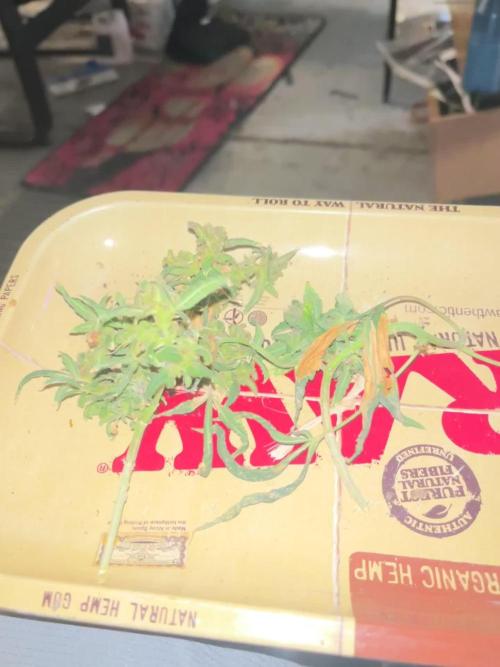
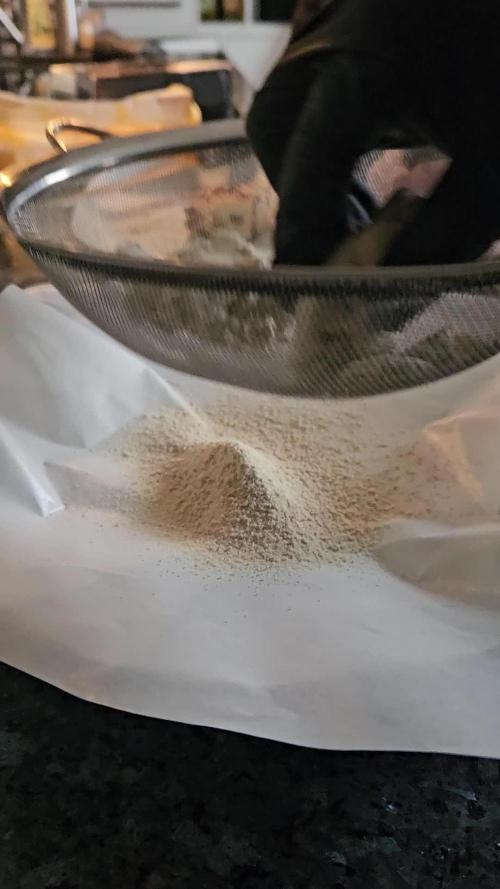
Processing
Likes
Comments
Share
@DrStrains
Follow
Hello everyone im still a bit noob on everything even on posting here and staff. ill figure it out in a couple of days hopefully! Lets start by saying that big bang had an issue because ........ i was growing it and i didnt see that my flores was empty and until i received a new it was almost a week had a lot of yellow on the leaves dying and falling out like doing full defoliation on the plant. have no clue if im lucky or something i do right but when i started feeding couple of days i saw signs of buds getting bigger so i continue. now we are at week 13 and from what i have seen from my previous 2 plants bb and king Tut autoflowers will not forgive when u stun them nut they will forgive slow growth or deficiencies and stuff when they are close to maturity at least for my garden. Whatever i did to them and i monitored closely everyday made them move on a slower pace but didnt stop them from being huge the only downtime i saw was more time to be ready for harvest. ill update by the end of the week with pics with the lights out (hps) . The pics are a bit shaky but cant do anything about it atm sorry! Any advice welcome the first red spots in some of the sugar leaves should i start flush? or wait to see on almost every bud?
Likes
13
Share
@WeedFlin
Follow
Retiro las primeras hojas que salieron que se quedaban sin fuerza/luz abajo y se estaban pochando. Avanza lo que parecía sequedad, ahora tiene mas pinta de hongo (mildiu). Corto las 4 hojas afectadas. Amanece reforzada y sin rastro del hongo. Apliqué la solución para curarla a pesar de ver mejoría. Parece que crece bien pero sigue desarrollando una especie de manchas al final de las hojas grandes
Likes
31
Share
@Tweak
Follow
Growth has been great, just plain water for this girl growing in organic super soil. I’ve started a slow transition to flower, extending her night by 15 minutes every day until I get to 11/13. I’ve also started Foliage spray of a very week seaweed and water solution (¼ recommended dose every other day.
Likes
6
Share
📆 Semana 2 El estiramiento se intensifica, con crecimiento vertical marcado y buena respuesta general. La planta mantiene color sano, turgencia correcta y una estructura que acompaña el aumento de altura sin perder equilibrio. Raíces activas y absorción estable durante esta fase de expansión. Sin intervenciones agresivas, se sigue priorizando estabilidad y control del entorno. Seguimos creciendo fuerte 💪!
Likes
4
Share
@Trinidad
Follow
24th.05.2025 Day 79 Chemdawg is the only remaining plant as the others have been chopped and drying. Today I will harvest her and put to her to dry. Problem is the dry tent is full so I will be putting her in a cupboard with no extractor fan. The others are drying nicely. The tropicana cookies are 7 days in dry tent. I think tomorrow I will place the buds into glass jars.
Likes
Comments
Share
@Hundreds
Follow
All good was draping a little but just needed water and Nutrients so I watered and fed them
Likes
2
Share
@Muybien
Follow
Did some LST and going to top both next week.
Likes
9
Share
( IVE SWAPPED OUT RHIZ FOR REGENAROOT ) will flower when i have room :) Feed Started With Tap Water Left Overnight For Chlorine/Chlorides To Evaporate. Next Day. Starting EC of our water is 0.15. I added 1ML of Regenaroot Per Litre. Then Used Canna Terra Vega Until EC measured 0.7. I then used the mighty growth enhancer drop by drop until my EC measured 1.1 Finally i PH'd the mix to 6.2. Made sure the feed was of adequate temp and continued to feed.
Processing
Likes
6
Share
3 Plants. 3 citrusy phenos! #1 : First to sprout rapid rooter. TASTE: Pure Lemon front end into hashy cakey afghani. refer to this as the "lemon hashcake" phenom very dense, beautiful nug structure. Yielded 24.5 dry grams of primo smoke. Uplifting more cerebral sativa high with some punch in body as well. happy stress reliever for sure! has some "gassy" or fuel notes to it but very subtle #2 Tangerine pheno: I orginally thought sour 76 was sour diesel x 76 Afghan til i read hso marks post on uk420 forums saying its cali sour d x 76 afghan. cali sour d is cali orange x sour d x mexican sativa. and it shows in this pheno which smell and taste pretty similar to tangie my friend grows which is cali orange x skunk 1 (mexican sativa x Colombian sativa x afghan indica) pretty similar genetics roots! Smell: Sweet tangerine 🍊 Taste: Just like tangerines 🍊 Medical Effects: Hybrid feeling effects felt both in body and mind.  Stimulating mentally, relaxing in the body.  Mild pain relief generally with amazing relief improving feeling in joints (reduced swelling or irritation in otherwise aching areas, loosened tension at joints) Notes: After breaking up or grinding the sweet tangerine open jar/bud smells turns more sour tangerine with very subtle gas aroma. This one is scary strong! I am an all day regular smoker of the most potent buds I can find, and I never make it thru 1 bowl of this without long breaks after each hit.  Starts off strong and creeps to EXTREME psychoactivity.  Not for the faint of heart this one might not be best for "new smokers" 😎🔥🔥🔥 yielded 26.1 grams if id have taken clones this woulda been the keeper of the batch, but I got more to check out in future run :) and I got a cloner and veg chamber to start keepin the keepers now I know i like the strain! #3 Lime Fuel pheno: Smell: Lime🍈 and gas ⛽ Taste: lime Medical Effects: Cerebral uplift. Creeper. thought it was weakest on initial smoke but 10 minutes in it end up being strongest high of all 3.  super wicked sativa, buzzy uplifting all similar to Cinderella 99 or strong jack herers this has almost a "scary high"  first few times but once you get used to it or microdose, it is a super fun creative medicine.  Helps my arthritis pains and gives me the clean up the house kind of high Notes: Foxtailed, lowest yield of 3 sour 76's likely because its place directly under the light (perhaps didnt like too intense direct light) but is the most potent of the 3 as well. yielded 22.5 grams of dry
Likes
10
Share
@CreoWeed
Follow
Here we are in what it will be the final week... I am now at day 61 and I'm considering to cut at the end of this current week... in 2 days basically... I recently bought a scope that allows me to check the trichomes and I can see all milky ones, I also posted some videos of it, please guys let me know your thoughts... Beside this buds are hard like rocks and smell still pretty intense and I cannot wait to taste this short but bulky phenotype. I'll keep you guys posted if I harvest or not this week hoping to read some of your comments. So Stay tuned, stay high! - - - - - - - - - - - - - - Little update at Day 63. I decided to give her few more days, so next week will be chopping her, this mostly cause I watered her last time on Day 61 and now I am basically just waiting for the soil to be dry. I count to put her in the dark for 48 hours at Day 65 and finally chop her at day 67, I cannot wait to update you for the harvesting part. I expect to reach 50/60 grams dry and I really hope to achieve that. Keep you guys posted! Stay tuned, stay high!
Likes
6
Share
@Sadhus
Follow
Journal de Culture - Dognabis Cup variété : Permanent Marker Semaine 4 - 1ère Semaine de Floraison Date : 11 octobre 2025Observations :Les plantes ont doublé de taille grâce au stretch typique de la phase de floraison. État des plantes : saines et vigoureuses, aucun stress observé cette semaine. Paramètres ajustés :PPFD augmenté à 800 (cible atteinte selon les données). VPD réglé autour de 1,0-1,1 kPa (cible atteinte, valeurs mesurées : 1,06 kPa jour, 1,09 kPa nuit). Température moyenne : 24,4 °C (jour), 22,5 °C (nuit) - cible stable. Humidité moyenne : 65,22 % (jour), 59,98 % (nuit) - ajustée pour maintenir le VPD. CO2 : ~900 PPM (cible atteinte). Solution : pH 5,92, EC 2,20 mS/cm, température 19,7 °C. Notes :Les paramètres ont été optimisés cette semaine avec une augmentation de la lumière (PPFD) et un réglage précis du VPD. Aucune intervention stressante, les plantes répondent bien aux conditions. On garde toujours les même rythme de marré pendant le stretch pour stimuler une croissance végétatif, semaine prochaine je vais commencer a réduire progressivement la durée des marée et augmenter progressivement le temps entre 2 marée pour commencer a stimuler une croissance générative pour la floraison Objectif pour la semaine prochaine :Maintenir les mêmes paramètres : PPFD à 800( on commencera une augmentation progressive a 900) , VPD autour de 1,0-1,1 kPa, température et humidité stables, sans stress supplémentaire. Légère defoliation prévu et petit lollipop 🍭 Merci de votre attention et merci a tous
Likes
8
Share
@TeaTime
Follow
Fastberry Auto is truly a gem among autoflowering cannabis strains! Its rapid growth, delightful berry-like aroma, and beautiful purple buds make it a joy to cultivate. The sweet and fruity flavor is a treat for the senses, and the balanced high leaves me feeling creatively inspired and deeply relaxed. A must-try for any cannabis enthusiast, whether you're a seasoned grower or just starting out! -
Likes
15
Share
@RBK2023
Follow
Big defoliation to end week 2 nicely 👌 Plants have continued to stretch hopefully not too much more! All phenos are growing impressively big shout out to @fast_buds
Likes
11
Share
So far so good Just at Week 4 i can smell Her already
Likes
7
Share
In der vierten Vegetationswoche wurde bei der Blue Lobster durch ein gezieltes Topping die apikale Dominanz gebrochen, um eine flache Struktur und eine bessere Energieverteilung in die Seitentriebe zu forcieren. Mit dem Umzug vom 3-Liter- in den 15-Liter-Pott bekommt das Wurzelwerk jetzt den nötigen Platz, um das neue Substrat voll zu erschließen und ordentlich an Masse zuzulegen. Trotz des Stresses steht die Pflanze mit ihren tiefgrünen Segeln top im Saft und geht nun in eine kurze Erholungsphase, um genug Stabilität für das anstehende LST zu sammeln, mit dem die neuen Triebe dann final in Form gezogen werden.
Processing
Likes
11
Share
@rudiak
Follow
Girls starting to grow really tall now, they have taken to the flowering stage really nicely! Started the Flores feed on Day 38. Starting high at 3.2 and working my way down after a couple of weeks. Smells are lovely coming from the tent! Leaves are looking very dark and healthy.
Processing
Likes
20
Share
The ladies are sucking down lots of water. So much so that the ppm's got a little high and some burn set in. Topped off the reservoir with ro water and calmag only to bring ppm down. No worries, looking pretty good I think and will finish up strong. These are the biggest girl scout cookies from fast buds I have ever grown. I have defoliate lots and snipped tiny bud sites down a bit to let the energy go into the bigger buds. I am very susceptible to PM so it's crucial I have air flow and light penetration. Everytime I let defoliation go the PM starts to set in and it's so hard to eradicate 100%. Prevention, prevention, prevention.
Likes
43
Share
@Ju_Bps
Follow
Hello friends, All was almost good, I've found insect several days ago, I'm trying to found an issue. Stretch was really impressive, she's biggest each day, I've seen was a girl today, Stretch in progress, first pistil, See you next week, hope insect will be eradicated, Have a good smoke and grow.
Likes
2
Share
For most crops, a slightly acidic soil pH between 6.0 and 6.8 is ideal because it optimizes nutrient availability. When soil pH rises above 7.0 (alkaline), the concentration of hydrogen ions H+ drops significantly, and they are replaced by calcium, magnesium, or sodium ions on the clay colloid exchange sites. To naturally lower alkaline soil pH, you can add organic matter (carbon-rich materials), which produces weak organic acids as it decomposes. Maintaining this slightly acidic range stimulates a highly active, diverse microbial community; these microbes decompose organic matter and release carbon dioxide CO2, which plants absorb through their roots and leaves to boost photosynthesis and sugar production. Furthermore, the added organic carbon acts like a sponge, drastically improving the soil's water-holding capacity. While soil biological activity does involve cellular electron transport, electrical conductivity (EC) in soil is actually a measure of dissolved mineral salts, not a voltage carried by individual microbes. Soil microorganisms secrete organic acids and chelate metallic and non-metallic minerals, transforming locked-up inorganic compounds into bioavailable organic complexes. Unlike harsh synthetic fertilizers that can dehydrate soil life in high concentrations, these naturally chelated nutrients safely nourish the plant, creating a thriving, self-sustaining ecosystem where plants can efficiently synthesize their own food. Metal-based: Could include elements like iron, manganese, copper, or zinc, which are essential nutrients for plants but can exist in forms not readily accessible. Non-metal-based: Examples like calcium carbonate, phosphate, or sulfur are also important for plant growth and potentially serve as building blocks for the organic salt. Chelation in a plant medium is a chemical process where a chelating agent, a negatively charged organic compound, binds to positively charged metal ions, like iron, zinc, and manganese. This forms a stable, soluble complex that protects the micronutrient from becoming unavailable to the plant in the soil or solution. The chelate complex is then more easily absorbed by the plant's roots, preventing nutrient deficiency, improving nutrient uptake, and enhancing plant growth. Chelation is similar to how microorganisms create organic salts, as both involve using organic molecules to bind with metal ions, but chelation specifically forms ring-like structures, or chelates, while the "organic salts" of microorganisms primarily refer to metal-complexed low molecular weight organic acids like gluconic acid. Microorganisms use this process to solubilize soil phosphates by chelating cations such as iron (Fe) and calcium (Ca), increasing their availability. Added sugars stimulate soil microbial activity, but directly applying sugar, especially in viscous form, can be tricky to dilute. Adding to the soil is generally not a beneficial practice for the plant itself and is not a substitute for fertilizer. While beneficial microbes can be encouraged by the sugar, harmful ones may also be stimulated, and the added sugar is a poor source of essential plant nutrients. Sugar in soil acts as a food source for microbes, but its effects on plants vary significantly with the sugar's form and concentration: simple sugars like glucose can quickly boost microbial activity and nutrient release. But scavenge A LOT of oxygen in the process, precious oxygen. Overly high concentrations of any sugar can attract pests, cause root rot by disrupting osmotic balance, and lead to detrimental fungal growth. If you are one who likes warm tropical high rh, dead already. Beneficial, absolutely, but only to those who don't run out of oxygen. Blackstrap is mostly glucose, iirc regular molasses is mostly sucrose. Sugars, especially sucrose, act as signaling molecules that interact with plant hormones and regulate gene expression, which are critical for triggering the floral transition. When sucrose is added to the growth medium significantly influences its effect on floral transition. Probably wouldn't bother with blackstrap given its higher glucose content. Microbes in the soil consume the sugar and, in the process, draw nitrogen from the soil, which is the same nutrient the plant needs. Glucose is not an oxygen scavenger itself, but it acts as a substrate for the glucose oxidase (GOx) enzyme, effectively removing oxygen from a system. Regular molasses (powdered if you can), as soon as she flips to flower or a week before, the wrong form of sugar can delay flower, or worse. Wrong quantity, not great either. The timing of sucrose application is crucial. It was more complicated than I gave it credit for, that's for sure. When a medium's carbon-to-nitrogen (C:N) ratio reaches 24:1, it signifies an optimal balance for soil microbes to thrive, leading to efficient decomposition and nutrient cycling. At this ratio, soil microorganisms have enough nitrogen for their metabolic needs, allowing them to break down organic matter and release vital nutrients like phosphorus and zinc for plants. Exceeding this ratio results in slower decomposition and nitrogen immobilization, while a ratio below 24:1 leads to faster breakdown and excess nitrogen availability. Carbon and nitrogen are two elements in soils and are required by most biology for energy. Carbon and nitrogen occur in the soil as both organic and inorganic forms. The inorganic carbon in the soil has minimal effect on soil biochemical activity, whereas the organic forms of carbon are essential for biological activity. Inorganic carbon in the soil is primarily present as carbonates, whereas organic carbon is present in many forms, including live and dead plant materials and microorganisms; some are more labile and therefore can be easily decomposed, such as sugars, amino acids, and root exudates, while others are more recalcitrant, such as lignin, humin, and humic acids. Soil nitrogen is mostly present in organic forms (usually more than 95 % of the total soil nitrogen), but also in inorganic forms, such as nitrate and ammonium. Soil biology prefers a certain ratio of carbon to nitrogen (C:N). Amino acids make up proteins and are one of the nitrogen-containing compounds in the soil that are essential for biological energy. The C:N ratio of soil microbes is about 10:1, whereas the preferred C:N ratio of their food is 24:1 (USDA Natural Resource Conservation Service 2011). Soil bacteria (3-10:1 C:N ratio) generally have a lower C:N ratio than soil fungi (4-18:1 C:N ratio) (Hoorman & Islam 2010; Zhang and Elser 2017). It is also important to mention that the ratio of carbon to other nutrients, such as sulfur (S) and phosphorous (P) also are relevant to determine net mineralization/immobilization. For example, plant material with C:S ratio smaller than 200:1 will promote mineralization of sulfate, while C:S ratio higher than 400:1 will promote immobilization (Scherer 2001). In soil science and microbiology, the C:S ratio helps determine whether sulfur will be released (mineralized) or tied up (immobilized) by microorganisms. A carbon-to-sulfur (C:S) ratio smaller than 200:1 promotes the mineralization of sulfate, when the C:S ratio is low, it indicates that the organic matter decomposing in the soil is rich in sulfur relative to carbon. Microorganisms require both carbon and sulfur for their metabolic processes. With an excess of sulfur, microbes take what they need and release the surplus sulfur into the soil as plant-available sulfate A carbon-to-sulfur (C:S) ratio higher than 400:1 will promote the immobilization of sulfur from the soil. This occurs because when high-carbon, low-sulfur materials (like sawdust) are added to soil, microbes consume the carbon and pull sulfur from the soil to meet their nutritional needs, temporarily making it unavailable to plants. 200:1 C:S 400:1: In this range, both mineralization and immobilization can occur simultaneously, making the net availability of sulfur less predictable. This dynamic is similar to how the carbon-to-nitrogen (C:N) ratio regulates the availability of nitrogen in soil. Just as microbes need a certain amount of nitrogen to process carbon, they also require a balanced amount of sulfur. Both mineralization and immobilization are driven by the metabolic needs of the soil's microbial population. Sulfur is crucial for protein synthesis. A balanced ratio is particularly important in relation to nitrogen (N), as plants need adequate sulfur to efficiently use nitrogen. A severely imbalanced C:S ratio can hinder the efficient use of nitrogen, as seen in trials where adding nitrogen without balancing sulfur levels actually lowered crop yields. Maintaining a balanced carbon-to-sulfur (C:S) ratio is highly beneficial for plant growth, but this happens indirectly by regulating soil microbial activity. Unlike the C:N ratio, which is widely discussed for its direct effect on nutrient availability, the C:S ratio determines whether sulfur in the soil's organic matter is released (mineralized) or temporarily locked up (immobilized). Glucose will hinder oxygenation more than sucrose in a solution because glucose is consumed faster and has a higher oxygen demand, leading to a more rapid decrease in oxygen levels. When cells respire, they use oxygen to break down glucose, and this process requires more oxygen for glucose than for sucrose because sucrose must first be broken down into glucose and fructose before it can be metabolized. In a growth medium, glucose is a more immediate and universal signaling molecule for unicellular and multicellular organisms because it is directly used for energy and triggers a rapid gene expression response. In contrast, sucrose primarily acts as a signaling molecule in plants to regulate specific developmental processes by being transported or broken down, which can be a more complex and slower signaling process. Critical stuff.