


Likes
Comments
Share

@MR_S_theGardener
Follow
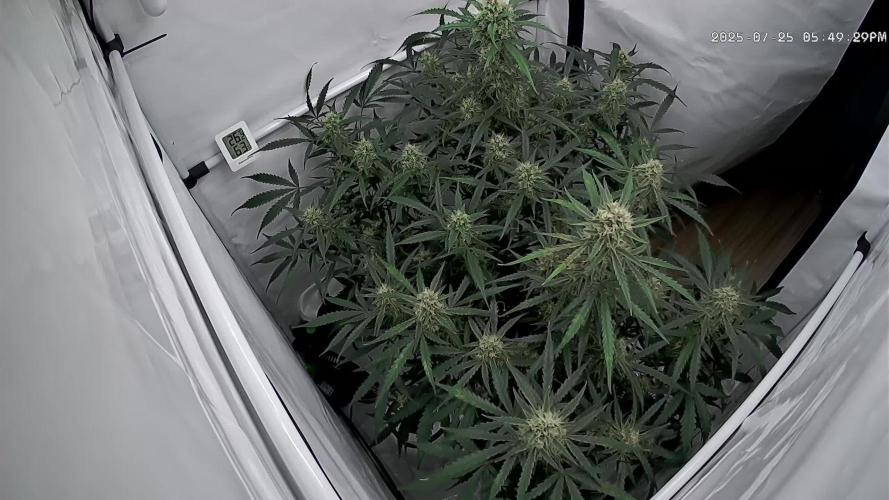
Beide Z-ups haben sich toll entwickelt, sowohl von der Reife als auch in der Masse. Das war die letzte Woche mit Dünger und nächste Woche gibt es gibt es dann nur noch flawless Finish, vielleicht auch noch zwei Wochen.


Likes
8
Share


@ElchichodelaGrasa
Follow
Hemos terminado hoy de transplantar a la que va a ser su maceta definitiva y hoy se ha encendido por primera vez el armario aunque ayer ya teníamos transplantadas unas cuántas debido a la bombilla que utilizábamos (Se fundió :( ), de todas formas ha sido cambiada a una AUVL así que muy contento y con ganas de empezar a ver resultados.


Likes
25
Share


@Jimmy89
Follow
All photos taken day 25 of flower. Started to develop a nice aroma now, I’ll have a little de leaf in a day or two to help lower humidity and uncover some flower sites. Can’t wait for it to warm up so I can switch my heaters off! ✌️

Likes
Comments
Share

@420DeepGrow
Follow
📆 Semana 11
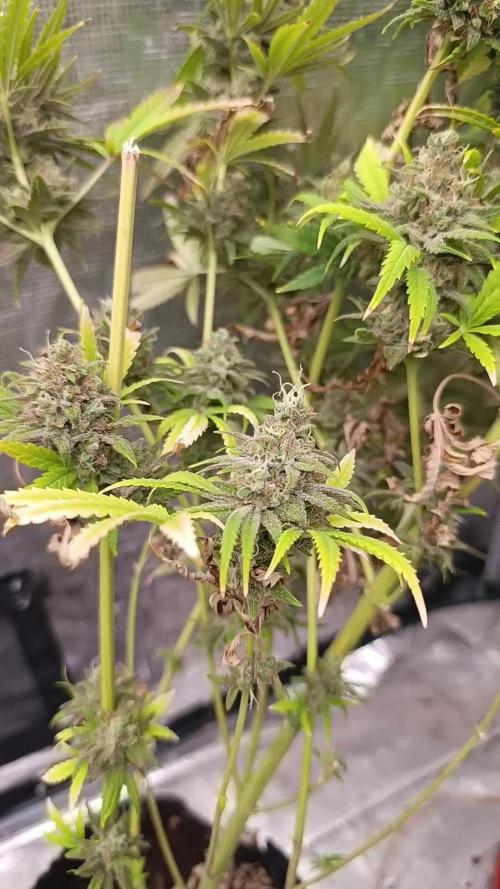
Las A5 Chaze entran en el tramo final. Con el lavado de raíz, ambas plantas empiezan a afinar aroma y resina: la de puntas secundarias se compacta más, y la de cola principal mantiene esa estructura clásica y firme.
Los tricomas siguen lechosos con algún toque cálido, y el olor terroso-especiado se vuelve más limpio y marcado.
🌿 Lavado final: transición suave hacia la madurez perfecta.
¡Seguimos creciendo fuerte 💪!
Likes
10
Share


@Andres
Follow
I was traveling ... to give information ... the temperature has dropped ... I think she will be even slower outdoor ...


Likes
15
Share


@RussianGrower
Follow
Greetings to all my friends from all over the world, greetings to you from Russia! Another week has gone and I am updating my diary. The plants show healthy growth, but when I arrived at a secret place, I found that one of the 400 watts burned out, so part of the tent was not lit. This lamp has served me for about seven years, but nothing lasts forever. When I did the defolation, the second 250-watt lamp burned out, but unfortunately it worked for more than a year. It's good that I had replacement lamps.
Due to the problem with the lamp, one side of the plants did not develop very well. But despite this, the processes of the plant became of sufficient size so that I took them for cloning. I took ten shoots, placed them in a hormone gel and transferred them to Rootriot, moving the clones into the greenhouse creating a microclimate there.
If you are interested in following the adventures of weed in Russia, subscribe to my diaries

Likes
22
Share


@TechDCo
Follow
10/08/2024
Lights On!
Week 8
12/08/2024
Lights On!
Looking good; phattening up!
Mid-day: Dimmed to 420watts
The buds are right under the canopy are showing signs of slight fishtailing. Reasons for dimming light! As they start to mature dimming of the light for 2-3days is needed.
They are getting bigger! Will have to raise scrog net soon for support 🙏🙌👍
14/08/2024
Lights On!
Increased light to 490watts!
Mid-day!
Video 60fps
FHD
Light needs turning down
Dimmed backs to 420watts!


Processing
Likes
Comments
Share


@MOTB666
Follow
Getting really bushy about 18 inches tall going in this week might be the last week of veg if they keep growing how they are. These girls are getting wide as hell. Will move one of them over to avoid over crowding in the middle next change out of nutrients. They're appetite is getting big

Likes
567
Share


@Rock_n_Roll_Randy
Follow
This grow with the TSW2000, FC4800 and 8x8 Grow Tent has come to an end🤘🤘. I'm so happy with the results mars hydro has done👍. Best lights you can get in my opinion and TONS of other people agree with me on this too👍. I always say mars hydro gets em frosty and their lights DID get em nice and frosty and the buds are so tasty and smell awesome🤘. I trimmed up 6 plants so far. Got 9 more to go. And it seems like I get a 1liter Mason jar per plant and is about 2 ounces per plant. Some are a bit more than 2. Not a huge haul per plant but I'm still very happy with it because the quality is amazing. I will never want to use anything but MARS HYDRO. Extremely satisfied with the entire grow with mars. The weed quality is very good and controlling the heat was simple because they don't get that hot. The lights were very easy to setup and so was the tent. I STONGLY recommend any products from Mars Hydro. You will not be disappointed 👍
Thanks for following my grow and good luck to all my friends and remember to have fun with your grows🤘🤘 rock n roll a joint everyone🤘🥁🎸
FOR EVERYTHING MARS HYDRO VISIT:
www.mars-hydro.com
PROMO CODE: rocknroll
VISIT THE ALIEXPRESS STORE:
@marshydro_aliexpress2
Instagram: @marshydropenny
https://youtube.com/channel/UChU5ZWwNi-DvnO3oWVU3ceA
Thanks for taking the time to read and check out my shit🤜🤛
GET THE MAX FROM MARS👍: Welcome one of the newest members of the Mars Hydro family🤜🤛🤘. The Mars Hydro FC 4800 480W LED Grow Light can accommodate up to a 4' x 4' area for flowering. It has OVER 2000 LED chips consisting of the best selling Samsung LM301B diodes which has a Luminous Efficacy of: 220 lm/W
0.2 W, 3 V mid power,
Osram 660nm Diodes, Infrared light and UV LIGHT👍. It boasts the incredible efficiency of 2.8 µmol/J, maximum 2.5gram yield per watt with 30% higher Average PPFD. This High-intensity spectrum is beneficial for plants at all stages - from veg to bloom, and creates Big dense Buds👍. achieve 50% higher yields & quality compared with the old lights! Only consumes 480W for 4x4ft personal grows, and 3x3ft for commerical grow. It comes with a dimmer and daisy chain function with a maximum of up to 15 lights, the master light controls the rest👍. Wide 6-bar design offers even & wide canopy coverage and can maximizes your grow space. slim 180° FOLDABLE DESIGN... YES I SAID FOLDABLE🤘🤣 , making it compact and easy to install, it's IP65 WATERPROOF and will give you no worries while growing in a humid environment and makes it a flexible high performance commercial grow light for enormous SUPER FROSTY yields.😛😛😛. MARS GETS EM FROSTY BOYS👍
AWESOME HEAT DISSIPATION: The Low energy consumption FC4800 growing light has 6 passive-cooled bars and an aluminum heat-sink a removable driver you can upgrade later or have it outside your tent. with zero noise you can save up to 50% in your electricity bill compared to HID's or HPS lights!
It also has a removable driver so you can upgrade it in the future or have it outside your grow space for better heat control in your growroom👍
UPGRADED FULL SPECTRUM: Yield Max Spectrum with enhanced red (Top-Bin Samsung 3000k-5000knm, Osram 660nm Deep Red), speed up blooming & fruiting, perfectly suited for full-cycle growing. The FC4800 LED grow lamp was born for Big Buds, perfect for commercial, grow tent, grow room, hydroponics, and all soil grows.👍
THE BEST SAMSUNG DIODES: THE FC4800 has Top Bin genuine Samsung Osram Diodes, combined with remarkable 2.8 µmol/J Efficacy, 30% higher Average PPFD, 50% less energy consumption, to maximize your yields. They give you a TRUSTED 3 years warranty 100% Satisfactory guaranteed!!!
The MARS HYDRO 8x8 Grow Tent interior is made of a unique diamond design mylar which is highly reflective. (Other companies mylar and reflective rate is as low as 50%, and it won't provide efficient light. They use thick 1680D oxford canvas, and being double stitched, it is tear proof and perfect for locking in the light. Their grow tent keeps 100% of the light inside the tent and helps your plants absorb more light. EXTRA-THICK material means No light leaks or rips at all.👍
Strong Stable metal corner adapters and poles are the trustful supporters of the tent. It's very sturdy, neither rusting or paint flaking off. quick and easy tool-free setup. They use heavy-duty metal zippers, with double layer black lining, by far the best on the market which creates a light-proof seal.
The Easy observation windows are made by double layers of cloth. Observe the growing conditions of your plants without opening the tent and avoid disturbing your plants. The observation windows also serves to dissipate heat and ventilate the air.
The tent includes 2 removable waterproof floor trays to hold soil and water. The removable tray can be taken out to wash easily.
They guarantee the grow tents are easy to install even if you've never done something like this before. Clear Instructions and no tools needed! They also offer 30-day unconditional refunds for quality problems. Just contact their friendly 24 hours customer service 👍
Likes
11
Share


@Gardener_of_Goodness
Follow
Some great growth over the past few days, Jack is starting to stretch his legs for sure! To ensure there’s no issues with height, I decided to Top him, I’m not really going to apply any other methods of LST other than gentle defoliation and lead tucking.
Jack has been fed regularly BioBizz nutrients and some beneficial bacteria to support the mediums microbiology 🤓✌️👍
Let’s see what the next week holds for Jack, he’s under a 250watt dual spectrum HPS for the rest of his life now ☀️ 😎
See you all next week! ✌️👊

Likes
24
Share


@MadeInGermany
Follow
Hi all 🤗.
Runtz did the topping very well :-).
I think I will top her 2 more times before she finally goes to the flower tent
She grows nice and bushy, 😍👍.
This week will be topped again.
I wish you all a nice week, stay healthy 🙏🏻 and let it grow 🌱
Type:
Runtz
☝️🏼
Genetics:
Zkittlez x Gelato
👍
Vega lamp: 2 x Todogrow Led
Quantum Board 100 W
💡
Bloom Lamp : 2 x Todogrow Led
Cxb 3590 COB 3500 K 205 W
💡💡☝️🏼
Soil : Canna Bio
☝️🏼
Nutrients : Canna bio
☝️🏼🌱
Water: Osmosis water mixed with normal water (24 hours stale that the chlorine evaporates) to 0.2 EC. Add Cal / Mag to 0.4 Ec Ph with Organic Ph - to 6.0 - 6.3
💦💧

Likes
20
Share


@DaddyPrime2
Follow
8/14 been chopping them. i got a clone a couple months back and she had spider mites. luckily, these autos werent overly affected. i do think that may have been the cause of some of the airy buds.
Likes
13
Share


@Skinnytalls420
Follow
Day 54-30/05/22 all looking good all going mad getting in controllable in the there but I like it!!!!
Likes
19
Share


@A_Rolling_Stoner
Follow
The one in the middle is struggling a little, but I'll just keep it and see how it turns
Likes
3
Share


@GanjaFarmer101
Follow
Smooth trim, last of the first wave of autos this summer - yields are very low but the bud looks great :)


Likes
2
Share


@CalGonJim
Follow
5/5 MONDAY Took out the AC Infinity lights and just went with the 2 cheap blue and red lights. Samsung 301B.. H?....great lights but so powerful and no blue red combo. I noticed the plant grow towards the red spectrum LED than the whiter ones on the AC system. There are 2 on each bar. I use the AC lights as auxiliary when I get need it for taller plants with lots of vegetation. 2pm looking great.
'"Sir, I have seen nae deerskin treaty, nor have I seen fairies or water sprites. But what I do have are Malay coins, enough to bury you. Prayer beads, not enough to get you to heaven. And hashish, enough to ease my grieving when the East India Company slit your throat, which, of course, they will."
― Brace in a conversation with James.
5/5 11pm Monday night, MORNING for me.....WHAT IS THIS?????
CONKEY IS ALIVE!!!!!!
CONKEY IS ALIVE!!!!!!
CONKEY IS ALIVE!!!!!!
CONKEY IS ALIVE!!!!!!
CONKEY IS ALIVE!!!!!! HOLDY SHILT I CANT BELIVE IT, NOW WHAT THE FUCK DO I DO???? I GOT OUTSMARTED BY A SEED!!!!!! A-FUCKING-GAIN!!!! HOW CAN I NOT BE SMARTER THAN A SEED....??????🚨
5/6 1230am..... ALL OF THIS IS SOMEONE ELSE FAULT....... Now I have a freakshow Siamese twin plant, PERFECT.
When Im not flying off in a rage about things I break....it's a fucking comet of disaster.... I typed comedy you stupid ficler.... Maybe I keep them in the same pot and call them Cory & Trevor!!!
2am They are getting a little humid so I have to open the top for a while. The cheaper lights work better. and are less than 15w
5/7👍🚨Looks like Cory & Trevor are fighting 😂😂
5/8 looks good. 8am getting great photos on small iPhone by pulling back a little bit so it doesn’t focus too far behind.
5/10 2am. I was able to empty my disgusting body of toxic shit...these plants are rebuilding by digestive tract and systems. A multi-year painful endeavor I have achieved through weed. so fuck you if you dont like it. I will defend my rights with overwhelming force. if you try and take it. you know exactly what I mean and yes this means you badgey mc fafo.
5/11 12 pm
Likes
48
Share


@MG2009
Follow
Start of week 8,flowering, looking for amber trickomes,took off a branch at day 52, trickomes,were mostly milky some clear. I want to know the sweet spot for this girl if you know what I mean. I will post other pics of early cut latter.
Also I switched to blue spectrum light only, supposedly it gets more UV light and packs on more resin(higher T H C ) ,Not that it needs more, but in the name of science I am willing to put in the extra effort. 🔎😎
