


Likes
Comments
Share

@Dameon0803
Follow
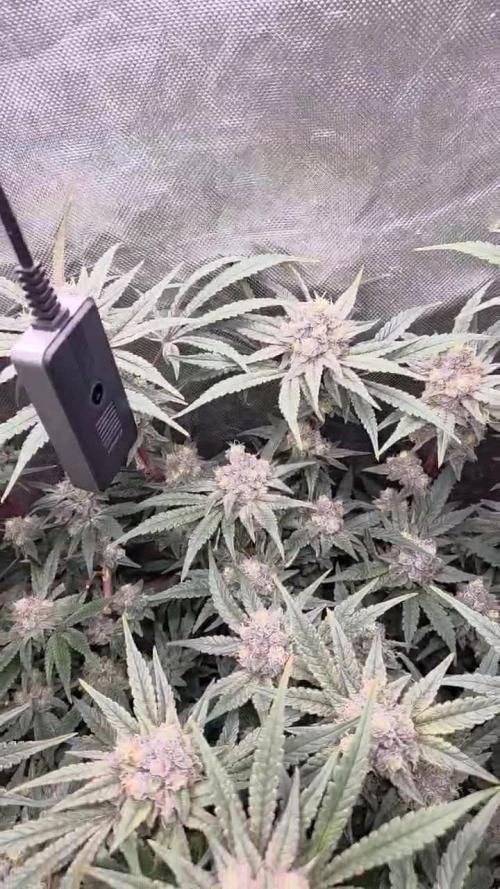
Another smooth week with the continued issues ive previously addressed. Trichomes are multiplying and buds have grown some. With the dehumidifier running pretty much constantly, it has bypassed my carbon filter. (I have my dehumidifier extract from outside the so I'm not adding additional, unwanted, heat.) Smell is very evident within the entire room. Final week of feeding and I have turned my reds down to 50%. Took trichome shots for fun around the front of the plant.





Likes
12
Share


@GirlGoneWeed
Follow
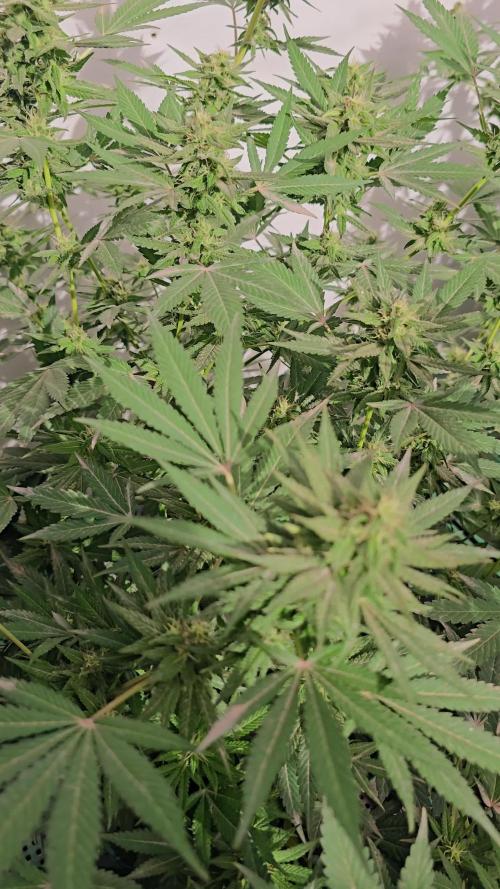
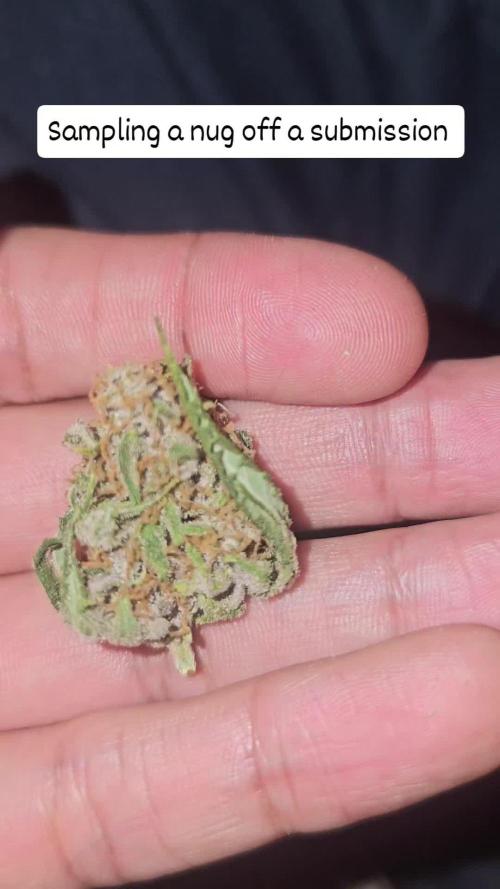
Its been very hot these past days in Ontario and the outdoor grow loves it!
Plants have been growing nice and tall, growing some fatty leaves, I wanna see how they grow without any human interference so I will leave them without training for now. The soil is still providing nutes for the looks of it, I have started spraying some natural homemade pesticide you can find the recipes on my Instagram @girlgoneweed (under the highlights) I have been spraying 2x a week to keep rodents, aphids, mites, and mildew away.
*The video is a dark angel as well but this one I have it on my roof garden.*
Thanks for following along, see y'all next xoxo

Likes
19
Share


@Chubbs
Follow
420 Fastbuds
FBT2306 Week 5
These two have gone into flower absolutely amazing. The flower sites are showing up beautifully. Over all haven't done much on these besides giving another defoliation and lollipoped them taking off the lower nodes. Should allow them plenty of light through flower and air to prevent moisture build up at pot level. All in all Happy Growing


Likes
14
Share


@herewegrow
Follow
Day 29 - Looking great! I'm liking the Roots soil so far, very healthy looking plants. As the differences between LST and topping become more apparent I'm realizing I like topping more. The burst of growth to the side branches after topping does wonders for the structure of the plants. Pulled the two LST'd plants down a little lower and topped WWBB1 for the second (and probably last) time.
Day 32 - Still right on track. Gotta start considering when to flip to flower as the sativas continue to take up vertical space.

Likes
12
Share


@GREENPHOENIX6262
Follow
Starting week 2 Veg - See below for specs
Nutrient feeds remain the system
Height - 2 inches (Not much progress in height) Width has definitely grown out
Water feeds continue to be everyday - Have a gallon+Nutes
Light Intensity - 100%
*Mid-week review - 8/18*
Introduced Cal-Mag (4 ml/Gal)
Plants grown approximately .5 inches in height - 2.5 -3.0 inches in width
Light Intensity 100%
*End of week recap* (08/20)
Both have grown about 1 - 1.5 inches in height and 2 - 2.5 inches in width.
Fan leafs deep lushes green
Bud sites topped
Thus far all is running smoothly.


Likes
15
Share


@HurlinghCultiveta
Follow
Hola cultivetas!
Todo sigue bastante bien a no ser por unos pulgones, moscas blancas y arañas rojas que encontré en 2 de mis plantas. Las estoy combatiendo manualmente.
Pensé que esta semana seria la ultima pero parece que sera en 2 semana mas el tiempo de cosechar!
Saludos y gracias por leer mi diario.


Likes
5
Share


@Growfornow
Follow
Week 11 harvest
Chop chop down she goes
What an easy and rewarding plant, she done great for my mistakes also and every person NEEDS a sweet forgiving women Amen
Nice sweet spunky smell
I would grow again for sure
Likes
7
Share


@NevermoreX0
Follow
Just that color. Wow! It is so nice. I love it, My personal favorite 😍. Looks happy :) so I am happy.
Likes
52
Share


@GuerrillaNo_4
Follow
UPDATE
-Leaves showing signs of stress coming up to harvest.
-Trichomes cloudy, just waiting on more ambers.
GENETICS:
-MSNL - Gorilla Glue Auto ~ my favorite strain, as you can tell by my username!
WATER:
-Condensed (Starting at 40ppm)
-Disinfected prior to adding nutrients etc. (Using COOSPIDER UVC - 253nm & 187nm bulb)
CLIMATE:
- Ambient Air Temp = 29'C ~ 28'C LST ~ Leaf to air temp variance of between 1'C
- Night Temp = 22/23'C ~ Day/Night temp differential 6-7'C
- Under Canopy Temp: 26'C (Day) ~ 21'C (Night)
- Relative Humidity = 50-60%RH (Avg. 55%RH)
- VPD = 1.45kPa (Avg.)
- Co2 ranges from 900ppm to 1500ppm (Avg. 1200ppm)
AIR PRESSURE:
- Ambient Air Pressure (outside tent) = Mean Avg. 1010 mbars (101 Kilopascals)
- Actual Air Pressure (inside tent) = Mean Avg. 1005 mbars (100.5 Kilopascals)
- Air Pressure Differential = up to 0.5 kPa range between inside & outside
LIGHT:
- UVB~ 2 hours daily mid light cycle.
- Warm White 3000K/White 5000k/Far Red (660nm)
- At plant canopy = PPFD 900-1000umols/s/m2 ~ Lux 45,000-55,000 ~ Daily Light Integral 55-65
- Under canopy lighting ~ Blue (460nm)/ Red (630nm)
NUTRIENTS:
- Mostly Advanced Nutrients (For base nutrients and most additives, as only company I could find scientific data on)
- Canna (For Calmag Agent and Cannazym)
- Plant Success (Great White Mycorrhizae)
ADDITIONAL GROW TECHNIQUES:
- Mostly getting out of the plants way and letting nature take its course.
- Some LST. (i.e. tying down branches and tucking large leaves away)
- No HST or Defoliation.
INFECTION PREVENTION & CONTROL:
Infection control practices i.e
-PPE, Alcohol Hand wash
-Gray room outside tent,
-Carbon filter
-HEPA filter
-Plasma Ionizer
-Inline UV-C germicidal bulb
- Also using an additional higher powered COOSPIDER (UVC) 253nm & 187nm bulb, to disinfect the gray room outside of the tent once a week for 30 mins.
- Ozone (o3) gas that is produced using the COOSPIDER, is then directed into the tent to further control any unwanted pathogens.
- Ed Rosenthal (Zero Tolerance organic pesticide), sprayed once a week as preventative measure. On hand for heavier use (Once every 3 days before lights out for 15 days) in the case of an outbreak
(No outbreaks yet, due to aforementioned preventative measures)

Likes
1
Share

@BalconyBoy
Follow
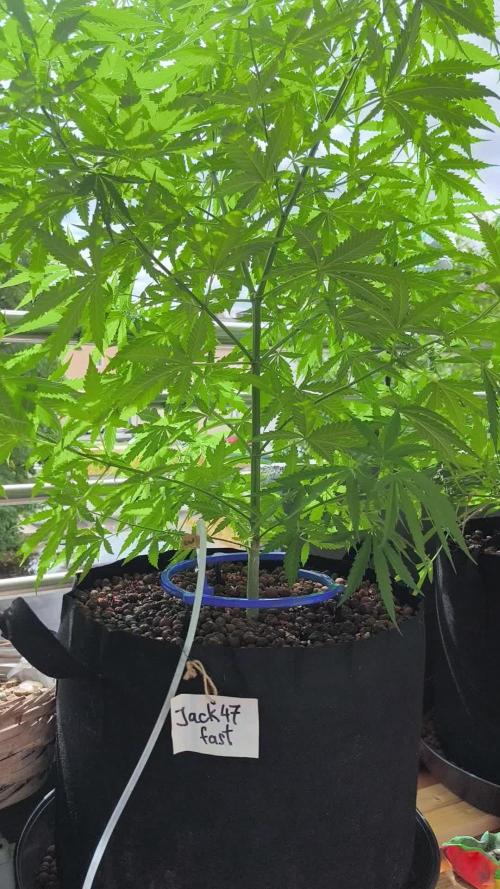
06.07.26 Das Hitzegewitter haben alle Pflanzen gut überstanden, die Temperaturen haben etwas nachgelassen aber auch bei 25 Grad läuft das Wachstum gut weiter. Der Wasserbedarf ist etwas zurück gegangen und bis auf einen einzelnen ausgewachsenen Thrips habe ich keine Schädlinge entdeckt und vernichtet. Zur Sicherheit habe ich ein paar Tüten mit Raubmilben bestellt und werde sie wohl Ende der Woche erhalten und ausbringen. Die automatische Bewässerung habe ich am Wochenende mal aufgebaut, bin aber noch nicht ganz zufrieden und spiele an der Einstellung. Gute Woche und weiterhin Erfolg beim Abbau euch allen!

Processing
Likes
4
Share


@Shiva
Follow
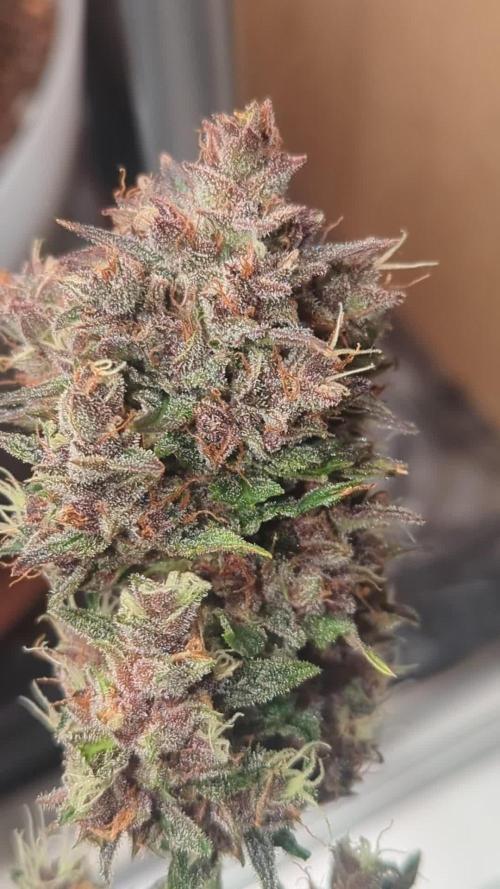
My lady is a Royal Queen Seeds Purple Queen. It sits in 9l of water with temp of 19°C. Water temp is maintained by using a copper tube within the reservoir connected to a peltier device with a water block. Lamp used is Viparspectra 450W led. All nutrition is from Vitalink. I have recently started using a homemade co2 generator made from yeast and sugar with water. I use Sonoff TH16s for automation incl water cooling and humidity control. The only problem I have ATM is that air temp goes too low but to 19°C at night.

Likes
5
Share

@Pheno_Minds
Follow
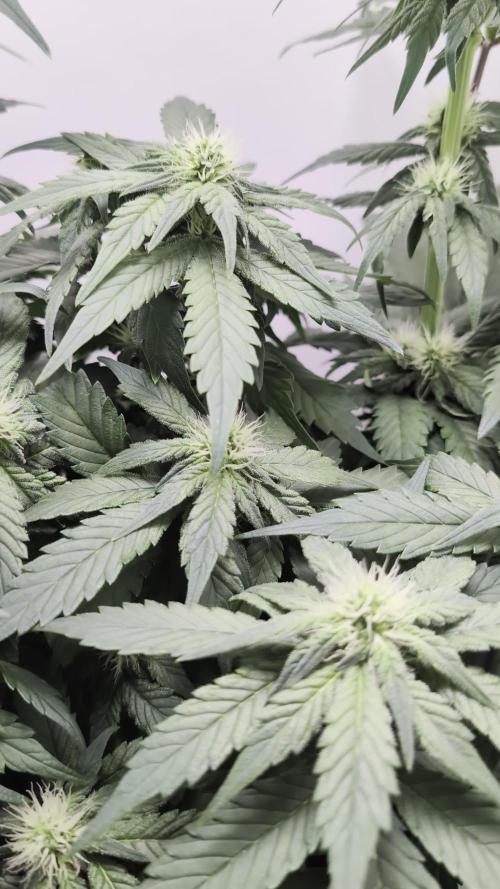
🌿 Grow Diary – Woche 4 Blüte
📅 Datum: 03.03.2026
💡 Lichtplan: 12h/12h
🔆 Avg. Lichtintensität (PPFD): 640 µmol/m²/s
📏 Lampenabstand: 35cm
💦 Bewässerung: 2L pro Gießvorgang
⏱️ Bewässerungsintervall: alle 2- 3Tage
pH (Gießwasser): 6
⚗️ EC (Gießwasser): 1.8 mS/cm
🌊 Wassertemperatur: 20 °C

Likes
3
Share


@macrocefalo
Follow
We arrived in the third week the plants show good vigor and growth. Some cold days 17 Cº may have prevented further growth but we do not have to complain the plants demonstrate to be enjoying food and light. On the 15th the plants presented slightly wilted leaves as day 16 was the day of watering I imagined it was thirsty. But day 16 a few hours after watering the plant still had the same symptoms so I realized that the LED screen was 53 cm from the plant. I increased the distance to 65cm and the plant returned to normal both in force and I managed to correct the diagnosis. I am managing to apprehend some things finally putting into practice.
Likes
41
Share


@Skinnytalls420
Follow
Day 37-27/11/21 I watered them with just water today cause I’m panicking about the burnt tips on some of them so I’ll give them a flush!!! Day 39-29/11/21 nothing new today seems like there doing better since flush!!!!! Day 41-1/12/21 plants are doing much better now I was getting worried but they look a lot better than they did a week ago Day 43-3/12/21 today I’m felling abit sad there not doing Aswell as the big bud did!!! Hopefully they get better but I’m a bit lost as what to do tbh cause they all get the same food!!
Likes
15
Share

@deFharo
Follow
Bienvenidos cultivadores de marihuana! 🖐️ 👨🌾
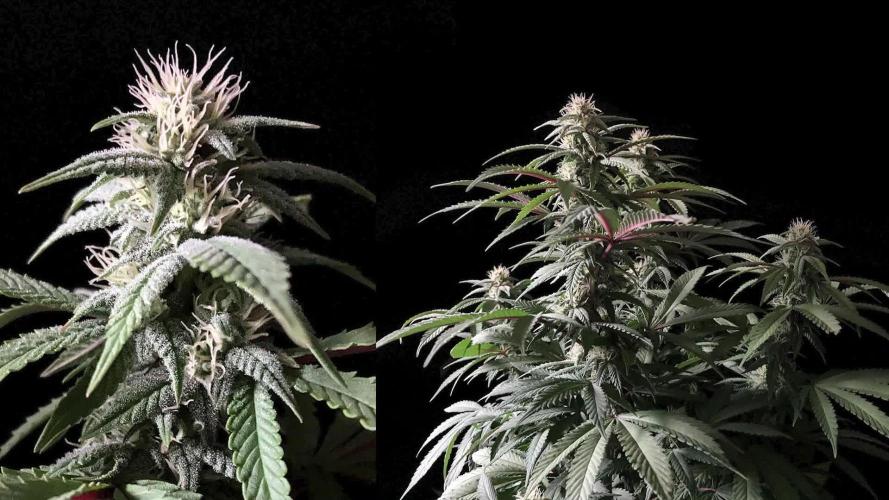
- Doce semanas desde que puse la semilla de Panamá Red a germinar! 🌱
- Diez semanas desde el trasplante a la maceta final.
- Ocho semanas desde el corte apical
- Cuatro semanas desde el cambio a horario de floración a 12/12H.
- Tres semanas desde que comenzó la floración... a jugar! 😋
¿Qué decir de esta mítica cepa? Ella crece con extrema fortaleza y a la vez con enorme discreción, sólo requiere la justa atención, riegos regulares y profundos cada tres días, yo le doy mezclas suaves y variadas con mis Bio Fertilizantes Orgánicos solubles, ella lo agradece mostrando brotes florales cada vez más bellos. 🌼🌼.
Esta semana he quitado todas las ataduras a las ramas, una recompensa merecida! las ramas están preparadas para llenarse de enormes cogollos y soportar cualquier peso... me estoy desquitando de mi anterior cultivo de esta cepa! 😍 https://growdiaries.com/diaries/249559-zamnesia-seeds-panama-red-grow-journal-by-defharo
Y por fin, hace dos días, la planta, generosamente cedió su esquina super iluminada a otra planta que necesita mucha luz para poblar sus largas ramas:
https://growdiaries.com/diaries/286333-grow-journal-by-defharo
Ahora Panama Red continúa su vida feliz en el centro trasero de la carpa de cultivo, un lugar calentito y bien iluminado... nada puede fallar! 🤣
😁 HASTA LA PRÓXIMA. SALUD Y SALUDOS PARA TODOS!
==============================
PANAMA RED (Zamnesia): "Si te gustan los efectos eufóricos, sociales y creativos, tienes que probar la Panama Red. Esta variedad landrace sativa centroamericana te animará al instante y deleitará tu paladar con un intenso sabor cítrico. "
- Genética: 100% Sativa Landrace
- Tiempo de Floración: 11-12 Semanas
- Hasta 350g/m²
- THC: 17%
https://www.zamnesia.es/10652-zamnesia-seeds-panama-red.html
==============================
