The Grow Awards 2026 🏆
Likes
Comments
Share
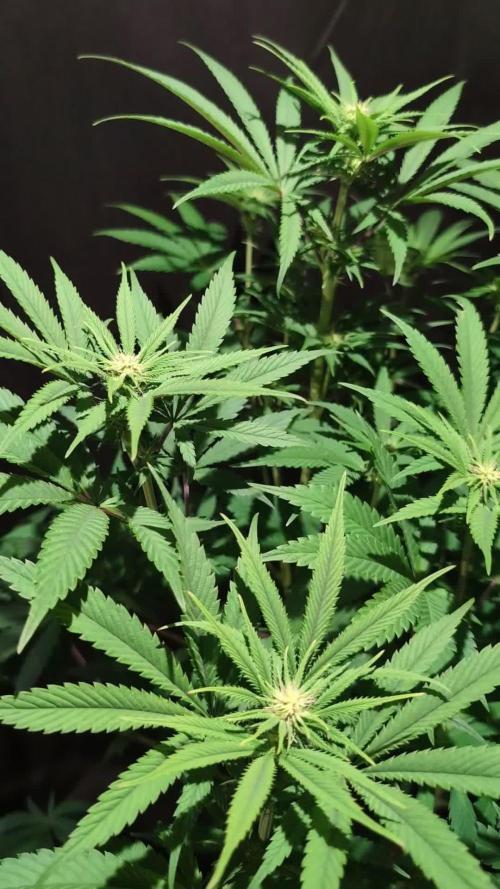
Week 11 August 11 —- Breeding Project—- We recently had a run of Sour Diesel and I decided to take the only male from that batch and cross it to some clones, one being the Cerezaz strain. The goal of this cross is to find faster flowering (45-55 days) plants and also increase yield as the Cerezaz is a timid producer and Sour Diesel is generally a medium to high yielded. Other characteristics we are looking for are: sour, berries, cherries, diesel, gas on the nose ( although unique combinations are welcome), decrease light sensitivity( Sour diesel was sensitive to light intensity) as well as breed in some resistance to heat from the Cerezaz as she did outstanding in 90+ heat indoors. Currently this batch of Polyhybrid F1s are exhibiting mostly the sour diesel traits: generally more tall and lanky, leaves closer to the main stem and drooping( as seen in some landrace sativas) and the stem rub is chemical, soap astringent with a slight savory berry backend with large fat fingered leaves. The other pheno is squat with very good lateral side branching and grows slower height wise medium sized leaves and the fingers are neither skinny nor fat but generally on the thicker side. Similar nose on these but more Cerezaz leaning so the berry, cherry sweet is more noticeable. With all that being said these ladies are top dressed and just got flipped into flower! So come along for the ride! 💪🏾
Likes
54
Share
***May 13 No reservoir change any more until the end of flower. I'm just filling it up with water as it goes, I'll let the plant flush itself out for anything it needs. Mainly because it's gotten too big and heavy to take out of the tent comfortably. The branches are all leaning over, and the buds are starting to finish up now. I have to take the loop to it to check the trichomes, but I think in another week or a little longer I'll be able to chop her down. Man I'm so excited to see what she brings to smoke!! I've never seen a freakshow with big nugs and not looking like a wiry mess, so I am a little proud of myself for a first hydro hahaha. Still dank as hell when I open the tent. Sorry for all the late updates, things are getting busy!
Likes
4
Share
@AustinRon
Follow
OG 4Q24 Flower Week 7 Orangegasm (Fem) [ IRIE Genetics ] 12/12 @ Bolt (Day 21) Germination: 20 November 2024 #3A Earliest Harvest Date: 9 February 2025 #3B Latest Harvest Date: 19 February 2025 _________________________________________ Start of Week: [Wed Jan 22, 2024 CR2 4Q24 43:F:6:1] End of Week: [Tue Jan 28, 2024 CR2 4Q24 49:F:6:7] OrangeGasm Fertigation: - MAX: EC: [ 2.4, mS] - LightIntensity MAX: [ 850, µMol/m2/s] ______________________________________ __ Wed Jan 22, 2025 OG 4Q24 43:F:6:1 - [x] R&R Each Drip Ring Assembly (Assure NO Fertigation/Bio Build up) Runoff - Amount: [ .5, l] - EC: [ 3.8, mS/cm] - EC∆: [ 1.2, mS/cm] # Danger! Refresh Res (Filtered, pH’d Tap Water) - [x] Amount: [ 2, gal] - [x] Primer A&B: [ 35, ml] - [x] SLF-100: [ 10, ml] __ Thu Jan 23, 2025 OG 4Q24 44:F:6:2 Refresh Res (Distilled Water, pH: 7, EC: 0.0) - [x] Amount: [ 2, gal] - [x] Primer A&B: [ 39, ml] - [x] SLF-100 Runoff - Amount: [ 1.2, gal] - EC: [ 4.3, mS/cm] - EC∆: [ 1.6, mS/cm] # DANGER __ Fri Jan 24, 2025 OG 4Q24 45:F:6:3 Runoff - Amount: [ 0.3, gal] - EC: [ 4.1, mS/cm] - EC∆: [ 1.4, mS/cm] # DANGER  __ Sat Jan 25, 2025 OG 4Q24 46:F:6:4 Dump Res - [x] Remove Chiller and Fertigation Pumps - [x] Dump and CLEAN Reservoir, Note Sediment - [x] Detach Main Feedline - [x] Clean Chiller Pump - [x] Clean Fertigation Pump - [x] Dry ALL Components - [x] REASSEMBLE When Dry - [x] Clean 1/2” Fertigation Mainline Watered In Primer A&B, CalMag Fuel, Silica Skin - Amount: [ 1.9, l] - EC: [ 2.7, mS/cm] Refresh Res w/ Full Hydro (Primer A&B, Silica Skin) - [x] Amount: [ 4, gal] - [x] EC: [ 2.7, mS/cm] - [x] Primer A & B: [ 73.1, ml] - [x] SLF-100: [ 40, ml] Runoff - Amount: [ 0.25, gal] - EC: [ 4.1, mS/cm] - EC∆: [ 1.4, mS/cm] # DANGER __ Sun Jan 26, 2025 OG 4Q24 47:F:6:5 Refresh Reservoir - 2 Gal, EC: 2.7 - [ ] Check, R&R Fertigation Manifold Filter as Needed - [x] SLF-100: [ 10, ml] - [x] Primer A & B: [ 40, ml] Runoff - Amount: [ 1.25, gal] - EC: [ 4.2, mS/cm] - EC∆: [ tbd, mS/cm] __ Mon Jan 27, 2025 OG 4Q24 48:F:6:6  Watered In Primer A&B, CalMag Fuel, Silica Skin - [x] Amount: [ 1.9, l] - [x] EC: [ 2.7, mS/cm] IPM - [x] Spray sides - cover Air holes of Airpot - [x] Spray tops of pots to drench - [x] Dr. Zymes, 28ml/quart @ 85°F - [x] APPLY Mosquito Bits to Top of Containers Runoff - [x] Amount: [ 1.5, gal] - [x] EC: [ 4.9., mS/cm] - [x] EC∆: [ 2.2, mS/cm] # *** Plants Should Be Fried! Need to R&R Pre-Filter again. Fan Flow significantly diminished. __ Tue Jan 28, 2025 OG 4Q24 49:F:6:7  Replace ACI Pre-Filter - [x] Remove Plants - [x] Disconnect Irrigation Emitters - [x] Remove and Rinse Drain Tray - [x] Drop Front of Light - [x] Remove & Replace Pre-Filter - [x] Verify Airflow (Make sure we don’t need to change the carbon in the filter) - [x] Raise front of light to run position - [x] Replace Drain Tray - Reposition Shims - [x] Replace Plants AS THEY WERE - [x] Replace Emitters - [x] Verify Irrigation Runoff - [x] Amount: [ 0.5, gal] - [x] EC: [ 4.8, mS/cm] - [x] EC∆: [ 2.6, mS/cm] # *** Plants Should Be Fried!
Processing
Likes
8
Share
After defoliating both Barbarian (=AK-47 x Barbara Bud) plants after week 11 they now develop more and amore flower clusters, since the light can penetrate deeper int the canopy now. The plants are producing trichomes like crazy, even the bigger sugar leaves are covered in them! VERY FROSTY PLANTS! The flower clusters clearly form colas now along all side branches and both plants fill up nicely. The smell is now strong and sweet with a clear peach aroma to it, it makes me smile every time I look into the tent. The plants love the Advanced Nutrients feeding schedule and are getting the recommended dose every watering.
Likes
Comments
Share
il y a eu un pique de chaleur, depuis j'ai eu des apparitions de carences
Likes
10
Share
Mimosa X Orange Punch is a beast! She’s doing so well and she is growing vigorously. The trellis net will support the branches when they start stacking the nugs on. Had to give these girls some more nutes as the lower growth is showing signs that the top is taking what they need. Only sparsely so not worrying me much but good to note. Well these girls are cruising can’t wait to see you all next week, till then peace ✌️ 08/21/23
Processing
Likes
2
Share
Likes
5
Share
This plant seems to have grown much denser and better than my first plant. I just got the ac infinity ventilation setup with controller 69 for my 2x2, still trying to learn, hopefully grow #3 goes even better. Stay tuned
Likes
10
Share
My FB 2025 grew so much this week! It grew like a teenager having a growth spurt. LOL. It went from 17 inches to 25.5 inches. My FB 2025 has officially transitioned to the flowering stage. This FB 2025 mystery seed has definitely been amazing to watch grow so far. I am very curious to see the end result. This past our weather has been hot days and cool nights. Perfect for growing.
Likes
14
Share
Veramente una pianta profumatissima e appiccicosissima!! Credetemi la quantità di tricomi è impressionante!!! Fast buds non sbaglia un colpo! Ora spero solo che le cime diventino belle grasse 😍😍😍
Likes
23
Share
@canongun
Follow
Days 71 - 77 We are coming to end... I started to flush her, buds look big and the colors are appealing. At the end of this week she will go on her last trip.
Likes
4
Share
Likes
4
Share
She's developed very well. I think there are already many amber trichomes, but also many light hairs. So I'll keep her for another week.
Processing
Likes
13
Share
@Lerium
Follow
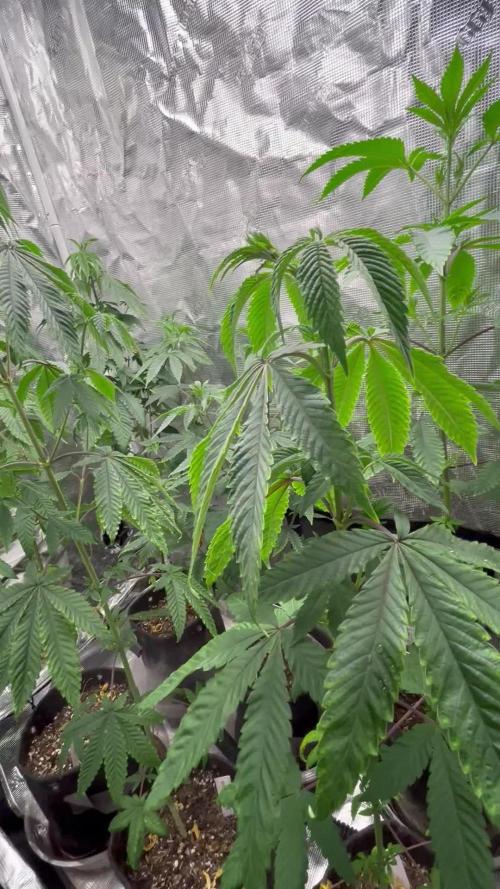
I added some tomato cages today. Gorilla Glue looks like its about to start flowering.
Likes
62
Share
So the Exodus Cheese is all trimmed up and curing in my airtight Mason jar and being burped 2 times a day. But I am really disappointed in the yield... Which I expected of the Cheese being Indica dominant... Just not that disappointing! 🤬 I'm still trimming the GH Cheese and once done will update you guys on the yield. 👍🏾👊🏾💚😎
Likes
10
Share
@Legor
Follow
a small nutburn. The are going into nonute week ;)
Likes
52
Share
You don't become confident by shouting affirmations in the mirror, but by having a stack of undeniable proof that you are who you say you are, outwork your self-doubt. Nitrogen fixation is a chemical process by which molecular nitrogen (N2), which has a strong triple covalent bond, is converted into ammonia (NH3) or related nitrogenous compounds, typically in soil or aquatic systems but also in industry. The nitrogen in air is molecular dinitrogen, a relatively nonreactive molecule that is metabolically useless to all but a few microorganisms. Biological nitrogen fixation or diazotrophy is an important microbe-mediated process that converts dinitrogen (N2) gas to ammonia (NH3) using the nitrogenase protein complex (Nif).[2][3] Nitrogen fixation is essential to life because fixed inorganic nitrogen compounds are required for the biosynthesis of all nitrogen-containing organic compounds, such as amino acids and proteins, nucleoside triphosphates and nucleic acids. As part of the nitrogen cycle, it is essential for agriculture and the manufacture of fertilizer. It is also, indirectly, relevant to the manufacture of all nitrogen chemical compounds, which include some explosives, pharmaceuticals, and dyes. Nitrogen fixation is carried out naturally in soil by microorganisms termed diazotrophs that include bacteria, such as Azotobacter, and archaea. Some nitrogen-fixing bacteria have symbiotic relationships with plant groups, especially legumes.[4] Looser non-symbiotic relationships between diazotrophs and plants are often referred to as associative, as seen in nitrogen fixation on rice roots. Nitrogen fixation occurs between some termites and fungi.[5] It occurs naturally in the air by means of NOx production by lightning.[6][7] All biological reactions involving the process of nitrogen fixation are catalyzed by enzymes called nitrogenases.[8] These enzymes contain iron, often with a second metal, usually molybdenum but sometimes vanadium. Green clover (Fixation) White clover (Fixation) Red Clover. (Fixation) Yellow Clover. (Fixation, deeper roots) Sweet Thai Basil. (Terpenes) Italian Basil. (Terpenes) Chamomile.(Oil production) Borage.(Pest attraction taste) Lavender.(Pest attraction smell) Marigold(Pest attraction visual) Mycorrhizae are beneficial associations between mycorrhizal fungi and a plant’s root system. Mycorrhizal fungi spores germinate in the soil, creating filaments (hyphae) that penetrate the root cells, thus establishing a symbiotic relationship. This collaboration leads to the development of both intra-radical and extra-radical networks of filaments, enabling efficient exploration of the soil for enhanced access to nutrients and water. Consequently, these vital resources are transferred to the plant, resulting in numerous benefits for crop cultivation. Various mycorrhizal products are available in diverse formulations (powder, granular, and liquid), concentrations, and qualities. Ongoing advancements in products, technologies, and research are reshaping our understanding of mycorrhizae. Despite these positive developments, certain misconceptions persist. In the following discussion, we aim to clarify the truths and dispel the myths surrounding mycorrhizae products. MYTH #1 A HIGHER NUMBER OF MYCORRHIZAE SPECIES MEANS BETTER RESULTS. Contrary to common belief, having a higher number of mycorrhizae species in a product does not translate to better results; in fact, it often yields the opposite outcome. A plant can sustain only one association with a particular mycorrhizal fungi species. Introducing multiple species creates competition among them, which is not advantageous for the plant. The initial colonizer does not ensure the highest success; instead, it gains precedence. It is recommended to select a product with a concentrated presence of a single mycorrhizae species known for its effective performance, rather than opting for a product with multiple species at lower concentrations. MYTH #2 ECTOMYCORRHIZAE ARE EFFECTIVE FOR CANNABIS PLANTS. Although ectomycorrhizae can colonize five to ten percent of plant species, cannabis is not among them. Ectomycorrhizae do not penetrate the root cells; instead, they develop around the roots and on the exterior. For cannabis plants, it is essential to seek out endomycorrhizae. Endomycorrhizae are capable of colonizing 70% to 90% of plant species, including cannabis. Unlike ectomycorrhizae, endomycorrhizae penetrate the root cells, forming structures like arbuscules for the exchange of nutrients and water with the plant. MYTH #3 WHOLE INOCULANT (PROPAGULES) PERFORM BETTER THAN ONLY VIABLE SPORES. The propagule count specified on most mycorrhizae products indicates the presence of spores (viable and unviable), hyphae, and root fragments. However, it is crucial to note that only viable spores, those with the capacity to germinate, can successfully colonize a plant’s root system. Spores are to mycorrhizal fungi what seeds are to cannabis plants—a fundamental component enabling fungi reproduction. Consequently, even if a mycorrhizal product boasts millions of propagules, its effectiveness hinges on the presence of viable spores. Without viable spores, the product will not contribute to plant development. Therefore, the genuine value of a mycorrhizal inoculant lies in the quantity of viable spores it contains, as only viable spores can efficiently initiate symbiosis. MYTH #4 ALL METHODS OF APPLICATION YIELD IDENTICAL RESULTS. To establish the symbiosis, mycorrhizal fungi spores must be close to the plant roots. The optimal recommendation is to directly apply mycorrhizal inoculant to the roots, either in powder, granular or slurry form. This method ensures maximum proximity between the spores and the roots, facilitating a rapid establishment of symbiosis. Particularly with crops like cannabis, which have a short growing cycle, employing this technique is the most effective way to obtain optimal benefits. Alternatively, techniques such as blending the inoculant with the soil are effective, but there may be a delay in the establishment of symbiosis. This is because the roots need to grow and come into contact with the dispersed spores throughout the growing media. MYTH #5 MYCORRHIZAE CAN ONLY BE GROWN ON LIVING PLANTS. While the predominant method for commercially producing mycorrhizae involves growing them on the root systems of living plants (in vivo production), it is not the exclusive nor the optimal technique. In fact, this production approach has notable drawbacks that the “root organ culture” method just does not have (in vitro production). In vitro production occurs in meticulously controlled, aseptic laboratory conditions, allowing for the consistent generation of products that are viable, highly concentrated, species-specific, and free from pathogens. Achieving such precision and quality is impossible when relying on the cultivation of mycorrhizal fungi on plants exposed to external conditions. In conclusion, it is crucial to take all these factors into consideration when choosing the appropriate product for your crop to fully harness the wide array of benefits provided by a high-quality mycorrhizal product. STRONGER PLANT – Stress resistance. FASTER GROWTH – Improve plant structure and shorter veg time. INCREASE YIELD – Overall more biomass. IMPROVED QUALITY – Increase cannabinoids and terpenes content.