Likes
Comments
Share
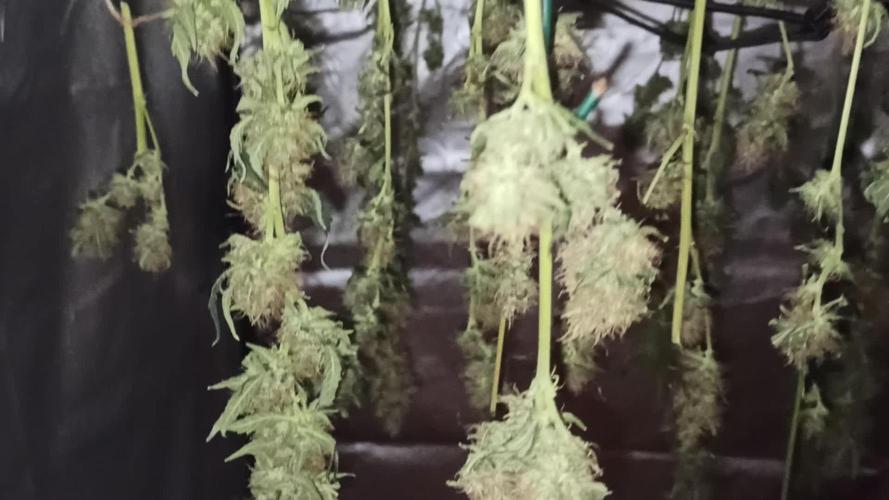
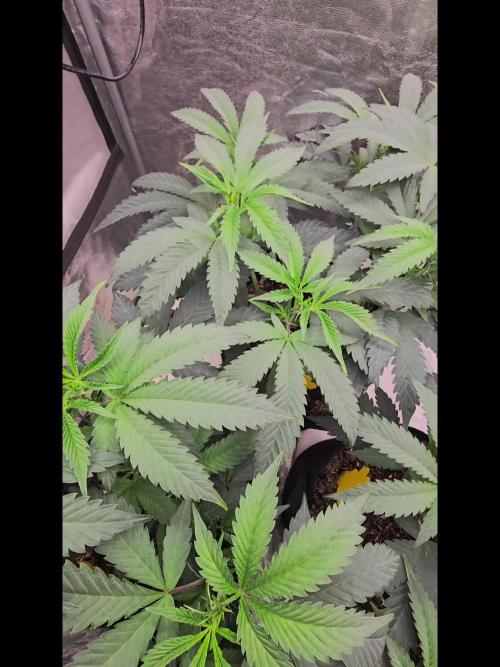
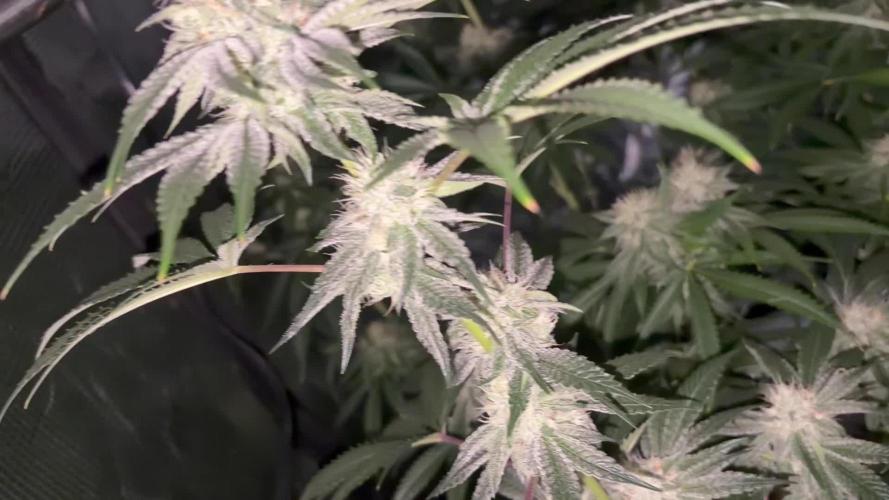
Bueno por fin la cosecha ha salido bien aun que no ha salido realmente como quería pero a pesar de eso estoy contento con muchas ganas de probarla ya
Likes
52
Share
Lacewings seemed to have mostly killed themselves by flying into hot light fixtures. I may have left the UV on which was smart of me :) Done very little to combat if anything but make a sea of carcasses, on the bright side its good nutrition for the soil. Made a concoction of ethanol 70%, equal parts water, and cayenne pepper with a couple of squirts of dish soap. Took around an hour of good scrubbing the entire canopy. Worked a lot more effectively and way cheaper. Scorched earth right now, but it seems to have wiped them out almost entirely very pleased. Attempted a "Fudge I Missed" for the topping. So just time to wait and see how it goes. Question? If I attached a plant to two separate pots but it was connected by rootzone, one has a pH of 7.5 ish the other has 4.5. Would the Intelligence of the plant able to dictate each pot separately to uptake the nutrients best suited to pH or would it still try to draw nitrogen from a pot with a pH where nitrogen struggles to uptake? Food for stoner thought experiments! Another was on my mind. What happens when a plant gets too much light? Well, it burns and curls up leaves. That's the heat radiation, let's remove excess heat, now what? I've always read it's just bad, or not good, but when I look for an explanation on a deeper level it's just bad and you shouldn't do it. So I did. How much can a cannabis plant absorb, 40 moles in a day, ok I'll give it 60 moles. 80 nothing bad ever happened. The answer, finally. Oh great........more questions........ Reactive oxygen species (ROS) are molecules capable of independent existence, containing at least one oxygen atom and one or more unpaired electrons. "Sunlight is the essential source of energy for most photosynthetic organisms, yet sunlight in excess of the organism’s photosynthetic capacity can generate reactive oxygen species (ROS) that lead to cellular damage. To avoid damage, plants respond to high light (HL) by activating photophysical pathways that safely convert excess energy to heat, which is known as nonphotochemical quenching (NPQ) (Rochaix, 2014). While NPQ allows for healthy growth, it also limits the overall photosynthetic efficiency under many conditions. If NPQ were optimized for biomass, yields would improve dramatically, potentially by up to 30% (Kromdijk et al., 2016; Zhu et al., 2010). However, critical information to guide optimization is still lacking, including the molecular origin of NPQ and the mechanism of regulation." What I found most interesting was research pointing out that pH is linked to this defense mechanism. The organism can better facilitate "quenching" when oversaturated with light in a low pH. Now I Know during photosynthesis plants naturally produce exudates (chemicals that are secreted through their roots). Do they have the ability to alter pH themselves using these excretions? Or is that done by the beneficial bacteria? If I can prevent reactive oxygen species from causing damage by "too much light". The extra water needed to keep this level of burn cooled though, I must learn to crawl before I can run. Reactive oxygen species (ROS) are key signaling molecules that enable cells to rapidly respond to different stimuli. In plants, ROS plays a crucial role in abiotic and biotic stress sensing, integration of different environmental signals, and activation of stress-response networks, thus contributing to the establishment of defense mechanisms and plant resilience. Recent advances in the study of ROS signaling in plants include the identification of ROS receptors and key regulatory hubs that connect ROS signaling with other important stress-response signal transduction pathways and hormones, as well as new roles for ROS in organelle-to-organelle and cell-to-cell signaling. Our understanding of how ROS are regulated in cells by balancing production, scavenging, and transport has also increased. In this Review, we discuss these promising developments and how they might be used to increase plant resilience to environmental stress. Temperature stress is one of the major abiotic stresses that adversely affect agricultural productivity worldwide. Temperatures beyond a plant's physiological optimum can trigger significant physiological and biochemical perturbations, reducing plant growth and tolerance to stress. Improving a plant's tolerance to these temperature fluctuations requires a deep understanding of its responses to environmental change. To adapt to temperature fluctuations, plants tailor their acclimatory signal transduction events, specifically, cellular redox state, that are governed by plant hormones, reactive oxygen species (ROS) regulatory systems, and other molecular components. The role of ROS in plants as important signaling molecules during stress acclimation has recently been established. Here, hormone-triggered ROS produced by NADPH oxidases, feedback regulation, and integrated signaling events during temperature stress activate stress-response pathways and induce acclimation or defense mechanisms. At the other extreme, excess ROS accumulation, following temperature-induced oxidative stress, can have negative consequences on plant growth and stress acclimation. The excessive ROS is regulated by the ROS scavenging system, which subsequently promotes plant tolerance. All these signaling events, including crosstalk between hormones and ROS, modify the plant's transcriptomic, metabolomic, and biochemical states and promote plant acclimation, tolerance, and survival. Here, we provide a comprehensive review of the ROS, hormones, and their joint role in shaping a plant's responses to high and low temperatures, and we conclude by outlining hormone/ROS-regulated plant-responsive strategies for developing stress-tolerant crops to combat temperature changes. Onward upward for now. Next! Adenosine triphosphate (ATP) is an energy-carrying molecule known as "the energy currency of life" or "the fuel of life," because it's the universal energy source for all living cells.1 Every living organism consists of cells that rely on ATP for their energy needs. ATP is made by converting the food we eat into energy. It's an essential building block for all life forms. Without ATP, cells wouldn't have the fuel or power to perform functions necessary to stay alive, and they would eventually die. All forms of life rely on ATP to do the things they must do to survive.2 ATP is made of a nitrogen base (adenine) and a sugar molecule (ribose), which create adenosine, plus three phosphate molecules. If adenosine only has one phosphate molecule, it’s called adenosine monophosphate (AMP). If it has two phosphates, it’s called adenosine diphosphate (ADP). Although adenosine is a fundamental part of ATP, when it comes to providing energy to a cell and fueling cellular processes, the phosphate molecules are what really matter. The most energy-loaded composition for adenosine is ATP, which has three phosphates.3 ATP was first discovered in the 1920s. In 1929, Karl Lohmann—a German chemist studying muscle contractions—isolated what we now call adenosine triphosphate in a laboratory. At the time, Lohmann called ATP by a different name. It wasn't until a decade later, in 1939, that Nobel Prize–-winner Fritz Lipmann established that ATP is the universal carrier of energy in all living cells and coined the term "energy-rich phosphate bonds."45 Lipmann focused on phosphate bonds as the key to ATP being the universal energy source for all living cells, because adenosine triphosphate releases energy when one of its three phosphate bonds breaks off to form ADP. ATP is a high-energy molecule with three phosphate bonds; ADP is low-energy with only two phosphate bonds. The Twos and Threes of ATP and ADP Adenosine triphosphate (ATP) becomes adenosine diphosphate (ADP) when one of its three phosphate molecules breaks free and releases energy (“tri” means “three,” while “di” means “two”). Conversely, ADP becomes ATP when a phosphate molecule is added. As part of an ongoing energy cycle, ADP is constantly recycled back into ATP.3 Much like a rechargeable battery with a fluctuating state of charge, ATP represents a fully charged battery, and ADP represents a "low-power mode." Every time a fully charged ATP molecule loses a phosphate bond, it becomes ADP; energy is released via the process of ATP becoming ADP. On the flip side, when a phosphate bond is added, ADP becomes ATP. When ADP becomes ATP, what was previously a low-charged energy adenosine molecule (ADP) becomes fully charged ATP. This energy-creation and energy-depletion cycle happens time and time again, much like your smartphone battery can be recharged countless times during its lifespan. The human body uses molecules held in the fats, proteins, and carbohydrates we eat or drink as sources of energy to make ATP. This happens through a process called hydrolysis . After food is digested, it's synthesized into glucose, which is a form of sugar. Glucose is the main source of fuel that our cells' mitochondria use to convert caloric energy from food into ATP, which is an energy form that can be used by cells. ATP is made via a process called cellular respiration that occurs in the mitochondria of a cell. Mitochondria are tiny subunits within a cell that specialize in extracting energy from the foods we eat and converting it into ATP. Mitochondria can convert glucose into ATP via two different types of cellular respiration: Aerobic (with oxygen) Anaerobic (without oxygen) Aerobic cellular respiration transforms glucose into ATP in a three-step process, as follows: Step 1: Glycolysis Step 2: The Krebs cycle (also called the citric acid cycle) Step 3: Electron transport chain During glycolysis, glucose (i.e., sugar) from food sources is broken down into pyruvate molecules. This is followed by the Krebs cycle, which is an aerobic process that uses oxygen to finish breaking down sugar and harnesses energy into electron carriers that fuel the synthesis of ATP. Lastly, the electron transport chain (ETC) pumps positively charged protons that drive ATP production throughout the mitochondria’s inner membrane.2 ATP can also be produced without oxygen (i.e., anaerobic), which is something plants, algae, and some bacteria do by converting the energy held in sunlight into energy that can be used by a cell via photosynthesis. Anaerobic exercise means that your body is working out "without oxygen." Anaerobic glycolysis occurs in human cells when there isn't enough oxygen available during an anaerobic workout. If no oxygen is present during cellular respiration, pyruvate can't enter the Krebs cycle and is oxidized into lactic acid. In the absence of oxygen, lactic acid fermentation makes ATP anaerobically. The burning sensation you feel in your muscles when you're huffing and puffing during anaerobic high-intensity interval training (HIIT) that maxes out your aerobic capacity or during a strenuous weight-lifting workout is lactic acid, which is used to make ATP via anaerobic glycolysis. During aerobic exercise, mitochondria have enough oxygen to make ATP aerobically. However, when you're out of breath and your cells don’t have enough oxygen to perform cellular respiration aerobically, the process can still happen anaerobically, but it creates a temporary burning sensation in your skeletal muscles. Why ATP Is So Important? ATP is essential for life and makes it possible for us to do the things we do. Without ATP, cells wouldn't be able to use the energy held in food to fuel cellular processes, and an organism couldn't stay alive. As a real-world example, when a car runs out of gas and is parked on the side of the road, the only thing that will make the car drivable again is putting some gasoline back in the tank. For all living cells, ATP is like the gas in a car's fuel tank. Without ATP, cells wouldn't have a source of usable energy, and the organism would die. Eating a well-balanced diet and staying hydrated should give your body all the resources it needs to produce plenty of ATP. Although some athletes may slightly improve their performance by taking supplements or ergonomic aids designed to increase ATP production, it's debatable that oral adenosine triphosphate supplementation actually increases energy. An average cell in the human body uses about 10 million ATP molecules per second and can recycle all of its ATP in less than a minute. Over 24 hours, the human body turns over its weight in ATP. You can last weeks without food. You can last days without water. You can last minutes without oxygen. You can last 16 seconds at most without ATP. Food amounts to one-third of ATP production within the human body.
Processing
Likes
11
Share
Plant has shown slow but healthy growth since its arrival, LST continues and I've managed to keep the plant at the same height it was last week but now at a horizontal angle. I did up the nutes for one feed to a slightly under recommended dose but in the days following I noticed the plant looking a little 'droopy' and since she has been with me she hasnt been drinking very well so I opted to flush her for a feed, since then she has seemed very happy :) whilst drinking much better (possible nute lock was imminent). Now back down to half doseages with the exception of CalMg (to help after flush) but will be increasing them in the following days. As of next week I will be transferring her and another plant my partner is nurturing into single bucket DWC set ups. Fingers crossed I will see some hearty results for making the crossover to hydro.
Likes
35
Share
@Roberts
Follow
Day 1. Hope all goes well. This time I have my substrate ready, unlike strawberry pie. It took off so fast didn't expect it to break ground in 2 days. Which I just transplanted.
Likes
5
Share
@XaXaXa
Follow
On day 10 they got first feeding EC 0,6 PH 6.3
Likes
5
Share
I had this trouble week ago. Irrai is same as yoursIR lights on 3 auto 3 photo in vega in 2/2 grow box After Co2-1200 ppfd 1200+ Thanks to everyone who answered my question
Likes
25
Share
@BB_UK
Follow
Ever since I turned to mars hydro I have double sometimes nearly quadrupled my yields I first had with eBay lights (meh) I have never looked back since and gained so much respect from the community and the breeders too! And to hold the sponsors I do shows me that I am doing something right and I show appreciation to all who support! And that’s why I take a different effort to be fair and document you all! Even though I’m aware your businesses I just can’t be bias when it comes to the greatest I think you all are! Thank you for choosing me! (No I’m not the only one) just showing the love back as best as I can! 💚💚💚💚💚 thank you
Processing
Likes
74
Share
@Mr_Maes
Follow
We are officially in full bloom. The have been enjoying 6-7 hours of sun light per day for about 4 days now, then brought back in under the cobs. The girls are all exploding with growth and stacking what I expect to be huge buds.
Processing
Likes
19
Share
For some reason it's say 9 weeks flower. But it's only 4 weeks flower. Lol. Going well I guess for a 1st grow. Looking nice n frosty at 4 weeks.. Got a alien in the corner lol which knocked me.. Turns out to be a different strain.. 5 n half foot monster.. N still going up.. Have enjoyed this 1st 1 and hope to do more. Has any 1.got n ideas for next. 1 myt try autos. Are they easy to grow? Is is it best to stay away from them.. Happy growing ppl
Likes
9
Share
@Jbuttch
Follow
Aquí ya en mi 8va semana después de cambiarlas a unas macetas más grandes de un aproximado de 15 litros. Bueno, se preguntarán dónde está la tercera si eran tres y ahí se ven dos. Resulta que se murió, aconsejo de mantener lejos a tus gatos. Sí, mi gato macho orinó en su sustrato (aconsejo siempre mantener limpio su arenero para que no busque otros lugares donde orina) y pese de hacerle su lavado de raíces y cambio de sustrato, no sobrevivió. Aquí fue la única vez hasta ahora que pasó algo así. Hasta ahora sigo renegando con el gato, pero bueno no es culpa de ellos, sino de uno mismo. Hay que ser más precavidos. Buenos humos!
Likes
2
Share
10/18 the mite and thrip damage is getting more obvious but all in all as a plant shes looking more 10/22 sprayed with safer brand insecticidal
Likes
15
Share
@Waveform
Follow
Day 17 (starting Aug. 2nd afternoon): Will water them with a lightly enhanced RO water that was imprinted with frequencies via a PEMF coli for about one day when their day starts. After being away over the extended weekend, on day 20 ladies have grown very nicely. I topped nr# 1 and #2 after I took the photos and will give them a bit of water with Root Complex to compensate for the shock later. Sadly my brilliant control equipment has crashed completely and will not even take a photo currently. Yikes. Hope I can get it back alive this week again. Also turned the left light up by another 20%, now running at 40 W, and lifted it a bit. Eye inspection told me lights were lower here and ladies can get a bit more. At the end of their day 20, they seem to have survived the topping well. I managed to cut right above the new nodes which are already growing. Ladies are at 20 cm height before going to sleep. Day 21 shows great growth again, with lady #1 being at 22 cm now and lady #2, while being a bit less tall, extremely good side branch development. I hope that the rearranged lighting on the left side of the tent will make #1 grow a bit bushier too. Besides from that, I am really happy I tested Hesi HPE. I had such enormous success with room plants that made me want to see how Cannabis plants react to it. It will not add much to salinity, so I dared to add it quite early. While the photos are processed to compensate the lighting, I did not add much to saturation, so leaves are indeed of a very vivid, luscious green and ladies looking extremely healthy. Speed of growth has increased too as the added video shows. It also tells me lighting is enough – they are turning their leaves away right at the end of their day. I am really uncertain if I will change to usual Hesi grow fertiliser at all … Did a bit of LST to the lowest branches of lady #2 which spread almost to the border of her pot. Both temporary girls will leave the tent soon, so that the competitors will have maximum space to develop. Day 22, end of week 3: Outside girl went to get fresh air from now on. Wishing her luck, good weather and not a single male in the vicinity. I rearranged the lights and positioned them a bit higher. First preflower signs appeared on the ladies, so I will change the lighting phase when I return next week. Currently, I have them at 18/6, 45 cm above heads, with 80% running to a total of 80 W. I wasn’t so lucky topping #2. She has only one "top side" branch now … But grows extremely well, so ok!
Processing
Likes
3
Share
Top dressed the soil day 19 with organic fertilizer. The blue strains are growing fast and bigger than the others. The two LSD’s look completely different, one looks healthy and growing strong. The other, has very light leaves. Im not sure why. it’s in the same soil with the same nutrients and gets the same water as the other plants. Any thoughts? Other than that, things are going well! The Ladies are growing rapidly. Should be ready to LST and tie them down in a few days.
Likes
14
Share
@MG2009
Follow
02/23/2022 Lots of stretching this week,not much to say so I let the pics and videos talk for them selves🙏🏻 Enjoy Grape Skunk tall and lanky one I'm loving! I will number her for future reference. Biscotti Skunk has some droopy leaves, it's watering day.
Likes
15
Share
All 5 plants are growing great now! Started flowering my bag seed plant to go ahead and get it sexed ahead of flipping the light. I'm feeling a female! She's looking too good to be a boy. The mentos is recovering great from the topping, as you can see she's starting to bush out quite nice, all but #2 (the taller, single stalk one). Went ahead and started tying back all the branches that were getting ready for it. Also started defoliating some of the would be larf from the lower nodes to give them more energy to the future colas! We're almost there guys and gals, flowering time is right around the corner! Hopefully a week or so away. I can't Fu@k!ng wait! LESSSSGOOOOOOOOOOOOO
Likes
9
Share
Hey sry the delay, this tuesday started the 5th week Watering: 07/7: 1l with 0.5ml bacteria/mycorrhizae each + 1 ml bio boost/flores CO2: Reaktor is using their phase 2 which it supose to give us 800 ppm
Likes
38
Share
Welcome to my Gorilla Cookies Diary sponsored by Pure Instinto & Mars-Hydro. Flower Days 25-37 Days 71-83 wks 11-12 Plant is getting nice and fat. Buds are started to swell real nice. Still a about a week to go before she enters Ripening. Trichomes are 60-40 cloudy/clear. Ambers about 15%. Has been nice watching her develop into a lovely little plant. She is little, at just 53cm, she grew very little in her stretch, as did all of my fems. 1 grew 5cm in her whole pre flower, a dom sativa too. But, back to this girl. She has a lovely structure with a sweet smell, her buds pop with bright orange pistils, she still has a good bit of stumble, so, I reckon she's got about a week left in putting on mass. Diet/Defoliation She was on a healthy but low dose of feed never exceeding 650ppm with both Short Flowering and PK booster powder from Green House Feeding. I've decided to drop their booster for 3 of Atamis finishers with a touch of Plagron Zym & Silic Rock the Finishers ppm falls inthe range of 350-430ppm and then I add short flowering to give a boost for N, which brings the ppm up to 550-600 & PHs of 5.9-6.2, I've ordered Raw NPK & Micro nutrients to have more control over my feeds. For terpine/taste profile I went with the best product on the market, Terpinator "The OG" feeds off this are very high I feel, 380-410ppm PH 6.1. Very light defoliation has been done, as she really had already a low leaf-calyx ratio. So, I'm happy overall with her progress, all a little slow, but, she's getting there. I reckon 9 weeks total in Flowering but, as soon as I see 90-95% cloudy she'll be harvested. I won't be waiting for her to turn mostly amber. (As the weed degradation kicks in) I've been learning bit and extras with every grow, and they just keep getting better and better, the quality of her look already speaks to my improvements. Still a long way to go. But, I feel I for sure can reach beyond Dispen weed you get from a store, or local dealer. Lights: SP 3000 & IR/UV45 are been used to great affect this round, they're doing 8 plants in a 50x100cm2 space as opposed to the 11 I did in a space of 100cm2. Can already see much improvement in the bud. Glad I decided to retry this light in its more desirable coverage conditions. The IR/UV45 has stepped up my game so much, I really can't praise this product enough. (IF YOU'RE GROWING FEMS, AND UNDERSTAND THE IMPORTANCE OF DLI, and don't implement this "1-2hrs extra flowering for all fems, without risk of reveg" then, well you really are behind in the times. And, its not as if its a new concept, Far Reds have been used by knowledgeable growers for decades to increase the flowering time and therefore your DLI. The UV-A is a really nice addition also. My bud as at least gotten 50-70% more resin, and on the Trich front, just look for yourself at my last harvests. Thanks to both my sponsors from MarsHydro & Pure Instinto. Much appreciated, and also to those who Viewed, liked, &/R commented, thanks for your attention and support, I look forward to seen your diaries. Either way thanks for dropping by.
Likes
52
Share
@MeaCulpa
Follow
I counted the days again and came to the conclusion that I have 70 days full and harvested tonight. Enough brown and amber trichomes are also present. I'm excited to see how they taste and pop. They definitely look and smell very good. What's really funny: From the 2-3 week onwards, I turned both TS1000s up to 100% for 18 hours a day. I just wanted to find out my cap. I used around 100kW/h and €40 less in electricity costs. Compared to my last grow with Feminized and 10 weeks of flowering + Veggy. I wouldn't have expected that. Well... let it dry in peace first. Another project is already underway. Have a nice weekend everyone.
Likes
6
Share
It is already the fifth week of vegetation and they are incredible, the autoflowering ones above all are beautiful and it is also noticing how the critical x are growing little by little. ! (Any questions, or any advice you can give me leave it in the comments, I also speak Spanish)
Processing
Likes
5
Share
Day 2 flip: Due to the other plants in the room , I needed to flip the lights to flower. I was worried she wouldnt really be big enough to benefit from the flowering yet but ad it is a tester seed for my own cross , I wanted to see the buds it creates rather than a big yield yet. I have about 15 of these crosses that I separated as they popped out and among the many that I mixed together during the panic to remove the offending male, "Billy big bollocks", to stop him ruining anymore of my vestal virgins. The result of the Gorilla Zkittelz/Blue Gelato41 is impressing the hell out of me so far. She is a lot younger than her neighbours by 2 weeks in some cases but she is the biggest in her NFT tray now. I have been training her with bends and squashes into a quadline of sorts and I am not dissapointed either response. The below decks nodes are stacking right behind each other's heads and look like they will remain close together. This is a bonus as I have a friend growing another cross of my gelato (RQS Hulkberry/Gelato)that is 1.2M tall and colas from the base to the many tips. I dont have space for any more monsters with the fastbuds testers going wild. lol The Zkittel pheno can go two ways too as I had two different ones in a previous grow that both produced rock solid buds but were very different in growth rate and structures. The Gelato gene is also a lanky lady from her sativa background so seeing a squat ,thick plant at this stage indicates a fat colas short girl is coming. I will be popping a cross in each new run i do as I want to see what I have created here with these and also as I a have always fancied a go at breeding seeds. Have fun and stay safe. be prepared for a 10 day internet loss !!!!. world financial reset imminent!!!!