


Likes
Comments
Share

@Growbody
Follow
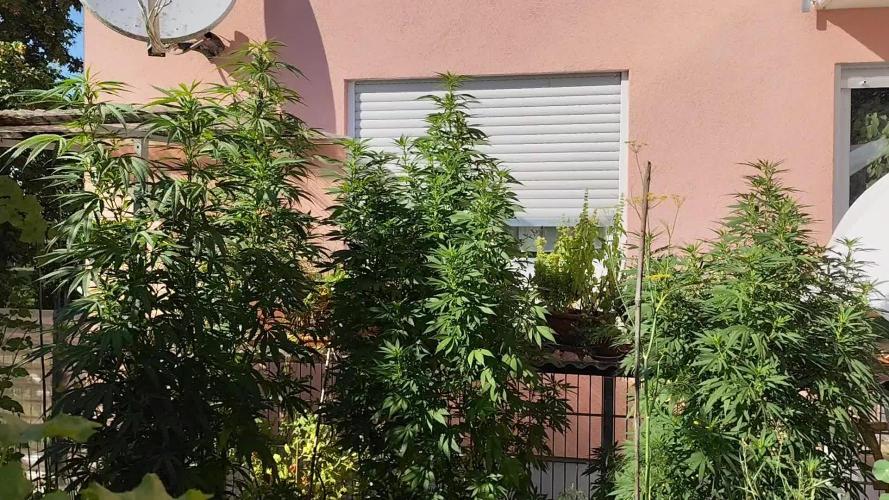
Hallo und herzlich willkommen zu meinem Growbericht Outdoor 2025 mit den Sorten Power Flower Feminized, Royal Medic Feminized und Special Kush #1 Feminized, alle 3 von Royal Queen Seeds. Es ist das erste Mal, das ich Töpfe für den Outdoor grow verwende, bisher waren alle Gorilla grows und direkt in die Erde gepflanzt.
Die URL der Power Flower Feminized: https://www.royalqueenseeds.de/feminisierte-hanfsamen/120-power-flower.html
Die URL der Royal Medic Feminized: https://www.royalqueenseeds.de/cbd-samen/148-royal-medic.html
Die URL der Special Kush #1 Feminized: https://www.royalqueenseeds.de/feminisierte-hanfsamen/138-special-kush-1.html
Die Planung für den Grow ist, die Samen in easyplug Anzuchtwürfeln keimen zu lassen und danach in 0,6L und 2,2L Plastiktöpfen, dann letztlich in die neuen komplett doppellagigen ROOTIES 15 Liter Wide Version Stofftöpfe umzutopfen. Sobald die Witterung es zuläßt, sollen die Pflanzen an die frische Luft.
Es ist schon eine Weile her, das der Grow losging, die Bilder sind jetzt aktuell.
Tag 162: Wieder ein Hitzetag, kaum Wind. Gewitter sind angekündigt, bis jetzt gehen die im Schwarzwald und den Vogesen runter, der Rheingraben bleibt bisher trocken. Die Mädels bekommen weiterhin 3x am Tag Ihren Cocktail. Kein weiteres Höhenwachstum.
Tag 164: Es hat auf angenehme 27°C "abgekühlt" und es weht ein leichter Wind.
Tag 166: Hab mal Photone auf mein xiaomi geladen, das zeigt bei Wolkenlosem Himmel und praller Sonne 1600 PPFD (µmol/m²/s). Wie weit der Wert realistisch oder mit speziellen Messgeräten vergleichbar ist, kann ich nicht sagen, hab damit einfach mal einen Anhaltspunkt. Die drei Großen werden mittlerweile 4-5 mal am Tag gewässert. Heute sind es wieder 31°C, mit 22% Luftfeuchtigkeit ist es sehr trocken und es weht so gut wie kein Wind. Der Brunnen wurde wegen Wassermangel geschlossen, im Bach fliest nur noch ein kleines Rinnsal.
Tag 167: Es ist Regen angesagt, die drei Großen stehen unterm Balkon. Rundherum hats ordentlich geschüttet, hier hats 10 minuten getröpfelt und seitdem ist es wieder stark Bewölkt aber trocken bei nur 22°C.
Wenn's dir gefallen hat, schau wieder vorbei ✌️😎


Likes
17
Share


@GreenHouseLab
Follow
This stuff packs a nice punch, one pheno showing off those cherry terps its 🔥🔥
Likes
18
Share


@RFarm21
Follow
9 março - 15 março
12 março - feeding
16 março - cheese #1 feeding:
Bio bloom 0.5ml ; top max 0.5ml ; bio heaven 1.5ml; sílica 0.1ml; bio grow 0.7ml
16 março - cheese #2 feeding:
Bio bloom 0.5ml ; top max 0.5ml ; bio heaven 1ml; bio grow 0.5ml
Processing
Likes
70
Share


@CBD_Sweden
Follow
2017-09-11. Kl 12.00. Week 3 starts. I have cleaned the whole room for the new week and gave the girls water and nutes. Added videos and pics. Girl is 11 cm high.
---------------------------------------------------------------------------------------------------------
2017-09-12. Kl 10.00. New pics and video.
--------------------------------------------------------
2017-09-13. Kl 22.00. Added new video.
----------------------------------------------------
2017-09-15. KL 10.00. New pics and video. The girl is 14 cm high.
---------------------------------------------------------------------------
2017-09-16. Kl 10.00. The girl is starting to grow little better now and i hope she is picking up the pace. Added new videos.

Likes
8
Share


@GoldenGromie
Follow
Things still chugging along nicely. Noticed a little leaf tip burn on one but its not bad at all. Gave one feeding of only water. Plants need to be defoliated a little. I have not been taking leaves off every day so I am in need of some clean up. Will tackle that this week.
If at any point you guys wanna check out my grow live please visit my Youtube page
https://www.youtube.com/channel/UC7345iXI2LnTIG1mmONKtPQ
Thanks for visiting my Grow!


Likes
1
Share


@Lazuli
Follow
The bulk is here and what an amazing plant she has become
I start the overdrive next week and this plant will be harvested at week 14
Likes
2
Share


@EtnoGrow
Follow
todo muy bien! esperando paciente el desarrollo de los cogollos, conociendo y viendo los puntos de maduracion asi como la fertilizacion ajustando a su maximo que creemos posible para incentivar que los cogollos engorden, ahora en adelante les hare segumiento de la grande principalmente, que es la que cumple con la edad del diario, ya que las otras como se explico en un principio venian recien cultivadas por eso tienen un par de semanas de retraso , tambien hay una hermafrodita, que al detectar como comentamos semanas anteriores aplicamos al tecnica vista de un cultivador mexicano, consistia en romper los brotes de machos las pelotas con el fin de que no vuelvan a salir, dejando solo los pelos estigmas de las hermbras, si bien el cogollo queda maltratado, al parecer se detiene el crecimiento, asi que estamos viendo como rinde ese experimento.


Processing
Likes
25
Share


@DeadwebsiteBoringcommunity
Follow
Night time photos so ladies look a little droopy from being in the light all day.
Woot woot Cheers to Ecofarm for Fast and friendly service. Got the grow bars in today and they will added to the tent, they are 90w Led grow lights 4 feet long with Banks of Sanan Epistar Smd 2835 and Osrams. PPFD of 198 @ 18” added to the power already there and we got a heck of a light setup. The lights are of great quality and have a three year warranty. Next big investment will mostly be an Apogee Light Meter, tired of fucking around and playing the Guessing game with “Lux meter” on the cell phone. After we acquire the ppfd meter the next step will be acquiring parts to build our own grow light. Also planning on experimenting with light moving technology next grow so we can avoid some of hot spot issues known to be present with Cobs.
Lights lights everywhere lights what the heck is going on here? Well the whole idea is to have a ppfd that is as close as possible to 1000 or higher Par/ppfd at 5 foot by 5 foot. Ladies will burned but yields will be large. No guessing or estimating yet. Taking a wait and see approach. The purple gelato mutant is still showing signs that she may indeed be going into flower. Not overly concerned, just kind of cool thing. So all said and done we will try to run 6 side bar lights. 4 cheaper led bars equaling about 180w with 2 Chinese high quality led that are also equal to about 180w. There is also a 2000w Cob grow light with 4 cobs and a bunch of leds draws about 400 watts. And finally a Parfactworks 500w grow light draws about 150 watts. These are all give or take numbers so really I could be drawing 1000 watts or I could be drawing 800 watts. Not really concerned about the power draws we are after bigger weights. And without investing in a new grow light this was our best course of action. Pleased with how everything is progressing and looks great.
So I'm actually kind of not use to plants growing this fast every plant is showing gender now in some way. The mutant is most likely not pushing into flower. But again I'm not use to plant growth this fast... Umm #@$% you Advanced Nutrients I used them for half a year and never really had anything to compare them too. This is a superior product in every single way including Price.. Thank you Green Planet Nutrients for making a fantastic product.
SMD 2835 – A cheaper led fairly efficient rated at 2.2umols/j with a 3 year warranty offers good value to performance. Comparable to Lg 5830s and Samsung 301h(b) But not as energy efficient.
PPFD - photosynthetic photon flux density
A link to a video with Dr. Bruce Bugbee a very respected and valued member of the Cannabis growing community. In the video he explains a lot about light intensity and yields. Seen it first hand and this gentleman does indeed know his stuff. Here's a link:
https://youtu.be/ID9rE5JewVg
Likes
15
Share


@38PLAN
Follow
Siamo all'8 settimana le piante hanno sviluppato fiori ben formati,ora dobbiamo avere pazienza ed aspettare che diventino ancora più grandi,la maggior parte dei pistilli é ancora bianca e le piante ancora verdi,questo significa in grandi linee che la pianta può ancora produrre,incredibile la pianta in fondo a sinistra ha quasi toccato il soffitto,un autofiorente di eccezionali dimensioni,ancora all'inizio della fioritura
Likes
2
Share


@Ctrellis90
Follow
So it's the end of week one after germination and we have a little mutation going on from the looks of it....I'm sure she's going to grow out of it but it looks like she doesn't have a main stem lol. I'm curious to see how this one grows in the next week or two.
Very interesting 🤔.
Anyways we started the alfalfa Ferment from Growing Organic and they have BAS Craft already mixed into their soil. The autos we're running organic so I really don't see us adding anything until around late veg.
Thanks for stopping by and we'll see ya next week.


Processing
Likes
37
Share


@organically
Follow
Week 5 - Day 2 - 11.12.2017
-
Hay lovers of Green, i will give you a big update.
While trying to fix the PH and Humidity issues last week, i've already found some nice root developments and decided to transplant to support the regeneration - 6.12.2017 -.
The Plants were unhealthy and shocked.
After 2 Days they started to reviltalize and stable - 08.12.2017 - and i found a suprise, the adjoining Auto Dinamex's start to Preflower.
-
Today the sweetys are healthy,vital,bushy and got nice stems, in height arround 18 cm
The BCC'S internod distances are longer and the stems are thinner as the ICED G's.
-
■ Blueberry Cheesecake [ Cheese x Blueberry Multiple Hybrid ]
■ ICED Grapefruit [ ICE [Skunk Special x White Widow x Blueberry] X Grapefruit [ C99 x Cinderella x Sativa ]
-
■ Timeline ■
Germination start [ 04.11.2017 - 17:15]
Germinated / into Coir Pellets [ 06.11.2017 ]
PreVegetative start [ 07.11.2017 ]
Transplanted into 1L Airpots [ 19.11.2017 ]
Vegetative start [ 26.11.2017 ]
Transplanted into 7L TeKu [ 06.12.2017 ]
-
PreFlowering start [ xx.xx.xxxx ]
-
Flowering start [ xx.xx.xxxx ]
Harvesting Part 1 [ xx.xx.xxxx ]
Harvesting Part 2 [ xx.xx.xxxx ]
-
■ Growroom ■
Size » 90x90x170 ~ 0,8 m²
-
PreVegetative Lightning
» 24 ▪️ LED ~ 33W - daylight - 3700lm
Vegetative Lightning
» 24 - 20/4 ▪️ HID ~ 250W - 5600K - 18.000lm
Flowering Lightning
» 12/12 ▪️ HID ~ 400W - 2100K - 56.500lm
-
Supply air ▪️ mesh window - negative pressure
Exhaust air fan ~ max.420m³/h ]
Circulating air fans ~ 3x16W max.2250 rpm
-
Pots ▪️ Coir Pellets --> 1 L Airpots --> 7 Liter TeKu.
Medium ▪️ Organic Soils!
Composition ▪️ bark humus,wood fibers,coconut fibers,coconut husks,compost,guano,hornmeal,clay minerals,trace elements,calcium carbonate,perlite.
-
■ Supported by ■
» Female Seeds - so easy !
» Cellmax - Organic Growing.
//////////////////////////////////////////////////////////////////
👋 Greetings your organically
» tried and true, since simple is the best! 👍

Likes
34
Share


@SalocinSpecial
Follow
D40 (31/12/2020): Second week of flower and everything is good! They are still stretching a lot. I'm not continuing LST with ties but just by tucking and banding stems and leaves. I will continue to slowly remove leaves and small bud site under canopy that will never receive enough light. The higher buds receive around 520 and 600 PPFD (40 000 to 46 000 lux) for a DLI (for 20 hours of continuous light) around 37,44 and 43,2 moles of photons which is perfect. This Glue Gelato phenotype is weird as it grows weird leaf structure since a couple of weeks. Probably since I discovers a nutrient lock in the soil with too much nutrients. Banana Kush is super healthy and look amazing! 😎
- temp: 25C
- no water
- RH: 56%
D41 (01/01/2021): They are stretching like crazy so it's a sign of good health! I fed with nutrients 3/4 of the recommended dose for transition week. I gave more then a gallon approx. 4L per plant. I did remove leaves today but no bending. I want to let them grow in height.
- temp: 25 C
- water: PH6.3, 820 PPM approx. 4L each plant
- run off: PH6.7, 1150PPM for BK ; PH6.8, 1120 PPM for GG
- RH: 54%
D42 (02/01/2021): Nothing special today. I try to turn the plant 180 degree each day to make sure fan is blowing air on every side of the pot and plant and to make sure light is distributed evenly. I also swap the two plants every 2-3 days to make sure again that the plants receive light equally. I continue removing leaves and small buds site under canopy.
- temp: 25 C
- no water
- RH: 54%
D43 (03/01/2021): The lights are now at 16 inch from the top buds and just 12h later I saw a big difference. They are now ready to receive intense light 😎. They receive approx. 650 to 780 PPFD and even 900 PPFD for the top buds (50 000 to 60 000 lux, and even 70 000 lux). I will check closely in the next days to make sure the buds and leaves are not burning. I fed only Max Minerals full recommended dose for transition week. I gave more then a gallon approx. 4L per plant. I placed a round stake in each pot for when the buds will be heavy.
- temp: 25 C
- water: PH6.3, 460 PPM approx. 4L each plant
- run off: PH6.8, 1550PPM for BK ; PH6.9, 1480 PPM for GG
- RH: 55%
D44 (04/01/2021): Nothing new today.
*** UPDATE ON BUGS: I did not see any more larvae since last week. It's the 3rd week since adding nematodes and after adding 2 pouch per plant, doing 2 insecticidal soap treatment and removing 1 inch of soil, I feel like I did control the infestation. I still see some mature fungus gnats on sticky traps but nothing alarming. Increasing air flow and reducing RH also helped a lot for those bugs.
- temp: 25 C
- no water
- RH: 55%
D45 (05/01/2021): Nothing special today. I let them grow without new LST. I did not removed leaves since a couple of days. They are growing in height and that's what I want. I might do a defoliation in beginning of week 7 (or week 3 of flowering). I want to reduce RH in the tent under 50%. When the lamps are off, I have a lot of difficulties to maintain a proper RH for flowering stage. During night, it is around 57% with the 4 inch AC Infinity inline fan blowing full speed. RH in the room where the tent is is around 35%-40%. With 5 plants in the tent (2 cannabis, 2 tomatoes and 1 mint) it will be more difficult to control RH in the next week with flower and fruit growing bigger. I ordered a small dehumidifier on Amazon to help me reduce the RH.
- temp: 25 C
- no water
- RH: 53%
D46 (06/01/2021): I fed today half of the recommended dose for transition week. The PPM of the run off from last fed was high so I want to cut a bit on nutrients. The run off of both plant is down under 900PPM which is what I wanted 👍
-temp: 25 C
- water: PH6.3, 480 PPM, approx. 3.5L each plant
- run off: PH6.9, 860PPM for BK ; PH6.9, 766PPM for GG
-RH: 52%


Likes
8
Share

@GERGrowDesigns
Follow
Welcome to Flower week 5 of Fast Buds LemonPaya
I'm excited to share my grow journey with you from my
FastBuds Project . It's going to be an incredible ride, full of learning, growing, and connecting with fellow growers from all around the world!
For this Project , I’ve chosen the Feminized Photo strain Lemonpaya :
Here’s what I’m working with:
• 🌱 Tent: 120x60x80
• 🧑🌾 Breeder Company: Fast buds
• 💧 Humidity Range: 50
• ⏳ Flowering Time: 58 Days
• Strain Info: 30%THC
• 🌡️ Temperature: 26
• 🍵 Pot Size: 16l
• Nutrient Brand: Narcos
• ⚡ Lights : 600W x 2
A huge thank you to Fast Buds for allowing me to try my Best with this amazing collection from Automatic and Photo Strains they managed to Sponsore . Big thanks for supporting the grower community worldwide! Your genetics and passion speak for themselves!
I would truly appreciate every bit of feedback, help, questions, or discussions – and of course, your likes and interactions mean the world to me as I try to stand out in this exciting competition!
Let’s grow together – and don’t forget to stop by again to see the latest updates!
Happy growing!
Stay lifted and stay curious!
Peace & Buds!
Likes
17
Share


@halexxo
Follow
Una de las plantas tiene un deficit de calmag creo, he probado a cambiar el pH y añadirle calmag de biobizz, veremos qué tal le sienta.
Likes
11
Share


@DeepRootsGrowTrees
Follow
FORBIDDEN 🚫 RUNTZ by FASTBUDS
Week #8 Overall
Week #7 Veg
This week nothing really to report she looks like a half sphere how round she is she's round as she is tall right now. Stay Growing!!
Likes
12
Share


@MazzeoN
Follow
Esta semana fue una semana bastante normal, con la unica complicacion de que una de las plantas comenzo a presentar manchas en sus hojas y no encuentro cual es el problema.