




Likes
2
Share

@GoodTimesOrganics
Follow
Welcome Back!💚
Die zweite Blütewoche ist vorbei und die Pflanze entwickelt sich weiterhin prächtig.
Die Blütenansätze sind schön erkennbar und die Pistilen bilden sich weiter aus.
Überraschenderweise wirken die Blätter sehr Sativa lastig, wobei genetisch eine Indica Dominanz vorherrschen müsste.
Außerdem ist ihr Wuchsverhalten eher Indica dominiert.
Jetzt ging die Pflanze etwas mehr in den Stretch und ist mit ihren Indica dominanten Mitbewohnerinen gleich auf.
Die Werte im Zelt sind optimal auf die Blüte eingestellt.
———————
🌞 Temp: 24°C
🌚 Temp: 20 °C
💨 RH: 56%
VPD: 0,97 kPa
😎PPFD: 830 mqm
———————
Stay Tuned! 💚

Processing
Likes
20
Share


@CityFarmer
Follow
Hello everyone,
We'll sorry I'm late, 😂😂 I've been sick for a few days but I'm back again, and good thing because my girls where thirsty as heck, lol
I cant find my tape measure so I'll update you guys on the height next week, everything else is good
See you guys next week ✌️✌️

Likes
3
Share


Likes
11
Share


@CeGrow
Follow
Woche 9
nr.1: Ende Woche 9 (Tag63)
die Blüte hat gut zugelegt, einige Stempel sind braun (ca 1/3), die Fächerblätter fangen langsam an zu verwelken, ein paar habe ich abgeschnitten
Trichome habe ich noch nicht unter dem Mikroskop begutachtet. werde ich in Woche 10 machen.
bald wird sie reif sein
nr.2: mitte Woche 9 (Tag59)
die Blüte hat sehr gut zugelegt, kaum braune Stempel, wächst noch, Fächerblätter fangen langsam an zu verwelken, ein paar habe ich abgeschnitten
gute Trichomenproduktion
momentan bin ich shr zufrieden über meinen low budget balkon grow
Düngung:
nr.1:
tag 63: 0,5 Liter Wasser + 1,5 ml Mairol Blütenwunder
nr.2:
tag 59: 0,45 Liter Wasser + 1,35ml Mairl Blütenwunder
tag 60: 0,5 Liter Wasser + 1,5ml Mairol Blütenwunder

Likes
8
Share


@Easygrower
Follow
Hello growers day 42 in the garden with the blue monster auto 19/7/20 all is well she’s looking really good just keep feeding her when the top is dry and she is loving life just hope this good weather iv been getting holds out for a bit longer so she can beef right up until next week be safe and happy growing ✌️

Likes
107
Share


@DogDoctorOfficial
Follow
It's that exciting time again—time to dive into the enchanting journey of my beloved Purple Lemonade FF as she strides confidently into Week 5 of flowering.
Defoliation Drama Unveiled!
As the grand finale approaches, I made a daring decision to perform a defoliation dance with my purple beauty. Now, don't worry, it's not as dramatic as it sounds! Think of it like a plant makeover. I carefully removed a select few fan leaves to allow the inner sanctum of the plant to breathe. This move allows more light to reach those budding sites, ensuring that every nugget gets its chance to shine. The result? A lush canopy where each bud twinkles like a star in the night sky.
Fruits of Our Labor: Bigger is Better!
Oh, but the fruits of our labor! They're a sight to behold. The buds have grown into massive, magnificent marvels that stretch toward the heavens. Imagine holding a juicy lemon the size of your palm—that's the kind of awe we're talking about! Their aroma wafts through the air, teasing the senses and promising an explosion of flavors and fragrances when the time is ripe.
The Symphony of Purple and Trichomes
And now, let's talk about the color show happening here. It's like the Northern Lights decided to pay a visit to my grow space! Delicate shades of purple are dancing across the buds, creating a breathtaking tapestry of colors that's straight out of an artist's dream. But wait, there's more! It's practically snowing trichomes in there. These tiny, glistening structures cover the buds like a shimmering blanket, and trust me, it's a sight that warms any grower's heart.
Mother Nature's Artistry in Action
Nature truly is the best artist, and our Purple Lemonade FF is her masterpiece. Each leaf, each bud, each trichome is a stroke of perfection. This journey reminds me that we're not just gardeners; we're cultivators of beauty, patience, and endless wonder.
A Glimpse of the Journey
And as promised, here's a sneak peek of this week's snapshot from the grow room. Feast your eyes on the splendor of my purple queen standing tall amidst her sisters of diverse genetics. It's a visual symphony that fills the heart with joy and gratitude.
Cherish the Journey
As we approach the next chapter of this remarkable journey, I'm reminded once again that it's not just about the end result; it's about the experience, the love, and the lessons we gather along the way. So, my fellow green-thumbed adventurers, let's cherish every moment, celebrate every bud, and keep growing with passion and joy.
Thanks for joining me on this magical ride. Until the next chapter unfolds, keep those hearts and plants thriving!
Genetics - Fast Buds Purple Lemonade FF
Ligth - Lumatek ZEUS 465 COMPACT PRO
Food - Aptus Holland
#aptus #aptusplanttech #aptusgang #aptusfamily #aptustrueplantscience #inbalancewithnature #trueplantscience #fastbuds #dogdoctorofficial #growerslove
With true love comes happiness <3 <3 <3 Always believe in your self and always do things expecting nothing and with an open heart , be a giver and the universe will give back to you in ways you could not even imagine so <3 <3 <3
All info and full product details can be find in can find @
https://2fast4buds.com/
https://aptus-holland.com/
https://autopot.co.uk/
https://lumatek-lighting.com/
<3 <3 <3 Growers love to you all <3 <3 <3
" Arising from a cross between purple and citrus Cali genetics, Purple Lemonade FF (Fastflowering) offers a complex high made up of perfectly balanced cerebral and body effects that are ideal for daytime use. Expect an extremely enjoyable high that boosts your mood while deeply relaxing your whole body and getting rid of muscle pain. This meticulous cross produces up to 550 g/m2 of some of the most beautiful purple buds, with pinkish and reddish hues that will catch everyone’s attention. The beautiful purple buds are ready for harvest in 7-8 weeks and come hand-in-hand with unbelievably sugary citrus terps that are just as refreshing as a cold lemonade on a hot Summer day. It’s the ideal variety for the sweet-tooth stoner seeking strains that deliver both in quality and quantity of resin.
Bud Description
Purple Lemonade FF grows chunky, spade-shaped buds that boast a whole range of pinkish-purple hues with rich, dark orange pistils shooting out of every direction. This variety stands out for the, oftentimes, lilac trichomes that give them a gorgeous pink tint and make for outstanding purple concentrates. The buds give off a delicious tart lemon aroma that reveals a sweeter, more fruity scent as you break the buds open. Definitely a must for flavor chasers and those looking for pungent terpene profiles. Smoke Reports
Purple Lemonade FF offers an effect that’s just as unique as the flavor. Expect a potent uplifting high that gives you that energy boost you need to get things done while 100% happy and stress-free. The effect gradually transforms into a wave that works its way along the limbs and through the muscles, deeply relaxing your body and putting you in the right mindset to go through a busy day with a huge smile on your face. This is an excellent all-day smoke as it not only increases energy but can also help combat chronic pain, migraine and stress. Plant Appearance
This feminized photoperiod variety develops a thick and strong structure, growing a medium-sized main cola with multiple shorter side branches, typical of hybrid strains. Purple Lemonade FF develops fairly short internodal spacing with gorgeous purple buds growing stacked on top of each other, making it the perfect choice for growers of all levels looking to get lots and lots of top-shelf purple weed, as this variety can produce up to 550 g/m2 in a 7-8 week flower cycle.
Grow Tips
This is a super fast feminized photoperiod version that takes approximately 7-8 weeks to flower with a 5-week vegetation cycle,, this means you can have faster harvests by shortening the veg cycle or have a longer veg cycle for bigger yields. Purple Lemonade FF (Fastflowering) makes for a great candidate for growers of all levels as it’s a vigorous strain that will thrive with basic maintenance both indoors and outdoors. This is a resin powerhouse so make sure to have your trim bin close by as all the resinous sugar leaves will make for the most mouth-watering hash and extracts. Flavor
Expect a long-lasting citrus zest that taste just like it smells. Purple Lemonade FF reeks of a delicious blend of sweet fruits and tart citrus that’ll make your mouth water. On the inhale, expect sour flavors that taste just like lemon candy with hints of orange and a really subtle earthy background. And on the exhale, the citrus flavors open up, giving place to a more sugary berry fruitiness that leaves your whole mouth tasting like an extremely sweet weed-infused lemonade.

Likes
3
Share


@MadBumbleBee
Follow
1 OG kush Shows Sings of Nitrogen Toxicity (cut most leafs off)
Soil PH: 5.7 - 6.8 (lowest and highest reading)
Flushed all plants with microrayza fungi
Watering with organic bio activated tea every 3 days (potassium = algae, bokashi = nitrogen, worm hummus and molasses)
Day 28 to 35
Day 32: Accidently cut off main stem of a very healthy OG kush plant, let´s see how it bounces back in a few days. Perhaps I just HST´d by accident
Day: 32: Some of my autoflower GSC already started to flower
Day 32: 3 OG kush plants are weak, one has a weak stem, second one had a problem since seedling (grew into the ground), third one i cut off main stem by accident
Day 34: OG kush plant was removed after many tries of getting it back to its feet

Likes
72
Share


@Schnabeldino
Follow
_____ Week 9 | Day 56 - 63 | 2nd week of Flower ______
Day 64 🌞💧
- each Plant 3 Liter, with small drain
- i give her 25% less fertilizer than indicated by Advanced...
Day 68 🌞💧✂️
- each Plant 3 Liter, with small drain
- defoliation and starting with Lollipopping.
____________________________________________________________________________________________
Light - 12/12 h - 560 Watt
- 2x 200 Watt Toplight
- 4 x 40 Watt Lightbars
PPFD - 900 - 1000 µmol
Temp. avg. - 23,0°
Hum. avg. - 64 % RLH
Likes
3
Share

@praven1
Follow
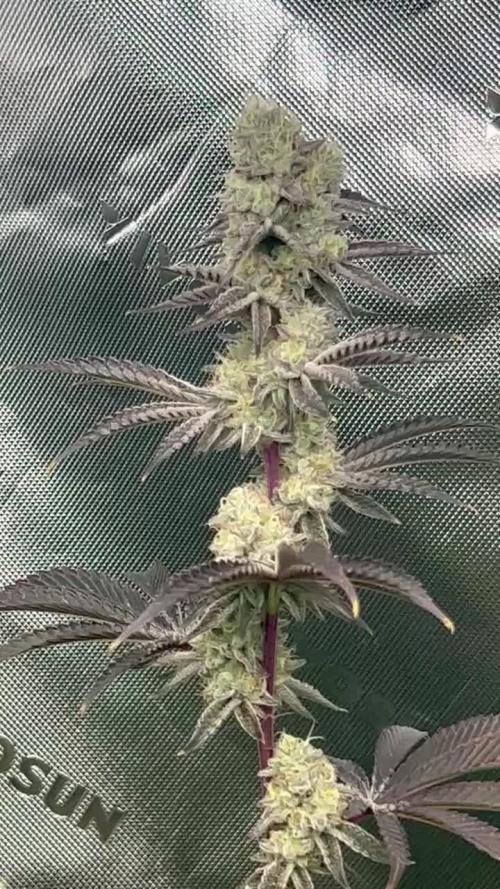
Colors of fall are filling the tent along with some lovely smells.
Black Cherry 1 smells of sour candy and gas. The sour candy is up front and then followed by a funky gas.
Black Cherry 2 smells of wild cherry medicine with a hint of wood. There's a strong wild cherry smell with a faint little bit of medicine all mixed with a small woodsy smell in the background.
Tahitian Vanilla 1 smells of an elves' bakery tucked deep in the woods. Creamy, doughy, bakery goods and Cashmere blast for this plant.
Tahitian Vanilla 2 smells of pine dumped in cream. Heavy pine smell upfront then a sweet warm creaminess comes into focus but the pine tar never leaves
Likes
8
Share


@Blacksheep
Follow
38 Days. They have had their 2nd topping. Will be planting the autos shortly. Using earthworm castings are killing it. They always do.


Likes
14
Share


@goeser
Follow
Growing much better then expected unter a 100W LED. Think they will start to flower in 5 to 7 Days.
Likes
25
Share


@SybDarret
Follow
I'm kinda late on the update, week 11 finished on sunday 4, now is feb 9th.
Last time i gave them nutrients was on sunday jan 28th and i'm flushing them since that date.
My intention was to take them down this sunday (11) but I will not be at home that day, maybe I'll cut them on monday 12th.
Maybe on monday i will add week 12 and then when the drying is done I'll update the harvest.
So far it seems like taller plant needs more time, as far as you guys have told me, seems like smaller is ready, but because of time I think I will cut them together.
Also my intention es to create a video to participate on 2F4B contest, i forgot to record the harvesting of LSD25 so this strain is my chance.😀
Likes
13
Share


@STAYINGONMYMAINCBATORUNTWO
Follow
Flush is going amazingly I’ve now switched to the lights off for 24hours and will chop tomorrow so next update is hopefully on time and will be a harvest one! Been loving growing all these strains can’t wait to add the final report!

Likes
50
Share


@AsNoriu
Follow
Day 84. Girl is down !!!!
Love FB and it's easy to understand why ;))
I started my run at same time as this one,think Mars super light had influence for girls finishing in such nice colours and short time.
Thank You very much for both companies, amazing products !!!
Huge respect
@MarsHydro
@FastBuds
Happy Growing !!!
Likes
42
Share


@Gabarram
Follow
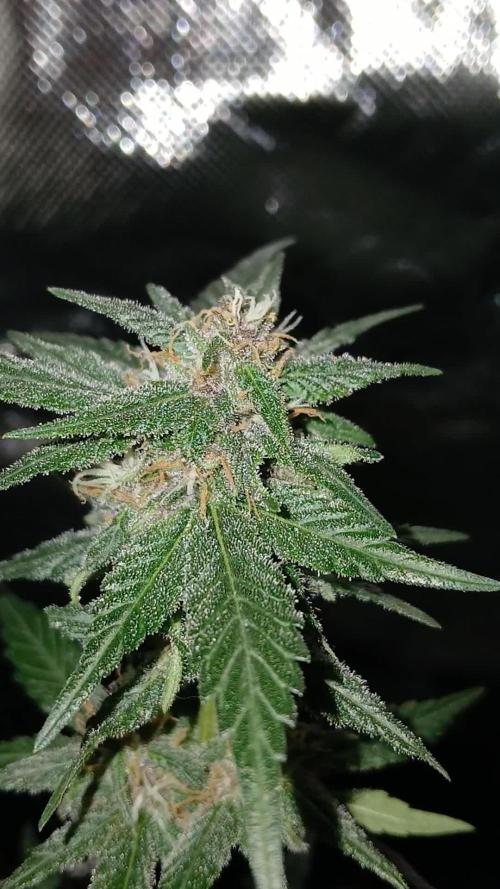
03/12/2019 Day 81 The Dr seems to be concentrating in forming buds but I think she's grown some half centimeter, is she going to touch the ceiling? She has to know that is is confined and the sky is not the limit, at least in her condition.
Day 82 (04-12-2019) The shoot at the rear left is almost touching the celiling of the grow tent😨 and i keep on tying other shoots and keeping them the farthest from the burning lights (many leaves' tips are scorched, but fortunately it's just the tip and the bud is still far from that hot point. Other leaves that are close to the lights, well, I took scissors and there's no need to speak further. Look the hard work I'm having with this plant height's issue. Goddammit why can't I have a normal grow like everyone?
Day 83 just looking the video and the pics is self explanatory. No further comments 😒
Day 84 Ithe tallest shoot has reached the ceiling and seems to try to keep on growing so she needed to start bending at the very top because she wouldn't get past the tent fabric.
Regarding EC, I am using a fertigation solution about 1,3 mS/cm and the runoff EC at 1.5 mS/cm. EC has been kept controlled since I raised fertigation volume to 6 L per fertigation event (1/day), unfortunately this solution containing nutrients goes to waste :(
Day 85 07/12 I'lllst the tops that get to touch the ceiling and keep observing and acting as needed. I fear she'll stilll keep going up for a while. Fertigations as usual, got runoff EC 650 ppm today (1.3 ms/cm) which I think it's very good of a value.
Day 86 (08/12/2019) Following advice I defoliated and even cut some thin and improductive shoots. Removed a lot of foliage and even supercropped a long tall shoot, I want to see how this high stress technique affects her. Because I plan to keep it doing if other shoots decided to continue growing.
I wonder why do shoots continue growing vertical after having passed the light's level. Is it the glow coming from the reflective walls perhaps? Many questions.
I decided to take down some tall shoots by suspending little weights near the tip, it seems to work more or less fine.
Day 87 luckily the HST seems to have worked fine, the shoots are recovering and point upwards again. The main tip is quite unruly, today I supercropped that tip. Runoff EC is 650 ppm, perfect.
Day 92 /14-12-2019) I think that despite her exaggerate growth she's managing to thrive fine with some limitations, buds seems going well. Shoots are still growing vertical but supercropping and resistance seems to have hampered her a while, but now I see she engaged on growing some centimeters more :/
Day 93 two days from starting the 14th week, despite the lights and the heat of this season (added to the lights I had to keep the tent door open for there was 32 ºC inside) the Dr is taking it well, I see the buds foxtailing as I expected, and I'm positive this grow will get to a good end. I'll work day by day to achieve that. Regarding fertigation, I gave her a solution half concentrated (relative to the solutions that I had given her the preceding days) because I noticed salt build-up by the EC measurements. I left run off EC at 800 ppm which is still a bit high for my liking but not excessively. For the amount of runoff I collected today, I see she seems to be drinking a little more.


Likes
54
Share

@PapaBlob
Follow
J'ai enfin eu un peut de temp pour lui faire la peau. J'espère que mon remplacent ne vas pas louper le séchage et le debut de l'afinage.. 🤞🙏🖖
Likes
9
Share


@Spirit4i20
Follow
This strain is of a local variety, some know it as pink mango 😎
It has a more energizing effect than the others I have picked.👌🙏
It is so common in and around the country that I found 2 seeds, pollen in the atmosphere. 🙌
Thanks to everyone who enjoyed this girl...
And good vibes and trips to all!🙏🙌
👊

